
Parker’s Crossroads Memorial Day Ceremony
By Professor Earnest Veritas · Originally published August 2021 · p. 21
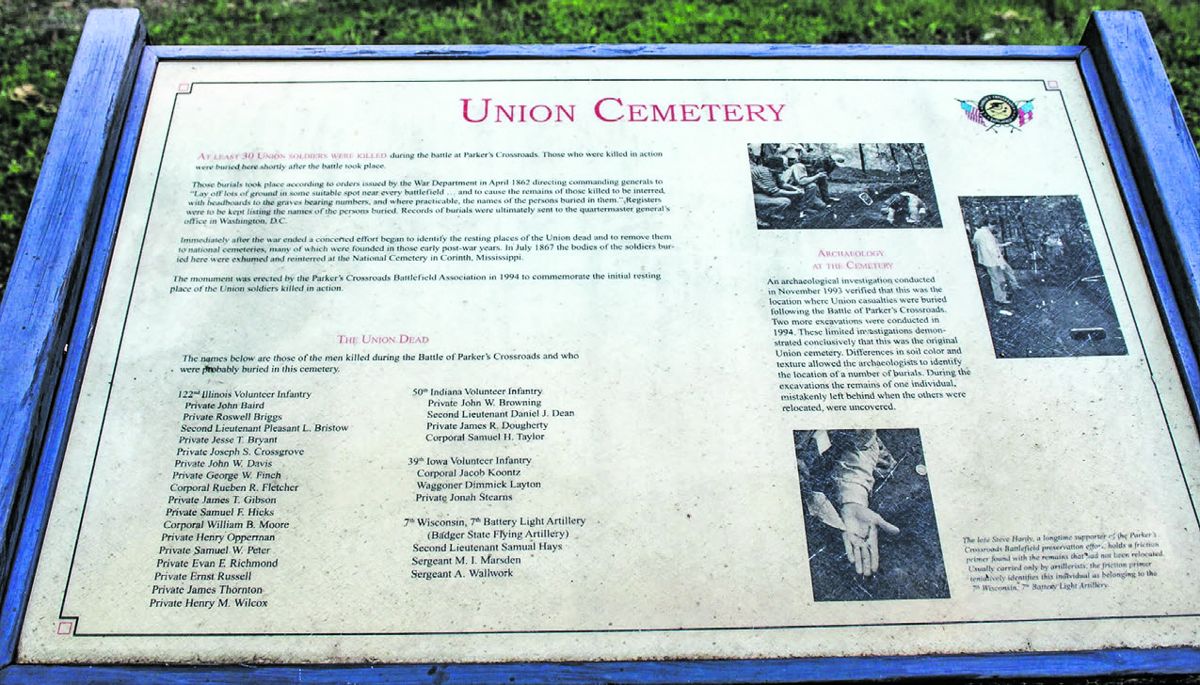
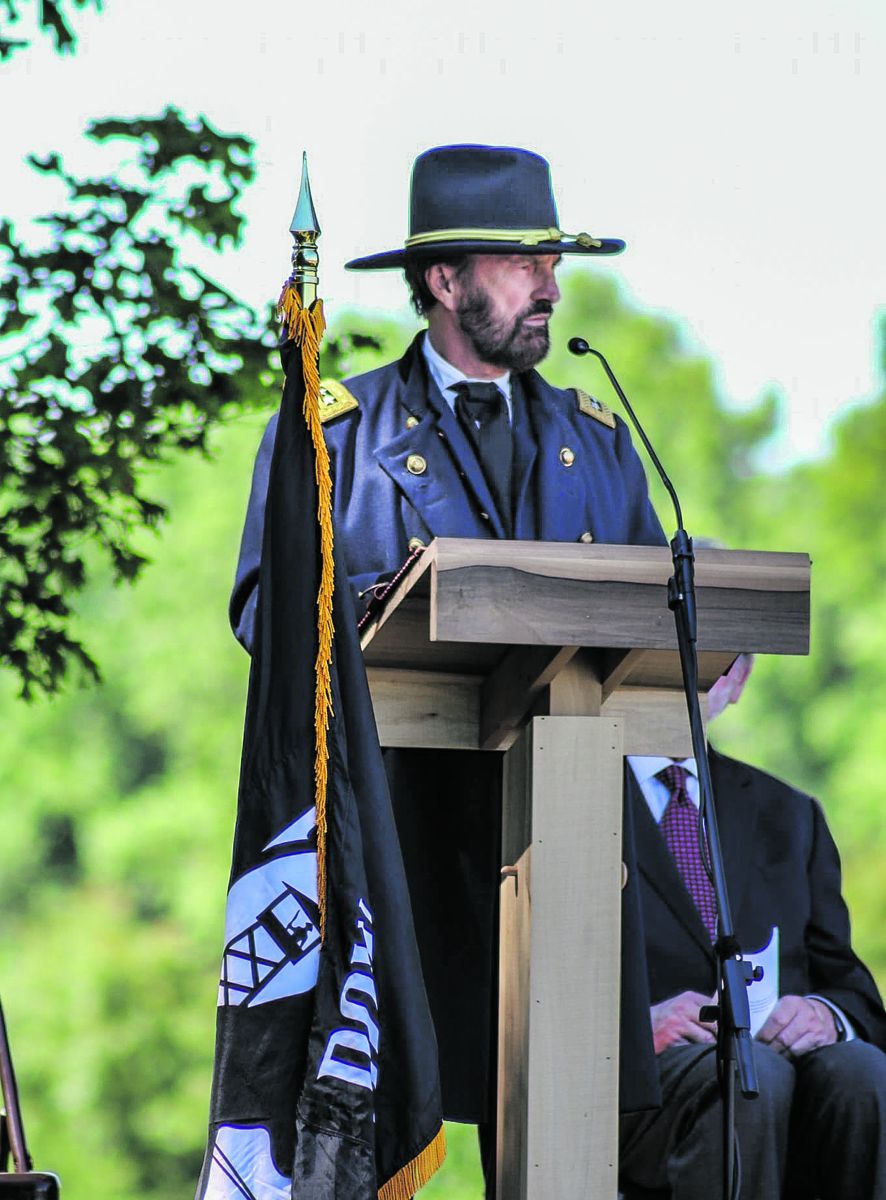
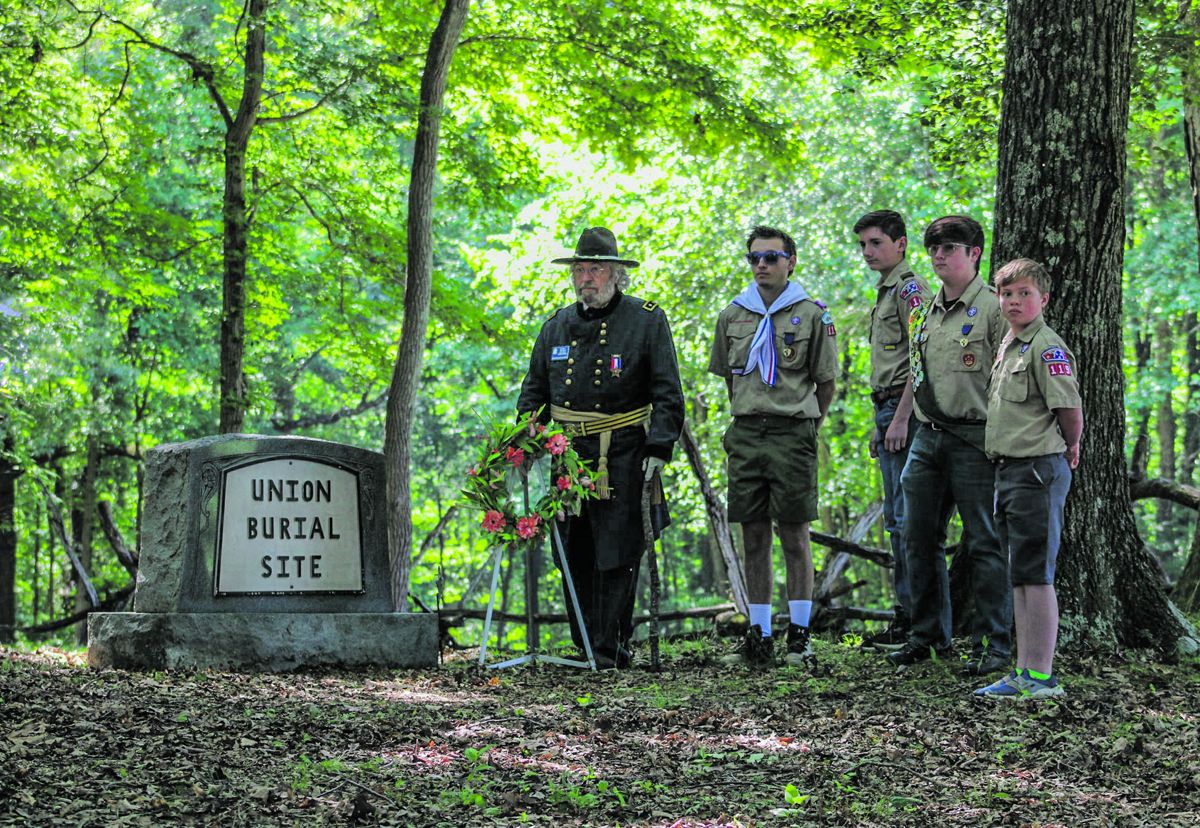
Parker’s Crossroads Memorial Day Ceremony by Professor Earnest Veritas Special Correspondent to Western Theater Memorial Day was solemnly observed in West Tennessee on the Parker’s Crossroads Battlefield May 31st, instant. With restrictions prohibiting the program being held in the West Tennessee Veteran’s Cemetery, the ceremonies were moved to the hallowed ground of Parker’s Crossroads battlefield nearby. The Dec. 31, 1862, Battle of Parker’s Crossroads took place during General Nathan Bedford Forrest’s First West Tennessee Raid. Confederate forces led by Forrest met Union forces led by Gen. Jeremiah C. Sullivan on Dec. 31, 1862. It was significant for Forrest’s unique use of artillery against infantry and famous for its Confederate commander’s brazen maneuvering resulting in his famous command, “charge them both ways!” Like many other similar ceremonies, the Memorial Day observation was well-attended and carried out with great dignity. Artillery units fired the salutes, Honor Guards posted colors, and General George Thomas (portrayed by Dr. Clyde J. Getman), with the assistance of the Boy Scouts, placed a memorial wreath at the marker where 29 Federal soldiers killed in the fierce fighting, were buried. In July 1867, they were moved to the Corinth, Miss., National Cemetery. Only six bodies were identified. General Grant (portrayed by Dr. Curt Fields) uttered words appropriate for the occasion. The General talked of the first Memorial Day ceremony held at Arlington National Cemetery on May 30, 1868, over which he presided. He then read Major General John L. Logan’s, May 5, 1868, General Order No. 11 for the Grand Army of the Republic. That General Order officially established Memorial Day ceremonies nationally. Noteworthy, however, for this
Bell Guard ringing one of the seven tolls.
particular observation was the Honor Bell ceremony. The sad sounds of a tolling bell echoed across the battlefield and the crowd gathered there, poignantly adding to the reverence of those there and for the occasion. The procedure and meaning of each of the seven tolls of the bell are of great interest. They serve to remind us that each step taken within the ceremonies has significant import. Just as each fold of the flag has specific meaning, so do the seven tolls of the Honor Bell.
Honor Bell Ceremony For Veterans At interment ceremonies, the Honor Bell is guarded and tolled by the Bell Guard. Tolling is the deliberate slow ringing of a bell to elicit sorrow and show respect. While many bells are rung for joy, one tolls a bell for sorrow. Rendering bell honors is performed in a tradition known as the “ancient tolling method,” a perfect complement to the beauty of military rites. After the folded flag of the United States of America is presented to the next of kin, the Bell Guard provides a tribute of dignity, honor, and respect with the Seven Solemn Tolls of the Honor Bell. After the rendering of Bell Honors, the Bell is not tolled again until the next Bell Honors mission. At each funeral or memorial service for a veteran, the Bell Guard tolls the Honor Bell seven times, with seven seconds between each toll. These tolls represent the many stages in a veteran’s life. Each toll has a specific meaning: Toll One: The Choice to Serve: This toll represents the veteran’s willingness to sacrifice their life for their country; a dedication to which few are called. Toll Two: Camaraderie: The second toll represents the friendships, family, and unity that bond all service members together. Toll Three: Patriotism: The third toll represents the veteran’s pride in their country, a duty to protect it, and the joy in celebrating the freedoms enshrined in our Constitution. Toll Four: Respect: The fourth toll represents the respect given to a veteran by their community, earned by them and owed by us, for their service. Toll Five: Dignity: The fifth toll represents the dignity with which a veteran’s community treats their fallen hero. Toll Six: Honor: The sixth toll represents the honor that is due to a veteran when they have died, given by their fellow service members and community. Toll Seven: The Value of Life: The seventh toll represents the ultimate sacrifice that the veteran has made. Whether killed in action, or after long years of quiet service, the value of a veteran cannot be adequately described by words alone. The battlefield is located at the intersection of I-40 & Hwy. 22, at Exit 108, mid-way between Memphis and Nashville, approximately 10 miles north of Lexington, Tenn. Professor Veritas would like to thank Mr. Keith Hair for his valuable help in providing the Honor Bell ceremony steps and meaning. Contact Information: Parker’s Crossroads [email protected] Phone: 731-968-1191 www.parkerscrossroads.org.