
This And That
An Interesting Blend of Fact and Fiction
By Gould Hagler · Originally published August 2021 · pp. 10–11
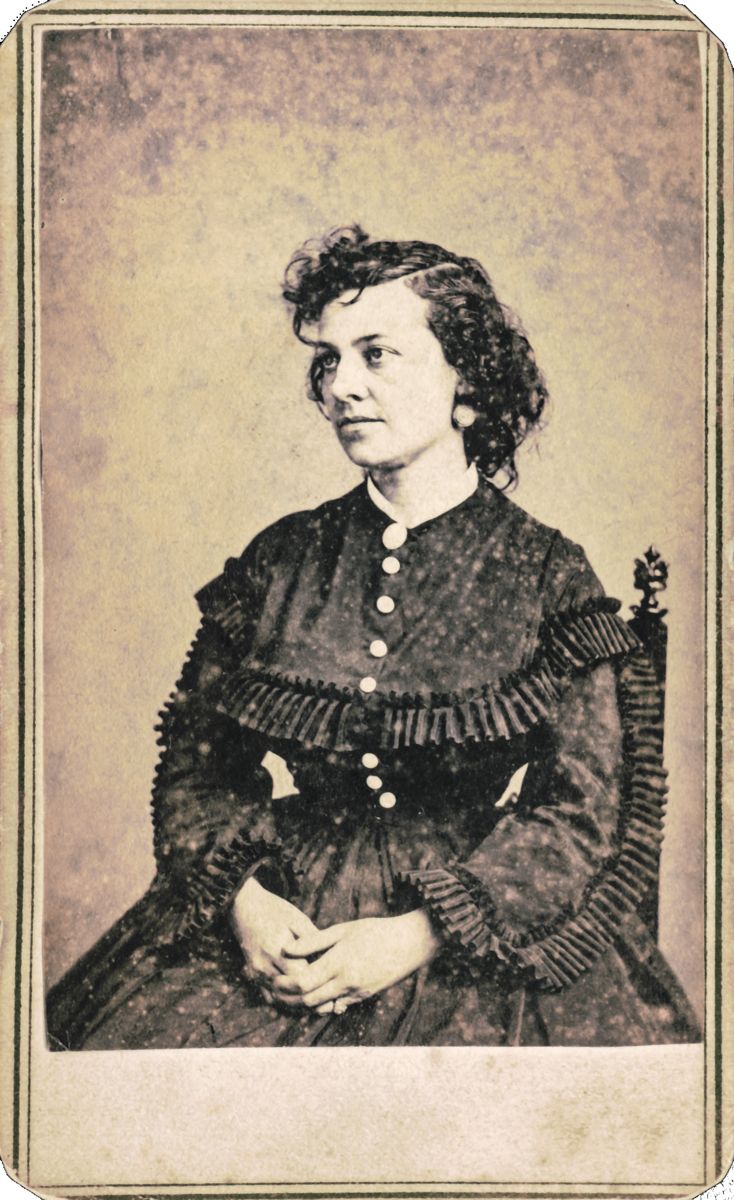
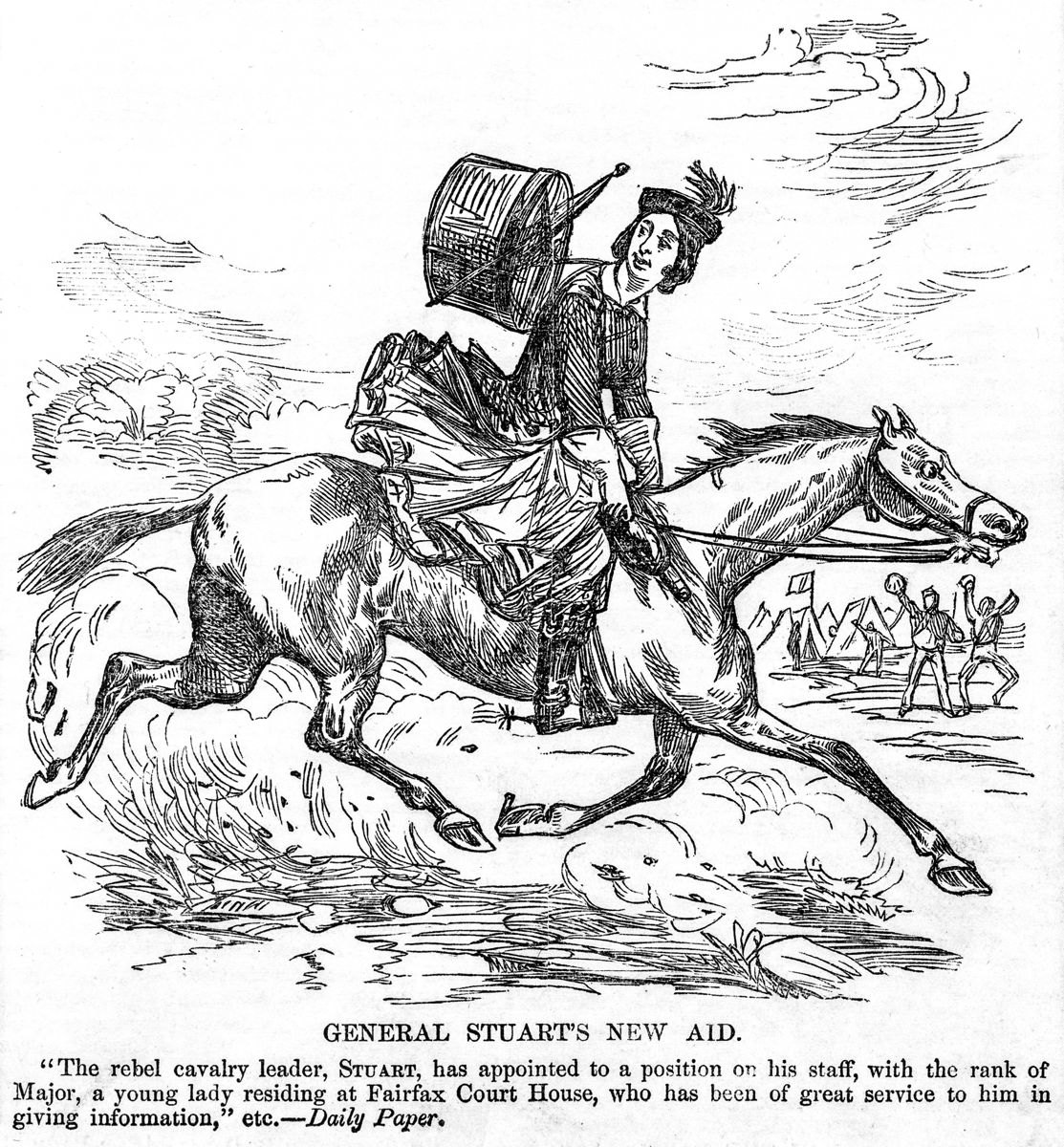
An Interesting Blend of Fact and Fiction This month’s column will continue to examine the accounts of women who, in various ways, served, or claimed to serve, the Confederacy and Union during the Civil War. Most examples covered in June and July were one-day stories, told and then forgotten. This month we will look at three of the better-known women who served (claimed to have served); women who achieved some lasting fame and today remain on the margins of history. We begin with the story of Antonia J. Ford, a young Virginia woman who served the Confederacy as a spy, and was commissioned as an honorary lieutenant and aide-de-camp by Gen. Jeb Stuart in 1861 after she provided intelligence to the Southern forces before the Battle of Manassas. On April 2, 1863, Atlanta’s Southern Confederacy, relaying information taken from a Baltimore paper, reported on Ford’s activities in the previous month. She was “the principal spy and guide for Capt. Mosby in his recent raid on Fairfax Court House, and aided in the arrest of Gen. Slaughter (sic, the general’s name was Stoughton), Wyndham and others.” Mosby got away with this embarrassed general, two lower ranking officers, 30 enlisted men, and 58 horses. Ford herself was less fortunate. “She was arrested and brought to the Old Capitol Prison, on Sunday last, with $1,000 Confederate money on her person.” What makes this story interesting, however, is not the spy angle, but the love angle. The officer who arrested Ford was Major Joseph Willard, a Washingtonian previously acquainted with Ford and her family, and who managed the Old Capitol Prison. While Antonia was Joseph’s prisoner, her jailer became her sweetheart. The smitten major, 18 years older than Antonia and married, worked to win her release. She was freed in a prisoner exchange but remained under suspicion. Re-arrested and given an ultimatum, take a loyalty oath or remain in prison; Ford relented and swore fealty to the hated Union. The power of love proved unconquerable. The Montague officer divorced himself from his wife and from the United States Army. The Capulet daughter risked alienating her secessionist family. They married, had three children, and lived in Washington until Antonia died in 1871, her life shortened by the effects of her harsh imprisonment. We now move to the Federal side and consider the history of Miss Major Pauline Cushman. I won’t attempt to separate fact from fiction and will just relate what was reported about this actress-turned-spy. Harriet Wood was born in New Orleans in 1833. At a young age she embarked on an acting career under the name Pauline Cushman. She was on stage in Cleveland when the War began, and two years later was performing in Louisville. She was asked by some paroled Confederate officers to ad lib a pro-Confederate toast from the stage. She consulted with the Federal provost marshal and together they concocted a scheme. “Here’s to Jeff Davis and the Southern Confederacy!” she cried out, “mortifying all loyal persons present and highly delighting their ‘secesh’ neighbors.” She was immediately dismissed for her supposed secesh proclivities. With her pro-South bona fides documented, she embarked on her career as a Union spy. That is the version reported in the Valley Spirit of Chambersburg. The Detroit Tribune reported that her friendship with the paroled officers and other factors aroused suspicion and led to her arrest. In that version she “indignantly denied” she was a rebel and proved her loyalty by agreeing to enter the U.S. secret service. If we stick with the Tribune’s account, we learn that Cushman “visited the Rebel lines time after time, and was thoroughly acquainted with all the country and roads in Tennessee, Northern Georgia, Alabama, and Mississippi, in which sections she rendered our armies invaluable service.” Newspapers contain various accounts of our heroine’s derring-do, of her capture, escape, and recapture; her encounters with John Hunt Morgan, Braxton Bragg, and Nathan Bedford Forrest; her trial and death sentence; her liberation
by Federal troops; and her commission, issued by Gen. James Garfield, granting her the “rank and title of Major,” after which she was forever known as Miss Major Pauline Cushman. My favorite part of the story is her bold demand of Abraham Lincoln, as reported in the September 1864 Nashville Dispatch. Miss Major Cushman was not one to be put off by officious underlings. When the army denied her claim for five months back pay, she called upon the president himself and pressed her case. Soon after the interview the Paymaster General received a note signed “A. Lincoln,” directing him to pay the lady. Cushman capitalized on her fame. From 1864 onward she toured the country, appearing on stage in cities large and small, telling of her adventures to paying audiences. Appearances became less frequent as time passed, but news items can be found as late as 1873 announcing her lectures on her wartime exploits. In later years her wartime celebrity earned her occasional mention in the press. It was newsworthy when she “cowhided a young man in San Francisco” who spoke of her in a disrespectful tone; when she opened a hotel in Arizona; or, in at least one case, when she merely passed through town. She died in 1893. Our last subject this month will be the woman who perhaps is the most famous female to wear the blue or the gray. Let’s take a look at the accounts of this lady’s adventures found in wartime and postwar newspapers, then consider her autobiography, and finally see what a prominent Civil War historian had to say in a recent book about the lady and her claims. First, what shall I call her? She used ten or so names over the years, and the count easily doubles if we include variations that appeared in print. Her real name is uncertain and she never used it anyway, so I will call her Loreta Velazquez, the name appearing on the cover of her autobiography. Loreta first appeared on the scene in 1861 in Lynchburg. According to the September 26 Lynchburg Republican, she was dressed in Confederate military garb, presented a “gay and dashing appearance,” and attracted much attention as she paraded about. The true sex of this suspicious character was discovered when she was arrested. Loreta called herself Lt. Harry T. Buford. She was sent to Richmond.
Miss Major Pauline Cushman.
Two days later the same paper reported that “Buford” had turned up again. She had returned to Lynchburg, but was preceded by a telegram from Gen. John Winder ordering her re-arrest. She claimed that while in Richmond she had met with the Secretary of War, not once but twice, the first time disguised as Buford and the second in female dress, calling herself Martha Keith. She declared that Secretary Benjamin, thinking that he had met with two individuals, had issued two passes to travel to Memphis, one to the male lieutenant and one to Mrs. Keith. The editor was “inclined to the opinion that there is something suspicious about her movements.” Indeed. And one must also be inclined to the opinion that either (1) she was lying about the passes or (2) the Confederate Secretary of War was extremely easy to fool. The Richmond Examiner reported on Loreta’s third appearance as Lieutenant Buford in July 1863. Loreta, now identified as Mrs. S.T. Williams, had continued to dress as a Confederate officer and “it was this that got her into trouble with the Richmond authorities.” Under suspicion as a spy, Loreta was kept briefly in Castle Thunder then released. The paper reported on her parentage, her family’s wealth, and her work to aid the Confederacy. In addition to ministering to the wounded, she was “known to lend a helping hand with the musket at several battles in which she participated.” Well, she was not exactly known to do these things. It was known only that she said she did them. There is a difference. Loreta was again in the news a few months later, passing through Richmond and stopping to visit the Examiner. She had a new husband and a backlog of adventurous tales to share with the world. Since our last encounter with her, she had joined Bragg’s army in Chattanooga; served on Gen. A.P. Stewart’s staff; was employed by the secret service; helped catch spies; and did various other “very daring things.” Again, so she said. This is all the wartime news about the famous Lt. Harry T. Buford, but the novel story spread far beyond Richmond and Lynchburg. Papers throughout the Confederacy and the North ran the item, as did papers as far away as Britain and Australia. Loreta reappeared soon after the war, with an expanded resume of her tireless work on behalf of the Confederacy. April 1866 newspaper reports summarized her service. In 1861 she had recruited and equipped at her own expense a company of cavalry. By war’s end she had struggled for Southern independence in various ways not only in the Confederacy but also in the North, in Canada, and in Europe. Some dared to question the veracity of her exploits. Loreta responded by publishing notices that persons who persisted in spreading these slanders “will do so at their personal peril.” As she warned off these skeptics, she toured the South “collecting
Antonia Ford Willard. subscriptions for three forthcoming works which she is preparing,” one of which was to be entitled “Buford’s Poems.” The poems were never published. In 1876, however, a work appeared entitled The Woman in Battle. This fantastical account of her wartime and postwar life expands on the adventures described in the various newspaper accounts. She fought and she spied. She went everywhere, traveling in high circles and winning the confidence of Confederate leaders who employed her many talents. While in female attire she was irresistible to men. While in disguise as Buford she won the hearts of women everywhere. She fought, she spied, and she loved, ultimately marrying a Confederate officer who fought side-by-side with Buford and fell in love with Loreta, not knowing until she revealed that the comrade-in-arms and the refined lady were the same person. “Pure fiction,” in the words of Gen. Jubal Early. How anyone who read it could think otherwise is a mystery. In 2016 William C. Davis’s Inventing Loreta Velasquez was published. Davis’s work revealed the facts about this “Confederate soldier impersonator, media celebrity and con artist.” The reader learns a great deal about the person behind the façade. To me, the truth is more interesting than the fiction. I won’t attempt to summarize the book, but will simply say this: during the war Loreta spent far more time talking to editors in newspaper offices, serving time in jail for theft, and working in a munitions factory (in the North!) than she did hanging around battlefields. Inventing Loreta Velasquez reports Loreta’s wartime activities but the story does not end there. After the war Loreta embarked on a decades-long career as a con artist. She was good at attracting attention and was a skillful-enough liar to fool some people and separate some from their money, but she was not successful in her chosen field. Her career in con artistry seldom earned enough money to support her much beyond a subsistence level, and sometimes she was reduced to destitution. She spent the last decade of her life in a hospital for the insane and died in 1923. Sources and further reading: • https://www.nps.gov/people/antonia-ford-willard.htm • https://www.battlef ields. org/lear n/biog raphies/
• • •
• • •
antonia-ford-willard https://www.battlef ields. org/lear n/biog raphies/ pauline-cushman https://www.battlef ields. org/lear n/biog raphies/ loreta-janeta-velazquez Betts, Vicki, “Women Soldiers, Spies, and Vivandieres: Articles from Civil War Newspapers” (2016). Special Topics. Paper 28. http://hdl.handle.net/10950/780 Other newspapers accessed at newspapers.com Inventing Loreta Velasquez, William C. Davis The Woman in Battle, Loreta Janeta Velazquez
Gould Hagler is a retired lobbyist living in Dunwoody, Ga. He is a past president of the Atlanta Civil War Round Table and the author of Georgia’s Confederate Monuments: In Honor of a Fallen Nation, published by Mercer University Press in 2014. Hagler speaks frequently on this topic and others related to different aspects of the Civil War and has been a regular contributor to CWN since 2016. He can be reached at [email protected].