
The Unfinished Fight
19th Century Spectacles
By Craig L. Barry · Originally published August 2021 · p. 8
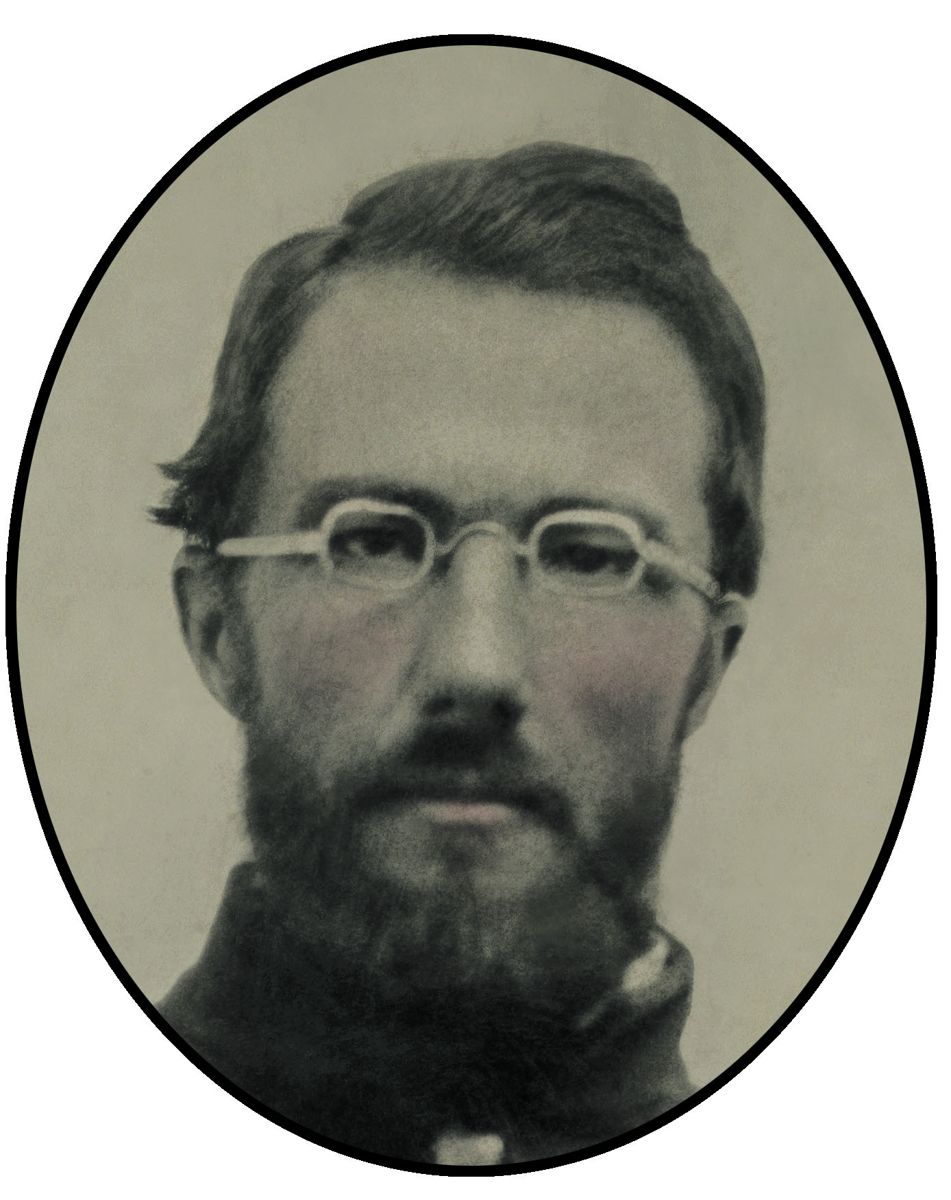
19th Century Spectacles The question comes up from time to time about 19th century eyeglasses and how commonly they may have been worn by Civil War-era soldiers. The first point to consider is whether the individual was near-sighted, had difficulty seeing at a distance, or far-sighted, had difficulty reading. The most common way of correcting vision problems was by using mounted lenses. In modern times mounted lenses are called eye-glasses, but in 19th century America they were referred to as “spectacles.” During the mid-19th century, the term “eye-glasses” referred to corrective lenses that did not have side pieces and were held on the face by clamping to the top of the nose, and called pince nez. Among far-sighted civilians of a certain age, reading glasses with wire frames and a half-moon lens were not uncommon and their cost was quite reasonable. Among the mostly young men in the rank and file, spectacles were not common and the need to correct for far-sightedness with reading glasses would have been practically unknown among younger men. Would a young man, either near-sighted or far-sighted enough to require corrective lens, be exempt from military service depending on the extent of his condition? By way of answering that question, one Northern newspaper noted “near-sighted men instead of finding themselves exempt will observe that they are transferred to the Invalid Corps. Henceforth spectacles and eyeglasses will not be so popular.” It is worth noting that while most men did not wear them, those who did require spectacles to correct their vision purchased the item on their own. Spectacles were not an item of military issue; later in the Civil War the
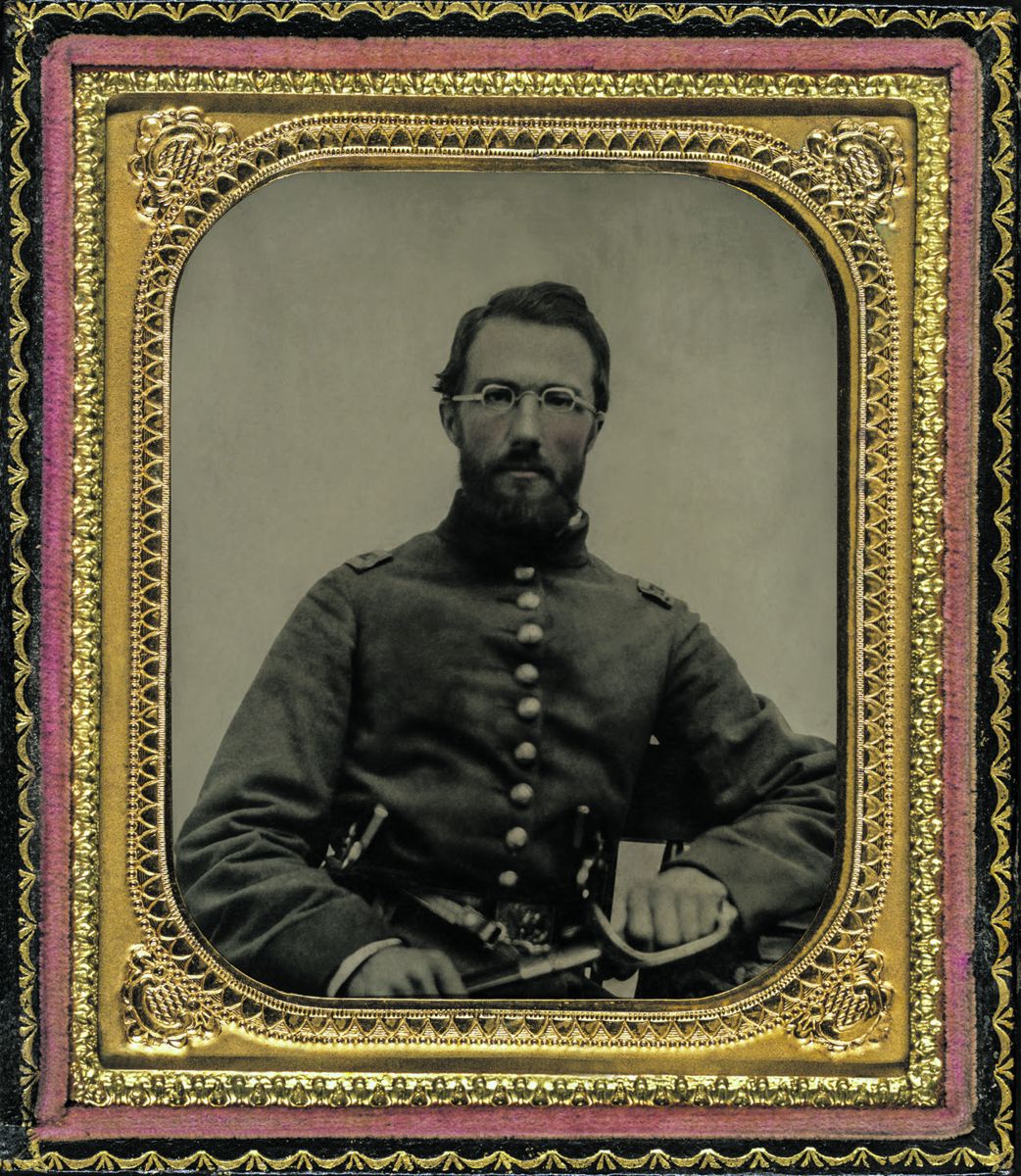
Sanitary Commission made note of distributing a few pairs. What sort of spectacles were commonly available during the time period? According to Alan McBrayer and Thomas Valenza in their monograph History on Your Face (2012), the frames and lens were usually hand-made in the mid-19th century. The most common method of selecting spectacles was to try various pairs until a pair was found that seemed to offer the greatest vision improvement. In cities with a population large enough to support an optician, spectacles could be custom made and fitted for a particular customer. The parts of spectacles consisted of the lenses, called “optics” or “eyes.” The “eye wire” surrounded the optics; the “bridge” rested on the nose. The “jints” attached the “temples,” or sidearms, to the side of the head. Former editor Nicky Hughes wrote an article for The Watchdog (Autumn 1995) called A Closer Look. He noted of mid-19th century lens that oval lens were “regularly popular” from the Colonial period through the beginning of the twentieth century. Other popular optic shapes were rectangular, the half-moon reading type, and long octagonal varieties. The main types of spectacle bridges were the arch, crank, x-type, and scroll. The temple pieces did not curve around the ears until the 1880s and were not in common use until the 1890s. Instead, they were straight or featured either round or tear drop shaped open rings or flat solid tips called “beavertails.” The optics or lenses were generally small by modern standards with typical dimensions being “somewhat over an inch wide.” Frames were brass, silver or other metals and the styles “did not seem to vary by the gender of the wearer.” While not uncommon in photographs of civilians, images showing Civil War soldiers wearing spectacles are very scarce. We do know many pairs of spectacles from the Civil War-era survive today and relics are sometimes dug at known Civil War campsites. Hughes notes some explanations for this including that some officers may have been hostile to their use among the rank and file. It may also be possible that a degree of self-conscious vanity played a role in the lack of eyewear in period photographs of soldiers. It may have been considered a sign of weakness or a lack of virility. There is anecdotal evidence of one New York soldier who was disparagingly called “Four Eyes” and the writer also noted that the man could not see a barn door at ten feet without them. There is also an account of a Confederate soldier who wrote in a letter home dated July 22, 1861, that while fighting at First Manassas he was injured above the forehead while reloading “…and drew off my spectacles and cast them aside.” This much can be said with certainty, while there are a few period accounts of men wearing spectacles in the ranks, we lack much photographic evidence of their use among Civil War soldiers.
Craig
L.
Barry was born in and
Masters degrees from
Craig served
The
Charlottesville, Va. He holds his BA the University of North Carolina (Charlotte).
Watchdog Civil War Quarterly as
Associate Editor and Editor from
2003–2017. The Watchdog published books and columns on 19th-century material from and donated publications to all funds battlefield preservation. He is the author of several books including The Civil War Musket: A Handbook for Historical
Accuracy (2006, 2011), The Unfinished Fight: Essays on Confederate Material Culture Vol. I and II (2012, 2013). He has also published four books in the Suppliers to the Confederacy series on English Arms & Accoutrements, Quartermaster stores
European imports.
and other