
Through The Lens
The Camden Expedition Part I
By Stephanie Hagiwara · Originally published April 2021 · pp. 16–17
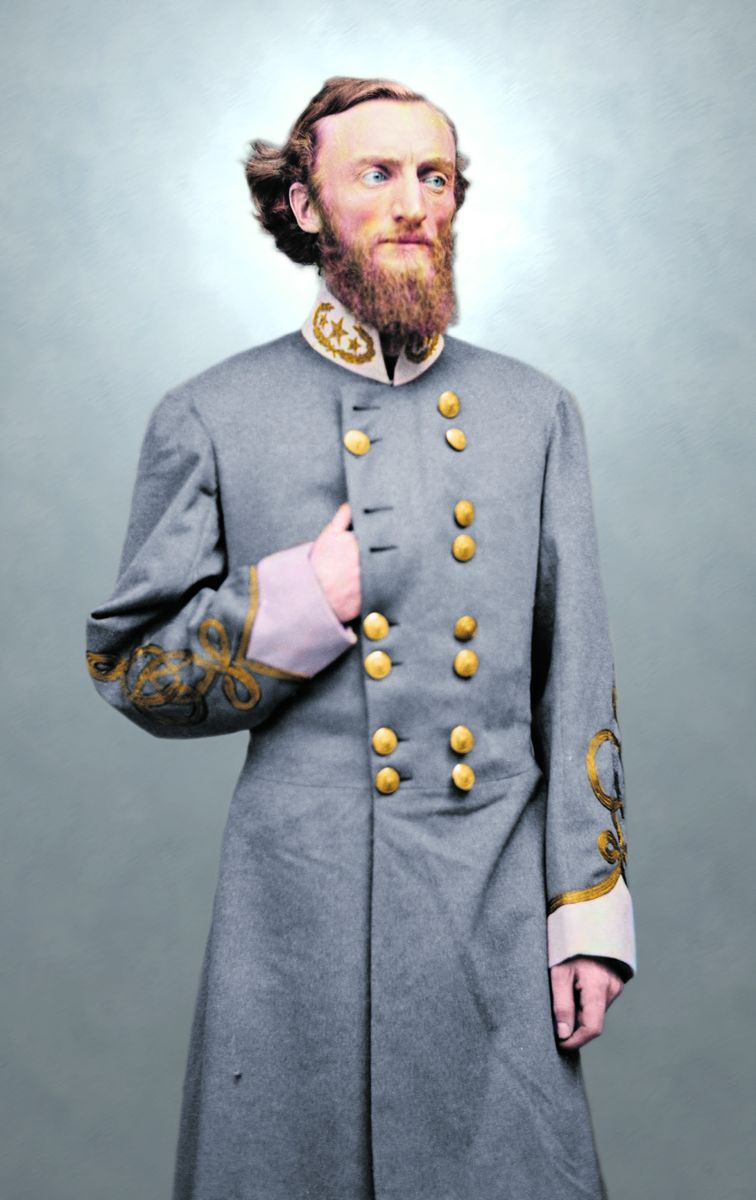
The Camden Expedition Part I “The men seemed eager as bloodhounds, and never halted or retired under the hottest fire.” – C.S. Gen. Joseph Shelby In 1864, for political reasons, U.S. Gen. Henry Halleck launched the Red River Campaign to “restore the flag to some one point in Texas.” The objectives were to ease Northern textile mills yearning for Texas cotton, discourage the French from moving north from Mexico, and sever the Confederate supply line from the Gulf of Mexico. It was a deceptively simple plan. Federal forces would move up the Red River to Shreveport, La. before moving on to Texas. Adm. David Porter’s gunboat fleet would provide firepower. Gen. Nathaniel Banks would lead 20,000 men along with an additional 15,000 men from
Gen. William Sherman and Gen. Frederick Steele’s 16,000 troops who would swoop down from Arkansas and join the advance in Shreveport. Career soldier Steele had met his life-long friend Gen. Ulysses S. Grant at West Point. He earned promotions for his bravery in the Mexican-American War and Pres. Lincoln requested his promotion to brigadier general for his actions at the Battle of Wilson’s Creek, Mo. During the Vicksburg Campaign, he again showed his mettle. After the capture of Vicksburg, Grant appointed Steele commander of the “Army of Arkansas.” Although his part in the expedition was conceived primarily as a diversion, Steele had doubts about the plan citing, “… The roads are most if not quite impracticable; the country Library of Congress.
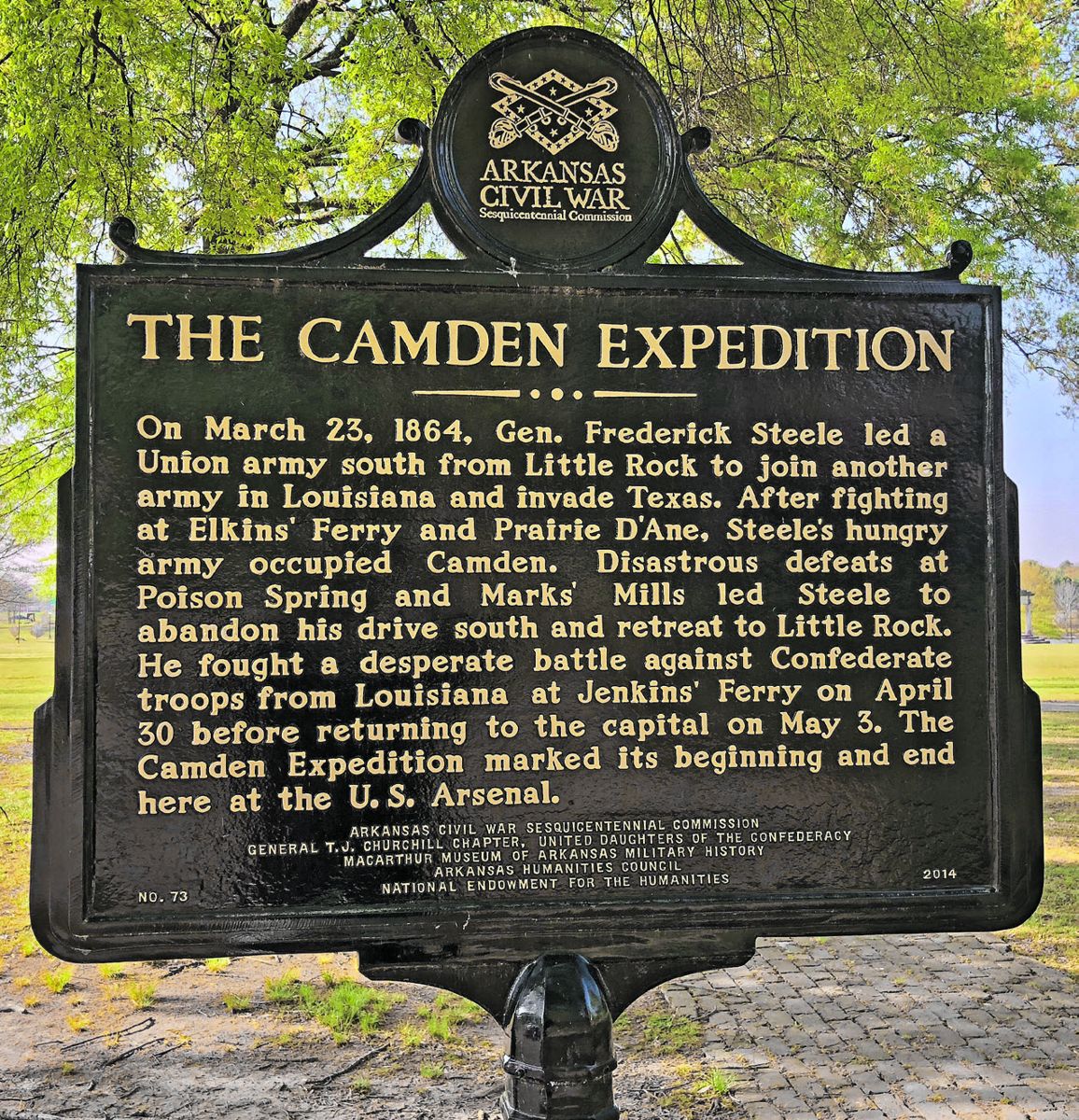
is destitute of provisions on the route.” He proposed making a feint instead. Grant, newly promoted to command of all Union troops, understood the campaign’s success depended on confusing the Confederates. Grant ordered his force to move in full. “…. A mere demonstration will not be sufficient.” On March 17, Steele ordered Gen. John M. Thayer’s 5,000 “District of the Frontier” men to meet him at Arkadelphia, Ark., before April 1. Both Steele and Thayer had unreliable supply chains and were unable to stockpile necessities for the expedition. The plan was to forage for supplies while quickly making their way to Shreveport. They were unaware that the Confederates had previously cleared the area of provisions, caching them for their later use. On March 23, Steele departed Little Rock, Ark., with 8,500 infantry, artillery, and cavalry. The Camden Expedition began “in style,” with bugles and a brass band playing “Yankee Doodle.” Morale sank after the quartermaster announced that, apart from coffee, only half rations would be issued during the expedition. Steele had arranged his own plan to deceive the Confederates. He ordered Col. Powell Clayton, commander of the Pine Bluff, Ark., supply depot to create a distraction. First, Clayton sent 100 men to burn the bridge over the Saline River. On the way, his men captured some Confederates who talked of an approaching supply train. The men decided to deviate from their orders and destroy it. The Federals followed the train and surrounded it after dark. Mistaking the Federals for their own men, the train guard didn’t prepare for an attack. The Federals captured 258 men, over 30 wagons, and 300 horses and mules, burned the bridge, and returned to Pine Bluff within 24 hours. On March 30, to further confuse the enemy, Clayton sent a small group to demonstrate at Monticello. Meanwhile, Clayton led his main column to Mt. Elba, The Camden Expedition Historical Marker. Marker reads: On March 23, 1864, Gen. Frederick Steele led a Union army south from Little Rock to join another army in Louisiana and invade Texas. After fighting at Elkins’ Ferry and Prairie D’Ane, Steele’s hungry army occupied Camden. Disastrous defeats at Poison Spring and Mark’s Mills led Steele to abandon his drive south and retreat to Little Rock. He fought a desperate battle against Confederate troops from Louisiana at Jenkins’ Ferry on April 30 before returning to the capital on May 3. The Camden Expedition marked its beginning and end here at the U.S. Arsenal. Photo by Mark Hilton.
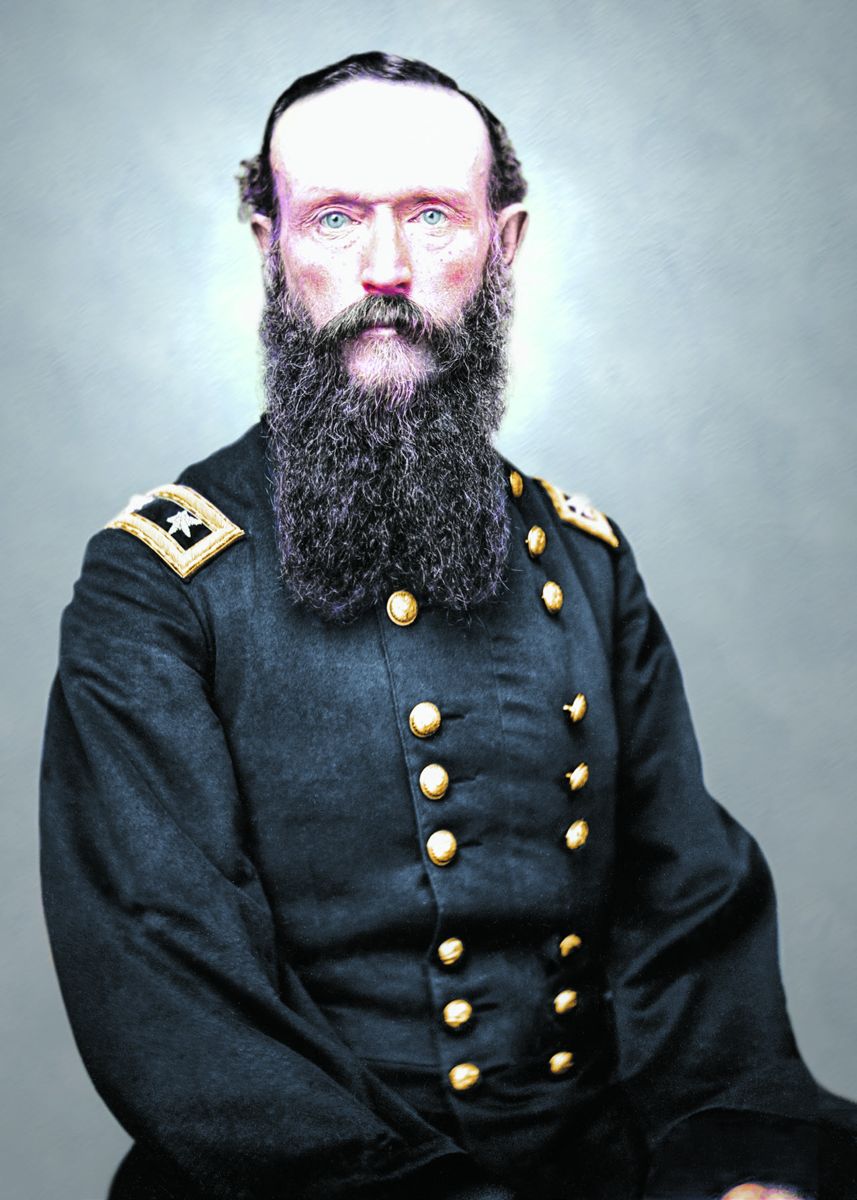
made a feint towards Camden, Ark., before retracing his steps to attack the Rebel camp from the south. Believing the demonstration was Clayton’s main force, the Confederates marched out to fight it. The demonstrators “handsomely repulsed” this first attack. As the Confederates prepared a second strike, Clayton placed the 1st. Indiana’s two howitzers squarely behind the Rebel’s rear. Ready, the artillery fired as the 5th Kan. cavalry and 28th Wis. infantry charged through the peach orchard towards their unsuspecting foe, routing the Confederates. Although harassed by C.S. Gen. Sterling Price’s cavalry, Steele reached Arkadelphia on the Ouachita River. The villagers were willing to share their provisions but unwilling to accept greenbacks due to their fear of being deemed Yankee collaborators. Still, they had limited surplus food. More to the point, Steele was unable to communicate with either Thayer or Banks. After three days Steele had to leave without Thayer. Steele headed down Military Road, through a pine forest towards the Little Missouri River. Skirmishing with the Rebels along the route slowed the column down. “Two or three of the companies were kept double-quicking a good deal of the time, first to the rear as reinforcements, and then back … again.” Meanwhile C.S. Gen. John S. Marmaduke was positioning his men for an attack from the front as Gen. Joseph Shelby was to attack from the rear and capture the Federal supply train. Marmaduke came from a political family. His great grandfather served as a Kentucky governor. Both his pro-Union father and his father’s pro-secession brother-in-law had served as governors of Missouri. At the start of the War, Marmaduke met with his father and resigned his commission from the U.S. Army. His uncle, the governor, appointed him a colonel in the State Militia. He would later resign and receive a commission in the regular Confederate army. About 11 a.m. on April 2, 100 of Shelby’s men charged the Federal rear, firing their pistols at “point blank range.” Capt. Colins advanced the two pieces of the battery “as flying artillery either at the trot or gallop.” Shelby’s entire force attacked from both sides of the road. U.S. Gen. Samuel A. Rice, defending at the rear, realized that the “harassing fire” was turning into an attack on the supply wagons. He led his entire brigade including an artillery battery, moving from one position to another, to defend the column. Darkness ended six hours of fighting. On April 3rd, three hours of fighting were interrupted by a terrible hail-storm. Amid the thunder and lightning, the “crash of artillery, the sharp rattle of musketry, and… the wild blare of bugles and the ring of sabers came from the valley below.” Despite the efforts of Marmaduke’s men, Steele arrived at the Little Missouri River, but he had no idea of Thayer’s location or Banks’ progress and he needed resupplying. Steele decided to keep his forces moving on Military Road giving Thayer time to catch up and his men to find a crossing. After he crossed the river, he would head to Camden, Ark. hopefully, he could find provisions there or use the nearby Ouachita River to resupply his men and still make his rendezvous with Banks. The Confederates would have to decide if and how much of their resources to expend to stop him. As planned, Steele was succeeding in keeping the enemy busy. Sources: Forsyth, Michael J. The Camden Expedition of 1864 and the Opportunity Lost by the Confederacy to Change the Civil War. McFarland & Company, Inc., 2015 • Sperry, A. F. History of the 33d Iowa Infantry Volunteer Regiment 1863–1866. Mills •
& Company, 1866 OR, Vol. 34, Part 1, 837 Johnson, Ludwell H. Red River Campaign: Politics and Cotton in the Civil War. Kent State University Press, 1993
• •
Stephanie Hagiwara is the editor for Civil War in Color.com and Civil War in 3D.com. She also writes a weekly column for History in Full Color.com that covers stories of photographs of historical interest from the 1850’s to the present. Her articles can be found on Facebook, Tumblr and Pinterest.