
Joseph Ryder Lewis Jr. Civil War Park Opens in Carolina Beach, N.C.
By Chris E. Fonvielle Jr. · Originally published April 2021 · pp. 1–6
James Burriss, nineteenth century farmer, waterman, and river pilot, could never have imagined that his land on Federal Point (modern Carolina Beach), North Carolina would be used as a Confederate encampment site in 1861, a Confederate defensive position in 1864, a battlefield in 1865, and a Civil War park in 2021. But it was, it was, it was, and it is. The Federal Point Historic Preservation Society and the Town of Carolina Beach held a grand opening ceremony for the Joseph Ryder Lewis Jr. Civil War Park on February 11, 2021, the 151st anniversary of the Battle of Sugar Loaf in the 1865 Wilmington Campaign. Despite the ongoing viral pandemic and a cool, overcast day, 110 people attended the event including civic leaders, municipal officials, Federal Point Historic Preservation Society members, local historians, preservationists, and Civil War enthusiasts. The last private owner of the property, across North Lake
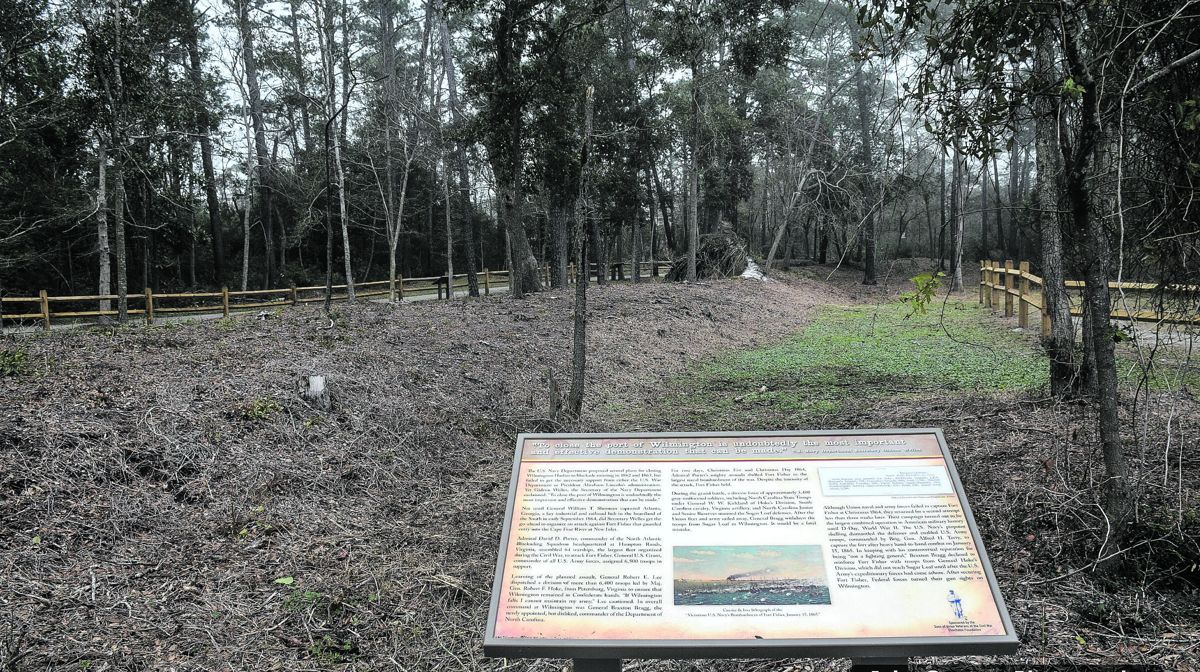
Newly installed kiosk at the Joseph Ryder Lewis Jr. Civil War Park. Photo by John Gregory.
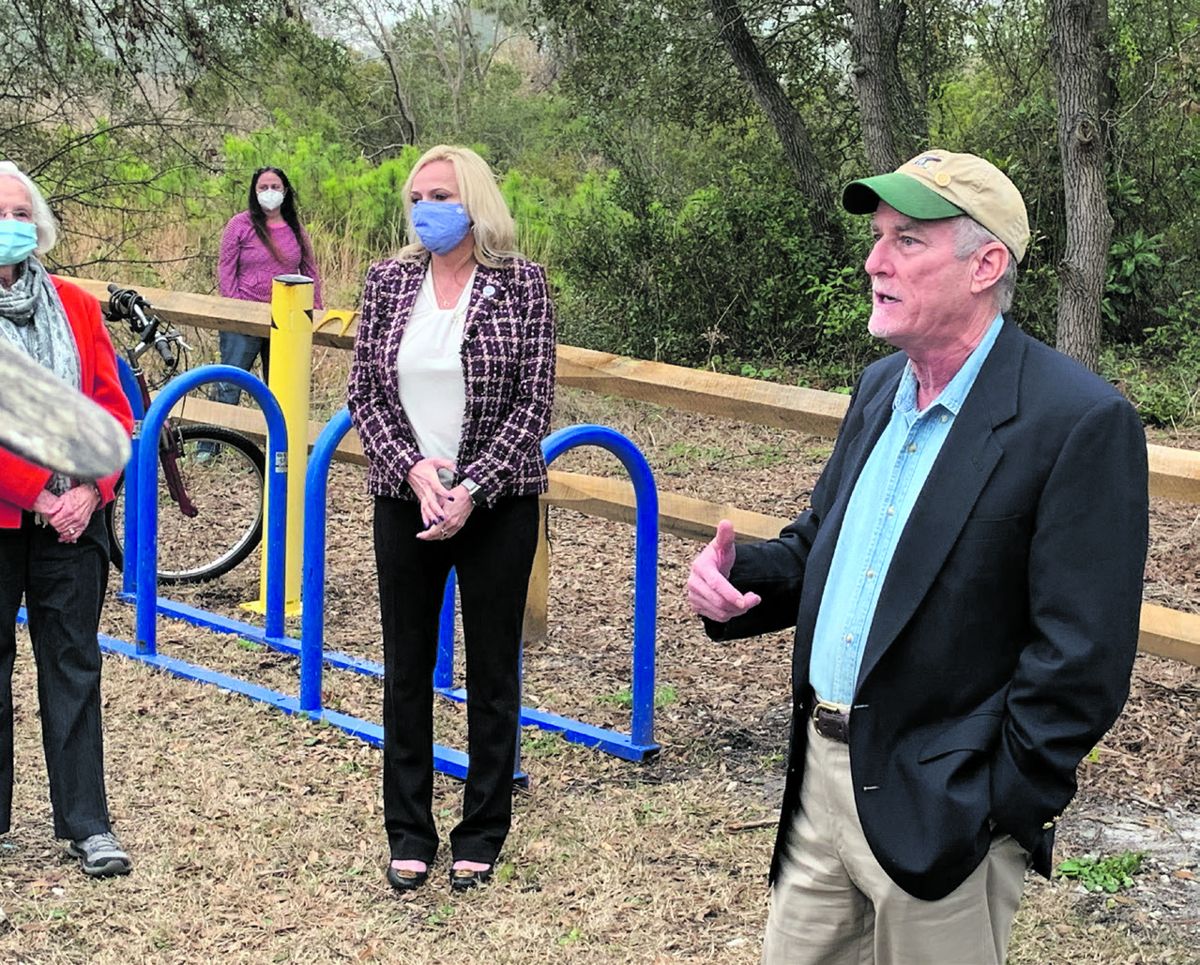
Boulevard from Carolina Beach Town Hall, was the late Joseph Ryder Lewis Jr. (1926–2010), a Carolina Beach resident, U.S. Army veteran, long-time employee of the U.S. Corps of Engineers, and member of the Federal Point Historic Preservation Society. Keenly interested in the history of the Lower Cape Fear, he donated approximately ten acres that feature Confederate earthworks of the so-called “Sugar Loaf lines” to the Town of Carolina Beach for a public Civil War park. It took eight years of committee planning meetings, volunteer workers clearing thick vegetation that covered the proposed park grounds, an archaeological dig, and designing interpretive signs for the project to finally come to fruition. Eric Jelinski, Carolina Beach’s Parks and Recreation Director opened the proceedings, followed by remarks from Elaine Henson, president of the Federal Point Historic Preservation Society; Mayor LeAnn Pierce; and Leslie Bright, Park Committee Chair. “It was a great day for the Joseph Ryder Lewis Jr. family, Federal Point Historic Preservation Society, and the Town of Carolina Beach in opening the park and fulfilling
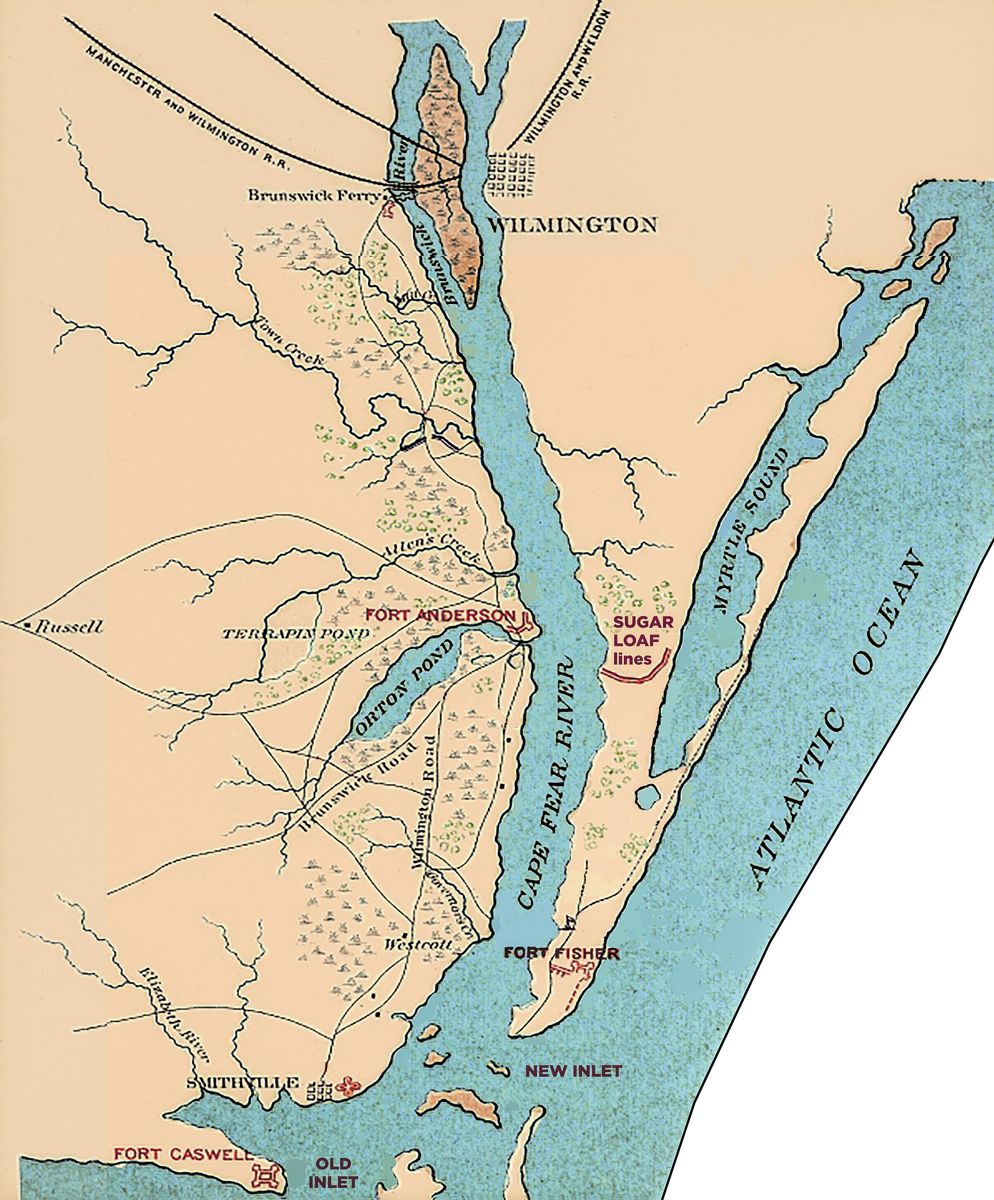
Mayor LeAnn Pierce, Eric Jelinski, Mary Ann Lewis, and Elaine Henson cut ribbon to open the Joseph Ryder Lewis Jr. Civil War Park, Carolina Beach, N.C., Feb. 11, 2021. John Gregory. the wishes of Ryder Lewis,” commented Elaine Henson. Mary Ann Lewis officially dedicated the park named for her late husband by cutting a ribbon at a newly constructed wooden bridge leading into the historic grounds. Chris E. Fonvielle Jr., professor emeritus in the Department of History, UNC Wilmington, then spoke on the importance of Wilmington and the Sugar Loaf lines during the Civil War. The parcel of land on which the Joseph Ryder Lewis Jr. Park is now located belonged to James Burriss in 1861. North Carolina’s Adjutant General’s Office originally established Camp Wyatt (named for Pvt. Henry Lawson Wyatt, the first Tar Heel soldier killed in action during the War) on the tract in June 1861, before moving it further south three months later. In October 1864, Maj. Gen. W.H.C. Whiting, commander of the Department of the Cape Fear, ordered engineers to construct a line of heavy fieldworks as auxiliary defenses to Fort Fisher, 4 ½ miles to the south, that would stretch from Sugar Loaf Hill, a fifty-foot high natural sand dune on the east bank of the Cape Fear River, eastward for about 1 ½ miles to Myrtle Grove Sound (modern Carolina Beach canal). Fort Fisher was the main guardian of Wilmington, N.C., the Confederacy’s last major seaport open to maritime trade with
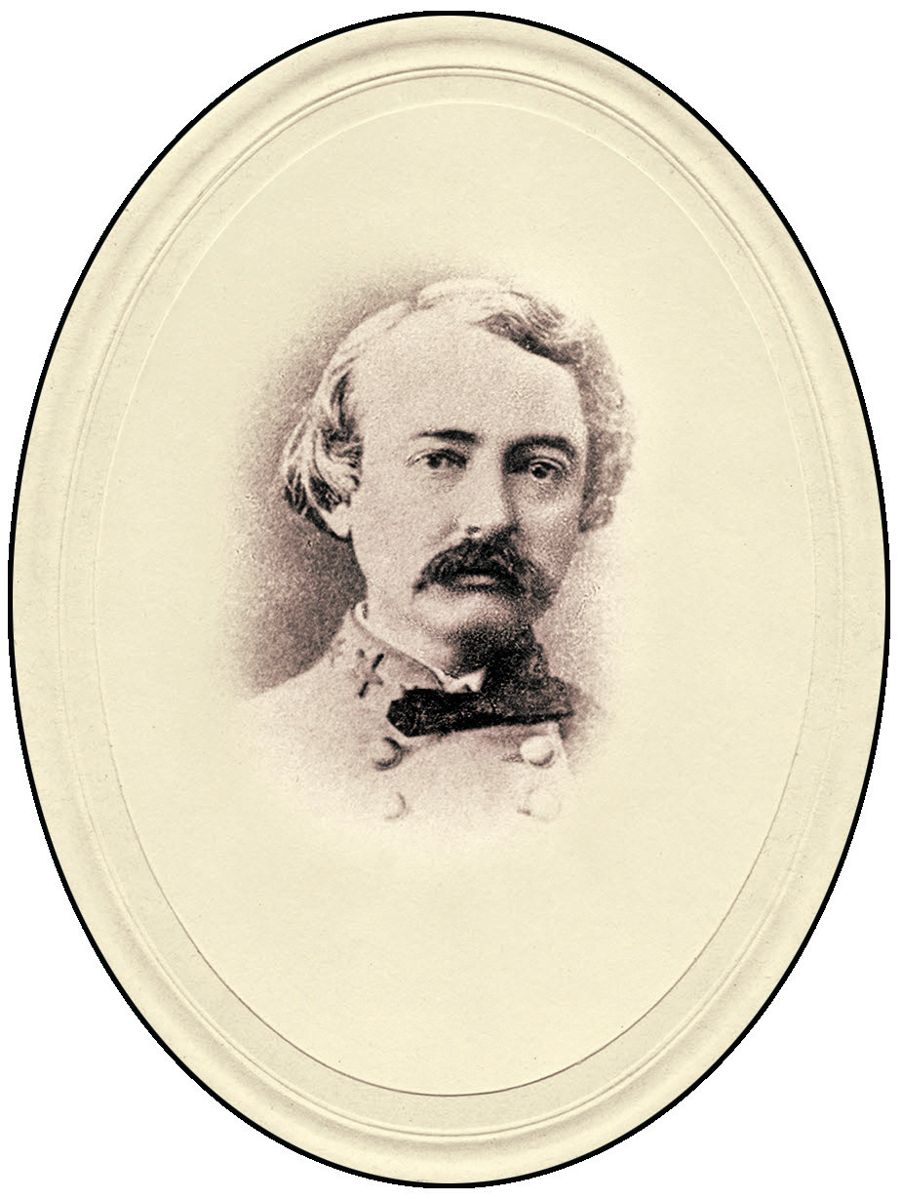
Maj. Gen. W.H.C. Whiting.
Europe, especially Great Britain, and by late 1864, most important city. Confederate spies reported that U.S. forces were organizing a joint army/navy operation to close Wilmington Harbor to blockade running by attacking Fort Fisher at New Inlet, the northern entryway into the Cape Fear River. For more than three years, Confederate commerce vessels had evaded, and continued to evade, U.S. Navy gunboats blockading the Cape Fear coast. At least 106 different steamships and an undetermined number of sailing vessels had been employed as blockade-runners to smuggle vital military supplies for soldiers on the battlefront and domestic products for civilians on the home front into the Confederacy by way of Wilmington, far more than came into any other Southern seaport. If a Union combined attack on Fort Fisher occurred, as appeared increasingly likely, General Whiting determined to keep enemy troops from coming ashore above Fort Fisher. If the Federals established a beachhead, the fall of Fort Fisher and Wilmington would be only a matter of time. The U.S. Navy Department had proposed several plans for closing Wilmington Harbor to blockade running in 1862 and 1863, but failed to generate the necessary political backing from President Abraham Lincoln’s administration and logistical support from the U.S.
War Department. After Admiral David G. Farragut’s flotilla of warships closed Mobile Bay, Ala., the last Southern seaport on the Gulf coast, to maritime trade in a dramatic sea battle on Aug. 5, 1864, U.S. Navy Secretary Gideon Welles got the go-ahead from President Lincoln to arrange an assault on Wilmington. “To close the port of Wilmington is undoubtedly the most important and effective demonstration that can be made,” exclaimed Welles. “If of less prestige than the capture of Richmond, it would be as damaging to the Rebels.”
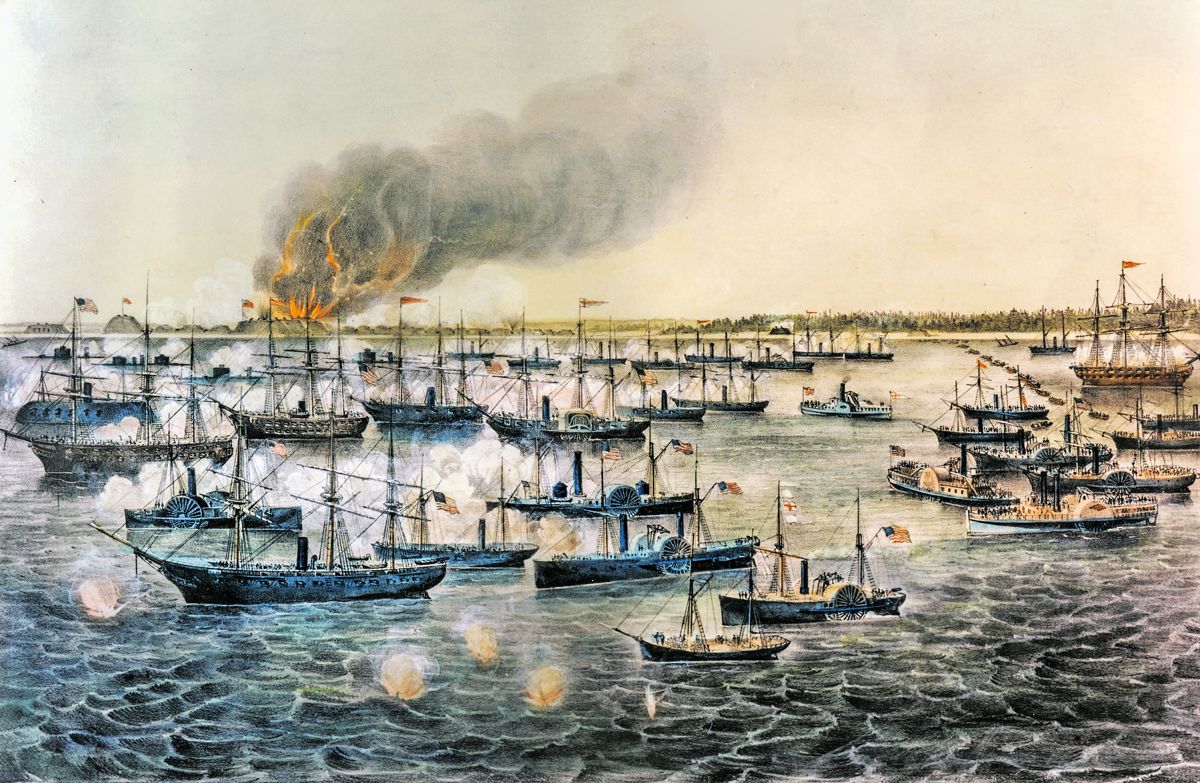
Admiral David D. Porter, Welles’s newly appointed commander of the North Atlantic Blockading Squadron headquartered at Hampton Roads, Va., gathered sixty-four warships, the largest fleet assembled during the Civil War, to attack Fort Fisher. General U.S. Grant assigned 6,500 troops, under the command of Maj. Gen. Godfrey Weitzel, for the proposed land assault. Learning of the planned Union combined operation, General Robert E. Lee dispatched a division of more than 6,400 troops, led by Maj. Gen. Robert F. Hoke, from
Petersburg, Va., to reinforce the troops deployed in the forts and batteries around Wilmington and ensure that the port city remained in Confederate hands. By then the supply line through Wilmington was so important that General Lee cautioned authorities: “If Wilmington falls, I cannot maintain my army.” The survival of Lee’s Army of Northern Virginia and the Confederacy depended in large part on the survival of Wilmington as a blockade running seaport. Given Wilmington’s significance to the Confederacy in the war’s eleventh hour, President Jefferson Davis, at the urging of North Carolina Governor Zebulon B. Vance, inexplicably superseded General Whiting in command there. Despite Whiting’s vast experience in preparing for the Tar Heel seaport’s defense and the respect and admiration from the officers and soldiers in his department, a reputation for drinking liquor at inopportune times and insubordination to his superiors haunted him. Curiously, Davis replaced Whiting with Braxton Bragg, the Confederate army’s most disliked high ranking officer and someone who was considered “not a fighting general.” “Braxton Bragg has been ordered to Wilmington,” read the headline of the Richmond Enquirer on Oct. 26, 1864. “Goodbye Wilmington.” The Union assault on Fort Fisher finally came about in late December 1864. For two days, Christmas Eve and Christmas Day, Admiral Porter’s mighty armada unleashed the largest naval bombardment of the Civil War against the stout, well-armed earthen defenses. Despite the intensity of the shelling, however, the warships failed to dismount or destroy the stronghold’s heavy seacoast guns that guarded the fort’s land approaches across which the U.S. Army troops would have to charge. General Benjamin F. Butler, commander of the Union Department of Southeastern Virginia and North Carolina who had finagled his way into accompanying Weitzel’s expeditionary force and effectively taking control, promptly aborted the planned ground assault and returned to Virginia with the troops close behind. During the great bombardment, a diverse force of approximately 3,400 gray-uniformed soldiers, including North Carolina infantry of Brig. Gen. W.W. Kirkland’s Brigade of Hoke’s Division, Capt. Andrew B. Paris’s Staunton Hill (Va.) Artillery, North Carolina Junior and Senior Reserve units, and a smattering of South Carolina cavalry manned the Sugar Loaf defenses. After the Union fleet steamed away, General Bragg withdrew the troops from Sugar Loaf to Wilmington, uniting them with Hoke’s other three brigades that straggled into town by rail at battle’s end. It would be a fatal mistake. Although Union navy and army forces failed to take Fort Fisher at Christmas 1864, they returned for a second attempt less than three weeks later. General Grant had been indifferent to the first mission, but his interest was now piqued. With Fort Fisher in their possession, Federal forces could advance up the Cape Fear River, to capture Wilmington in support
Maj. Gen. Robert F. Hoke. of General William T. Sherman’s proposed “Northern expedition,” or Carolinas Campaign as historians call it. At the same time Porter and Butler suffered defeat at Fort Fisher, General Sherman captured Savannah, Ga., 300 miles to the south. Sherman proposed to Grant that he march to Virginia going through South Carolina and North Carolina, destroying infrastructure, supply caches, and railroad depots as he had done so successfully in his March to the Sea across Georgia in the autumn of 1864. General Grant approved the bold plan, but wanted to provide Sherman with a haven on the seacoast to which he could retreat if he met stiff Confederate opposition in the Carolinas or from where reinforcements and supplies could be forwarded to his army. Wilmington, roughly halfway between Savannah and Petersburg, where Grant and Lee had been slugging it out in a stalemated war since the spring of 1864, now took on a whole new meaning to Grant. Its three railroads and the Cape Fear River offered good lines of communication and transportation into interior North Carolina. Wilmington’s capture might well bring an end to the long, bloody war. Admiral Porter’s slightly scaled down armada of fifty-eight warships renewed the bombardment of Fort Fisher on Jan. 13, 1865. Under the protection of the navy’s big guns, an expeditionary force of 9,600 army troops, now under the command of Brig. Gen. Alfred H. Terry, began going ashore shortly after sunrise. They met virtually no resistance as General Bragg had encamped Hoke’s Division near Wilmington and not along the Sugar Loaf lines to meet the Federals as they landed. Not until the afternoon of January 13 did Hoke’s brigades finally reach Sugar Loaf. By then, as General Whiting had feared, Federal forces had dug strong trenches halfway between Fort Fisher and Sugar Loaf to meet any threat. After two-and-a-half days of heavy naval bombardment, the second largest of the war,
General Terry’s troops charged Fort Fisher’s works late on the afternoon of Jan. 15, 1865. A landing party of more than 2,200 sailors and Marines, volunteers from various ships in the fleet, also participated in the ground assault. The vastly outnumbered, outgunned, and exhausted Confederate garrison, under the command of Col. William Lamb and General Whiting, who had gone to Fisher as an advisor and volunteer combatant, fought at close quarters for 5 ½ hours before finally surrendering. Despite desperate pleas from both Lamb and Whiting for assistance during their plight, General Bragg declined to send reinforcements from Hoke’s Division at Sugar Loaf. When Bragg telegraphed President Davis and General Lee that Fort Fisher surprisingly had fallen, they immediately ordered him to attempt to recapture it, but he refused. Instead, he abandoned the forts at the mouth of the Cape Fear River at Old Inlet, and withdrew their garrisons to Fort Anderson directly across the waterway from Sugar Loaf Hill. From there and Sugar Loaf he determined to defend Wilmington. But the port was of little value now that blockade-runners could no longer ascend the river to reach the city’s docks. Federal forces soon turned their gun sights upriver to capture Wilmington, their main objective. On Jan. 19, 1865, General Terry’s forces, under the covering fire from Union warships on the ocean-side, made a reconnaissance in force along the Sugar Loaf lines in an attempt to overrun them. With a tangled swamp blocking his view, Bvt. Brig. Gen. Joseph C. Abbott, who led one of the Union brigades, climbed to the top of James Burriss’s house to get a good look at the Confederate defenses. From there he observed that the Sugar Loaf lines were strong, well manned, and probably could not be taken by frontal assault. Brigadier Gen. Charles J. Paine, who led a division of U.S. Colored Troops in the advance, remarked that the Sugar Loaf entrenchments were “as strong as any Lee had at Petersburg or Richmond, & from water to water.” As January 1865 drew to a close, the Union and Confederate forces facing each other at Sugar Loaf settled into a stalemate. The Federals adopted a strategy of intimidation, while gray-uniformed soldiers dug in deeper. General Bragg was seemingly content to prevent the enemy from moving against Wilmington instead of recapturing Fort Fisher as his superiors in Richmond had ordered.
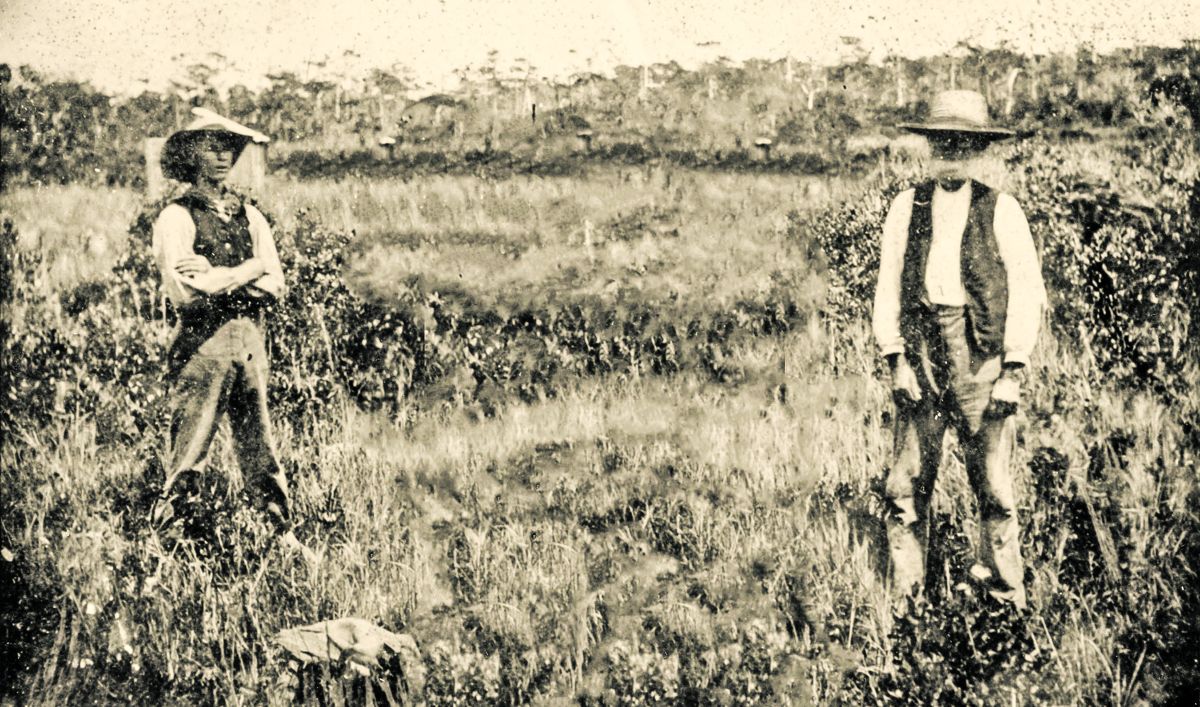
The campaign devolved into a routine of pickets trading potshots, and Union gunboats regularly firing their cannon against the Sugar Loaf lines. The harassment continued for weeks. Confederate soldiers stationed at Sugar Loaf invented a unique, if dangerous game to endure the monotony of sand and salt air, and boredom. During the U.S. Navy’s daily shelling, the Southerners would recklessly expose themselves to exploding projectiles in order to claim the brass water cap fuses which they fashioned into rings and ornaments. “As soon as the missile burst,” exclaimed one player, “you would see men running in every direction toward the place for the purpose of finding the broken parts.” As the Union tempest gathered, civilians and soldiers alike lost faith in General Bragg’s leadership. “We have no confidence in Bragg whatsoever,” stated Lt. Zaccheus Ellis, 1st Battalion North Carolina Heavy Artillery. “I hope we can hold Wilmington, but must say that if we had some other general in command, confidence would be greater.” As if displaying indifference to Wilmington’s fate, General Bragg left by rail on Feb. 10, 1865, and returned to Richmond to reorganize his military staff. Upon his departure, General Hoke assumed command of local Confederate forces. Hoke maintained his field headquarters at Sugar Loaf, which was defended by 4,500 soldiers in three brigades and Capt. Ellis’s Staunton Hill Artillery and the Wilmington Horse Artillery positioned on the summit of Sugar Loaf Hill. His fourth brigade, South Carolinians under the command of Brig. Gen. Johnson Hagood, was sent to reinforce the North Carolina troops that garrisoned Fort Anderson. They would soon have to defend against the onslaught on Union forces. Battered and bloodied after his hard fought victory at Fort Fisher, General Terry waited for reinforcements, commanded by Maj. Gen. John M. Schofield, to arrive in early February before moving against Wilmington. General Grant considered the capture of the city so important that he traveled to the Cape Fear to offer his advice to Admiral Porter and Generals Schofield and Terry as they planned the attack. Having tested the Confederate defenses at both Sugar Loaf and Fort Anderson for almost a month now, Porter and Terry cautioned Schofield, who Grant placed in overall command of Union forces, the positions would be tough to capture. Schofield organized a two pronged attack. While Admiral Porter’s flotilla of gunboats, that had pushed its way into the Cape Fear estuary after the fall of Fort Fisher, shelled both Fort Anderson and Sugar Loaf from the river, General Terry’s Provisional Corps, including two brigades of U.S. Colored Troops, would attack the Sugar Loaf lines. Reinforcements from General Schofield’s 23rd Army Corps would be held in reserve. They launched an all-out ground assault on Feb. 11, 1865. General Paine’s U.S. Colored Troops bore the brunt of the Union fighting in the Battle of Sugar Loaf. “For a little while it was a lively and interesting fight,” stated Maj. John McMurray, 6th U.S. Colored Troops. Despite their prowess and courage in the headlong attack against the strongly entrenched Confederate forces, the African American soldiers, and their white comrades of Bvt. Maj. Gen. Adelbert Ames’s Division, failed to overrun the earthworks. They withdrew to establish their own line of trenches about 900 yards to the south, close enough to keep the Confederates in check. Having failed to breach the Sugar Loaf lines, General Schofield attempted to outflank them by sending an expeditionary force up the sea beach (modern Masonboro Island) under the cover of darkness on February 12 and again on the 14th, but stormy weather both nights doomed the movements. Consequently, Schofield abandoned hope of capturing Sugar
Loaf and transferred operations to the west side of the Cape Fear River. As a flotilla of Union gunboats bombarded Fort Anderson, U.S. Army troops outflanked it, forcing the Confederate defenders to evacuate in the pre-dawn hours of Feb. 19, 1865. Now endangered by Union infantry in his front and U.S. Navy gunboats ascending the river above him, General Hoke abandoned the Sugar Loaf lines later that morning, and retreated toward Wilmington. General Terry’s blue-clad soldiers temporarily occupied the Sugar Loaf lines before beginning their chase of the rapidly retreating Confederates. General Bragg returned to Wilmington on the afternoon of Feb. 21, 1865, only to order its immediate evacuation. Federal forces occupied the city early the following morning. As he had predicted if Wilmington fell, Robert E. Lee was forced to evacuate his lines at Petersburg. General Grant pursued the Army of Northern Virginia to Appomattox Courthouse where Lee surrendered on April 9, 1865, only forty-six days after Union forces captured Wilmington. North Carolina infantry of Brig. Gen. Thomas L. Clingman’s Brigade, temporarily commanded by Col. Hector McKethan of the 51st Regiment North Carolina Troops, and Capt. Andrew B. Paris’s Staunton Hill Artillery manned the section of the Sugar
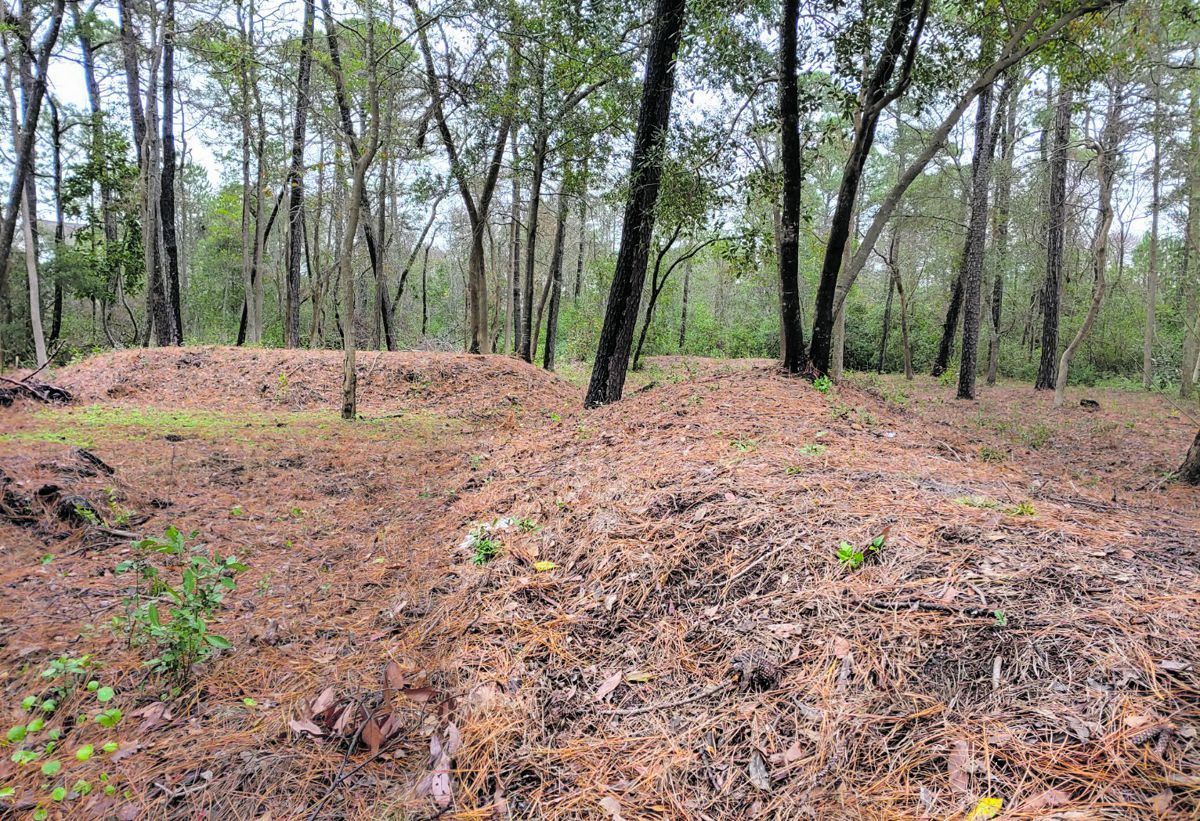
Loaf lines in what is now the Joseph Ryder Lewis Jr. Civil War Park. Gun emplacements used by Paris’s Battery are still extant. The Joseph Ryder Lewis Jr. Civil War Park is open daily for self guided tours through the historic grounds and around the well preserved Confederate earthworks. For more information, contact the Federal Point Historic Preservation Society, 1121 N Lake Park Blvd., Carolina Beach, NC 28428, 910-458-0502, or visit its website: http://federal-point-history.org. Chris E. Fonvielle Jr. is a native Wilmingtonian with a lifelong interest in American Civil War, North Carolina, and Cape Fear history. He attended public schools, including New Hanover High School, class of 1971, where he was the first soccer-style placekicker in North Carolina football history. After receiving his B.A. in anthropology at the University of North Carolina Wilmington, Chris served as the last curator of the Blockade Runners of the Confederacy Museum. He subsequently received his M.A. in American history at East Carolina University, and his Ph.D. from the University of South Carolina. That makes Chris a Wildcat, a Seahawk, a Pirate, and a Gamecock. After a brief teaching stint at East Carolina University, Dr. Fonvielle returned to his undergraduate alma mater at UNCW in 1996, where he taught courses on the Civil War, Wilmington and the Lower Cape Fear, and Antebellum America. His in-depth research focuses on coastal operations and defenses, and blockade running in southeastern North Carolina during the Civil War. He has published books and articles including The Wilmington Campaign: Last Rays of Departing Hope; Wilmington and the Lower Cape Fear: An Illustrated History; and Fort Fisher 1865: The Photographs of T.H. O’Sullivan. In 2014, then-Governor Pat McCrory appointed Dr. Fonvielle to the North Carolina Historical Commission. Upon his retirement from UNC Wilmington in 2018, Chris was presented with the Order of the Long Leaf Pine for distinguished service to the State of North Carolina, signed by incumbent Governor Roy Cooper. He is also a regular tour guide for Wilmington Water Tours, and a featured guest on “Cape Fear Unearthed” podcasts. His website is www.chrisfonvielle.com. The brush has been removed from the Confederate earthworks exposing the lines. Joseph Ryder The Battle of Sugar Loaf, Feb. 11, 1865. Lewis Jr. Civil War Park. Photo by John Gregory.