
Emerging Civil War
Emerging Civil War — April 2021
Originally published April 2021 · pp. 30–32
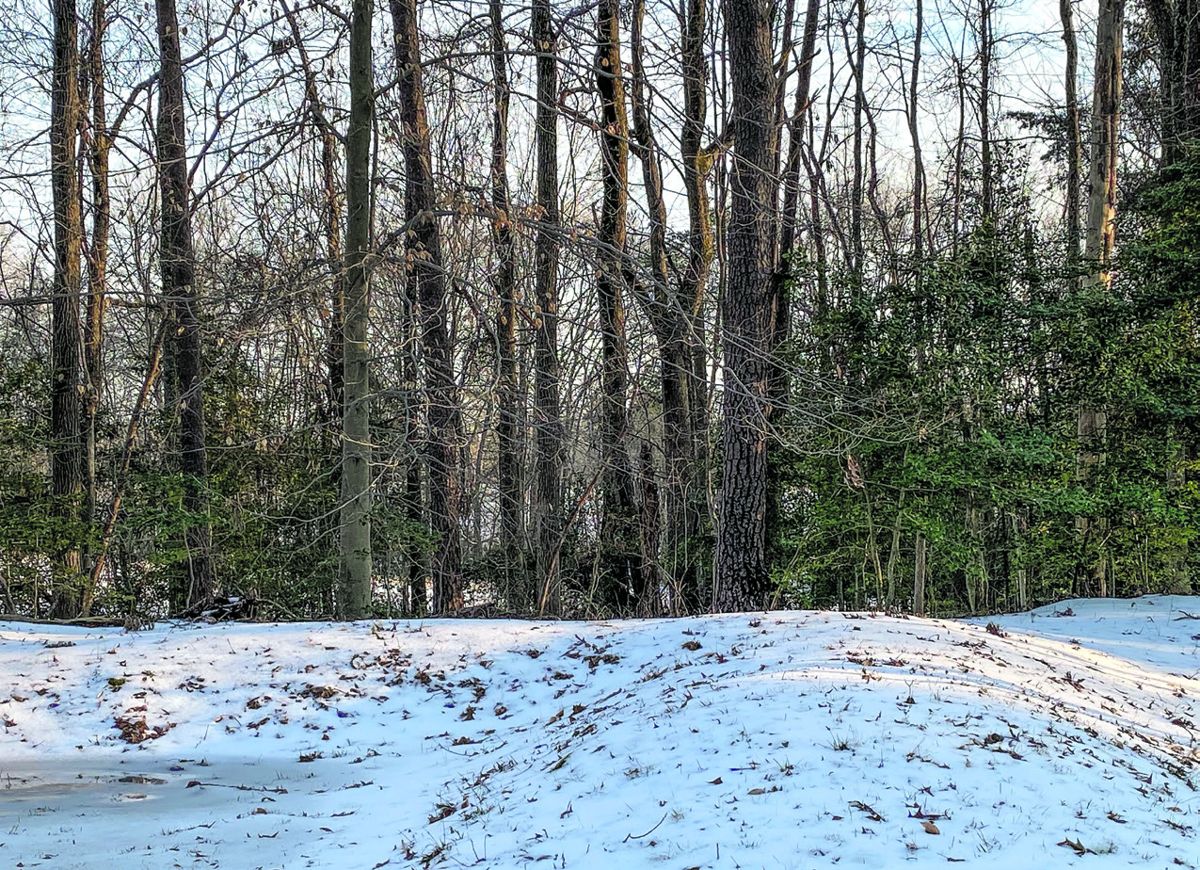
For only lasting 28 days, February sure seems like the longest month. The days are getting longer, it’s true, but the accumulated darkness of long winter nights still seems to hover. It crowds the dawn and rushes the sunset. As a result, the days are longer, but they don’t yet seem lighter. In central Virginia, winter never seems to come until February. Certainly colder temperatures start tapping at the thermometer in November, and we might even get snow flurries now and then during the stretch of cozy holidays that run from late October through New Year’s. But we always get our most protracted cold in February, as if in defiance of anything that Yankee groundhog from Pennsylvania might have to say about more winter or not. The grip of cold is strongest in February. Earthworks, which look like long piles of leaves even at their best, now look like long piles of snow. Leaf litter and forest debris might poke through if the snow isn’t thick enough. The battlefields don’t quite look frozen; instead, the menacing threat of mud and water lurks just below the surface, ready to smear a visitor into a cold mess. The fields don’t invite exploration and contemplation. I realize this is all perception. February is a state of mind as much as anything. In Alaska, they call it “The ‘F’-Month,” explains my ECW colleague Terry Rensel, an Alaskan ex-patriot now living in Virginia. “It’s the month cabin fever begins to set in. Everyone begins to lose their minds.” This February, everywhere, has not just been hard on a lot of people; it’s been especially hostile. Forces of Nature have paid little attention to man’s hubris and have smacked around millions of people almost willfully, except Nature doesn’t care one way or the other. It’s a reminder for us to approach the world with a little more humility. Hopefully it’s also a reminder to approach each other, especially those millions impacted by the weather, with more compassion. The winds of March will soon begin to blow in spring. The battlefields will once more stand as sublime landscapes, welcoming visitation. We can all help each other get through February together. —Chris Mackowski, Ph.D. Editor-in-Chief
Seventh Annual Emerging Civil War Symposium at Stevenson Ridge We’re less than six months away from our 2021 Symposium! While ticket sales closed on
January 31, we will continue to monitor both state and federal guidelines, and as conditions improve we may be able to open a limited number of additional tickets closer to the date of the symposium. All registered attendees will be contacted in the near future as our plans continue to develop. We’d like to thank everyone again for all of your support and understanding over the past year as we continue to navigate the ongoing pandemic. We look forward to welcoming everyone back to Stevenson Ridge!
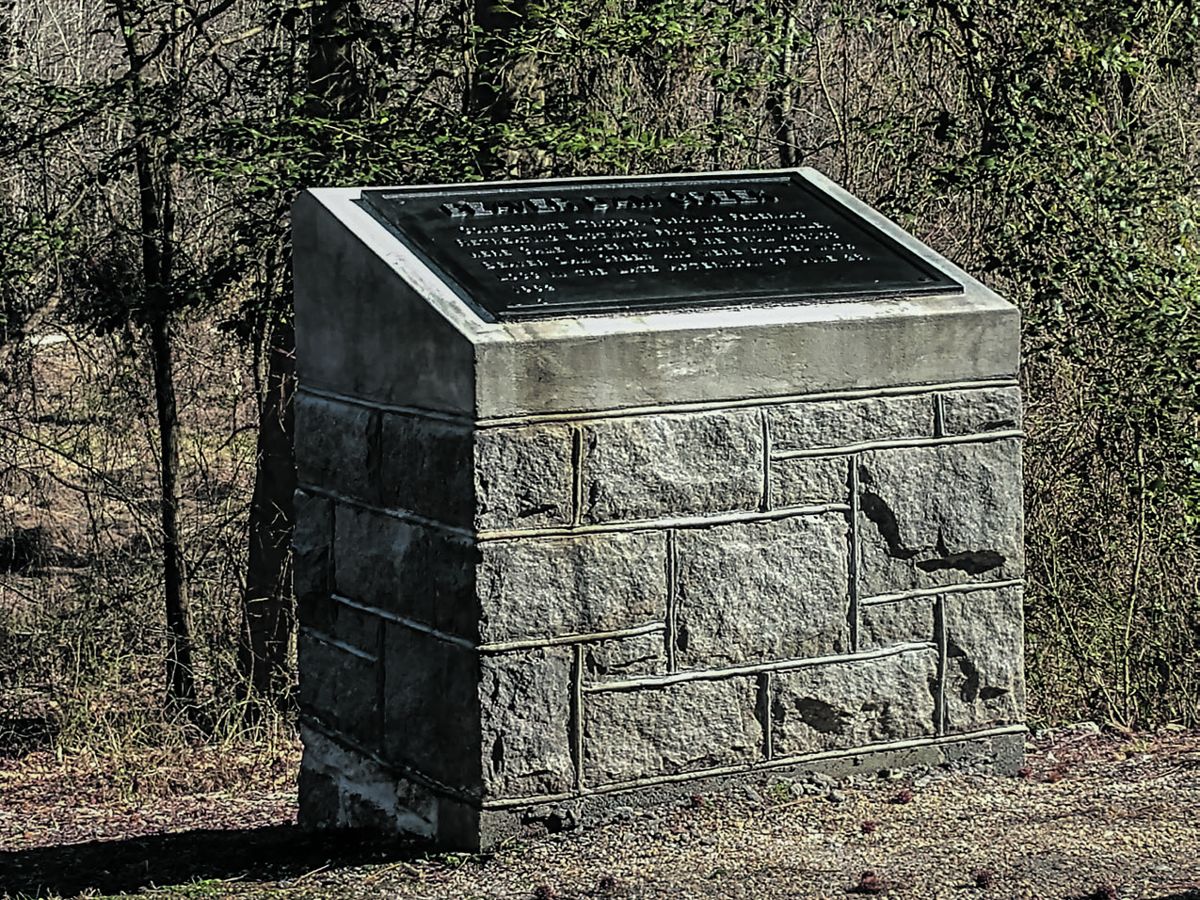
ECW News & Notes From Edward Alexander: “Two anticipated books I did the maps for have been published. Brian Matthew Jordan’s A Thousand May Fall: Life, Death and Survival in the Union Army (New York, NY: Liveright). This regimental history of the 107th Ohio Infantry contains theater maps, troop movement maps for Chancellorsville and Gettysburg, and a campaign map for Potter’s 1865 South Carolina Raid. “Eric Wittenberg’s Six Days of Awful Fighting: Cavalry Operations on the Road to Cold Harbor (Burlington, NC: Fox Run Publishing) contains daily troop movement maps covering the movement from the North Anna to Cold Harbor and detailed battle maps for Hanovertown, Haw’s Shop, Matadequin Creek, Hanover Court House, and Ashland.” Sarah Kay Bierle has been rearranging her bookshelves during winter storms to make better backgrounds for Zoom presentations and history interviews! Bert Dunkerly has embarked on a personal campaign to visit every one of the 59 Freeman Markers in and around Richmond. Placed in the 1920s by a group led by historian Douglas S. Freeman, they mark important battlefield landmarks, fortifications, etc. Phil
Brian Matthew Jordan’s A Thousand May Fall.
10 Questions … with Jon Tracey
Dwight Hughes had the ship model built to commemorate his new book about the USS Monitor. Greenwalt did an article on them a few years ago. “It’s been fun,” he says. “Only 3 more to go!” David Dixon’s book Radical Warrior: August Willich’s Journey from German Revolutionary to Union General received a review in the March 2021 issue of Civil War News. Reviewer Stewart Bennett said, “Dixon gives a fair and balanced appraisal of a failed European revolutionary turned successful Union general regardless of his [Willich’s] communist leanings.” Jon-Erik Gilot has been named Curator and Social Historian at the Captain Thomas Espy Post in Carnegie, Pennsylvania. Meg Groeling is furiously pounding the keys on pieces about “Old Abe,” the War Eagle and Abraham, the enslaved man blown to freedom” in the Vicksburg mine (one good Abe deserves another—is Lincoln next?). She is carefully choosing poems for the blog’s “Weekly Whitman” and is preparing a blog post or two. However, a shipment of roses from Jackson & Perking came, so she may be seriously interrupted by the planting of roses. “Why aren’t there more CivilWar-themed roses?” she asks. “‘Mr. Lincoln’ is one of the great roses, but surely there should be more. A ‘Grant’ rose, or a ‘Harriet Tubman’ rose—surely someone has this in their sights!” Dwight Hughes gave a virtual presentation to 72 members of the Civil War Round Table of the District of Columbia, the largest audience on record, on his new ECW Series volume Unlike Anything That Ever Floated: The Monitor and Virginia and the Battle Hampton Roads, March 8-9, 1862, which will hit the shelves in March. This month, he speak virtually to the Falls Church Military History Forum, Falls Church, Va. As a reward for completing the book, Dwight commissioned a 28-inch, scratchbuilt, plank on frame model of Monitor for his study. It’s covered with individual “iron” (actually tin) plates. The turret rotates and shows a cutaway view of the interior, guns, and accoutrements. On February 4, Chris Mackowski did a talk about his book Grant’s Last Battle: The Story Behind the Personal Memoirs of Ulysses S. Grant for St. Bonaventure University’s Alumni Office. Bonnies from around the country Zoomed in for the talk. Go, Bonas! Derek Maxfield spoke on Civil War Talk, an online forum, on Feb. 10 about his book Hellmira: The Union’s Most Infamous Civil War Prison Camp – Elmira, NY. Over 75 were in attendance from all over the country. Ryan Quint has long been at work on a book about the early war battle of Dranesville, and he’s excited to report his passion project is under contract. “I’ll be working with Ted Savas; no ETA on when it’ll be released, but the ball is moving!” he says. The working title is Dranesville: A Town, a Battle, and J.E.B. Stuart’s First Defeat, Dec. 20, 1861, “which admittedly isn’t very flashy,” he chuckles. “A new title is on the to-do list.” Jon Tracey is presenting “’A Fragment of Brave Men:’ Andrew Gatewood’s Parole Pass and Lost Cause Memory” at Temple University’s (virtual) James A. Barnes Graduate Student Conference, April 10. On March 31, Kris White talked to the Civil War Roundtable Congress about “Lee’s Greatest Victory-Lee’s Greatest Defeat: The Battle of Chancellorsville.”
ECW Bookshelf A Thousand May Fall attempts an intimate, absorbing chronicle of the Civil War from the ordinary soldier’s perspective.
From the Editor
At the heart of the book is the 107th Ohio Volunteer Infantry. The unit saw service in two defining battles, Chancellorsville and Gettysburg, each time in the thick of the killing. But the men of the 107th were not lauded as heroes for their bravery and their suffering. Most of them were ethnic Germans, set apart by language and identity, and their loyalties were regularly questioned by a nativist Northern press. In the course of its service, the 107th Ohio was decimated five times over. Yet even as they endured the horrible extremes of war, the Ohioans contemplated the deeper meanings of the conflict at every turn, from personal questions of citizenship and belonging to the overriding matter of slavery and emancipation. Based on prodigious new research, including diaries, letters, and unpublished memoirs, A Thousand May Fall restores the common man and immigrant striver to the center of the Civil War narrative. “Also worth noting,” Brian says: “ten of Ed Alexander’s brilliant maps illustrate the book.”
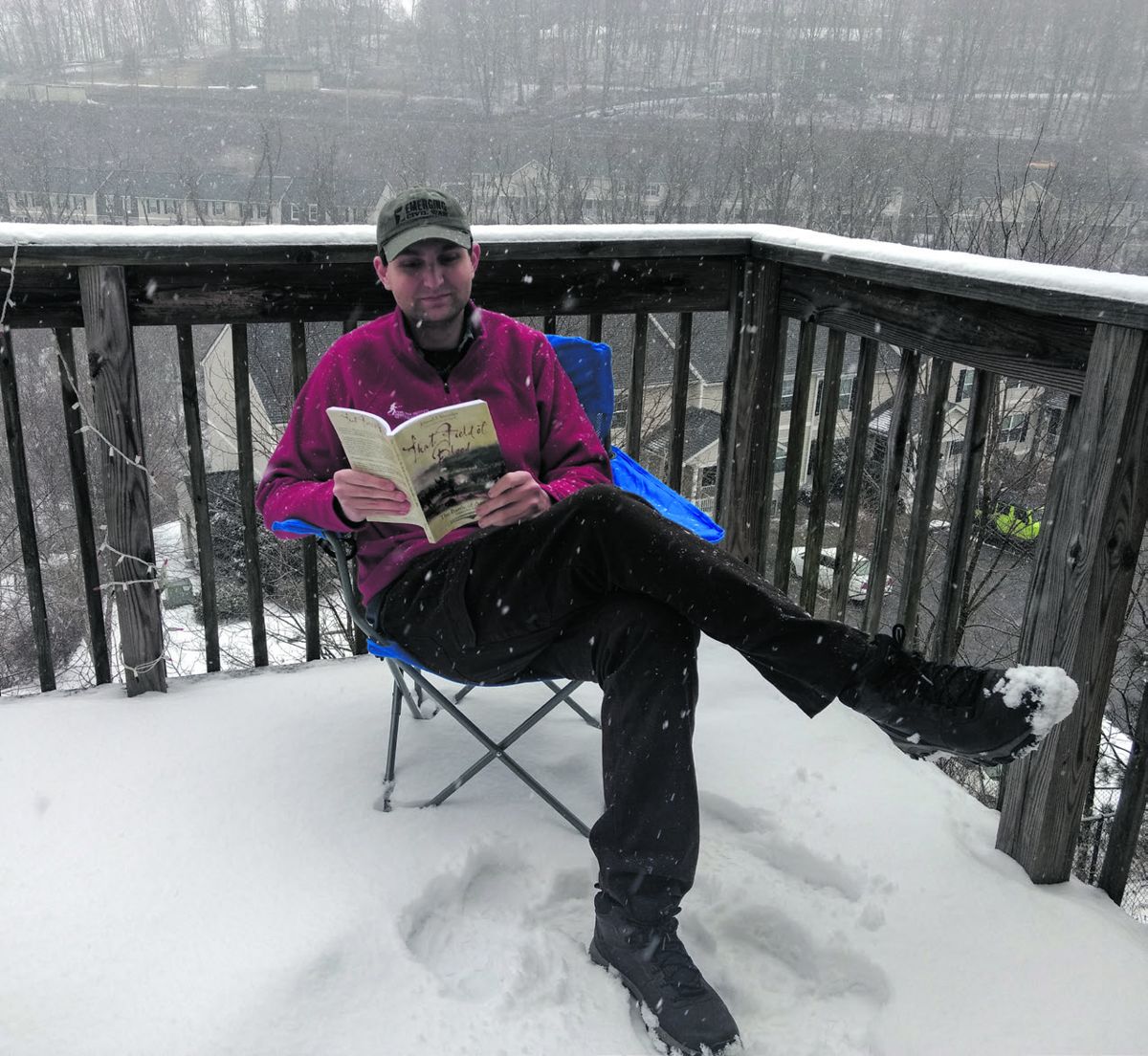
Jon Tracey is the newest regular contributor to ECW, and we’re pleased to have him aboard. You can view his full bio here: https://emergingc i v i l w a r. c o m / 2 0 2 0 / 1 2 / 1 9 / ecw-welcomes-jon-tracey/ We always love to hear a person’s Civil War “origin story.” How did you get hooked on the Civil War? I’ll place that blame, or credit!, on my parents. Though they both pushed hard into STEM fields in their careers, their own interest in history was manifested through book collections and family trips to battlefields and historic sites, which really sparked my interest. That passion turned academic when I started my studies at Gettysburg College, where I was able to dive more deeply into primary sources and in-depth accounts, which added a lot of nuance to the secondary sources I was used to reading. From there I started working in historic site interpretation, and it all took off from there! Many of your blog posts so far have told stories from Gettysburg. Why does that battle in particular fascinate you? I think the interesting thing about Gettysburg is that despite the conception that it has been done to death, it hasn’t. As I hope my blogs show, there’s a lot of fascinating stories that get buried by the traditional narratives. Changing landscapes, WWII prisoners, individual accounts of combat elsewhere, under-credited actions like those of Cutler’s Brigade, and the medical operations at Camp Letterman are too often overlooked in favor of more popular things like Little Round Top or Pickett’s Charge. I may be a little biased since I’ve spent so much time there, but there’re so many new stories yet to be told. You’ve worked at Gettysburg, but you’ve worked elsewhere, too. Where have some of your other adventures taken you? I’ve bounced around a few other NPS sites, including Appomattox Court House NHP, Fredericksburg & Spotsylvania NMP, and Eisenhower NHS. It’s been great to have the opportunity to work at so many varied sites. Each of the four has been so different, and they all have very important stories to share with the public. From living history at a small village that saw the beginning of Reconstruction, to battlefields across three campaigns, to the presidential and retirement home of Dwight Eisenhower, I have never lacked for variety. I’m excited to see where I go next, and I’m eager for new opportunities! Do you have a particular favorite Civil War spot? What is it why? Sometimes I feel like my favorite spot changes monthly! At the moment, I’d have to say the Sunken Road at Antietam. It’s incredible to think about what that landscape has seen over time, and it is so wonderfully preserved now. My recent genealogy work revealed a direct ancestor in the 130th Penn., which not only attacked that position but was also assigned burial detail on that part of the field. Taking a look at photos, period engravings, and later art by veterans who witnessed it showed me a small portion of what he would have seen, and that added a lot of meaning to that landscape. What are you working on these days? Wrapping up my last semester of graduate school at West Virginia University takes up the majority of my time, but I’m also revising an article-length work on a type of amputation at Camp Letterman. I’m using period medical records, accounts from that major hospital in the aftermath of Gettysburg, and postwar medical journals to make the argument that operations there fit into the broader theme of the professionalization of American medicine and helped advance debates about how effective amputation actually was as a life saving measure. Spoilers: It was highly effective, as shown through period records as well as following up with amputee veterans later in life, and Camp Letterman was an excellent hospital. Lightning Round (short answers with a one-sentence explanation) Favorite primary source? Surgeon Henry Janes’ case ledger, packed full of treatment records from Camp Letterman. Favorite Civil War-related monument? The Soldiers’ National Monument in Gettysburg National Cemetery. Favorite unsung hero of the Civil War era? Perhaps a bit cliché, but I still think the average soldier deserves more credit. What’s a bucket-list Civil War site you’ve not yet visited? Stretching the definition of Civil War site a little, but the U.S. Grant Cottage. Favorite ECWS book? That Field of Blood: The Battle of Antietam, September 17, 1862 by Dan Vermilya
ECW Multimedia Have you been following the ECW YouTube page? You can check it out by going to YouTube and search “Emerging Civil War.” In January, we: • revisited Richmond in the Civil War with Bert Dunkerly and Doug Crenshaw and their new book about the topic, Embattled Capital • mapped the Western Theater with cartographer Steve Stanley and historian Kris White, authors of a new map book from the American Battlefield Trust • began exploring Petersburg National Battlefield with a series of “on location” videos We also made a number of our interviews available as free podcasts on the ECW Patreon page. Be sure to subscribe to the Emerging Civil War YouTube channel to get all the latest. While you’re at it, don’t forget to follow ECW on Facebook and Instagram (@Emergingcwblog). Please share and like our pages!
Behind the Scenes: ECW’s Partnership with Reconstruction Blog By Patrick Young More than a decade ago I began writing The Immigrants’ Civil War series for a Long Island immigrant news site. A lifelong fascination with the Civil War and my professional life as an immigration law professor at Hofstra University School of Law made writing the 250 installments a natural fit. As I pushed the stories of individual immigrants into the post-war world, I began to study the Reconstruction Era for the first time. I saw that the Civil War could not be fully appreciated without understanding the world the Civil War created. It would be like studying the United States conflict in Iraq and stopping with the toppling of the statue of Saddam Hussein! I decided to create a blog on
Patrick Young has made himself into one of the most widely read authorities on Reconstruction on the web. Reconstruction. The era was so neglected that in 2019 I was able to purchase the domain thereconstructionera.com for the price of my tea kettle. With its white nationalist uprisings, widespread terrorism, and the first-ever impeachment, Reconstruction looked more like the world I live in than any other period in the 19th Century. Over the last two years, readers have found the blog and it developed a loyal following. When Chris Mackowski approached me to partner and write a monthly column for Emerging Civil War, I saw an opportunity to put my research in front of new readers. Readers interested in the Civil War often know everything about the military campaigns, the major political figures, and the events leading up to the opening of the conflict. Paradoxically, their research often ends with the last Confederate battle flag being surrendered. I hope the new Echoes of Reconstruction column can help fill that void. Echoes of Reconstruction fleshes out the rest of the story. Reconstruction has brave stories of hope, and tales so horrid that they were purposely hidden for one-hundred and fifty years. Both need to be told.
By Phill Greenwalt February saw the birth of the George Washington in 1731 and the alliance of France with the colonies in 1778. On February 22, Emerging Revolutionary War historians commemorated the birthday of the Continental army leader and first president at the George Washington birthplace with a special “Rev War Revelry.” Speaking of the “Rev War Revelry” series, February 21 saw an interview with historian
John Maass, and March 7 will see Kristopher White, Vanessa Smiley, and Phillip S. Greenwalt on Guilford Court House. Just click onto Emerging Revolutionary War’s Facebook page at 7 p.m. EST to watch/listen and ask questions. Also, mark your calendar for a winter campaign of ten days crucial to the eventual American victory in the Revolutionary War. On November 12-14, 2021, ERW historians will lead a bus tour of the Trenton and Princeton Campaign. Check out our blog, www.emergingrevolutionarywar.org, for details and how to reserve your spot. While on the blog, make note to attend the Emerging Revolutionary War Symposium held in conjunction with Historic Alexandria. Blog posts of the speaker line-up are going live every other week. There is also rumor that the next volume of the Emerging Revolutionary War Series will be available prior to the conference in May. To find out if the rumor is correct, you will have to attend!”