Core Mausoleum Stands in Self-Tribute to Confederate Phoenix
By Bob Ruegsegger · Originally published April 2021 · pp. 36–37
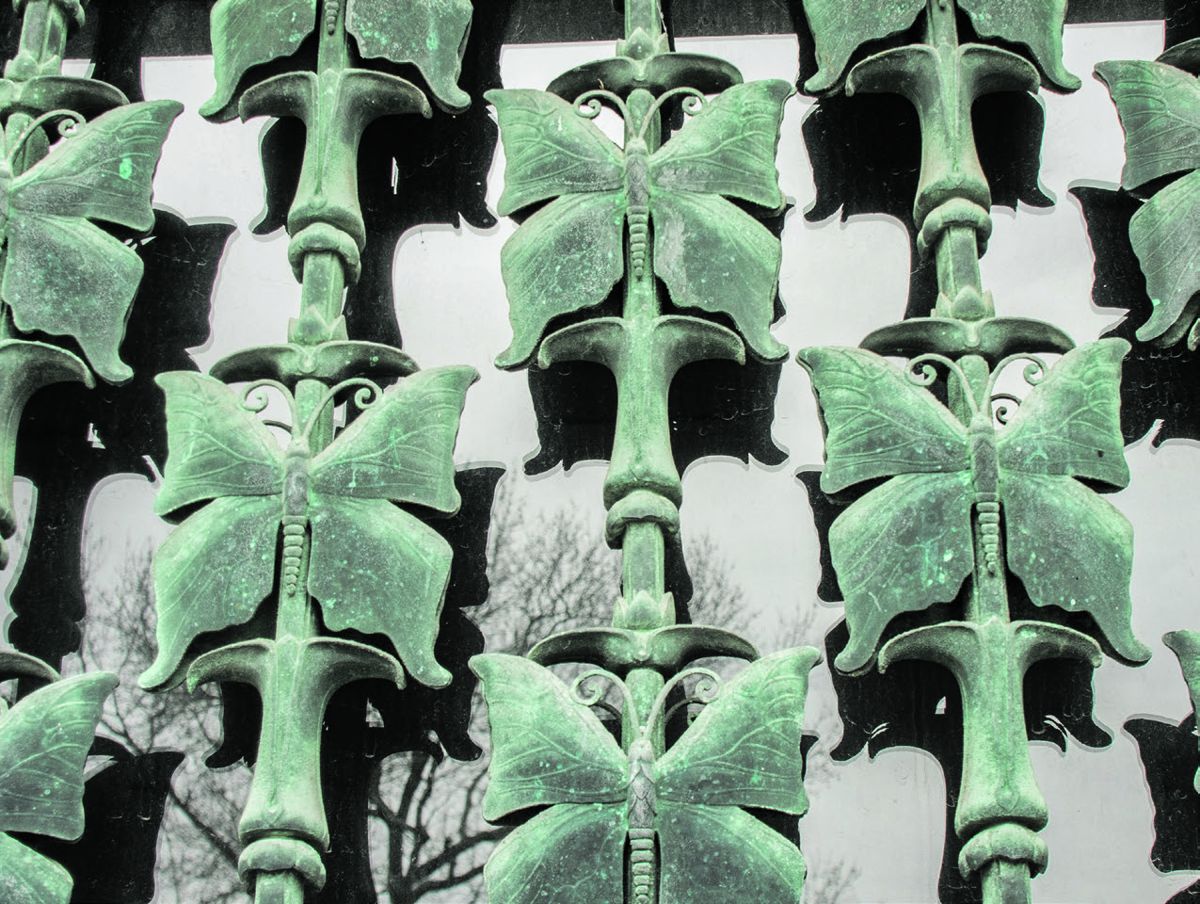
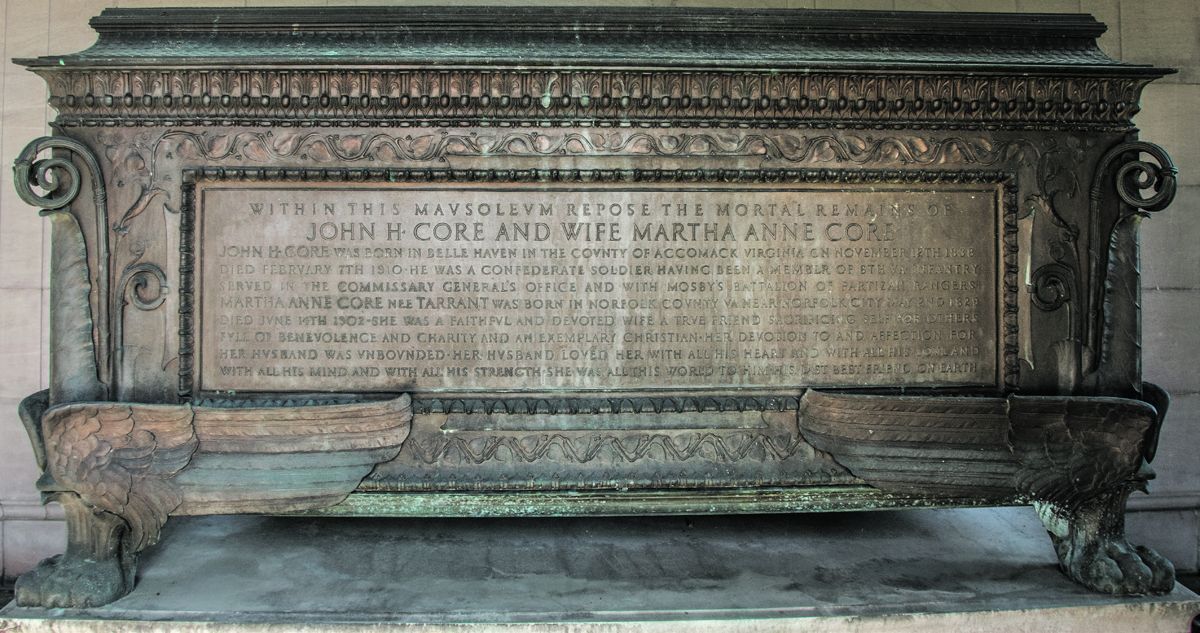
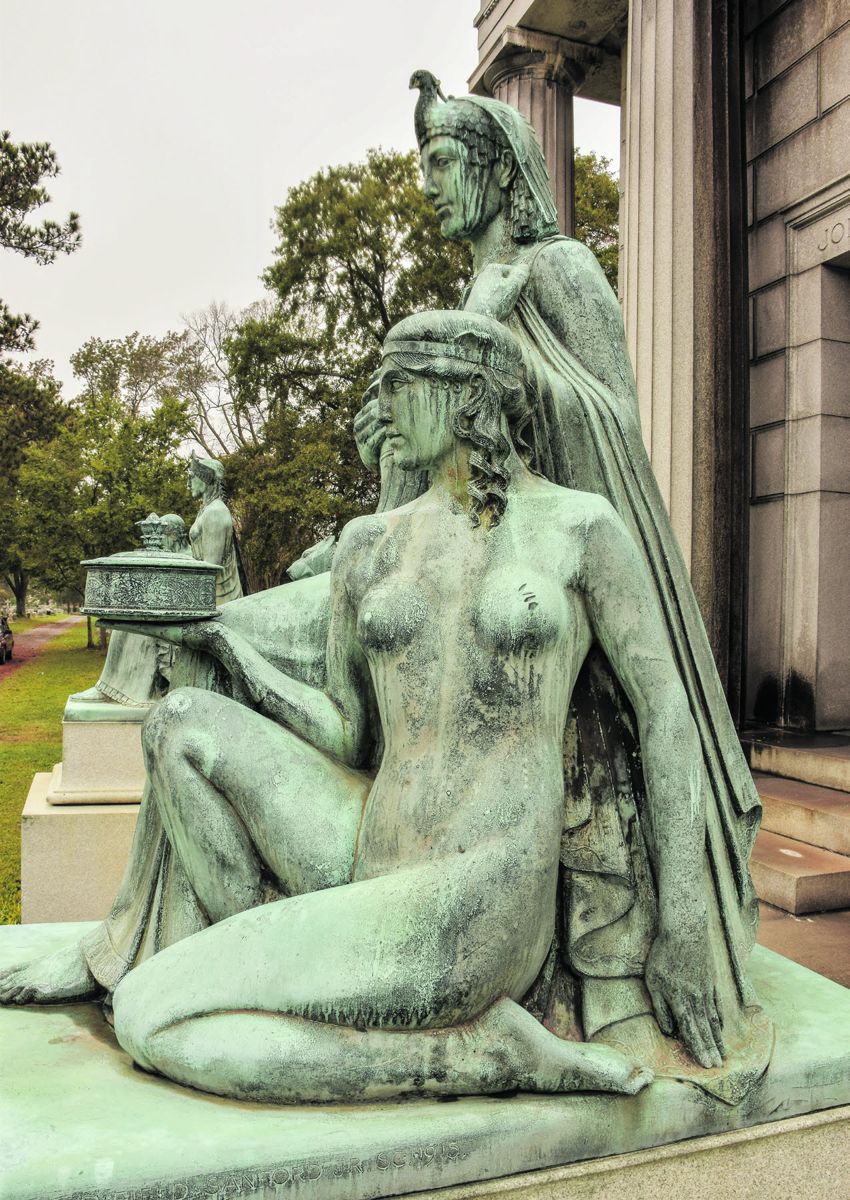
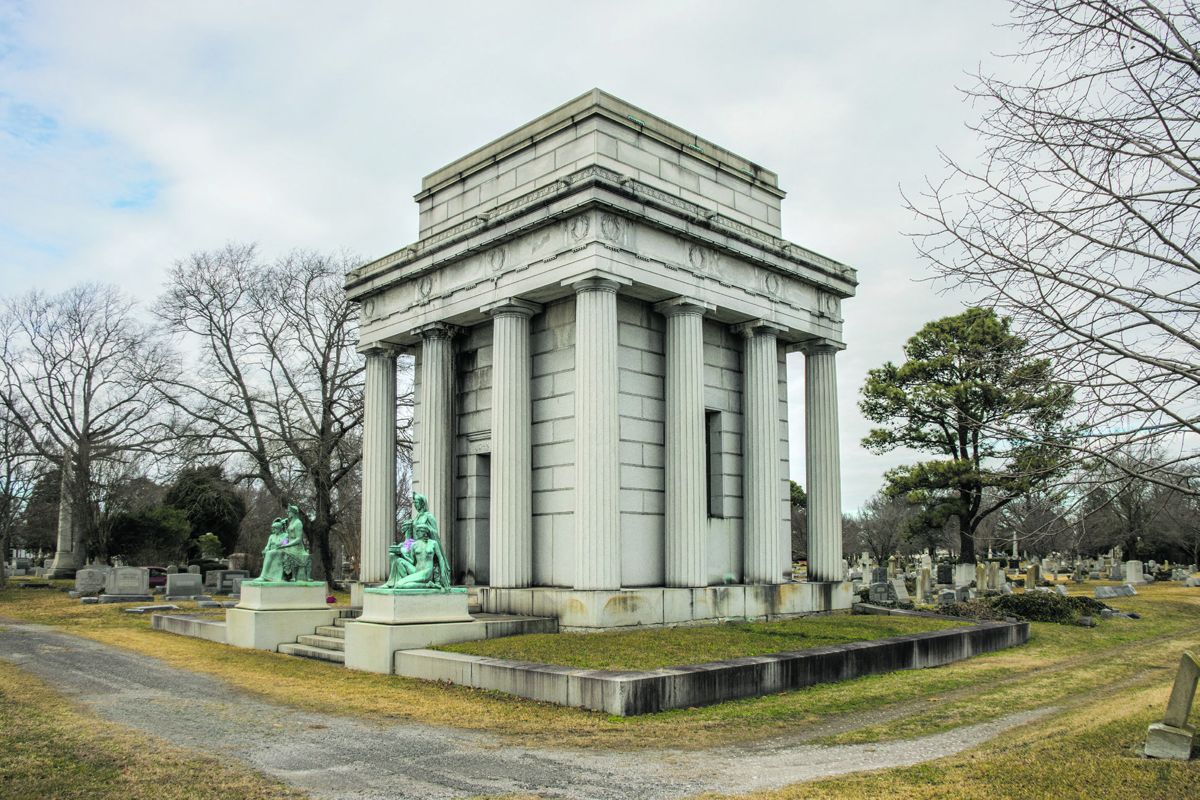
Core Mausoleum Stands in Self-Tribute to Confederate Phoenix by Bob Ruegsegger At the end of the Civil War, Corporal John Core’s dream for Southern independence vaporized with the surrender of the Confederate armies. Virginia was in shambles. The South was devastated. The future for former Confederate soldiers looked dismal. Embraced by the ashes of a vanquished South, Core could hardly have imagined that his best days were ahead of him. John Core served in the Confederate Army in the Commissary General’s office and then the 6th Virginia Infantry before joining Mosby’s Partisan Rangers, the 43rd Battalion of Virginia Cavalry. Core participated in a fight with Union cavalry at Mt. Carmel Church on February 19, 1865. Major A.E. Richards gathered about 40 Rangers and attacked a contingent of the 21st New York Cavalry led by Major Thomas Gibson. Colt revolvers gave the Confederate cavalrymen a distinct advantage in the close range fighting. After a few minutes, two-thirds of Major Gibson’s 90 troopers had been killed, captured, or wounded, including Gibson. Mosby, in later years, characterized the Mt. Carmel Church battle as “the most brilliant thing our men ever did.” Richards claimed in an official report that he had wounded or killed 25 Federals, captured 64, and seized 90 horses. After Mosby disbanded, rather than surrendering, his rangers, Core remained with Mosby. They intended to head south to join General Joseph Johnston. When word reached Mosby that Johnston had surrendered, Mosby and Core abandoned their plan. Compared to Core’s final resting place, Colonel Mosby’s modest tombstone in Warrenton, Va., looks like a pauper’s grave. Mosby criticized Core’s enormous allocation of funds for a mausoleum as inconsequential. “I think he would have done better,” observed Mosby, “if he had left the $100,000 for a hospital. That would have been a gift for which he would have been blessed by his fellow-men.” Core’s place of interment was ostentatious, and still is. The entrance to John Henderson Core’s mausoleum in historic Elmwood Cemetery faces south toward East Princess Anne Road in downtown Norfolk. The price tag in 1915 was $100,000. Core made his fortune as a wholesale broker and merchandise agent. He also bred and raised thoroughbred hogs. Also a real estate tycoon, Core owned large parcels of land totaling 475 acres in Norfolk and Princess Anne counties. In his will, John Core, who died in 1910, directed that the mausoleum be built for his remains and those of his wife. The Cores had no children. His estate at the time of his death amounted to well over $500,000. American architect Harold Van Buren Magonigle designed the tomb that contains the remains of John Core and Martha Ann, his devoted wife. Magonigle was known for his artwork, sculptures, graphic design, and painting. The Core Mausoleum reflects the Greek Revival style that was popular in Northern Europe and the United States during the late 18th and 19th centuries. Massive fluted Doric columns support a pediment at the entry to the mausoleum. The interior of the tomb has a domed ceiling inlaid with mosaic tiles. Huge bronze doors with plate glass panels and covered locks block access to the Core crypt. Windows on the east and west walls of the mausoleum provide light to the interior. Throughout the mausoleum, figures of scarabs, butterflies, and phoenixes suggest belief in immortality, resurrection, and eternal life. The bronze butterflies on the doors of the mausoleum are symbols of the afterlife. To the ancient Greeks, a butterfly was a symbol of a human soul released from a deceased body. For Christians and Native Americans, the butterfly represented rebirth. In ancient Egypt, the scarab was a symbol of immortality. The elegant bronze Romanesque sculptures at the front entrance were created by Edward Field Sanford Jr. They were cast at Roman Bronze Works in New York City in 1915. It was the leading art foundry in the country during the American Renaissance [1876–1917]. Inside the mausoleum Core and Martha Ann, his wife, rest peacefully nestled in their heavy bronze sarcophagus on a raised marble platform. Inscriptions on the sarcophagus gave testimony to their affection foreach other. Martha Ann’s “affection for her husband was unbounded.” According to an inscription, John Core loved his wife with all of his heart, soul, and mind, as well as “all of his strength.” Side by side within the confines of their bronze sarcophagus, the Cores’ remains rested in peace for 92 years until grave robbers broke
Scarab.
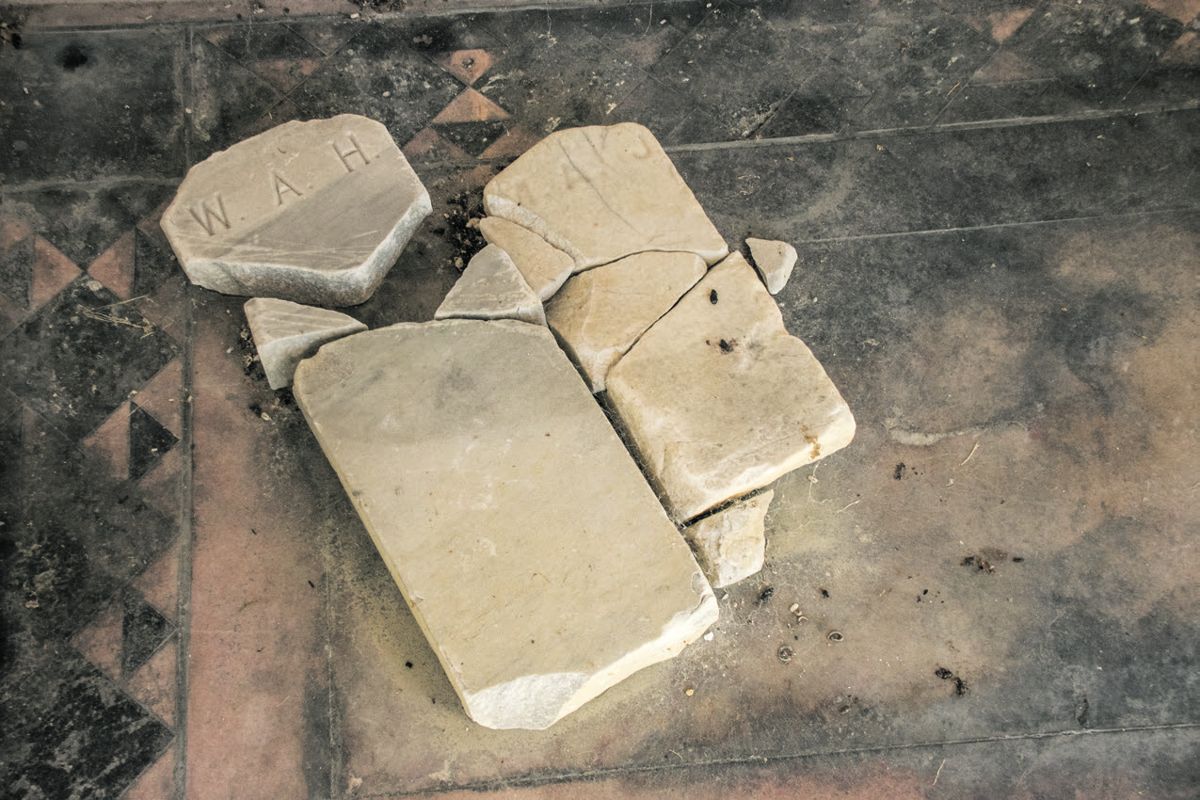
Broken foot stones inside the mausoleum. into the mausoleum through a window, tore open the sarcophagus, and scattered their remains inside the vault while looking for valuables in 2007. The bronze bars that protected the mausoleum windows were slightly pried apart and a foot stone from the cemetery was used to shatter one of the mausoleum windows and gain entry. A visitor on a self-guided tour peered into the mausoleum through the bronze-plate glass entrance door, saw a skeleton on the tomb floor and reported the vandalism to cemetery authorities. The grave robbers, who probably found nothing of value, caused $6,000 in damage to the interior of the elaborate granite mausoleum. While the Cores’ tomb was being restored, their remains were in the custody of H.D. Oliver Funeral Home in Norfolk. Tim Bonney, at the time vice president of Friends of Norfolk’s Historic Cemeteries, and his organization took the lead in fundraising efforts to restore the Core mausoleum and its contents to its appearance before the break-in and vandalism took place. “It took three years to restore. That was because of fundraising and then finding the right person who could do the work,” said Tim Bonney. “We probably spent about $8,000 in total. That was also with donation of the window by Walter T. Howard of Chesapeake Glass Company.” “When I got over there, the remains of Mrs. Core had been pulled out of the sarcophagus. “The vandal pounded on the left side of the sarcophagus until he broke the bronze plate loose and peeled it back like a sardine can,” he said. “The first body he came to was Mrs. Core.” Martha Anne Core had been buried in a wooden coffin sheathed in copper. When the break-in occurred, the wooden casket had completely deteriorated. “She still had a henna rinse on her hair, but her body had completely deteriorated. It was just a skeleton with some clothes on,” said Bonney. “When we finally opened up the sarcophagus to get Mr. Core out so we could make repairs, he was remarkably intact with a leathery-type skin.” No forensic analysis was done. A clear motive for the crime was never determined. Tim Bonney called H.D. Oliver Funeral Home, who had originally buried the Cores, and requested that they store the remains until the sarcophagus and broken window could be fixed.
“They kept them at the funeral home until we were ready for them to go back to the mausoleum,” said Bonney. “We had a little rededication ceremony in 2010.” When the restoration of the Core mausoleum was completed, John and Martha Anne Tarrant Core were returned to their sarcophagus, and a contingent of the Sons of Confederate veterans came to honor Corporal John Core at the rededication ceremony. “He was a Confederate veteran and we gave him full Confederate honors with the flags and the rifle salute as we would with any Confederate veteran when we’re marking a grave or having them re-interred,” said Frank Earnest, a member of the Norfolk County Grays. About Elmwood Cemetery: Visitor Hours: Sunrise to Sunset Office hours: Monday to Friday 9 a.m. to 4:30 p.m. Free admission and parking inside cemetery Address: 238 E. Princess Anne Road, Norfolk, VA 23510 For more information: www.norfolk.gov/cemeteries. Bob Ruegsegger assignments frequently take him to historic sites throughout Virginia, the MidAtlantic, and the Southeast. His favorite haunts include sites within Virginia’s Historic Triangle— Jamestown, Yorktown, and Williamsburg. Bob served briefly in the U.S. Navy. He is a retired educator and has been an active newspaper journalist for the last twenty years.