Brunswick CWRT Helps With Placing Interpretive Signs at Fort Caswell
By Mike Powell · Originally published April 2021 · pp. 26–27
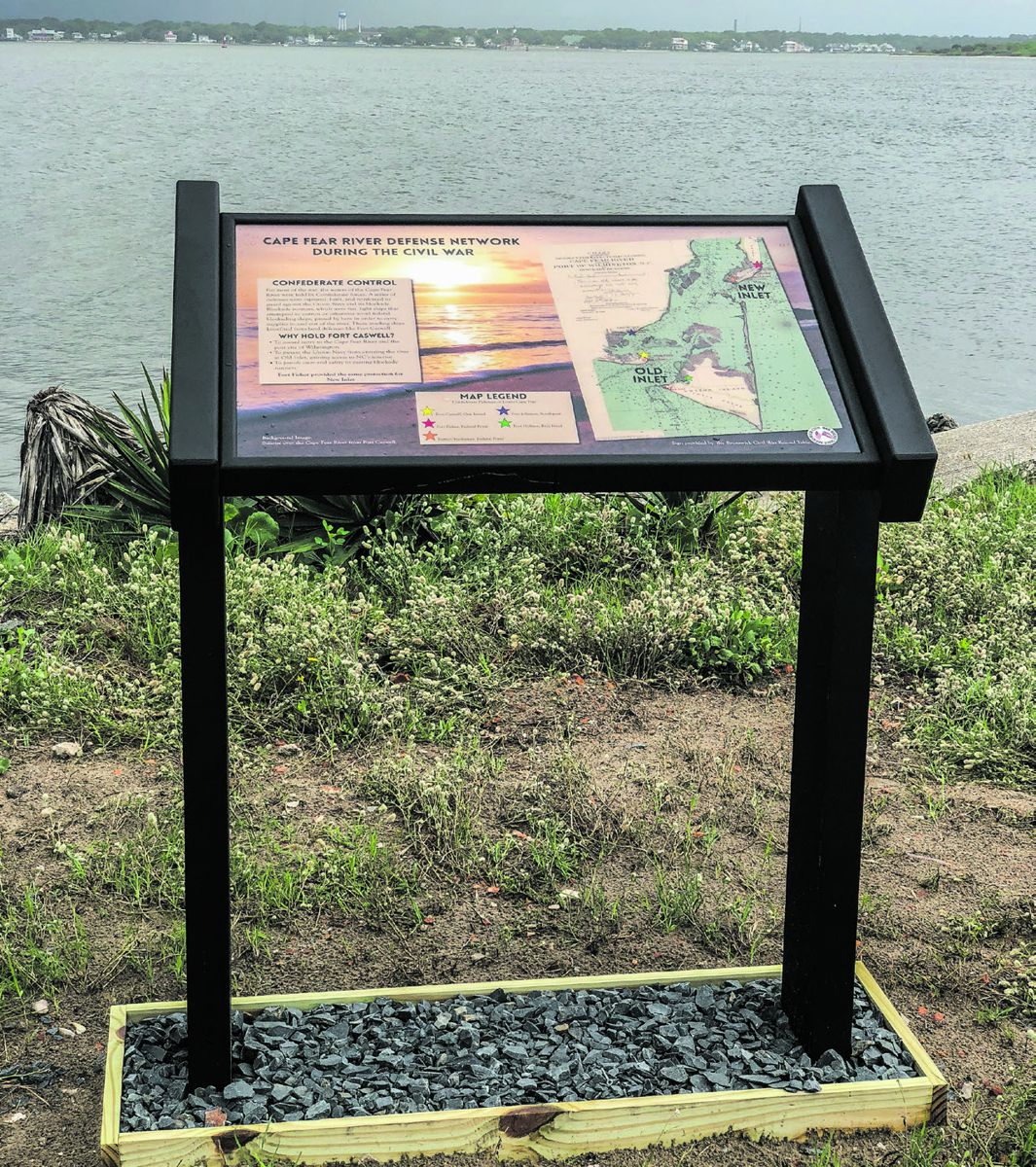
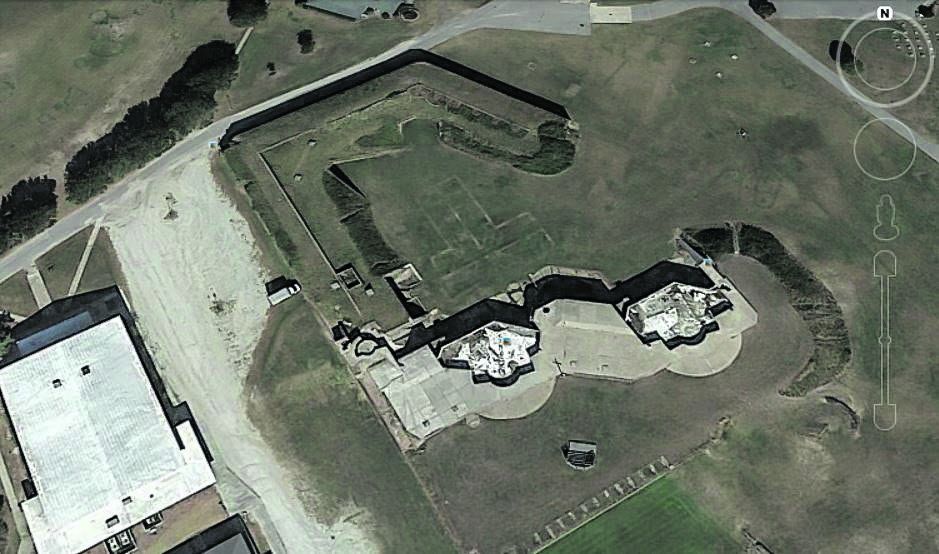
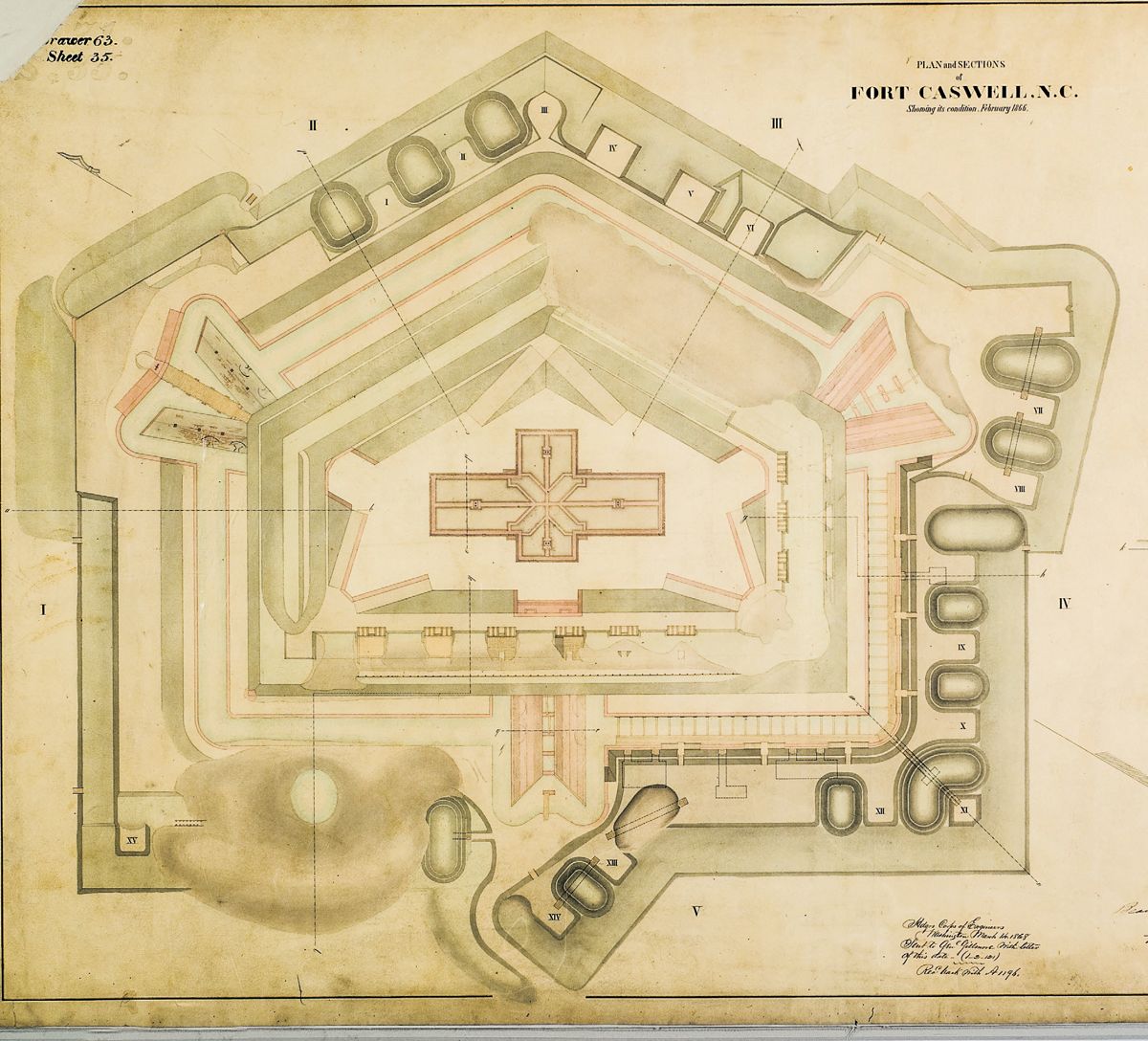
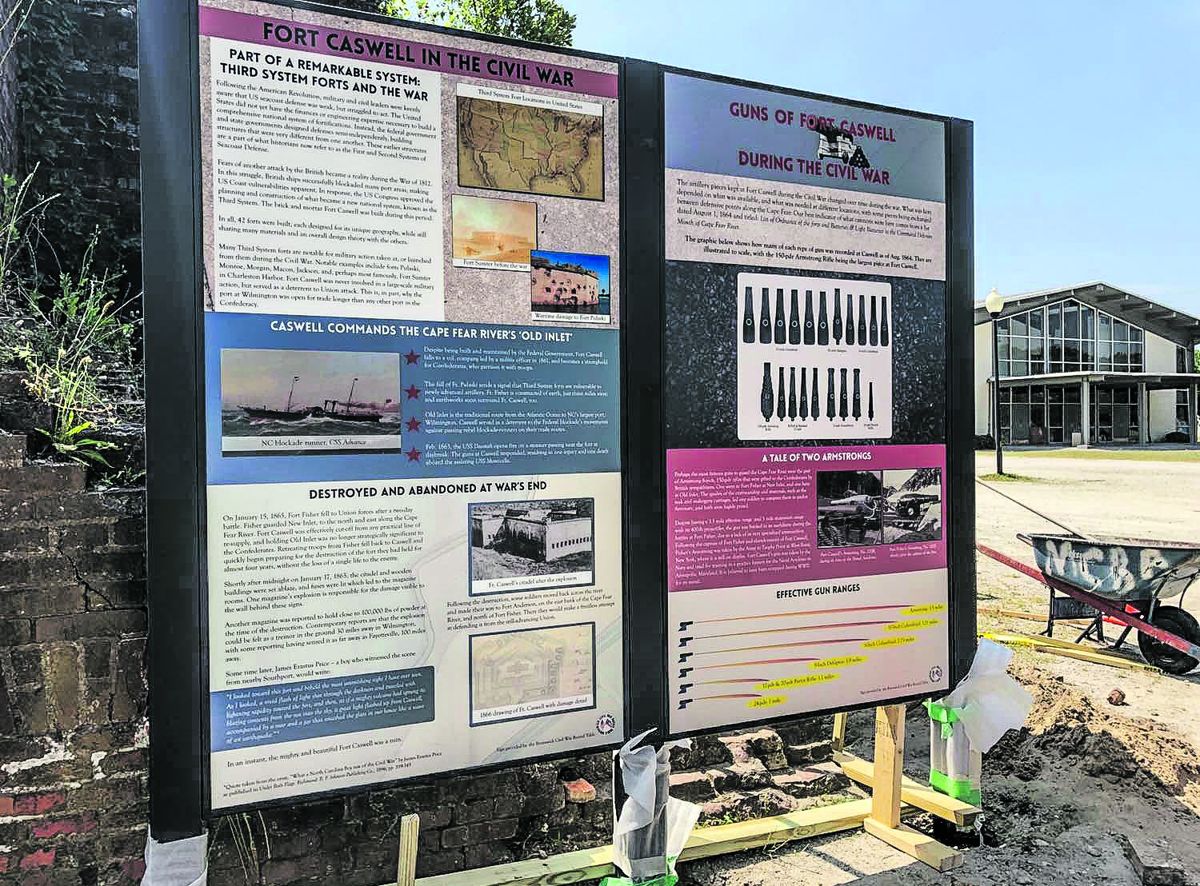
Helps With Placing Interpretive Signs at Fort Caswell by Mike Powell The Brunswick CWRT is the nation’s largest Civil War Round Table. Before the virus pandemic we had over 1,400 members and averaged about 450 per meeting. In our ten years existence we have donated over $50,000 to preservation all over N.C In 2014 the BCWRT moved into Hatch Auditorium on the grounds of the North Carolina Baptist Retreat in 2014. This Oak Island site is also home to Fort Caswell. The fort sits on the island’s eastern shore that is also the western side of the Cape Fear River’s Old Inlet. There are also late 19th century Endicott forts on the property in excellent condition. The town of Southport is just across the harbor. In 1825, the U.S. government authorized fortifying the mouth of the Cape Fear. The Oak Island fort’s construction went slowly due to funding, distance from supplies, and labor shortages. It was finally completed about 1838. Fort Caswell’s initial armament was supposed to be 90 cannon. Ten years later, plans called for a slight reduction to 80 cannon of different sizes. There is no documentary evidence these guns were ever mounted in the fort. When North Carolina authorities took over the fort in 1861, there were only two, 24-pounder During the Civil War, the fort was upgraded as Wilmington turned into a major, then the only, east coast port importing supplies for the Confederacy. Wilmington became so important that many other forts were built to protect the Cape Fear with the most famous being Fort Fisher. When Fort Fisher fell on January 15, 1865, Fort Caswell was evacuated. Some buildings were burned, the powder magazines were blown up, and guns spiked. The garrison went upriver to Fort Anderson. In 2018, BCWRT, working with the site’s administrators put up five interpretive plaques to tell some parts of the Fort Caswell story. Two additional plaques are planned. Until we installed the signage there was no interpretation on the site. Since we put the signs up, the NC Baptist Retreat’s administrators have allowed me to conduct tours of the forts, so it has been a good relationship. BCWRT is committed to providing support, including financial support, to like minded organizations that advance the study and understanding of the American Civil War. Visit brunswickcivilwarroundtable.com.
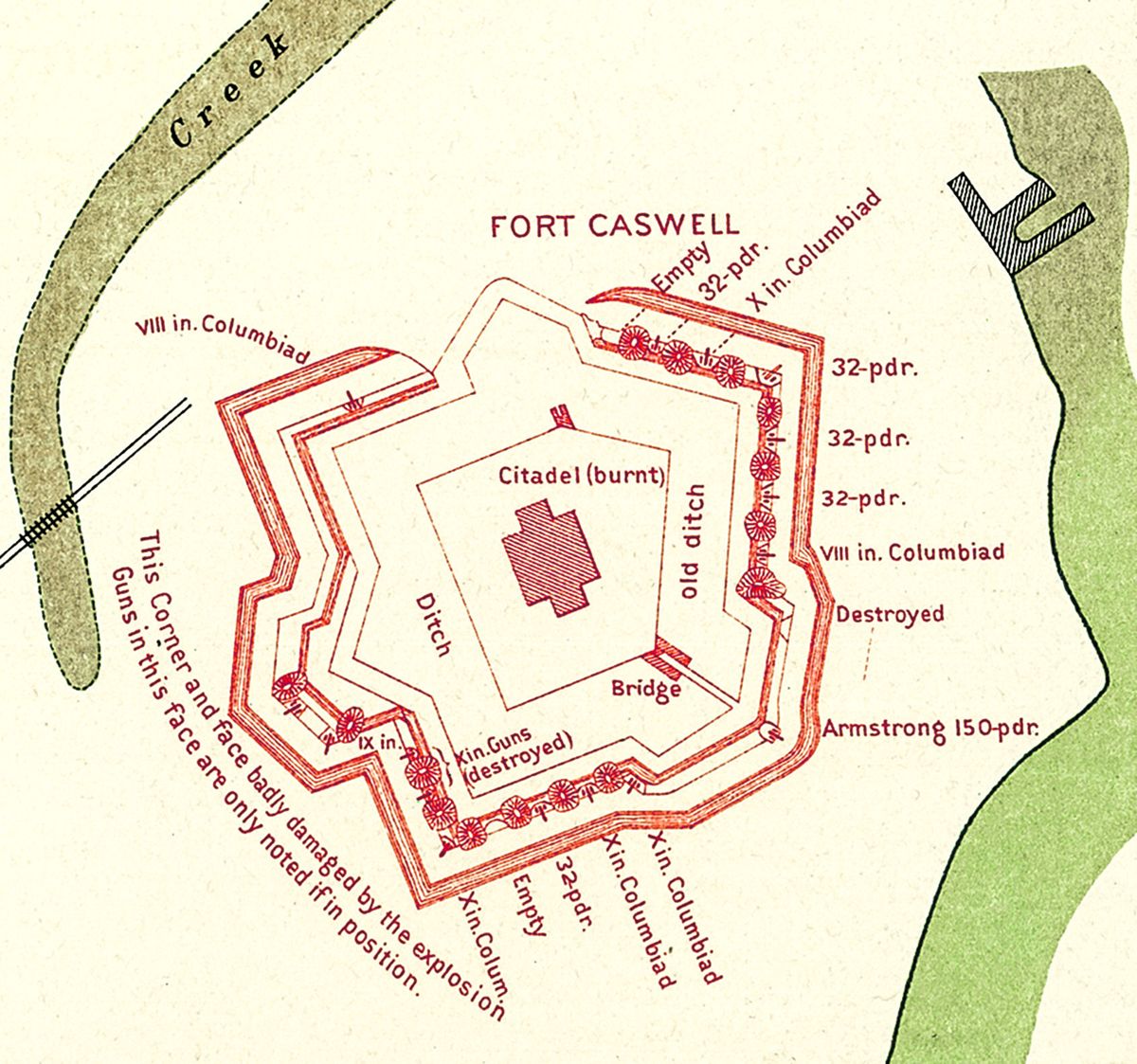
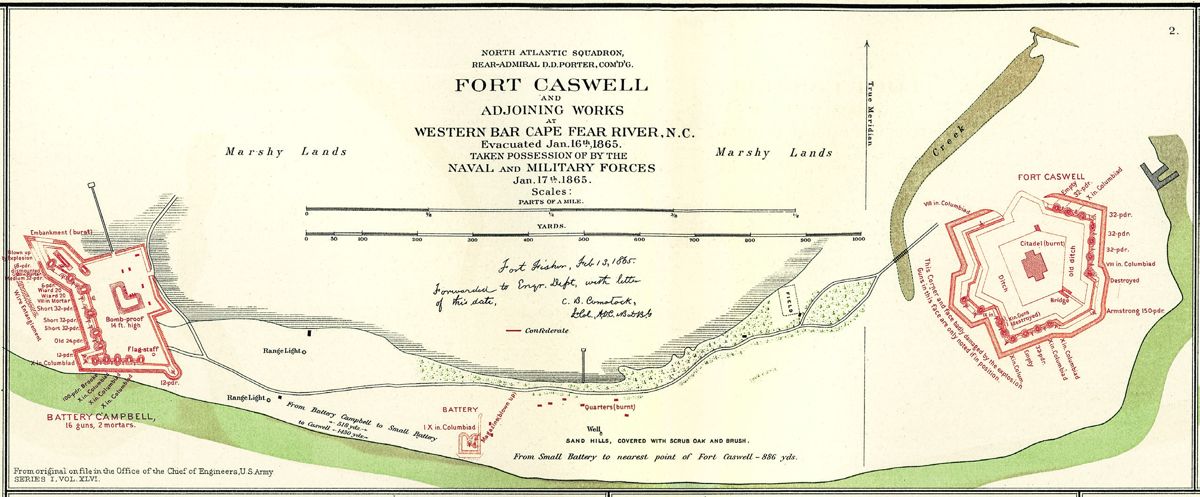
View of Fort Caswell’s sea face brick walls. Map of Fort Caswell and adjoining works from the Atlas To Accompany The Official Records Of The Union And Confederate Armies, Plate 132, Fig. 2.