American Battlefield Trust — April 2021
Originally published April 2021 · pp. 38–39
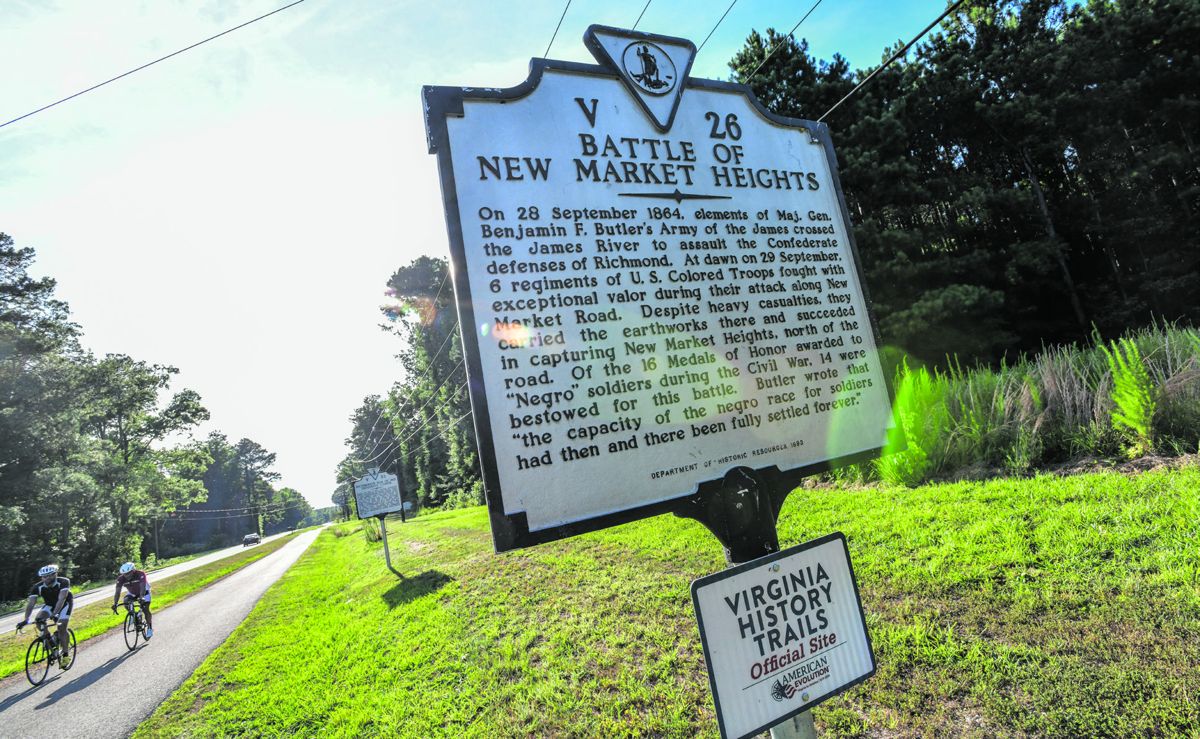
Preservation of Land at New Market Heights Honors the Valor of Black Civil War Soldiers Nearly 180,000 black men in Army units designated as U.S. Colored Troops fought for liberty on scores of major battlefields during the Civil War, but nowhere with more distinction than at New Market Heights, Virginia, where the American Battlefield Trust is working to preserve land and create a battlefield park in their honor. Recently, the Trust announced the purchase of 22 additional acres to further these efforts. The $260,000 land purchase, that otherwise could have been targeted for development in the quickly growing Richmond suburbs, was paid for by donors and a matching grant from the Commonwealth of Virginia. The Trust has now protected a total of 88 acres at New Market Heights. The Sept. 29, 1864, battle was a key to securing the Union position and eventually helped lead to the Confederate surrender of Richmond the next year. That day, 14 USCT soldiers earned the Medal of Honor; a remarkable figure considering only 25 black men earned the nation’s highest award for valor during the entire Civil War. Two white officers of USCT units were also awarded the Medal of Honor for their actions that day. Completion of the latest Trust project was made possible by donations made by Trust members and private donors, as well as a matching grant awarded by the Commonwealth’s Virginia Battlefield Preservation Fund, administered by the Department of Historic Resources. These competitive grants have helped protect 9,598 acres that tell a diverse scope of military history across the Commonwealth. Learn more about the Trust’s work to tell the stories and save land associated with the African American military experience at www.battlefields.org/ fighting-for-freedom.
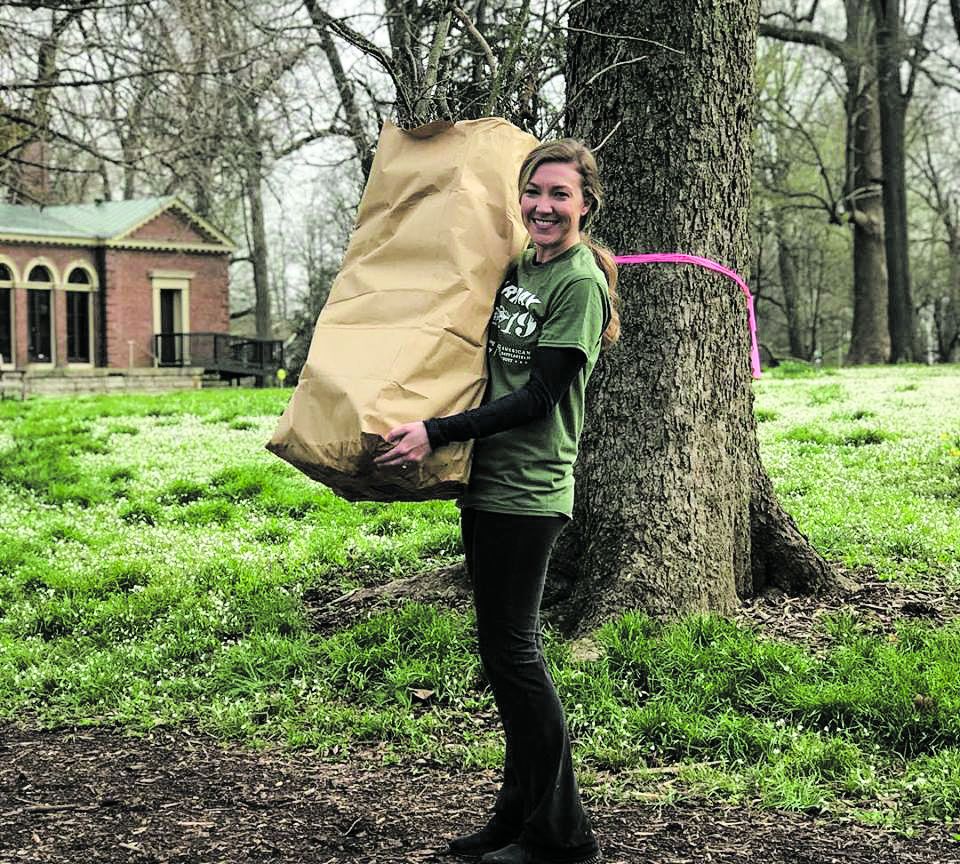
Mark Your Calendar for Park Day’s Silver Anniversary For 25 years, the American Battlefield Trust’s Park Day has offered volunteers of all ages nationwide the opportunity to give back to their communities by helping maintain places sacred to our nation’s heritage. Since 1996, battlefields and historic sites have embraced the hands-on preservation event to meet the needs of upkeep projects large and small, ranging from raking leaves and hauling trash to painting signs and building trails. This means that even amidst the COVID-19 pandemic, sites can rally to safely host deeply beneficial Park Day projects, while practicing social distancing or selecting alternative dates as necessary. While the spirit of Park Day is timeless, this year’s nationwide event is scheduled for April 10, 2021. Revolutionary War, War of 1812, and Civil War battlefields and historic sites across the nation have signed up in hopes of fulfilling necessary projects and look forward to welcoming volunteers. To find your nearest volunteer opportunity, along with site contacts and relevant details, please visit www.battlefields.org/ parkday. As sites consider weather realities and public health guidelines, please note that alternative dates may be sought to ensure that Park Day projects are brought to life. For any questions regarding weather policies, rain dates, COVID-19 considerations, and more, please contact the site at which you would like to volunteer for more information.
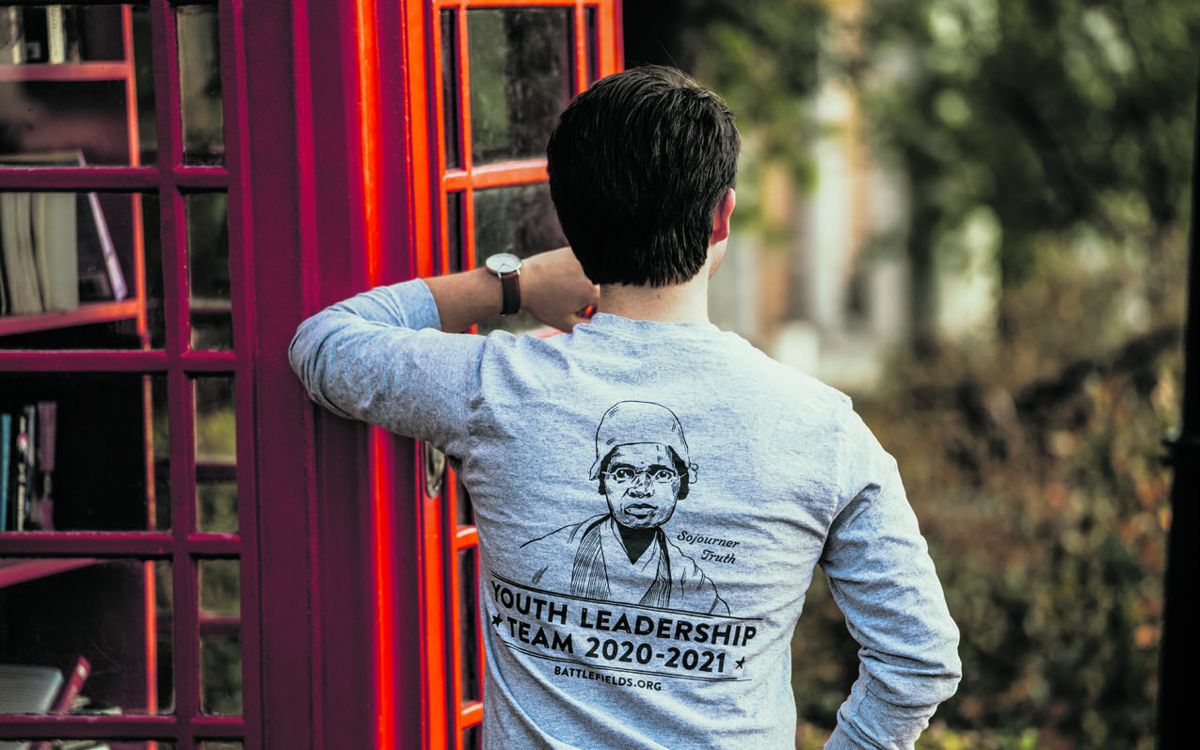
Seeking Motivated Teen Leaders for the Trust’s 2021-2022 Youth Leadership Team The American Battlefield Trust Youth Leadership Team is a rotating group of young people, aged 15-18, who serve as the youth face and voice of the Trust, introducing to a new generation the importance of historic preservation. In return, these students gain invaluable skills and experiences that will set them apart as they pursue college admissions and future careers. In this academic-year-long program, members will: • Receive training in leadership, program management, lobbying, media relations, and fundraising. • Travel to Washington D.C., two times for a training session and Youth Lobby Day, and off-site to our Annual Conference, where they are encouraged to network with our nation’s leaders in historic preservation. All expenses are paid for the participant and relevant travel guidelines respected. Contribute to content creation on battlefields.org, interact with, and create posts for the Trust’s social media channels, and use their creativity to produce photos and video for the Trust. • Be responsible for a preservation, education, or visitation project in their hometown. Current members spread across the nation are busy exploring an impressive range of topics. Francesca is creating a video documentary; Alex is crafting an audio drama bringing the voices of the war of 1812 to life; Ashlyn is developing an interactive scavenger hunt at Gettysburg, and Tiffany is writing and illustrating a preservation-themed children’s book. By supporting this group of motivated young leaders, we hope to create a ripple effect, fostering the next generation of preservation advocates who will tend to the places that make up our American story. If you know a student interested in participating, please encourage them to apply. Applications are open until April 30, 2021 and more information can be found at www.battlefields.org/youth-leadership-team.
Pushing to Preserve Hallowed Ground at Three 1864 Battlefields In the Trust’s latest endeavor to save priceless hallowed ground, the organization looks to 95 acres at three consequential 1864 battlefields: Mansfield in the Bayou State of Louisiana, plus First Deep Bottom and the Wilderness in Virginia. These struggles were all puzzle pieces that factored into Union Lt. Gen. Ulysses S. Grant’s grand strategy for the final full year of war. The first of these engagements was at Mansfield, where the Trust seeks to preserve approximately 20 acres. With their objective to capture Louisiana’s Confederate capital at Shreveport and open the gateway for Federal troops to enter Texas, Union forces launched the Red River Campaign in the spring of 1864. Forces under Maj. Gen. Richard Taylor stood as a roadblock to Shreveport when they forced the retreat of Maj. Gen. National P. Banks’ Union forces at the Battle of Mansfield on April 8. The following month, the Battle of the Wilderness marked not only the initial stages of the Overland Campaign in the East, but also the first major battle between newly appointed Union commander Grant and his Confederate counterpart, Gen. Robert E. Lee. The 36 acres of core battlefield up for preservation encompass action that unfolded May 5, 1864, during the first day’s battle. From this parcel, the Confederates launched part of their counterattack that stymied the Union advance along the Orange Turnpike. This fighting was not easy, as men on both sides moved “cross-country,” cutting through dense forest. You can read more about this property on page 28. Meanwhile, during the sweltering summer of 1864, the engagement at Deep Bottom played a valuable role in the Petersburg Campaign. A diversionary Union maneuver intended to threaten Richmond and pressure Lee to dispatch a sizeable number of his Petersburg defenders to stop this advance, the First Battle of Deep Bottom involved Union forces under Winfield Scott Hancock and Philip Sheridan over the course of July 27-29. The 39-acre parcel tract we’re working to save, located alongside the Gravel Hill Church, includes at large portion of the land where fighting on July 28 helped set the stage for the Battle of the Crater on July 30. Efforts will simultaneously protect the history of the Gravel Hill community, where formerly enslaved individuals once settled and created a safe haven for their expanding families and culture. Today, many of their descendants still live nearby. Recognizing an opportunity to save American history in perpetuity, a combination of federal grants and gifts from the Trust’s local partners at the Central Virginia Battlefields Trust and the Virginia Land Conservation Foundation are already anticipated. This means that more than 88% of the funds needed to pay for the approximate $1.2 million transaction value has already been accounted for. $145,671 remains to be raised, and the Trust now turns to its resilient donors to make the final push for preservation, with each donation dollar matched $8.90-to-$1.
American Battlefield Trust Saves 49 Acres at Gettysburg, including Historic Mcknight House Another 49 acres on the country’s most famous battlefield has been purchased. Among the parcels recently purchased by the American Battlefield Trust is the historic James McKnight House, located along the Baltimore Pike near East Cemetery Hill. But thanks to the Trust’s acquisition, all three properties will be saved from development threats encroaching on the edges of Gettysburg National Military Park. “If any battlefield is universally considered ‘hallowed ground’ by Americans, it is Gettysburg, where president Abraham Lincoln coined the phrase,” said Trust President David Duncan. “This is a place quintessential to the American experience and it is our privilege and honor to ensure that it remains a sacred place of memory and contemplation for future generations.” Cumulatively, the Trust has protected 1,231 acres across the Gettysburg landscape, representing important action from all three days of the July 1-3, 1863 battle—the bloodiest engagement of the Civil War and a moment widely considered a turning point of the conflict. The 49 acres most recently protected include a 47-acre parcel near Big Round Top that was a prime location for a housing subdivision of largelot “McMansions,” construction of which would have intruded on views from across the battlefield. Two small adjacent parcels along Baltimore Pike near East Cemetery Hill—adjacent to McKnight’s Hill or Stevens Knoll, an area of the battlefield set aside for preservation in the 1860s— were also purchased. One lot consisted of the historic James McKnight House, a landmark on this portion of the field. Tens of thousands of Union troops—up to a third of the Federal army— marched along the road past this property on July 1 and 2. Notable fighting occurred here on the evening of July 2, as the 5th Maine Light Artillery helped to stymie a fierce Confederate assault against East Cemetery Hill long enough for reinforcements to arrive on the scene. Period documentation also demonstrates that Union casualties were temporarily interred all around this property prior to the opening of the Soldiers’ National Cemetery, the ceremony at which Lincoln delivered the Gettysburg Address in November 1863. Both small lots were zoned “village mixed use,” allowing for commercial development, and there were no protections or easements on the McKnight House. The Trust announced the three projects last year and completed the purchases by leveraging private donations from Trust members against matching grants from the federal American Battlefield Protection Program. This mechanism promotes preservation of significant Revolutionary War, War of 1812, and Civil War battlegrounds by making use of monies from the Land and Water Conservation Fund to encourages private sector investment in historic preservation. During an event at Gettysburg last May, then-Secretary of the Interior David Bernhardt announced $573,000 in federal funding for two of these three properties.