
William Wells, Civil War Medal of Honor Recipient
By William Sweeney · Originally published September 2020 · p. 36
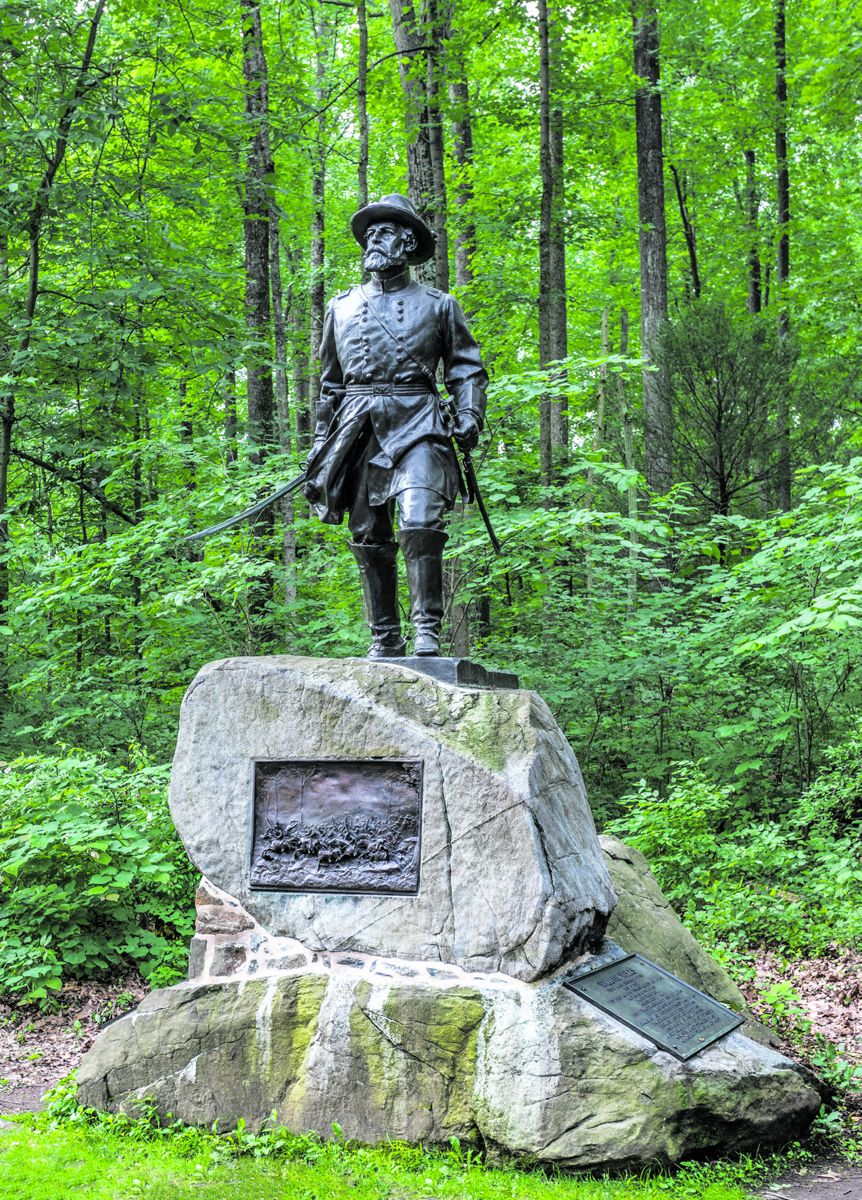
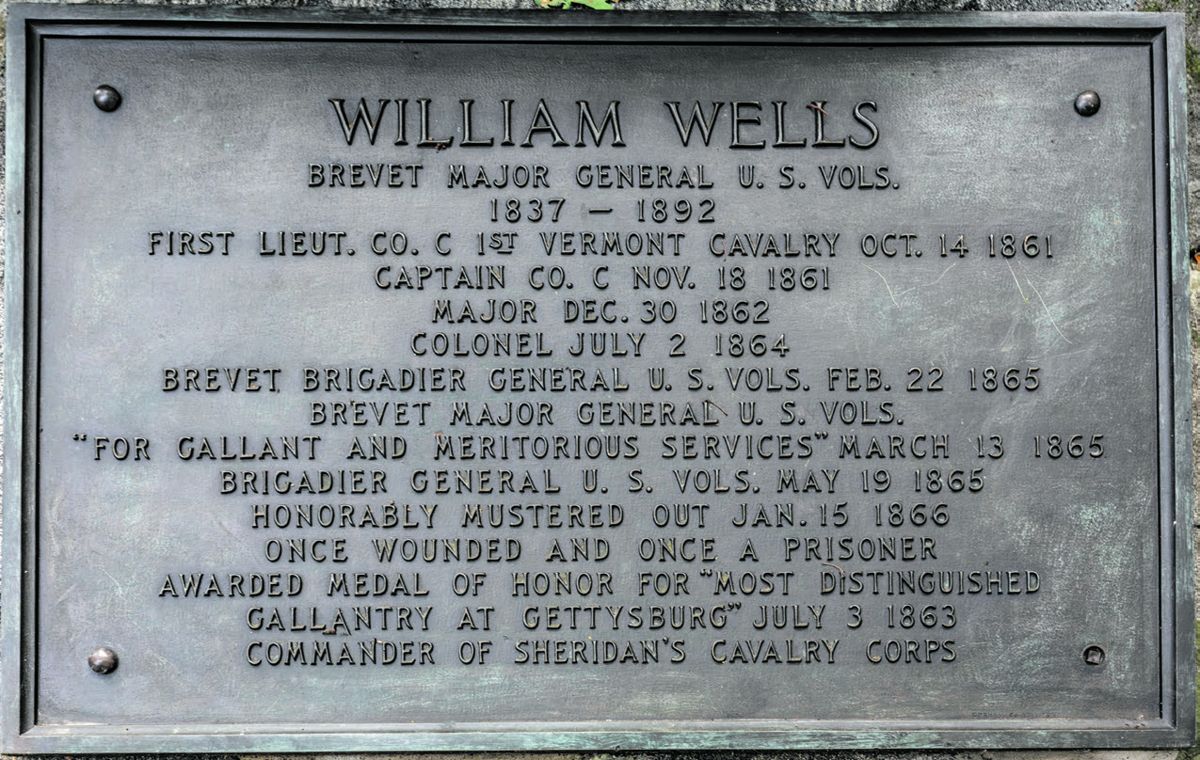
Brigadier- and Brevet MajorGeneral William Wells was born in Waterbury, Vermont, Dec. 14, 1837. He enlisted as a private in Company C, First Regiment Vermont Cavalry, Sept. 9, 1861; was sworn into the United States service, Oct. 3, 1861, at the age of twenty-three years; commissioned first lieutenant, Co. C, Oct. 14, 1861, and captain, Nov. 18, 1861; mustered November 19, 1861, with the field and staff of the First Vermont Cavalry, to serve for three years. Promoted major, October 30, 1862; colonel, June 4, 1864. Appointed brevet brigadier-general of volunteers, Feb. 22, 1865, and brigadier-general of volunteers, May 19, 1865. Appointed brevet major-general of volunteers, March 30, 1865, “for gallant and meritorious services.” He led the 7th Michigan Cavalry, March 2, 1864, while near Richmond, Va., and continued in command of the regiment for several weeks. As major, he commanded his own regiment from June 3, 1864 to July 2, 1864. Promoted to colonel, he led the 1st Vermont cavalry regiment until September 19, 1864, when he assumed command of the Second Brigade, Third Division, Cavalry Corps, Army of the Potomac. He commanded this brigade until May 22, 1865, when he assumed command of the Third Cavalry Division. He was in command of the cavalry corps from June 1 to June 24, 1865, being its last commander. He mustered out Jan. 15, 1866. He was wounded by a sabre at Boonesboro, Md., July 8, 1863, and by a shell fragment at Culpeper Court House, Va., Sept. 13, 1863 He was briefly a prisoner of war in Libby prison, Richmond, Va., from March 17, 1863, to about May 6, 1863. During his service with the First Vermont Cavalry, General Wells took part in the following battles and skirmishes: Middletown, Winchester, Luray Court-House, Culpeper CourtHouse, Orange Court-House, Kelley’s Ford, Waterloo Bridge, Bull Run, Warrenton, Hanover, Hunterstown, Gettysburg, Monterey, Leitersville, Hagerstown, Boonsboro, Falling Waters, Port Conway, Culpeper Court-House, Somerville Ford, Raccoon Ford, James City, Brandy Station, Gainesville, Buckland Mills, Falmouth, Morton’s Ford, Mechanicsville, Piping-Tree, Craig’s Meeting House, Spottsylvania, Yellow Tavern, Meadow Bridge, Hanover Court House, Ashland, Hawes’ Shop, Bottom Bridge, White Oak Swamp, Riddle’s Shop, Malvern Hill, Reams’s Station, Nottoway Court House, Roanoke Station, Stony Creek, Reams’s Station, [sic] Winchester, Summit Point, Charlestown, W.Va., Kearneysville, and Opequan. At the grand review, Washington, D.C., May 22,
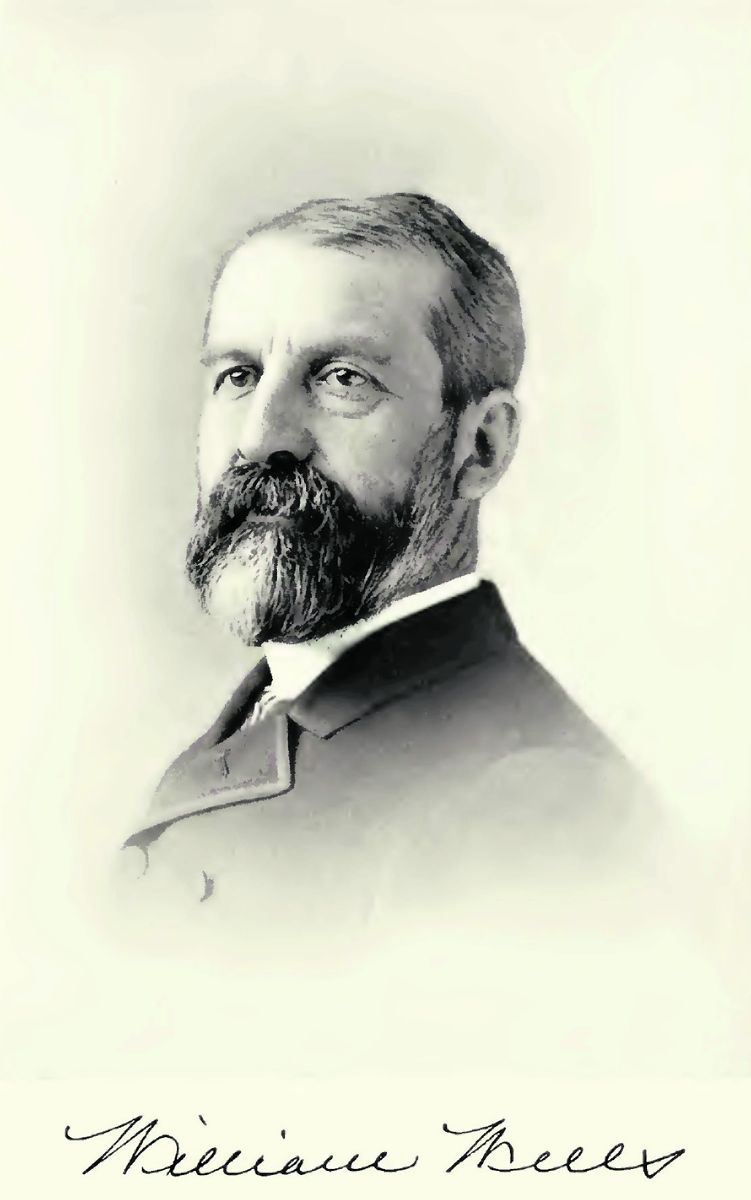
Portrait of William Wells.
1865, he commanded the Second Brigade, Third Division, Cavalry Corps, which led the advance of the Army of the Potomac. A medal of honor was awarded him by Congress “for distinguished gallantry at the battle of Gettysburg, Pennsylvania, July 3, 1863.” He was collector of customs, District of Vermont, from 1872 until 1885. General Wells was elected to the office of adjutant and inspector-general of the State of Vermont in 1866, and resigned in 1872. He was one of the trustees of the Vermont Soldiers’ Home. He was a member of the Grand Army of the Republic, and a charter member and first commander of the Vermont Commandery, Military Order of the Loyal Legion. General Wells died April 29, 1892, and is buried at Lake View Cemetery, Burlington, Vt. Wells’ obituary noted that he served in the Vermont Legislature from 1865 to 1866 and again as State Senator from 1886 to 1887. A statue of General Wells was dedicated at Gettysburg in 1913, and an identical statue can be found in Battery Park, Burlington, Vt. The first Medal of Honor presentation took place in 1863. Since then, and as of October 30, 2019, there have been 3,525 Medals of Honor awarded. This includes 19 double recipients and 9 unknowns but does not include those revoked by the 1916 Army Review Board. Of the 3,525 recipients, 1,523 are from the Civil War. The mission of the Medal of Honor Society of the United States’ (MOHHSUS) is dedicated to provide for the research, preservation, and documentation of the history of the individuals who have been awarded the Medal of Honor, the highest award that can be bestowed upon a member of the U.S. Armed Forces. Membership is open to all and is only $20 annually. Please visit our webpage at www.mohhsus.
com to learn more. Source: Men Of The Century, edited by Charles Morris, Philadelphia, Penn., 1896. William Sweeney is from Woburn, Massachusetts. He is an Army veteran of the Vietnam War, and belongs to several veterans organizations including the VVA, DAV, VFW, Amvets, and American Legion. He is a descendant of a Civil War veteran and has a particular interest in the Civil War. He also has a special interest in the Medal of Honor, and is Vice President of the Medal of Honor Historical Society of the United States. He has been a subscriber to Civil War News for many years.