
The Unfinished Fight
War Horses
By Craig L. Barry · Originally published September 2020 · pp. 18–19
The horse was the backbone of the war effort, especially for the Confederate side. They carried generals and moved artillery and ambulances. One general ordered that, “Every opportunity at a halt during a march should be taken advantage of to cut grass, wheat, or oats and extraordinary care be taken of the horses upon which everything depends.” The first thing Gen. Robert E. Lee asked for after the surrender at Appomattox was rations for his troops and feed/fodder for the horses. The surrender document included a negotiated provision for every Confederate cavalryman to take his horse home with him. There were up to one million horses and mules killed during the Civil War. At the beginning of the war more horses were being killed than men. At the Battle of
Gettysburg, at least 1,500 horses and mules were killed, leaving burial details the horrendous task of disposing of bloated animal carcasses during the heat of July. A War Horse was required to be fast, steady under fire, strong, and maneuverable. While there is no one particular breed unique to the antebellum South or specifically the war effort, the popularity of horse racing meant the greater numbers (and best) war horses were bred there. The breed known as the American Saddlebred was very popular, easy both to ride and to train. Kentucky Saddlers, Thoroughbreds, Morgans, Standardbreds, and Tennessee Walkers were also widely used. According to an article in the New York Times, the last Confederate war horse named “Old Jack” died on December 23, 1889, at age 33. He did his service for Lieutenant R.T. Craighill of Nelson’s Artillery
Battalion from early 1862 until the end of the war. Old Jack was injured three times in battle. There is anecdotal evidence that a horse named “Old Jim” was the last surviving Civil War horse and lived until at least 1894. His rider Lieutenant McMahon, was killed in action, but post-bellum Old Jim went back to live in Aiken, S.C. Who knows?
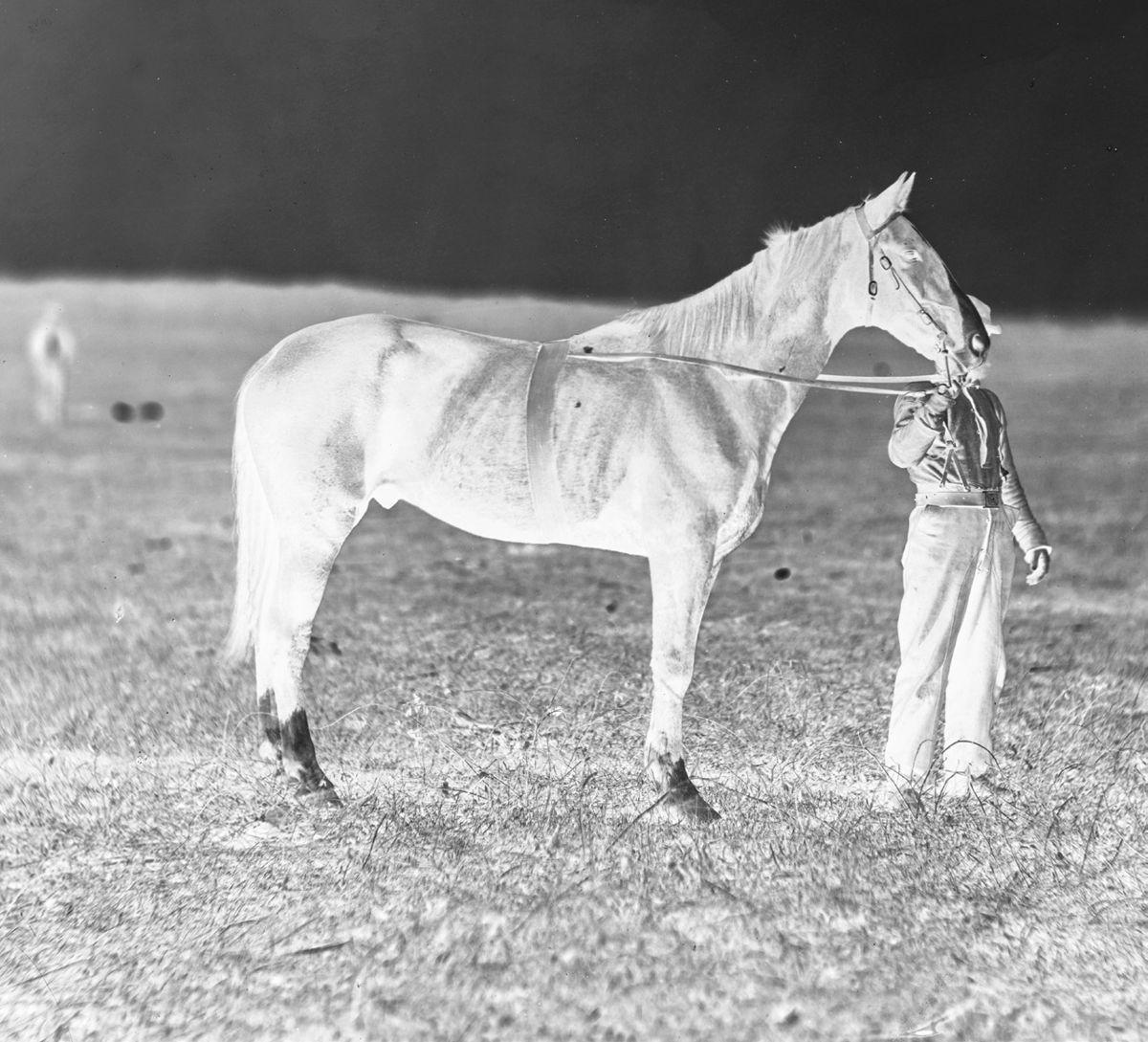
Craig L. Barry was born in Charlottesville, Va. He holds his BA and Masters degrees from the University of North Carolina (Charlotte). Craig served The Watchdog Civil War Quarterly as Associate Editor and Editor from 2003–2017. The Watchdog published books and columns on 19th-century material and donated all funds from publications to battlefield preservation. He is the author of several books including The Civil War Musket: A Handbook for Historical Accuracy (2006, 2011), The Unfinished Fight: Essays on Confederate Material Culture Vol. I and II (2012, 2013) and four books in the Suppliers to the Confederacy series on English Arms & Accoutrements, Quartermaster stores and other European imports. Little Sorrel, Stonewall Jackson’s horse, on the VMI Parade Ground, ca. 1890. After the war, Little Sorrel first returned to North Carolina with Mrs. Jackson, and subsequently was sent to VMI, where he grazed on the VMI Parade Ground and was a favorite of cadets. He died in March 1886, at the age of 36, and his mounted hide is now on display in the VMI Museum in Lexington, Va. Little Sorrel’s bones were cremated and interred on the grounds of VMI in 1997. VMI Archives Photographs Collection. Visit http://digitalcollections.vmi.edu/digital/collection/p15821coll7/id/4067 for more information about Little Sorrel.
Here is a list of some of the better known war horses and their owners who served during the Civil War. In some cases, the horse is as well-known as its owner; in others the name is practically lost to history:
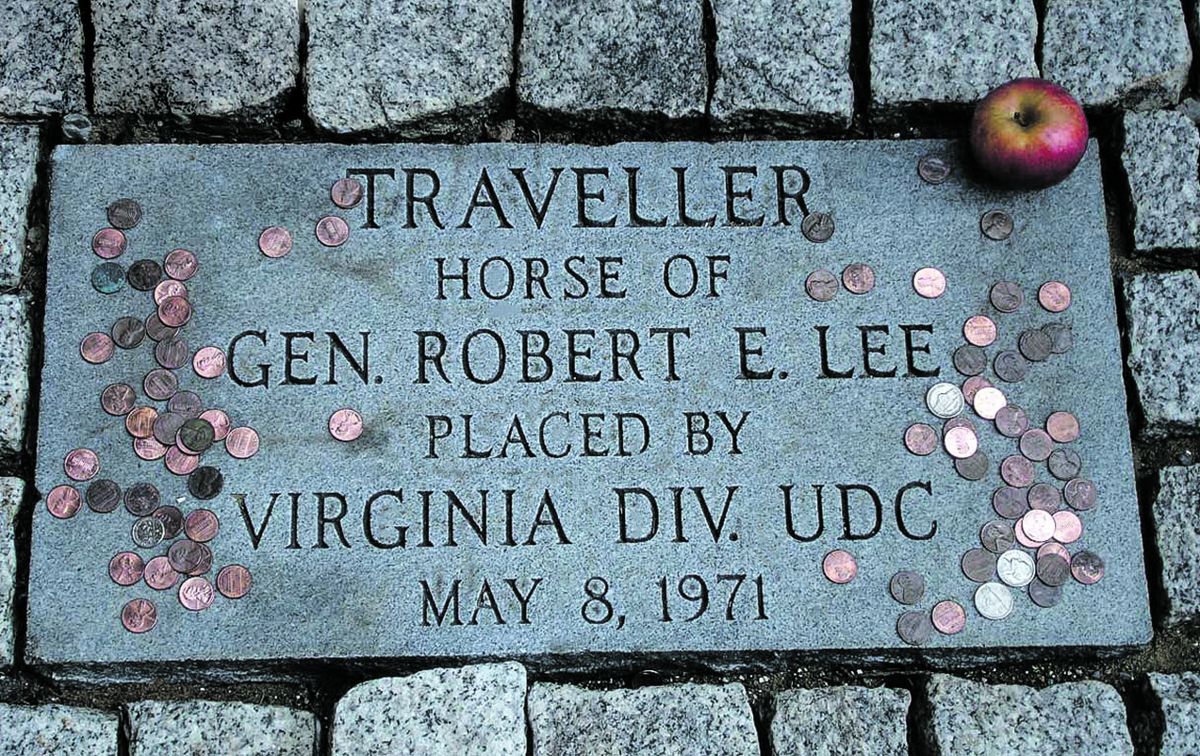
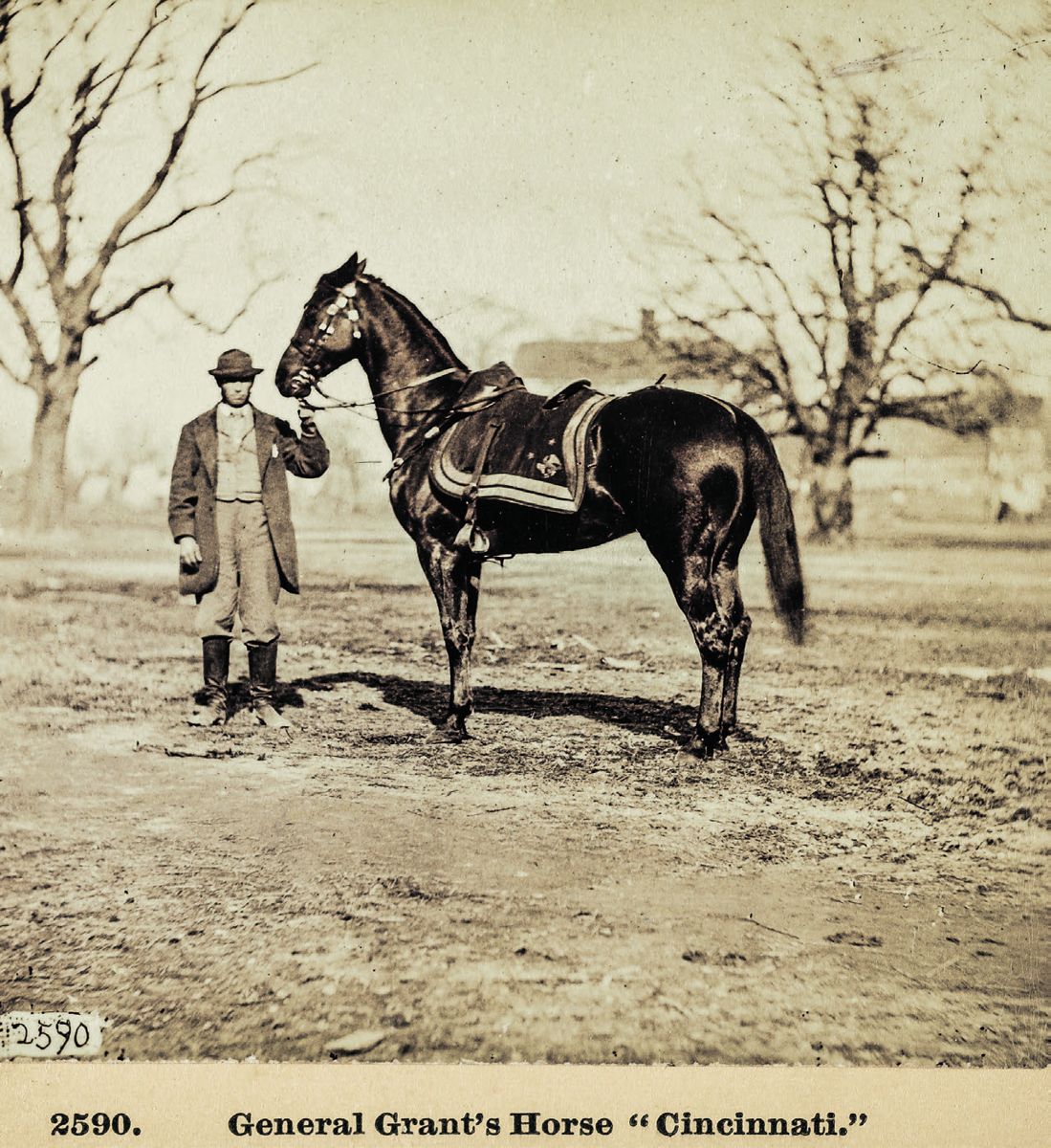
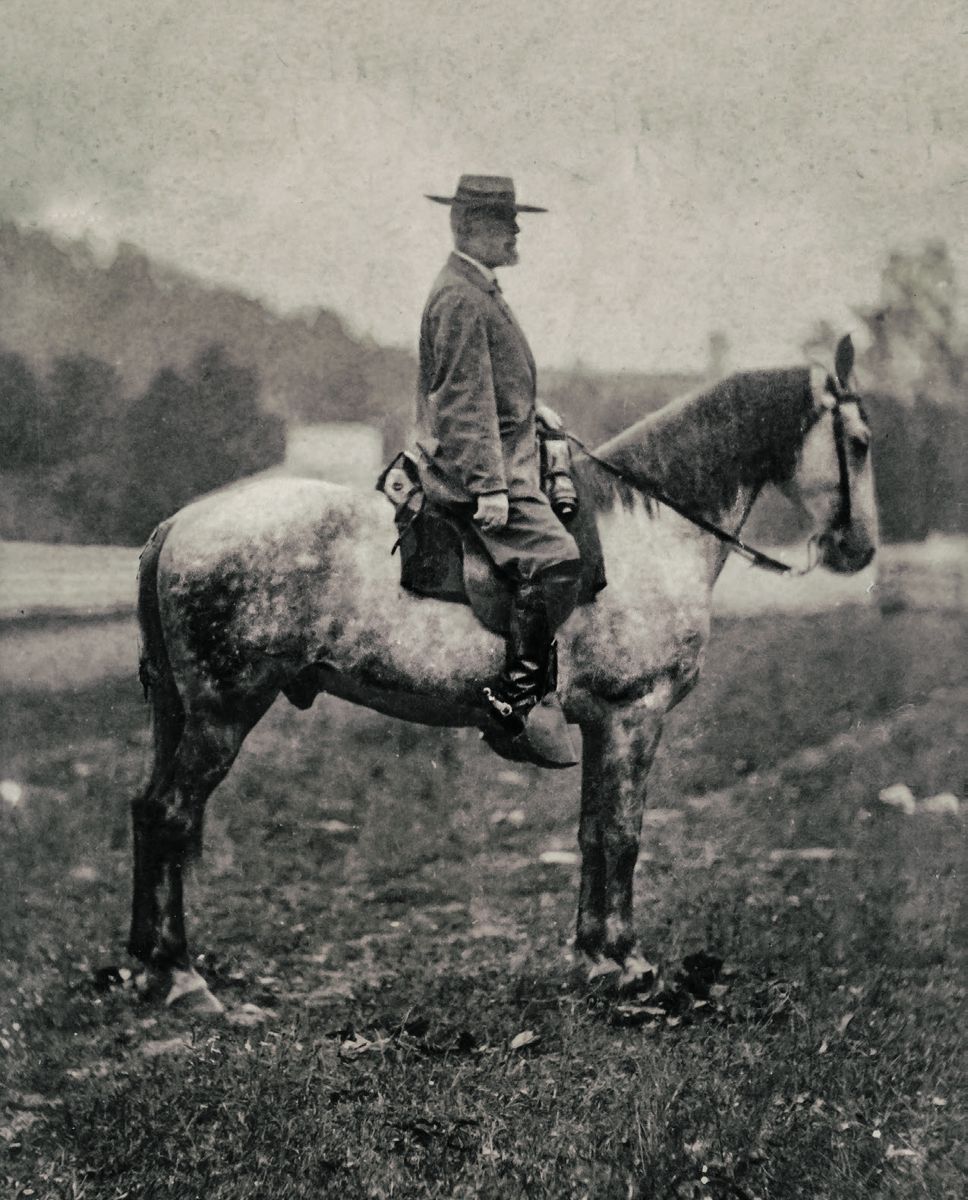
Tom Telegraph: Col. Turner Ashby Jr. Old Charley: Gen. John Bell Hood; he also rode a horse called Jeff Davis. Baldy: Gen. George Gordon Meade. Blackjack: President Jefferson Davis. Red Eye: Gen. Richard Garnett. Cincinnati: Gen. Ulysses S. Grant; he also rode a horse named Jeff Davis, apparently a popular equestrian name. Black Hawk: Maj. Gen. William B. Bate. Dixie: Maj. Gen. Patrick R. Cleburne. Dixie was killed at Perryville in October 1862. Meg Merrilies: Gen. Edward Porter Alexander; he also rode a horse named Dixie. Rifle: Lt. Gen. Richard S. Ewell. King Philip: Gen. Nathan Bedford Forrest, who also owned and rode Roderick and Highlander. King Philip was apparently not one of the twenty-nine horses shot out from under General Forrest. King Philip survived the war and there is anecdotal evidence he still bit men dressed in blue uniforms years after the war ended. Old Black: Gen. George Pickett. Cecelia: Col. John Singleton Mosby. Highfly: Gen. JEB Stuart; he also rode Virginia, Skylark, and My Maryland. Joe Smith: Brig. Gen. Adam R. “Stovepipe” Johnson. Nellie Gray: Maj. Gen. Fitzhugh Lee; this mare was numbered among the dead at Opequon (Third Battle of Winchester). Old Fox: Col. E G. Skinner of the 1st Virginia Infantry. Sardanapalus: Brig. Gen. M.J. Thompson, Missouri State Guard. Hero: Lt. Gen. James Longstreet. Little Sorrel: Gen. Thomas J. “Stonewall” Jackson. Little Sorrel, Jackson’s favorite horse, is still on duty in the museum at Virginia Military Institute, Lexington, Va. He also rode Gaunt Sorrel, Superior, Staunton Steed, and Trojan Mare. Traveller: Gen. Robert E. Lee; he also rode Brown Roan, Richmond, Grace Darling, Lucy Long (gift from JEB Stuart), and Ajax. Traveller (1857–1871) was originally named Jeff Davis. He is buried a few yards from Lee, outside Lee Chapel, Washington and Lee University, where visitors still place apples, sugar cubes, and coins on his grave. Fire-eater: Thoroughbred ridden by Gen. Albert S. Johnston when he was killed at Shiloh. Milroy: Gen. John B. Gordon, captured from Union General Robert Milroy. Old Isham: Gen. Benjamin Cheatham. Gray Bull: Gen. Jubal Early. Butler: Gen. Wade Hampton also rode a horse named Captain. Folly: Gen. Leonidas Polk. Jack: Gen. “Fighting” Joe Wheeler. Black Bess: Gen. John Hunt Morgan. Beauregard: Capt. W.I. Rasin, 1st Maryland Cavalry. Firefly: Gen. Robert Rodes. Shiloh: Gen. William J. Hardee. Bucephalus: Gen. Sterling Price. Pocahontas: Gen. George “Maryland” Steuart. Jinny: Gen. Isaac Trimble.
In Henry K. Douglas’s memoirs, I Rode With Stonewall, he left a description of Little Sorrel: General Jackson never had a handsome horse in the army, nothing to compare to General Lee’s “Traveller,” or Stuart’s “Maryland, My Maryland,” or Ashby’s white or black stallions. “Little Sorrel” was a plebeian-looking little beast, not a chestnut; he was stocky and well-made, round-barreled, …good shoulder, excellent legs and feet, not fourteen hands high, of boundless endurance, good appetite, good but heavy head and neck, and natural pacer with little action and no style… It would have been impossible to have found another horse that would have suited his owner so exactly – he was made for him… The endurance of the little animal was marvelous, and the General was apt to forget it was exceptional. He never seemed to change in looks or condition; his gait, except when the yells of the soldiers warmed him into a gallop, was always the same, an amble; he could eat a ton of hay or live on cobs…