
Ulysses S. Grant: Migraine and Drunkenness – A Reconciliation
By M.G. Subhas · Originally published September 2020 · pp. 4–7
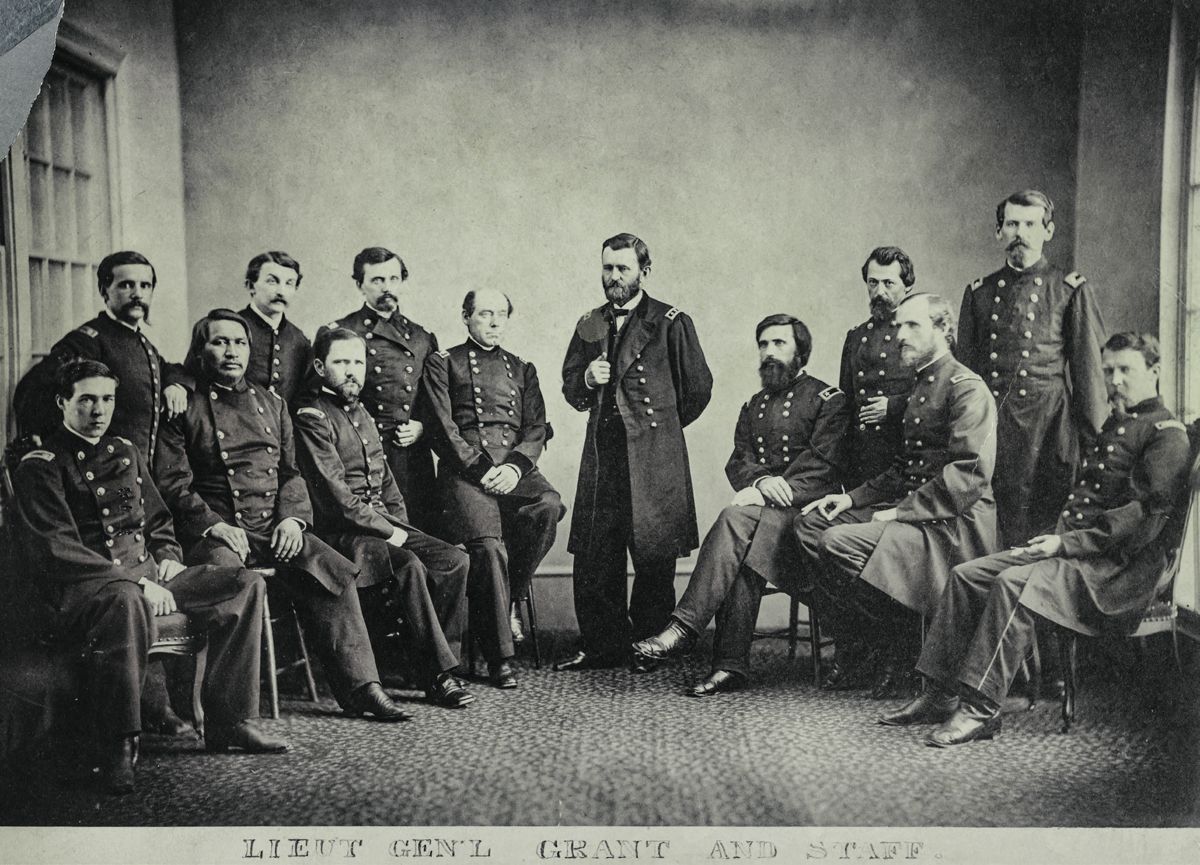
Introduction Allegations of drunkenness followed Ulysses S. Grant from his 1854 posting at Fort Humboldt in the Pacific Northwest to this day. There is a dissonance when considering the allegations of drunkenness since Grant, who is acknowledged to have been honest, plain spoken, and with an indomitable will, had publicly pledged to be temperate (Chernow p. 69). Was Ulysses Grant living a lie? Is there a perspective that can reconcile this dissonance? This paper sets out to show that Ulysses Grant was not an alcoholic. Grant suffered from a ‘sick headache’ or what today is called a bilious migraine. Many, if not all, recorded observations of Grant being intoxicated were probably an instance of mistaking the symptoms of a bilious migraine.
Migraine – A Misunderstood Illness Even today the physiology of migraines is not well understood. Katherine Foxhall’s Migraine: A History, provides a chronology of the condition from the Middle Ages to the early 21st century. The description of migraines during the mid-nineteenth century helps us evaluate the social and physiological perspectives during Ulysses Grant’s lifetime. Given our current understanding of migraines, we can evaluate and reassess the historical record of Grant’s condition through witness statements. In the mid-nineteenth century, “sick headache” and “bilious headache” were terms commonly used to describe what later would be called a migraine, the French version of the more ancient hemicrania. “Migraine is a spectrum disease,” Foxhall writes, “usually manifesting as an episodic or chronic primary headache disorder, characterized by attacks that can last from a few hours to up to three days….Before and during a migraine attack, many people encounter various symptoms, such as, tiredness, emotional disturbance, poor concentration, sensitivity to light or sound, blurred vision, nausea and yawning. On average, migraine sufferers experience one to two attacks a month…” (Foxhall, p. 5). Sick headaches then, as with migraines today, were observed in many more women than men. This led to several diagnosticians positing causes of the condition being due to female issues, such as weak constitution, nerves, mental weakness and instability, hysteria, menstruation, etc. Several pills and tonics were advertised and sold during the nineteenth century claiming to remedy a very wide variety of deficiencies including headaches. Many pills contained opium or cocaine along with an array of other herbs and chemicals. They were essentially household remedies targeting a condition that is still not understood and which does not have an effective cure. Symptoms can be lessened in intensity and duration after the advent of an attack, but the attacks themselves cannot be prevented. Johns Hopkins Medicine maintains a practice focused on migraine. Their description is along the lines of Foxhall’s cited earlier. These modern-day physicians conclude that: At their worst, they are typically associated with sensitivity to light, noise and/or smells. Nausea is one of the most common symptoms and it worsens with activity, which often results in patient disability. In many respects, migraines are much like alcohol-related hangovers.
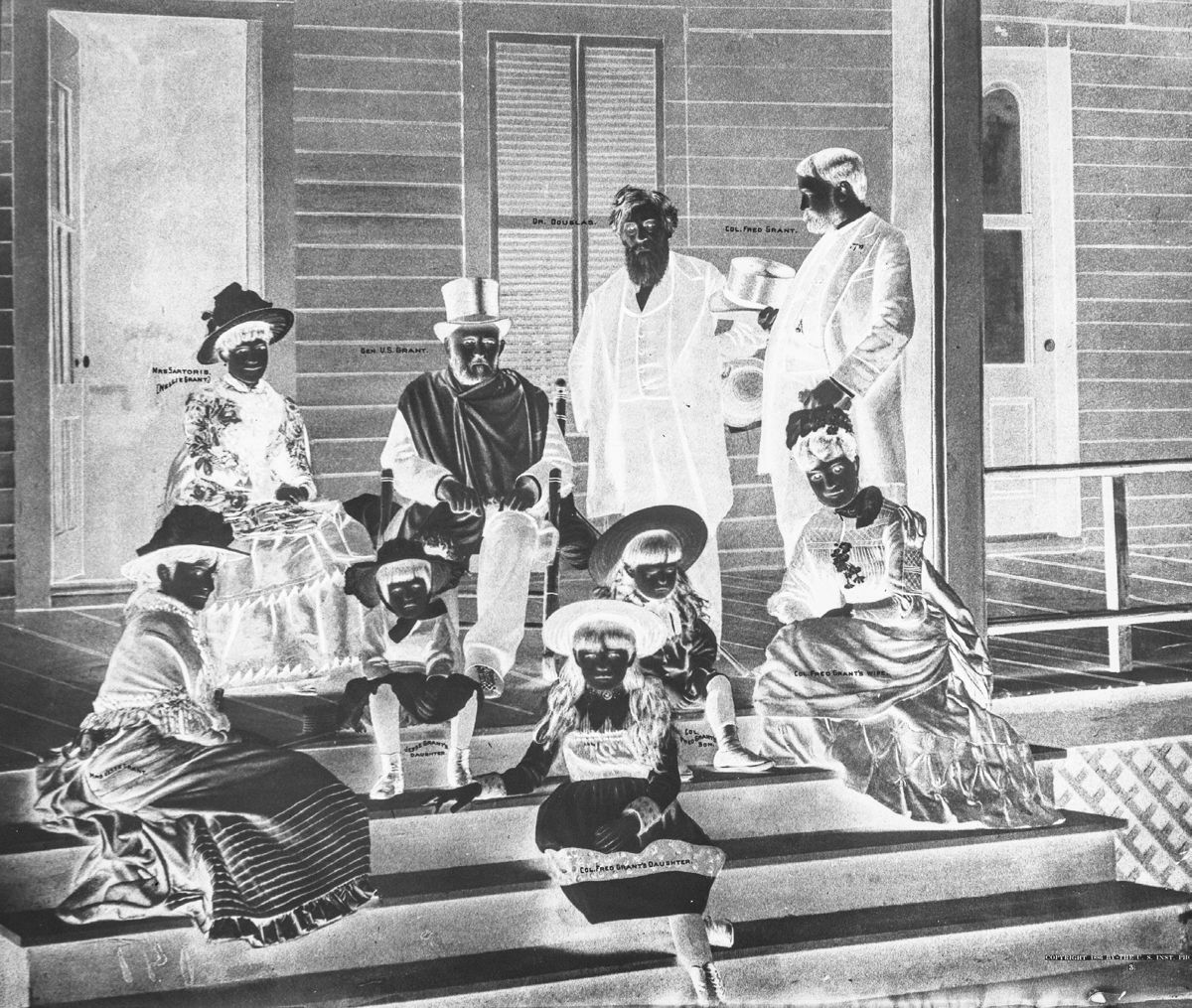
Ulysses Grant – Living With The Burden Of Migraine Ulysses Grant, from an early age, had a chronic condition. “[Grant] was growing up fat and strong, even though the fever and ‘ague’ [chills] that haunted the West struck him severely for long spells now and again” (Lewis, p. 31, citing Sanderson, Memoirs). Note the reference to ‘now and again’ frequency and the duration of ‘long spells.’ Jesse Root Grant was Ulysses’ father. “Two of Jesse Grant’s brothers had died of consumption and Jesse was worried over the severe spells of fever and ague that occasionally struck Ulysses. Ulysses’ life in the open air by day, would, it was hoped, counteract any weakness in the lungs” (Lewis, p. 35). Again, the reference to severe spells and occasional frequency suggests that Ulysses experienced these symptoms more often and differently than other children, including e.g. Cousin Johnny or Grant’s other playmates. Since migraines were not really understood in the mid-nineteenth century, it is possible that what was prevalent, i.e. ague, was imputed to Ulysses’ condition. Julia, Grant’s adoring wife, stated succinctly in her memoirs. “The General used to have dreadful headaches about once in three or four weeks and on those occasions would return from his office saying to me: ‘Oh! Do not ask me to speak. I have a dreadful headache.’ I would seat him in his armchair, darken the room, call for a hot foot-bath with mustard, and, after bathing his feet, I would persuade him to take one of my little pills, when he would lie down and sleep, and always in an hour or two he would awake well and ready” (Grant, p. 162). Julia clearly remembered her husband’s periodic attacks of headaches and her brief but complete mention of Ulysses’ headaches is reflected in Katherine Foxhall’s description. What is particularly interesting is Julia’s mention of “my little pills” indicating that she kept with her one type of such easily accessed and ready-to-consume ‘women’s’ pills. Whatever the intended effect of the pills, Ulysses Grant seems to have recovered from his attacks after Julia’s ministrations. Though, in her memoirs, she chides him for being “ungracious enough to laugh and say: ‘You did not cure me. Why, I got well myself, did I not?’” Foxhall mentions Ulysses Grant and Sigmund Freud in a list of famous people with migraines. Citing an 1885 letter from Freud to his wife blaming an attack of migraine on the tartar sauce he had with lunch, he “took some cocaine, watched the migraine vanish at once,” and went on writing. Dr. Jack D. Welsh, in his Medical Histories of Union Generals, mentions a much-recounted episode. “On April 7, 1865, he had a severe headache. He was told to bathe his feet in hot water and mustard and to apply mustard plasters to his wrists and the back of his neck. However, the treatment produced little relief” (Welsh, p. 139). In his memoirs Grant mentions the unexpected cure he experienced when he received notice that Robert E. Lee had accepted Grant’s suggestion of a meeting to discuss terms of surrender. Grant, acknowledging that he “was suffering very severely with a sick headache…spent the night in bathing my feet in hot water and mustard, and putting mustard plasters on my wrists and the back part of my neck, hoping to be cured by morning,” wrote “… but the instant I saw the contents of the note I was cured” (Grant, Personal Memoirs, p. 625-627). The record seems clear that Ulysses Grant suffered from migraines, maybe even from an early age when they were potentially misdiagnosed as fever and ague. When the migraines came on, Ulysses suffered from headache, odd sensations, indigestion, and nausea, obvious intense personal suffering. His migraines, as Foxhall writes, suffered from a legitimacy deficit likely due to the gendered images, metaphors, and stereotypes, i.e. affecting people who are weak, feminized, oversensitive, and unable to cope ….Ulysses Grant carried this disease, trying his best to keep it private and seeking solitary confines whenever he could—while at the same time leading a very public war effort and later presidency.
Looking Through The Migraine Lens – Reinterpretation Jesse Grant exempted his son Ulysses from working in the tannery. Yet, Johnny Grant, Ulysses’ cousin worked in the tannery when he was just nine years old. Jesse Grant’s fears of hereditary illnesses and the differentiated nature, i.e. frequency and severity, of the fever and ague likely were reasons Ulysses was released from tannery work. Smell and physical activity are cited as triggers for migraines, both were present in abundance in a tannery. Luckily for Ulysses, “his father placed him in charge of the wagon and, therefore, working with horses and kindling a lifelong love of the noble animal” (Lewis, Captain Sam Grant, p. 35). In 1849 Ulysses Grant was stationed in Detroit. Biographer William C. Church obtained the recollections of Colonel James E. Pitman, one of Grant’s close friends while in Detroit. Pitman said, “I used to go to the same Methodist church where Dr. George Taylor was the pastor. I think Dr. Taylor helped Grant a great deal. It was said that he had a long talk with Grant at that time and told him that he could not safely use liquor in any form and Grant acknowledged this and took the pledge and thereafter used no liquor at all in Detroit. I will say that I saw Grant drink, but never saw him intoxicated. He was a gentleman in his habits and instincts. He took his fun or dissipation, you might say, in racing horses. In those days Detroit was a frontier town and all used whiskey freely. Grant drank no more than the rest of the officers, he was not noticeable either way, either for leaving it alone or taking it.” (William Conant Church Papers, Library of Congress—archived at granthomepage.com/ intpitman.htm)
CWN After reviewing Pitman’s Detroit recollections, could it be that Grant approached Pastor Taylor about, as Katherine Fox describes, the “nervous weakness” and “bad habits” to which his sick headaches were, at that time, most likely attributed. Was Grant seeking a moral remedy from a pastor for the much-ridiculed bilious migraine? The refocus on the episode, using the migraine lens, suggests that Grant was seeking help for a condition he had from an early age and about which he did not want to talk openly, i.e. his frequent debilitating headaches. Dr. Taylor’s prescription, more from a moral perspective than medical, is also then coherent with the then current understanding of it being a weakness, especially Taylor’s use of the word “safely.” John Rawlins was Grant’s closest aide-de-camp. His statements on Grant that referred to drinking and temperance are much cited in the many Grant biographies. Rawlins had a father who was a hard-drinking man (Chernow p. 149). Observing his father, Rawlins developed a strong dislike of alcohol and, recoiling from his father’s alcoholism, is likely to have bought into the then-prevalent theory of weak constitution and bad behavior being the cause of migraine. His admonition of
Grant to stay strong and not succumb to ‘bad habits” plaintively echoes the early nineteenth-century ‘nervous weakness/bad habits’ theory. This interpretation reconciles Rawlins’ note to Elihu Washburne on December 30, 1861, “I would say unequivocally and emphatically that the statement that General Grant is drinking very hard is utterly untrue and could have originated only in malice” (Chernow, p. 165). Grant’s resignation from the army while serving at Fort Humboldt was the seminal incident that brought the issue of drunkenness to a head, and drunkenness was said to be the motivation for Grant’s decision to resign. Grant’s friend and West Point roommate Rufus Ingalls said, “… without his family, and with little to occupy his attention, [Grant] fell into dissipated habits, and was found, one day, too much under the influence of liquor to properly perform his duties” (White, p. 120). Ingalls related that Buchanan demanded Grant either resign or stand trial. Note that Grant was ‘found’ inebriated, i.e. no one claims to have seen him drinking. This is not the statement of a witness to drinking but an observation of inebriation. Grant could not mount a defense other than ‘I did not drink’ because there was no legitimacy to sick headaches as a disease and they were considered a bad habit, a term Ingalls uses, and a female weakness. Lewis Cass Hunt, Buchanan’s adjutant, observed that Grant “used to go on long sprees till his whole nature would rebel and then he would be sick” (Chernow, p. 84). General (William Farrar) Baldy Smith at Cold Harbor echoed Hunt when he said “General Grant has gone away drunk.” He rode off “in a most disgusting state after having vomited all over his horse’s neck and shoulders” (Chernow, p. 422). Again, this description, while presuming intoxication is also consistent with a sick headache/bilious migraine. These descriptions by Ingalls, Hunt, and Smith, relying as they do on observed conditions (‘he was found/seen, sick, vomited’) suggest that migraine was the more likely affliction mischaracterized as intoxication. Combining this with the suggestion of “dissipation,” suggesting weak or ‘feminine’ nervous symptoms, it is no surprise that Grant did not want to face a trial where his ‘weakness’ and fitness to serve would be challenged while he had no authoritative support for his migrainous condition to draw on as a defense. In another observed incident, Henry Hodges, speaking of an expedition being marshaled under the direction George McClellan out of Fort Vancouver says: “Grant got on one of his little sprees, which annoyed and offended McClellan exceedingly, and in my opinion he never quite forgave Grant for it” (Chernow, p. 81). Though suffering from a severe cold, Chernow concludes, Grant delivered two hundred horses and other supplies on time, but he had made a powerful enemy who would associate him with an alcoholic binge. Chernow’s little post-script of a ‘severe cold’ is again a symptom of a migraine. As Johns Hopkins Medicine says: Migraine pain can be felt in the face, where it may be mistaken for sinus headache—or in the neck, where it may be mistaken for arthritis or muscle spasm. Complicating the diagnosis of migraine is that the headaches may be accompanied by other “sinuslike” symptoms, including watering eyes, nasal congestion and a sense of facial pressure. (op. cit. hopkinsmedicine.org) Hodges’ reference to ‘one of his little sprees’ indicates periodic frequency and presumption of alcoholism while being consistent with Julia’s note on the frequency and manifestation of Grant’s sick headaches. Grant, on the day of Lee’s surrender at Appomattox, described his headache as a nervous prostration, “On the night before Lee’s surrender,” said General Grant, “I had a wretched headache—headaches to which I have been subject—nervous prostration, intense personal suffering. But suffer or not, I had to keep moving” (Young, p. 455). An article in the Boston Medical and Surgical Journal from January 1884, defines a person with nervous prostration as “…suffers odd sensations in his head, his digestion is disordered; he is weak; wakefulness, mental depression and a thousand and one new sensations of strange character and fearful portent are superadded’ (Vol. CX, No. 3, January 17, 1884, p. 53).
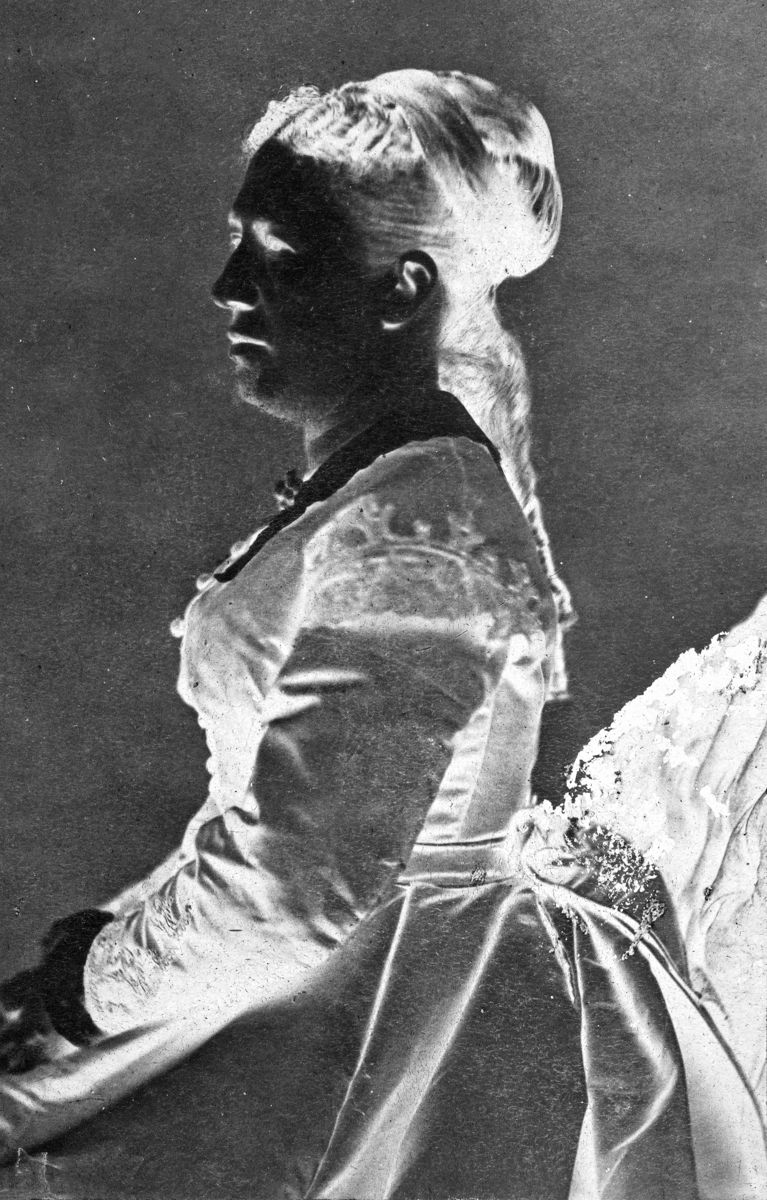
Grant – A Man Of Honesty, Integrity And Temperance Character witnesses abound for Grant’s honesty, integrity, and temperance, which render the rumors of drunkenness to be more fable than fact. Chernow, while labeling Ulysses Grant as ‘utterly incapable of guile,’ cites a classmate during Grant’s early adolescence: “He was an exception as a boy for truth, honesty, and fairness” (Chernow, p. 16). Dabney Maury, a United States Military Academy graduate who Grant took under his wing during the Mexican War, says, “Grant was a thoroughly kind and manly young fellow, with no bad habits …” (Lewis, p. 183). This statement is from a time when, according to Lewis, “drinking was very much in evidence among the army in Mexico.” General Henry Halleck, Grant’s superior headquartered in St. Louis, assigned Lieutenant James Birdseye McPherson, who finished first in his class at West Point, to Grant’s staff along with orders to Grant to ‘take & hold Fort Henry.’ McPherson confided to Dr. John Brinton, staff physician, that Halleck asked McPherson to obtain ‘special information’ on reports that “he [Grant] is drinking terribly, and in every way is inefficient” (White p. 185-186). Brinton told McPherson that “the reports were unfounded, that I knew were false,” but encouraged him to see for himself. McPherson did see with his own eyes and saw in Grant a “disciplined, respected commander” (White, p. 186). The use of ‘disciplined’ by a military man is noteworthy and is defined in the Merriam Webster dictionary as ‘orderly or prescribed conduct or pattern of behavior.’ James McPherson went on to serve under Grant from the early victory at Fort Henry until his death outside Atlanta during July 1864. Adjutant General Lorenzo Thomas, who was given the responsibility of recruiting former slaves into the army, implicitly exonerates Grant of charges of being a drunkard. “It is currently stated that when Adjutant General Thomas visited the Department of the Tennessee, early in April 1863, he carried…an order from the President to displace and remove General Grant from his command if the facts [drinking] proved to be as they were reported at the national capital …. General Thomas, on his arrival at Milliken’s Bend, found matters far different than were represented at Washington …. He therefore elected not to remove the note from his pocket” (Larke, 1864, p. 312). Mrs. Mary Livermore, the woman’s suffragist, and temperance activist, was working with the Sanitary Commission, and visited Grant at Young’s Point, La., while vicious reports of Grant’s negligence and imbecility (hints of drunkenness) were bandied about in the press. Mrs. Livermore “gave the lie to the universal calumnies then current.” Mrs. Livermore insisted that the General “was not a drunkard” and possessed a “clear eye, clean chin, firm flesh and steady nerves” (Miers, p. 97), each a negation of the caricature of a drunk. Charles Anderson Dana, a journalist, accepted Secretary of War Edwin Stanton’s offer of being an Assistant Secretary. An early assignment from Stanton was for Dana “to give such information as would enable Mr. Lincoln and [himself] to settle their minds as to Grant ….” while ostensibly auditing paymasters. Dana, whose role as a spy was an open secret, describes “Grant was an uncommon fellow—the most modest, the most disinterested, and the most honest man I ever knew, with a temper that nothing could disturb, and a judgment that was judicial in its comprehensiveness and wisdom” (Brands, p. 229). Dana’s report to Stanton ended with, “I have to report that the paymasters have finished their work and gone, and henceforth any shrewd person can see I am not attending to their transactions” (Miers, p. 153). A winkwink, nod-nod exoneration of Grant from the charge of drunkenness was stated within the official scope of Dana’s mission.
Elihu Washburne, congressman and strong advocate of Ulysses Grant, spoke in Congress after vicious news reports of Grant’s drunkenness following the bloody battle at Shiloh, saying of Grant, “He is an example of courage, honor, fortitude, activity, temperance and modesty” (Chernow, p. 210). Also, at the same time, Benjamin Johnson called on Grant in his tent and Grant asked him what people said about the battle. “I told him they said he was drunk. He fired up a little and asked me if I thought he was drunk now. I said I knew he was not. He replied, ‘Well, I was just as drunk then as I am now, no more nor less.’” This is a statement from a ‘most honest’ man who is ‘utterly incapable of guile.’ Hamilton Fish served as Secretary of State during both terms of Grant’s presidency. During the 1872 presidential campaign Grant’s opponents used accusations and innuendo to diminish Grant’s candidacy. Responding to an inquirer about Grant’s drunkenness, Hamilton Fish says, “The very close personal association which I have had with him for many years justifies me in saying that the imputation of drunkenness is utterly and wantonly false” (White, p. 534). These attestations from Grant’s early life through his military and political careers speak of a simple, guileless man of honesty, integrity, and courage. This is the father who admonished his children that, ‘Lying is the foundation of all crimes and follies’ (Chernow, p. 97). This honest and iron-willed man also took a pledge of temperance.
Conclusion – Grant’s Migraine Illness Was Misdiagnosed Ron Chernow, calling it a chronic disease, comes tantalizingly close to the right diagnosis of a migraine but veers sharply to alcoholism. His contention that “Grant was an alcoholic with an astonishingly consistent pattern of drinking, recognized by friend and foe alike; a solitary binge drinker who would not touch a drop of alcohol, then succumb at three- or four-month intervals usually on the road. As a rule, he underwent a radical personality change and could not stop himself once he started to imbibe” (Chernow, xxiii) (italics added for emphasis). Chernow’s list of symptoms is consistent with those of a migraine sufferer. The regular periodic attacks are attested to by
Julia Grant. That these were usually on the road and not while Julia was present speaks more to the care that Julia gave Grant including her “little pills.” The sensitivity to light that Grant felt is mentioned by Julia and this is likely why Grant took himself off to solitary confines where he could be inactive while in the throes of a sick headache. No one likes to be a spectacle of sickness and vomit. Grant’s mention of mental prostration and Foxhall’s description of intense personality changes are reflected in Chernow’s list of symptoms. So, yes Grant had a life-long migraine disease. Many who knew him personally, some intimately, attest to his honesty. That is good enough to look for an alternative explanation. The migraine lens, with more recently clarified history, clearly establishes that the resemblance to a hang-over can lead to a mistaken diagnosis. Many observed incidents of drunkenness, when reinterpreted through the lens of a migraine, are likely a mistaken case of migraine. Ultimately, acknowledged as a guileless man, Grant’s own admission is that he was temperate. The author accepts the testimony of General Lorenzo Thomas, General James McPherson, Doctor John Brinton, Charles Anderson Dana, Mrs. Mary Livermore, and Dr. Jack Welsh that Ulysses S. Grant was honest, suffered from migraines and was not an alcoholic.
CWN
•
• •
•
•
•
• •
•
•
•
Bibliography:
Brands, H. W., The Man Who Saved the Union: Ulysses Grant in War and Peace. United States: Anchor Books, 2013. Chernow, Ron, Grant. New York, Penguin Press, 2017. Foxhall, Katherine, Migraine: A History. Baltimore, Johns Hopkins University Press. 2019. Grant, Julia, The Personal Memoirs of Julia Dent Grant (Mrs. Ulysses S. Grant), New York, Putnam, 1975. Grant, Ulysses S. (Ulysses Simpson), Personal Memoirs of U.S. Grant, Selected Letters 1839–1865. New York, N.Y.: Library of America, 1990. Larke, Julian K., General Grant and his Campaign., New York, J.C. Derby & N.C. Miller, 1864. Lewis, Lloyd, Captain Sam Grant, Little, Brown, 1950. Miers, Earl Schenck, The Web of Victory: Grant at Vicksburg. New York, Alfred A. Knopf, 1955. White, Ronald C., American Ulysses: A Life of Ulysses S. Gran., New York, Random House, 2017. Welsh, Jack D.M.D., Medical Histories of Union Generals. Kent, Ohio, The Kent State University Press. 2005. Young, John Russell, Around the World with General Grant. Baltimore, Johns Hopkins University Press, 2002.
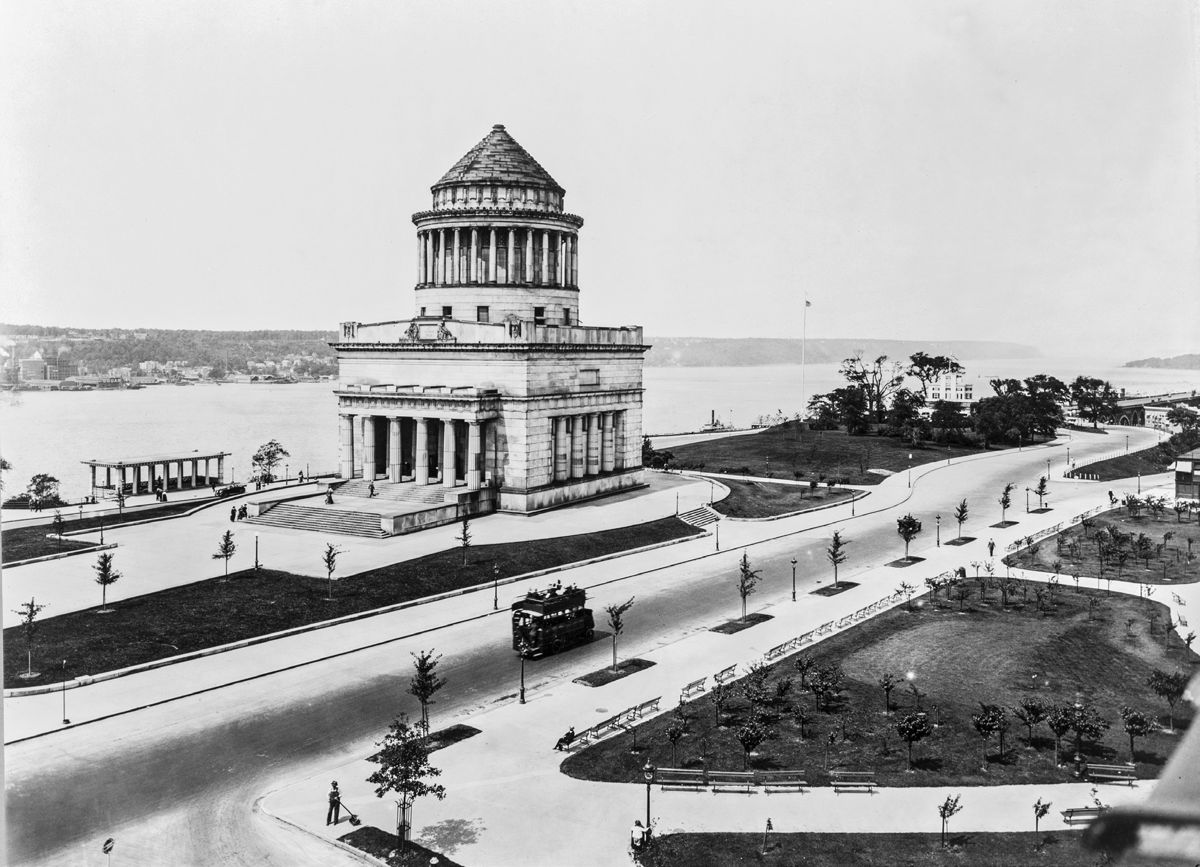
M.G. Subhas, after retiring from a career in finance, has volunteered at the General Grant National Monument in New York City logging more than 500 hours over the course of two-plus years. Subhas is featured on the Facebook page of the site under the ‘Volunteer Voices’ segment in a video discussing some of the symbols used to adorn the monument. During the course of his activity at Grant’s Tomb, Subhas has had the opportunity to hear Mr. Ron Chernow, Mr. Ron White, Mr. Frank Scaturo—all biographers of Ulysses Grant. Subhas resides in New York City with his wife.