
Stunning Identified CS Regulation Artillery Frock Coat
By Shannon Pritchard · Originally published September 2020 · pp. 30–31
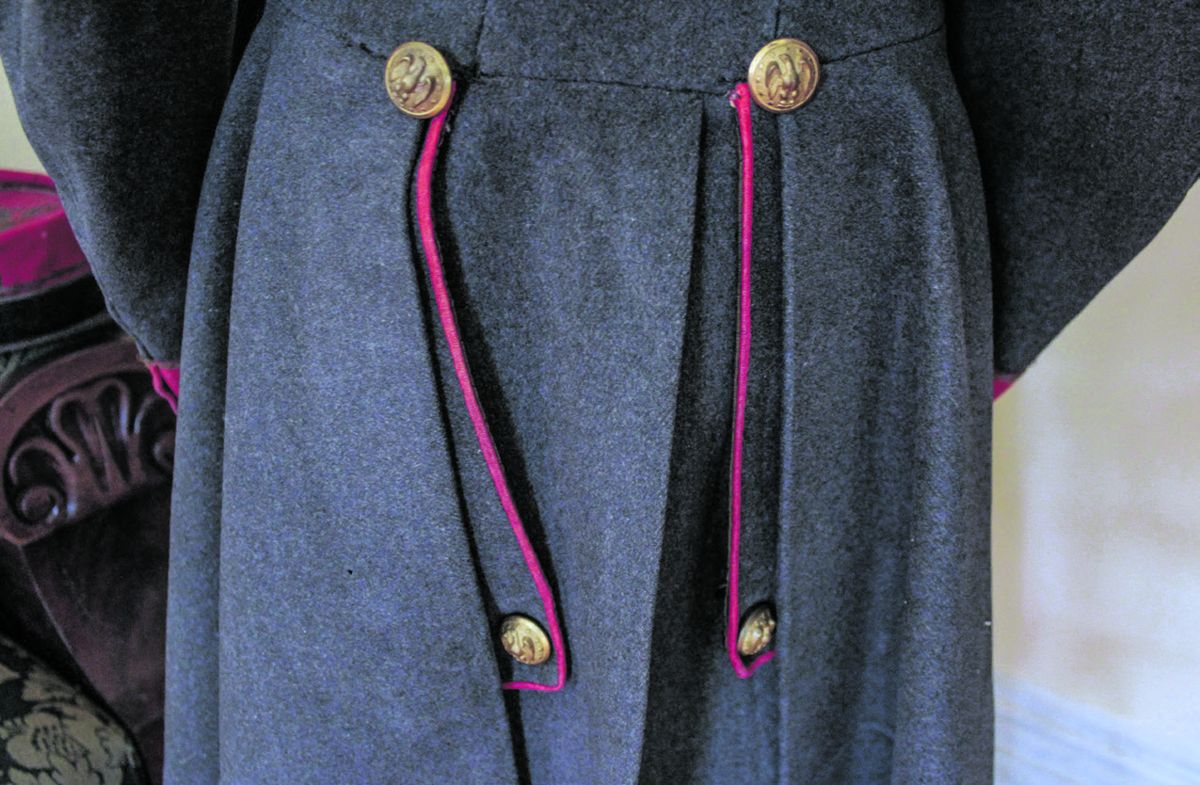
Stunning seems an understatement. This is without a doubt the most colorful Confederate regulation uniform that I have ever seen in over thirty years of collecting.
The family tree that led to the discovery of the coat’s original owner. Ancestry.com.
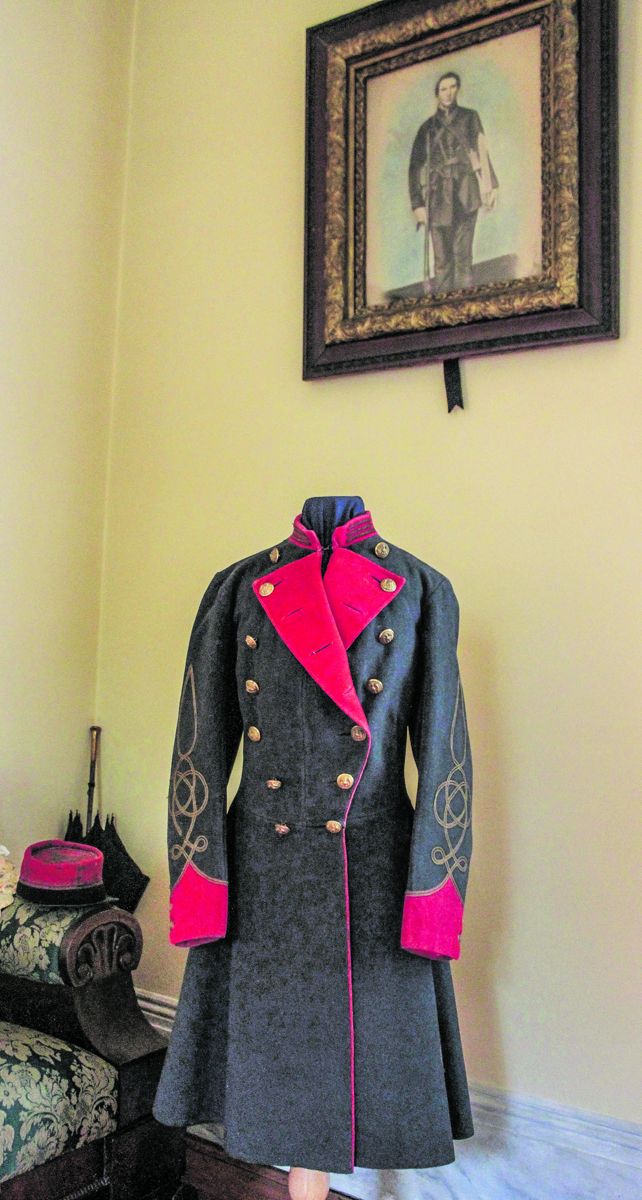
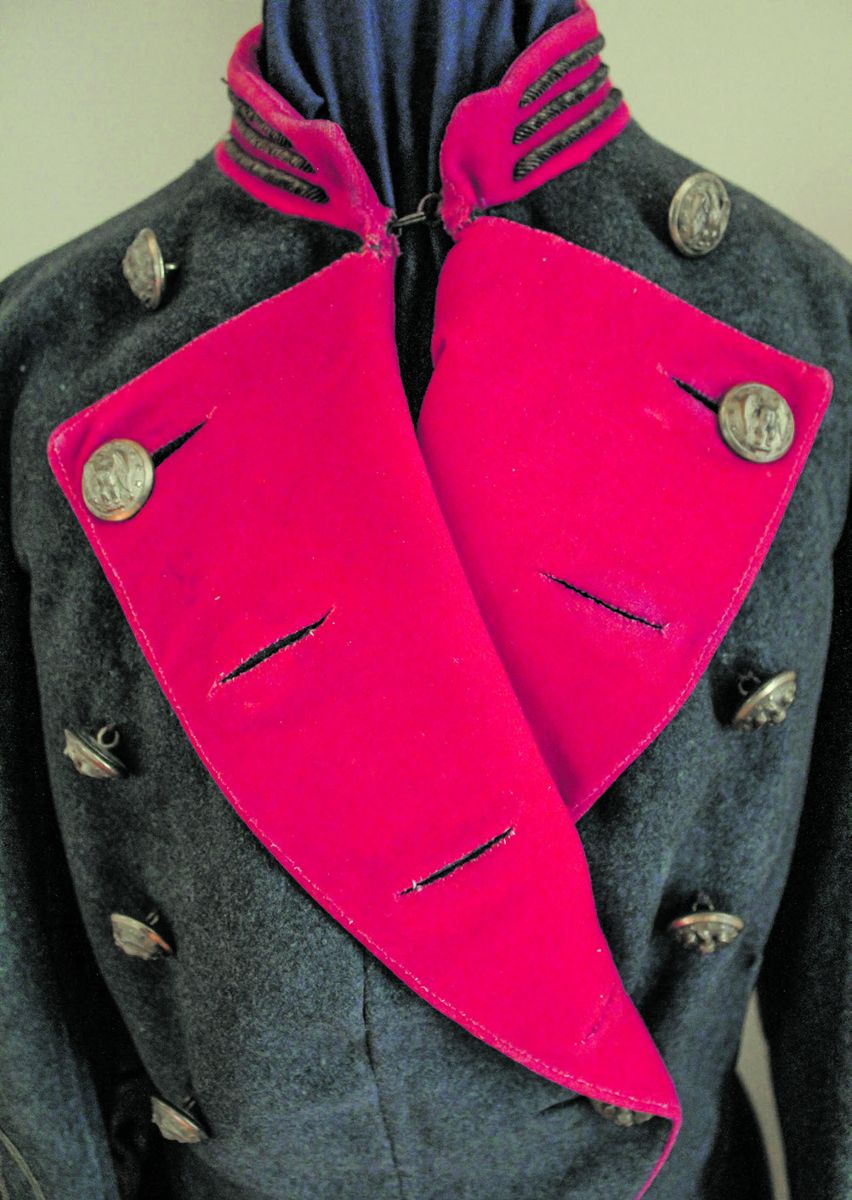
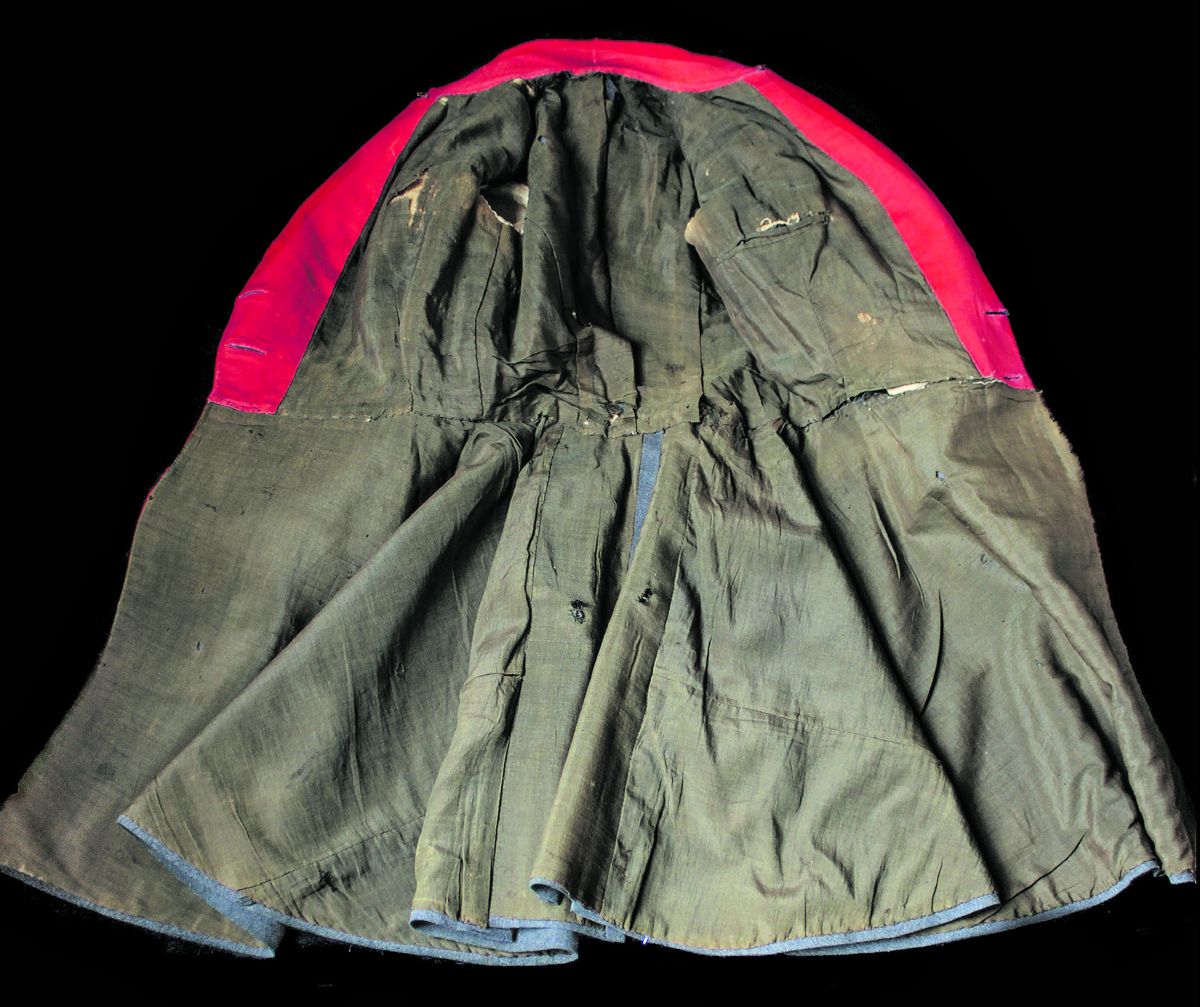
The coat is finely tailored of the best English wool, and faced with fiery red broadcloth. What makes this artillery captain’s frock stand apart from all others is the breast lining of the same red broadcloth, so that when the breast was buttoned back with its gorgeous Confederate staff officer buttons, the officer was oozing with red blooded Southern patriotism. The coat’s cadet grey wool exterior is in near new condition. The green satinet liner shows extensive wear but remains in good condition. The broadcloth service branch facings show extensive wear but are otherwise in excellent condition. All eighteen “EXTRA RICH TREBLE GILT” stamped coat buttons are original to the coat. The six CS staff officer cuff buttons are original and carry the same “EXTRA RICH TREBLE GILT” backmark. “Property of Chas. I Dial” is inked on the inside of one sleeve. The style of writing is post War, so he was not the coat’s owner, but Charles Inglesby Dial was the son of Mary Inglesby Dial, and grandson of Captain Charles Inglesby, 1st South Carolina Artillery. Charles Inglesby entered Confederate Service as a 2nd Lieutenant, Company B, 1st Battalion South Carolina Artillery. He was promoted to 1st Lieutenant in Company E by January 1862. On March 24, of the same year, the battalion officially became the 1st South Carolina Artillery. Inglesby had been signing documents as commanding officer of the company for nearly a year and a half when he was finally officially promoted to Captain, Company I, on July 20, 1864. He was paroled at Greensboro, N.C., on May 1, 1865.
The Captain’s cuffs are adorned with EXTRA RICH TREBLE GILT Confederate staff officer’s buttons, two of which fasten the working cuff, the third is merely for decoration.
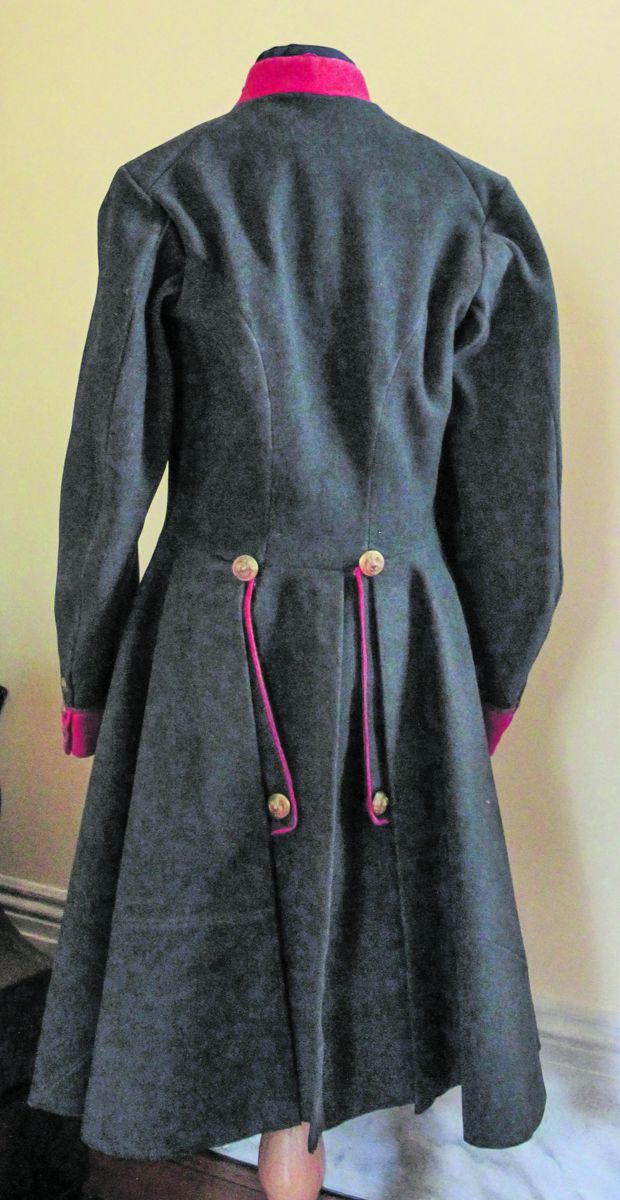
The regiment was assigned to the Department of South Carolina, Georgia, and Florida. It fought in the June 16, 1862, battle of Secessionville, or the First Battle of James Island, a Confederate victory. Afterwards the 1st South Carolina Artillery served in the defenses around Charleston in their various engagements. During operations on Morris Island, July 10 to September 6, 1863, the battalion suffered 18 killed, 50 wounded, and 52 missing. In February 1865, the unit was converted to Stunning, even from the rear!
Right and left sides showing the galloons’ running two thirds of the way to the shoulder and coming to a sharp point.
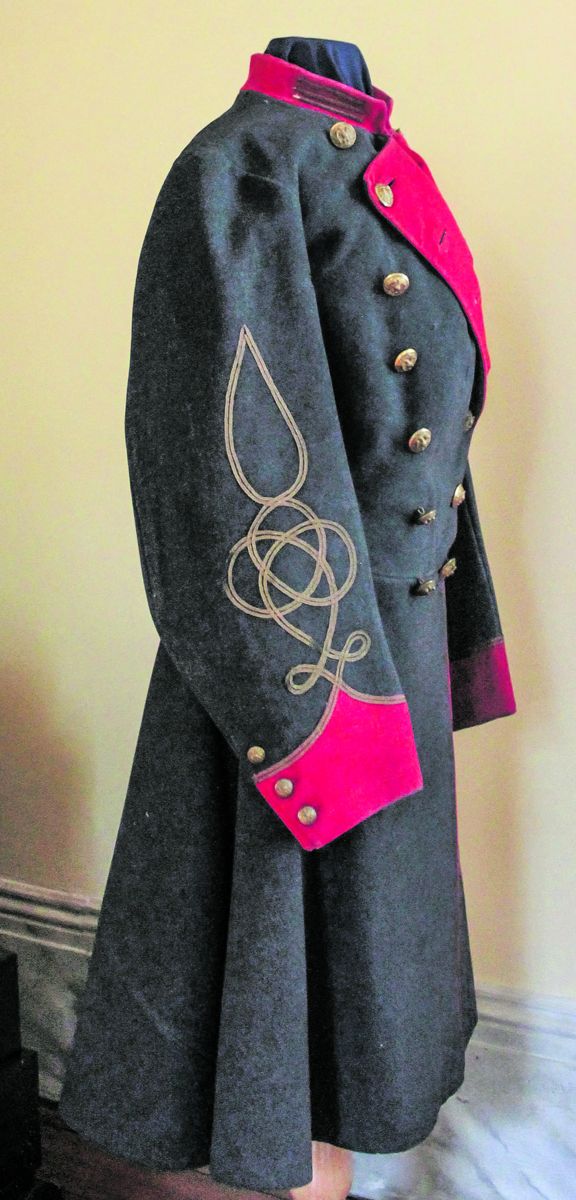
Left: With the breasts pinned back, the Captain showed a flaming front.
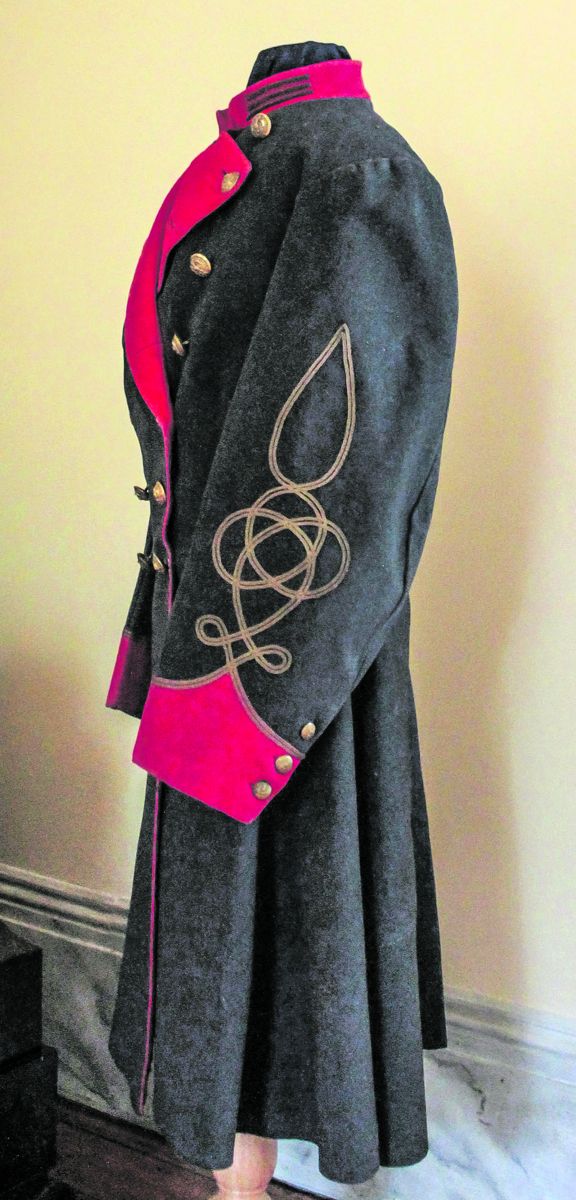
Right: Note the green satinet liner shows extensive wear, but remains in remarkably good condition. an infantry regiment and was assigned to Colonel A. Rhett’s Brigade. The regiment soon became part of the forces involved in the North Carolina Campaign. Only a remnant surrendered with the Army of Tennessee. The author thanks Dom Serrano for the research that led to the identification of the coat’s original owner. Shannon Pritchard has authored numerous articles relating to the authentication, care and conservation of Confederate antiques, including several cover articles and is the author of the definitive work on Confederate collectibles, the widely acclaimed Collecting the Confederacy, Artifacts and Antiques from the War Between the States, and is co-author of Confederate Faces in Color.