
“My Home, My Battlefield, My Passion”
By Tom Van Winkle · Originally published September 2020 · p. 14
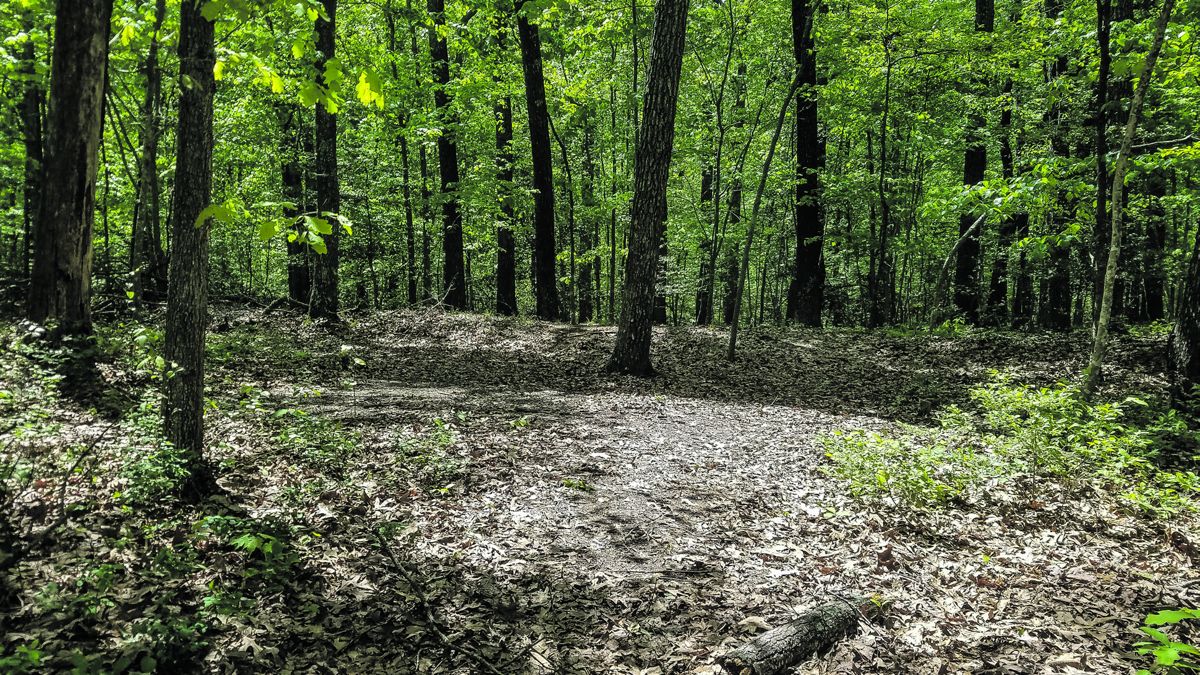
Entering the thick forest of the Wilderness, I carefully negotiate the underbrush as the sharp tree limbs seem to intentionally assault my face and arms. It is over ninety degrees, and the Virginia humidity seems even higher as my clothes become sodden with perspiration. I eventually see the light of a clearing and finally make it to the edge of the water. This could easily be a narrative from any soldier during the 1864 battle of the Wilderness, but it is not. It is what I experience most days in my own backyard. You see, my wife and I live on the Wilderness battlefield. When your employer one day says to you, how would you like to relocate to Virginia and you can pick anywhere you want, opportunities for an armchair military historian become bountiful. In 1994, my wife Lisa and I relocated from central New Jersey, which is rich with Revolutionary War resources, to Virginia, and settled in Spotsylvania County. We purchased a ready-built home on a partially cleared acre of land. The home also happens to be on a well-known water source that was once commonly known as Wilderness Run, prominent in both the Chancellorsville and Wilderness battles. The Run was dammed decades ago to create three lakes for our current subdivision. Several years ago, the
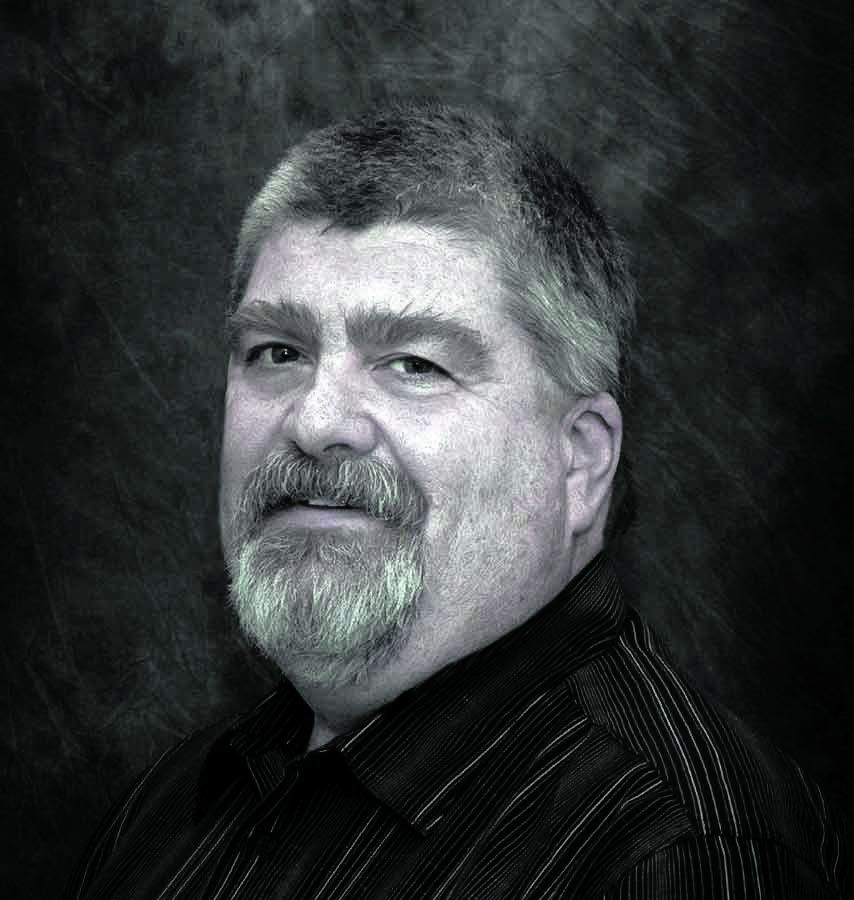
Tom Van Winkle (CVBT President) is a preservation leader and he’s inspired everyday by his view of Wilderness Battlefield. subdivision drained these lakes to repair the dams. I was surprised to see that the lake in our backyard still had the original cut of the Run, and it was bordering our own shoreline. It was not long before we decided to purchase the heavily wooded lots on each side of our home. These are pristine undisturbed parts of the Wilderness Battlefield. It looks somewhat different now, the trees are much taller than they were one hundred and fifty-six years ago when they were only regrowth after being cut for making coal to power Virginia Governor Spotswood’s iron furnaces established about 1716. The underbrush is also not quite as thick. Still, if you tried to walk a straight line of ten people in one end of the forest they would never emerge in that straight line. Imagine the armies in 1864 trying to keep any sort of organization fighting in these woods, especially when the forest erupted in flames from the intense musket blasts. I am extremely interested in the entire Civil War, particularly the Overland Campaign and its battles. Being within walking distance of the Orange Plank and Brock roads as well as Saunders Field and all the battlefield in between, I am most fascinated with the Wilderness since it is so easily accessible. It is thought provoking when you wake up each morning and immediately stare into the throat of the beast that significantly hindered fighting by both Union and Confederate troops in early May 1863 and 1864. For General Lee, it was the great equalizer with his army being only a portion of the size of Grant’s. For General Grant, it took away his cavalry and gave him quite a surprise on the Orange Turnpike from unseen Rebel skirmishers. I soon realized, by the license plates on vehicles buzzing around my area, that people were coming from all over the United States, in fact the world, to visit these sites. When you live near or within an historic area, it is easy to begin taking it for granted. For me, it made me dedicated to help saving it. This is important history. I often wonder how many of my neighbors are aware of what took place in their backyards. About twenty-five years ago, shortly after moving here, I read in our subdivision newsletter, of a group trying to form with the intention of assisting the National Park Service in preserving and promoting the Wilderness Battlefield. I attended that meeting and never looked back. The Friends of Wilderness Battlefield was formed. I held several positions in this organization, culminating in five years as its president. The Friends organization is still going strong today. As is true with all of us, life sometimes gets in the way. I had to retire from the preservation cause for a couple of years to take on my day job’s travel demands. This did have an upside; it gave me the opportunity to visit many battlefields across the country and learn more and more about the conflict. I was able to speak with other like-minded battlefield preservationists and came away with best practices and success stories. I always remind myself how fortunate I am to live on one of these battlefields, arguably one of the most important, when realizing that General Grant’s decision to follow General Lee contrasted with previous Union commanders who simply positioned their armies back where they started. A few years later, I met an old friend, Dr. Mike Stevens, at a book signing. Dr. Mike happened to be the President of the Central Virginia Battlefields Trust. He asked so, what are you up to lately? To make a long story short, I wound up on the CVBT Board of Directors and for years held several positions culminating in, you guessed it, becoming the current President of CVBT. Never miss a meeting! I am extremely honored to hold this position and work alongside our most dedicated Board members and staff. We have a staff of two, and the rest of us are all volunteers. Although I have a comfortable CVBT office in Fredericksburg, I still do most of my work at my home office in the Wilderness. With my day job, I accomplish much of my preservation work at odd hours, and it makes for some exceptionally long days. When these hours begin to wear on me, I simply look out the window, overlooking the Wilderness, and imagine, in my mind’s eye, what occurred here in 1864. This reminds me why I am so passionate about preserving these battlefields.
I had a dear friend and wellknown Overland Campaign author stay over at the homestead one night. I had to ask, what do you think happened on our property in 1864? He paused for a second or two and answered, well, Burnside might have stopped for lunch in your front yard. To this day I am not sure if he was kidding me. When we read a brilliantly written book chronicling one of these battles, it is easy to immerse yourself and feel as if you are there. Preserving these battlefields allows us all to walk upon those grounds where so many were wounded or gave their lives. Each one of those men has a story to tell, and those stories are embedded in those fields. The men outside my window tell me their stories each day, and I listen to them. I answer back; I am doing my best to keep your memories alive. At CVBT, we are doing our best to save the ground where much of our nation’s history is embedded. We consider Fredericksburg, Chancellorsville, Wilderness, and Spotsylvania battlefields our backyard, and for almost twenty-five years, we have been preserving it for future generations to learn and conceivably better understand our past. Tom Van Winkle is the President of the Central Virginia Battlefields Trust and author of several articles regarding the Civil War. He is also an historical film maker and has produced several films including a popular local cable TV series “History Scene™”