
How Constructive was Grant’s Reconstruction?
By Richard Blumberg · Originally published September 2020 · pp. 1–13
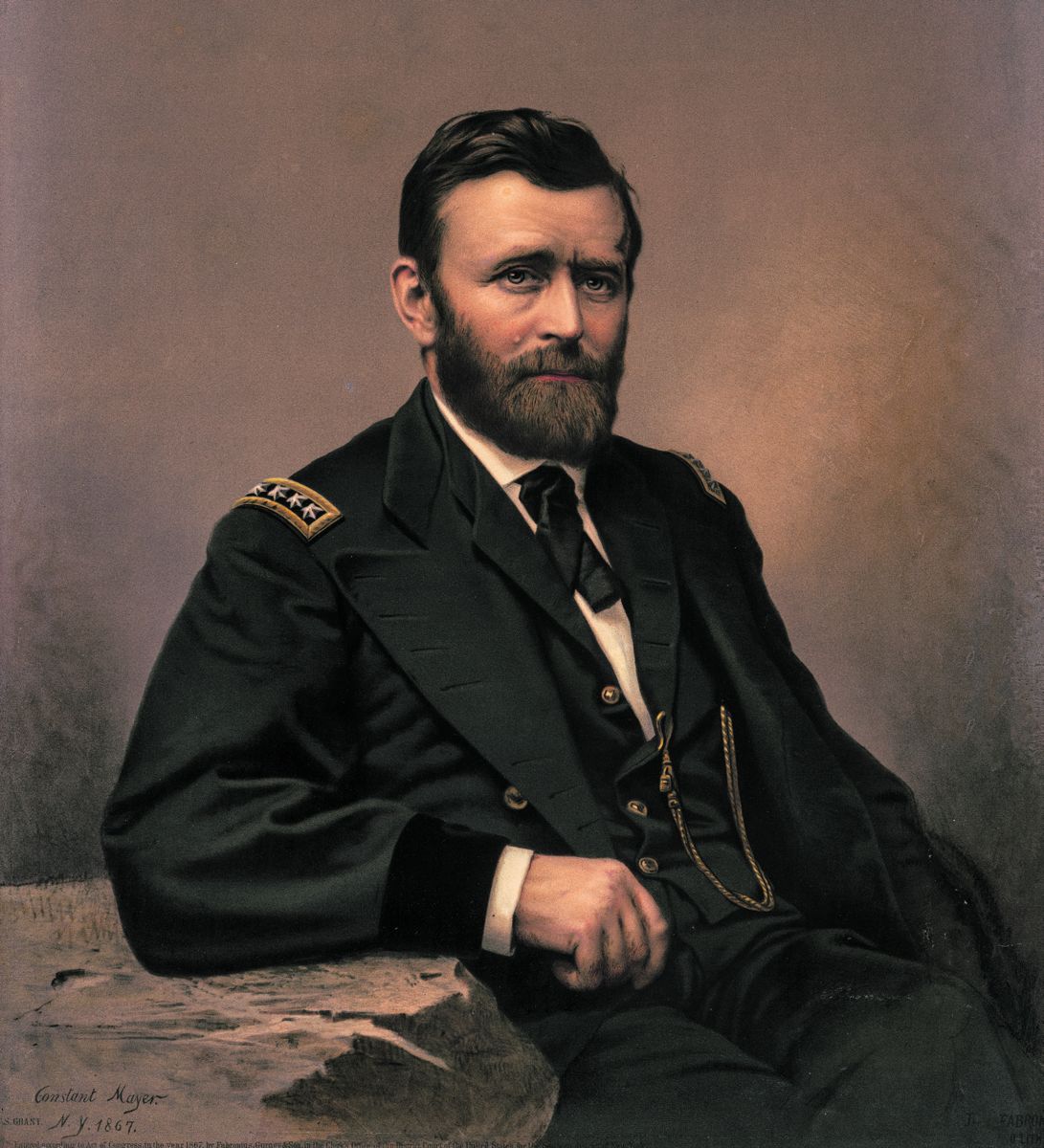
General Grant’s leadership style was unique because of his military and political experience. His two terms as president covered the last eight years of the Radical Reconstruction period. His military leadership skills propelled him to the highest office of this country, yet history books portray his presidential tenure as a period of ineptitude, marred by scandal and corruption. His military successes were based on his ability to work with and through others, as well as dealing with difficult political situations. Why then, is Grant’s presidential service remembered as being so ineffective? This question requires analysis in five areas: 1. Grant’s military and political careers 2. what Reconstruction was supposed to accomplish 3. the political, economic, and social situations Grant inherited as president 4. the actions he took to promote Reconstruction and why 5. were these actions effective and efficient? A seventeen-year-old Grant began his military career in 1839 at West Point. He served during both the Mexican War and the Civil War. Early mentors including Winfield Scott Hancock and Zachary Taylor enabled Grant to become a seasoned battle veteran and troop commander. Grant applied knowledge he gained from these experiences throughout his military career. Two examples of this are: 1. the strategy and conducting of war he adopted 2. the handling of volunteer and Regular Army troops. Many Union generals Lincoln initially relied on adhered to older strategies aimed at attacking cities or conquering land. Grant, however, realized the importance of attacking armies. He also realized that significant differences between Regular Army soldiers and their volunteer counterparts. Volunteers usually had no formal military training, rarely knew what their jobs entailed, and were not attuned to army style discipline. These distinctions required that they be commanded differently from regulars.1 Grant also spent time studying the personalities and both the strategic and tactical thinking of his peers and commanders. This allowed him to better understand the motives and likely courses of actions of former officers who were now Confederate Army leaders. Another skill was forging strong command partnerships across military service lines. This enabled him to conduct effective joint land and sea operations. Many military situations he encountered underscored the importance of politics as it related to the military. Grant faced many political situations. Three of the most wellknown were: 1. his General Order Number 11 dated Dec. 17, 1862, ordering the expulsion of all Jews in his military district for alleged black market operations with the Confederacy 2. the dismissal of the very political Union General John McClernand, from corps command during the Vicksburg campaign in 1863 3. Grant’s promotion to Lieutenant General and General-in-Chief of the Armies in March 1864, while his former boss, General Henry W. Halleck was shifted to Chief of Staff. In addition to serving as a general and president, Grant also served as Secretary of War and simultaneously as commanding general during the last five months of 1867.2 As frequently happens, successful military leaders are automatically assumed fit for high-level civilian leadership and Grant was no exception. In his memoirs, Grant asserts he never sought political office. Grant learned many political nuances related to military operations the hard way. His order expelling Jews put both Grant and Lincoln in the precarious position of involving religious and social groups in the military command arena. After Lincoln rescinded the order, Grant obeyed and took what he learned from this experience and applied it to his presidency. Showing no ill will against those of the Jewish faith, Grant appointed several Jews as members of his cabinet. General McClernand was one of the most politically powerful generals in the Union army. Grant was an academy graduate; McClernand was a volunteer. They never saw eye to eye on anything. General McClernand had his own agenda for fame and fortune, and simply regarded Grant as an obstacle in his path. As a result, Grant removed McClernand from command during the Vicksburg campaign. Although Grant did not ask for it, he also did not refuse his appointment as General-in-Chief. The promotion established him as the master military and political strategist of the war, while moving Halleck to a position better suited to his talents as the master political administrator of the war. These three examples show Grant’s ability to politically maneuver and bargain as needed. In 1868, the Civil War hero and novice politician became the “inevitable nominee of the Republican Party.”3 Grant’s military career that helped him develop many attributes made him an effective President. He developed strong communication skills. He knew how to delegate effectively, making subordinate commanders responsible for executing orders, while he held himself accountable for the overall operation. Grant had a strong focus and was not easily swayed. His tenacity despite several failures at Vicksburg was one major reason he was regarded as a military prophet. He also knew how to work with a variety of people to get a job done. However, Grant also had three significant flaws: 1. he was known to have a temper 2. he drank too heavily at times [editor’s note: for a different interpretation of “drunkenness,” see the M.G. Subhas article on page 4] 3. he was also too trusting. Grant won the elections of 1868 and 1872, making him the eighteenth President. Ironically, the same skills that served him so well in the military caused some of his problems in the White House. Historians agree Grant’s trust and loyalty to his friends blinded him from seeing their true colors. Although several cabinet appointments went to individuals he knew through his military service, there were also some that went to men he hardly knew.4 Some individuals in this latter group were involved in unscrupulous business practices and fraud as they took advantage of the unsettled, often desperate times following the Civil War. One example was Grant’s association with insider dealing in the Credit Mobilier Corporation financing of the Union Pacific railroad by his first Vice President, Schuyler Colfax.5 Bruce Catton summed it up best in U.S. Grant and the American Military Tradition, when he stated, “Grant made an irretrievable mistake by not consulting Republican leaders or even the men he appointed.” Catton also asserted that Grant was a political innocent catapulted into the presidency as a reward for a brilliant military career. Grant could literally do no wrong. If he asked for something, it was usually accomplished without question or reservation. Unfortunately, this situation almost guaranteed disastrous results. Grant’s two terms as president came during one of the more pivotal times of American history. During his eight years as president, Grant faced numerous problems including: • a prior president who faced impeachment proceedings • an uncooperative Congress • reconstructing and reintegrating the Southern states into the Union • dealing with the economic depression of 1873. When Grant first entered office, he did not state any goals regarding Radical Reconstruction, possibly because he did not have any strong opinions. However, it is more likely he wanted to act carefully. His impeached predecessor, Andrew Johnson, was ineffective, because he opposed the Republican controlled Congress on how to administer Reconstruction programs and policies. His biggest problem was that the United States Constitution provided no guidance on secession or how to reinstate seceded states. This left Grant with four major issues open to interpretation: 1. readmission of Southern states 2. treatment of ex-Confederates 3. the civil rights of free Blacks 4. the make-up of new state governments in the South. Each issue was significant in its own right. In many cases, Congress, the president, and general public could not agree on any uniform or consistent terms allowing the southern states to reenter the union. Some people were conciliatory like President Lincoln; others at the opposite end of the spectrum wanted each and every Southerner to “pay” for what they did to this country. These same groups also disagreed on how to handle the former Confederates who had borne arms against the Union government they were now trying to re-enter. Many Northerners felt these soldiers could not be trusted. The Confederates still had weapons and might have a willingness to continue waging war in their hometown areas. The biggest problem was handling more than four million former slaves who were now free, but incapable of taking care of themselves.6 It is interesting to note that President Lyndon B. Johnson, serving his term almost one hundred years after Grant, is well known for his record on race relations, a problem that never was completely addressed during Reconstruction. The racial issues Grant faced were met with greater resistance, yet he is not remembered for that.7 The complex problems dealing with emancipated blacks were difficult, if not impossible, for anyone to overcome. Reconstruction supposedly brought universal freedom for all men, filling in gaps where the Emancipation Proclamation fell short.8 Equal voting rights and protection under the law only lasted as long as the United States Army enforced it. “Freedom” is a confusing word. Many freed blacks had no real freedom. They owned no land, had little or no education, and had little hope of achieving true freedom, because they had no concept of what freedom meant. The paradox of Reconstruction lay in trying to help people who either wanted no help or did not know what kind of help they wanted. To some Freedom meant: • reuniting separated families • ending physical punishment and abuse • beginning an education process • establishing churches to freely practice their own religious beliefs • owning and working land • forming social clubs and/ or entering the political arena.9 Owning land was one of the most important measures of freedom, because it demonstrated economic independence and a potential livelihood for the family.10 The most interesting issue associated with the U.S. Constitution and secession was establishing new state governments in the Southern states. Both the legislative and executive branches claimed reintegrating the state governments as their role and responsibility, but neither could agree on how to implement it. The general public was also deadlocked. As a result, four separate Reconstruction programs emerged: 1. Presidential Reconstruction 2. the Fifty Percent Plan 3. the Johnson Initiative 4. Radical Reconstruction.11 Each emphasized different plans and policies. Presidential reconstruction is what President Lincoln desired. Lincoln’s view was that since a state had no right to leave the Union, they never really left and General Grant during the war. Brady-Handy photograph collection, Library of Congress. he could control their reinstatement. Lincoln’s plan, created in 1863, required ten percent of each state’s voters to pledge their allegiance to the Union for that state to be readmitted. This plan was really aimed at subverting the southern war effort, and was only implemented in those states then (1863) under military occupation: Louisiana, Arkansas, and Tennessee.12 Since Lincoln discussed this plan with both Grant and Sherman and they concurred, it is likely Grant would have implemented a program similar to this. The second program, the Fifty Percent plan, was a congressional response to Lincoln’s plan, and was authored by Senator Benjamin Wade and Representative Henry Davis. This was a harsher program passed by Congress July 2, 1864. It required: 1. an oath of allegiance by a majority of each state’s adult white men 2. new state governments formed and operated only by those who had never carried arms against the Union 3. a permanent loss of voting rights by Confederate civil and military leaders.13 The Wade-Davis Bill clearly sent a message that Congress was not about to hand over Reconstruction policy to the President. Rather than challenging it, Lincoln executed a “pocket-veto” by failing to sign it into law before the Congressional session adjourned.14 The third program came as a result of Lincoln’s assassination. The Johnson initiative, also known as the “Restoration” plan, began in May 1865 and offered amnesty to all Southerners: • revoked their Ordinances of Secession repudiated Confederate debts • ratified the Thirteenth Amendment, abolishing slavery. This option was not available to high-ranking Confederate officials or wealthy planters.15 Only by presidential order could members of these two classes be pardoned. Johnson was a selfmade man who hated the wealthy southern planters and what he saw as the corrupt northeastern aristocracy. His animosity was strong enough that he wanted to see the planters and aristocrats brought down to earth, but he did not care to see colored men elevated in their place.16 Johnson, a slave-owner, was a champion of the poor whites and very likely a racist, since it is documented that he held little if any regard for the rights of freed blacks.17 Congress responded to the Johnson initiative by stating that Reconstruction was a legislative prerogative and not an executive branch mandate. Congress proposed, in turn, “Radical Reconstruction,” based on the premise that “when the southern states seceded, they did it so well, they committed suicide.”18 They no longer existed as states and would not unless and until the Federal government made them anew. Of these four programs, Lincoln’s was the most conciliatory and probably would have reconstructed the South the quickest. However, when Lincoln was assassinated, the political, economic, and social situation Grant inherited began to unfold. This is the third evaluation criterion used in determining how effective Grant’s reconstruction policies were. There were mixed reactions among the general public as to how to implement reconstruction policies and how far it should go. The biggest political situation Grant faced was his own political party. The Republican Party represented a variety of several different things at the same time. It was the party that: • won the war • saved the Union • freed the Negro • stood for high tariffs • provided protection for expanding industry • gave “big business” what it wanted. This situation was important for two reasons. First, Grant was such a popular hero that he was the center of attention regardless of what was going on. Also, his own political beliefs were caught in the middle of the argument about which branch would administer the reconstruction program.19 During Andrew Johnson’s administration, several events caused a fraying of relations between Johnson and Congress. Johnson was a Democrat prior to joining Lincoln’s Republican Party ticket.20 The friction between the president and Congress escalated to such a degree, the
Republican majority of both houses saw Johnson as a major impediment to the Reconstruction process. Misunderstandings, miscommunications, and conflicting personal agendas lasted until President Johnson’s impeachment proceedings led to Grant’s election. These divisions caused a split in the party, that included a new group called Radical Republicans, which Grant affiliated himself with. The Radicals espoused the abolitionist ideals within the Republican Party.21 This group came to power in March 1867, and imposed a military based reconstruction dividing the South into five districts, each commanded by a general. Economically, the North and the South were ruined by the ravages of the Civil War. Many Southern farmlands lay in ruins unfit for most crops. Although the North still had various forms of commerce, it was saddled with the burden of trying to unify the whole nation economically. America was just entering a period known as the “Gilded Age.” This period lasted thirty-five years following the war. During that time, America experienced: • a massive urbanization movement • significant technological improvements • the growth of big business • “get rich quick” schemes. The economic shift created the potential for fraud, waste, and corruption. Social and cultural issues frequently flowed from political and economic issues. Such was the case in the late 1860s. Many freed blacks felt displaced, unwanted, and treated as second-class citizens. The birth of the “Lost Cause” movement emerged in part as a strong rallying cry for the South. Many Southerners were more focused on re-writing history rather than reconstructing their broken region. William C. Davis explored this phenomenon in his book The Cause Lost: Myths and Realities of the Confederacy. Many Southerners felt God was still punishing them for sins they had committed relative to the slavery issue. The fourth evaluation criteria, the actions Grant took to promote Reconstruction and his justification for these actions is the next focus. When Grant began his initial term, he believed the most important issue was Reconstruction. He internalized this belief stating “that the sacred heart of the program lay in the effort to protect the Negro in his new freedom.”22 According to Bruce Catton in U.S. Grant and the American Military Tradition, Grant believed “that the Negro would infallibly be trodden back down into second-class citizenship or worse unless the strong arm of the Federal government intervened to protect them.” In his first inaugural address on March 4, 1869, Grant indicated he had no professional political experience, but his initial Southern policy would be one of conciliation.23 When Grant became president, Congress had no need to fear a presidential impediment to Reconstruction, but the Southern white counterrevolution remained very strong. In response, Grant sought a spirit of magnanimity similar to that exhibited in his Appomattox surrender terms. However, he was not willing to lose any gains made as a result of the end of the Civil War, especially at the expense of suppressing black citizen’s rights.24 In his first year as president, Grant made one of the most profound statements of any president up through his time, and far beyond. He is credited as the first president to “acknowledge the existence of racism as a fundamental problem facing the nation.”25 Frank Scaturro asserted in President Grant Reconsidered, that Grant made the following quote: “The present difficulty, in bringing all parts of the United States to a happy unity and love of country grows out of the prejudice to color. The prejudice is a senseless one, but it exists.” Scaturro goes on to say Grant’s primary aim was for equal rights and not segregation. In 1871, near the midpoint of Grant’s first term, all the seceded states met the required Congressional stipulations and had rejoined the Union. As a result of military and political activities, state Republican organizations won control of several of these newly established reconstruction governments.26 Blacks figured prominently in leadership positions of these newly formed state governments.27 This increased black participation frightened many Southern whites who did everything they could to intimidate the blacks. The intimidation and repeated attempts by the Southern whites to undermine the Fourteenth and Fifteenth Amendments helped Grant see that the central problem with any reconstruction policy was enforcement.28 The Fourteenth Amendment, passed in June 1866, established national citizenship for persons born or naturalized in the United States; prohibited states from depriving citizens of their civil rights or equal protection under the law; and reduced state representation in the House of Representatives by the percentage of adult male citizens denied the right to vote.29 The Fifteenth Amendment, passed in February 1869, forbade denying citizens the right to vote on the grounds of race, color, or “previous conditions of servitude.”30 The Ku Klux Klan, an organization based in Tennessee, became a paramilitary force under the guidance of Confederate General Nathan Bedford Forrest.31 From 1865 to 1871, this organization operated in support of the aims and beliefs of the Democratic Party, by burning churches and schools; and murdering and whipping Republican politicians.32 We can look to Stetson Kennedy’s After Appomattox: How the South Won the War which presents a good picture of why Grant had difficulties enforcing his policies. Kennedy graphically related the stories of some 5,000 lynching and flogging incidents against blacks as the justification Grant used to convince Congress of the need to enlarge his enforcement powers. In response to the intimidation tactics, President Grant passed the Ku Klux Klan Act in April 1871. This act authorized the use of federal prosecutions and military force to suppress conspiracies that deprived citizens the right to vote and enjoy the equal protection of the law.33
Specifically, it empowered the president to try cases of conspiracy, fraud, bribery, and intimidation against state voting officials to Federal courts.34 Even today, these statutes remain as some of the most far-reaching and widely litigated provisions upon which a person can realize or vindicate their constitutional rights.35 The Ku Klux Klan Act was one of five Enforcement Acts Congress passed between 1870 and 1872 to quell the increasingly dangerous intimidation practices used. In effect the Ku Klux Klan Act gave Grant two tools related to managing state related disorders: 1. the use of military force 2. the writ of habeas corpus, a requirement to appear before a judge or court as a result of alleged violations of someone’s personal liberties. The act succeeded at curbing some intimidation. However, it also reminded Southern Republicans, how dependent they were on Federal Troops enforcing the laws. As a result, various government agents gathered and presented evidence that led to arrests, Federal Grand Jury indictment, and convictions of more than 3,000 Klansmen.36 Not all of Grant’s first term was dedicated to helping freed blacks. Frank Scaturro summarized Grant’s involvement with other activities from 1869–1873 in President Grant Reconsidered. In his first inaugural address, Grant advocated freedom from sectional prejudice; the resumption of specie or coin-based payments; restoration of national credit; healthy national commerce; reforms to the nation’s policy toward American Indians; and ratification of the Fifteenth Amendment.
Inaugural Promises Fulfilled Library of Congress.
The following activities of Grant’s first term provide a benchmark for evaluating how close Grant came to fulfilling the promises of his first inaugural address: • Public Credit Act (March 18, 1869) – payment of government obligations in gold. • “Black Friday” (Sept. 24, 1869) – a financial panic erupted when Jay Gould and Jim Fisk tried to corner the gold market, but ended when Grant ordered the sale of government gold to stabilize the market. • Celebration Proclamation (March 30, 1870) – issued to celebrate the ratification of the Fifteenth Amendment.
First Enforcement Act (May 31, 1870) – first of several acts through 1872, protecting the voting rights of blacks. Neutrality Declaration (June 13, 1870) – Grant made a declaration of neutrality despite strong pressure for U.S. military involvement in the Cuban rebellion. Department of Justice (June 22, 1870) – newly created department under the Attorney General, marking a major consolidation of the federal government’s power to enforce civil rights. Civil Service Commission (March 3, 1871) – created the first Civil Service Commission in U.S. history. Indian Appropriation Act (March 3, 1871) – nullified Indian treaties and required government to recognize Indian welfare as individuals instead of tribal entities. Prosecution of the Ku Klux Klan (1871–1872) Nine South Carolina counties suspended the writ of habeas corpus on Oct. 17, 1871, in one of the boldest displays of peacetime presidential power. After troops were sent in, the Ku Klux Klan was effectively destroyed by the end of
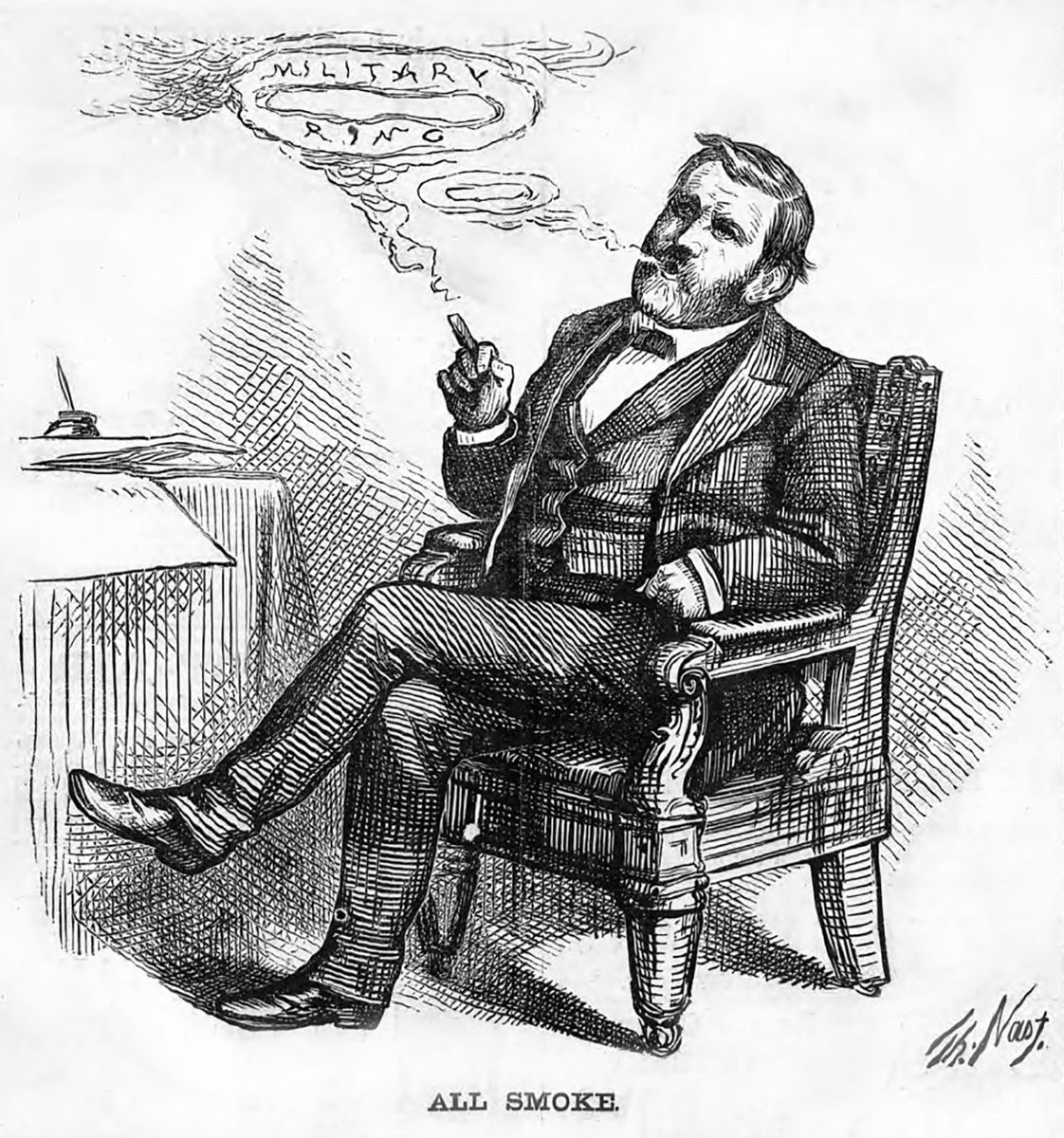
CWN 1872. • Nation’s First National Park (March 1, 1872) – Established Yellowstone as the nation’s first national park. This was the genesis of the National Park Service. • Amnesty Act (May 22, 1872) – restored civil rights to all Southerners except certain named former Confederate leaders. • Coinage Act (Feb. 12, 1873) – made gold the only monetary standard. As the list above shows, Grant did not do too badly for a novice politician in an extremely difficult period of American history. Unfortunately, Grant’s second term did not start off as well. During the election season, the Credit Mobilier scandal occurred. Unbeknownst to Grant, several congressmen took bribes during construction of the Union Pacific Railroad in exchange for their votes in getting certain pieces of legislation passed. This scandal and the rise of the Democratic Party made it tough for Grant to focus on what he promised in his second inaugural address on March 4, 1873. In this address he continued advocating civil rights legislation for former slaves; the gold standard; domestic and international commerce; industrial development, and continued reforms in Indian policies. Scaturro also described activities outlined in Grant’s second inaugural address. Although his second term was marked with political and economic turbulence, Grant stood firm in his conviction to help Black Americans. Grant made the following remark during his address showing how deeply he felt about this issue. “Social equality is not a subject to be legislated upon, nor shall I ask that anything be done to advance the social status of the colored man, except to give him a fair chance to develop what there is good in him; give him access to schools; and when he travels let him feel assured that his conduct will regulate the treatment and fare he receives.”37 A brief list of Grant’s second term activities sheds light on some obstacles he dealt with: • Dispersion of Disorderly Bands – (May 22, 1873) Louisiana’s small Black Majority required Grant’s military support for the fragile Republican government to continue. By this time, Grant’s popularity was plummeting, because the race issue was so intense. • Panic of 1873 (September 18, 1873) – Jay Cooke and Company Banking House closed its doors. Many other banks/businesses followed suit, causing a depression that lasted four years and created increased pressure for currency inflation. However, since Grant stood firmly for sound money, he vetoed an inflation of currency bill.
Virginius Dispute (November 28, 1873) A Spanish gunboat captured a merchant ship, flying the American flag and was commanded by U.S. citizen, Captain John Fry. Spain was convinced the vessel and crew were aiding Cuban rebels. Fry, sixteen passengers, and thirty-six crew members were executed. Despite intense pressure to declare war on Spain, Grant successfully arbitrated the issue and received an indemnity and apology from the Spanish government. Inflation Currency Bill Veto (April 22, 1874) – One of Grant’s 94 vetoes, more than the total number of vetoes by all his predecessors combined. It paved the way to continue specie payments, despite being very unpopular. Dispersal of disorderly gatherings in Mississippi
•
•
•
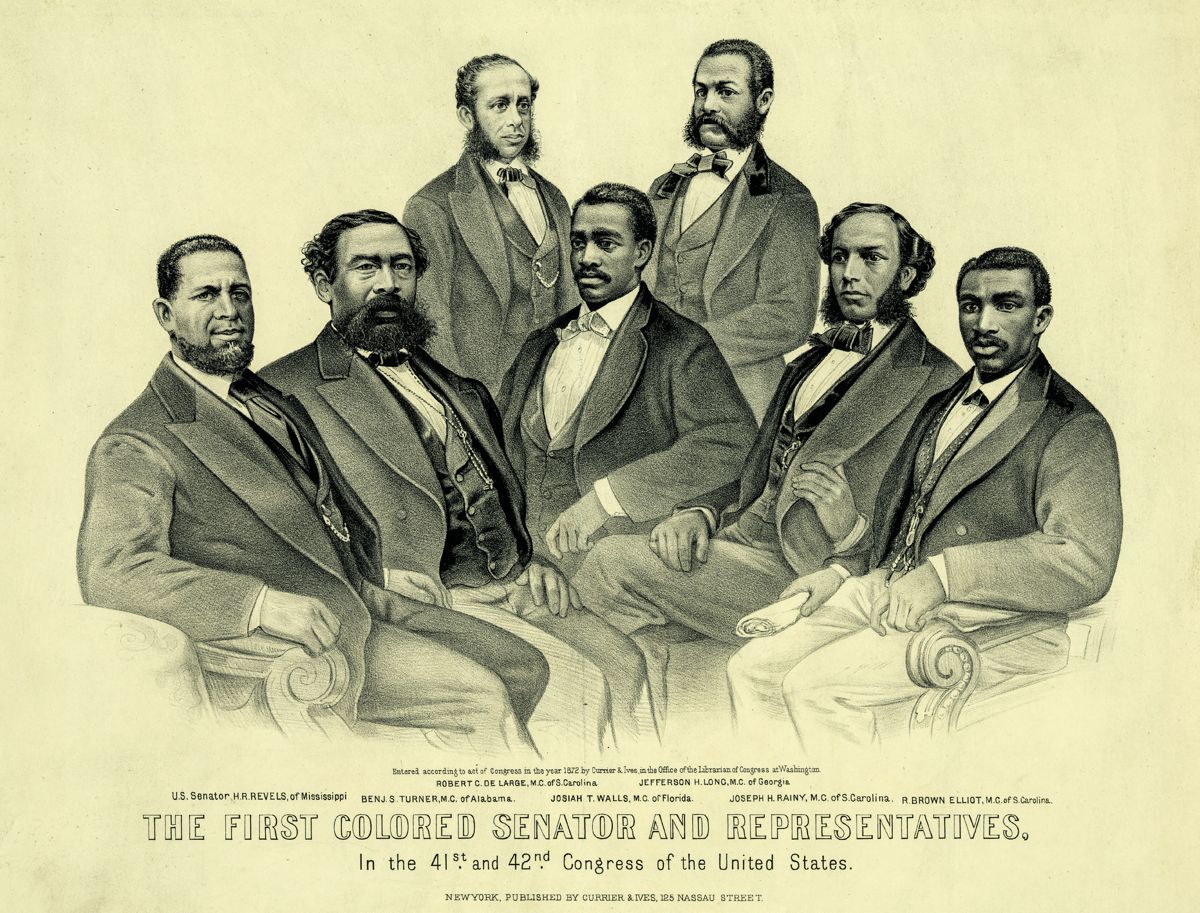
(Dec. 21, 1874) – Federal troops restored order and removed a fraudulently installed Democratic sheriff following the mass murder of blacks in Vicksburg. Specie Resumption Act (January 14, 1875) – Stabilized the currency by reducing the number of paper greenbacks in circulation and resumed gold coinage payments starting Jan. 1, 1879. Civil Rights Act (March 1, 1875) – prohibited racial segregation in public accommodations, transportation systems, and jury selection. Although ruled unconstitutional in 1883, it was the most sweeping civil rights legislation written until 1964. It was very unpopular with various groups and was lamented by many as a move that hurt the Republican Party. “Whiskey Ring” (May 1,
•
•
- – 350 indictments were secured against whiskey distillers who defrauded the Federal government for years. Dispersion of South Carolina “Rifle Clubs” (Oct. 17, 1876) – On this date, Grant ordered these rifle clubs to disperse. Election of 1876 (Nov. 1876) – Louisiana, South Carolina, Florida, and Oregon all submitted two sets of election results, one by Democrats and one by Republicans, bringing the election into dispute. During this time South Carolina and Louisiana, both having a slight black majority, held gubernatorial elections. Although the elections were contested, Republican candidates were inaugurated and Grant sustained both of them until the end of his term. •
Presidential Electoral Crisis of 1876–1877 – Grant’s response, the Compromise of 1877, made Democrats agree to recognize Republican Rutherford B. Hayes as president in exchange for assurances that Hayes would end Federal intervention in the South. This list provides ample justification why many Democrats and Southern Whites grew weary of what appeared to be endless military tactics used to enforce Reconstruction policies. The irony is that, when possible, Grant limited using federal troops and let each state’s militia resolve the own problems to prevent a very unpopular military intervention.38 Despite his intentions, Grant became involved in state related business on several occasions. One issue was the contested elections occurring throughout the South between 1872 and 1875. Grant was involved in four elections.39 Louisiana was one of the worst, primarily because this state had a slim black majority in the popular vote. One state where Grant did not intervene was Texas. The Texas Republican Party passed the state election laws and willingly campaigned under them. Their only protests arose when they lost, as a result of a Democratic majority. Grant’s decision not to intervene underscored his policy of intervention in a southern state. According to Scaturro, Grant’s policy was “neither shrilly partisan nor incoherent and confusing.” Texas was a typical example of how Democratic tendencies were shaped in a predominately white state. Grant simply allowed the law to run its own course without being impeded by the actions of disgruntled Republican Party loyalists.40 At the end of Grant’s presidency, political and economic turmoil still existed; however, it was vastly different from when he initially entered office. Several factors causing the new political and economic challenges set the stage for twentieth century America. One of the biggest changes was a shift in power in Congress. During the war years and until 1874, Republicans enjoyed a majority in Congress, however, in 1874, halfway through Grant’s second term; Democrats won a majority in the House of Representatives.41 A major economic shift also occurred. During most of Grant’s second term, the country was in a depression, resulting from the “Panic of 1873.” Compounding this problem was moving into the heart of the “Gilded Age,” an era that lasted about thirty-five years after the Civil War. In 1877, this period of history was already one-third over. Technological advances, increased competition, and consumer awareness brought many new things to the business world and commerce. Some were good things like entrepreneurship; others were bad such as greed and fraud. Any evaluation of Grant’s Presidency must focus on whether his actions were effective and efficient based on the options available in the late 1800s. Effective means the actions he took were correct based on the situation. Efficient means that the right actions were executed in the most logical and expeditious manner possible. Grant’s effectiveness or ineffectiveness is rooted in the content of his two inaugural addresses. He made his intentions quite clear in both inaugural addresses as to what he intended to do. He was very effective in his first term, because he accomplished all the items he addressed. He quickly determined he had a significant racial problem, not just the issue of freed slaves. He took steps to secure freedom from sectional prejudices in voting and in curbing, where possible, actions of the white counterrevolution and the Ku Klux Klan. He championed rights for many Native Americans. Economically he resumed specie payments and helped restore a fragile national credit program. Although no great businessman, he tried to employ the advice of his Republican Party peers to promote a healthier national commerce. His second term was not as effective, primarily because the media focused on the scandals and corruption that came to light. He still advocated securing civil rights for Blacks and Indians, stabilizing the economy, and promoting commerce and industry. Efficiency is hard to measure simply because any country coming out of the ravages of a fouryear war has tremendous obstacles to overcome to become stable. During both terms, Grant used military force and the writ of habeas corpus quite extensively. These were drastic measures, for desperate times. Grant faced three distinct disadvantages from the moment he entered office: 1. a lack of political savvy and maturity for so high a position 2. a two-fold racial problem 3. a fickle Congress and general public. The first disadvantage was like a junior officer trying to orchestrate and lead the entire Vicksburg campaign. To overcome the second disadvantage, Grant weighed the possibility of retaliatory action against whites denying the rights of newly freed blacks. The third disadvantage was especially prevalent during his second term. As race relations intensified, and control of the House of Representatives shifted, Grant relied on continued use of military power despite it being very unpopular with Congress and the general public. These obstacles made any changes slow and incremental, giving the impression that Grant’s efforts were not efficient. However, a majority of his actions were efficient. They resulted in civil service and civil rights reform; suffrage for Blacks; the establishment of a future national parks system; a moderately stable economy; and increased growth and commerce. Unfortunately, his biggest downfall was a trusting nature and lack of business acumen. Additionally, Grant held the traditional army officer’s view that Congress was the boss.42 We can only speculate whether Grant made all the correct decisions. Grant could not reasonably have foretold all the nuances associated with the Gilded Age. If Grant was so bad, then there really should not have been much corruption in later presidencies, yet there was. Grant made some very hard, decidedly unpopular, decisions no matter which way he turned. In that respect, he is no different from modern presidents. It is unfair to evaluate Grant’s terms on what we know now. Grant made many correct choices. He used his military experience to help ensure that what was won during the war was not lost afterward. Unfortunately, when his second term ended in 1877, so did Reconstruction. Within months after Rutherford B. Hayes was inaugurated, he made good on his promise to quit intervening in the South. All the heart and hard work Grant expended into Reconstructing the South would wither away, or would it? The racial issues created long before the Civil War exploded soon after, but were contained under Grant but it would be some eighty years after Grant left office before the civil rights issues received the attention again that it deserved. Grant’s Reconstruction program was constructive. Grant was human. He was put into a position of having more power than he adequately knew what to do with. Like all of us, he used his experience, character, personality, strengths, and weaknesses every day that he served. He was an extraordinary military genius who, though promoted beyond his political capabilities, performed admirably. He truly deserves to be recognized as a good president and a military mastermind.
Endnotes:
Bruce Catton, Grant Moves South, (Boston: Little, Brown and Company, Inc., 1960), p. 8. Catton, U.S. Grant and the Military Tradition, p. 152. F. Norton Boothe, Ulysses S. Grant (Great American Generals Series), (New York: Gallery Books, 1990), p. 69. Ibid., p. 70. Ibid. Frank J. Scaturro, President Grant Reconsidered, (Lanham, MD: University Press of
America, Inc., 1998), p. 63. 7. Ibid., p. 64. 8. Gisela R. Ables, et al., eds., “A Special Covenant …” Perspective on American History, (New York: American Heritage Custom Publishing, 1999), p. 381. 9. James A. Henretta, et al,, America’s History, 4th edition, (Boston: Bedford/St. Martin’s, 2000), p. 481. 10. Ibid. 11. Ibid., pp. 477-479. 12. Ibid., p. 477. 13. Ibid., p. 478 14. Ibid. 15. Ibid. 16. Catton, U.S. Grant and the Military Tradition, p. 143. 17. Henretta, et all, p. 478. 18. Catton, U.S. Grant and the Military Tradition, p. 145. 19. Ibid., p. 147. 20. Henretta, et al., p. 479. 21. Ibid., p. 485. 22. Scaturro, p. 66. 23. Ibid., p. 68. 24. Ibid. 25. Ibid., p. 69. 26. Henretta, et al., p. 489.
•
•
•
-
-
-
-
Ibid. 28. Scaturro, p. 70. 29. Henretta, et al., p. 487. 30. Ibid. 31. Ibid., p. 494. 32. Ibid. 33. Ibid. 34. Scaturro, pp. 70-71. 35. Ibid. 36. Henretta, et al., p. 495. 37. Scaturro, p. 92. 38. Ibid., p. 79. 39. Ibid., p. 80. 40. Ibid., p. 82. 41. Henretta, et al., p. 502. 42. Catton, U.S. Grant and the American Military Tradition, p. 152.
Primary Sources:
Grant, Ulysses Simpson, Personal Memoirs of U.S. Grant. New York: Dover Publications, 1995. Oliver, Philip and Guild Press of Indiana, The Civil War CDRom: The War of the Rebellion (A Compilation of the Official Records of the Union and Confederate Armies. Carmel: Guild Press of Indiana, 1996.
Ables, Gisela R., Howard Bodner, Chris Drake, Harry Goss, Susan Hult, J. Kent McGaughy, Charles Robinson, and Joella Robinson, eds. (Houston Community College), “A Special Covenant…” Perspectives on American History. New York: American Heritage Custom Publishing, 1999. Boothe, F. Norton, Ulysses S. Grant (Great American Generals Series). New York: Gallery Books, 1990. Catton, Bruce, U.S. Grant and the American Military Tradition. Boston: Little, Brown and Company, 1954. ________. Grant Moves South, Boston: Little, Brown and Company, Inc., 1960 Hart, B.H. Liddell, Sherman: Soldier, Realist, American. New York: Da Capo Press, 1993.
Richard Blumberg is a retired Army Reserve Colonel, who received his MA in Military History (Civil War Studies) from American Military University. He is Past President of the Houston, Texas Civil War Roundtable. He has served as Book Reviewer with CWN since 2003. This is his second published article in Civil War News. He served as a presenter to the 2000 Conference on Women in the Civil War. He is scheduled to teach a community college online class in Civil War Logistics in October 2020.