
The Unfinished Fight
More on Rations: Nutritional Deficiencies
By Craig L. Barry · Originally published October 2020 · pp. 18–19
What the Yankees don’t kill will die of disease or return home with a broken constitution… – Letter from William Hardy to his wife Sally, October 9, 1861. It required real dedication to the cause to be fighting when the soldiers didn’t know where their next meal was coming from. Because of the lack of infrastructure such as the existing commissary and supply system of the North, the Confederate soldier had to do a lot of foraging for food during campaigns until regular supply lines were up and operational. This was not always a hardship, during the spring/summer campaign season, especially early in the war, there was at various times reasonable access to fresh carrots, corn, onions, turnips, peas, squash, and potatoes. Confederate soldiers were issued pork or beef (usually pork), corn meal, tea (off and on), sugar, and molasses to go with the occasionally foraged fresh vegetables. It was not always possible to forage off the countryside and became less so as the war dragged on and on. The most common vegetables regularly available to the Southern soldier were peas or beans. While many Confederate Medical Department records were destroyed after the Civil War, adequate documentation exists on the Federal side in the Medical and Surgical History of the War of Rebellion to evaluate the effects of the soldier’s poor diet on the outcome of the war. These volumes detail diseases among Federal troops during the War and most of the significant data was true of the Confederate army as well. The two sides were similar in that disease was a more common cause of death among troops than combat injuries. According to the Medical and Surgical History of the War of Rebellion 1861–1865 the chief culprits were fever (313,332) and diarrhea/dysentery (319,233); for some reason the two main forms of intestinal illness were lumped together statistically. The numbers affected were very evenly divided between the two categories, and are understated if anything. The impact of a poor diet on the health of Confederate soldiers in the field is widely acknowledged. The role played by nutrition was recognized at the time but not fully understood. While the commissary department oversaw the supply and distribution of rations, it was the medical department that performed field observations and made recommendations about the soldier’s diet and how it affected the army’s health. The other effects of vitamin deficiency were not fully appreciated by the medical community until the early twentieth century. The physicians on both sides tended to lump diet related nutritional deficiencies as “scorbutic diathesis.”
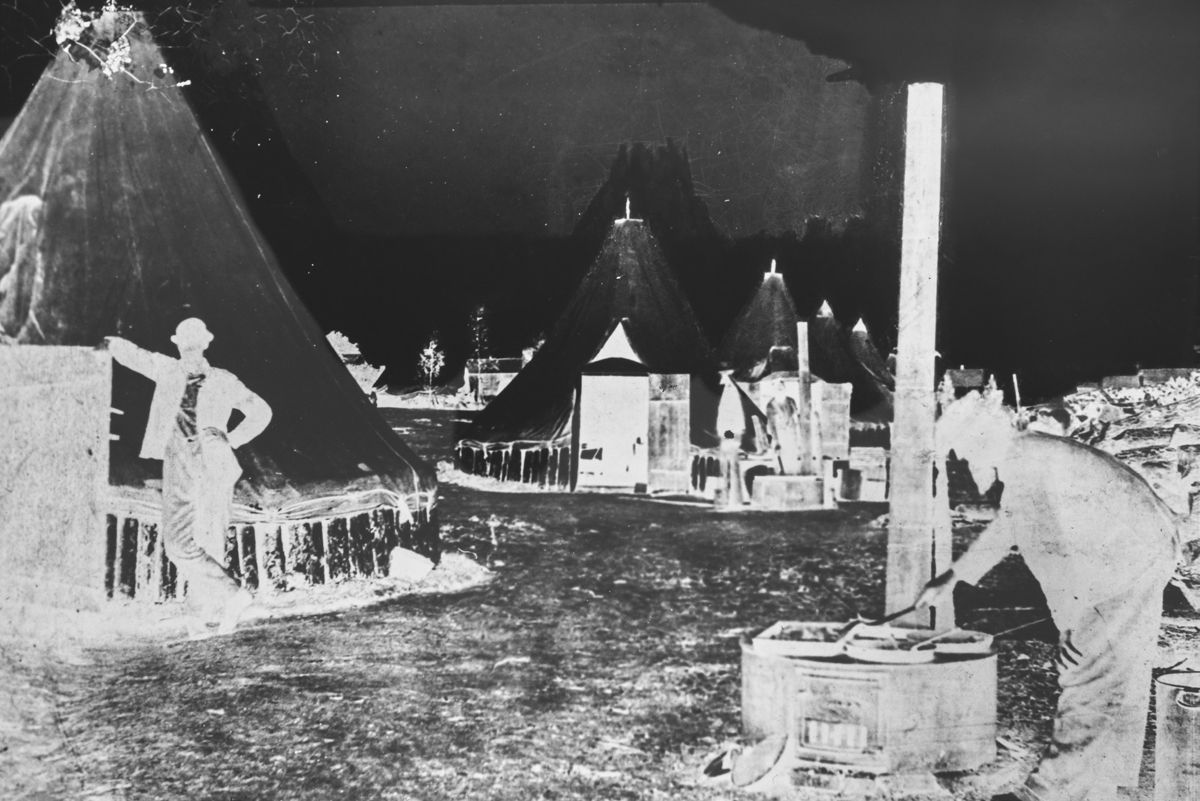
Cooking in camp. Library of Congress.
Perhaps in this regard the Confederates enjoyed a more enlightened understanding at the highest levels of the medical community, but if so it had little effect on improving the rations delivered to soldiers. Confederate Medical Director Dr. William Carrington had from the start strongly recommended a diet that included fresh fruits and vegetables for the men in the field; in the Army of Tennessee, Dr. Samuel Stout ordered his hospital stewards to purchase large quantities of “vegetables, butter and eggs” to aid in the recovery of the injured and invalid. The challenge was understood on the other side, and the Union commissary issued “anti-scorbutics” in the form of desiccated vegetables and potatoes. The process of drying the vegetables stripped them of the necessary ascorbate (vitamin C) to ward off scurvy and of course, potatoes are not particularly rich in vitamin C after being skinned and boiled. Poor health in the Confederate Army was partially from the cumulative effects of a monotonous diet that left them either directly or indirectly more vulnerable to disease than their Union counterpart, and partially from poor sanitation. The reliance on salt pork and corn flour, though a traditional southern diet well known as “hogs and hominy” was partially at fault. The ongoing supply challenges played a role as well. The medical staffs and surgeons were too busy dealing with combat injuries and cases of “eruptive fevers” such as measles, chickenpox, smallpox, and mumps that were cutting a swath through entire companies, laying them to waste early in the war. Even if they could invest the necessary time investigating the role of the poor diet to other diseases, what could be done? Physicians were at least partially aware of the effects of the poor diet, and they were reported accordingly. For the Commissary it proved a challenge to get enough of any edible food delivered to the army, let alone the necessary variety to ensure long term health. One Mississippi soldier noted this problem in his diary, There was considerable sickness in Company C at Corinth. Measles and diarrhea were most annoying…the latter doubtless owing to bad water and unhealthy diet. From this passage it is fairly clear that even very early in the war, soldiers suspected the right culprits were responsible for their miseries. One disease that was especially dreaded was scurvy. As long as there have been ships and extended voyages, scurvy has been a problem. It was noted by Hippocrates (460 B.C.E.) as a condition that benefited from herbal treatments. Scurvy was dreaded by seamen and explorers who found themselves on a diet of meat and biscuits for periods far longer than fresh fruits or vegetables could be preserved. It was also noted as a result of the potato blight in Ireland during the mid-1840s. The use of citrus fruits by the British navy gave rise to the term ‘limey’ for their sailors, since their vessels often carried limes/ lemons for their seamen to eat as a preventative. British Naval surgeon James Lind had demonstrated the correlation of diet to various diseases by the treatment of scurvy with citrus fruits in the mid 1750s. By the eighteenth century, German ships were generally seen as free from scurvy because they issued sauerkraut.
The continued lack of vitamin C (which leads to scurvy) begins with poor wound healing, then bleeding and blackening of the gums, followed by severe pain in the extremities, and death. Humans and primates are omnivorous general feeders not specifically adapted to eat and digest either meat or plant material exclusively, though modern vegetarians may beg to differ. The human digestive system does not synthesize vitamin C from a diet whose primary nutrients are from meat alone, as most carnivores do, and must regularly include plant sources to obtain the necessary compounds for good health. It is important to realize that the amount of nutrients from any one source of food supply is not the only determinant of its importance to an army, but rather the importance lies in a steady, consistent supply of a variety of nutrients in the dietary rations. Getting enough “calories” from a steady diet of fatty meat and fried hardtack or cornbread was not enough to maintain the health of a fighting force over the long haul. Worse yet, a number would perish from these debilitating conditions alone, regardless of any other wound or ailment. There was little the physicians could do for it that produced any long term improvement. While nutritional deficiencies from poor diet were one root cause of diarrhea/dysentery, after onset an improved diet seldom affected the chronic form of the disease to the point of full recovery. The soldier always remained susceptible to recurring attacks of intestinal disease afterwards. Physicians suspected a correlation between the role of nutrition to intestinal illnesses and scurvy, but could do very little about it given the number of battlefield injuries they had to contend with. While not exempt from intestinal problem themselves, the invading Union force used to call the condition “the Confederate disease,” that both sides rightly blamed on the poor diet and lack of sanitation in Army camps. Common medical treatments for diarrhea/ dysentery included opium pills, laudanum (morphine in an alcohol base), or blue mass (mercury mixed with chalk). Other treatments were strychnine, turpentine, calomel, lead acetate, quinine, silver nitrate, camphor, whiskey, and ipecac. One doctor prescribed strips of raw beef liberally coated with vinegar, salt, and pepper. It proved about as effective in the long run as any of the other treatments listed.
Craig L. Barry was born in Charlottesville, Va. He holds his BA and Masters degrees from the University of North Carolina (Charlotte). Craig served The Watchdog Civil War Quarterly as Associate Editor and Editor from 2003–2017. The Watchdog published books and columns on 19th-century material and donated all funds from publications to battlefield preservation. He is the author of several books including The Civil War Musket: A Handbook for Historical Accuracy (2006, 2011), The Unfinished Fight: Essays on Confederate Material Culture Vol. I and II (2012, 2013) and four books in the Suppliers to the Confederacy series on English Arms & Accoutrements, Quartermaster stores and other European imports.