
Emerging Civil War
Emerging Civil War — October 2020
Originally published October 2020 · pp. 34–36
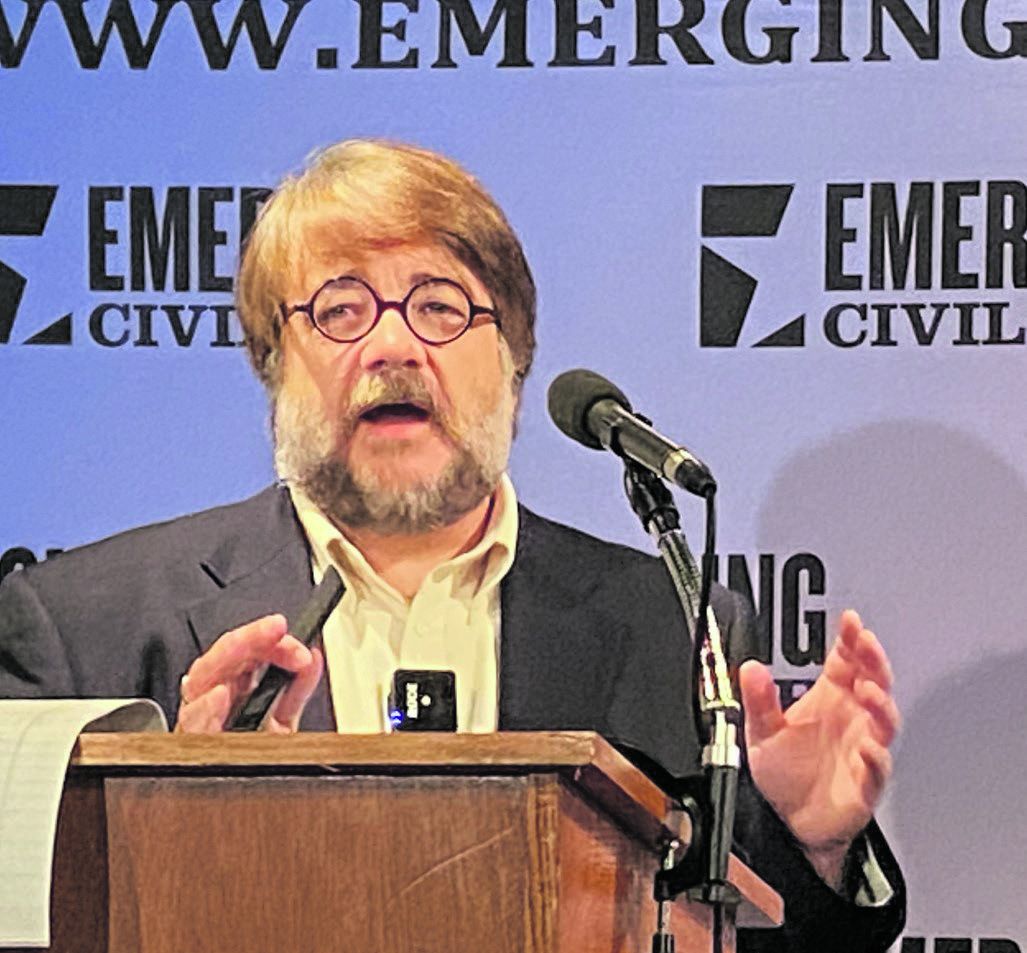
Chris Mackowski
From the Editor
What are you doing these days to take care of yourself? The coronavirus pandemic has of course forced all of us to adopt new habits to protect our health, but I’m talking about more than just physical health, although that’s really important. The pandemic is just one of many stress-inducing factors we have swirling around us all right now. I won’t even bother rattling off a list, because we all know what they are and I don’t want to add to anyone’s stress levels by mentioning them. In the midst of that kind of tumult, it’s easy to feel overwhelmed and disconnected. That’s why it’s important to take care of yourself. Keep your stress level down. Get plenty of rest. Extend a word of encouragement to the people around you. Practice random acts of kindness. Read. Go for a walk. Treat yourself to a nice dinner. Sometimes, the most obvious things are the things we overlook or forget about. That’s why I am making an effort to remind you. It’s no secret that the Civil War community, on the whole, skews older, which puts a lot of ECW readers in high-risk categories for COVID-19, in particular. We enjoy your company, so we want to make sure you’re doing OK. Although the world can seem like a stressful, hostile place sometimes, beyond any individual’s ability to fix, remember that the first place you can start is with yourself. If we all made sure to take care of ourselves, we’d all feel a little better. The cumulative effect of that would make the world a little better. I hope you’re hanging in there and staying safe and healthy, and taking good care of yourself. — Chris Mackowski, Ph.D. Editor-in-Chief Emerging Civil War is now officially a 501(c)3 not-for-profit organization. We have always run ourselves this way, with a strong focus on our educational mission, so our designation by the IRS really just formalizes the way we’ve done business for the last nine years. We don’t plan on being a fund-raising organization. That would put us in competition with many great partners who rely on donations to keep them going. We don’t want to hurt them by dipping into the same fund-raising pool they rely on. That said, with no symposium this year, we’re going to have a tight budget because the symposium is our major source of income. So, we’re hoping our readers might be willing to help us out with a tax-deductible donation to help us get through these lean times. If you’re interested in making a tax-deductible donation, you can do so through PayPal by clicking this link: https://www.paypal.com/donate/?token=l0pVC2xpSQ868EgMLRNrkqwNlxfW1sUggzfbVRv5C36SciydGxvoadgEVYgFkdq-kFyzYG&country.x=US&locale. x=US
Congratulations to the recipients of this year’s Emerging Civil War Awards! The Emerging Civil War Award for Service in Civil War Public History: Dave Ruth, former superintendent at Richmond National Battlefield https://wp.me/pbxXKT-Oqc The Emerging Civil War Book Award: Fight for the Old North State: The Civil War in North Carolina, January–May 1864 by Hampton Newsome https://wp.me/pbxXKT-OpQ Runners-Up: • Conquered by Larry Daniels (University of North Carolina Press, 2019) • Bodies in Blue by Sarah Handley-Cousins (University of Georgia Press, 2019) Brig. Gen. Thomas Greely Stevenson Award for Service to ECW: Jack Melton, Civil War News https://wp.me/pbxXKT-Oqw Brig. Gen. Emory Upton Award, presented to a member of the Emerging Civil War community in recognition of outstanding service to ECW: Rob Orrison
ECW News & Notes Independent publishers are hurting because of the coronavirus pandemic’s effects.. Ted Savas, publisher of the Emerging Civil War Series, recently shared some thoughts on our blog about the need to support independent publishing. If you missed the article, it’s definitely worth reading: https://emergingcivilwar.com/2020/08/07/ecws-support-independent-publishing/ From Doug Crenshaw: Bert Dunkerly and I are doing a live video for Richmond National Battlefield on Richmond’s lesser-known battlefields on 6-8, 2021. We’ll still focus on “Fallen Leaders” as our theme, Gordon Rhea will still be our keynote speaker, and Greg Mertz will still be our battlefield guide. In the meantime, we recorded a virtual symposium on Saturday, August 8, 2020, one of the days our in-person symposium was originally scheduled. Those talks are now available on the ECW YouTube page: • Paige Gibbons Backus: A Fight for Life or Death: Carnage in the Medical Field During Civil War • Sarah Kay Bierle: “We’re the boys who rode around McClellan” The Chambersburg Raid of 1862 • Mark Maloy: The First Shots of the Civil War in Charleston Harbor • Derek Maxfield: Hellmira: The Union’s Most Infamous Civil War Prison Camp • Kevin Pawlak: In the Wake of Antietam: The Loudoun Valley Campaign of 1862 • Dan Welch: “Where all so well did their duty” George Greene’s Brigade at Gettysburg
Saturday, August 22, and in September, we’re doing one on Fort Harrison, with re-enactors. As usual, Meg Groeling has been hanging out at home writing about a myriad of things Civil War-related. She is also reading about Berdan’s Sharpshooters. “I have this hare-brained theory that the Sharpshooters might be considered a ‘special forces’ unit and, as such, were treated differently from the rest of the rank & file,” she says. “Might this also have applied to the 11th New York in some manner? If Ellsworth had not been killed, might he have created units schooled in the zouave drill that could have been used as special forces to find and flush out the enemy immediately prior to a battle? Could they have attained the status zouave troops had in the Crimea? Inquiring minds want to know!” Meg is also glad baseball is back. Looks like a good, if short, year for the Yankees. Frank Jastrzembski published an article on Marcellus Crocker in the latest issue of Civil War Times: “Marcellus Crocker: Grant’s Hammer in the Western Theater.” Frank also reports that Brigadier General William Gamble will be receiving a memorial headstone in the next few weeks: https://www.findagrave.com/memorial/212281957/william-gamble. (Frank has worked diligently to get the new headstone installed.) On September 2, Chris Kolakowski will keynote “A Better World Shall Emerge,” a virtual ceremony commemorating 75 years since the end of World War II. The event is sponsored by Virginia’s WWI and WWII Commission. More details are available here: h t t p s : / / w w w. v i r g i n i a w w i a n d w w i i . o rg / 2 0 2 0 s i g n a tureevent?fbclid=IwAR-
0jzltwvO1H3I2pSaVxP_ AJ7xxZTCRhoQQpY7_ AOUO9hFQ6Gqx3qaorMZU Chris Mackowski gave a Zoom presentation on “Grant’s Last Battle,” based on his book of the same name, to the Bull Run Civil War Roundtable. The roundtable recorded the presentation, which can be viewed here: http://bullruncwrt.org/ B R C W RT / A u d i o A r c h i v e s / lecturer-Mackowski20/ ChrisMackowskizoom_0.mp4 Chris also did a video battlefield tour of Chancellorsville based on Stephen Crane’s Red Badge of Courage as part of a virtual fund-raiser sponsored by Central Virginia Battlefields Trust (CVBT). You can see a preview of the tour on the ECW YouTube page: https:// y o u t u . b e / I C r b m A g H A PA . And you can support CVBT’s fund-raiser here: https://bit.ly/CVBTRedBadgeofCourage. The September 2020 issue of Civil War News gave a positive review to one of Dave Powell’s latest books, Union Command Failure in the Shenandoah: Major General William Franz Sigel and the War in the Valley of Virginia, May 1864. Reviewer Jonathan Noyalas said, “This study, solidly written, soundly researched, profusely illustrated, and enhanced with detailed maps, is indispensable reading…” The same issue of Civil War News featured a review by Meg Groeling of Jon Schaff’s Abraham Lincoln’s Statesmanship and the Limits of Liberal Democracy. The Megster called it an “intellectually demanding study…”
The 2020 ECW Virtual Symposium Because of the pandemic, we had to postpone this year’s ECW symposium to next year, August
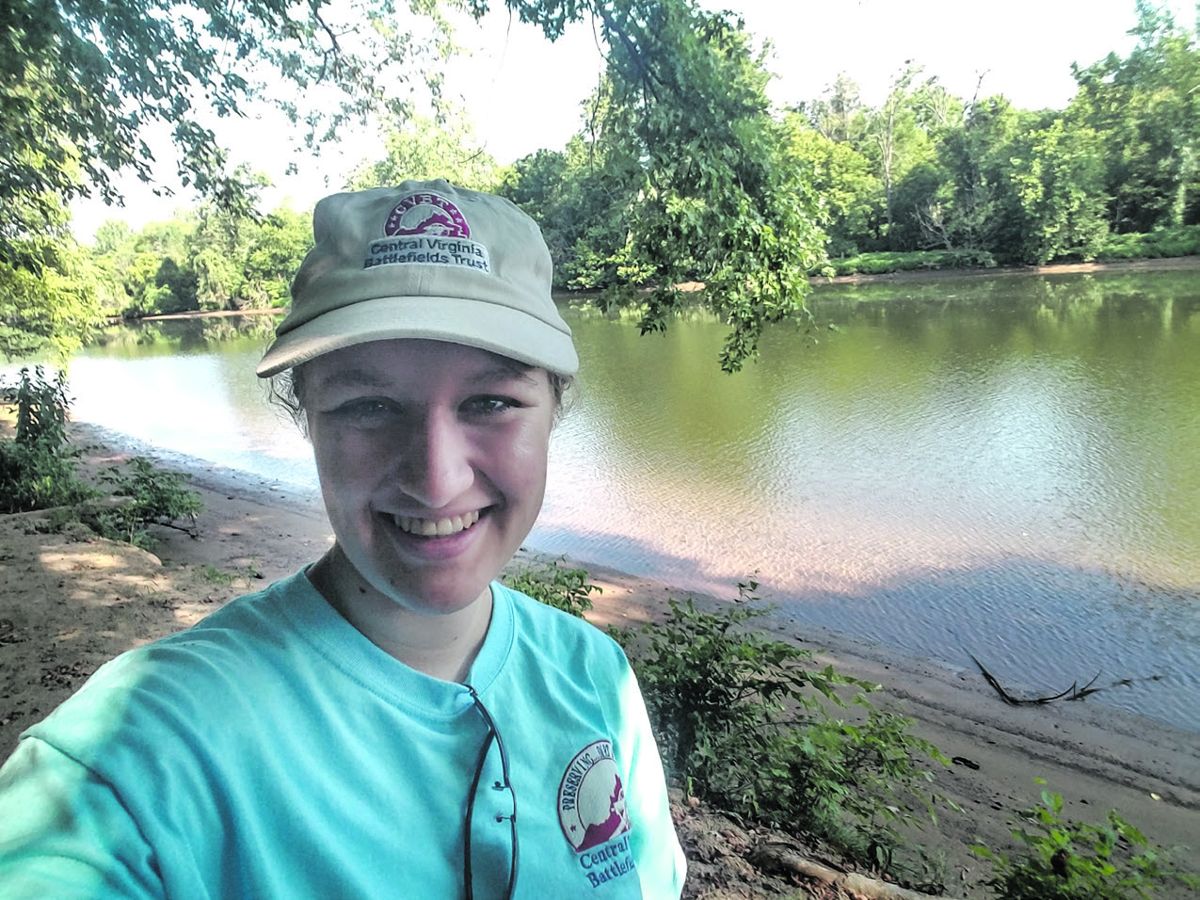
10 Questions…with Sarah Kay Bierle Sarah Kay Bierle is the managing editor of Emerging Civil War, which means she’s the daily living heartbeat of our organization. By day, she’s the assistant to the director at the Central Virginia Battlefields Trust in Fredericksburg, Va. We originally profiled her in our December 2017 newsletter (http://conta.cc/2E6B3Mz). You can read her full ECW bio here: https://emergingcivilwar.com/author-biographies/editors/sarah-kay-bierle/. What’s it been like, transplanting yourself from California to the heart of Civil War Virginia? Exciting! The traffic is similar,
CWN summers are hot everywhere, but there are Civil War battlefields in Virginia. It’s more challenging with the pandemic this year, and that has really halted my travel, research, and exploration plans, but it’s also meant that I have the opportunity to really get to know the land, roads, and battlegrounds close to my new home. I imagine you get to experience history in an entirely different way being here rather than far away. How has that changed your understanding of the Civil War? I already understood the importance of walking the ground to understand a battle and troop movements but having the opportunity to really take in the topography or return week after week has really helped. I particularly appreciate getting a better sense of direction and distances; some locations are much closer than I had realized, while others are significantly farther apart. Fredericksburg and Spotsylvania battlefields are great examples; traveling on foot or by car, I’ve been able to gain a better appreciation for the scope of the battle and the wide areas used for troop movements. Now that you’ve been on the inside of the battlefield preservation movement for a while, how has that affected your understanding of battlefields? I think I’m even more aware of the hallowed ground aspect. When I spent hours advocating, writing, or researching land files and historical records, I’d go to the fields more equipped with the knowledge of what happened here. To slightly twist a line from the musical Hamilton: Who lived here? Who died here? How will we tell and preserve their stories? I also get more emotional at battlefields when I’m out walking or working on my own. Deeper meaning overall.
What’s your favorite part of the job working for Central Virginia Battlefields Trust? Normally, I think I would say “events and visiting with our preservation partners,” but I haven’t really had that experience this year! Since so much of my job is happening with social distancing and remote access, I think writing is my favorite part at this time. I never dreamed I’d get to work in the history field with research and writing for part of my daily job. Getting out and hiking properties or researching new land opportunities is pretty awesome too! Outside of work, are you in the middle of any projects at the moment? Aside from sewing lots of masks for the community and working on some admin processes for Emerging Civil War, I’m pressing forward on some research and learning to write biographies! I’d hoped to have a new manuscript for the ECW series finished this autumn, but cancelled research trips and closed libraries have moved that goalpost. It’s a good challenge to see how much I can find and piece together from my desk, though, as I keep working the puzzle of primary sources to find the facts about those who fought or died during the Civil War.
Lightning Round (short answers with a one-sentence explanation) Favorite primary source? My Life In The Irish Brigade by Private William McCarter—a new favorite that I discovered this spring! Favorite Civil Warrelated monument? Sergeant Kirkland Memorial near at Fredericksburg’s Sunken Road. It’s great art and the memorialization of a timeless sentiment of compassion during difficult and horrifying hours. Favorite unsung hero of the Civil War era? I’ll go with heroines here: Kate Corbin Pendleton or Arabella Barlow. What’s a bucket-list Civil War site you’ve not yet visited? Missionary Ridge! Dave Powell’s book in the ECW series inspired me to start probing the western theater a little more. Favorite ECWS book that’s not one of your own? Out Flew The Sabres: The Battle of Brandy Station by Eric Wittenberg and Dan Davis. This is my current favorite (it changes!) because I used this book and the driving tour to explore Brandy Station for the first time this summer.
August 1780 saw the defeat of another Continental force in South Carolina, when the army under General Horatio Gates was routed at the Battle of Camden on August 16, 1780. One of the casualties was Baron de Kalb. To learn more about the Battle of Camden and also the death of de Kalb, click on over to Emerging Revolutionary War’s Facebook page for videos from the hallowed ground in South Carolina. While on our Facebook site, check out the “Rev War Revelry” videos, our weekly Sunday night historian happy hour discussion on a number of topics related to the founding era of the United States. A new Facebook Live comes every Sunday at 7 p.m. EST. On the publication front, ERW historian Eric Sterner’s book on the massacre of Gnadenhutten in 1782 is due out in November. Congrats Eric. Updates will follow. As always, continue to check our blog: www.emergingrevolutionarywar.org.
Emerging Civil War Honors Dave Ruth for Service in Civil War Public History Emerging Civil War is pleased to honor Dave Ruth, former superintendent of Richmond National Battlefield Park, as the recipient of this year’s Emerging Civil War Award for Service in Civil War Public History.
Emerging Civil War’s Award for Service in Civil War Public History recognizes the work of an individual or organization that has made a significant impact on the field of public history in a way that better helps the general public connect with America’s defining event. “We have a strong public history mission at ECW, and we want to recognize, and offer our gratitude to, the work of others who share that same mission,” explains ECW Editor-inChief Chris Mackowski. Ruth retired as superintendent of Richmond National Battlefield Park in 2018 after 44 years with the National Park Service. During his tenure at Richmond, the battlefield park grew from 754 acres to just under 4,000. “Anyone who is familiar with Richmond Battlefield Park knows Dave Ruth,” says ECW Chief Historian Chris Kolakowski. “In his various capacities there and at other parks, Dave has been a superb interpreter and preservationist. Richmond is a better park because of his work and leadership over the years.” Mackowski added, “Dave’s work at Richmond exemplified
Subscribe at
CivilWarNews.com the importance of working partnerships that resulted in wins for everyone involved. In doing so, he helped Richmond better appreciate and preserve its unique and complex Civil War history, to the benefit of us all.” A native of Pennsylvania, Ruth grew up in a family totally immersed in history, particularly the French and Indian and Civil War eras. “It seemed preordained that I would absorb that interest,” he said, “and many summer trips to the Virginia battlefields with my father at an early age sealed the deal.” Ruth first started working for the National Park Service in 1973 as a fifer in a Confederate camp at Chancellorsville where he also spent the next few summers honing his historian and interpretive skills. In 1975, he graduated from Virginia Tech with a history degree in honors and had the privilege of working with Dr. James I. Robertson who served as his advisor for several independent studies and his honors thesis that explored the Battle of Salem Church. Ruth and his wife moved from park to park to gain experience and was finally rewarded with a permanent NPS position in 1977 in Philadelphia. After that assignment, he was sent to Manassas Battlefield and then to Fort Sumter in 1981, where he served as both park historian and chief ranger. In 1991, he relocated to Richmond where he initially served as chief of interpretation, then assistant superintendent, and in 2008 was promoted to park superintendent. He retired from that position in 2018 with 44 years of government service. History remains at the forefront in Ruth’s post-NPS career. In July 2018, Governor Ralph Northam appointed Ruth to the Virginia Board of Historic Resources for a four-year term. In 2019, he was appointed to the Leadership Board of St. John’s Church, where in 1775 Patrick Henry delivered his famous “Give Me Liberty” speech. He also serves on the boards of the Manassas Battlefield Foundation and the Hanover Tavern Foundation. During his career he had the opportunity to work on several historical productions including North and South and Glory, and served as the on-camera commentator for Civil War Journal’s
Fort Sumter episode. He has written several book reviews, and in 2014 Ruth and two of his colleagues published No Turning Back: A Guide to the 1864 Overland Campaign, part of the Emerging Civil War Series. He is now in the research phase of a book that will examine the early phase cavalry operations of the Overland Campaign leading to Phil Sheridan’s Richmond Raid and the mortal wounding of Jeb Stuart. “Throughout Dave Ruth’s career, he focused on interpretive improvements to National Park sites, and fostered relationships with partners,” says ECW’s Robert Dunkerly, who worked for Ruth at Richmond National Battlefield Park. “Perhaps Dave’s best work was done at Richmond, where he oversaw new exhibits, new historic markers on the landscape, encouraged programming with partners, and expanded park properties.” ECW’s Doug Crenshaw volunteered at Richmond National Battlefield Park when Ruth was superintendent. “Dave was instrumental in working with preservation groups and under his tenure the Park grew from about 750 acres to nearly 4,000. Truly amazing,” Crenshaw says. “He was also really good at public relations in terms of working with other groups in the city. When I think of Dave, I remember the saying ‘You never forget how someone makes you feel.’ Dave always made the volunteers feel special and important. I still remember a volunteers meeting I attended when Dave pulled out my first book and asked me to sign it in front of everyone. That was a big deal to me.” In 2018, to mark Ruth’s retirement, Mackowski sat down for an extended conversation with him about his work. You can read that interview here: https://emergingcivilwar.com/2018/01/02/a-conversation-with-dave-ruth-richmonds-retiring-superintendent/. More recently, Mackowski interviewed Ruth for ECW’s 2020 virtual symposium. That interview is available on the ECW YouTube page here: https://youtu.be/_YQxttgyWUs. Previous recipients of the Emerging Civil War Award for Service in Civil War Public History include Ted Alexander, former historian at Antietam National Battlefield; Dave Roth, publisher of Blue & Gray magazine; D.P. Newton, founder of the White Oak Civil War Museum; and John Coski, historian at the American Civil War Museum. Emerging Civil War is recognized by the I.R.S. as a 501(c)3 not-for-profit corporation.
Emerging Civil War Honors Fight for the Old North State with 2020 Book Award Emerging Civil War has chosen Hampton Newsome’s Fight for the Old North State: The Civil War in North Carolina, January– May 1864 (University Press of Kansas, 2019) as the recipient of this year’s Emerging Civil War Book Award.
The Emerging Civil War Book Award recognizes a work of Civil War history with a public history focus published in the preceding calendar year. Recipients are chosen by ECW’s stable of published authors, making the award the only peer-to-peer award given by Civil War writers to Civil War writers. Fight for the Old North State tells the story of the late-war Confederate resurgence in North Carolina. Using rail lines to rapidly consolidate their forces, Southern forces attacked the main Federal position at New Bern in February, raided the northeastern counties in March, hit the Union garrisons at Plymouth and Washington in late April, and concluded with another attempt at New Bern in early May. Newsome also covers the broader context, revealing how these military events related to a contested gubernatorial election; the social transformations in the state brought on by the war; the execution of Union prisoners at Kinston; and the activities of North Carolina Unionists. “Newsome has proven to be among the best Civil War authors writing today,” said ECW Book Review Editor Ryan Quint. “His book on fighting in North Carolina was not only one of the best campaign studies I read last year, but one of the best I’ve read ever.” ECW author Sean Chick called The Fight for the Old State “a thorough, organized, and well researched book about a topic not often discussed.” Chick added, “Beyond it being good military history, Newsome takes time to discuss the political, economic, and social factors in the campaign. The result is among the best rounded and richest campaign histories I have yet encountered.” Newsome is an independent author who lives in Arlington, Virginia. In addition to The Fight For the Old North State, he is author of Richmond Must Fall: The Richmond-Petersburg Campaign, October 1864 (Kent State Univ. Press, 2013), a study of Grant’s and Lee’s battles in the weeks before the 1864 election. He is also a co-editor of Civil War Talks: Further Reminiscences of George S. Bernard and His Fellow Veterans (UVA Press, 2012) along with John Selby and John Horn. Quint also announced two finalists for the ECW Book Award: • Conquered by Larry Daniels (University of North Carolina Press, 2019) • Bodies in Blue by Sarah Handley-Cousins (University of Georgia Press, 2019) “The three works nominated this year for the Emerging Civil War Book Award have been among the best we have considered since creating the award,” Quint noted. “All three were extremely well researched and written, and all of them deserve high accolades. There is still so much to learn about the Civil War and the three finalists this year all advanced our understanding of that chaotic conflict.” Of Bodies in Blue, Quint said, “Sarah Handley-Cousins reminds us that war’s impact and trauma carries far beyond the immediacy of the battlefield, and the book is a great asset in the expanding scholarship that we have on medical care during and after the American Civil War.” “Larry Daniel’s work brought to us new scholarship and a new understanding on what went wrong for the Confederacy’s Army of Tennessee, and how, fitting the title, it came to be Conquered,” Quint added. Emerging Civil War is the collaborative effort of more than two-dozen historians committed to sharing the story of the Civil War in an accessible way. Founded in 2011 by Kris White and Chris Mackowski, Emerging Civil War features public and academic historians of diverse backgrounds and interests, while also providing a platform for emerging voices in the field. Initiatives include the award-winning Emerging Civil War Series of books published by Savas Beatie, LLC; the “Engaging the Civil War” Series published by Southern Illinois University Press; an annual symposium; a speakers bureau; and a daily blog: www.emergingcivilwar.com.