
American Battlefield Trust — October 2020
Originally published October 2020 · pp. 24–25

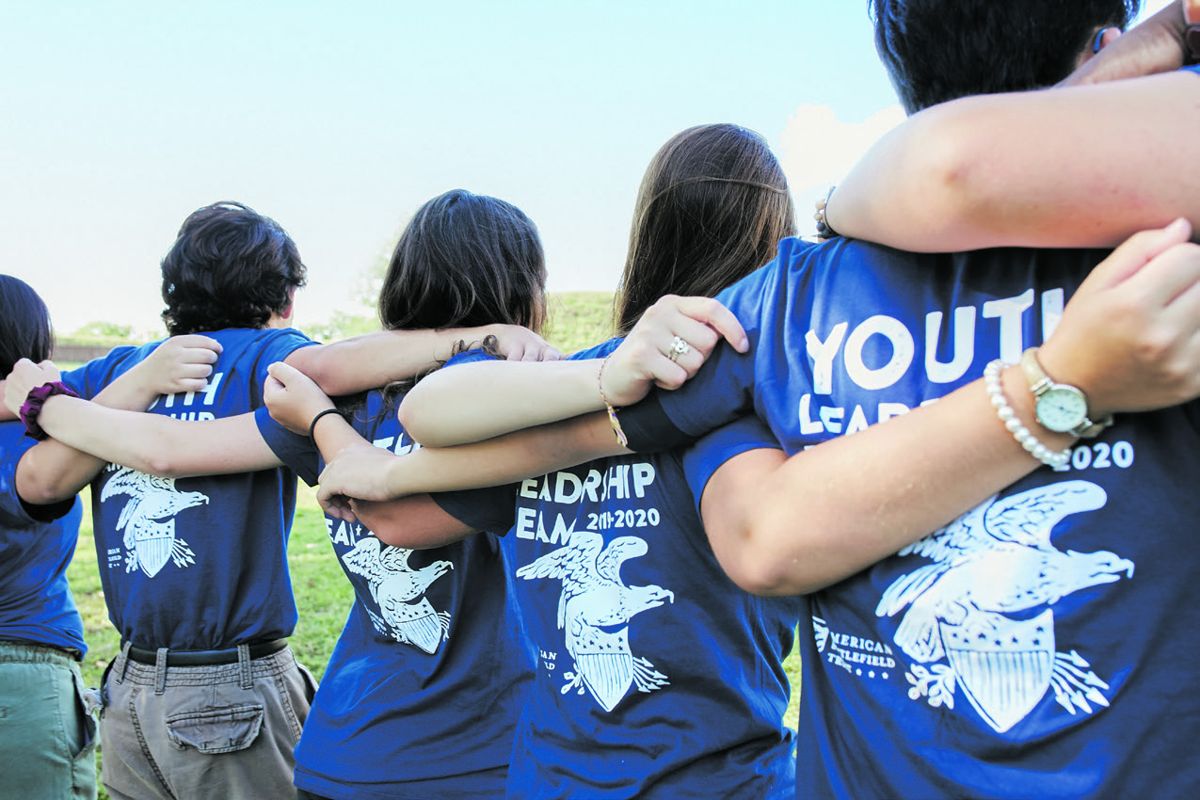
The newest members of the American Battlefield Trust’s Youth Leadership Team (YLT) are ready to engage classmates, neighbors, and local decision makers by taking on custom-designed projects that pursue preservation and interpretation goals and making a tangible impact in their communities. “Today’s students are tomorrow’s historians and community leaders,” said Trust president James Lighthizer. “These young people are emerging leaders who have the potential to impact education, preservation, and visitation strategies and policy for decades to come. The Trust is proud to support and empower the work of this next generation of preservationists.” Participants are selected through a competitive application process and successful candidates undergo training in many aspects of the Trust’s mission and in advocacy skills. Trust professional staff work with each student crafting a project to be undertaken in their local community, tailored to fit their passions and interests. The inaugural YLT class last academic year was wildly successful, leading the program to expand by 50 percent for the upcoming cycle, thanks to a generous grant from the Pipkin Foundation. Also new for 2020– 2021: a challenge grant from renowned historical fiction author and former American Battlefield Trust board member Jeff Shaara that will augment the baseline stipend for the best project with a storytelling focus.
Youth Leadership Team.
Planned projects for the coming academic year include digital scavenger hunt apps for regional historic sites, infrastructure for physical and digital field trips to battlefields “lost” to the growth of major cities, investigations into War of 1812 “witness trees,” and promoting under-told historical narratives, like those of women, Black soldiers, and prisoners of war. The full roster of the 2020 Youth Leadership Team includes: Benjamin Armus, 16, of Long Beach, N.Y.; Alex Azar, 17, of Bethesda, Md.; Ashley Alarcon, 17, of Estero, Fla.; Ashlyn O’Neill, 17, of Stewartstown, Penn.; Gabriella Gonzales, 15, of Farmington, N.M; Daniel Holt, 18, of Mt. Pleasant, S.C.; Francesca Lanese, 16, of Grove City, Ohio; Isaac Leichty, 16, of Lafayette, Ind.; Kellen Narke, 17, of Phoenixville, Penn.; Andrew Palmer, 17, of Oregon, Wisc.; Sahar Tartak, 16, of Great Neck, N.Y.; Drew Thompson, 18, of Richmond, Va.; Julia Vogt, 17, of Cary, Ill.; Ian Woolridge, 17, of Liberty, Mo; and Tiffany Yeung, 17, of West Lafayette, Ind.
Celebrating the Great American Outdoors Act The future of America’s hallowed ground, the battlefields on which its formative conflicts were decided, is more secure after the “Great American Outdoors Act” became law at the beginning of August. This legislation to preserve and restore America’s public lands received significant bipartisan support in both houses of
Congress and from a vast coalition of conservation and stewardship organizations, including the American Battlefield Trust, the nation’s leading battlefield preservation organization, en route to its presidential signature. The Great American Outdoors Act benefits battlefield preservation in two parallel ways. First, it fully and permanently funds the Land and Water Conservation Fund (LWCF) at the $900 million level annually via revenues from on-shore and off-shore energy development, both fossil and renewable energy operations, not already allocated by law to other programs. This large pool in turn funds the Battlefield Land Acquisition Grant Program, a matching grant program that has successfully saved more than 32,000 acres of America’s hallowed Revolutionary War, War of 1812, and Civil War battlefields. The Trust and its partner organizations leverage these targeted federal grants with individual donations to create public-private partnerships protecting key portions of battlefields outside National Park Service boundaries. Further, the bill allocates $9 billion over five years to address the deferred maintenance backlog experienced by federal agencies, including the National Park Service, the National Forest Service, the Bureau of Land Management, U.S. Fish and Wildlife Service, and the Bureau of Indian Affairs. Battlefield parks are included in this critical maintenance backlog, with millions of dollars’ worth of projects at dozens of battlefield parks, such as Antietam, Gettysburg, Shiloh, Vicksburg, and Yorktown. Completion of these projects will materially enhance these outdoor classrooms and ensure they are accessible to the public.
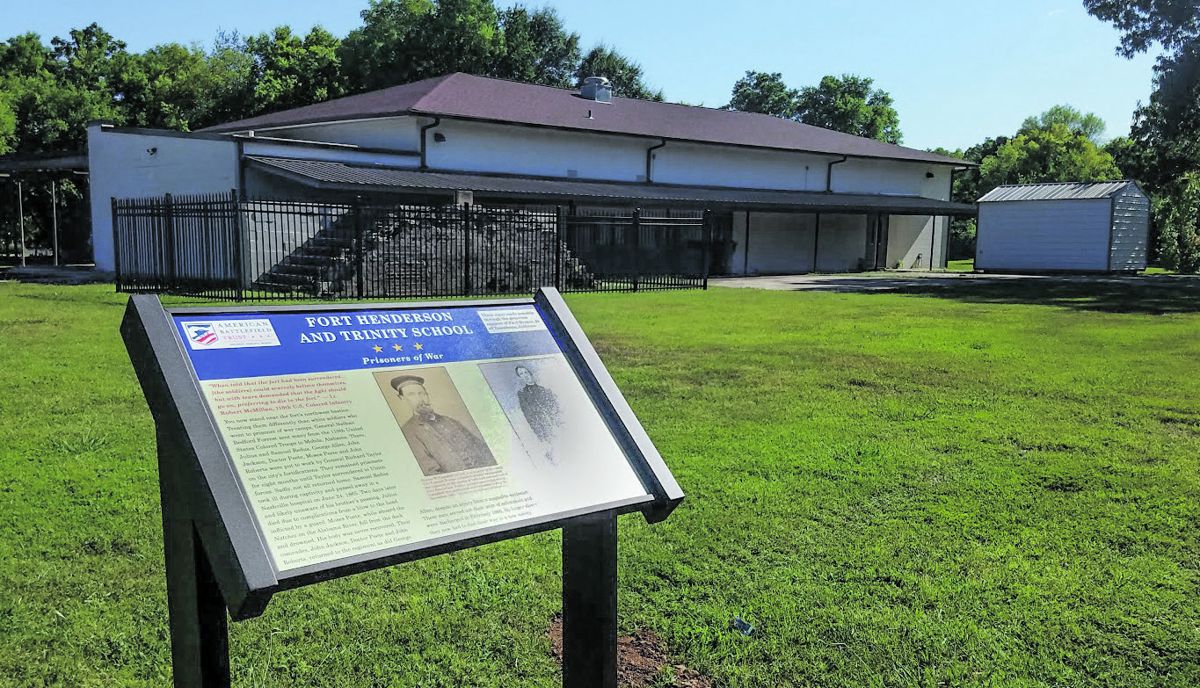
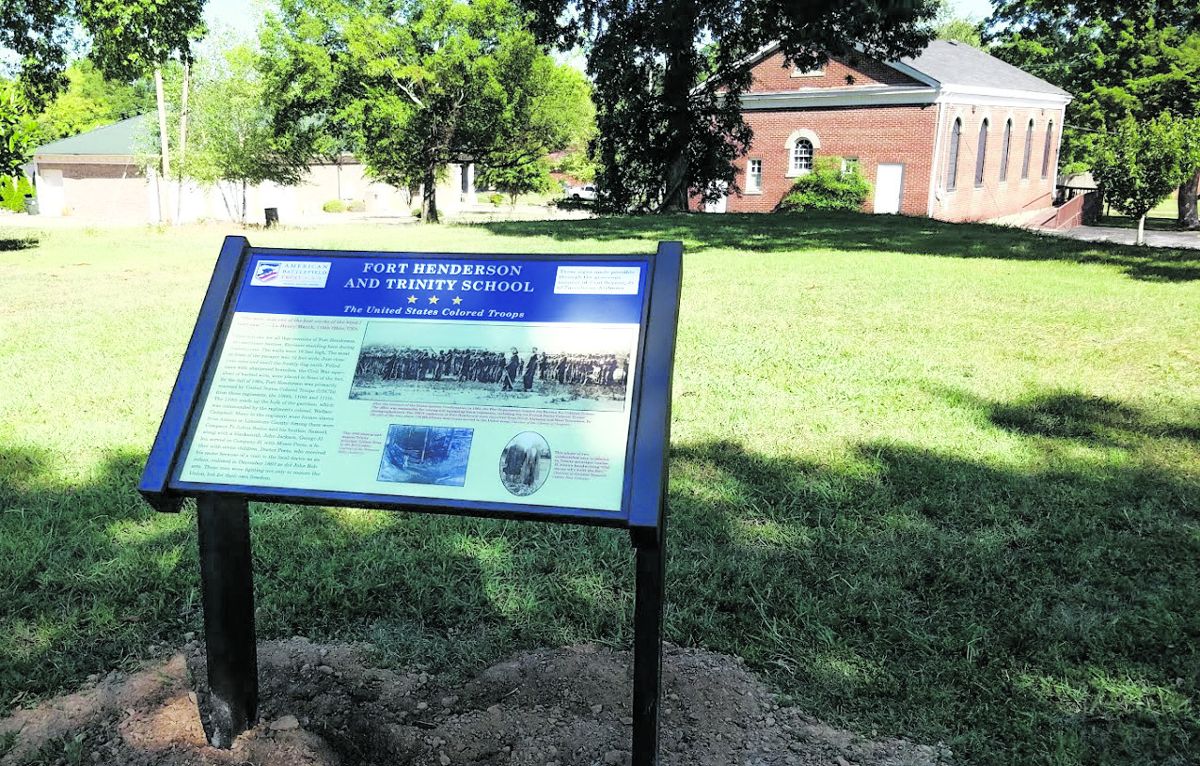
One hundred and fifty-eight years ago this month, two great armies clashed in the Battle of Antietam. Now, the American Battlefield Trust is working to protect three additional acres of the West Woods, one of the most United States Colored Troops who served at Fort Henderson, Athens, Ala.. an effort that spanned about 18 months, the Trust worked with the Limestone County Archivist and local historians to research, prepare narrative text, and procure archival photographs for the signs. Known during the Civil War as the Athens Fort, and renamed in the 1890s to honor a local surveyor, Fort Henderson protected the Nashville and Decatur Railroad, a critical Union supply line during the Atlanta Campaign. The fort was garrisoned primarily by elements from the 106th, 110th, and 111th United States Colored Troops (USCT) along with the 2nd and 3rd Tennessee (Union) Cavalry. After a sharp two-day battle, the fort surrendered to Nathan Bedford Forrest in late September 1864, along with other fortifications north of
Antietam’s West Woods. Wayne Hsieh. fiercely contested areas during the battle. Once saved from the threat of development, this threeacre property in an area that is currently largely inaccessible to visitors will be transferred to the National Park Service for permanent protection within Antietam National Battlefield. The transaction must be completed and paid for by September 30, 2020, leaving the Trust only weeks to match a major donor’s gift and meet the $310,000 purchase price. In describing the transaction, Trust President Jim Lighthizer stressed that “Privately owned property inside a national park can be bought and a modest home swiftly replaced with a much larger “McMansion.” In this case, before pursuing a sale on the open market, a thoughtful landowner approached the Trust to gauge our interest.” Knowing the national park considered the land parcel a priority for acquisition, the Trust wasted no time in moving forward with the sale. A part of the land’s appeal is that it will provide visitor access to this portion of the West Woods for the first time; a state highway bisects the battlefield at this point and the far side lacked an access point for motorists, forcing pedestrians to cross the busy roadway unprotected.
New Hampshire Educator Named Teacher of the Year As millions of families across the nation begin a school year like no other, the American Battlefield Trust has named Erin Gagliardi, a middle school social studies specialist at Saint Thomas Aquinas School in Derry, N.H., as its Teacher of the Year. “Capturing the attention of middle school students is notoriously difficult,” said Trust chief historian Garry Adelman, “Yet Erin manages it with grace and compassion. She uses the stories and figures of American history to help her charges grow into young men and women of character and instills in them a true love of learning.” Teaching students across multiple grades requires that Gagliardi cover numerous periods in American history, from the colonial period and the Revolution with her fifth graders, through the Civil War with seventh graders, and up to the Cold War in eighth grade, plus units in geography and civics. Throughout it all, her passion for the subject truly shines through. Her students have even been known to request American Battlefield Trust memberships for birthday gifts.
From Battle Site to School: Interpreting Fort Henderson With leadership from Trustee Paul Bryant Jr., the American Battlefield Trust worked alongside the Athens-Limestone Community Association to install six new interpretive signs at the site of Fort Henderson and Trinity School in Athens, Ala. In
Save the West Woods at Antietam
Athens at Sulphur Creek Trestle. Many USCTs from the 110th, which was recruited from Athens and Limestone County, were sent to Mobile and not repatriated until May 1865. In the early 20th Century, Trinity School moved to the old USCT garrison site. Founded for former slaves by Mary Fletcher Wells at the end of the war, the school remained in operation until 1970. Former members of the 110th saw their children and grandchildren attend and, in some instances, return to teach at Trinity. Through the Jim Crow and segregation eras, Trinity was the only institution in Limestone County that offered African Americans an education. Today, two Trinity School structures remain, as does the fort’s southwest rampart and ditch.