
Emerging Civil War
Emerging Civil War — November 2020
Originally published November 2020 · pp. 44–45
Chris Mackowski
From the Editor On June 16, 1858, Republicans meeting in Springfield, Ill., nominated Abraham Lincoln as their candidate for the U.S. Senate. Slavery overshadowed all other political issues, so much so that Lincoln saw it as an existential crisis. “A house divided against itself cannot stand,” he warned. The agitation slavery caused, moral and political, “will not cease, until a crisis shall have been reached, and passed,” Lincoln predicted, although he did not expect the Union to dissolve. “I do not expect the house to fall,” he explained, “but I do expect it will cease to be divided. It will become all one thing, or all the other.” Today’s political tumult makes America seem no less divided, and I often consider Lincoln’s admonition: “A house divided against itself cannot stand.” What is our responsibility in today’s times, as students of history and as people passionate about America? Earlier
A clean-shaven Lincoln as he appeared at the time of his “House Divided” speech—one of many statues in the former president’s tomb in Springfield, Illinois.
in September, I mulled over that question in a blog post, “A Useable History: Partisanship, Citizenship, and the Presidential Election” (https://emergingcivilwar.com/2020/09/03/1941-91/). I’m now mulling over the question in the context of Lincoln’s speech. Often overlooked in the speech is Lincoln’s hope for common ground with his political opponents, specifically Sen. Stephen Douglas, “whenever, if ever, he and we can come together on principle.” Lincoln seemed pessimistic, though, and instead believed, “Our cause … must be intrusted to, and conducted by its own undoubted friends—those whose hands are free, whose hearts are in the work—who do care for the result.” No sooner had he sounded that pessimistic note, though, than Lincoln admitted that differing political factions could, in fact, come together in common cause, as the recently created Republican Party demonstrated. “Of strange, discordant, and even hostile elements, we gathered from the four winds,” he pointed out, “and formed and fought the battle through, under the constant hot fire of a disciplined, proud, and pampered enemy.” Regardless of political affiliation, a lot of people feel like they’re fighting the good fight, that they “do care for the result,” and that their opponents are proud and pampered enemies. If you feel that way, and consider yourself a person of honest motivation and good intent, perhaps a place to start is by considering that many people on the other side of the political spectrum also hold honest motivations and good intentions just like you. That offers a common platform for discussion. So I urge all of us to consider the optimism in Lincoln’s tale, not his pessimism, and remember that “discordant, and even hostile elements” can come together for the common good. — Chris Mackowski, Ph.D. Editor-in-Chief, Emerging Civil War
“Fallen Leaders” at the 2021 ECW Symposium Early bird tickets are on sale for the 2021 Emerging Civil War Symposium at Stevenson Ridge,
August 6-8. Our theme, “Fallen Leaders,” will feature keynote speaker Gordon Rhea on the loss of Jeb Stuart and a battlefield tour of James Longstreet’s wounding by Greg Mertz. Plus, we’ll have eight other speakers on the docket. For details, or to buy tickets (only $155 each at the early bird price), visit https://emergingcivilwar.com/2021-symposium/.
10 Questions … with Cecily Zander Nelson Cecily Nelson Zander serves on Emerging Civil War’s editorial board for the “Engaging the Civil War” Series with Southern Illinois University Press. A historian who specializes in the Civil War era and the American West, Cecily is finishing her dissertation at Penn State. You can read her full bio here: https://emergingcivilwar.com/author-biographies/authors/cecily-n-zander/.
Cecily Nelson Zander on a visit to Vicksburg. What’s your Civil War “origin story”? How’d you get interested in the CW? I don’t ever remember not being thrilled by history, which is likely a product of where and how I grew up, in Colorado and with vacations every summer driving across the country and visiting countless historic sites. I have early memories of visiting the Custer House at Fort Abraham Lincoln in Mandan, N.D., and being fascinated by Custer (hard not to be), as well as the Little Bighorn, Fort Laramie, and many Laura Ingalls Wilder “Little Houses” and so on. When I was about 11, I saw Glory for the first time (fueled by a childhood crush on Matthew Broderick), and instead of just walking away from the movie, I searched the local library for more info about the characters and checked out Robert Gould Shaw’s letters (Blue Eyed Child of Fortune, University of Georgia Press, 1992) and enjoyed them immensely, so I read some other Civil War letters and diaries that were at the library.
About five years later my parents took our family on a trip to the Washington, D.C., area where we visited Manassas and Gettysburg and, like so many people, I was taken in by the battlefields and my interest in the Civil War was really solidified. You’re finishing up your dissertation. What have you been writing about? My dissertation combines the Civil War and all the Western history that I absorbed as a kid; I am writing about the United States Army (the Regulars) between 1835 and 1885. I’m making an argument about how politicians used the army to achieve various expansionist goals. I’m really looking at the regulars as an institution that had great political value and then explaining how politicians’ negotiated over military resources and how they intended to use the army to achieve their goals. I’ve found a few interesting things, most notably that the antebellum regulars were robustly supported by pro-slavery political interests who used the force to conquer the Southwest and lay the groundwork for a southern trans-continental railroad. I contrast their political investment with postbellum Republicans, who turned away from the army in favor of reformers and then explain how men like Sherman and Sheridan had to make a case for the value of the regulars to the post-Civil War United States and struggled to do so. After that, you’ll have to hit the job market. What have you seen as you’ve been looking? This year things have not looked great in terms of academic jobs, to be brutally honest. I’m hopeful for a bit of a bounce-back next year, but am looking anywhere and everywhere for opportunities to put my research and teaching skills (such as they are) to use. I’m hoping I can at least put some teaching opportunities together to stay in the game next year. But if anyone has any leads, I’ll be glad for advice! Gary Gallagher told me you’re a woman who doesn’t know how to stay un-busy. He really commended your work ethic. Tell us a little about that. It’s very nice of Dr. Gallagher to say that. His courses at UVA required a fair amount of work, so it might actually be his fault that I work as much as I do. I’m not entirely sure it is the healthiest approach to always be thinking about working, but I enjoy so much of the research and writing process that it often doesn’t feel like work. I take time out to watch sports and classic films, and almost every day an episode or two of Frasier, so I’m not entirely hopeless. One thing my parents always told me was that the best trait to have is to be coachable, which means taking advice and improving at every opportunity. What fuels my work is the guidance I get from my mentors and dissertation committee members who have given countless hours to reading, critiquing, and editing my work. I’ve been very lucky for the attention they’ve paid to my work. While I don’t always love to receive harsh comments, they are always constructive, and I think the least I can do is put as much effort as I can muster into my work in return. Seeing improvement and getting results gives me a lot of satisfaction. What’s your next project? I’m interested in doing something with George Custer, in part fueled by an archival collection I got to explore during my dissertation research, and will soon feature in a post I’m working on for ECW. I really enjoyed looking at historian Robert M. Utley’s papers while at the University of Oklahoma’s Western History Collection; reading about his work on Custer has me thinking about a project that would essentially investigate the history of the history of Custer. I’m a bit of a nerd for historiography, so what I would hope to do is write a book in two halves, the first would look at Custer and how he was viewed by his contemporaries with particular attention to how his own actions changed public opinion about him. The second half would look at his wife, Elizabeth Bacon Custer, and how she transformed public opinion about her husband after his death, and then try to unravel which version of George Custer historians have really written about and how memory has affected the accuracy of historical depictions of the Civil War’s “Boy General.” In the shorter term, I’m working on smaller essays about Braxton Bragg and John Pope because I can’t help myself when it comes to much-maligned Civil War generals. Lightning Round (short answers with a one-sentence explanation) Favorite primary source? I love Kate Stone’s diary, Brokenburn, from the Confederate perspective and I’ll give the edge to Sherman’s memoirs for the Union side. Favorite Civil War-related monument? I always jokingly tell people it’s the Arkansas monument at Gettysburg, which is a big monument for a single regiment, but it’s really a tie between Grant’s tomb and the Grant memorial in
Washington, D.C. Favorite unsung hero of the Civil War era? My less-serious side would tell you it’s William McKinley for serving all that hot coffee at Antietam, without orders, or so his monument says, but I’m really on board with the recent appreciation for Montgomery Meigs, who handled his job with aplomb and made a big difference to the Union war effort. What’s a bucket-list Civil War site you’ve not yet visited? I’ve been lucky to visit most of the big battlefields, often with my dad who is an untiringly good sport about it all, but I’ve yet to see Bennett Place in Durham and Fort Sumter in Charleston. Favorite ECWS book? I’ve always been a huge admirer of David A. Powell’s command of the Chickamauga and Chattanooga campaigns, so I’ll go with The Battle Above the Clouds: Lifting the Siege of Chattanooga and the Battle of Lookout Mountain.
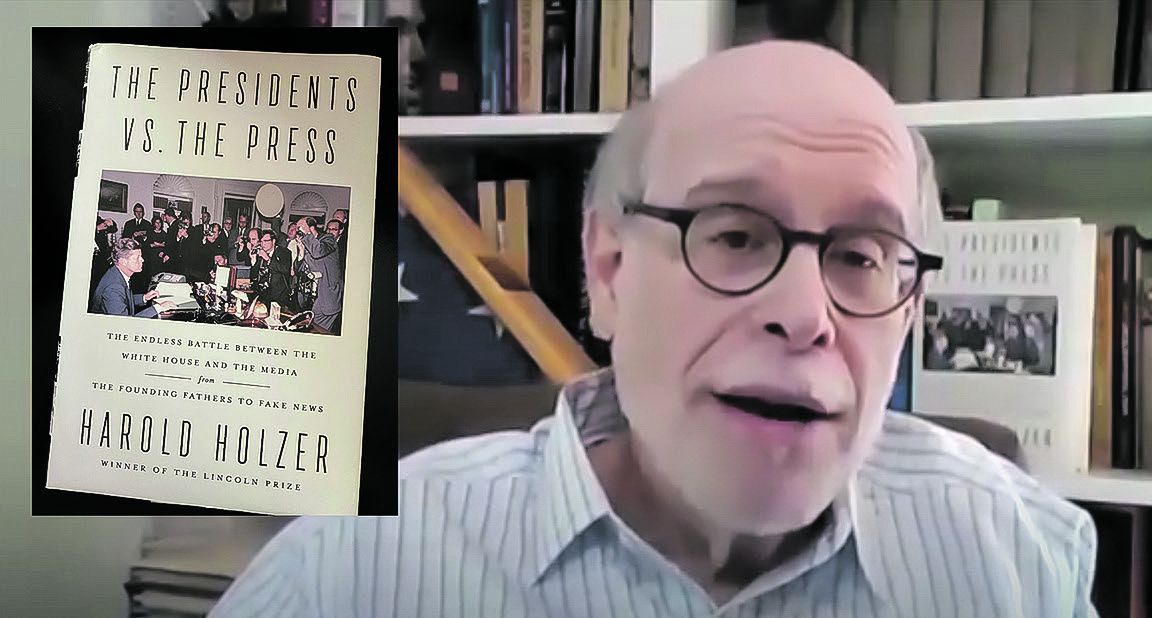
ECW News and Notes Edward Alexander has been revisiting some old battlefield stomping grounds from a different perspective, on bike, for the first time. “We’ve done Petersburg’s Eastern Front, Fort Harrison, and Fredericksburg’s Lee Drive this month and are planning to do High Bridge soon,” he says. On August 9, Paige Gibbons Backus participated in an ERW “Rev War Revelry” focused on Colonial Medicine. “I am currently working on a series of articles for the American Battlefield Trust to help bolster their online articles,” she adds. “These are mostly going to be focused on Women during the Civil War and the medical field.” On Sept 23, Doug Crenshaw spoke about the battle of Glendale to the James City Cavalry S.C.V. camp in Williamsburg, Va. On Sept. 26, he co-hosted a Facebook Live from Fort Harrison for Richmond National Battlefield. ECW was pleased to welcome historian David Dixon to the fold last month. David’s current book, published by the University of Tennessee Press, is titled Radical Warrior: August Willich’s Journey from German Revolutionary to Union General. You can follow his blob, “B-List History,” at davidtdixon.com. Because of the wildfires in California, Meg Groeling has been breathing bad air for days now, but she is still enjoying Harold Holzer’s The Presidents vs. The Press, which is a very timely read. “Remember ‘book reports’ in school?’ the Megster asks. “Who knew I’d write so many as an adult!” Robert Lee Hodge wrote a piece for the October 2020 issue of Civil War Times: “Lee is Marching to Our Flank.” “May 2, 1863, at Chancellorsville was one terrible day for Union Captain Frederick Otto Von Fritsch,” the article says. Dwight Hughes gave a Zoom presentation on September 10 for the Wilmington, N.C., Cape Fear Civil War Round Table on “Rebel Odyssey: The Cruise of the CSS Shenandoah.” Brian Matthew Jordan reviewed Arguing Until Doomsday: Stephen Douglas, Jefferson Davis, and the Struggle for American Democracy by Michael Woods for the October issue of Civil War News. Chris Mackowski participated in a panel discussion for Grant Cottage at the end of August titled “Memoirs and Memory: U.S. Grant’s Literary Legacy.” Joining Chris was Andre Fleche, associate professor at Castleton College, and Ben Kemp, operations manager at Grant Cottage. The program is available on YouTube: https://www.youtube.com/watch?time_continue=5&v=T6uWZdOe9XM&feature=emb_logo. Chris also spoke in September to the Franklin Civil War Roundtable, presenting “The Last Days of Stonewall Jackson.” The program is available on the roundtable’s Facebook page: https://www.facebook.com/franklincivilwarroundtable/videos/3074168112694714. While he was there, Chris and roundtable founder Greg Wade shot a series of videos that will appear on the ECW YouTube page in November. Chris wrapped up the trip with some time at Stones River National Battlefield, where he took photos for an upcoming ECW book by Bert Dunkerly and Caroline Davis. Derek Maxfield celebrated a book (re)launch event for Hellmira: The Union’s Most Infamous Civil War Prison Camp at Roman’s restaurant in Batavia, N.Y., on 9/12 and had a great turnout. As it happened, later that day Derek’s book talk for the
ECW virtual symposium aired on C-Span 3 that evening. Derek’s theatre group, Rudely Stamp’d, debuted their new historic play “Grant on the Eve of Victory” at the West Sparta, N.Y., Town Hall on Sept. 26. Written, directed, and performed by Derek Maxfield, who portrays Gen. Ulysses S. Grant, the play also features Jess Scheuerman as war correspondent George Alfred Townsend. This one-act play is available for any interested audience. Folks interested in hosting a performance should contact Derek at [email protected] or by calling 585-478-3753. Kevin Pawlak took part in a morning program at the Cornfield with the Antietam Battlefield Guides on September 17 and was also featured as a guest for the America Battlefield Trust’s Antietam 158 coverage. Kevin, Rob Orrison, and Dan Welch, plus members of the Mahoning Valley CWRT, went on a tour of the South Mountain and Antietam battlefields September 19. They specifically focused on the actions of the Ninth Corps’ Kanawha Division at both battles. Kristen Pawlak did a talk on Wilson’s Creek for the Bull Run Civil War Round Table on Sept 10. The program is available on the roundtable’s Facebook page (at about 40 minutes in): https:// www.facebook.com/bullruncwrt/ videos/372896887064790. Terry Rensel spent a day doing research at the Erie Public Library’s Heritage Room and the Erie Cemetery for future projects. On Sept. 16, he also finally visited Antietam for the first time. You can see his video with ersatz tour guide Chris Mackowski on the ECW YouTube page: https:// youtu.be/HInVf4SMgMQ). In October, Terry will address the Mahoning Valley Civil War Roundtable to talk about the Central Virginia Battlefield Trust and battlefield preservation. He wrote an article, “How Far? A New Perspective on the Battle of Spotsylvania,” for the October issue of Civil War News. Terry is also awaiting delivery of Ohio microbrews from Dan Welch (via Rob Orrison) for losing multiple bets on the Cleveland Browns last football season.
ECW Bookshelf Congratulations to ECW contributor David Dixon on his latest publication. Radical Warrior: August Willich’s Journey from German Revolutionary to Union General (University of Tennessee Press 2020) is the biography of a Prussian army officer who renounced his nobility and joined in the failed European revolutions of 1848. He emigrated to America, edited a daily labor newspaper in Cincinnati, and became one of the most accomplished generals in the Union Army. This story sheds new light on the contributions of more than 200,000 GermanAmericans who fought for the Union in the Civil War. In an age of global social, economic, and political upheaval, transatlantic radicals helped affect America’s second great revolution. For many recent immigrants, the nature and implications of that revolution turned not on Lincoln’s conservative goal of maintaining the national Union, but on issues of social justice, including slavery, free labor, and popular self-government. The Civil War was not simply a war to end sectional divides, but to restore the soul of the nation, revive the hopes of democrats worldwide, and defend human rights.
ECW MultiMedia Have you been following the ECW YouTube page? You can check it out here: https://tinyurl.com/yxhp4zfp. Or, go to YouTube and search “Emerging Civil War.” This past month, we had an exclusive interview with Gary Gallagher: https://youtu.be/huIczDMrl_A We introduced the incoming president of the American Battlefield Trust, David Duncan: https://youtu.be/aCRNkyG1QRA. We spoke with Harold Holzer about his new book The Presidents Vs. The Press:
https://youtu.be/yraPsKNYd_Q. We’ve posted the talks from our 2020 Virtual Symposium (which have also started airing on C-SPAN 3’s “American History TV”) and more. Be sure to subscribe to the Emerging Civil War YouTube channel for the latest. We also make a number of our interviews available as free podcasts on our Patreon page: https://www.patreon.com/emergingcivilwar.
On Sept. 11, 1777, along the banks of Brandywine Creek in southeastern Pennsylvania, the largest battle of the Revolution, in terms of combined strength of armies, was fought: British and German forces under General William Howe versus Continentals and militia under General George Washington. On Sunday, Sept. 13, Michael Harris, historian and author of the preeminent battle study on Brandywine, joined ERW on our “Rev War Revelry” Sunday night Facebook Live to discuss the engagement and campaign. Click over on our Facebook page to watch the video. In reference to the “Rev War Revelry,” remember to keep Sundays at 7 p.m. ET clear as we roll into October, with discussions on Charles Lee, Germantown, the Liberty Trail/Camden, and South Carolina Rev War leadership. We round out September with an author interview of a recently released study and roundtable discussion about Daniel Morgan. Then in November, the annual Emerging Revolutionary War historian road-trip¬, scaled down this year because of the pandemic, will visit a few sites in Virginia related to the American Revolution. Stay tuned for onsite lives and a special “Rev War Revelry” from a unique location. To stay current, follow us on Facebook and the blog; www.emergingrevolutionarywar.org.