
This And That
Between the Lines
By Gould Hagler · Originally published November 2020 · pp. 42–43
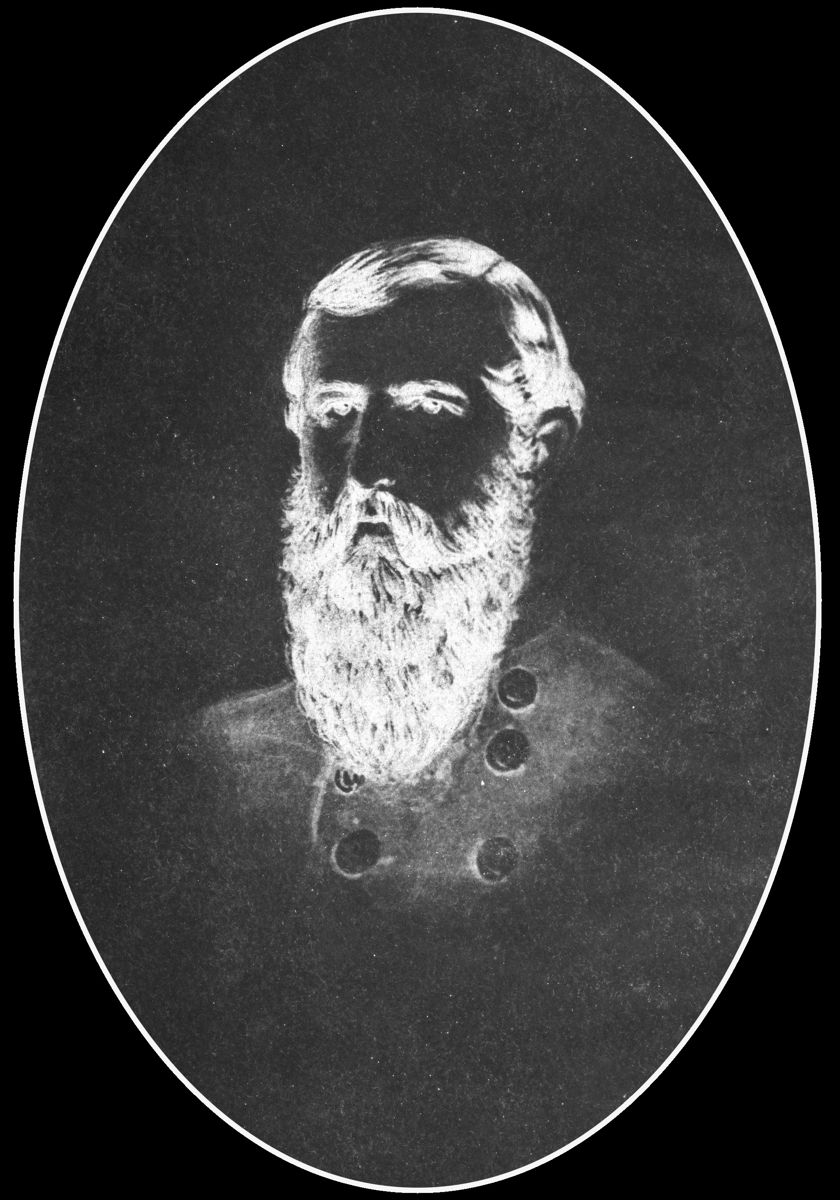
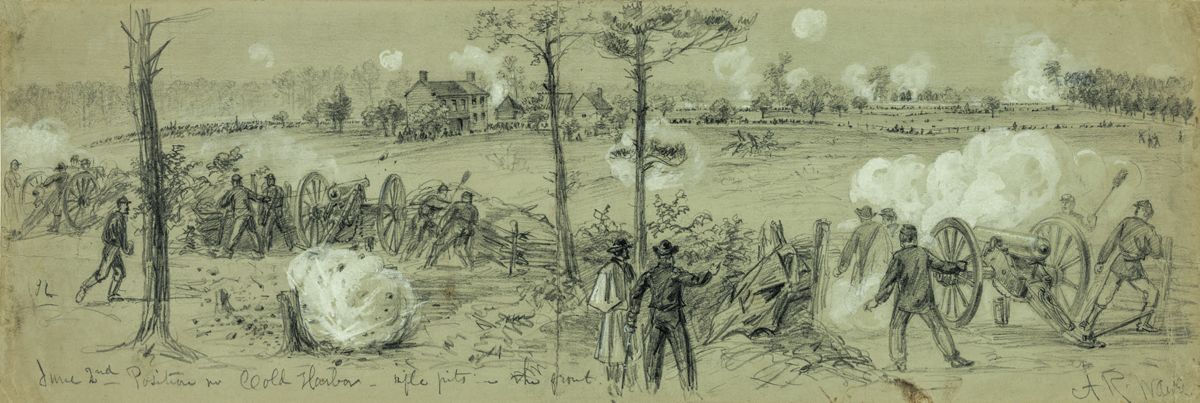
Between the Lines Of all the many cruelties of war, one scene that evokes the most pity is, perhaps, the image of wounded men trapped between the lines, suffering for hours that stretch into days, left behind after their charge was repulsed, within earshot of both their friends who withdrew and their enemies who shot them, men in dreadful pain, maddened by thirst, crying out for aid that never comes, unable to move and, for a time that seems an eternity of torment, unable even to die. In movies a punch in the jaw renders a man unconscious for as much time as the plot requires. A gunshot in the belly drops a man and sends him into eternity faster than he falls to earth. It is not so off the screen where warriors live and die for real, where for good or bad the human body is far, far tougher, where even the most horrific wounds take their time. Several instances of trapped wounded men are well known to students of the Civil War. Two of the most notorious occurred after Grant’s assaults at Vicksburg, on May 19 and 22, 1863, and at Cold Harbor on June 3 the following year. Shelby Foote wrote a moving account of the former. “For three days – six in the case of those who had fallen in the first assault – Grant’s dead and injured lay in the fields and ditches at the base of the Confederate ridge, exposed to the fierce heat of the early Mississippi summer. The stench of the dead, whose bodies were swollen grotesquely, and the cries of the wounded, who suffered the added torment of thirst, were intolerable to the men who had shot them down; yet Grant would not ask for a truce for burial or treatment of these unfortunates, evidently thinking such a request would be an admission of weakness.” Perhaps because of the intolerable stench, perhaps moved by compassion, the Confederate commander at Vicksburg, Gen. John Pemberton, departed from military convention and took the initiative. He sent a message to Grant suggesting a truce. “At 6:00 p.m.,” wrote Foote, “all firing was suspended while the Federals came forward to bury the dead…and bring comfort to such few men as had survived the three-day torture.” That is, of course, three days for the men shot down on the May 22; others had been between the lines since the initial, smaller attack three days earlier. How many men survived the ordeal is unknown. The following year Grant commanded another army with another adversary. After slugfests at the Wilderness and Spotsylvania and Grant’s subsequent maneuver around the Confederate right flank, two corps of the Army of the Potomac and one corps of the Army of the James charged the works hastily built by Lee’s men at Cold Harbor. Hundreds upon hundreds were shot down, and for hour after hour, day after day, the wounded lay where they fell. The order suspending the attacks came at 1:30 p.m. on Friday, June 3. The wounded lay between the lines the rest of that day and night; all day Saturday and Saturday night; Sunday and Sunday night; Monday and Monday night; through the heat of the day on Tuesday. Finally, at 6:00 p.m. the truce began. “Very few wounded were collected,” wrote Union Maj. Gen. Andrew A. Humphreys. “The dead were buried where they lay.” In his personal memoir, Fighting for the Confederacy, Brig. Gen. E. Porter Alexander provided an account of a similar aftermath following a failed assault at Spotsylvania, three weeks before Cold Harbor. Alexander at that time commanded the artillery in the Army of Northern Virginia’s 1st Corps. His account focused largely on a single Federal soldier, observed for days by him and his second-in-command, Col. Frank Haskell. No battle in the Civil War matched the ferocity of Spotsylvania, where the armies were locked in close combat for several days. On May 8 Brig. Gen. Horatio Wright’s V Corps attacked a position on the left of the Confederate line manned by Lee’s 1st Corps. The assault was repulsed. Wright fell back and entrenched. While this assault was less prolonged and less sanguinary than the famous attack at the Mule Shoe on May 12, it did result in numerous casualties, with dead and wounded Federals lying between the lines. May 9, Alexander wrote, was a “comparatively quiet day,” but there was skirmishing, sharpshooting, and, of course, artillery. In one instance a Federal solid shot “actually went down the bore of one of [our] howitzers,” Alexander wrote, “after knocking its mouth some what askew.
[Col.] Frank Huger loaded the ball into [another gun] & fired it back, as, he said, it seemed to know the road.” After sending this ball on its return trip, Huger pointed to the men lying in the dirt beneath the sky crisscrossed by Union and Confederate iron. “Huger… called my attention to the number of Federal wounded still alive, lying out between our lines, among those shot down in yesterday’s assault. They could be heard to call out for water, & seen to move & to throw up their hands, & one in particular would sometimes sit up.” Alexander explained that Grant had not asked for a truce, believing that the general was loathe to admit his men had been repulsed. He also pointed out the danger of allowing Federals to get close enough “to spy into our lines.” “So there was nothing left for those men but to die there.” At night some sympathetic Southerners did venture out to give water to some of the nearer suffering men, but “it was very dangerous to do this even at night, and in daylight it would have been fatal. And it is even a question whether it was a charity to give them water, when it probably prolonged their sufferings.” The reader should keep in mind that these unfortunate creatures had fallen on May 8. On May 11, Alexander wrote, Huger “again showed me a few wounded men, yet alive out between the lines. The fellow who could sit up still did so occasionally. The others only showed life by sometimes moving their arms, as if trying to keep flies from their wounds. It was a sight to move one’s heart, but it was beyond our power to remedy.” On Friday, May 13, after the horrific contest at the Mule Shoe, the pathetic scene to the left, where Alexander was, continued. “Huger had gotten much interested in the particular wounded man who sometimes sat up, out between the two lines of battle. Today he had seen him trying to knock himself in the head with the butt of a musket – raising it up & letting it fall on him. It hardly seemed possible that a man could really give himself a fatal blow in this way, but through the glass he now seemed to be dead.” On the morning of May 14 the sharpshooting waned, then ceased. The Federals vacated the lines in front of Alexander’s position and the Confederates at long last were free to leave the trenches. “Frank Huger and I rode out to see his wounded man,” Alexander wrote, but they were not the first to reach him. “The poor fellow had already been stripped by someone who wanted his clothes & his body was notable for beautiful tattooing all over arms & chest, principally in patriotic patterns of eagles, flags, &c.” This patriotic soldier’s suffering was over. Perhaps one’s thoughts now shift to the desperate Confederate soldier now wearing the dead man’s bloody shirt and trousers. What would be his fate as Lee’s army moved from Spotsylvania to North Anna, Cold Harbor, Richmond, Petersburg, and Appomattox? Gould Hagler is a retired lobbyist living in Dunwoody, Ga. He is a past president of the Atlanta Civil War Round Table and the author of Georgia’s Confederate Monuments: In Honor of a Fallen
Nation, published by Mercer University Press in 2014. Hagler speaks frequently on this topic and others related to different aspects of the Civil War and has been a regular contributor to CWN since 2016. He can be reached at [email protected].
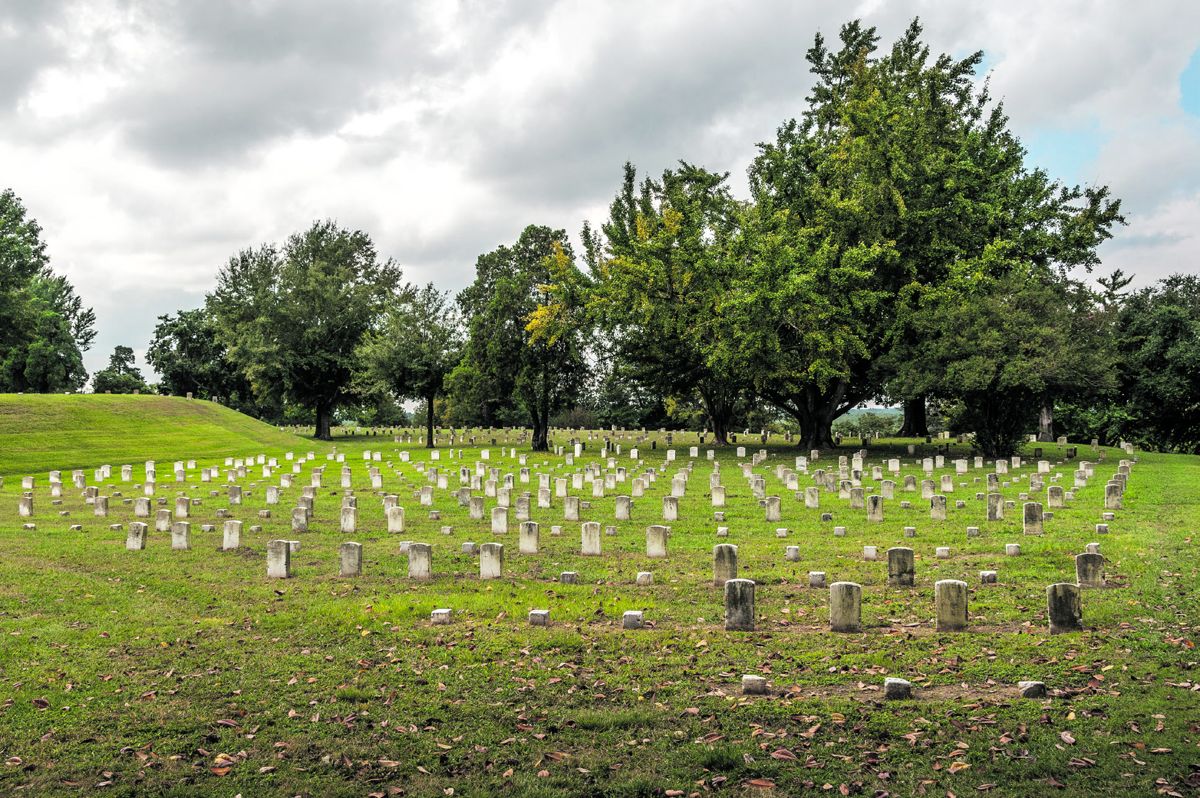
![The battle of Spottsylvania [sic]—View of the field from the center of the position. Library of Congress.](/article-images/cwn-2020-november/cwn-2020-november-between-the-lines-04.jpg)