The Land Tells the Story
By Terry Rensel · Originally published May 2020 · p. 44
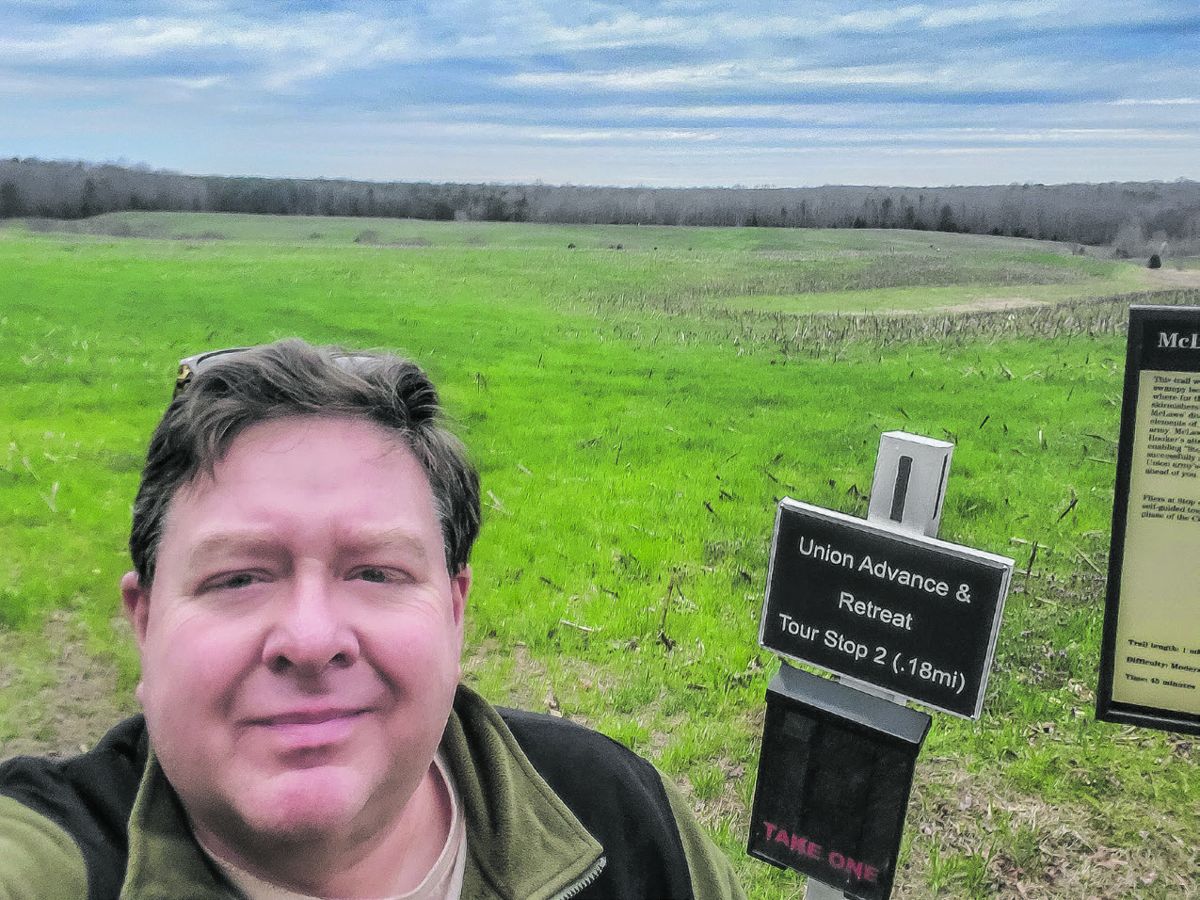
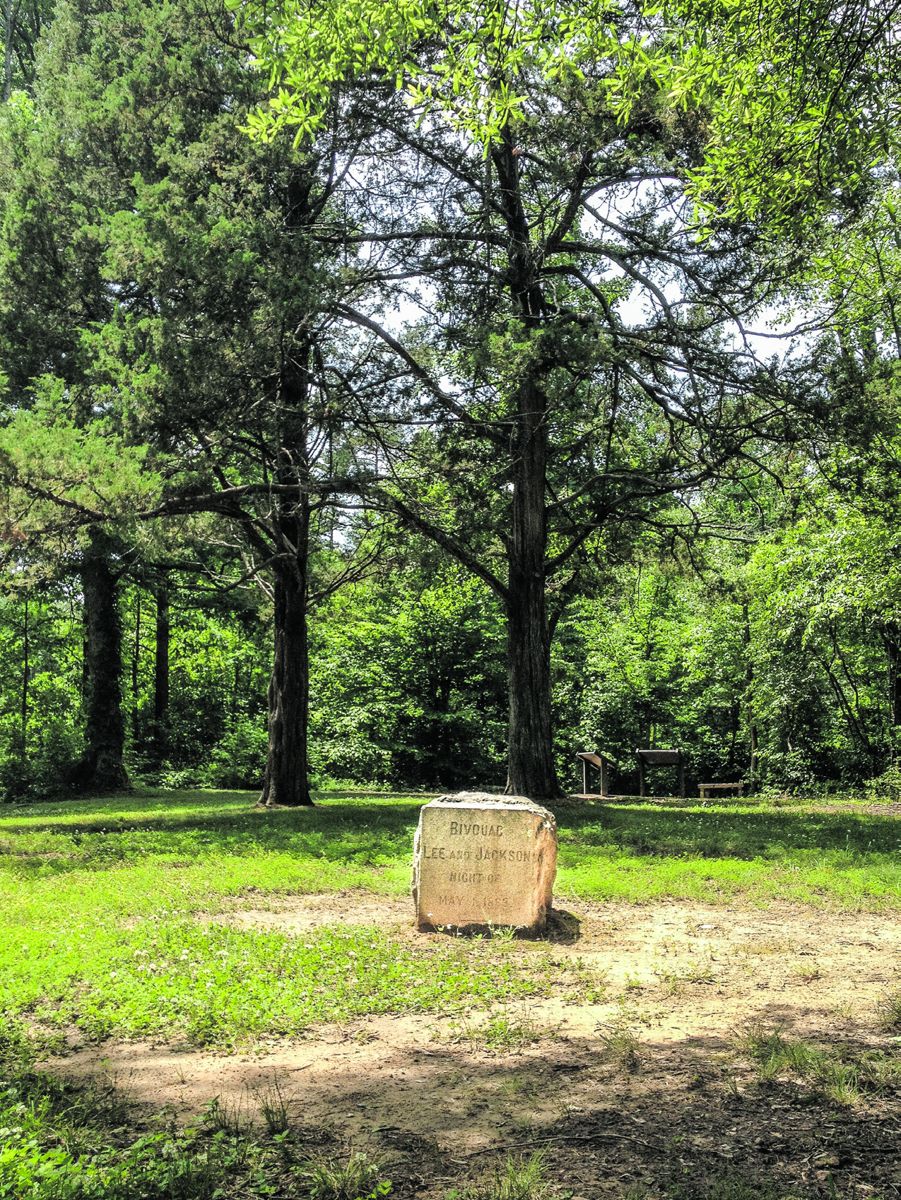
It’s a quiet location, tucked back from the busy road. A place where—with a little imagination—it’s evening in May 1863 and two generals are meeting for their final council of war. That’s where my Civil War journey and love of Central Virginia battlefields began. I’ve had a life-long interest in history and avidly collected volumes about Winston Churchill, and, of course, the American Civil War. My connection to Central Virginia’s battlefields really started in 2014 when I arrived in the area for a friend’s wedding. I lived in Alaska at the time and arrived in 90-degree Spotsylvania after a 20 hour journey. Over that weekend, between wedding festivities and celebrations, a friend took me battlefielding. We visited Salem Church, toured the Mule Shoe at Spotsylvania, drove through the Wilderness Battlefield, and spent time at Chancellorsville. That first time I visited the Lee-Jackson Bivouac my battlefield guide shared the story in vivid detail, and I gained an appreciation for the leadership moment that occurred at this secluded spot. Five years later (to the day!) I returned to Virginia to interview for the position of Executive Director at Central Virginia Battlefields Trust. In the years that I’d been away, I spent significant time digging deeper into Civil War history and gaining a greater appreciation of the leadership decisions and courage displayed on these battlefields. When I arrived here to start my new job, I stayed at my friend’s home and we talked about local, historic places to visit, I said, “There’s a place I have to go back to.” So, we returned to where my journey started five years earlier. The place where Lee and Jackson had met to start their great, final partnership for victory. As I walked to the spot, I realized I had returned with greater historical knowledge, a skill set I’d been honing for over 25 years in the nonprofit world, and an understanding of all that battlefield hallowed ground represents. Taking out my flask of bourbon, we shared a sip and poured a little on the land as a memorial symbol. (I’m not sure if Lee or Jackson would have appreciated the drink, but I think they would have recognized the gesture.) I settled into my role as executive director, working through stacks and files of paperwork about land, grants, and administrative projects. Sometimes, the days are long, but the need to preserve the land and the stories it holds motivates me to “press on.” My weekends are often spent on the battlefields, walking, taking photographs, and pondering the meaning of what happened at these places. Often, I return to Chancellorsville—drawn, I think, by the interest that came from that place of leadership council. A couple months ago my weekend adventures brought me to the fields of First Day Chancellorsville. This pristine tract of land tells the story of the opening shots and fighting on May 1, 1863. Central Virginia Battlefields Trust worked with American Battlefield Trust in 2004 to save 134 acres of this area. When people zoom by this battlefield on Route 3, they might notice some changes in topography, but walking the ground gives an entirely different perspective, particularly if moving west from the parking area. There’s a hill that the Confederate charged, and every time I walk it, I still wonder why the Union isn’t still sitting at the top. It’s a solid defensive position! Looking at the topography gives the chance to reevaluate Civil War leadership (or lack thereof). On May 1, Union General Joseph Hooker made the decision to pull back his troops, but I can’t help wondering if the battle could’ve been very different if he had more fully explored the defensive high ground initially held by his men on that day. One army overcame while another gave up its advantage. More recently, I explored McLaws’ Wedge—a 99-acre tract located south and east of the National Park Visitor Center at Chancellorsville. In 1998, CVBT saved this land as one of their earliest preservation projects, and the ground has since been turned over to the National Park Service for continued preservation and interpretation. Here, again, with my boots on the ground, I see how topography influenced and changed the battle. At first it seems like “just a big old field,” but then a deep valley slopes across the land, creating high ground that Federal troops could’ve held to their advantage. Could’ve is a word packed with hindsight and judgement, I know. Looking closer at the battlefields and the history, I can take in the big picture critically, but I don’t lose my understanding of what it must have been like for the men who fought here. These soldiers had to overcome the challenges of the land with daring and bravery. As I walk the land, I feel a greater connection to those men and what they did here. I think about the lessons that I learned during my days in the National Guard and have great admiration for what those soldiers, Blue and Gray, did so many years ago. Appreciation seems like too small a word. Admiration begins to sound like hero-worship. I’m a guy with a military background, library of books, and a lot of nonprofit executive experience, how do I find the right words? But maybe it’s not the words that matter so much. Maybe it’s the actions that count instead. Afterall, it wasn’t the words Lee and Jackson spoke at the bivouac site that are remembered; it was the bold actions that came from their meeting. Jackson’s march on May 2 and the crushing attack against the Union army right flank. The actions which came from that meeting cannot be underestimated.
By helping to preserving the hallowed ground of Central Virginia’s battlefields, we ensure the opportunity for each generation to come walk the topography, gain a greater understanding of the history, ponder leadership, courage, and resolve. I’m very happy to read history in a book, but to taking that knowledge and walking the land brings a whole new level of commitment to seeing the story of our pasts as a nation and as humanity. Perhaps Winston Churchill said it best after he explored Central Virginia’s battlefields in 1929: “Destiny pivoting here has stamped the ground with a ruthless heel; the path of the world takes a different turn henceforward.” When I walk the battlefields, it strengthens my resolve to save the hallowed ground where history changed. Central Virginia Battlefields Trust saves Civil War battleground to preserve the memory and meaning, sacrifices and stories of the men who fought at Fredericksburg, Chancellorsville, the Wilderness, and Spotsylvania. Learn more: www.cvbt.org