
Through The Lens
Stirring Up Dry Bones
By Stephanie Hagiwara · Originally published May 2020 · pp. 24–25
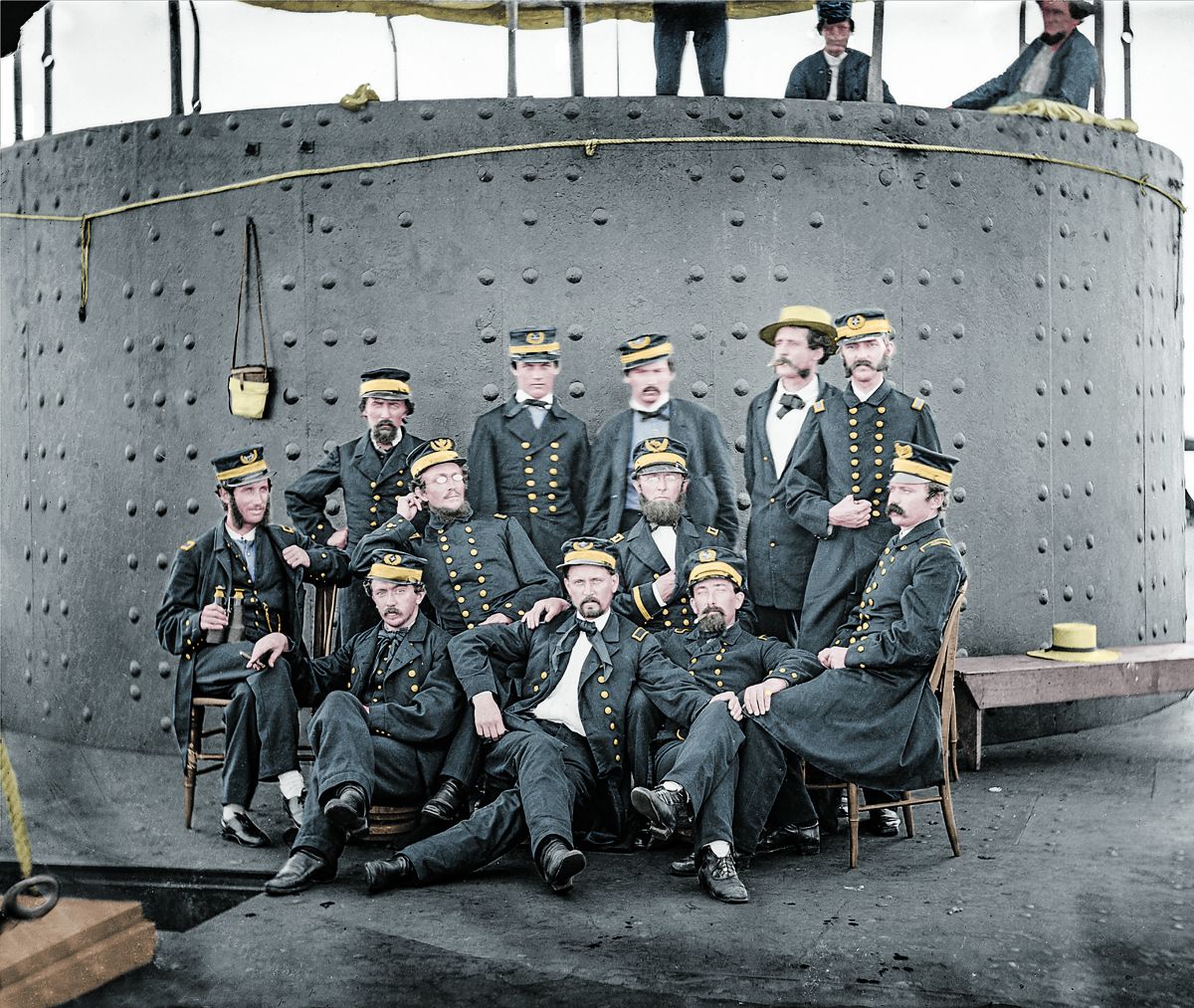
The fact is the Government is getting to regard the Monitor in pretty much the same light as an over careful housewife regards her ancient china set – too valuable to use … yet anxious that all shall know what she owns & that she can use it when the occasion demands.” – William F. Keeler, Assistant Paymaster, USS Monitor On May 4, 1862, Gen. Joseph Johnston pulled his troops out of Yorktown, Va., to avoid the massive bombardment of his position by Gen. George McClellan. President Abraham
Lincoln considered the weeks McClellan spent hauling in siege guns a waste of time. On May 6, Lincoln, Sec. of War Edwin M. Stanton, Sec. of Treasury Salmon P. Chase, and Brig. Gen. Egbert Viele arrived at Fort Monroe, Va., to move the war forward in Virginia. Fort Monroe, the “Gibraltar of Chesapeake Bay,” was located on the end of a peninsula formed by the York and James Rivers. Fort Monroe protected the Federalheld port of Hampton Roads and prevented Confederate access to Richmond, Va., via the James River. The fort remained in Federal control after Virginia’s secession due to the quick and decisive efforts of Gen. John
Ellis Wool, Cmdr. of the Army Department of Virginia. Wool, age 78, was the oldest officer in the field. He had served in both the War of 1812 and the Mexican American War. Wool’s hands trembled and he would repeat things he had said earlier, but he could still mount a horse and his bravery remained firm. As McClellan was far too busy chasing the enemy to see them, Lincoln turned his attention to the local sights. The Confederate batteries at Sewell’s Point caught his notice. After prodding from Lincoln, U.S. Adm. Louis Goldsborough agreed to organize a “go up & feel” while Lincoln visited the fleet. On the Monitor, Assistant
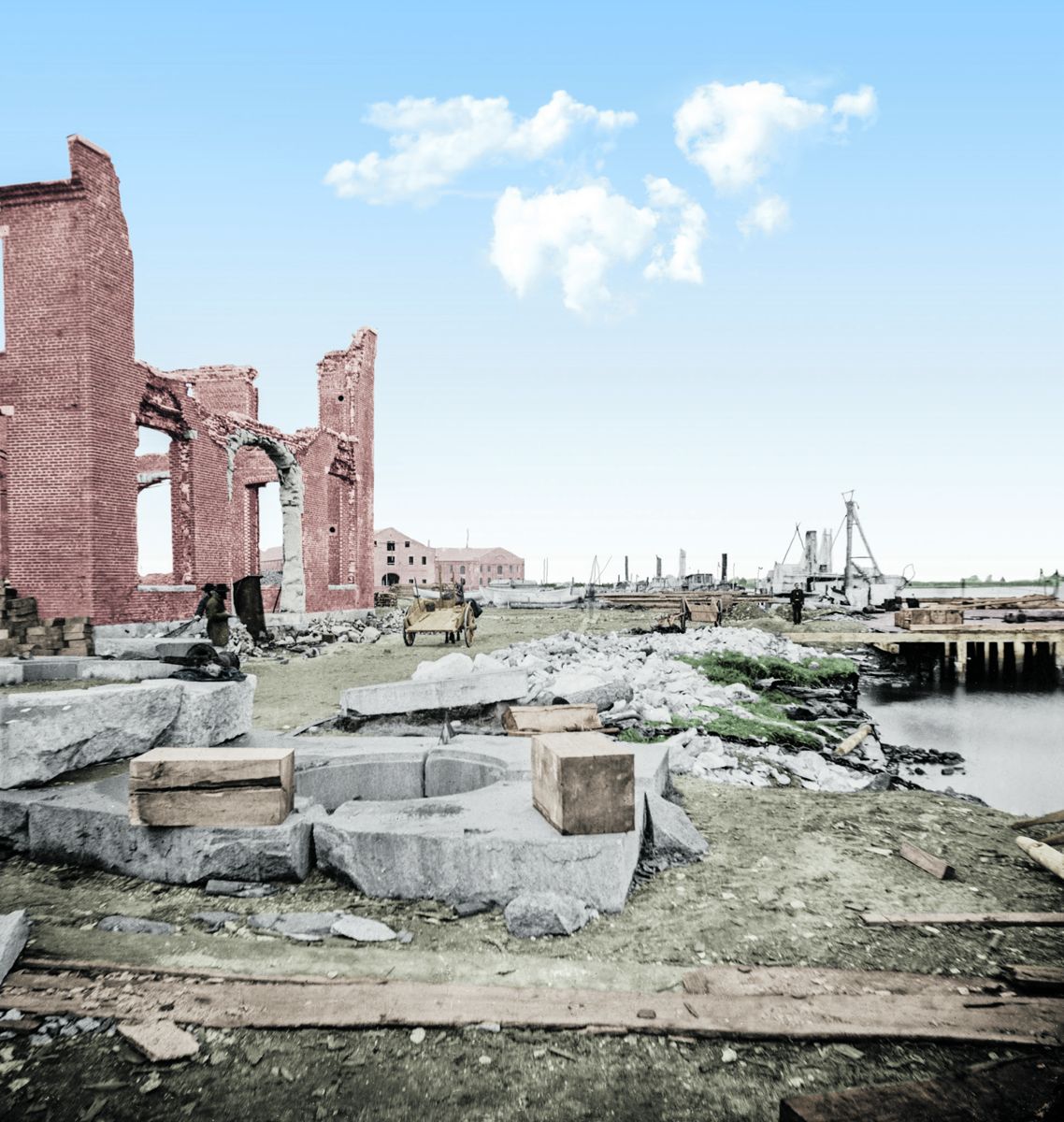
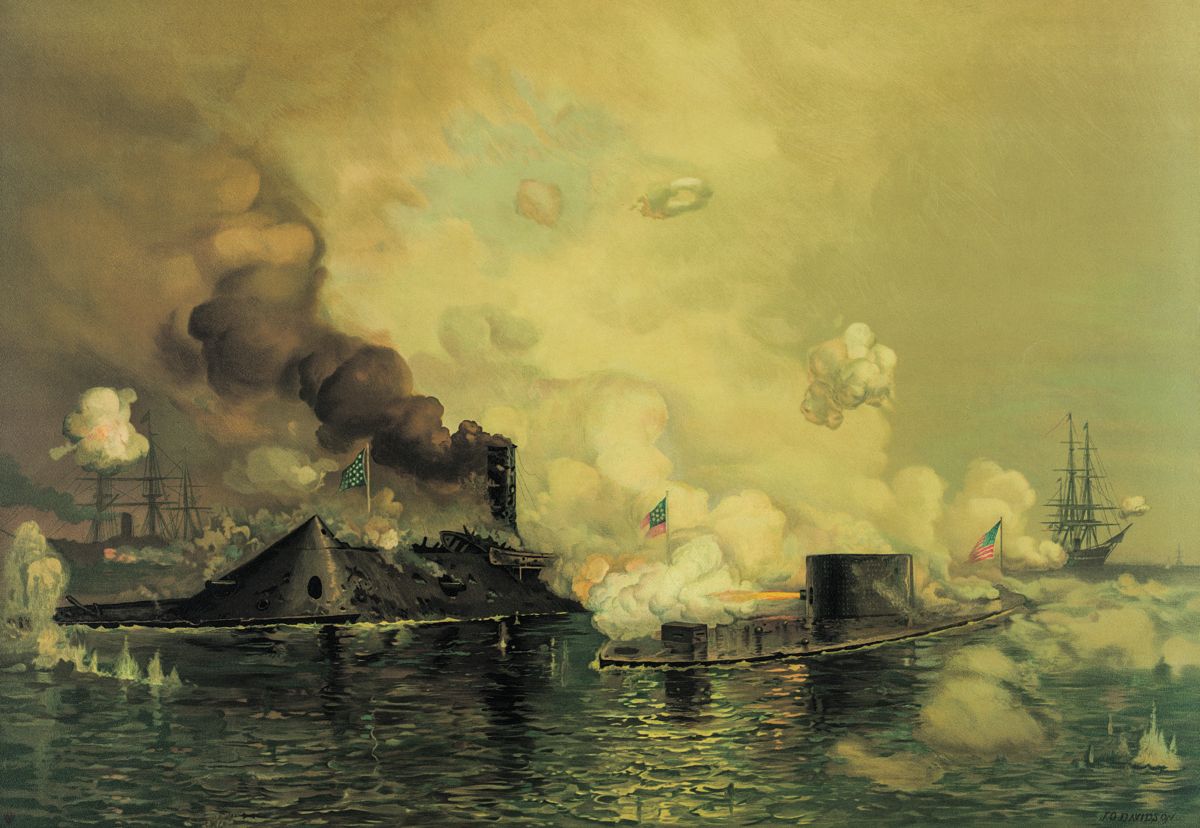
Paymaster William Keeler recounted, “Most of our visitors come on board filled with enthusiasm & patriotism ready, like a bottle of soda water, to effervesce the instant the cork is withdrawn, but with Mr. Lincoln it was different. His few remarks as he accompanied us around the vessel was sound, simple, & practical, the points of admiration & exclamation he left to his suite.” After the March 8-9, 1862, Battle of Hampton Roads, Va., a.k.a. the “Battle of the Ironclads”, the Monitor and CSS Virginia (former USS Merrimac) settled into a game of cat and mouse. The crews of both ironclads believed they won the battle, wanted a rematch, and were prevented from doing so by their governments. The Virginia patrolled the Elizabeth River, protecting Sewell’s Point and the Gosport Navy Yard at Norfolk, Va. The Monitor was part of the fleet that blocked her movement past Hampton Roads. Her crew was frustrated because, “day after day the emblem of rebellion flaunts in our very faces, & day after day we remain torpid & inactive.
That afternoon Lincoln watched the Sewell’s Point attack. The Monitor’s Lt. Samuel Greene loaded a ten second Birney shell then fired. The Monitor moved in closer, 300 yards from her target. Keeler wrote, “… bang, bang go the guns again – as yet no response from the fort. Their rag still flies but nothing living is to be seen.” Due to heated guns, the Monitor withdrew, “as four of our gun boats drawn up a half circle were sending an almost uninterrupted storm of iron over our heads & into the rebel defenses.” The buildings burned as the Confederates managed to raise their fallen flag. From the distance the telltale signs of the approaching Virginia a.k.a. “the Big Thing” could be seen. She is “concealed in a huge murky cloud of her own emission, black, and repulsive as the perjured hearts of her traitorous crew. The water hisses and boils with indignation as like some huge shiny reptile.” The Federal fleet, following Lincoln’s original orders, “not to risk the Monitor,” obeyed the signal to “resume moorings.” On a roll, Lincoln turned to reclaiming the Gosport Navy Yard. After much discussion, Lincoln took matters into his own hands by consulting the charts. With a local pilot and two cabinet ministers, the President scouted a troop landing site from a tug. Early the next morning over 5,000 troops set out for Norfolk. Wool had begged Stanton to lead the assault and he had agreed. Both Chase and Viele also accompanied the landing troops which led to confusion regarding chain of command. Chase ordered Viele, “in the name of the President,” to take command. Outside Norfolk, about 5 p.m. they were met by the Mayor William Lamb and the city council. Lamb had prepared a ceremony to turn over the keys to the city that lasted until dark. Johnston had warned that he was abandoning the peninsula to protect the capital at Richmond. C.S. Gen. Benjamin Huger ordered the evacuation of Norfolk and to salvage what they could. The attack at Sewell’s Point came as the Confederates were dismantling their guns. While Wool and Chase listened to the mayor, the Confederates were destroying the Navy Yard and the last of Huger’s men boarded the final train out. The Federals were thrilled by the bloodless capture of Norfolk. Stanton “fairly hugged General Wool.” Chase considered the expedition, “a brilliant week’s campaign of the President.” Lincoln received confirmation that an energetic spirit can be more valuable than expertise. Keeler would credit Lincoln for “stirring up dry bones … It is extremely fortunate that the President came down when he did- he seems to have infused new life into everything, even the superannuated old fogies [Goldsborough and Wool] began to show some signs of life.” With the evacuation, the Virginia now lacked a base. Her captain, Flag Officer Josiah Tattnall, had a decision to make. The ironclad could attack the Federal fleet and go down in a blaze of glory or be taken up the James River to serve as a floating battery to defend Richmond, but only if her draft could be reduced from 23 to 18 feet. The crew threw everything overboard except her guns and ammunition. Then the prevailing wind changed, making the river shallower. Furthermore, she was no longer an ironclad. Thus, the Virginia was set ablaze to avoid capture. Her enemies watched the inferno with glee. After “a tremendous explosion the Merrimac went into the air and was seen no more.” Sources: Daly, Robert W., ed. Aboard the USS Monitor: 1862: The Letters of Acting Paymaster William Frederick Keeler, US Navy, to his wife Anna, Annapolis, MD: United States Naval Institute Press, 1964. • Symonds, Craig L., Lincoln And His Admirals, Oxford University Press, 2008 • Quarstein, John V. The Monitor Boys: The Crew of the Union’s First Ironclad (Civil War Series), Arcadia Publishing Inc, 2013 • Sears, Stephen W. To the Gates of Richmond: The Peninsula Campaign, Houghton Mifflin Harcourt, 1992 • Foote, Shelby. The Civil War: A Narrative: Volume 1: Fort Sumter to Perryville (Vintage Civil War Library), Knopf Doubleday Publishing Group, 1986 •
Stephanie Hagiwara is the editor for Civil War in Color.com and Civil War in 3D.com. She also writes a column for History in Full Color. com that covers stories of photographs of historical interest from the 1850’s to the present. Her articles can be found on Facebook, Tumblr and Pinterest.