This And That
A Revolutionary War
By Gould Hagler · Originally published May 2020 · pp. 32–33
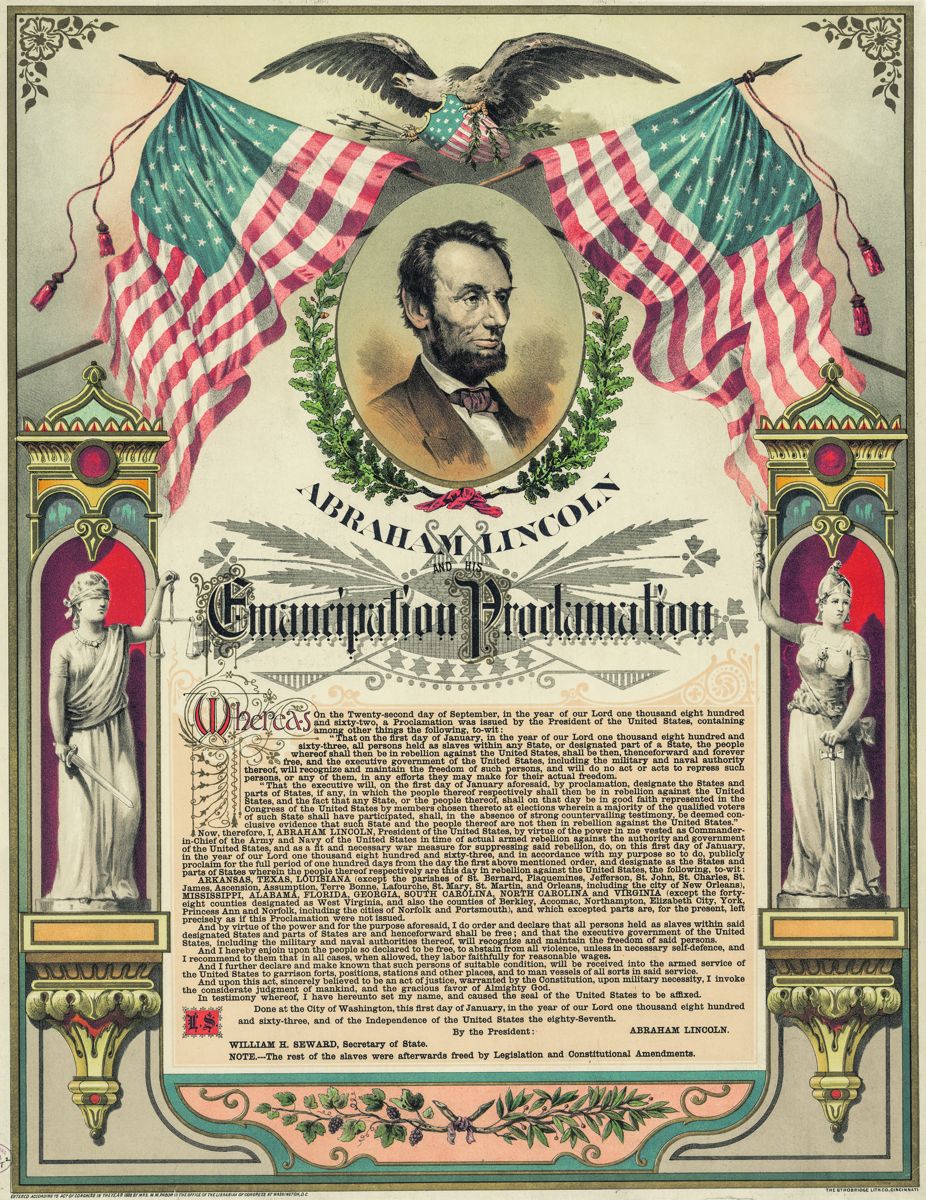
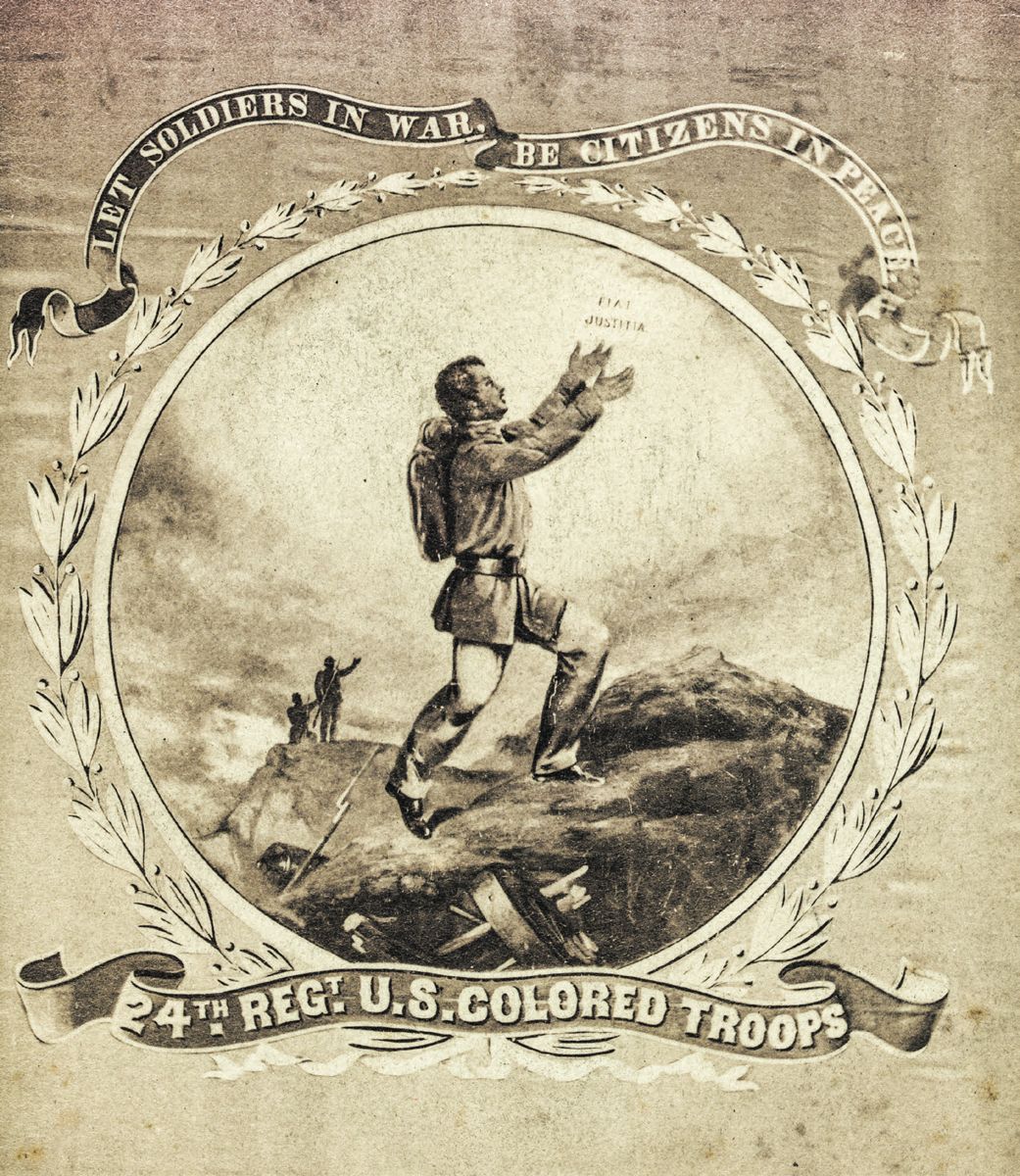
As the war was prolonged, it inevitably accomplished a revolutionary change in the status and outlook of the colored folk who comprised about an eighth of the population. When John Brown was hanged in 1859 slavery had seemed as strongly entrenched as ever. Had fighting ended in the spring of 1862 it might have survived for years. But it suffered shock after shock…. By the spring of 1863, with a systematic enlistment of colored troops, the future of the Negro was assured.” – Allan Nevins, in The War for the Union: War Becomes Revolution 1862–1863. Had the first Battle of Manassas turned out as a Federal victory (as it almost did), or had McClellan prevailed in the Peninsular Campaign (as he could have), the war’s repercussions would have been quite different than the ones actually experienced. In all likelihood a quick Federal victory would have resulted in restoration of the Union without immediate abolition of slavery, without the enfranchisement of black men, without the disfranchisement of hundreds of thousands of white men, without profound and immediate social and political upheaval. The 1863 Emancipation Proclamation and the recruitment of black soldiers spelt revolution. In this column we will examine newspapers and hear some voices of the time commenting on these and related issues. As we have done in previous columns, we turn to the Valley of the Shadow archive for witnesses. On Oct. 7, 1862, the outraged editors of the Staunton Spectator quoted Paradise Lost and equated the president of the United States with Lucifer. “The Arch-Fiend in the regions of woe, ‘grins horribly a ghastly smile,’ for he and his emissaries upon earth – the extreme abolitionists – have succeeded in prevailing upon ‘Old Abe’ to issue a proclamation of emancipation which will send a thrill of horror through all civilized nations. He invites the servile population of the South to enact the bloody scene of St. Domingo throughout the limits of the Southern Confederacy.” “‘Murderer’ is a term of honor compared to Lincoln’s crime,” the Spectator continued. “To this is added the cowardice of employing an agent. To this belongs the additional fact that the agent, when unleashed, is a savage.” One hundred sixty miles to the north in Chambersburg, even before the September 22 Proclamation, the Democratic newsmen at the Valley Spirit were no less incensed at the prospect of emancipation. The Pennsylvanians on July 30 advocated restoration of “the Union as it was” and opposed “the atrocious and bloody revolutionary programme of emancipating the four millions of slaves at the point of the bayonet….” The unconstitutional act would hamper the war effort, argued the Spirit, as it would “succeed in arraying the Southern people in a solid phalanx against what they term ‘Abolition Lincolns.’” For them, the Spirit reminded its readers, “it is a matter of life and death.” In early September the Spirit railed against the radicals, the “miserable charlatans, abstractionists, and theorists” who were forcing their policies on Lincoln. “They had a party programme to carry out. Slavery had to be abolished in the District of Columbia and in the Territories. Confiscation and emancipation bills were introduced and urged with persevering energy and fanatical zeal, regardless of Constitutional objections or injurious effect to the Union cause in the Slave States….” Later that month the Spirit reported the miserable charlatans’ success, when Lincoln “issued a proclamation proclaiming unconditional freedom to all the slaves in the seceding States after the first day of January next.” The editors again raised the constitutional issue: “Where the President pretends to find his authority for issuing such a proclamation, he does not deign to tell us.” Waynesboro’s Village Record expressed a starkly different view on Jan. 9, 1863, after the Proclamation took effect, stressing both the moral and practical aspects of Lincoln’s action. The order “takes away the burden of national death from the hereafter, and makes the country of our children the country of freedom. This is the general thought that pervades the Proclamation; but that which is practical and immediate, is the conversion of this silent, oppressed, and anxious race into active allies of the Union. It adds a reserve force to the army of the Union, and makes three million of slaves three million of able-bodied recruits, who have only to see the Union banner to follow it with their lives. It takes away the labor that sustains the power of the South, and adds to the military power of the North. It is a war measure, and will add strength to our armies and glory to the object of the war.” The recruitment of black soldiers, like the Emancipation Proclamation, was the subject of vehement debate in the press. In August 1862 the Spirit ran a piece about an Indiana official who emphatically denied a report that his state would provide two black regiments for the army. “I can positively state that negro enlistments would be repugnant in the highest degree to the authorities and people of that State,” the Hoosier official stated, adding that a “measure so distasteful… could not be tolerated by our citizens.” The following February the Spirit published excerpts from a Congressional debate on this sensitive issue. The “negro soldier bill” proposed by Thaddeus Stevens was, according to a Kentucky member, intended to “entrench [black soldiers] on the soil of the cotton states, and maintain them there, to exterminate or drive off the whites of that section.” A Pennsylvania congressman argued that the enlistment of blacks “would produce demoralization, and the soldiers of the army had said to him that if black men were sent to them they… would leave the service….” The Staunton Spectator that same month expressed similar views and predicted that “as soon as [Northern blacks] come within reach of the Southern army they will be captured and restored to the condition for which Providence designed them.” On May 11, 1864, the Spirit printed a report of an unprovoked assault on a group of workers in Quincy, Ill., “by a whole company of negro soldiers, with brickbats and other missiles….” There were no deaths, went the report, but “some of the party [were] considerably bruised and injured.” In addition to reporting allegations of riotous misbehavior, the Spirit expressed incredulity about accounts in other papers of black troops who fought bravely and effectively in battle. “It is scarcely possible to take up a newspaper in the interest of Lincoln and Johnson which does not contain grandiloquent spread eagle flourishes about the black troops, and comparisons disparaging to our white veterans,” said an article in a July issue. It is interesting to note that most newspaper commentary on the enlistment of blacks is found in papers opposing the policy. As we have seen, the opposition is expressed in incendiary terms and the language is no less incendiary in Pennsylvania than it is Virginia. On the other hand, the Franklin Repository, the Republican paper, had little to say on this subject. However, in December 1863, the paper ran a long article entitled “Rebel Atrocities.” Chief among the atrocities was “the treatment of our negro troops,” compared to which “all the other atrocities of the war will pale….” Another issue of the Repository included a quote from the Richmond Enquirer: “Should [black troops]
be sent into the field…none will be taken prisoner – our troops will know what to do.” This, the Pennsylvania editors said, was “frankly admitting that they have been murdered.” Did the Republican editors calculate that their readers had doubts about the enlistment of blacks? Did they figure that the less said the better, and choose to limit their commentary to what almost any reader would find proper, i.e., that soldiers of the United States, regardless of their race, should not be murdered? In contrast, the Democratic editors pulled no punches in their frequent attacks on Lincoln’s policies and in stark terms laid out the racial issues as they saw them. The opinions expressed in the Valley Spirit, and the language in which these opinions are articulated, are telling of 19th century racial attitudes. That which would be beyond the pale today was mainstream 150 years ago. It is clear that a great number of citizens saw the issues as the editors of the Spirit saw them, as evidenced by the resolutions adopted at the Pennsylvania Democratic state convention on July 4, 1862. One resolution is especially noteworthy: “That this is a government of white men, and was established exclusively for the white race; that the negro race are not entitled to and ought not to be admitted to political or social equality with the white race, but that it is our duty to treat them with kindness and consideration, as an inferior and dependent race; that the right of the several States to determine the position and duties of the race is a sovereign right….” Another resolution stated “That the party fanaticism…that seeks to turn the slaves of the Southern States loose to overrun the North…is insulting to our race, and merits our most emphatic and unqualified condemnation.” These resolutions were adopted when the war was in its 15th month. Those who favored restoration of “the Union as it was” continued their advocacy. As late as September 1864, the Spirit wrote that the “only true road to peace and Union” lay in the revival of the Crittenden Compromise, in other words, the return of the seceded states with the institution of slavery left intact. The Republican party, however, “has diverted the war to other purposes, and now declares that the unconditional submission of the rebels can alone end it.” The Spirit argued that if the people of the Confederate states “were assured that the government of the country would be administered in accordance with the Constitution as our fathers made it, so that it were rendered impossible to interfere with the reserved rights of the States…they would…soon throw their leaders overboard, and gladly to return to the shelter of the Union.” How realistic was this hope, when the war was in its 29th month, and had become revolution? Sources: All the newspapers cited can be found in the Valley of the Shadow archive: http://valley.lib.virginia.edu. Gould Hagler is a retired lobbyist living in Dunwoody, Ga. He is a past president of the Atlanta Civil War Round Table and the author Georgia’s Confederate Monuments: In Honor of a Fallen Nation, published by Mercer University Press in 2014. Hagler speaks frequently on this topic and others related to different aspects of the Civil War and has been a regular contributor to CWN since 2016. He can be reached at [email protected].