John Henry Myer: Pursued by War
By Paul T. Scott · Originally published March 2020 · pp. 8–10
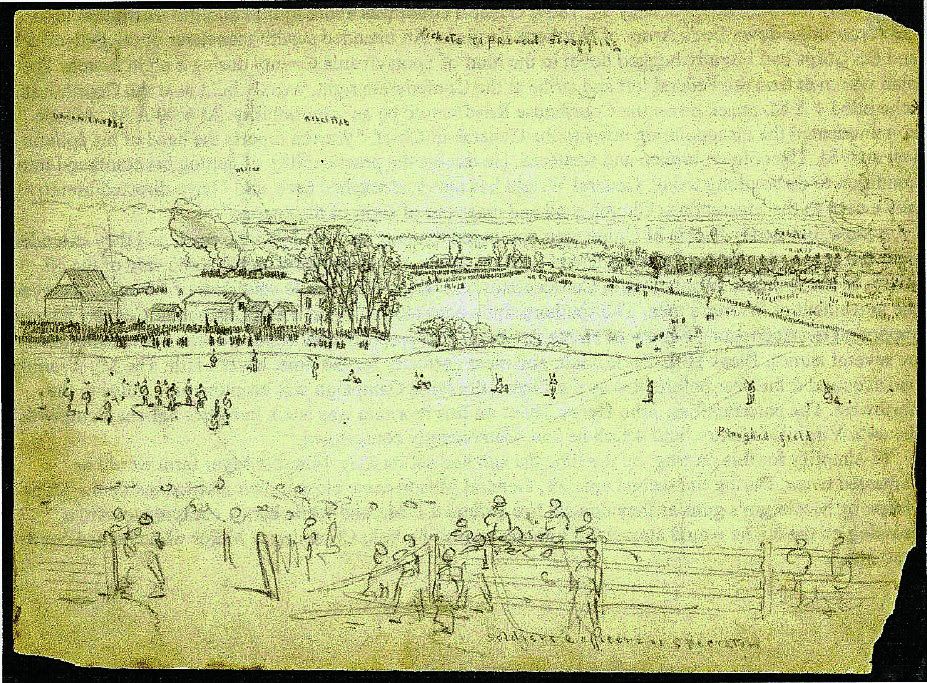
When war threatened civilians directly, they had three essential choices: stay, temporarily flee, or permanently relocate. Circumstances sometimes dictated which option they chose. One of the most famous civilians of the conflict, Wilmer McLean, moved his family from Manassas Junction when a second battle in that area threatened his family; he relocated the clan to Appomattox Court House, only to have armies arrive in his yard and their generals discuss terms of surrender in his parlor three years later. Near Fredericksburg, Va., another civilian faced a similar circumstance, war threatened, he relocated, but battlefield conflict pursued him. John Henry Myer spent his life making choices trying to better his family’s future, but sometimes fate did not cooperate. In 1847, Myer and his wife, Mary Elizabeth Kohler Myer, immigrated to Virginia from the German kingdom of Hanover. They settled in the port city of Fredericksburg and started raising their family, which grew to include three children, Mary, John Jr., and Annie. The family lived over the store where Myer worked as a bridle and saddle maker. In 1852, he sold his business and home and started a bakery and confectionery business, believed to have been located at 212 William Street. Myer’s bakery prospered until war came to the city. In November 1862, Union forces gathered on the east bank of the Rappahannock River opposite Fredericksburg. Anticipating the coming onslaught, Myer followed the example of many neighbors, fleeing westward in Spotsylvania County. On Dec. 11, 1862, Federal artillery shelled the town, followed by street fighting that brought a new level of war to the Civil War history saga. Then, on Dec. 13, deadly attacks just west and south of town produced many casualties and left a horrific trail of carnage in the community. The following spring, the Second Battle of Fredericksburg took place, bringing another wave of violence through the riverside community. In April 1863, desiring to move his family away from the desolation in the city, Myer purchased a farm known as Bleak Hill (later Myer’s Hill) on the Ni River in Spotsylvania County and moved his family, hoping for a more peaceful future. The new property lay approximately twelve miles from Fredericksburg and southeast of Spotsylvania Court House. Unfortunately for Myer, war seemed to pursue him. It came to his front doorstep on May 14, 1864, during the Battle of Spotsylvania Court House. Serious fighting occurred near the house and atop Myer’s Hill. New York, Pennsylvania, and New Jersey regiments fought Georgia, Mississippi, and Virginia units for the strategic high ground. Generals Grant and Meade both came to Myer’s Hill, and at one point, Confederates came close to capturing Meade. The hill where the Myer house stood changed hands three times during the battle before the Federals claimed the day’s victory. The Myer Family had fled, but a caretaker had stayed behind, sheltering in the house. Just before the final assault, the caretaker fired on the Federals, and in response, they burned the house to the ground. John Myer saw the flames engulfing his house from the ranks of the 40th Virginia Infantry. Earlier that spring, he had been conscripted by the Confederate government for military service. He saw his first action in the Wilderness, and during the battle of Spotsylvania Court House, his unit was positioned in a part of the line that became known as Heth’s Salient, well within sight of the hill that bore Myer’s name. He watched helplessly as smoke rose from his homestead. On May 22, 1864, near the North Anna River, Yankees captured Myer, sending him to Maryland’s Point Lookout prison camp for the duration of the war. Much to his relief, he learned that his family had survived the battle and burning and were safe elsewhere. After his release, he took the oath of allegiance and returned home to restart his life. With little except the home’s foundation left on his Spotsylvania farm, Myer abandoned the property and moved back to Fredericksburg with his wife and three children. Industrious as usual, he started to rebuild his opportunities and business ventures. He formed a partnership with Frederick Brule in 1866 and built the Germania Flour Mill with its office and warehouse at 317 William Street. He became a prosperous merchant again, actively assisted in community affairs, and served on the Town Common Council for thirty years. Myer died on Dec. 5, 1909, and was remembered by the community as a member of the Presbyterian Church, a Mason, and an honored citizen. Today, Myer’s Hill remains untouched since the battle and house fire. Rifle pits still surround the homesite and earthworks traverse much of the southeastern section of the property. It is like a time capsule from 156 years ago, telling the story of a man, his family, and the battle that destroyed his home. Professional archaeology has uncovered a variety of clues and artifacts at the site, giving local historians a clearer picture Union General George G. Meade was almost captured during the fight at Myer’s Hill.
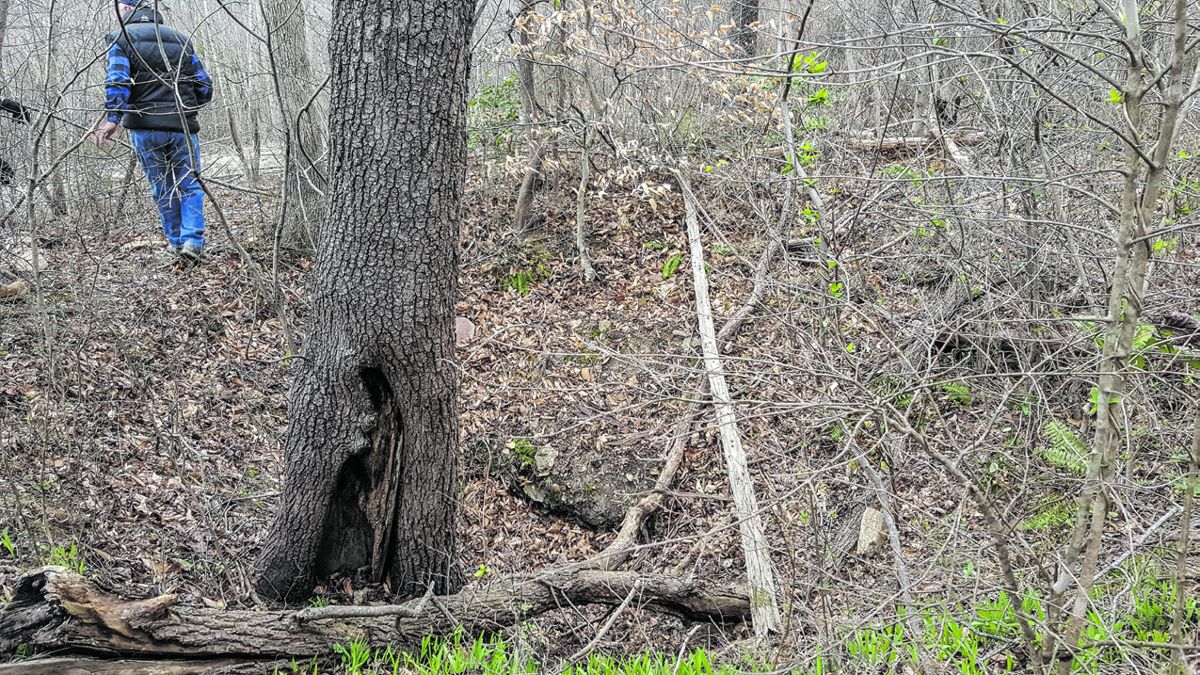
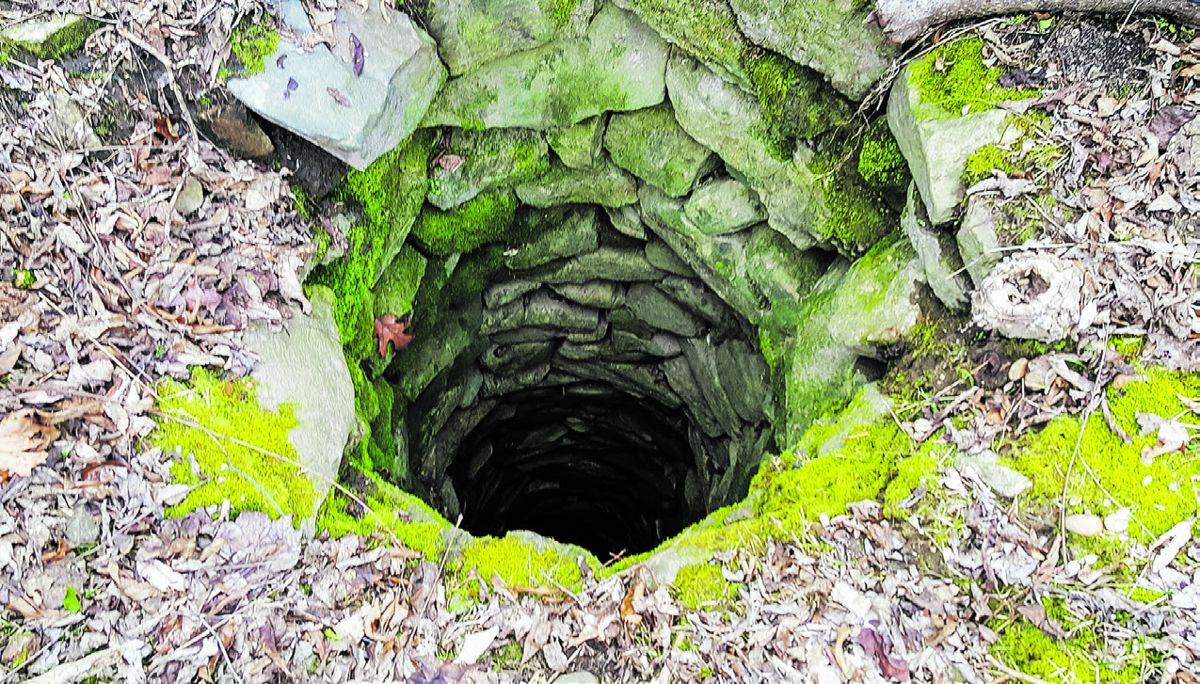
of the family’s life and the battle that ended their time in the house on the hill. In August 2018, the Central Virginia Battlefields Trust (CVBT) acquired a 73.3-acre tract at Myer’s Hill and has been working on preservation efforts and opportunities for special interpretation in the future. The stone basement of the burned house, the rock-lined well, and the icehouse pit are still clearly visible. At the time the property was purchased, CVBT President Thomas Van Winkle noted that the acquisition “is an increasingly rare opportunity to preserve an almost completely intact battlefield—one that history has paid little attention to yet, nevertheless, is so important to the entire story.” As CVBT continues to fundraise to retire the debt and preserve the battlefield forever, the day is anticipated when the property can be further explored, studied, and interpreted. It is hallowed ground, a nearly forgotten part of the Battle of Spotsylvania’s history, and a witness to war’s destruction of civilian property. John Myer, immigrant, entrepreneur, farmer, conscripted soldier, prisoner, businessman, and community leader, has a special chapter in Central Virginia’s local history. The opportunity to preserve pieces of his story also opens a greater discussion about civilians, their roles, and their losses during the Civil War. The conflict seemed to pursue Myer at multiple points, but happily he and his family survived, stayed in the Fredericksburg area, and rebuilt their lives when the fighting ended. For more information about the preservation efforts at Myer’s Hill, please visit www.cvbt.org. Paul Scott is a retired attorney and a member of the Central Virginia Battlefields Trust Board of Directors.
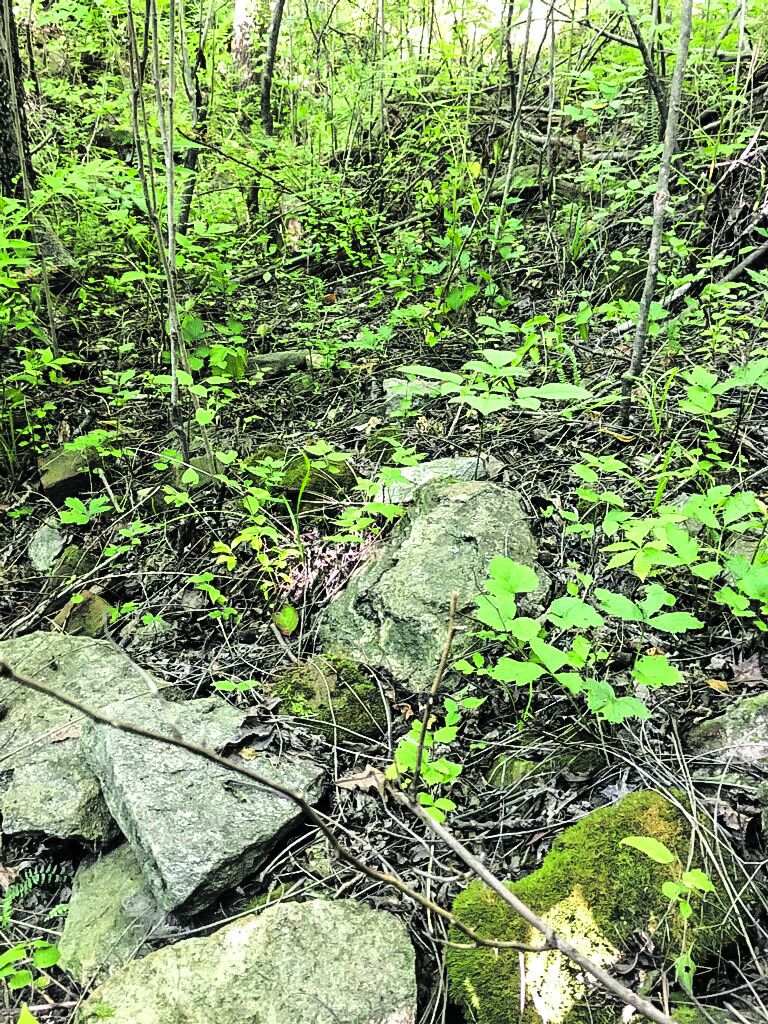
Myer’s Hill icehouse pit.