
Portraying Mary Todd Lincoln – America’s First, First Lady
By Bob Ruegsegger · Originally published June 2020 · pp. 30–31
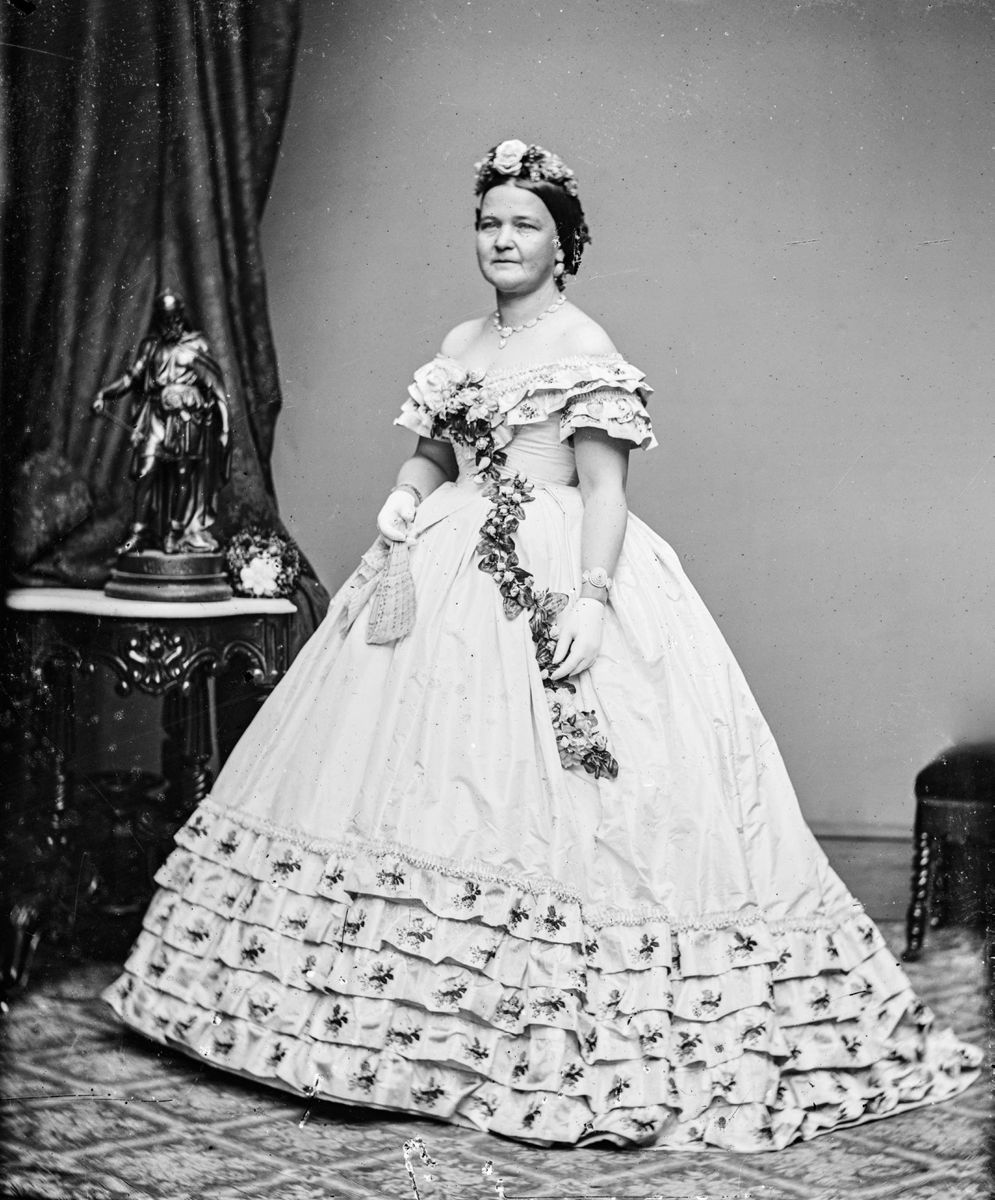
As a young girl growing up in Lexington, Ky., Mary Ann Todd dreamed of living in the Executive Mansion—the White House. She was vivacious, welleducated, and ambitious. She set her sights on marrying the man who would become president. Mary Ann Todd came from a very wealthy Kentucky family from the “thriving metropolis” of Lexington, the “Athens of the West.” Her father was Robert Smith Todd, and her mother was Eliza Parker Todd. Her home was a tastefully appointed mansion full of family heirlooms. She belonged to a family with seven children. At one time Mary Todd was, according to Mona Buss, quoted as saying that she would marry the man who would become President of the United States. Prior to becoming involved with Abraham Lincoln, she dated Stephen A. Douglas, a Democrat. Lincoln was a Whig, until a new Republican party was developed. Her dream came true when, after being sworn in by Chief Justice Roger Taney, President Lincoln was escorted to the White House on March 4, 1861. At the invitational inaugural ball, dressed in blue silk and bejeweled with diamonds, pearls, and gold, Mary Lincoln dazzled the crowd. On that evening she was living her dream. Mary Lincoln had become the First Lady, and she was savoring the experience.
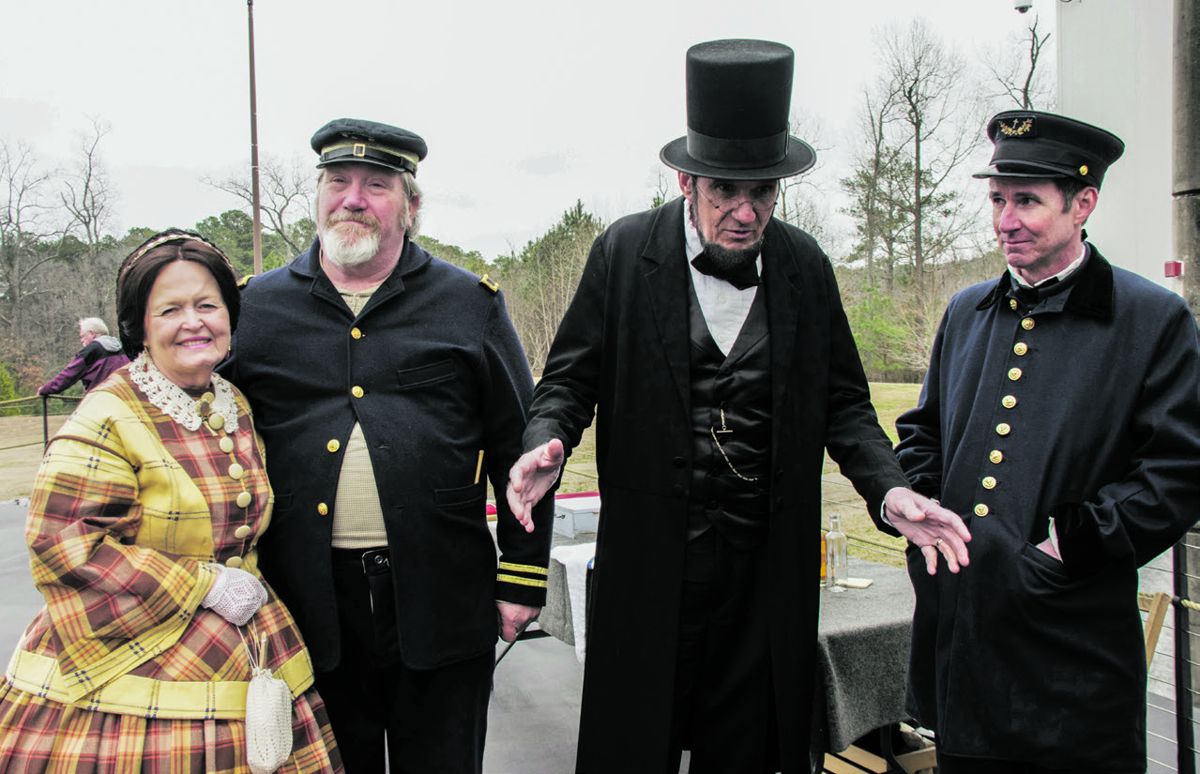
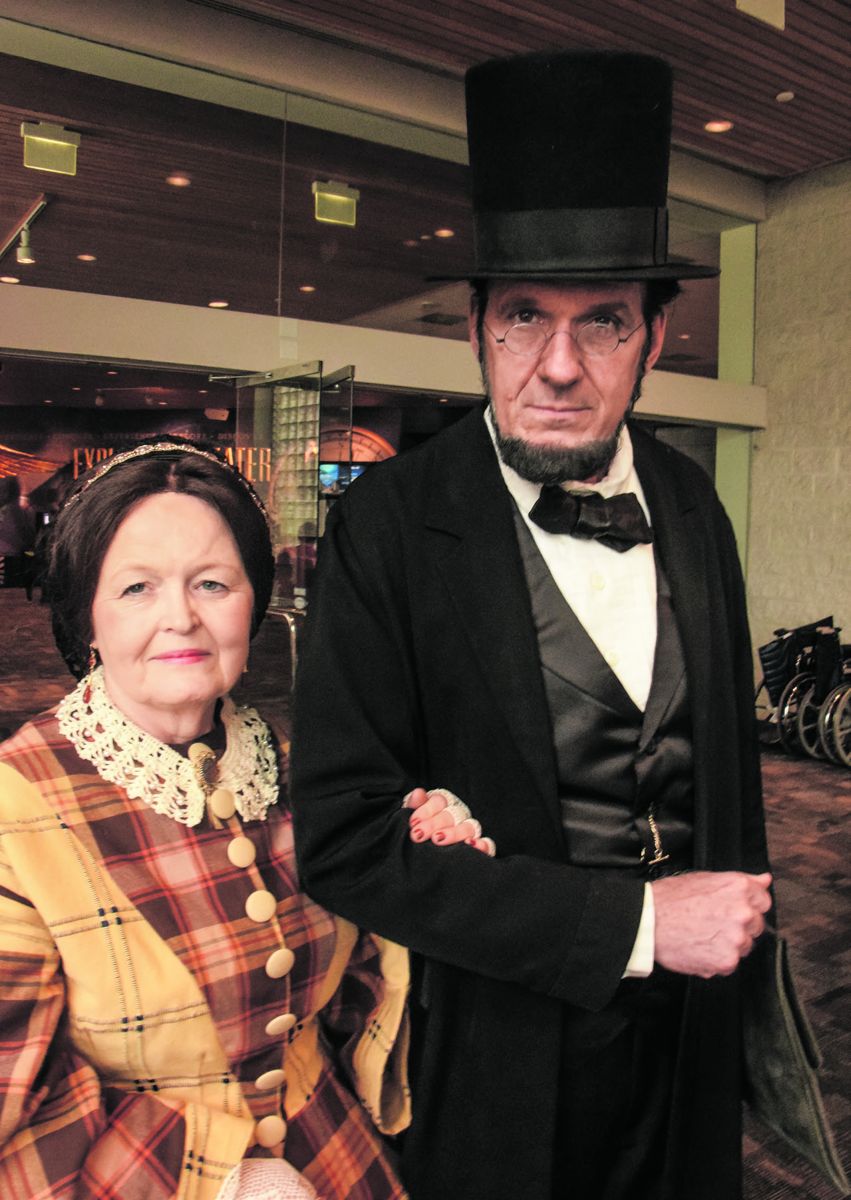
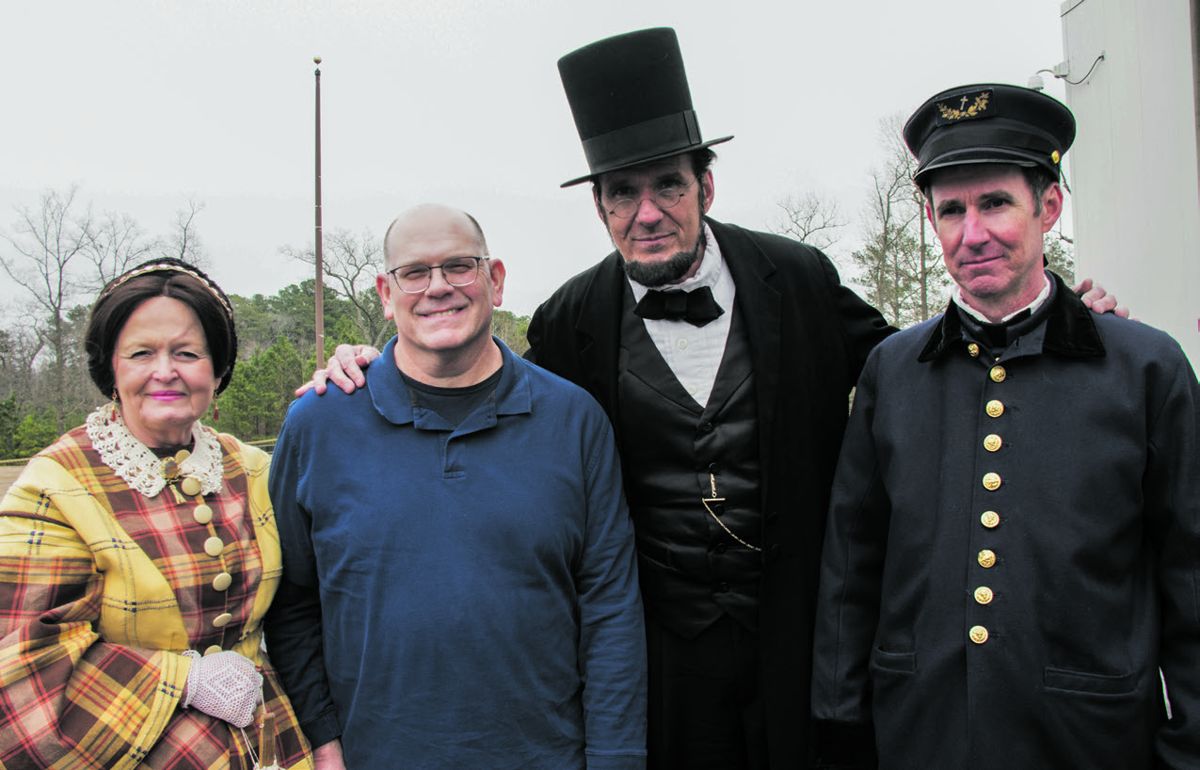
Mary Lincoln had no inkling of the suffering and heartache that the next five years would bring to her and her family. George and Mona Buss are historical interpreters who portray President and Mrs. Lincoln, Madam President. George Buss has over thirty years of experience portraying Lincoln. Mona Buss [George’s spouse] has relatively recently assumed the role of Mary. “The reason that I wanted to portray Mary Lincoln is that she had a vast influence on Lincoln’s political career,” said Mona Buss. “I think, her story is not told that often.” Mary Lincoln evidently subscribed to the notion that “behind every successful man, there is a strong woman.” Without Mary Todd Lincoln, there might never have been a President Abraham Lincoln. Mary was very supportive of her husband’s political career. She’d visit the legislatures when in Springfield and in Washington. She would take notes, come back, and discuss the political atmosphere with Lincoln. After he served one term in Congress, she recommended that he not take an appointment as governor of Oregon Territory that was offered to him by the Secretary of the Interior in 1849. She felt it would take them out of the national spotlight where “we want to be.” “They obviously loved each other and were very supportive of each other,” said Buss. “She had a political impact. She visited the hospitals, wrote letters for soldiers, and was very supportive of the anti-slavery movement,” she observed. “I think she was a woman far beyond her time because she had thirteen years of education.” Mary Lincoln enjoyed being the center of attention in Lexington, Springfield, and Washington. She relished the limelight. She loved being the First Lady. For Mona Buss, her transition to First Lady has taken time. “You have to adjust to it. I think that the more you study her character the more you feel comfortable with it,” she explained. “I had to learn to grow into the role. I do like it, but it’s a learning curve. I think she’s a wonderful person to represent.” Her husband’s portrayal of President Lincoln over the last three decades has obviously been a huge factor in her decision to portray Lincoln’s lady. She sees Lincoln-like qualities in her husband’s interpretation of the Great Emancipator. “He portrays him well. He looks like Lincoln. He has his intelligence and his compassion for people.” said Buss. “He’s very authentic. He has studied his craft for over thirty years. He has a wide span of knowledge. I’ve not really seen him stumped with any one question,” she said. “I admire him because he loves people of all ages. He’s down on his knees talking with little children. He leans over when he talks with elderly people. He’s very personable.” “The thing that I admire most about President Lincoln is his compassion and his political savvy, his intelligence, and his kindness to people,” said Buss. “He was very compassionate with people.” In early Lincoln portraits, Mona Buss sees Lincoln as a man of determination. As Lincoln aged, she sees that determination still reflected in his photographs. She also sees the weariness that the Civil War brought to his life, Mary’s life, and the lives of his family members. “He would go to the Department of War to listen to the staff. That would take a lot out of him and it took a lot out of his family,” said Buss. “He was very consumed by the Civil War. He was so saddened by what it was going to take to win and end the war. He wanted America to be united again,” she said. “ Mona and George Buss are from the North, west of Chicago, in
Freeport, Illinois. That’s Lincoln country. “The Lincolns were, in addition to being southerners, also considered to be from the West. Illinois was the West back then,” said Buss. “When they came to the Executive Mansion, many people felt that they were westerners and couldn’t handle this,” she said. “They weren’t from the South. They weren’t part of the eastern establishment.” Mary Lincoln was disparaged in the North and condemned in the South as a traitor. Many in her family fought for the Confederacy.
Two of her half-brothers, Samuel and Alexander, were killed in Confederate service. Emilie, a half-sibling, married Ben Hardin Helm who fought with the Confederacy as a general and was killed at Chickamauga. “Lincoln invited Emilie to the White House in 1863; they were criticized terribly for having a southerner come to the Executive Mansion,” said Buss. “It wasn’t [called] the White House at that time.” Mary Lincoln had to prove she was capable of being a First Lady.
Actually, she was the first presidential spouse referred to as the First Lady. When she arrived at the Executive Mansion, it was in shambles. Congress would allow $20,000 every year for redecoration, but Mary Lincoln exceeded the appropriation. “That was a big stress. Lincoln didn’t like that because the boys in the war didn’t have the right shoes and clothing,” said Buss. “He was quite concerned about her spending on the Executive Mansion.” Mary Lincoln viewed the Executive Mansion as a political stage, not just for America but for the French and the English as well. The Federal government wasn’t sure whether France or England would side with the South regarding their support. “She just felt like she needed to put the people’s house in order—and she did,” said Buss. “She wanted people to remember that her husband was the President of the United States and that she was there to support him,” said Buss. “They both had that goal of being in the national spotlight,” she said. “She enjoyed being front and center, but she basically wanted to be by her husband’s side and support him as President.” When the topic of Mary Lincoln’s mental stability comes up, Mona Buss is empathetic and compassionate. “She might have had some mental issues,” said Buss. “They would prescribe Dilaudid.” Robert Lincoln became concerned that his mother might be mixing medications, perhaps with alcohol, and may have resumed harmful spending habits. “One of his biggest concerns was finances. She was overspending money,” said Buss. “I think he was concerned about his interests too, spending his money. She did have some issues. I don’t know that they were treated correctly.” Apparently, Mary Lincoln had weaknesses for jewelry and gloves. She was committed to Bellevue Place, a sanitarium in Batavia, Illinois. During her institutionalization at Bellevue, Mrs. Lincoln was among the most privileged of inmates. Buss emphasized that Mary Todd Lincoln had a lot to cope with. She lost her mother at an early age. After her mother’s death, her father married Elizabeth Humphreys. The couple had a huge new family of nine children. “The loss of her father’s attention was huge,” noted Buss. “She and her step-mother did not get along.”
Before she and Lincoln were married, he called off the engagement. She suffered from depression. During their marriage they lost Eddie Baker [1850] – their second child. They lost Willie in the White House when he was twelve. She saw her husband assassinated. Their son Tad died at age eighteen.
Bob Ruegsegger is an American by birth and a Virginian. His assignments frequently take him to historic sites throughout Virginia, the Mid-Atlantic, and the Southeast. His favorite haunts include sites within Virginia’s Historic Triangle—Jamestown, Yorktown, and Williamsburg. Bob served briefly in the U.S. Navy. He is a retired educator and has been an active newspaper journalist for the last twenty years.