Identified Confederate Knapsack
By Shannon Pritchard · Originally published June 2020 · pp. 36–38
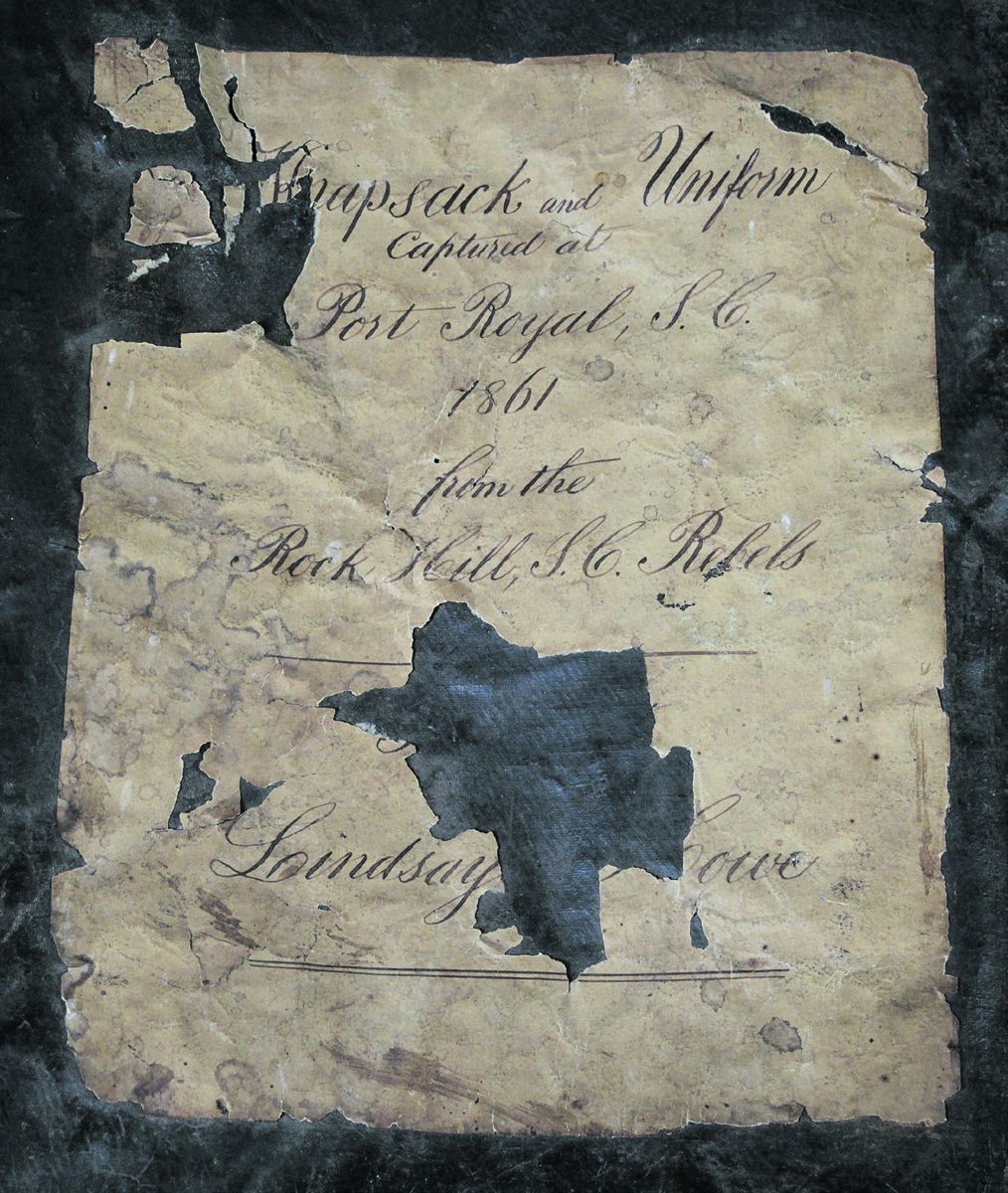
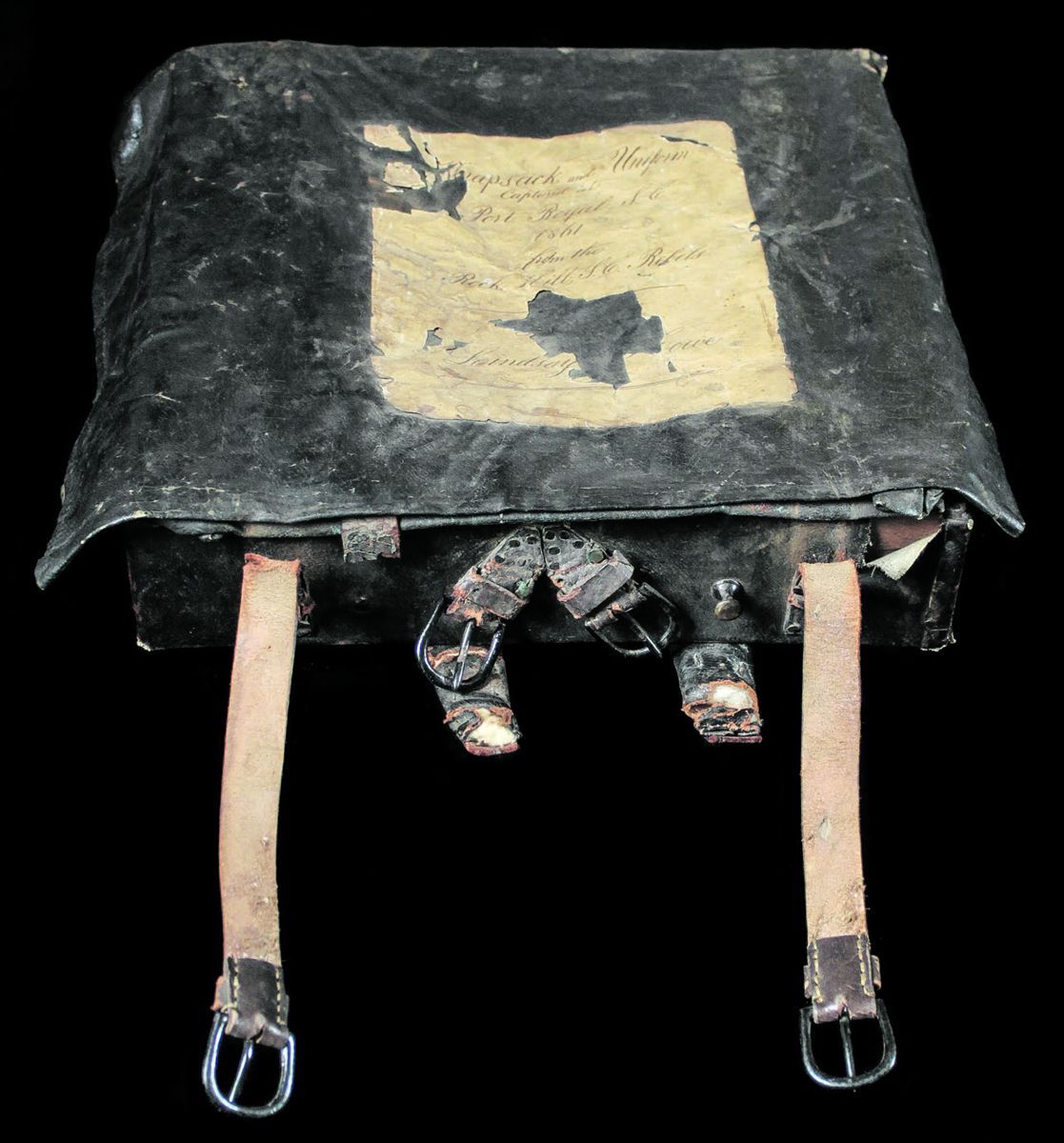
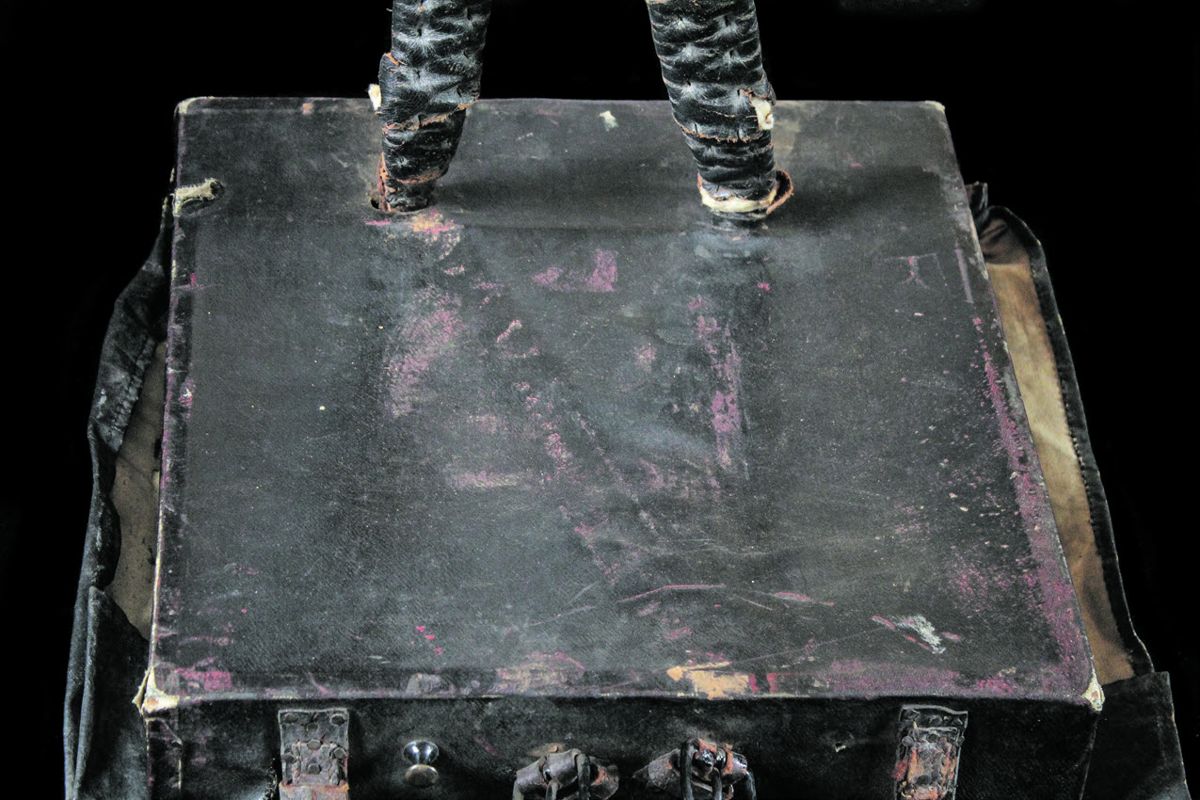
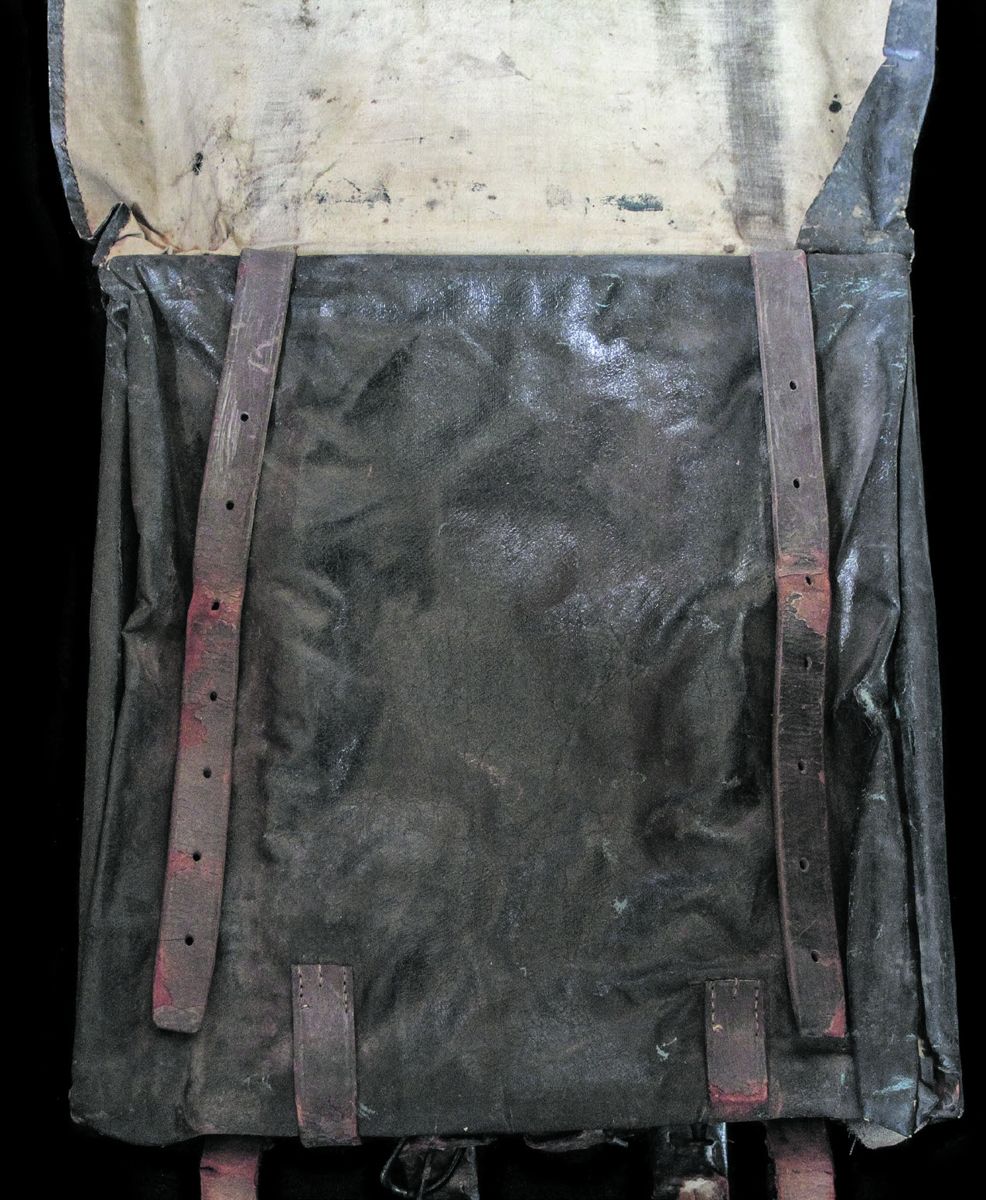
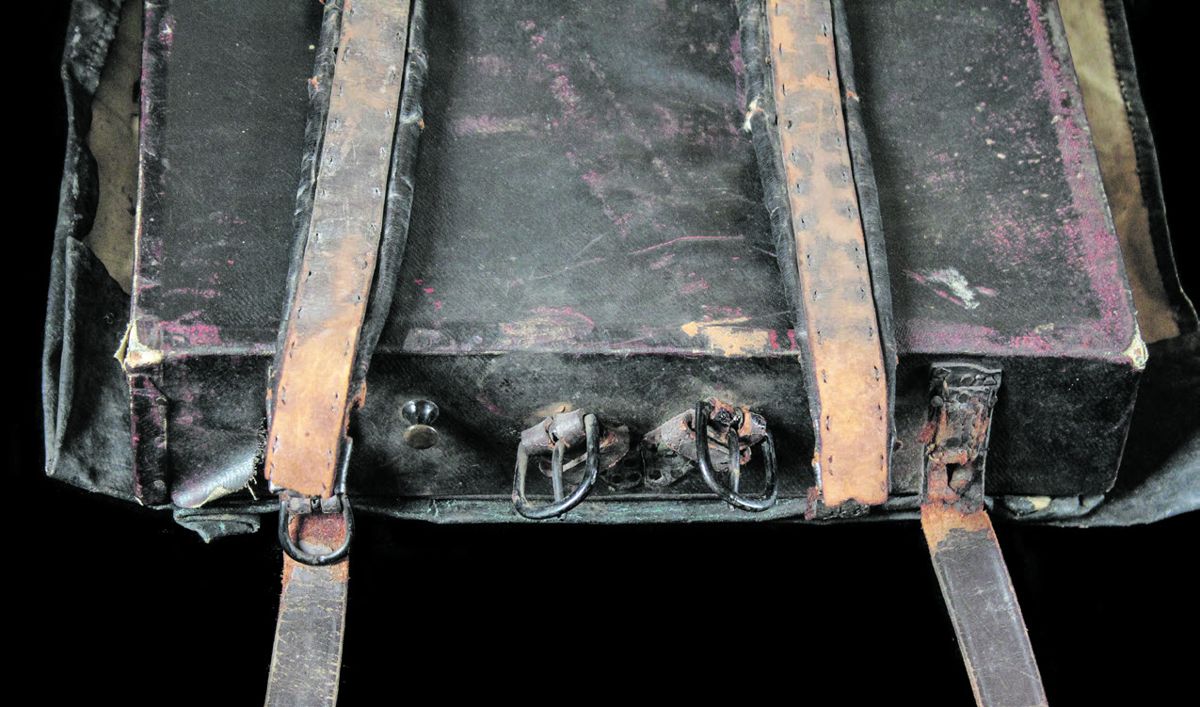
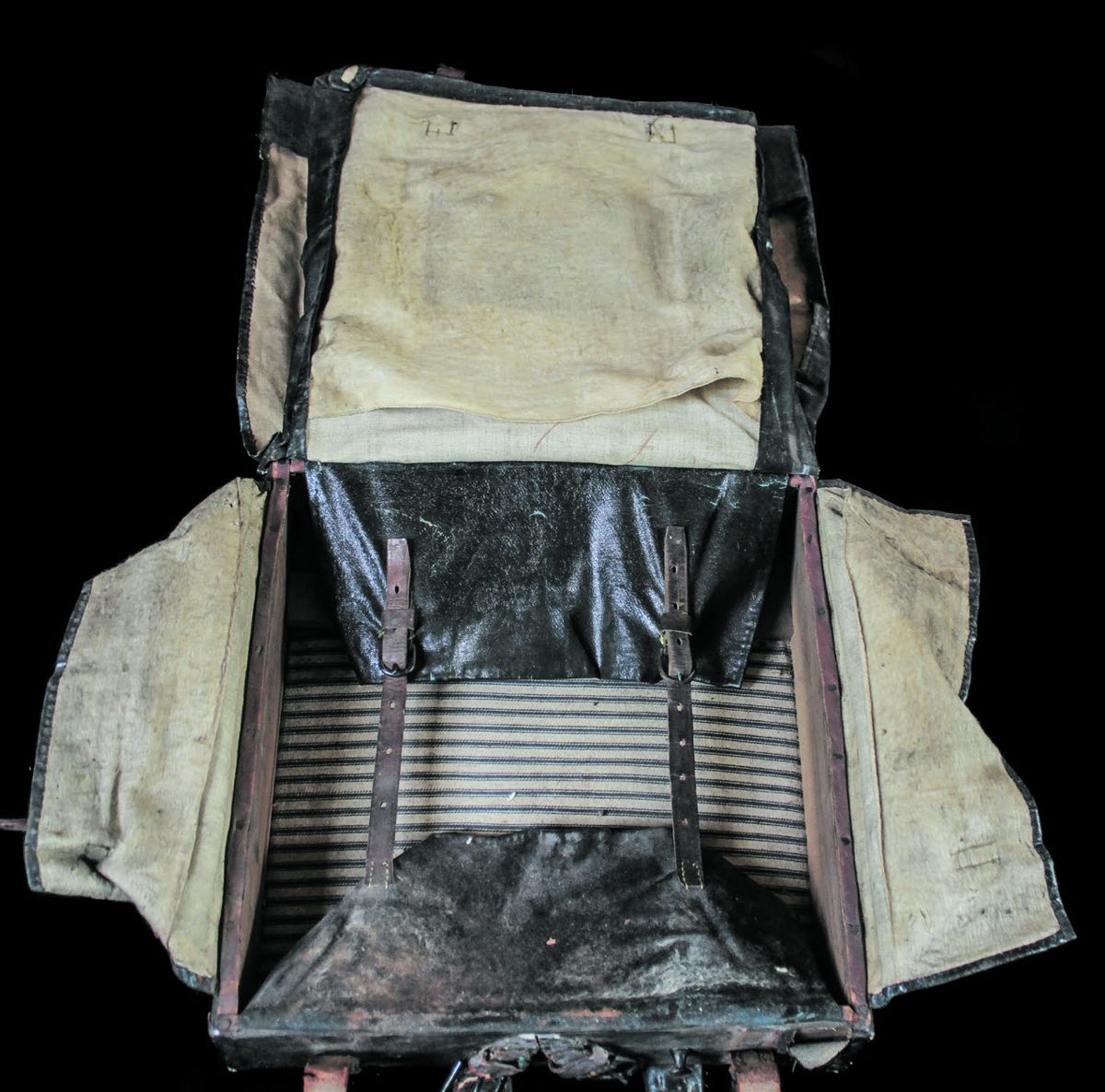
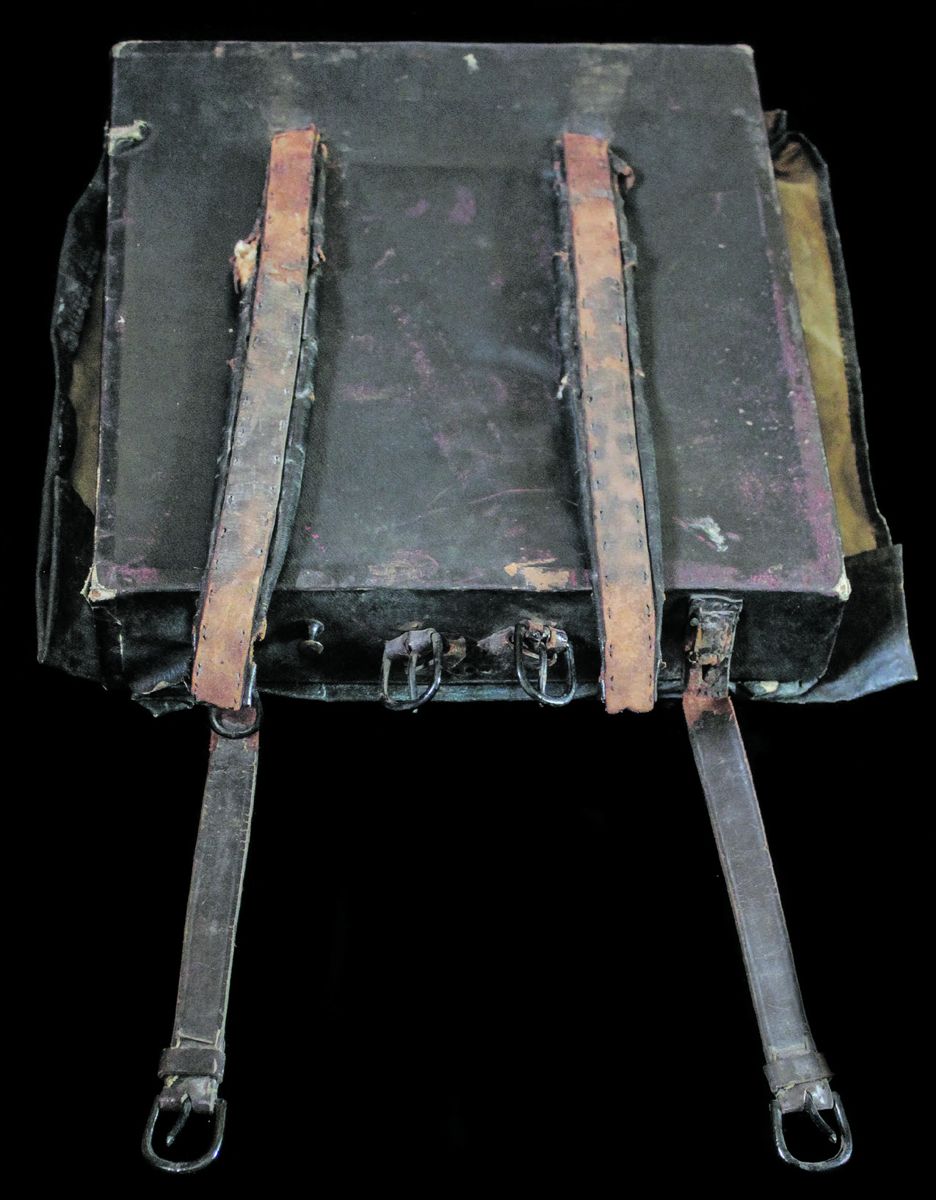
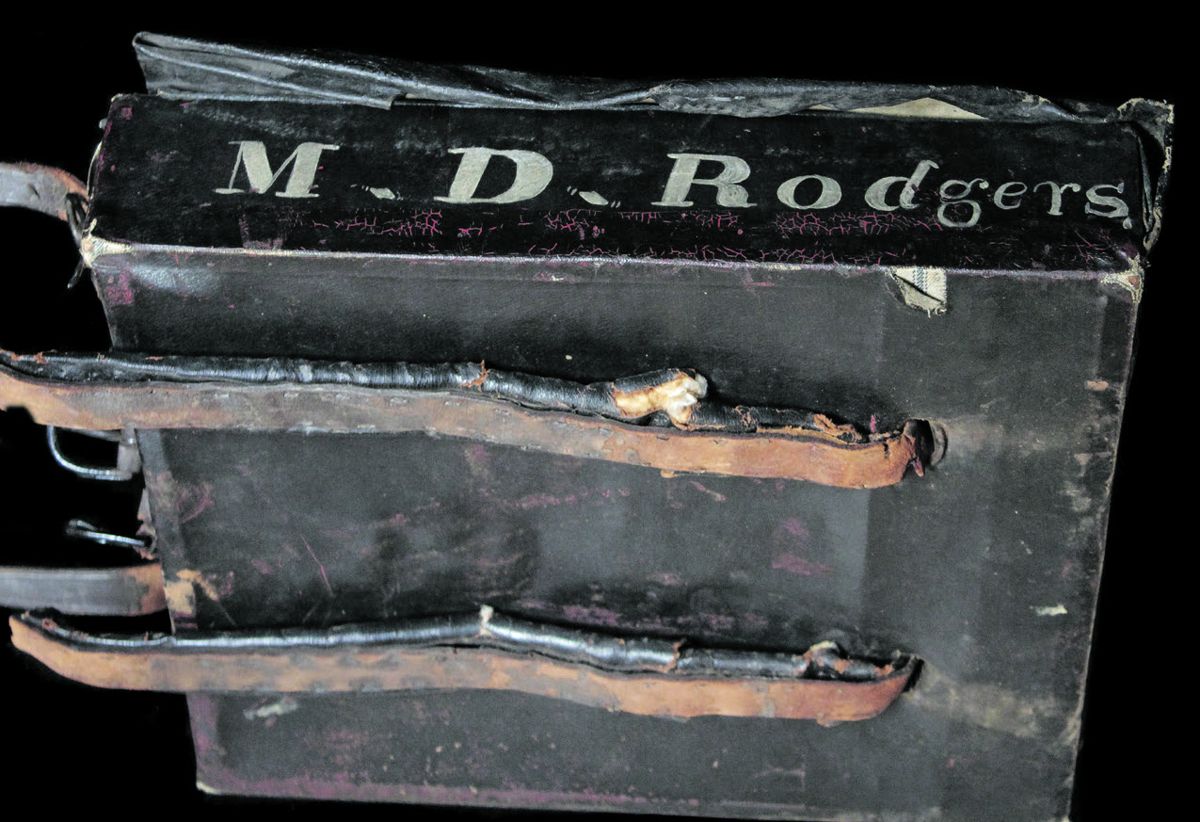
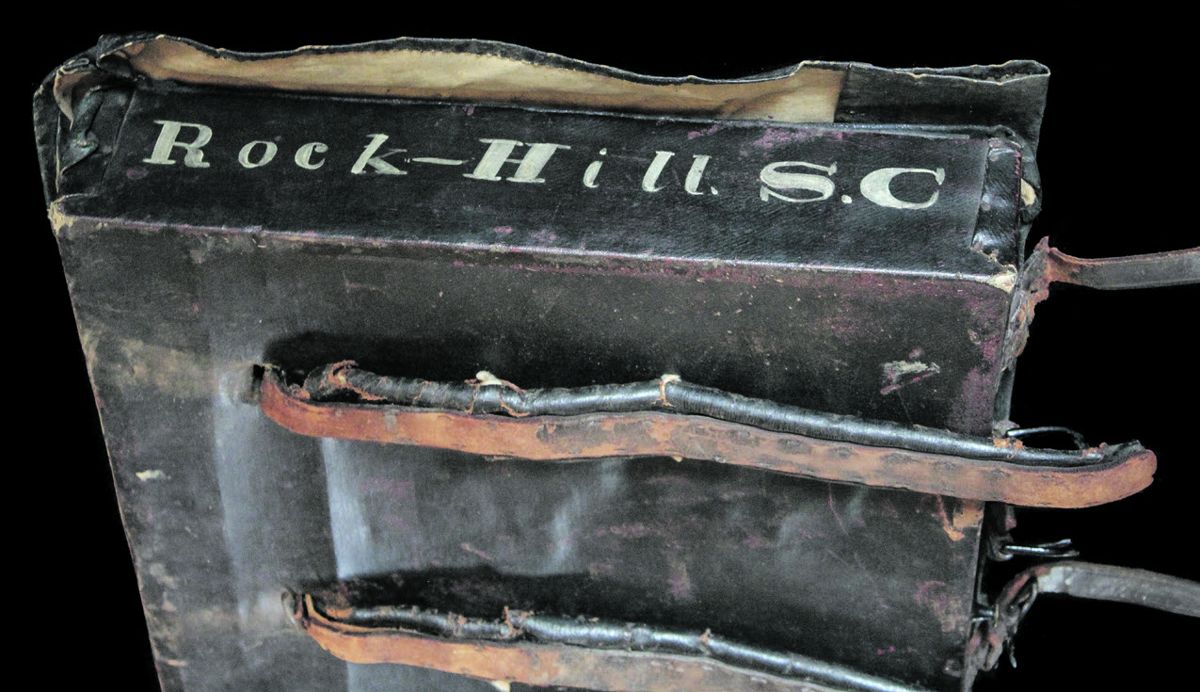
In my nearly forty years of collecting the Confederacy, this is the best knapsack I have ever owned. The knapsack itself is great, but the Confederate soldier’s painted identification, and the Yankee captor’s inked history, set it apart as truly remarkable. The knapsack is pure Confederate made, from the raw cotton stuffed shoulder straps to the buggy awning finials used to fasten its straps, it reeks of Confederate manufacture. It is hand lettered in white paint with its owner’s name on one side, and his address is painted on the other side. Seventeen-year-old Marion D. Rodgers enlisted in Company H, 12th South Carolina Infantry at Rock Hill, S.C., Aug. 13, 1861. He was fair skinned, had dark hair, blue eyes, and stood 5’ 8”. A few months later, he was involved in the first of his many battles at Beaufort, S.C., known to history as the Battle of Port Royal. On Nov. 7, 1861, a Yankee amphibious force captured Port Royal Sound and the port city of Beaufort. It consisted of seventeen warships, twenty-five coaling schooners, and thirty-three transports carrying approximately thirteen hundred soldiers. The sound was protected by Fort Walker on Hilton Head, and Fort Beauregard on Bay Point. The two forts mounted thirty-nine guns and were manned by 2,400 men under General Thomas Drayton. Assisting the fortifications was a small squadron of makeshift gunboats, The Mosquito Fleet, under Captain Josiah Tattnall. The Federal forces rendezvoused off the sound on
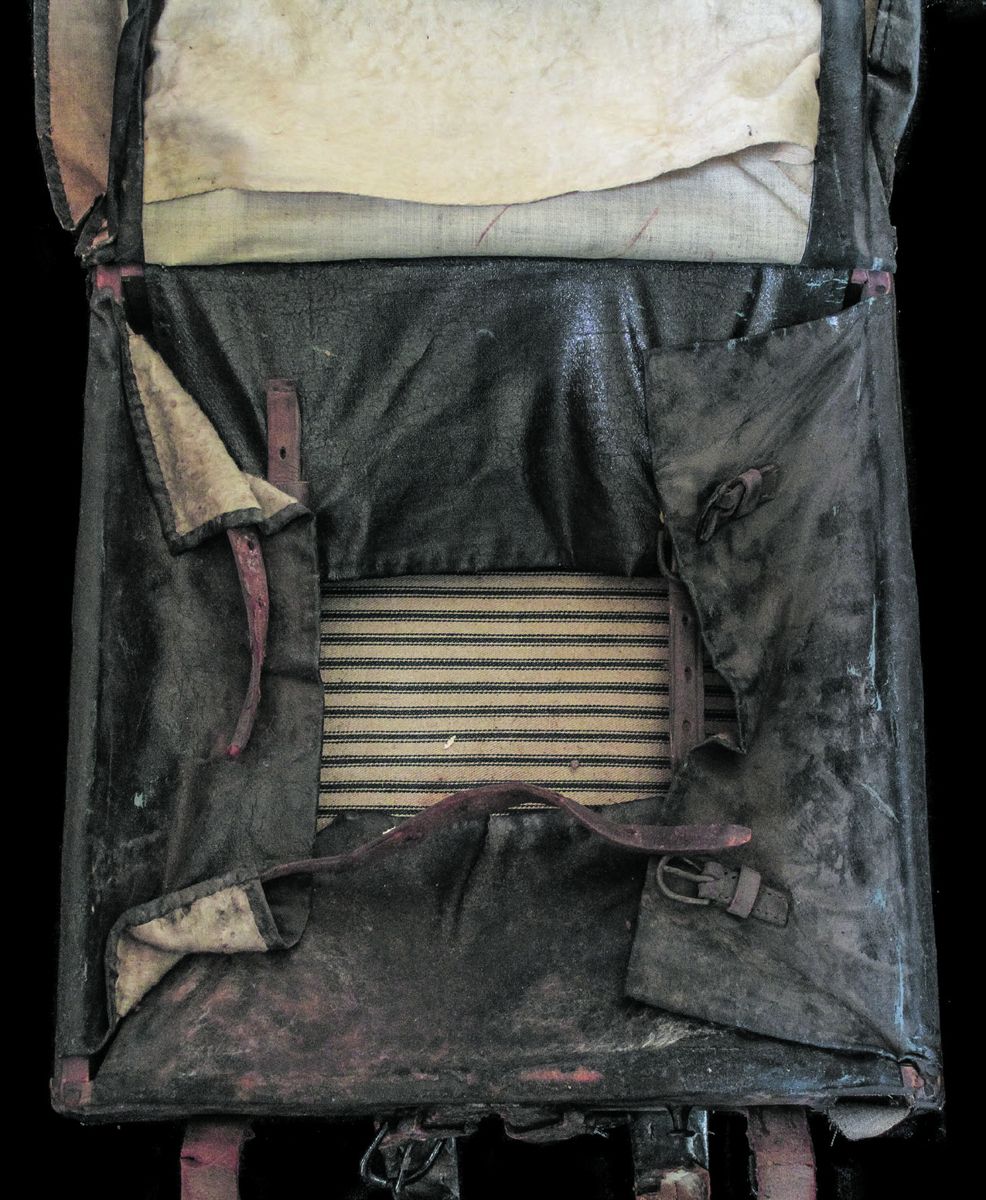
November 3. Four days later, on November 7, the Yankee fleet entered the sound. Tattnall’s gunboats were chased off, and while the Wabash, Susquehanna, and Bienville kept the Confederates occupied in front of Fort Walker, the remainder of the fleet moved to a position on the fort’s northwest flank to enfilade the works. Later the Federal gunboat Pocahontas arrived off Fort Walker’s seaward flank, and added her guns to the bombardment, completing the crossfire. Ironically, Captain Percival Drayton, brother of the Confederate commander, commanded the Pocahontas. After nearly five hours of fighting, the Confederates evacuated Fort Walker and Fort Beauregard and fled inland, abandoning Beaufort and the Sea Islands. It must have been at this time that Rodger’s equipment was abandoned. I know of another Confederate knapsack captured at this same time, so these must have been stored in one of the forts when the Confederates abandoned them. I am unworthy to accurately judge the actions of soldiers on the battlefront, but it seems to me it was abandoned too easily. The battle cost Union forces 8 killed and 23 wounded. The Confederates on Hilton Head had 11 killed and suffered only 48 wounded. At Fort Beauregard, the Southerners suffered only 13 wounded. Shortly afterwards the Yankee army and navy established a huge military installation that served as headquarters for the South Atlantic Blockading Squadron and the Department of the South. Besides the obvious military advantages, especially a coaling station for blockaders, the capture of Port Royal provided the enemy with a political and morale-boosting victory. It was a significant loss. The 12th South Carolina Infantry and Private Rodgers lived to fight many more days. Rodgers fought the remainder of the War. The regiment continued to serve on the South Carolina coast until April 1862, when it moved to Virginia. Assigned to General Gregg’s and McGowan’s Brigade, the regiment fought with the Army of Northern Virginia from the Seven Days’ Battles to Fredericksburg. During the Chancellorsville operations the Twelfth was detached to guard ordnance trains and prisoners. With 340 men it marched 2,000 Federals to Richmond. Later the unit rejoined the brigade and continued the conflict from Gettysburg to Cold Harbor, then saw action in the Petersburg trenches and the Appomattox Campaign. It lost 17 killed and 121 wounded at Gaines’ Mill, 54% of 270 at Second Manassas, 20 killed and 82 wounded at Sharpsburg, and 36% of the 366 at Gettysburg. The regiment sustained 102 casualties at the Wilderness, 118 at Spotsylvania, 34 from May 12 to July 1, 1864, 18 at Deep Bottom, 26 at Fussell’s Mill, and 23 at Poplar Springs Church. It surrendered 10 officers and 149 men. After making a fine record with the Army of Northern Virginia, the 12th South Carolina pulled out of the trenches on April 2, 1865. Private Rodgers was captured at Southerland Station, just outside Petersburg, Va., on April 3, 1865, and was sent to City Point, Va. The private, now without a country, was released two months later on June 16, when he could finally begin to make his weary way back to his destitute and destroyed homeland. Rodgers’ knapsack is certainly Confederate manufacture. Its painted canvas body is lined with bed ticking. Each flap has a pouch on the inside, made of wool. The closure finials are what are commonly referred to as “buggy awning finials,” but they are no more buggy awing finials than they are knapsack, cartridge box, cap box, or harness finials. They are simply Southern finials. The painted canvas was repurposed; it was originally painted red, then black was applied over the red. The straps are a wonder to behold. Each shoulder strap has a leather sleeve stuffed with raw cotton sewn to its inside, making it a comfortable padded strap. Shannon Pritchard has authored numerous articles relating to the authentication, care and conservation of Confederate antiques, including several cover articles and is the author of the definitive work on Confederate collectibles, the widely acclaimed Collecting the Confederacy, Artifacts and Antiques from the War Between the States, and is co-author of Confederate Faces in Color.