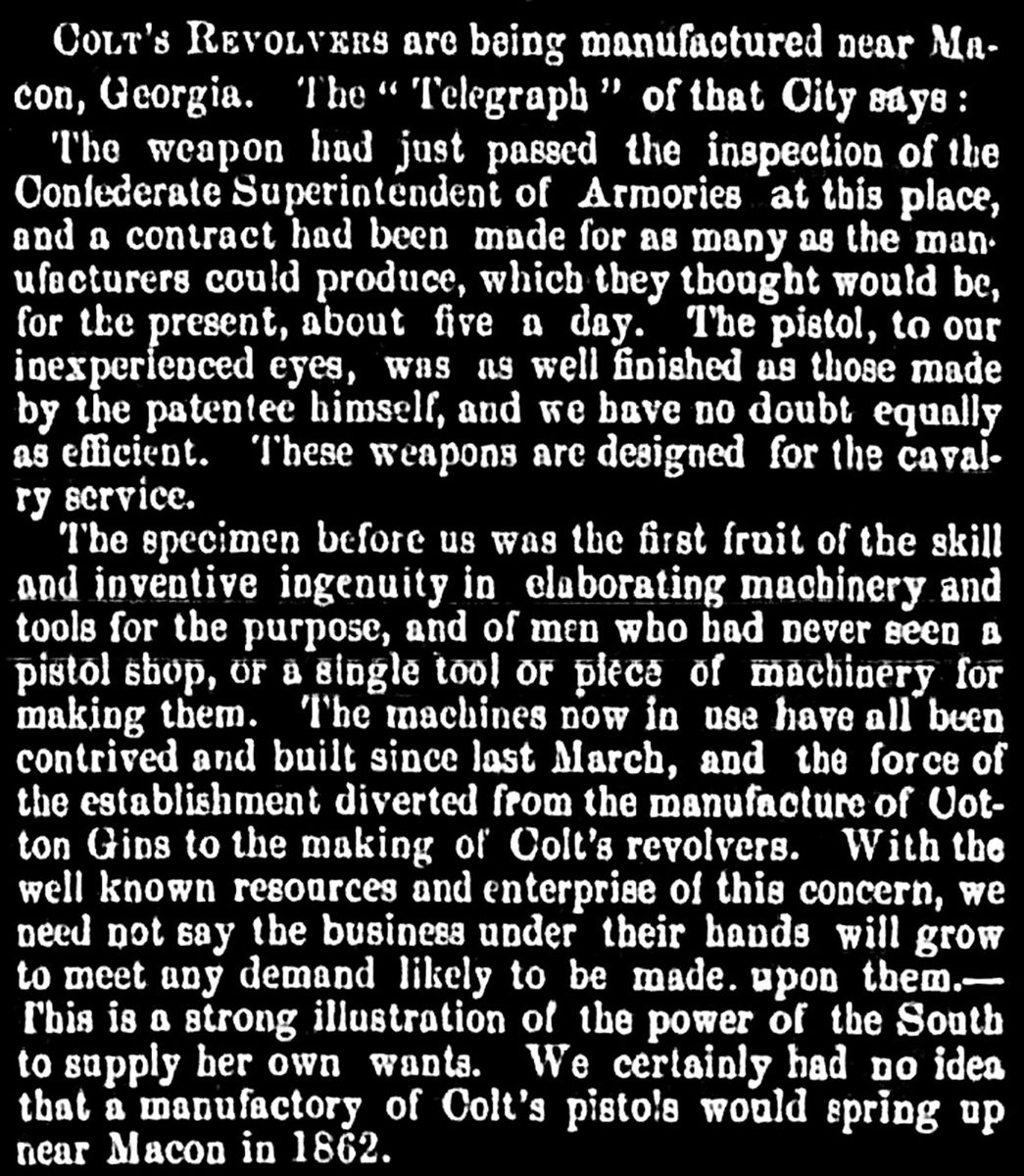
Griswold Revolver added to Database
By John Sexton · Originally published June 2020 · pp. 22–23
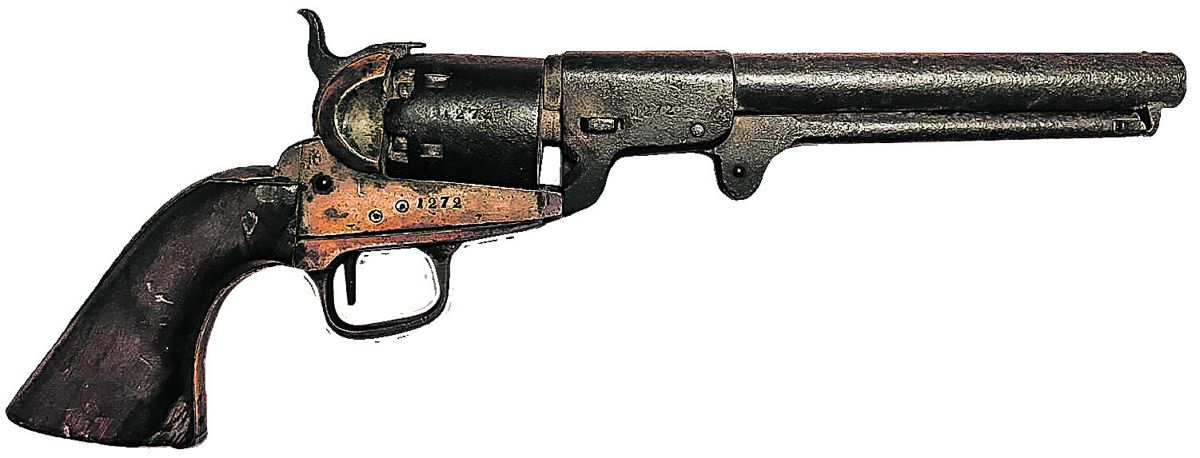
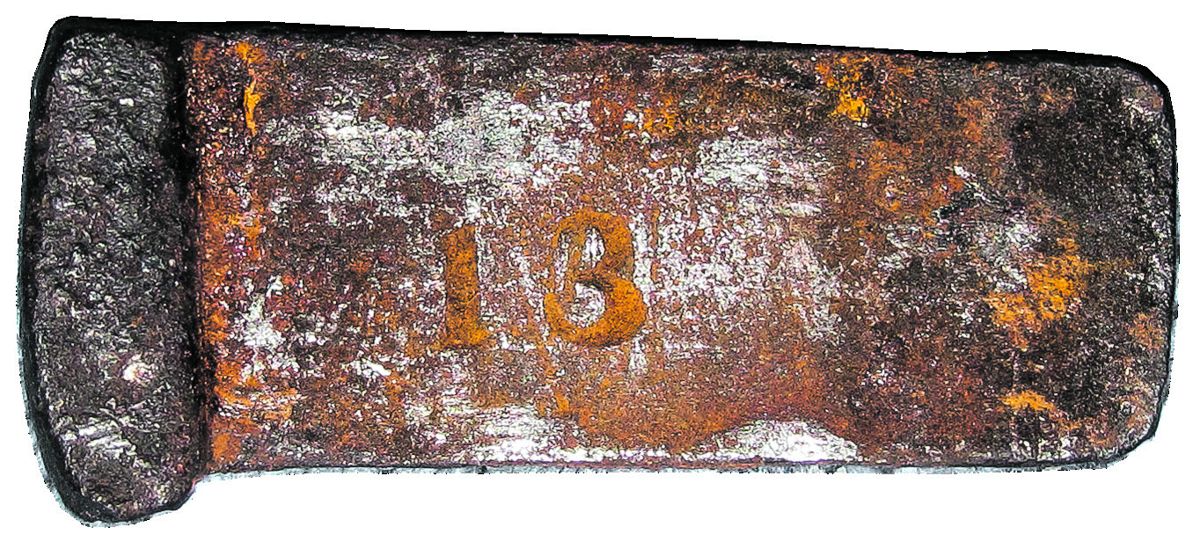
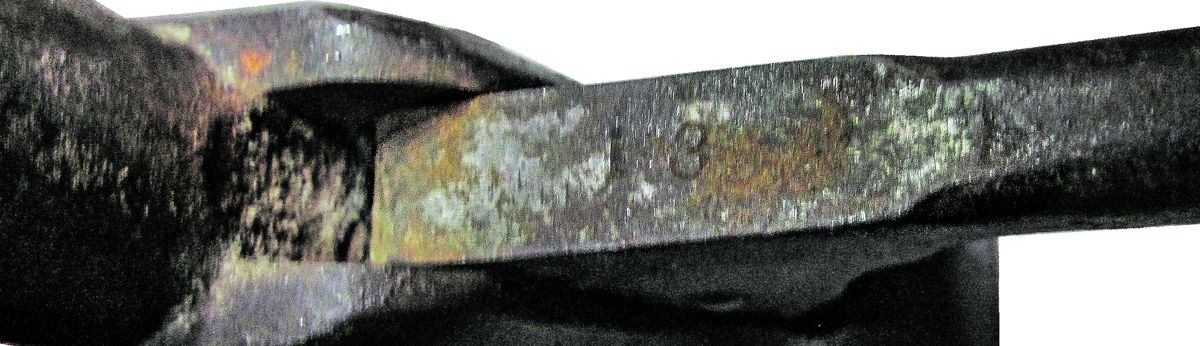
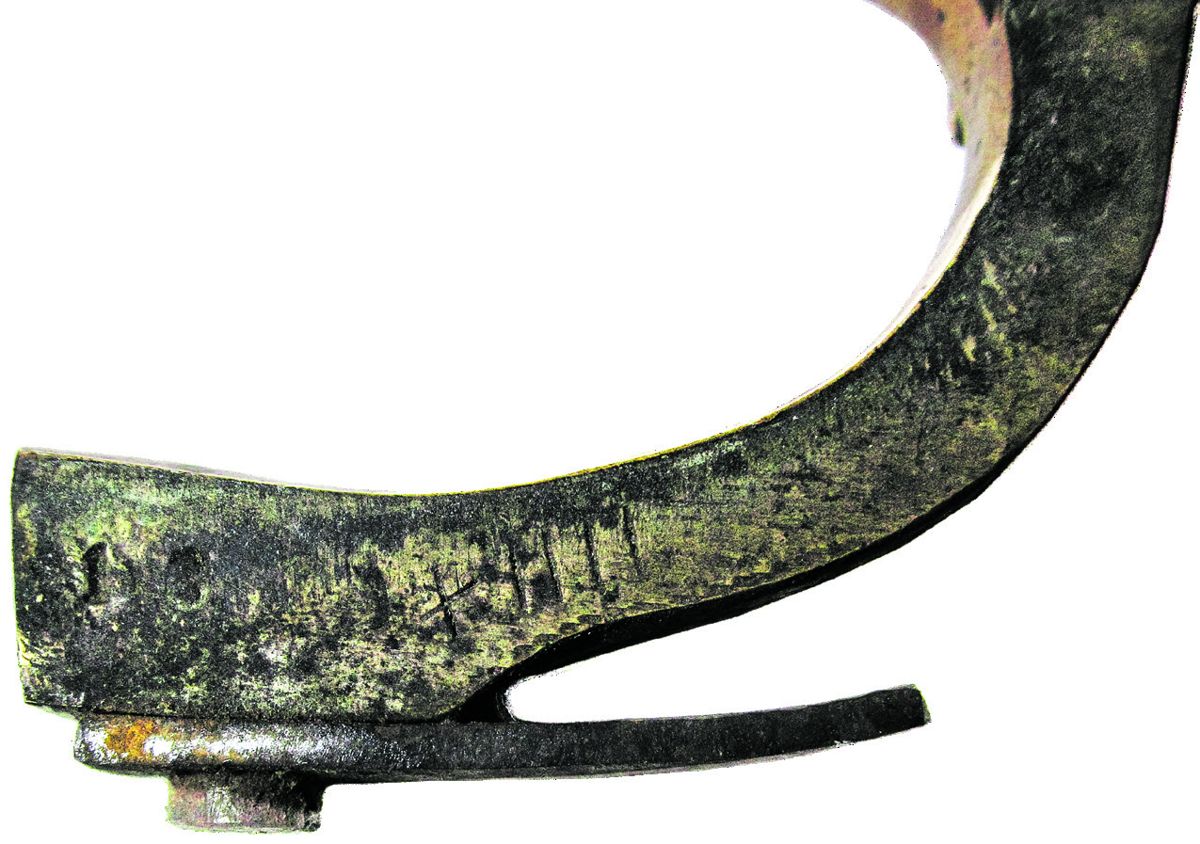
Question: Earlier this evening I read your excellent article in Arms Heritage, Vol. 9, Issue 3. I have what I believe to be a Griswold revolver that was passed down to me from an ancestor who carried it in the War. In your article you wrote that you maintain a database of Griswolds, and I thought I would offer to share the information I have on this revolver. I am not 100% sure it is a Griswold, but I don’t believe it was intended to be any kind of fake. It has been passed down through the generations and my family just called it “the civil war gun.” I myself always thought it was a Colt Navy. It is also in pretty rough shape and probably not worth the effort for a faker; I do not believe it would hold much value at an auction. After reading your article, I began looking for other markings. I carefully tapped out the wedge and found the number 13. I removed the barrel but the cylinder I could not remove all the way. There was what appeared to be a buildup of powder and some scaling that impeded removal. I didn’t want to scrape too much off, so I just moved the cylinder forward enough to look at the back. The main spring came out in two pieces unfortunately. The number
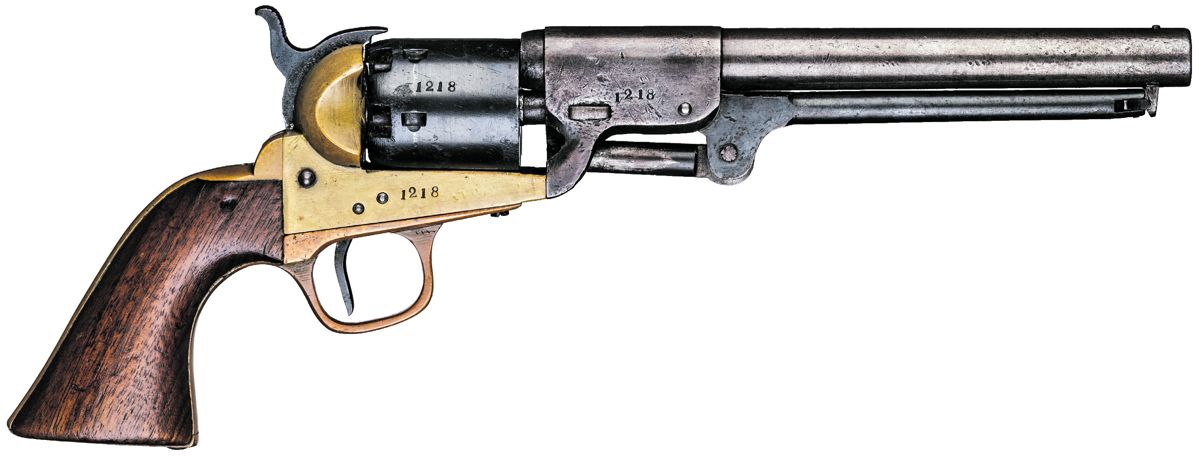
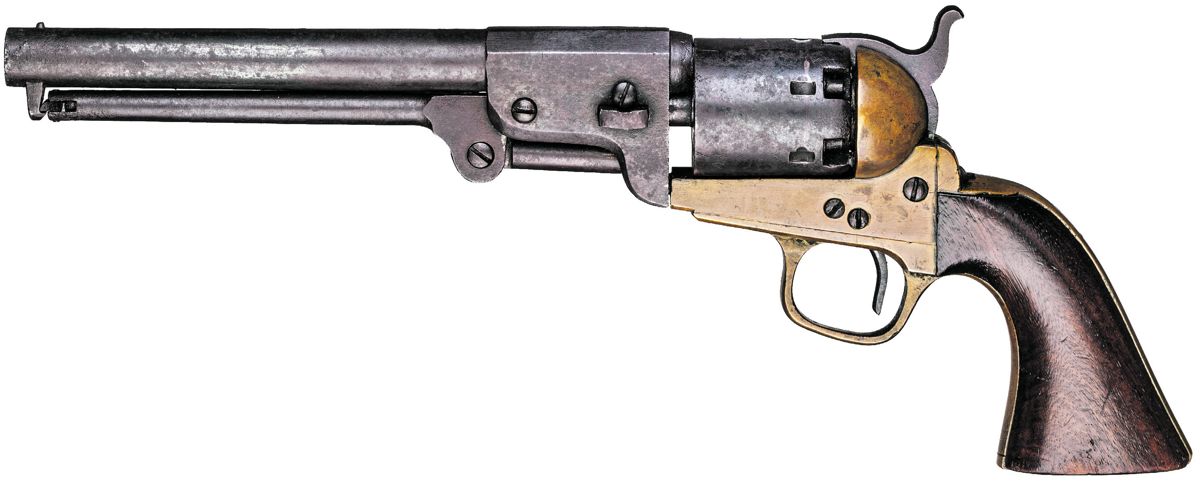
13 was also stamped on the part of the trigger guard that was in the hand grip. Additionally, X I I I I was cut near the number 13. I did see what could be an L under the barrel near the catch for the loading lever. I’m still not positive I know exactly which ancestor it belonged to, the most likely candidate was in a Tennessee cavalry unit until he couldn’t replace his horse in 1864, but there is another who fought with an Indian Territory cavalry regiment. Joshua Answer: Your assessment of your ancestor’s pistol is correct; it is a “Griswold” brass frame Confederate revolver modeled after Samuel Colt’s 3rd model dragoon revolver made in navy size and caliber substituting brass for the frame instead of steel. Among Confederate revolver makers, Samuel Griswold was the most proficient and largest manufacturer. Griswold was about as close to an industrialist as you could find in the rural South. Griswold originally came to Georgia from Connecticut and established “Griswoldville” just outside Macon, Ga., on several hundred acres. It was a town in itself with post office, sawmill, gristmill, candle making shop, and factory for making cotton gins. Griswold had about 100 slaves involved in manufacturing cotton gins and later revolvers. When the war began, Griswold answered the February 20, 1862, call of Georgia Gov. Joseph Brown to manufacture “Georgia pikes” for defense against Northern invasion. The cloverleaf pikes he made are rare and signed “GRISWOLD.” I have studied Confederate handguns for 40 years and have personally examined more Griswold revolvers than anyone alive. I would love to see yours in person sometime. In my database, I have 341 original Griswold revolvers, that total now includes this new discovery. There are 3 distinct models of Griswolds. The earliest Griswold revolvers I refer to as 1st model-1st type are rare and most likely made in New Orleans by Arvin Gunnison. These earliest, and rarely seen, Griswold & Gunnison revolvers are all numbered under serial number (SN) 100. Read my article in Arms Heritage if you want to find out more about the chronology of manufacture. Your revolver is a standard 1st model, virtually identical to 2nd models externally with the exception of a half round barrel housing instead of half octagonal. I appreciate you taking such detailed photographs of the markings to add to the database. I would expect your serial number 1272 to have a secondary number ending in a “2” as over 95% of survivors have such corresponding numbers. Finding “13” on wedge, loading lever, and internally was a surprise; only 3 or 4 other examples in the standard production range are documented with “deviant” numbers.
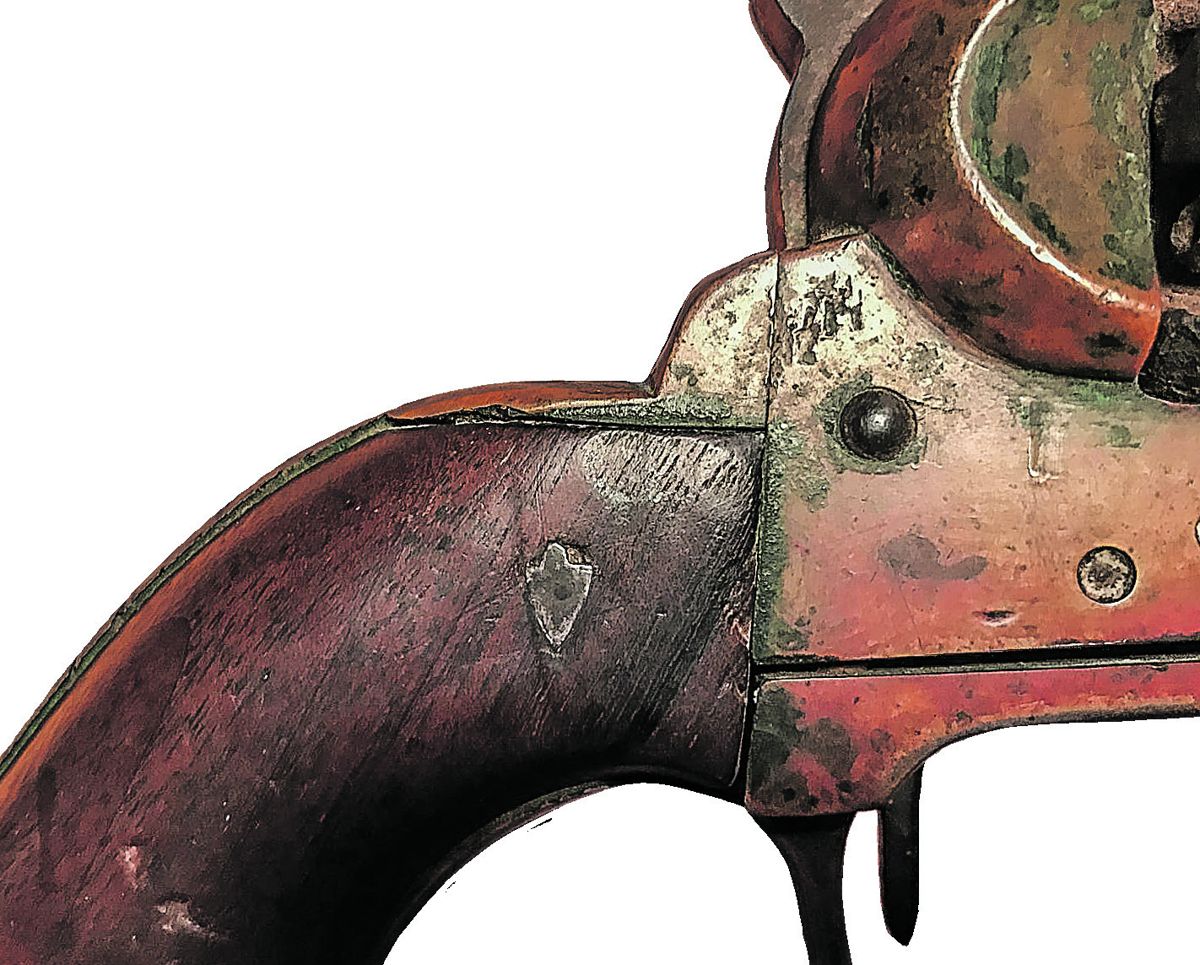
The Roman numeral assembly mark “XIIII” matches on all three brass components as they should. These assembly marks were added after the grip frame was fitted and finished. Many different stamped single or doubled backwards letters long known to collectors as “cryptics,” are found stamped on various Griswold components. The cryptic “L” you found is most likely a final factory inspection mark before the gun was sent to a government armory. I know your heirloom carried by a descendant is priceless to you, but you probably should schedule it with your insurance company. A similar example being “as found” with dark patina to brass is very desirable among “old school” Confederate collectors who love unrestored weapons like this. The main spring and plunger can easily be restored if you wanted. In auction your revolver with its good family history could be estimated at $6,000-8,000. I would not be surprised for it to sell for over $10,000. For intended use of insurance replacement I would recommend scheduling at $15,000.
John is an certified appraiser with International Society of Appraisers specializing in Civil War memorabilia. He authenticates and evaluates other rare and valuable historic items as well. His website is www.civilwardealer.com. He is coauthor of the book Confederate Bowie Knives (2012) by Jack Melton, Josh Phillips and John Sexton, that was published by Mowbray Publishing, Inc. Send “Ask The Appraiser” questions and photographs to [email protected].