USS Monitor’s Dahlgren Guns Continue Undergoing Conservation at Monitor Center
By Bob Ruegsegger · Originally published July 2020 · pp. 38–39
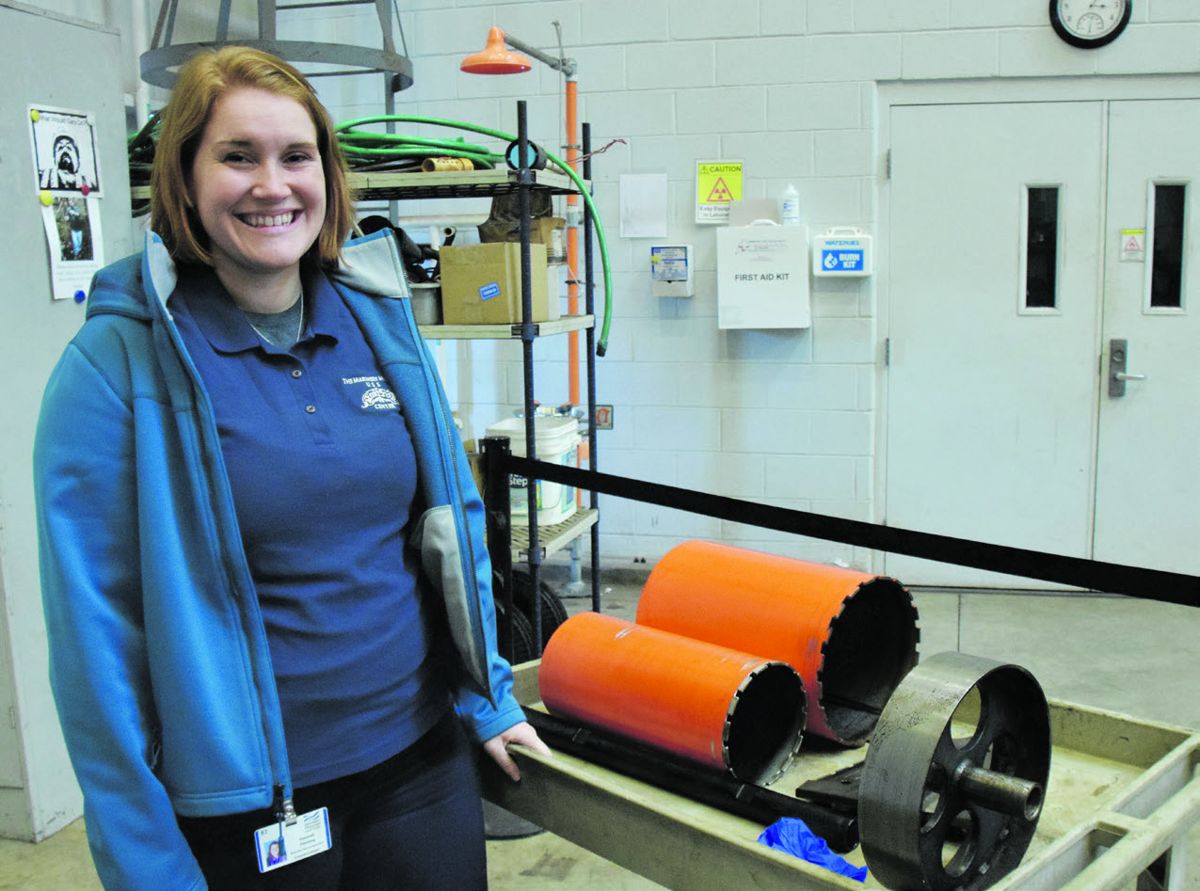
Archaeological Conservator Erik Farrell works primarily with Monitor artifacts at the Batten Conservation Laboratory Complex at the Monitor Center. Recently, his focus has been on removing concretion inside the XI-inch Dahlgren shell guns.
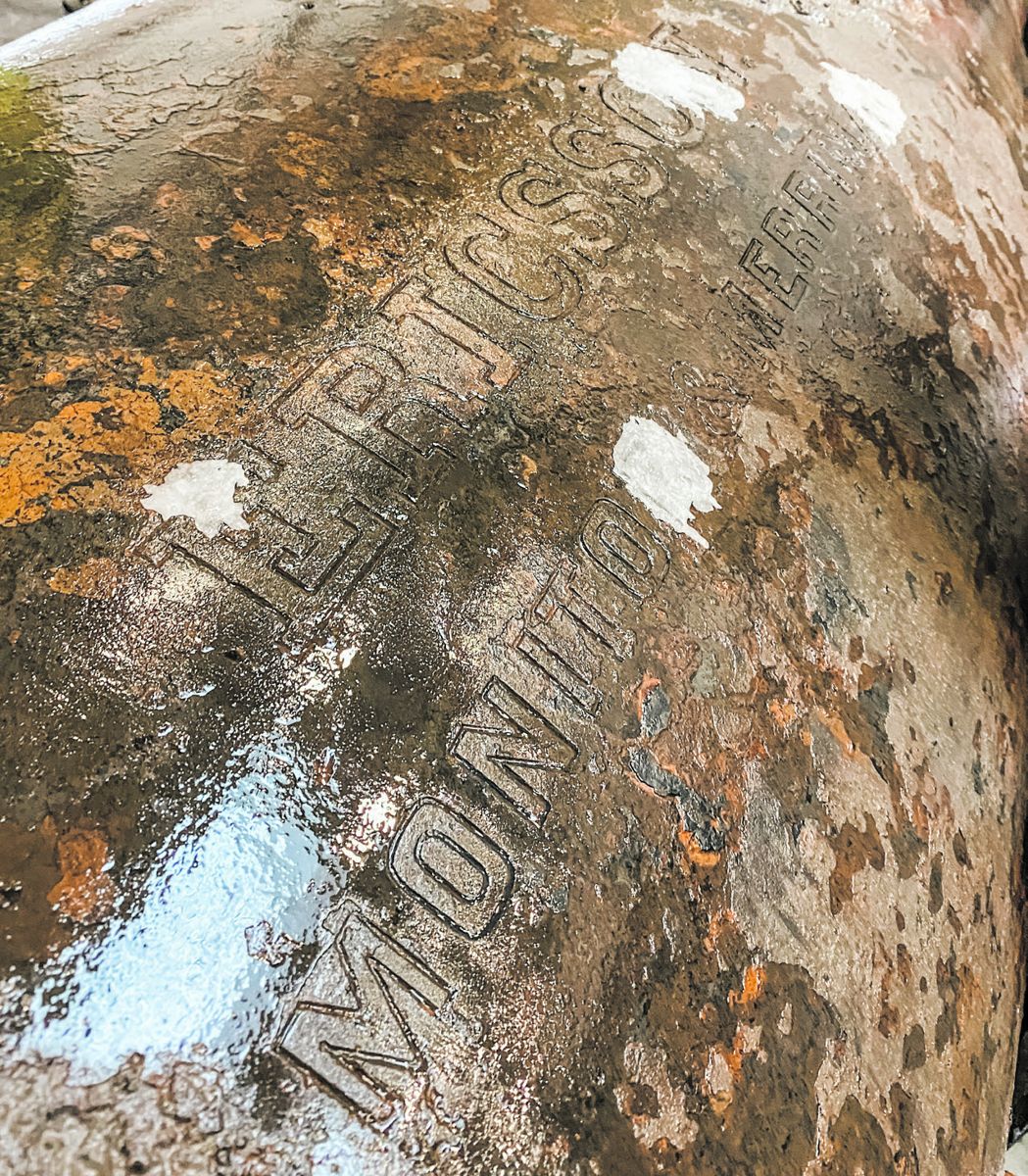
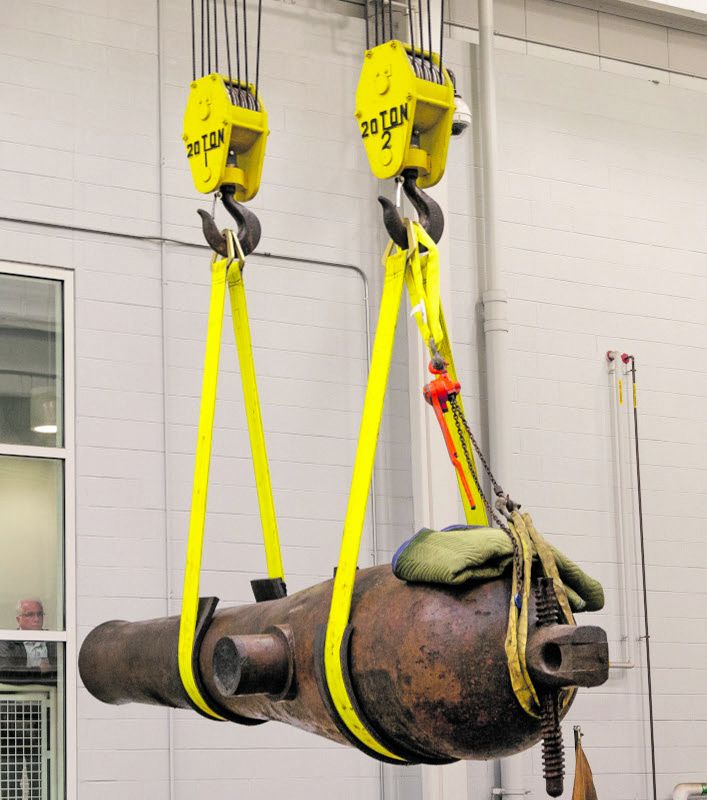
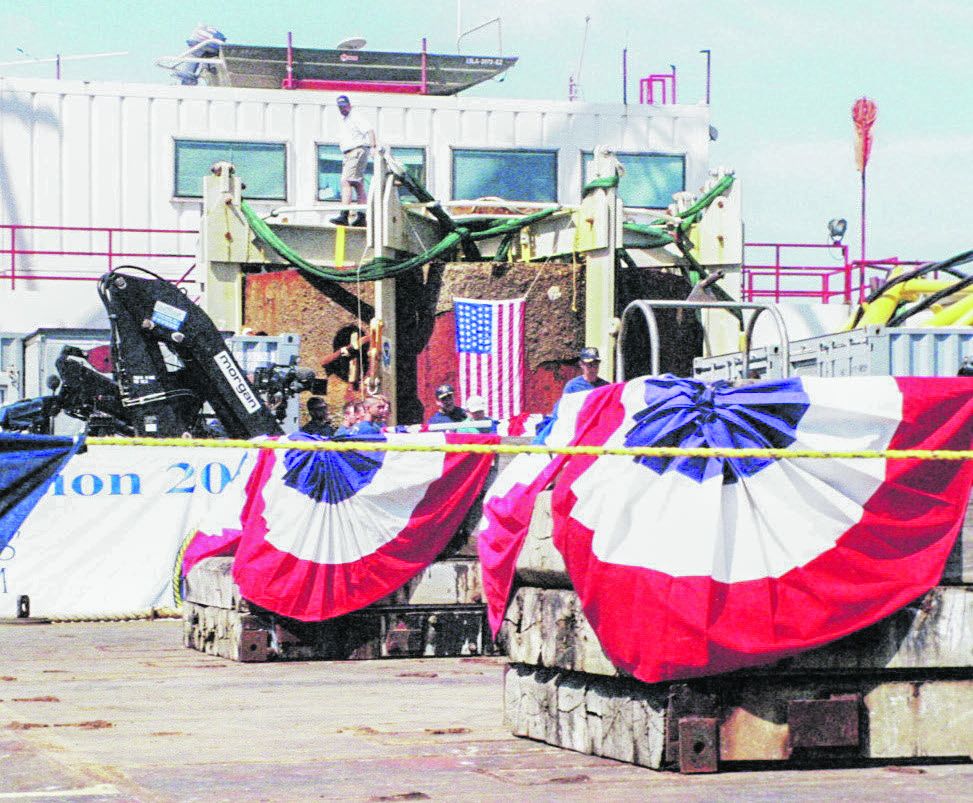
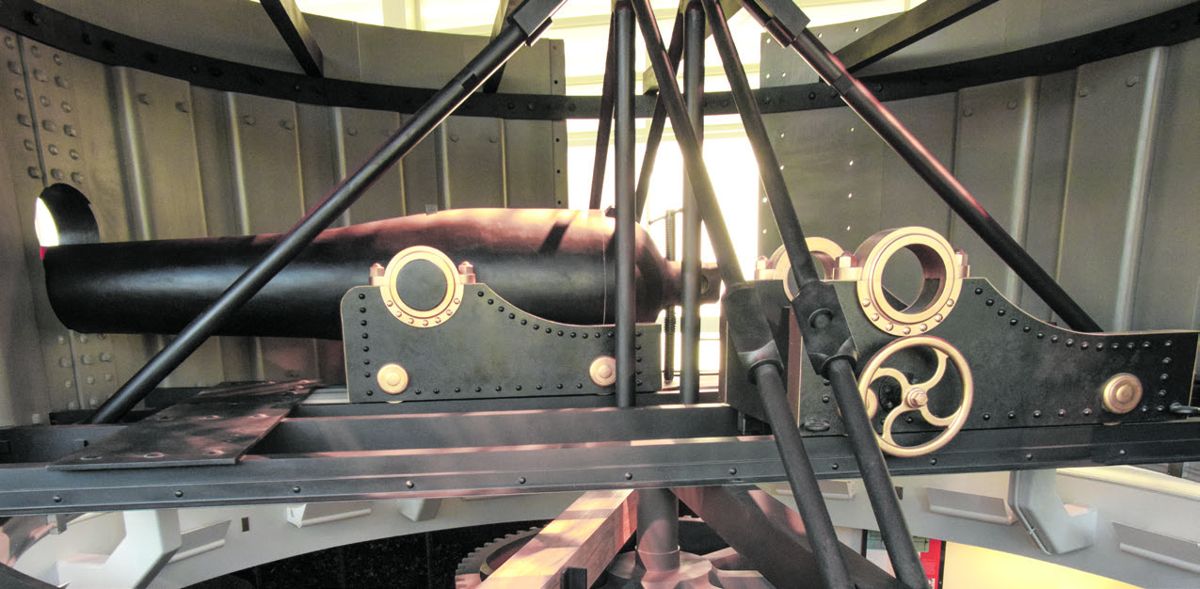
Continue Undergoing Conservation at Monitor Center by Bob Ruegsegger The USS Monitor’s two XIinch Dahlgren shell guns continue to undergo conservation at the Batten Conservation Laboratory Complex in Monitor Center at the Mariners’ Museum in Newport News, Va. “The Dahlgren guns are kind of my focus,” said Erik Farrell. “I’m an archeological conservator working here on staff. I work primarily on Monitor objects and within that focus heavily on the two guns,” he explained. “We are coring out the guns. Basically, we are taking all the marine growth and the concretion inside the guns and cleaning it out.” While John Ericsson would have preferred XV-inch guns in the turret of his iron warship, the largest gun approved by the U.S. Navy was the XI-inch Dahlgren shell gun. Admiral John Dahlgren worried about the safety of guns larger than XI-inch. When Ericsson submitted the design for his warship, he incorporated two XI-inch Dahlgren shell guns on slide carriages in his plans for the turret. The two muzzleloading, smoothbore Dahlgren shell guns that eventually served aboard the Monitor were originally assigned to the USS Dakotah. The Monitor’s Dahlgrens (registry numbers 27 and 28) were cast at the West Point Foundry in Cold Spring, N.Y., in 1859. The cast iron tubes each weighed about 16,000 pounds (The Worden gun weighs 15,720 pounds.) and the artillery pieces sold for $1,391.00 each. In 2002 a team of U.S. Navy divers and NOAA archaeologists recovered the Monitor’s turret from 230 feet of water, about 16 miles SSE off Cape Hatteras lighthouse. In 2004, conservators began the delicate process of removing the large iron guns from the turret and stabilizing the artifacts by placing them in conservation tanks. “The two guns were found inside the turret. The turret had come off the Monitor’s hull when it sank and both turret and hull were upside down. The guns are right side up now,” said Erick Farrell. “When sinking, the turret fell off the ship because it was held in place by its weight.
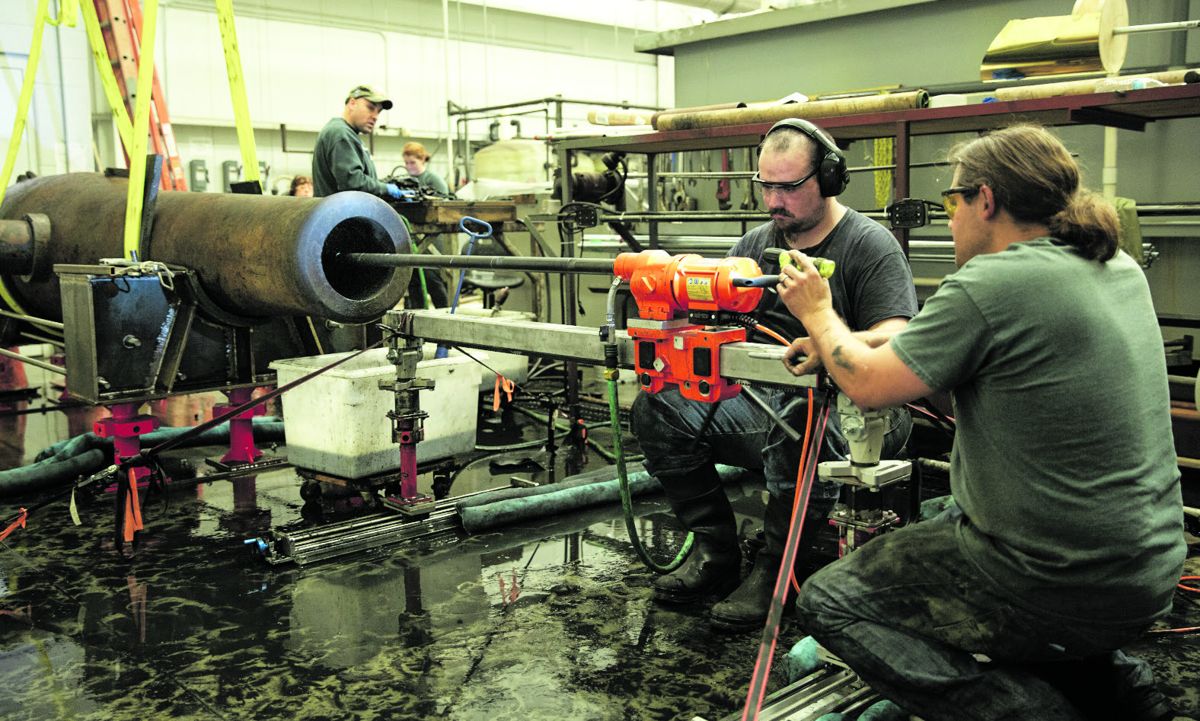
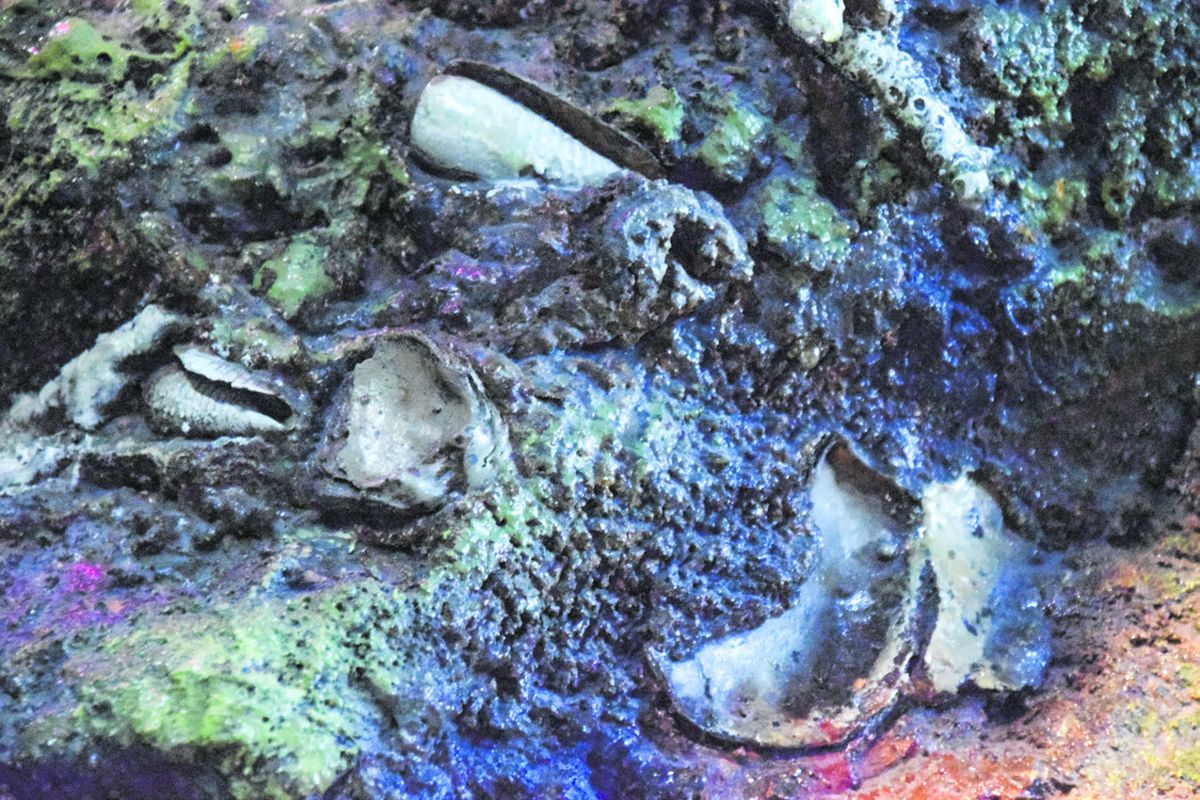
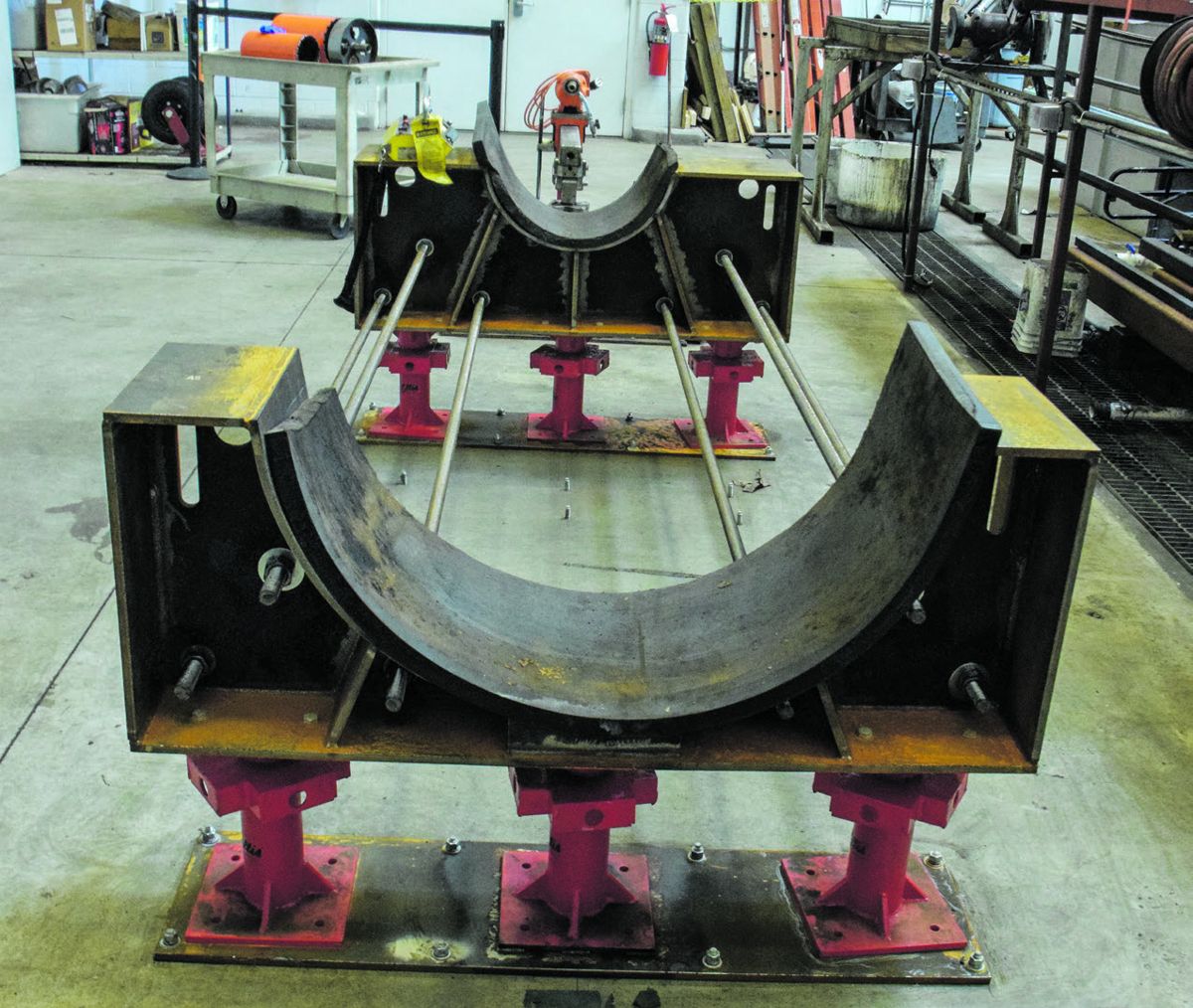
It and everything in it was upside down.” Each gun’s exterior was cleaned of marine growth that formed a concretion, a product that forms when iron corrodes in seawater and combines with calcium in the water, sea life, sand, anything else found on the sea floor, cementing itself into a rock-like coating on the outside of the artifact. “Iron rusts. If you have salt plus iron plus water, the iron is going to go away eventually,” noted Farrell. “We try to take the salt out of the iron so these objects can be dried off and displayed.” According to Conservator Farrell, most concretion on the outside of the guns had been removed by 2012, and they were in desalination. Driving salt out of iron objects that have been submerged in saltwater is the primary focus of the desalination process. “The guns would normally be in electrolysis. They are not hooked up now because we’ve been working on them the last couple of weeks,” said Farrell. “A negative current will be applied to the guns, driving negatively charged chlorides and salts out on a positively charged current to some sacrificial materials in the water, but away from the guns” he explained. “We’ll check periodically and wait for it to plateau. When it plateaus, we change the water and start again,” said Farrell. “When that plateau is as close to zero as we can possibly get it, then we’ll know that it’s stable and can come out.” The problem with the guns specifically is that in order to effectively drive salt out, the surface needs to be exposed. While the gun’s outside was cleaned, there was still concretion covering some surface inside the gun’s bore. “The last year and a half or so we have been looking into methods and have designed a new horizontal coring drill rig specifically to work on these guns. It is extremely adjustable,” Farrell observed. “You want that drill to be lined up perfectly with the bore of the gun so it is removing only the concretion down the middle and not straying or wandering off into the gun metal.” During the drilling and coring process the guns rest in a cradle. The guns are a little over 13 feet in length and each originally weighed nearly 16,000 pounds. Unlike working with smaller guns, the Dahlgrens were not clamped down during the coring operation because it wasn’t necessary; they were too heavy. “The Monitor carried two XIinch Dahlgren shell guns. They are smoothbore muzzleloaders. This diamond-bonded coring bit was used to bore out the concretions inside the Monitor’s XI-inch Dahlgren guns. They were a work horse for the Union navy,” Said Farrell. “John Ericsson originally wanted XVinch Dahlgren guns; however, those weren’t available on short notice so the XI-inch guns were mounted instead,” said Farrell. “They were taken off another vessel and repurposed for Monitor.” The coring-cleaning operation of Monitor’s guns took two weeks to complete. The insides of the tubes have been cleaned. The concretion is out. There is now more surface exposed inside the guns. They’ll be going back into desalination. More chlorides will be coming out of the iron. “If you go up to the turret [tank], you’ll see a lot of steelmesh plates hanging around it that are the sacrificial anode material and wires going to iron artifacts,” said Farrell. “There’s none of that in the gun tanks right now because we’ve had them out for cleaning. That all has to go back in, but the cleaning stage itself is finished. The next step is back in to desalination.” After the desalination process has been completed, conservators will try to consolidate the outside surface of the guns as best they can. The Monitor’s guns are made of grey cast iron, an alloy of iron and carbon. The carbon used for grey cast iron is graphite, like pencil lead. “When the grey cast iron corrodes in seawater, the iron comes out. Some forms the concretion material; some dissolves. Some becomes nutrients for sea life, but it’s no longer even iron,” said Farrell. “The outer surface is just graphite. It’s about a quarter-inch in depth. You can break pencil lead. It’s a fragile material.” Farrell and his colleagues will spend considerable time consolidating the cannon, trying to add strength to it, and protecting the graphitized layer with its inscriptions, weight marks, and makers marks. “All those things are on the graphitized layer. It will take some time to make sure they stay there,” said Farrell. “We do intend to exhibit them, but I couldn’t tell you when, especially, right now,” Having just cleaned the bore, Farrell anticipates that the chloride content is going to spike since more surface has been exposed. More chloride will come out. Until Farrell knows how high that spike is, he won’t really have an idea of how much chloride is left to come out and can’t really predict with any degree of accuracy how long that might take. “It will probably take a couple more years desalination. That’s a very give or take number because we don’t have the information yet,” said Farrell. “That will be followed by a year or so in drying and coating. These guns will also require extremely specialized display environments.” When conservators are fighting 150 years of corrosion, it’s impossible to remove 100-percent of the salt, but they eliminate as much as they possibly can. To ensure that the little bit of salt that remains will do no harm, they control the environment around the artifacts to make certain that they stay intact. “If you have something the size of your hand and you need it in an extremely dry environment, it’s reasonably easy to do,” said Farrell. If you have something 14x6x4 feet and you need it to stay unbelievably dry indefinitely, that’s actually a significant engineering problem.”
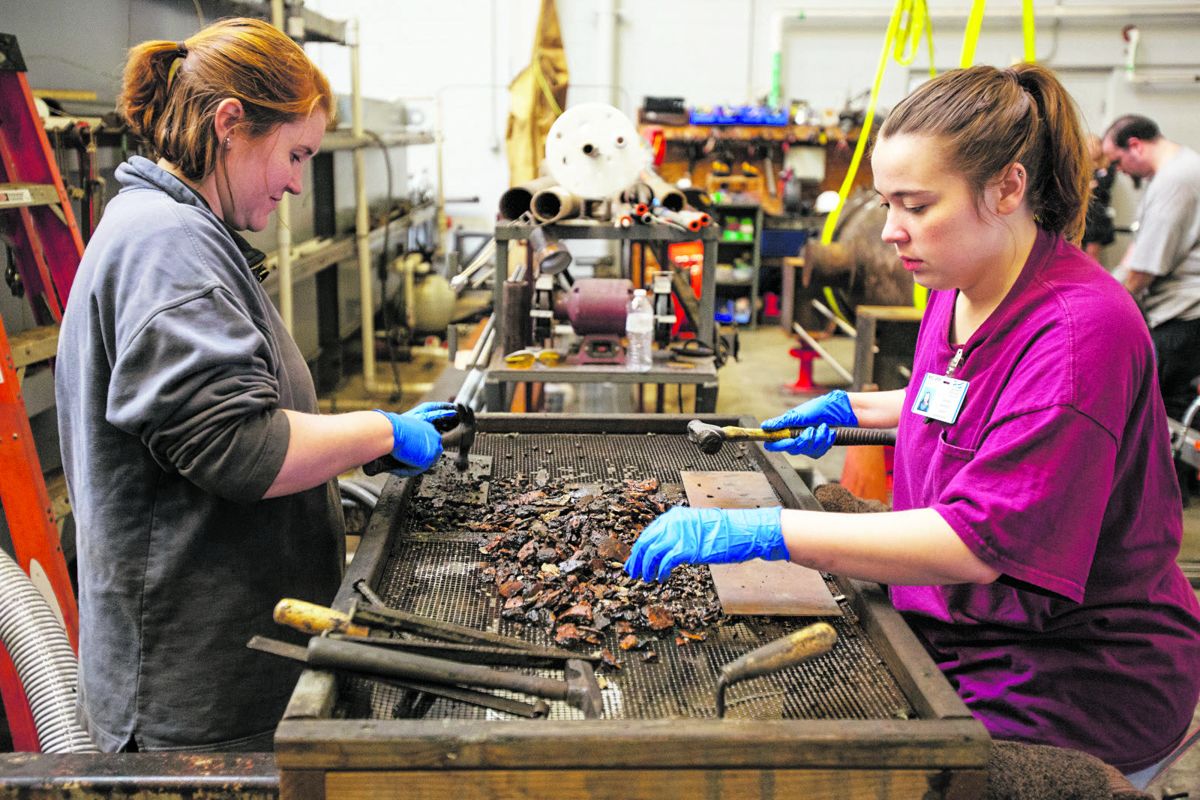
For the gun itself, humidity is the major factor. Iron corrodes with oxygen and water. If salt is added, iron corrodes more quickly. Removal of water and oxygen [air] stops the corrosion. “Water is easier to get rid of than oxygen,” Farrell said. “Both of can be removed from display environments, but there’s a balancing act between how much you need and how big a problem it will be to achieve the right balance.” Hannah Fleming, material culture specialist at the Mariners’ Museum, participated in the recent gun boring project. Her role was to sift through all the concretion removed from the inside the gun tubes to look for artifacts that might be inside the concretion. In the first gun, the Worden gun, 2 ½ to 3 pounds of coal were found. In the second, the Ericsson gun, a single bolt was found. “They had to get the gun perfectly aligned with the drill so that the drill went down the gun at the right angle and didn’t do any damage to the inside. That was the most difficult part,” said Hannah Fleming. “If that wasn’t aligned correctly, we were going to damage the gun. It was meticulous. It was very successful,” she said. “Erik did an excellent job. He really nailed it.” Bob Ruegsegger is an American by birth and a Virginian. His assignments frequently take him to historic sites throughout Virginia, the Mid-Atlantic, and the Southeast. His favorite haunts include sites within Virginia’s Historic Triangle—Jamestown, Yorktown, and Williamsburg. Bob served briefly in the U.S. Navy. He is a retired educator and has been an active newspaper journalist for the last twenty years.