
Thirty Minutes of Bloody Excitement
By Roger Semplak and Marc Ramsey · Originally published July 2020 · pp. 42–43
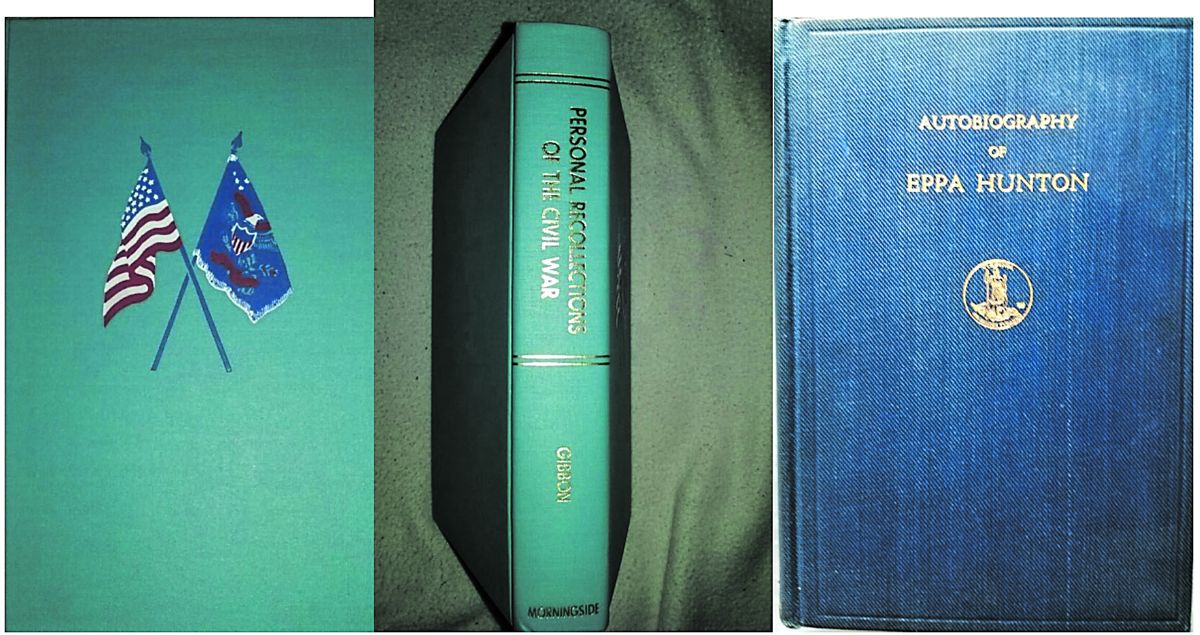
Thirty Minutes of Bloody Excitement Personal Accounts of Two Officers Who Faced Each Other From Opposite Sides of a Great Battlefield by Roger Semplak and Marc Ramsey Two first-hand accounts that you might want to consider when looking for books to read that include interesting sections related to the Battle of Gettysburg are the ones we will discuss in some detail within this article. Both are well-written, primary sources, penned by two articulate officers who were there. One is a memoir while the other is actually an autobiography. Both were written more than 20 years after the war but neither was published until well into the twentieth century. The two authors commanded troops that faced each other on the third day of the battle of Gettysburg. Both were wounded during the action and they witnessed much of this event; their writing clearly shows how their individual perspectives and other’s observations influenced their accounts. We start with John Gibbon’s Personal Recollections of the Civil War, originally published by G.P. Putnam’s and Sons in 1929, with a forward by Brig. General C.A. Woodruff. The author’s original manuscript was finished in 1885 as noted by a number of references within the text, but it took an additional 44 years for the book to be printed. It was published by his daughter who added a few footnoted comments but never provided an explanation as to why it took so long to see the light of day. While original copies of the book can still be found on the rare and secondary market, the reading public is fortunate that in 1988 Morningside Bookshop provided an excellent reprint, with an introduction by Don Russell, making it available again, though even this edition is becoming more difficult to find. John Gibbon was an artillery captain stationed at Camp Floyd, Utah Territory, as a result of the Mormon uprising, an outpost in the middle of nowhere. The military’s knowledge of what was happening in the east was much delayed and also limited in scope with a great reliance on the Pony Express. Once hostilities began, Gibbon expressed his frustrations at the slow process of returning east with the Battery B, 4th U.S. Light Artillery, so he could turn both the guns and enlisted personnel over to authorities at Fort Leavenworth, Kan. He commented on the rather slow
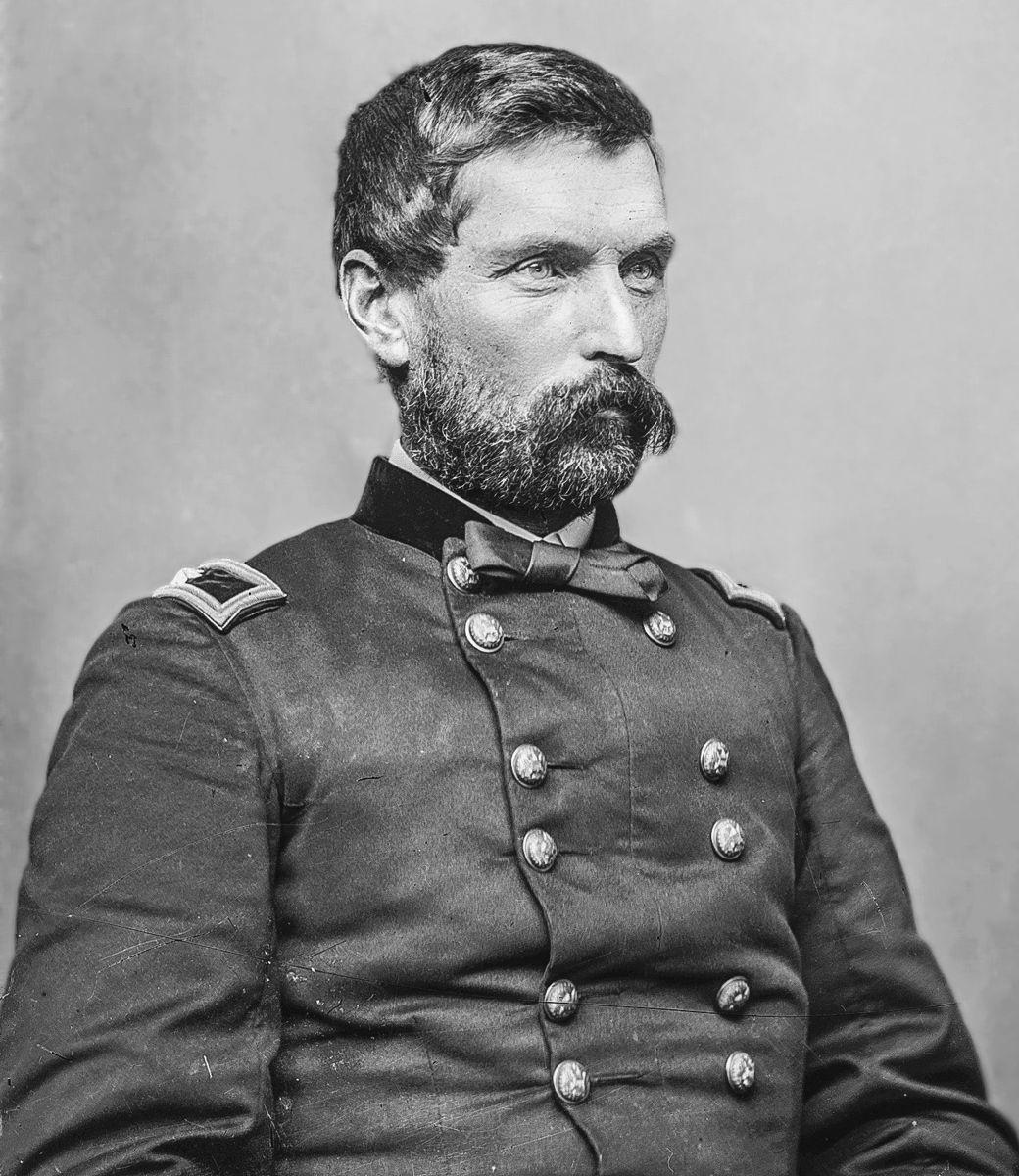
General John Gibbon. Library of Congress.
process of destroying large quan His frustration as a career officer at the time it takes to accomplish this and then move eastwards towards a war that wasn’t originally expected to last over 90 days can be felt in his writing. Once back east and available to serve in a war that wasn’t going to end in the near term, Gibbon’s career started to move in a upward direction when he was named chief of artillery in General Irwin McDowell’s Division. As with the vast majority of his professional peers, he initially had a rather low opinion of the volunteers particularly when it came to discipline. Being trained and used to a discipline derived through the administration of punishment, the fact the volunteers were not motivated by fear was frustrating. Over the course of the book, a slow but steady transition in Gibbon’s opinions and methods occurred. He found that artillerists under his command were much quicker to understand the organizational structure and responsibilities required and were actually quicker to learn the battery’s drill than the regulars he had previously commanded. Due to other officers’ advancement Gibbon found himself commanding an infantry brigade. While this move allowed for greater career enhancement, Gibbon had been an artillery officer his entire career and had no experience commanding infantry. He never commanded an infantry company much less a regiment; he now had responsibility for a brigade. This resulted in many hours burning the midnight oil to become familiar with an infantry regiment’s commands and movements. During this learning experience, he realized the movement of multiple artillery batteries was similar to that of an infantry brigade, thereby making the transition a little more manageable. The brigade he initially commanded came to be known as “The Iron Brigade” and consisted of three Wisconsin regiments, the 2nd, 6th, and 7th, plus the 19th Indiana. The westerners did not take well to the professional discipline instituted by Gibbon; while he glossed over his various problems in his book, the History of the 6th Wisconsin provides a deeper understanding of the conflict of wills between Gibbon’s strict, almost martinet style of discipline and their more laid back approach to soldiering. Gibbon tried to instill more soldierly pride in these volunteers by making them professional looking with the appearance of U.S. Army Regulars in their uniform and accouterments even to being forced to wear leggings. The leggings resulted in an incident that pushed the volunteers to their limit of tolerance, and while Gibbon didn’t mention it, the regimental history of the 6th records that some member of the regiment placed leggings on Gibbon’s horse. While not well received by Gibbon, it did bring an end to the extreme discipline associated with conformity to dress. This corresponded with the period when Gibbon finally began to realize these western volunteers were not as motived by fear but rather reward. After this Gibbon began to comment on how he improved his brigade’s discipline by acknowledging a job well done and allowing the volunteers time to pick blackberries resulting in a happier situation for all involved. By the time the regiment participation in the Second Manassas campaign, his volunteers have learned to be excellent soldiers. They handled themselves well against Stonewall Jackson’s forces at Groveton and were engaged from late in the day until they were withdrawn long after dark. The brigade was again be heavily engaged at South Mountain, where they obtained their name, and Antietam after which Gibbon was assigned to command a division with the I Corps. During this assignment he was wounded at the Battle of Fredericksburg. Upon his return to active duty he was given command of the Second Division, II Corps under Major General Winfield Scott Hancock. The relationship between these two men was very congenial, professionally respectful, and friendly to begin with but after the Battle of Gettysburg it became somewhat testy. At Gettysburg the II Corps did not deploy on the field until the morning of the second day. Hancock was initially detailed to provide General Meade with reliable information as to what was happening at Gettysburg after learning of General Reynolds’ death and receiving conflicting reports from those left on site. In the absence of General Hancock, Gibbon took over temporary command of the II Corps and got them ready to move toward the fight. Upon Hancock’s return the evening of July 1, Gibbon had the II Corps ready to move and reverted back to commanding the Second Division. The II Corps moved forward, initially in a support role, prior to their second day deployment on Cemetery Ridge. When Major General Sickles was wounded, Meade assigned Hancock responsibility for stabilizing and holding Cemetery Ridge. This shift resulted in the II Corps coming under Gibbon’s immediate command again. At the conclusion of the second day, there was the much mentioned Council of War convened by General Meade to establish a clear picture of his capabilities where the various corps commanders all expressed their opinions. General Gibbon, as the junior commander present, was first to comment on the situation. Gibbon’s book seemed to rely on notes taken by General Butterfield and the comments and opinions found their way into many histories of the battle. The minutes of the meeting from Meade’s personal papers are included in the text as well. Whether or not the material previously presented was drafted at the time, and when Gibbon was made aware of Meade’s minutes, is subject to debate, especially since there are subtle differences between the two. What is worth noting however is the parting conversation between Meade and Gibbon as the meeting broke up, where Meade informed Gibbon that if General Lee attacked the next day it would be on Gibbon’s front. General Meade then stated that Lee tried both flanks and failed, so if he tries again it will be the center. This comment has appeared in many volumes pertaining to the battle, but since it takes place basically between only the two generals, this reference is probably the best primary source of this interesting and insightful observation. When the assault occurred where Meade predicted, Gibbon sent one of his aides, Lt. Haskell, to inform the army’s commander. During Lt. Haskell’s absence, Gibbon was wounded and actually did not witness most of the assault and its repulse as he was taken off the field to the hospital. What’s interesting in this account is Gibbon’s concern about the entry point of the wound possibly being in his back. He is greatly relieved to learn the wound he initially experienced was actually the exit wound. For the coverage of the actual assault Gibbon included a 15 page letter written by Lt. Haskell to his brother shortly after the event where he detailed his own experiences. Gibbon gave credit to Haskell for the letter, and also recognized the enormous effort exerted by this staff officer, in both rallying the various elements of the Second Division, II Corps in stemming and finally repulsing the assault. Gibbon, like Hancock, returned to the Army of the Potomac in the spring of 1864, however their relationship soured, resulting in a post war dispute over actions related to the May 6 Wilderness fighting. Their dispute resulted in a number of letters that were included in the mid 1880’s edition and might be a reason for the delay in publication, but that is only speculation by the authors of this article. Gibbon concluded his Civil War service as a Major General commanding the XXIV Corps, Army of the James, under General E.O.C. Ord. After the war he reverted back to his original prewar rank, in his case as a captain of the 4th Artillery. By 1866 he was named colonel of the 38th U.S. Infantry, then transferred to the 7th U.S. Infantry in 1869 when the 38th was deactivated. Gibbon was finally promoted to Brigadier General in the Regular Army in July 1885 and retired in April 1891.
General Eppa Hutton Our second book is very different. It is the Autobiography of Eppa Hunton. The foreword lays the ground rules for this piece when Eppa Hunton, Jr., the author’s son, writes: “My wife and son have urged me to add a few notes to the autobiography of my father and to have a few copies printed for my immediate family and a few intimate friends, as a part of the unwritten history of important events of the period in which he figured.” He added: “No copy will be sold, and none has been given away, but when advisable a copy may be loaned to a friend who may desire to read it.” In the book’s preface his father stated: “I have written this little unpretentious volume for them” [my children] “and for them only” To this he added: There are many facts in the book, and especially some relating to the war, which would probably lead to bitter and acrimonious controversy that I deeply regret.” As an autobiography this book covers a good portion of the author’s life and since it wasn’t meant for anyone outside the family it is rather frank in some areas. In many ways Hunton was a very successful self-made man starting from humble beginnings to becoming a successful attorney. He was a very early advocate of secession. He says; “When the State of Virginia seceded from the Union we believed that we had a perfect right to withdraw, and had no intention in the world of disturbing the united forces or interfering with the United States.” He then added, “All that Virginia asked for was to be let alone, to pursue her course under the new order of things brought about by secession.” As a member of the Virginia State Militia, Hunton achieved the rank of Brigadier General but resigned to accept command of the 8th Virginia Infantry as a Colonel, much to the dissatisfaction of Virginia Governor Letcher. As commander of the 8th Virginia he led troops under General Johnston in the Shenandoah Valley, then moved by rail to participate in the Battle of First Manassas. He reminisced after the battle while General Beauregard had his army at Fairfax Courthouse, that there were four notable Rebel girls, whom he names, and who were noted for their beauty and violent loyalty to the Confederacy. After Southern forces withdrew from the area, these same Rebel girls became great belles with the Yankee officers, eventually not only forgetting to hate but learning to love Yankees. Hunton’s next major action was at Balls Bluff where the Confederates successfully repulsed a Union advance which got out of hand with the arrival of Union Colonel Baker, who he mistakenly referred to as General Baker. While being offered the rank of general by the Lincoln administration, Baker didn’t accept it because it would cost him his seat in Congress. He did not survive the battle. During the early defense of Richmond, the 8th Virginia was involved in a number of engagements and Hunton was there on some occasions, however due to poor health there were times when he was not with his regiment. As the war progressed Hunton’s 8th Virginia had different brigade commanders. After the Battle of Fredericksburg, General Richard B. Garnett was assigned to command and Hunton wrote the following: “General Garnett was a graduate of West Point, a member of the distinguished Garnett family of Essex County Virginia and, while he was not a man of much mental force, he was one of the noblest and bravest men I ever knew.” Hunton’s regiment and the brigade missed Chancellorsville, being previously assigned to North Carolina, but returned to serve in the Gettysburg campaign. As part of General Pickett’s Division, Hunton’s regiment arrived on the battlefield very late the second day. He wrote that, “The action was brought on without General Lee’s orders. His intention was to fight at Cash Town six miles southeast of Gettysburg, and on this side of South Mountain, but General Ewell [sic A. P. Hill] had accidentally encountered quite a force of the enemy at Gettysburg, the fight commenced … and a heavy battle ensued.” He goes on to further state; “General Gordon says that he was driving the enemy from Seminary Ridge when he was ordered by Ewell to retire.” For the second day Hunton recounted that, “The next morning the 2nd of July – Longstreet was ordered at an early hour of the day to make an attack on the left of General Meade.” The objective point in the attack was “Little Round Top.” He later noted in the same section that Pickett’s Division, including Garnett’s Brigade, reached the vicinity of Gettysburg about night on the 2nd, “very much worn down by the march.” During the Pickett, Pettigrew, Trimble assault, aka Pickett’s Charge, Hunton was wounded and forced to leave the field of action. This wounding probably resulted in some of the most controversial observations of his remembrance when he commented on where General Pickett was during the assault. Hunton wrote, “No man who was in that charge has ever been found, within my knowledge, who saw Pickett during the charge.” He further added that “One of my soldiers whom I met here at the laying of the cornerstone of the Jeff Davis monument in Monroe Park told me that he was detailed to carry water to Pickett and his Staff during the fighting at Gettysburg.” When asked where, he said “they were behind a limestone ledge of rocks, about 100 yards in the rear of the position that we were prior to the charge.” To add to this controversy, Hunton also stated that “neither Pickett not [sic] any of his Staff was killed or wounded, and that not one of their horses was killed or wounded, whereas every man who was known to have gone into the charge on horse-back was killed or wounded, or had his horse killed.” Hunton continued to soldier through almost to the end of the conflict when he was captured by Custer’s troops at Sailors Creek. After the war he returned to his law practice and then moved on to politics. He was a strong believer in the “Lost Cause;” General Lee never did anything wrong, and the Battle of Gettysburg was lost simply because neither Longstreet nor Ewell could execute orders in a timely manner. These two books look at the war from different perspectives. While both actively participated throughout Civil War, their writing efforts took different approaches as to how they presented the facts. Both are wonderful reads, with the Gibbon volume being much easier to find and well worth the time. If you’re ever fortunate enough to find the Hunton volume, which does reside in the Virginia State Library, and odd copies do appear for sale at certain antiquarian bookshops from time to time, you, as the reader are in for a unique journey alongside a veteran officer who was there and who lived to tell the tale very well. Happy reading! Somewhere buried within each of these great books are nuggets of knowledge and adventure just waiting to be rediscovered. Marc Ramsey is co-owner of Owens and Ramsey Historical Booksellers with his lovely wife Jill, who, for the past 25 plus years, have specialized in the buying, selling, and trading of rare and collectible Civil War books, artifacts and paper items, They provide appraisals for estate planning, charitable deductions, or insurance purposes. They also love making recommendations to readers looking to expand their Civil War knowledge as well as providing customers with very rare and collectible volumes for their libraries. The Ramsey’s send out a monthly catalog, and can be seen at many Civil War Shows and conferences throughout the year. Call Marc at 804-272-8888. Roger A. Semplak is a close friend and consultant to the Ramsey operation, often times providing insight and critiques of certain Civil War books, new or antiquarian. An avid reader and collector of many things Civil War he is a strong proonent of battlefield preservation. Roger can often be found working as staff at the Owens and Ramsey tables, especially for the larger events such as the two Gettysburg shows and the Mosby Heritage Conference in Middleburg, Va., where he is tasked with book sales whose proceeds are earmarked for preservation efforts.