Southern Dead at Gettysburg
By Sue Boardman · Originally published July 2020 · pp. 8–10
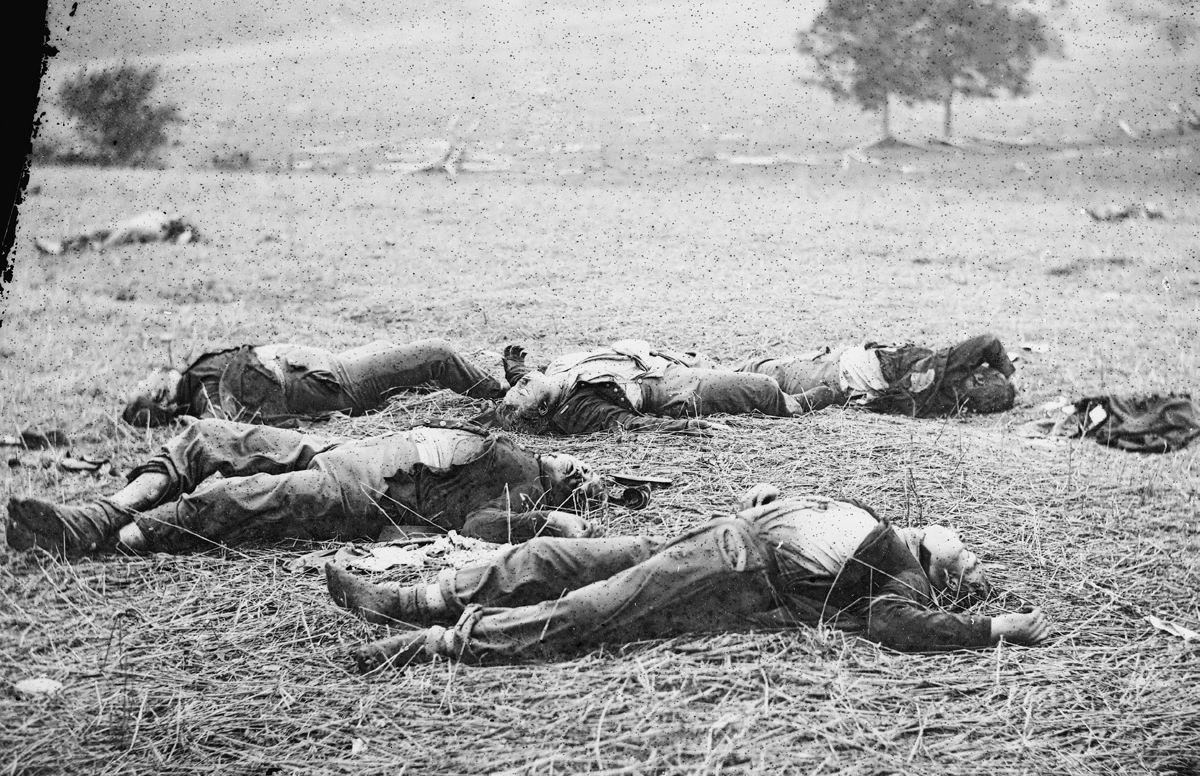
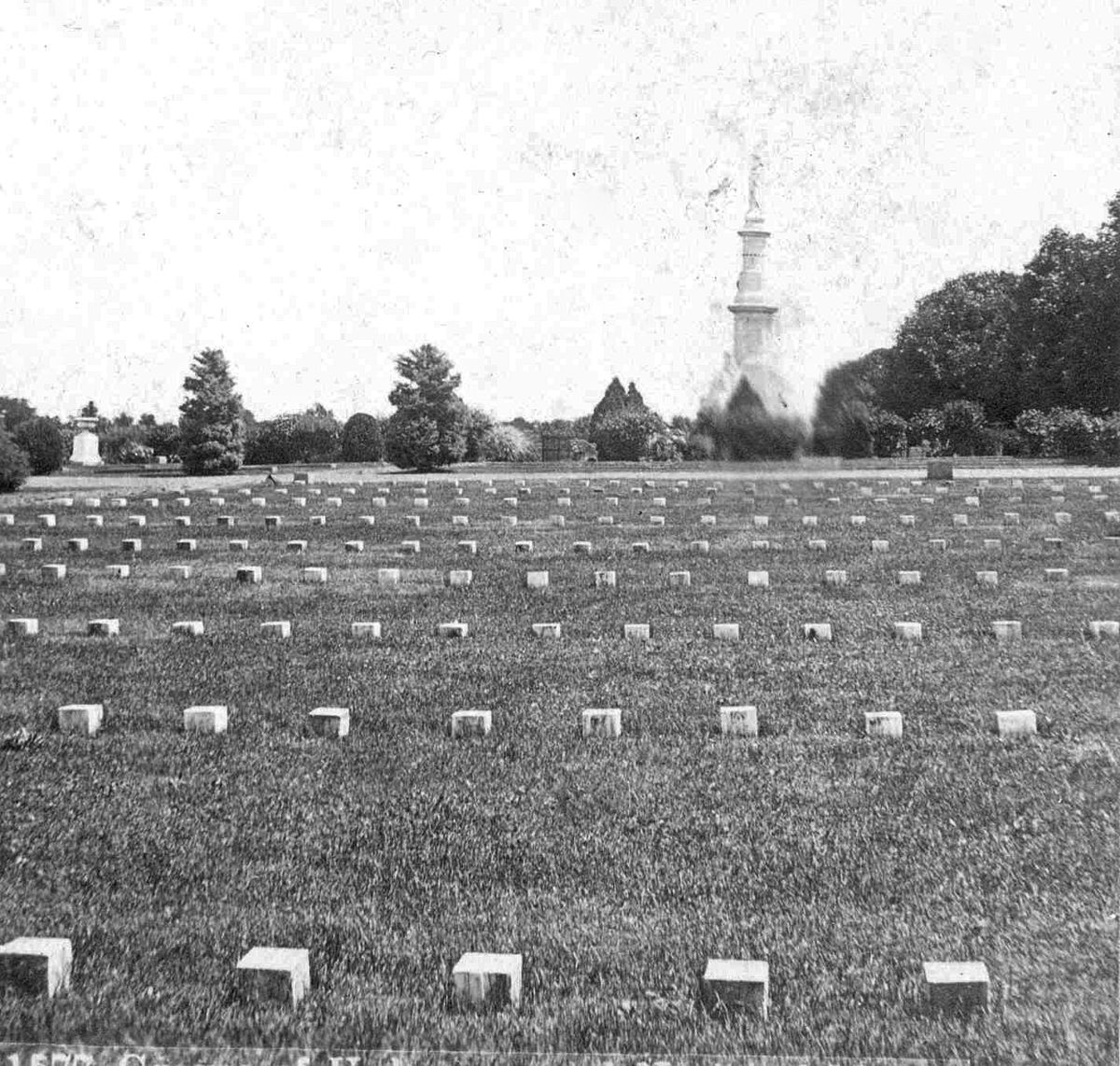
Southern Dead at Gettysburg by Sue Boardman The Gettysburg National Cemetery is an important part of any visitor’s experience on the battlefield. It is sobering to walk among the unique landscape architecture and understand the enormous sacrifice in lives represented by row upon row of solemn graves. Many visitors don’t realize the graves in the cemetery represent only a portion of the battle’s dead. Not only were there a significant number of solders’ remains taken home by families after the battle, but the national cemetery, according to the laws of its creation, excluded Southern casualties. The graves of Southern dead at Gettysburg would have to wait nearly a decade before the situation was properly addressed. When the Battle of Gettysburg ended on July 3, thousands of bodies lay across 6,000 acres of trampled ground under the hot sun and pouring rain. The outcome of the conflict was a Union victory on Pennsylvania soil. Just the year before, the Pennsylvania legislature passed an act that provided for the care of her wounded and burial of her battle dead. Within days of the battle, Pennsylvania’s Gov. Andrew Curtin visited the battlefield and was appalled by the haste with which the brave dead had been buried. He appointed David Wills to carry out the requirements of the law.
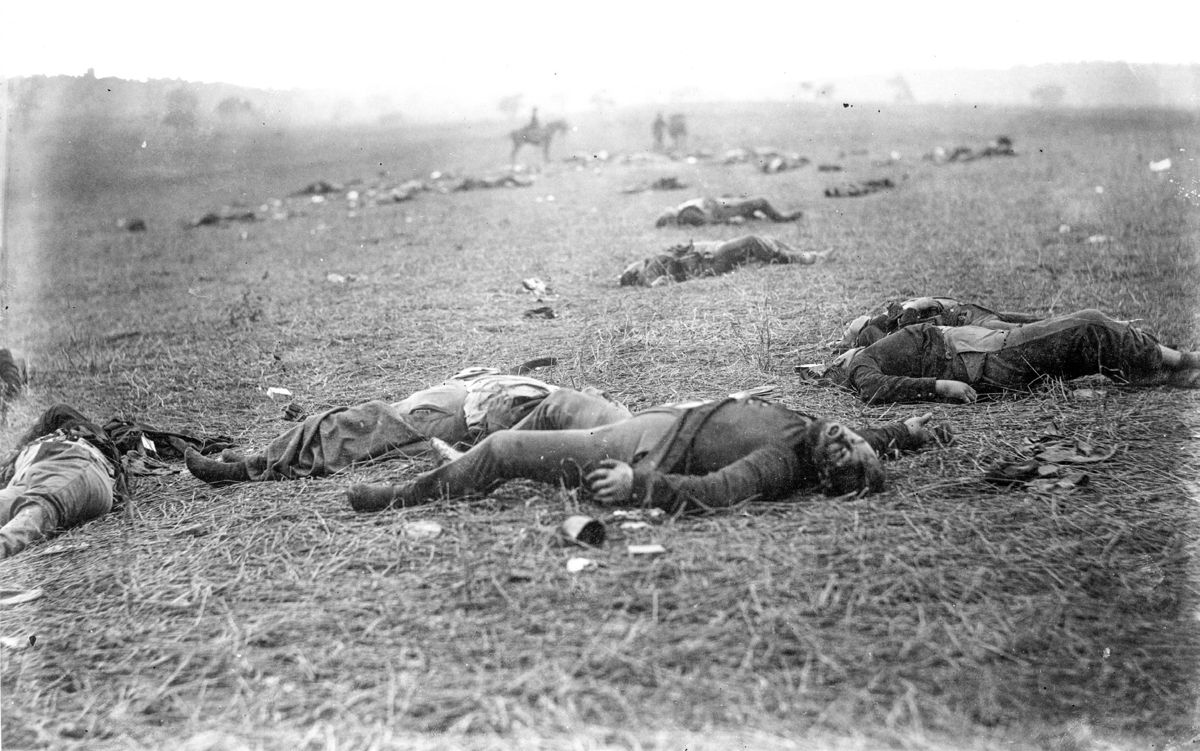
Will’s first report emphasized the rapidly deteriorating condition of the temporary graves. Curtin authorized Wills to arrange for the exhumation and transportation of all Pennsylvanians killed in the battle. At least 700 bodies were shipped home in pine coffins to their families, but the decaying bodies created a terrible stench and a health risk. By the end of July, the military authorities ordered the cessation of further exhumations. What we know today as the national cemetery system was already in place by 1863; nearly a dozen cemeteries were established in 1862. Those cemeteries, like Pennsylvania’s, allowed only for the burial of “loyal dead,” thereby automatically ruling out a solution for Confederate dead simply because they fought on behalf of states in rebellion and therefore were not “loyal.” Wills eventually acquired the 17 acres of ground that provided for establishment of the Soldiers National Cemetery at Gettysburg. Union dead were exhumed from October 1863 through March 1864. During the grueling work of reburying the dead, a dedication ceremony was held at which President Lincoln delivered his immortal address. Throughout the process of gathering and reburying the Union dead in their newly dedicated national cemetery, Southern dead remained on the field, many in unmarked graves or with identification markers rapidly becoming illegible. Fortunately, two individuals, Drs. J. W. C. O’Neal and Rufus Weaver, walked the fields and recorded as many names as they were able to make out. Weaver eventually took a much more active part in removing Southern dead from Gettysburg. As plans were underway for dedicating the national cemetery in November 1863, local attorney David McConaughy received an inquiry from Governor Andrew Curtin who expressed an interest in knowing how much it would cost to remove and rebury the Southern dead. Curtin’s interest was inspired by the potential for bad publicity resulting from the large crowds visiting the battlefield for the cemetery’s dedication and seeing the poor condition of Confederate graves. McConaughy suggested that, although he was aware of a rumor that Southern sympathizers were raising funds to create a cemetery for their dead, it might be better if the government took control of the situation to prevent displays of disloyalty in the process. McConaughy gave assurances that Confederate graves would be properly covered by the dedication’s date. However, no further plans were forthcoming from the Pennsylvania legislature regarding removal of Confederate dead. There were other futile discussions on the matter as well. In February 1864, a newspaper article lamented the condition of the graves and the difficulty farmers would soon encounter trying to cultivate their fields. It went on to suggest that common decency should prevail so that Southern families and friends of the fallen could have a place to visit when the war ended, to remember those they had lost. Later that spring, New York Governor Horatio Seymour contacted Gettysburg attorney Moses McClean offering to raise funds to give decent burials to Southern battle dead but those plans also failed to materialize. Although the topic appeared in local and regional papers from time to time, no further official action was discussed or taken. When the war ended, the Federal government developed a very ambitious project to recover all Union dead scattered on battlefields across the land. The arduous task was able to be accomplished because the South was under Federal control. It was largely completed by late 1870, when more than 300,000 Northern soldiers were reburied in 72 newly established national cemeteries. Southerners hoped the Federal government would eventually include all the battle dead that were as yet improperly buried, however, in spite of discussions to that effect, Confederate soldiers were ultimately excluded from the government’s recovery efforts. Meanwhile, Southern newspapers lamented the failure of the Federal government to include Confederate soldiers, blaming it on partisan politics. A Richmond paper’s message regarding Gettysburg was that while Northerners set the example of honoring their dead with eulogies, monuments, and great expenditures of money in turf, flowers, and plants, “the poor southerner was cast aside from the scene, sleeping uncared for in his narrow and neglected house.” It went on to say that the expense for the Gettysburg ceremony was paid in part by Southerners but radicals censured the Southern people for wishing to take care of their own dead. The article ended by stating it was the Southerners’ right and duty to look after their own boys who died for their cause. When it became clear that no help would be forthcoming from Federal authorities or the Northern people, work commenced under the auspices of Ladies Memorial Associations to raise funds to locate and identify Southern soldiers’ graves and care for them. They earnestly and faithfully carried out their work on battlefields within their own states throughout the late 1860s, but they had no organized plans for recovering their lost soldiers at Gettysburg. At the 1869 dedication of the Soldiers National Monument, keynote speaker General George Meade included the following statement in his remarks: “When I contemplate this field, I see here and there the marks of hastily dug trenches in which repose the dead against whom we fought…. Above them a bit of plank indicates simply that these remains of the fallen were hurriedly laid there by soldiers who met them in battle. Why should we not collect them in some suitable place? In all civilized countries it is the usage to bury the dead with decency and respect, and even to fallen enemies respectful burial is accorded in death. I earnestly Antietam National Cemetery denied permission for Confederate burials. hope that this suggestion may have some influence throughout our broad land, for this is only one of a hundred crowded battlefields.” Meade’s words inspired no further action on the part of Gettysburg citizens, state officials, or Federal authorities. This was soon followed by a protest against the neglect of Confederate dead, delivered during a speech by Henry Ward Beecher. He said, “Can it be possible that a great and generous nation will much longer suffer the Confederate dead to lie disheveled in such utter and contemptuous neglect?”
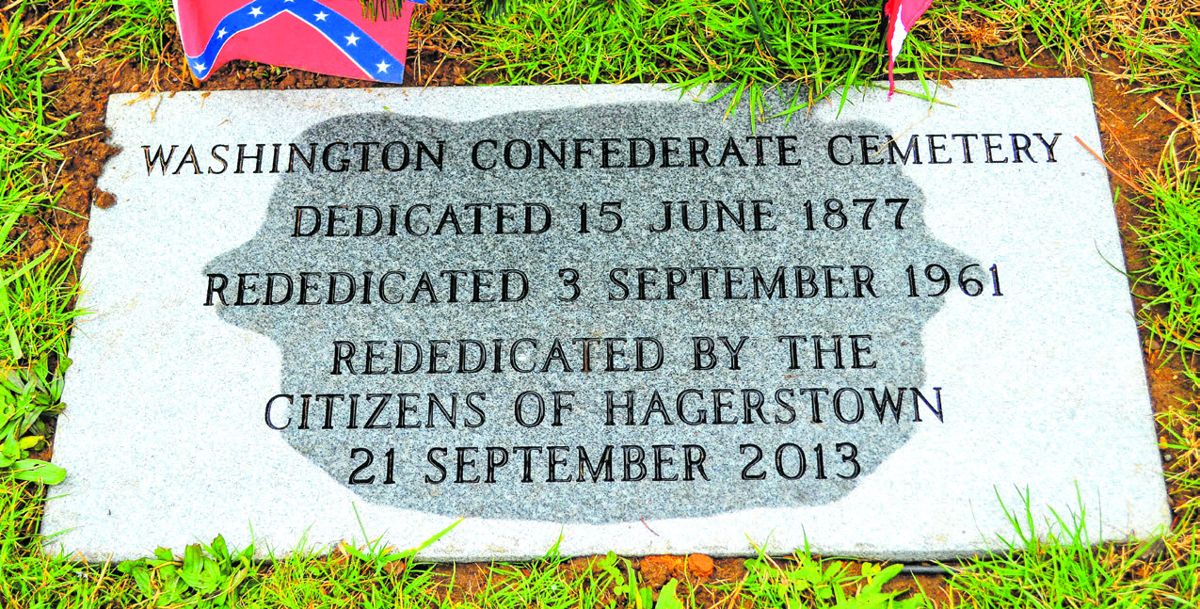
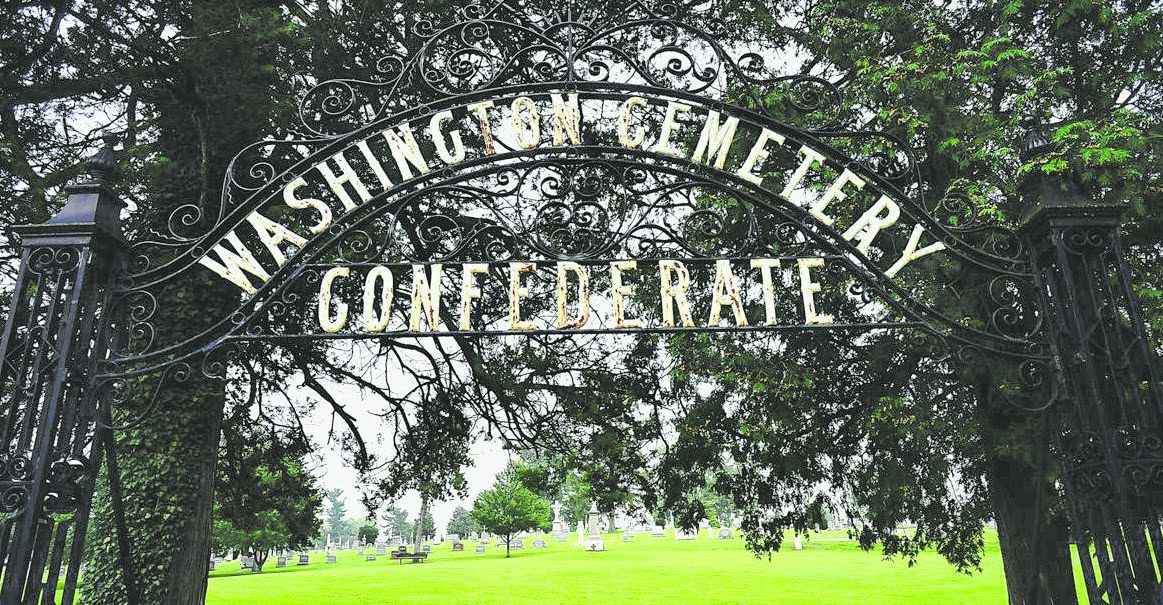
The last straw that spurred initiative among Southerners to reclaim their Gettysburg dead came in March 1870, when a bill was passed by Maryland’s Senate to establish a cemetery near Hagerstown for the internment of Confederate dead from the battles of Antietam, South Mountain, and Gettysburg. The senate committee reported that the incorporation of the Antietam National Cemetery provided for including Confederate dead but in 1869 trustees of that cemetery refused to do so. Consequently, the senate took the initiative to establish a burial ground within the recently established Rose Hill Cemetery that became known as Washington Confederate Cemetery. However, its stated purpose was to rebury the dead from battles and skirmishes in western Maryland. This included the dead from Antietam, South Mountain, and areas that saw skirmishes within the state in which Lee’s retreating army were engaged, thus excluding the bulk of Confederate dead still in Gettysburg. At this point, the Hollywood Memorial Association took the lead. They appealed to each Southern state whose soldiers still lay at Gettysburg to raise the necessary funds. The directors also appealed to General Lee to support their mission. Lee at first declined, not wishing to put himself into the public arena because he thought it would detract from the cause. He finally relented and issued a letter from Lexington, Va., on March 8, 1870, that was published in Southern newspapers. It read, “I have felt great interest in the success of the scheme of the Hollywood Memorial Association of Richmond for the removal of the Confederate dead at Gettysburg, since learning of the neglect of their remains on the battlefield. I hope that sufficient funds may be collected by the association that it will receive the grateful thanks of the humane and benevolent. May I request you to apply the enclosed amount [$125] to this object.” This endorsement by General Lee spurred the Ladies Memorial Associations to redouble their efforts in their respective states but funds were slow in coming from poverty stricken Southern states. In what could be described in today’s world as public shaming, a Charleston newspaper chided its citizens with the headline, “Nothing from South Carolina.”
The article enumerated the funds raised by other states that totaled just over $1,000 by April 1870, the majority of which was raised in Virginia; and stated, “So far, only a miserable sum has been collected for the purpose, and it will be noticed that there is nothing from South Carolina….the state which poured out her blood like water in the cause of the south, has, up to this time, given nothing for preserving from insult and pollution the mouldering bones of the gallant men who fell in the mighty conflict in Pennsylvania. Now that the truth is known, this reproach will not be allowed to rest upon our people.” In early 1871, the long-awaited process to remove Confederate dead from Gettysburg was finally begun with a request by the Ladies Memorial Association of Charleston, S.C. Although Samuel Weaver, who was instrumental in removing Union dead to the National Cemetery in Gettysburg, was the initial recipient of the request, his untimely death in a railroad accident left his son, Dr. Rufus B. Weaver to take up the task. By Memorial Day, May 10, 1871, Weaver had shipped the
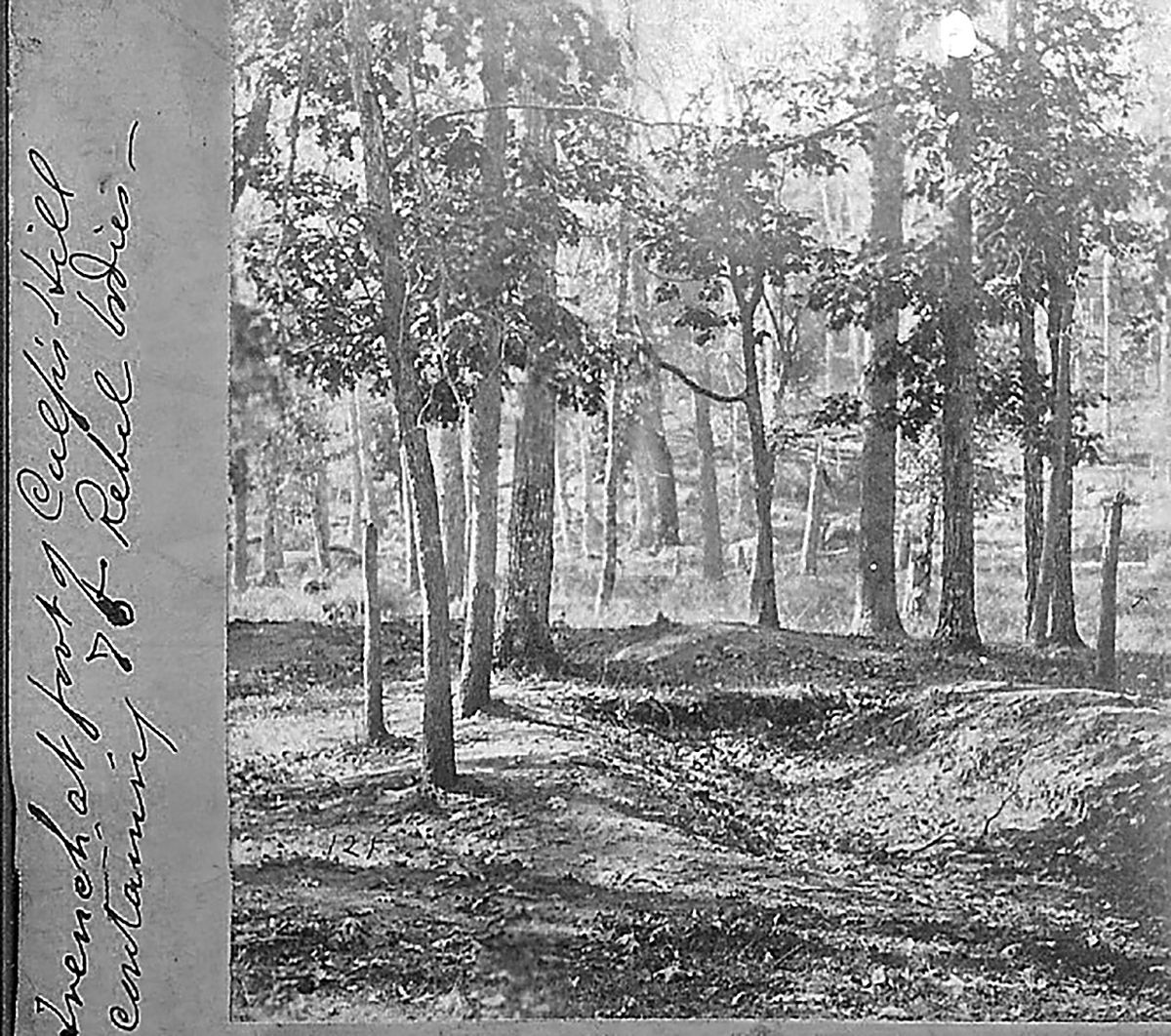
Magnolia Cemetery, Charleston, S.C., where some Gettysburg dead now repose. as farming, the building of roads, fellow soldiers filled two burial and other improvements required trenches with Confederate bodground to be disturbed. A num- ies, 13 in one trench and 16 or 17 ber of discoveries are recorded in the other. He said they covered in the reports of governing bod- the bodies with their old (US) ies over the years. For example, it blankets because they picked up is known that approximately 200 new ones the day before from the soldiers were buried on the 11th Maryland Eastern Shore troops. Corps Hospital site at the George This explained why the bodies Spangler Farm; conflicting re- were originally thought to be cords report that between 4 and Union. Monat drew a crude map 20 of them were Confederates. to show where the bodies were. Yet there is no record of their reThere were a number of othmoval in Dr. Weaver’s notes. er incidents in which bodies, During War Department years both Union and Confederate, (1895–1933), Park Commissioner were found on the field over William Robbins noted in his the years. Some were sent to journal in September 1899, that the Confederate Cemetery in one crew working on the battle- Hagerstown, some to the National field “found on the southwest- Cemetery, and some were simply ern side of Culp’s Hill about 17 moved out of the way and reburbodies of Union soldiers. We ied. The most recent discovery had the remains put in boxes was a partial skeleton found in and sent to the Custodian of the 1996 in the side hill of the railNational Cemetery to be buried road cut on the first day’s field. there among the unknown.” The It was thought to be that of a discovery was reported in region- Confederate after the remains we al newspapers which prompted analyzed by Smithsonian archaeDavid Monat, a veteran of the ologists. Those remains rest in the 29th Penn. Volunteers to write to Gettysburg National Cemetery Col. John P. Nicholson, head of today. the Park Commission, to explain It is this author’s hope that why he felt the bodies were ac- my article has reinforced the tually Confederate. He shared need to preserve the Gettysburg that on July 4, 1863, he and his Battlefield for future generations.
It is some of the most sacred ground in America, made so by the men who fought and died there, regardless of whether they were from the North or the South. Further Reading: bodies of 80 South Carolina soldiers to Charleston where they were buried with ceremonies in Magnolia Cemetery. His work on behalf of the Memorial Association of Charleston led to requests from other like associations. Ultimately, in response to requests from Ladies Memorial Associations and individuals during the summers of 1871, 1872, and 1873, Weaver exhumed and shipped 3,253 sets of Confederate remains to Charleston, S.C. (80); Savannah, Ga. (101); Raleigh, N.C. (137); and Hollywood Cemetery, Richmond, Va. (2,935). He also exhumed the bodies of 73 individuals that were sent to various locations throughout the south. Each shipment was lovingly received and reinterred with solemn and patriotic ceremonies. Weaver received far less in compensation than was personally expended by his efforts. As of 1887 he was still owed over $11,000, a sum he most likely never received. A question, often asked by visitors who are told about the removal of the Confederate dead from the battlefield, is whether any bodies remain on the field. The affirmative answer allows historians to impress upon visitors the fact that the Gettysburg battlefield is indeed hallowed ground, not just for the battle that was fought there but also because there are still soldiers’ remains there. Dr. Weaver was not able to remove all the Confederate dead nor did he attempt to do so. Some bodies buried in out-of-the way places were left undisturbed. Some were simply not found. Some were found over the years
Early Photography at Gettysburg, by William Frassanito (1995); A Strange and Blighted Land, by Gregory Coco (1995); Wasted Valor, by Gregory Coco (1990); “The Removal of the Confederate Dead from Gettysburg,” by Edward Richter in Gettysburg Magazine, January 1, 1990; “The Aftermath and Recovery of Gettysburg,” Part 2 by Eric Campbell in Gettysburg Magazine, July 1, 1994; Richmond Dispatch and The Charleston News, various dates, 1866–1871; “Journal of Major William Robbins,” Gettysburg National Park Commission, GNMP Archives. Sue Boardman, a Gettysburg Licensed Battlefield Guide since 2001, is a two-time recipient of the Superintendent’s Award for Excellence in Guiding. Sue is a recognized expert of not only the Battle of Gettysburg but also the National Park’s early history including its many monuments and the National Cemetery. Sue is Director Emeritus of the Gettysburg Foundation’s Leadership Program. Her program, In the Footsteps of Leaders has been well-received by corporate, government, non-profit and educational groups. Sue is a native of Danville, Penn., and an Honors Graduate from Penn State/Geisinger Medical Center School of Nursing and attended Bloomsburg University. A 23-year career as an ER nurse preceded her career at Gettysburg. Sue served as President of the historic Evergreen Cemetery Association and is currently on the Board of Trustees. She has worked as an adjunct instructor for Harrisburg Area Community College and Susquehanna University.