
Violet Bank Museum Scheduled for Restoration
By Bob Ruegsegger · Originally published January 2020 · pp. 20–21
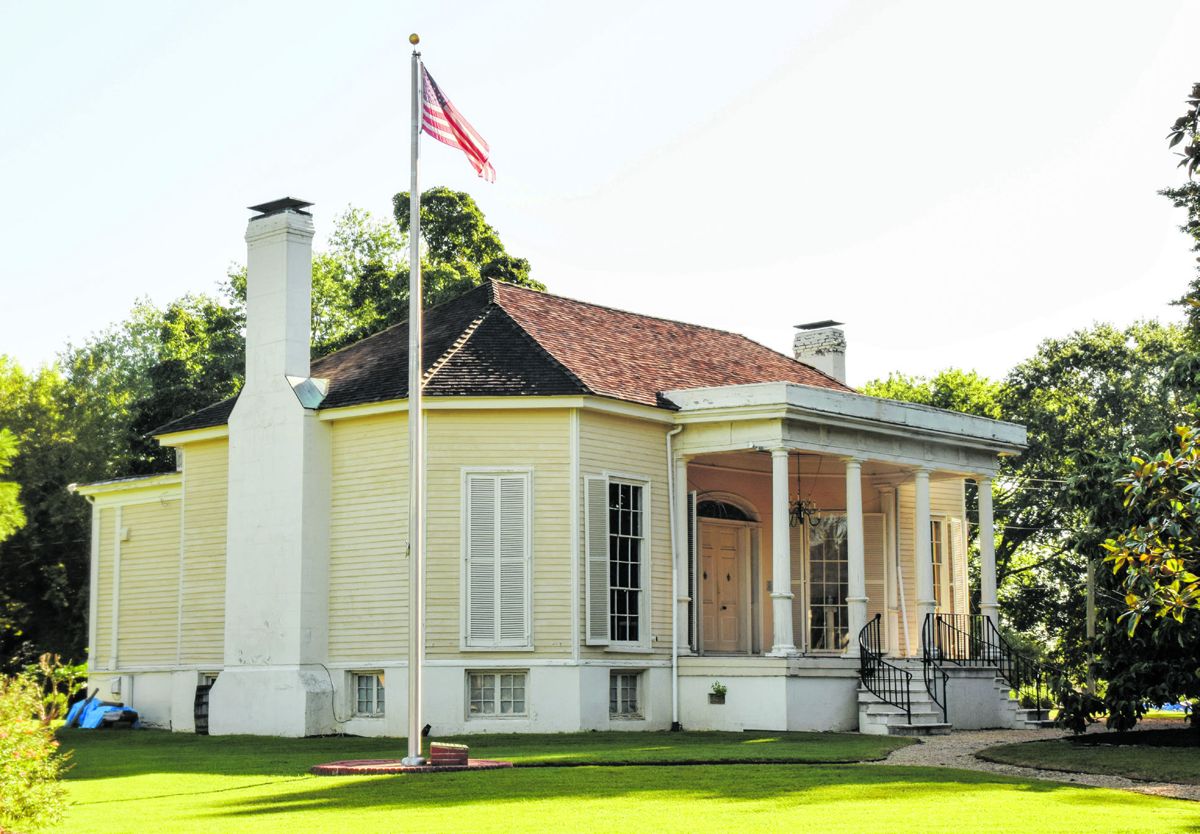
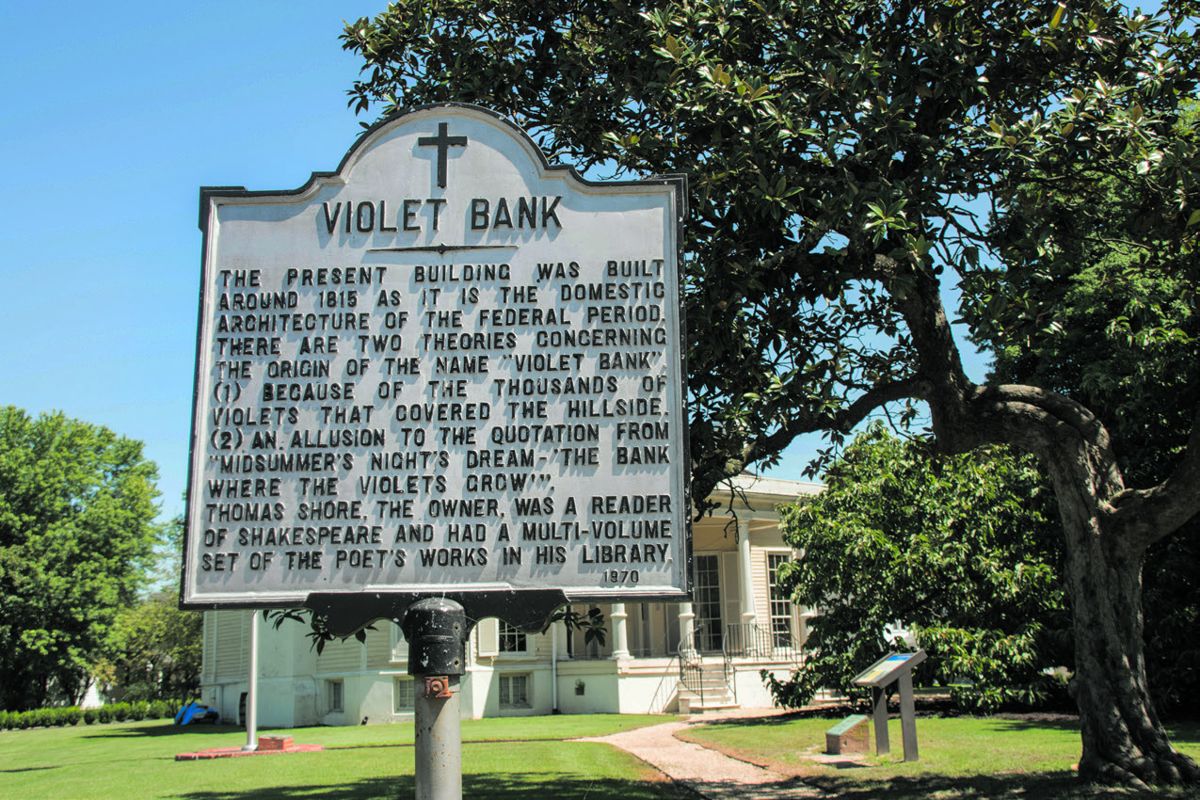
Situated high above Petersburg on the north bank of the Appomattox River, the Violet Bank Museum in Colonial Heights offers a commanding view of the historic downtown below. Violet Bank served as the headquarters for General Robert E. Lee’s Army of Northern Virginia during the first six months of the Petersburg Campaign. The history of the Violet Bank site dates back to the late 1700’s when Thomas Shore first purchased 144 acres on which he built his home. The site was part of a larger holding called Archer’s Hill, a grant that encompassed much of what is now Colonial Heights. The existing house was the second residence built on the property. After the initial dwelling burned in 1810, a new residence was rebuilt using the footprint of previous structure, including the original English basement and chimney stacks. Over the last century and a half,
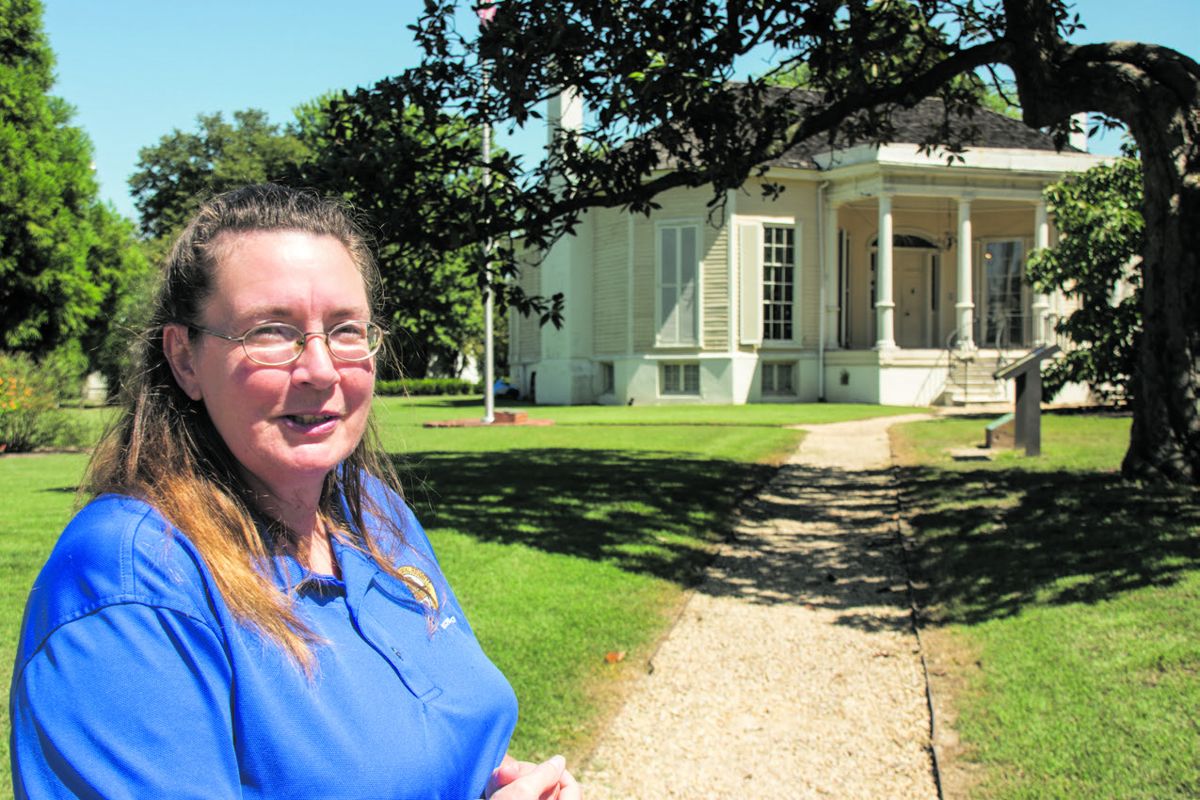
Father Time and Mother Nature have taken their toll on Violet Bank. Foundation issues, water damage, and structural concerns have made a major four-part restoration project essential to preserving the historic building. The undertaking, if all goes well, has been estimated to take several years. “Violet Bank does have some condition issues related to the water that is continually getting into the house,” said Wendy Alvis, curator of the Violet Bank Museum. “It definitely needs some work. It hasn’t had a major restoration in a long time. It really hasn’t had a complete restoration since, basically, it was built,” she noted. “It’s long overdue for that. The house has good bones. It has a lot of potential. It’s gone through a period of graceful decline.” Architects Mesick, Cohen, Wilson, and Baker, a group noted for the preservation and restoration of historic buildings, has been selected to oversee the $1.1 million, four-phase endeavor. “The firm that’s going to be doing the work was really thrilled with how much original molding and trim work remained,” Alvis said. “We’re hoping that they can restore what is damaged and replicate what is missing,” she said.
Now a house museum, Violet Bank saw service as a VFW post as well as Colonial Height’s first public library.
“They have a whole retinue of qualified craftspeople who specialize in historic preservation and restoration so we know that it will be done right.” Because of its strategic location Violet Bank was a place of interest during the Revolutionary War and also the Civil War. The hillside outpost afforded a great view into Petersburg. “Petersburg was the second largest city in Virginia at the time of the Civil War,” said Alvis. “It was a transportation hub. It had five rail lines coming into it, and it had water access for shipping,” she explained. “To hold the high ground and be able to look into Petersburg was very important. It allowed Lee to be close but not too close.” General Lee’s aide, Lt. Colonel Water H. Taylor, established Lee’s headquarters at Violet Bank on June 17, 1864, at the onset of the siege of Petersburg. Protected by Confederate defenses to the south and east, the city remained connected to the Confederate capital via the Richmond and Petersburg Railroad as well as the Manchester and Petersburg Turnpike. Violet Bank was situated near both transportation routes. It enabled General Lee to travel rapidly to Richmond to consult with Confederate President Jefferson Davis. It also made it convenient for President Davis to visit Lee at Violet Bank. While at Violet Bank, Lee was informed of the explosion that began the Battle of the Crater on July 30, 1864, and hastened to the front to direct the Confederate counterattack. Although Lee retained his headquarters at Violet Bank, after August 15, 1864, he
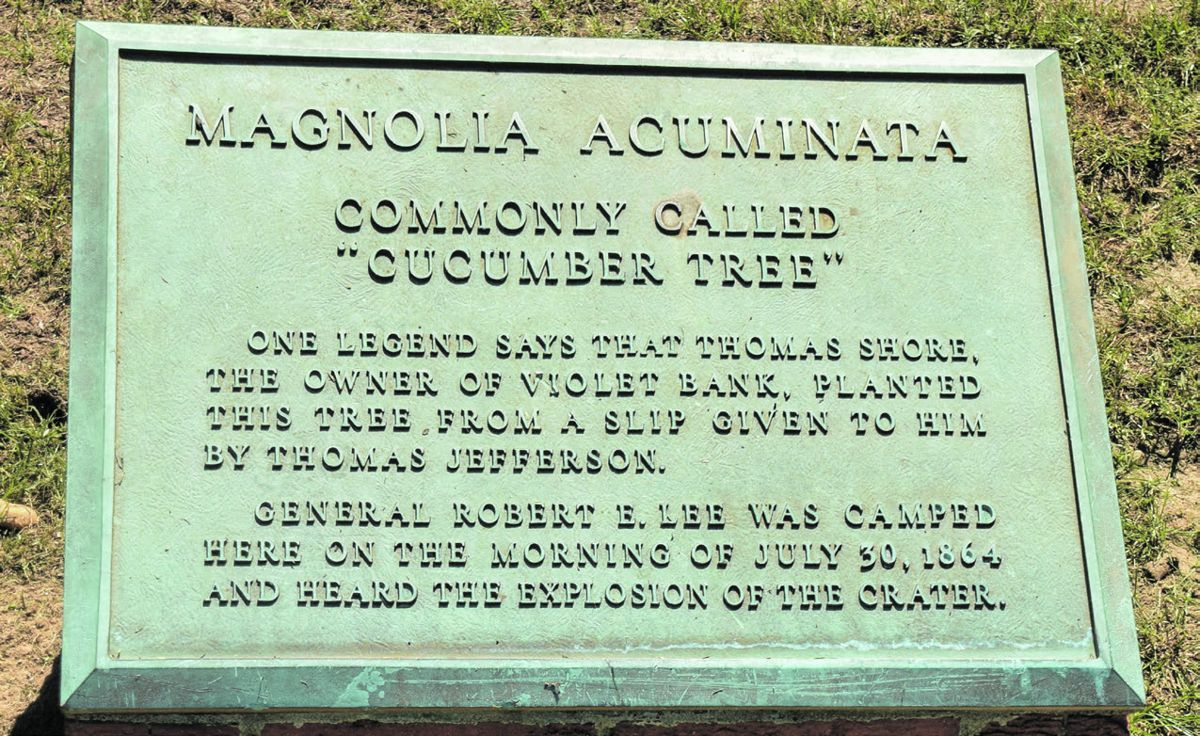
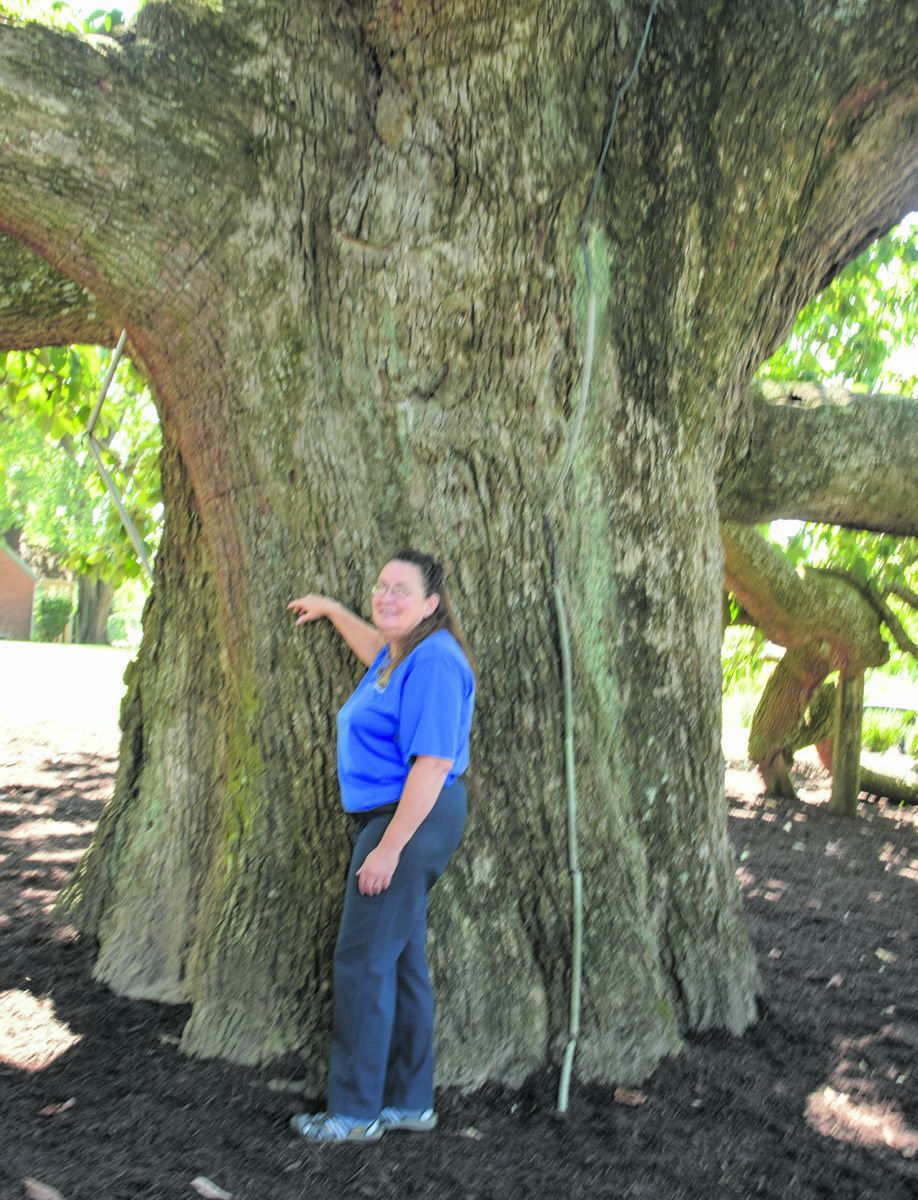
Jane Grey Wall Shore, widow of Thomas Shore, had Violet Bank rebuilt after it burned in 1810. spent a good percentage of his time at Chaffin’s Bluff, north of the James River. On October 28, 1864, General Lee moved his headquarters to another location in Petersburg. Following Lee’s evacuation of Petersburg on April 2-3, 1865, Union troops occupied Violet Bank briefly. While Lee used one of the parlors as his office, the family stayed in residence in the other wing of the house. Dr. John Gilliam and his wife, the granddaughter of Thomas Shore, continued to reside at Violet Bank. “Violet Bank was described as being in the Federal-style, but it was really unique architecturally,” said Alvis. “The design is attributed to Benjamin Latrobe. It’s in his style. The influence is there, but a direct connection has not been established.” The Gilliam family initially offered General Lee the entire house. He declined that offer. They asked if he would like to take rooms in the house so he wouldn’t have to sleep outside. He also declined that suggestion. “General Lee preferred to be among his men because he felt it kept morale and discipline up,” said Alvis. “He had his general’s tent outside, and he used the rooms above the basement as office space.” On the front lawn just beyond the porch, an ancient cucumber tree, a variety of magnolia, embraces the yard. “This tree is estimated to be in excess of 300 years old,” said Alvis. “Under this very tree, General Robert E. Lee arranged for church services to be held to benefit him and his men at Violet Bank.” Violet Bank was occupied by descendants of the Shore family until after the war. In the 1870’s it was sold and changed hands a number of times. Parcels of land were sold from the original acreage. The house and property ended up as a dairy farm. The long part of the house was converted to a dairy barn and the upstairs was used as a haymow. Hay was pulled down the staircase. “When it came time to divide the land up and develop it, they knocked the long part of the house down and sealed up where the two parts of the house came together,” said Alvis. “They sold this structure as a stand-alone house.”
Proposed Plan for Preservation and Restoration The first phase of the preservation-restoration project addresses water issues relative to the structure. Extensive water damage has occurred in the chimney stacks and the foundation due to the porosity of the ancient brick and mortar. Shoring-up and strengthening the load bearing chimneys is crucial because of their impact on the floor, roof, and the structure around them.
“They have to trench all the way around the building. They’re going to make sure this is stabilized and that water is no longer getting in,” said Alvis. “They’re going to point-up the mortar. This is the most important phase because without a strong foundation and the stabilized chimneys, there’s no point in doing the rest of it,” she said. “This has to stand another couple of hundred years.” In the second phase, issues with restoring and repairing the porches, support columns, roofing, and guttering will be resolved. Phases three and four overlap. Upgrading the plumbing, electrical, HVAC systems, and site beautification are all part of phase three. Recasting and restoring the ornamental interior moldings, repainting the exterior, and refinishing and reinstalling the shutters and hangers will be part of the work done during phase four. “There is some overlap between phases three and four,” said Alvis. “I can’t separate it completely. Some of it goes hand in hand.”
Post-Restoration Plans Curator Wendy Alvis has great plans for Violet Bank once the restoration has been completed. She has a variety of programs in mind, speaking engagements, art exhibits, and small living history events are among them. Architecturally, she compares the house to a beautiful old jewel. She warmly embraces the opportunity to showcase the architecture and history of the resurrected house. “The renovation is going to give the programs a chance to succeed and be well-attended by the public,” said Alvis. “I really want to show this place off when it gets finished. It’s going to be gorgeous.” Note: Violet Bank Museum is located at 303 Virginia Avenue in Colonial Heights, Va. It is open Tuesday-Saturday from 10 a.m.
until 5 p.m. and Sunday from 1 p.m. until 6 p.m. The museum is closed on Monday. For more information call 804-520-9395or visit www.colonialheightsva.gov Bob Ruegsegger is an American by birth and a Virginian. His assignments frequently take him to historic sites throughout Virginia, the Mid-Atlantic, and the Southeast. His favorite haunts include sites within Virginia’s Historic Triangle—Jamestown, Yorktown, and Williamsburg. Bob served briefly in the U.S. Navy. He is a retired educator and has been an active newspaper journalist for the last twenty years.
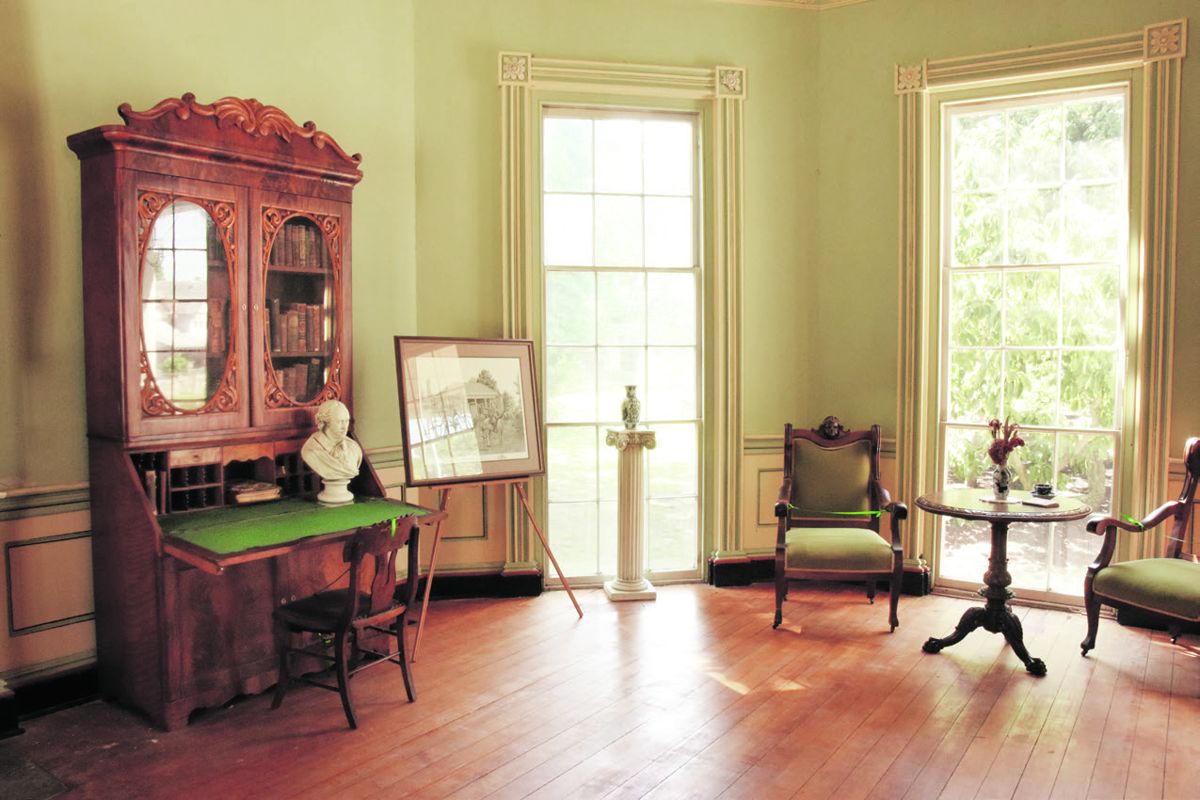
The Gentlemen’s Parlor served as Lee’s staff’s office space.
The Lee’s Headquarters highway marker S-27 on Route 301 indicates the location of Lee’s headquarters. The chimney stack bricks are preserved behind a thick coating of plaster.
Door corner block.
This ornamental plaster ceiling cornice is among the architectural features that make Violet Bank a beautiful “old jewel.”
General Lee slept in a tent while on the grounds of Violet Bank.
Lee’s Headquarters Stone at the intersection of Arlington Avenue and Route 301 marks the entrance to the housing development that grew up around Violet Bank.
Gatling Gun–Violet Bank’s galleries include weapons that range from Colt revolvers to a Gatling gun.