
Through The Lens
This Ball Is At An End (Battle of Chickasaw Bayou part 1)
By Stephanie Hagiwara · Originally published January 2020 · pp. 14–15
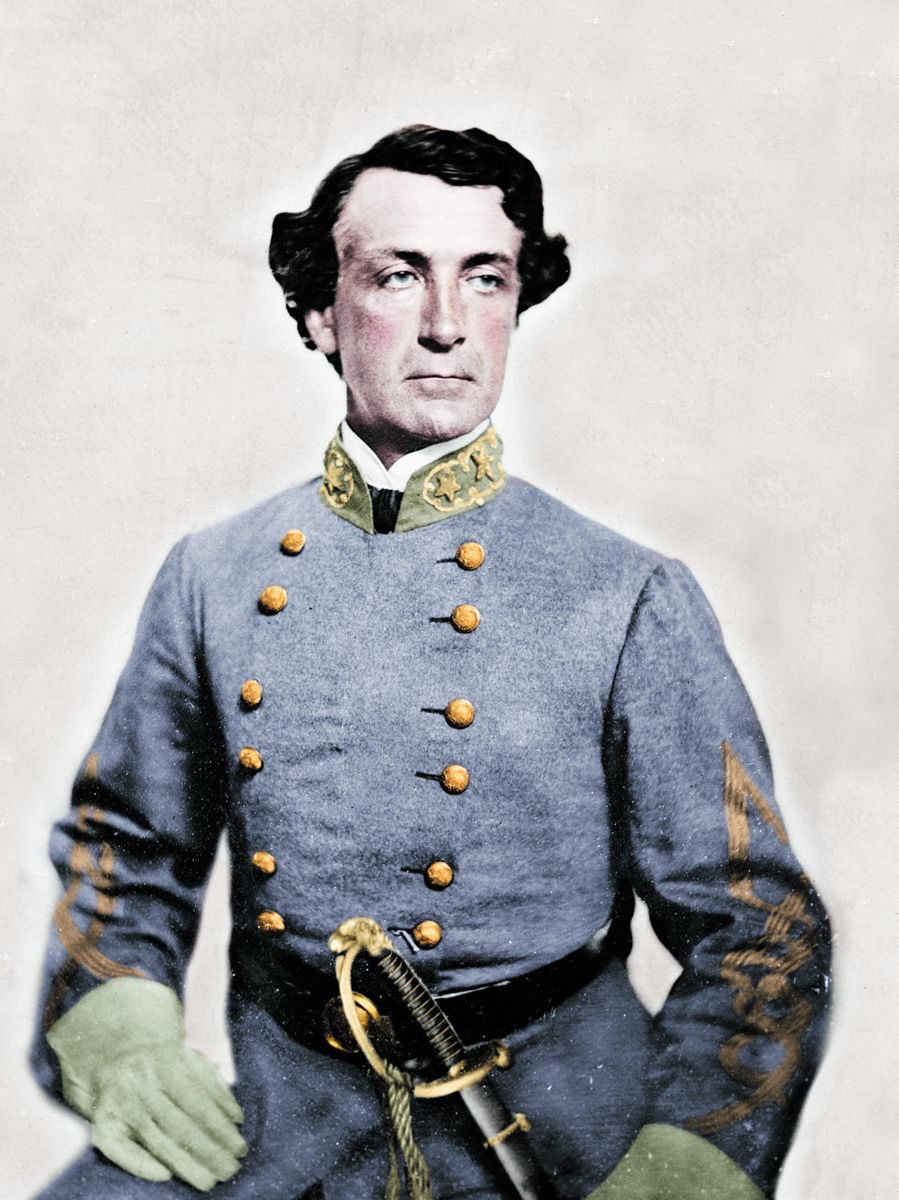
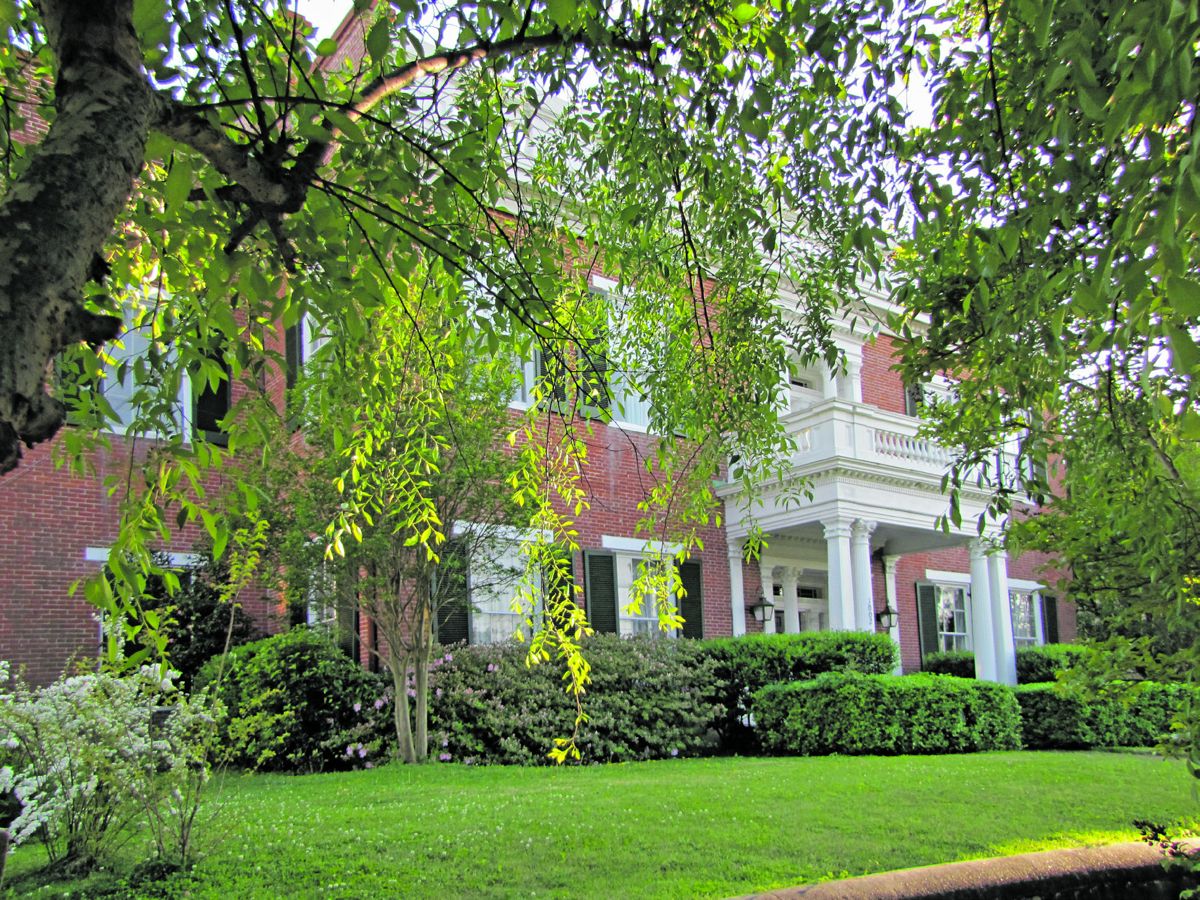
Better come out here, I hears a boat a coming. … I hears it say, choo, choo, pat, pat, pat.” – little negro girl On the evening of Dec. 24, 1862, telegraph operator C.S. Maj. L. L. Daniel was assigned to report boat movements on the Mississippi River, as part of the early warning system for defending Vicksburg, Miss., sixty-five miles downriver. The Federals were unaware of the existence of the private telegraph line of Horace B. Tibbots, a rich planter, twelve miles south of Lake Providence, La. About 8:45 p.m., alerted to the sounds of boats on the river, Daniel and his companion C.S. Maj. E. P. Earnhearst left their card game to go to the riverbank “… and waited perhaps thirty minutes. We could hear the panting and pat, pat; directly a monster turned the bend, two miles above us, and came slowly as if feeling the way. It was the gunboat. I was ready to send the news to you, [Fall] but no—‘hello Major here cames [sic] another,’ this in a whisper; just then some sparks flew out of the Major’s pipe, and I grabbed the pipe, extinguished the fire, telling him those * * * would fire a volley at the crack of a match. By now, the large black devil was abreast of us, in easy gun shot from our double barrels, but suicide to fire.” “It was a dark, cloudy night, cold and drizzly; just as soon as we were satisfied the last one was by, I jumped on my little bay filly and fairly flew to the little telegraph office, three miles back in the woods.” Daniel telegraphed C.S. Col. Phillip H. Fall at De Soto Point, La., across the river from Vicksburg. “Good God, Phil, eighty-one transports loaded with Yankees, and gun- boats galore, passing down the river, and many more behind moving on, … I can see lights as far as the eye can reach up the river.” It was after midnight when Fall received the wire. Understanding the urgency of the message, Fall, ignoring personal safety, delivered the message within a half hour. He rowed across the river against the high wind and choppy waters. Fall flashed his red signal light to alert the Vicksburg batteries so they would not fire at him, fearing the waves would extinguish his light. Landing, he rushed up to the hilltop home of Dr. William T. Balfour. Balfour was hosting a grand Christmas Eve ball at his mansion. The women were wearing beautiful gowns. The guests, including Confederate officers, were gliding in pairs over the dance floor. Muddy and disheveled, Fall “stopped in front of Gen. [Martin Luther] Smith, he scanned me critically and frowned with the exclamation, ‘Well sir, what do you want?’ I told him eightyone gun boats and transports had passed Lake Providence and were still passing. He turned very pale, and in a loud voice exclaimed, ‘This ball is hereby at an end. The enemy are coming down the river, all non-combatants must leave the city!’” Both Smith and Gen. John C. Pemberton, commander of the Dept. of Mississippi were Northern career soldiers who had married Southern women. The Confederates were aware that the Federals were determined to return the Mississippi River to its role as the main commerce thoroughfare for the Mid-West. Vicksburg, the “Gibraltar of the West”, located on a high bluff, on a bend in the Mississippi River was an obstacle. A military engineer, Smith designed Vicksburg’s defenses. At intervals for nearly 20 miles, guns lined the bluffs. On Dec. 19, as part of a morale boosting tour, Confederate President Jefferson Davis and Gen. Joseph E. Johnston, commander of the Dept. of the West inspected Vicksburg’s defenses. During the visit it became clear the three men had different strategies. Johnston felt, “Our great objective is to hold the Mississippi.” Davis believed that
(Library of Congress)
Balfour House.
(© 2010 Robert Berryman)
Panorama of the Vicksburg Battlefield ca. 1910. In the right center is the Illinois Memorial located on Union Avenue. This memorial was dedicated on Oct. 26, 1906.
Vicksburg is the nail head that holds the South’s two halves together.” He and Pemberton wanted to turn Vicksburg into a fortress, differing only on the size of the garrison. Johnston advised a “concentration of forces” and fighting the enemy where they were found. He envisioned a fort with a small garrison. Instead, he found, “an immense intrenched camp, requiring an army to hold it.” Furthermore, all positions were scattered on the high ground “to prevent the bombardment of town, instead of close to the navigation of the river to the enemy,” to enable the batteries to concentrate fire during a naval attack. Davis responded by wiring the War Department of the “immediate and urgent necessity for heavy guns and long-range fieldpieces at Vicksburg.” On Christmas day, Smith ordered his men to their positions. The Confederates had already determined five spots the Federals most likely would cross the bayou to reach Vicksburg and sent for reinforcements. Daniel spread the alert, wiring Gen. Edmund Kirby-Smith and others. Between the natural and man-made defenses, the Federals faced a formidable fight. Instead of attacking Vicksburg’s high bluffs from the water, Gen. William Sherman’s plan was to land at Chickasaw Bayou and work his way towards Walnut Hills, north of the town. On Dec. 24, Sherman’s army loaded on seven gunboats and 59 troop transports arrived at Milliken’s Bend, La. Sherman sent out Gen. Stephen G. Burbidge’s Brigade to cut down telegraph poles and destroy the Vicksburg & Shreveport railroad bridges. Daniel was captured and held for months. The Federals, in retaliation for
Confederates firing on their boats, would leave Milliken’s Bend in flames. The Battle of Chickasaw Bayou, Dec. 26–29, the first battle of the Vicksburg Campaign, began with the Federals landing at Johnson’s plantation, opposite Steele’s Bayou. The Federals outnumbered their foe two to one (30,720 to 13,792). Sherman, who considered surprise instrumental to his attack, did not realize his arrival was already known. •
•
•
Sources:
Foote, Shelby. The Civil War: A Narrative: Fredricksburg to Meridan: Vintage Books, 1963 Lee, Stephen D. “Details of Important Work by Two Confederate Telegraph
Operators, Christmas Eve, 1862, Which Prevented the Almost Complete Surprise of the Confederate Army at Vicksburg”, The Mississippi Historical Society, Vol. VIII, Oxford, Mississippi, 1904 Taylor, William D. A Fit Representation of Pandemonium: East Tennessee Confederate Soldiers in the Campaign for Vicksburg:
Mercer University Press, April 30, 2007 Stephanie Hagiwara is the editor for Civil War in Color.com and Civil War in 3D.com. She also writes a column for History in Full Color. com that covers stories of photographs of historical interest from the 1850’s to the present. Her articles can be found on Facebook, Tumblr and Pinterest.