
Critic's Corner
Reminiscences of Fort Sumter and Moultrie in 1860-’61
By Stephen Davis · Originally published January 2020 · p. 40
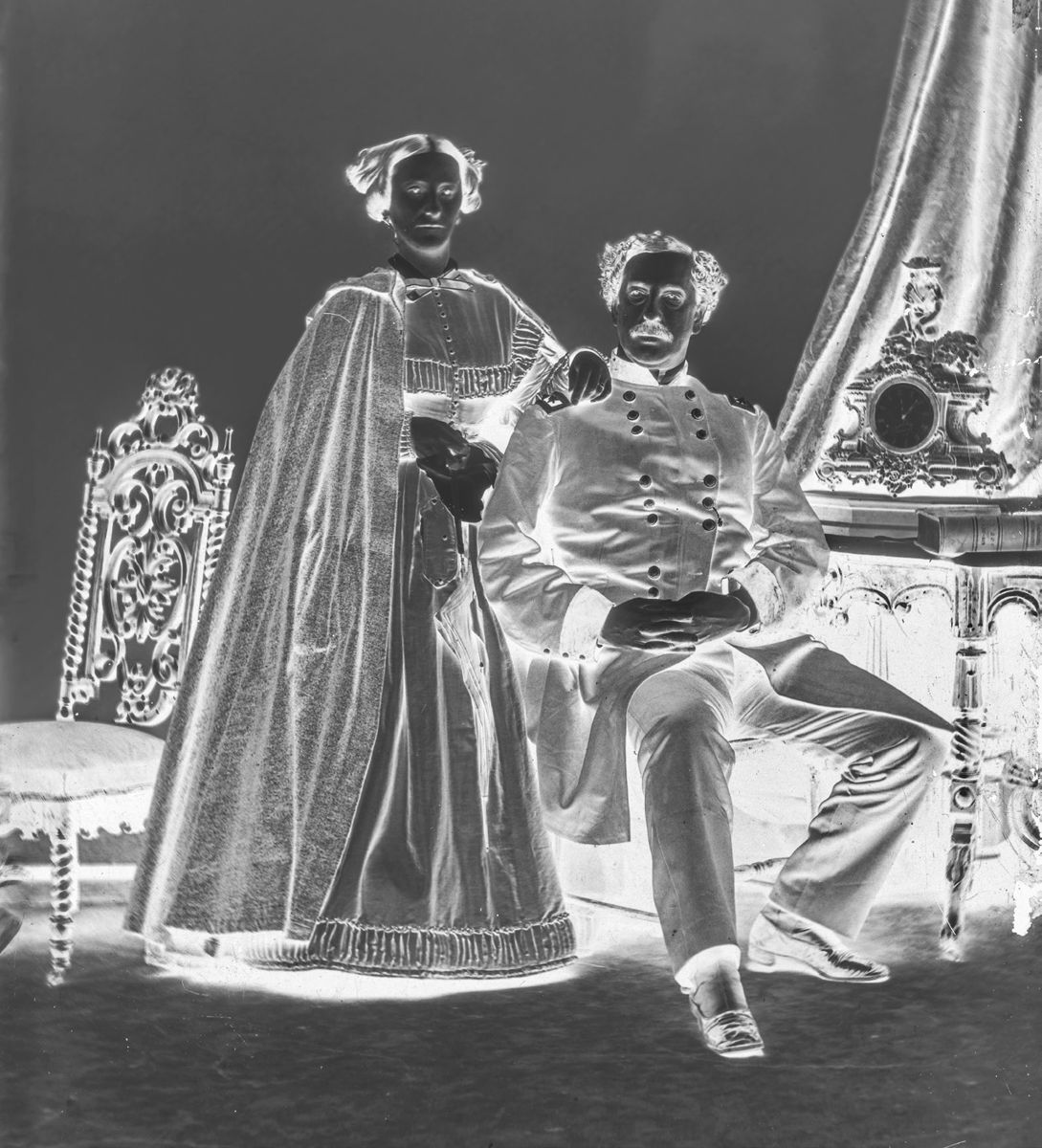
Reminiscences of Fort Sumter and Moultrie in 1860-’61 By Abner Doubleday (1876) The summer of 1860 found me stationed at the head-quarters of the First United States Artillery at Fort Moultrie, South Carolina. I was captain of Company E, and second in command to Brevet Colonel John L. Gardner, who was lieutenant-colonel of the regiment. The regimental band and Captain Truman Seymour’s company (H) also formed part of the garrison. The other forts were unoccupied, except by the ordnance-sergeants in charge.
Thus begins Union general Abner Doubleday’s memoir, Reminiscences of Forts Sumter and Moultrie in 1860-’61 (New York, 1876; reprint, Nautical & Aviation Publishing Company of America, 1998). For the latter reprint, my friend in Charleston, Rick Hatcher, then Historian at the Fort Sumter National Monument, wrote the Introduction. He notes that Doubleday’s book was also reprinted in 1976, which signals why I chose it for this month’s column. Because we know what’s going to happen at Fort Sumter, and Doubleday knows that we know, a valuable element of his memoir is its background for the start of the war, events of 1860-61. And because I know that you also know what’s going to happen at Sumter, I’m going to focus on the first part of this charming little book. In the summer of 1860, “Charleston, at this period, was far from being a pleasant place for a loyal man.” “As early as July there was much talk of secession,” Doubleday wrote, yet he noted that Secretary of War John B. Floyd, a Virginian, sent 17,000 muskets to South Carolina. “By the middle of August the country people began to be quite violent in their language.” As the presidential election neared, “the disunionists became more bitter.” About this time a poor seamstress from New York was jailed in the city simply for saying that she opposed slavery. “Independent companies and minute men were everywhere forming,” the author observes. When a party from Moultrie’s garrison attempted to slip across the water to procure ammunition from the Charleston Arsenal, a mob stopped them. Days before the November election, Doubleday was in Fort Moultrie when he saw that “crowds of excited countrymen, wearing secession cockades…formed in procession and marched around it,” to show their martial ardor and perhaps intimidate the garrison. But they did not kick up a fight. The presidential election took place on Tuesday, November 6. Doubleday had learned that he was the only one of Moultrie’s seven officers supporting Lincoln; others may have favored the Northern Democrat, Douglas, or even the Southerner, John C. Breckinridge. Lt Col. John Gardner, garrison commander, was himself “in politics… quite Southern,” Doubleday commented. When news reached Charleston of Lincoln’s election the day afterward, excited secessionists marched in the streets shouting “Hurrah for Lincoln!” “By the 9th of November the whole state was swarming with minute men,” Doubleday recalled. The judge of the U.S. District Court, then in session in Charleston, showed his sentiments by resigning. In Columbia the legislature set the date for a secession convention. Next door, in Georgia, Gov. Joseph E. Brown did, too; the state legislature voted a million dollars to raise troops. Thus, as Doubleday states, “the excitement in each state constantly reacted on the other.” Fort Moultrie’s garrison at the time numbered sixty-eight officers and men, plus thirteen musicians. Fort Sumter, out in the harbor about a mile west of Moultrie, was held by all of one man, an ordnance-sergeant, who lived on the man-made island with his wife and two young children. Castle Pinckney, on a low island three-quarters of a mile east of the city, also had its ordnance sergeant. War Secretary Floyd had ordered workmen sent to Charleston Harbor to strengthen the three fortified places – Moultrie, Sumter, and Pinckney. A suspicious Abner Doubleday thought that Floyd was improving fortifications just before South Carolinians would seize them. When Doubleday learned that the Secretary of War had appropriated $150,000 to repair Fort Moultrie and another $80,000 to finish Sumter, he formed the opinion that this “was simply an expenditure of public money for the benefit of the Secessionists.” “Forts constructed in an enemy’s country, and left unguarded,” he acidly observed, “are built for the enemy.” One hundred and fifty brick masons from Baltimore arrived in early November to work on Fort Sumter. One officer at Moultrie suggested obtaining muskets from the arsenal to arm the masons to help them guard the gunpowder being stored at Sumter and also other property at Pinckney, but Floyd overruled the order. At the same time he dispatched two thousand more muskets to South Carolina. “This did not look much as if the Administration intended to sustain us,” Doubleday writes with understated sarcasm; “the honorable secretary was thus supplying our enemies with arms, and leaving the United States Arsenal, full of military stores, without a guard.” Floyd did send an officer (Maj. Fitz John Porter) to Charleston to inspect things. After Porter recommended that Lieutenant Colonel Gardner be relieved (he was so old, he had fought in the War of 1812), Porter recommended Maj. Robert Anderson as his successor. Anderson arrived on November 21. By then Doubleday had concluded that “the General Government seemed quietly to have deserted us.” An example of Abner Doubleday’s subtle wit is this, having to do with South Carolina’s Ordinance of Secession, which was signed in Charleston: “immediately afterward there was great competition for the possession of the immortal pen with which the instrument was signed. At the close of the war, I heard it was for sale at very low figure.” After secession, an outspoken Unionist in the city visited Moultrie to express his sorrow and regret. When asked if he favored the state’s secession, Doubleday recorded his reply: “I should think not! South Carolina is too small for a republic, and too large for a lunatic asylum!” Among Major Anderson’s officers there was talk about removing the garrison from Fort Moultrie to Fort Sumter. Anderson gradually came around to the idea, given Moultrie’s vulnerability to land The secession of South Carolina found him stationed at Fort Moultrie on Sullivan’s Island, second-in-command to Maj. Robert Anderson. The day after Christmas 1860, Robert Anderson moved his garrison quietly across the harbor to Fort Sumter. Captain Doubleday, as married officers at army posts usually did, had his wife Mary with him. After the withdrawal to Sumter, Mary with other officers’ wives found lodging in the city. Or tried to. Mrs. Doubleday was told by a boarding-house keeper, as Abner relates in his Reminiscences of Forts Sumter and Moultrie in 1860–’61 (1876), “that, as the house depended on the patronage of the Southern people for support, she (the landlady) could not undertake to harbor the wives of Federal officers.” Mary Doubleday took the hint. On January 8, 1861, she and other Northern officers’ wives left Charleston, northward-bound.
attack. While trying to keep the inter-fort transfer secret from the men, Anderson arranged for three schooners and some barges to be loaded with supplies; Doubleday inferred that the garrison was in for “a prolonged residence in Fort Sumter.” The move order came suddenly. Doubleday recalled dinner with his fellow officers on the evening of December 26, when in strode the major: “I have determined to evacuate this post immediately, for the purpose of occupying Fort Sumter; I can only allow you twenty minutes to form your company and be in readiness to start.” As I said, you know the rest of the story…. Steve Davis and Jack Melton’s new book is 100 Significant Civil War Photographs: Charleston in the War. In it we note that Abner Doubleday’s wife, Mary, sailed north on Jan. 8, 1861, when things were getting testy in Charleston Harbor.