
This And That
Perspectives on Antietam Phase Two – The Sunken Road
By Gould Hagler · Originally published January 2020 · pp. 26–27
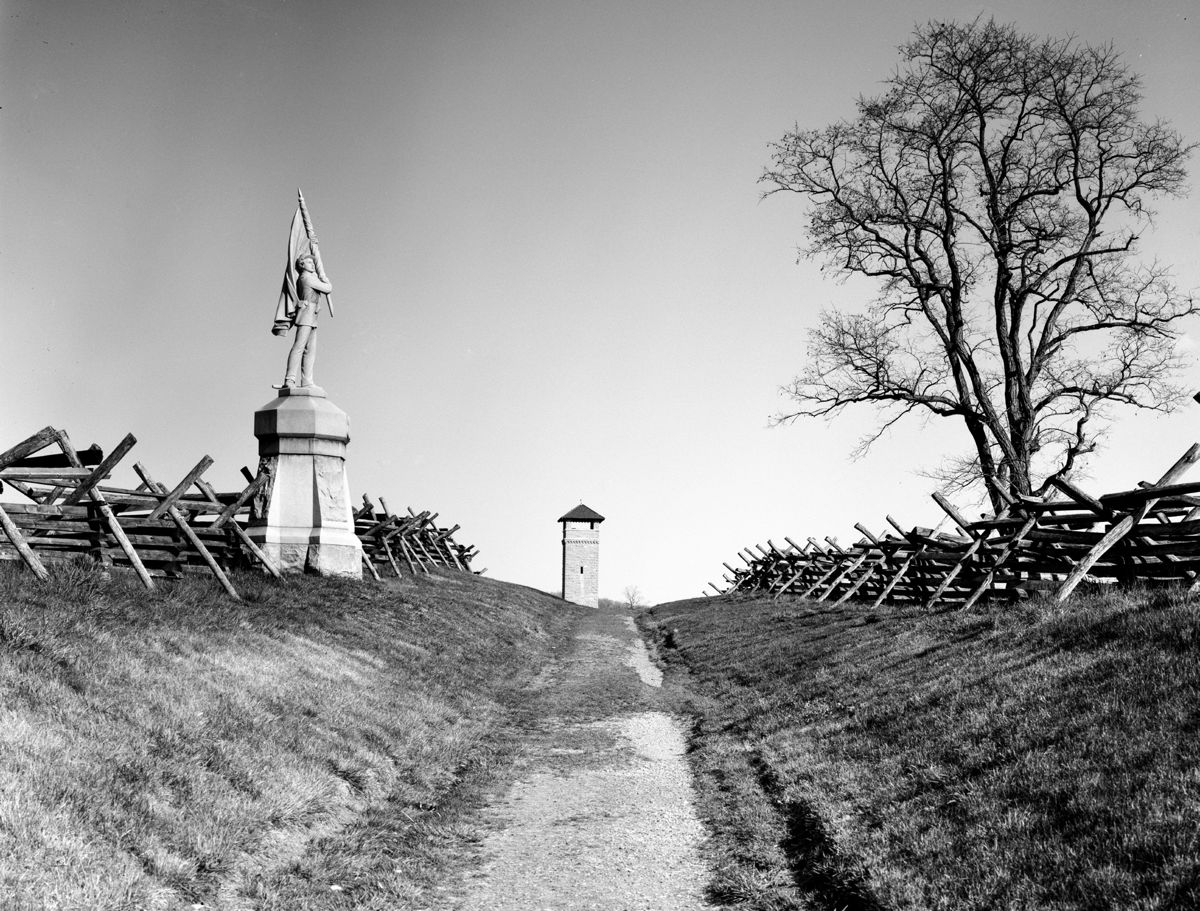
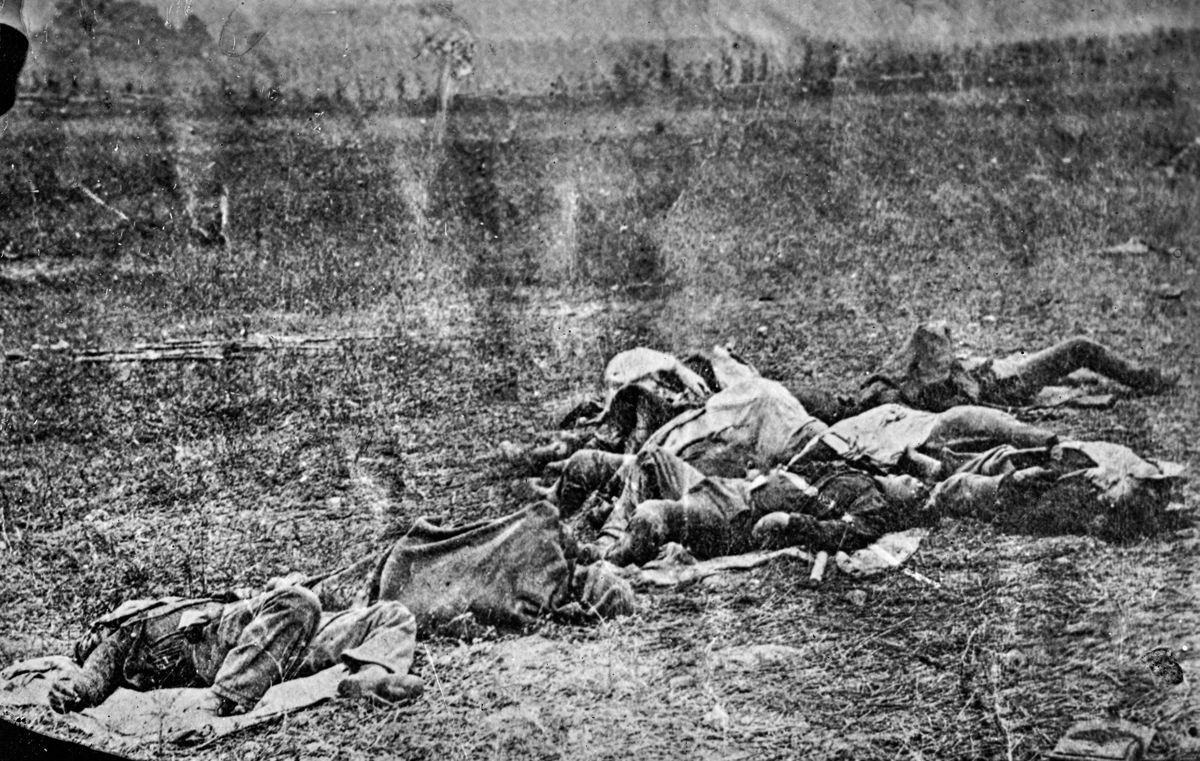
Last time we reviewed the accounts of two Federal officers who described their actions and observations in the first phase of the Battle of Antietam in the fields and woods at the north end of the line. We now leave this part of the battlefield, and the men who fought to exhaustion there, and move to the center, the sunken road made famous by the bloody struggle that marked the battle`s next phase. Col. John Andrews led his Delaware regiment in this sector and took command of Brig. Gen. Max Weber’s Brigade when Weber was wounded. In his report Andrews described the brigade’s attack on the Confederates’ position and the terrain over which the attack occurred. “Having advanced steadily through woods and corn-fields…, we met the enemy in two lines of battle, posted in a road or ravine 4 feet below the surface of the adjoining field, with a third line in a corn-field in the rear, the ground gradually rising so that they were able to fire over the heads of those in the ravine; our right was also exposed to the sudden and
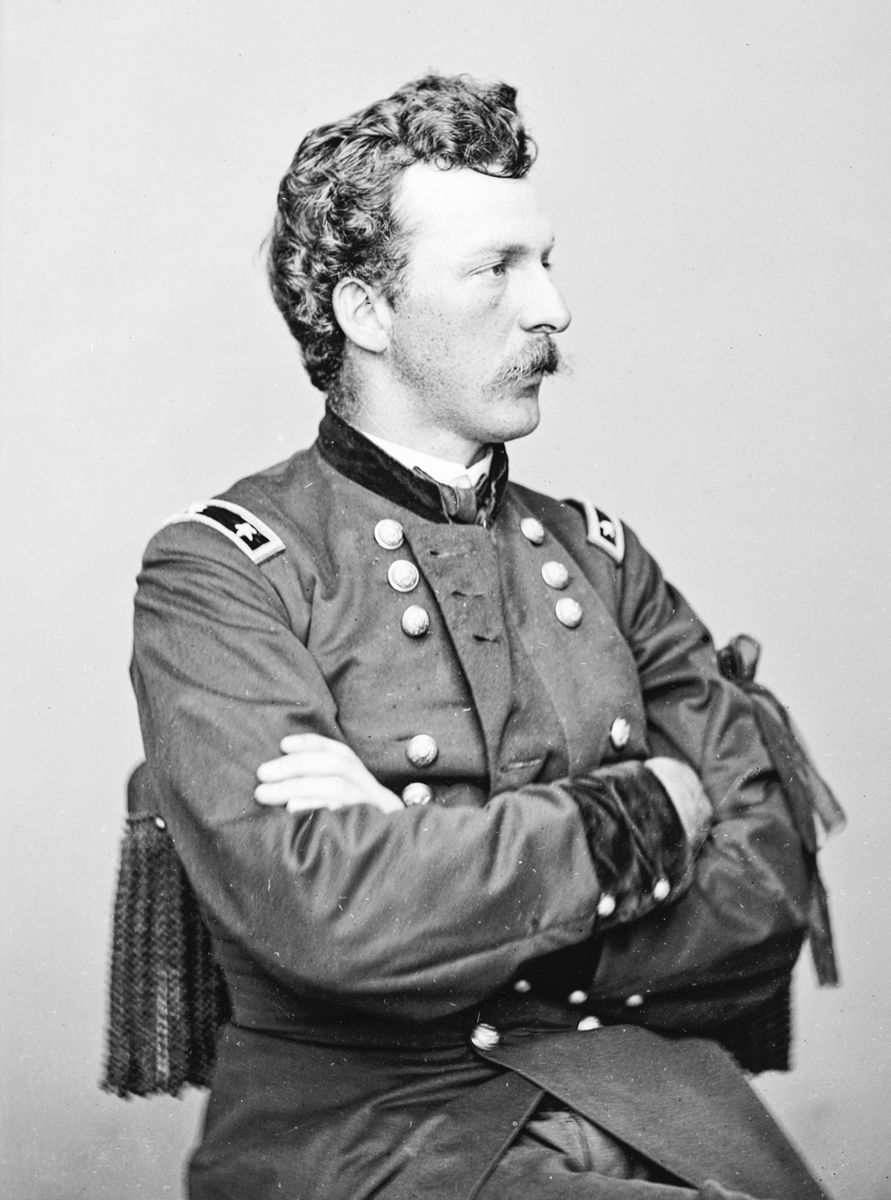
Maj. Gen. Francis Channing Barlow terrible fire from the troops who succeeded in breaking the center division of the line of battle. We were at this time about 20 paces off the enemy, and returned their fire for some time with much coolness and effect.” We also learn from this report what can happen when inexperienced troops go into battle. “A charge was then ordered and attempted, but our second line, composed of new levies, instead of supporting our advance, fired into our rear. We had now lost one-third of our men, and 8 officers commanding companies were either killed or wounded. Under these circumstances we fell back gradually to a stronger position until relieved by our third line composed of veterans under General Kimball. This was our first battle….” Brig. Gen. Nathan Kimball reported on his brigade’s attack. “Directly on my front, in a narrow road running parallel with my line, and, being washed by water, forming a natural rifle-pit, between my line and a large cornfield, I found the enemy in great force, as also in the corn-field in rear of the ditch.” Kimball’s brigade advanced
Brig. Gen. Nathan Kimball and “a murderous fire was opened upon it from the entire force in front. My advance farther was checked, and for three hours and thirty minutes the battle raged incessantly, without either party giving way.” The Confederates tried unsuccessfully to turn Kimball’s left, then “made a heavy charge upon my center, thinking to breach my line, but… was repulsed with great slaughter.” Kimball then charged, “driving the enemy entirely from the ditches &c., and some distance into the corn-field beyond. In this charge my command captured about 300 prisoners, the enemy in his flight leaving behind several stand of colors….”It seems that Kimball’s men were busy pursuing the enemy and did not stop to pick up these flags. The colors were “were taken by some parties outside my brigade….” Kimball’s report praised these men who fought while others gathered abandoned flags. “For four hours and a half my command was under the most galling fire, and not a man faltered or left the ranks until the field was left by the rebels in our possession, those who were sent with the wounded to the rear quickly returning to their places in line. For three and a half hours of this time we were upon the field, and maintained our position without any support whatever. My men having exhausted all their ammunition, the fight was maintained for some time with the supplies stripped from the bodies of their dead and wounded comrades.” To complete our look at this phase of the battle, we turn to Col. Francis Barlow, who commanded two New York regiments. The fighting in this sector began at about 9:30. Within an hour, reinforcements arrived on both sides. Some Confederates had been dislodged from their strong defensive position but others, as Barlow stated, “remained lying in a deep road, well-protected from fire in their front.” Barlow, though he had only 350 men total in both regiments, took advantage of a feature of the terrain to gain the upper hand. “Our position giving us peculiar advantages for attacking in flank this part of the enemy’s line, my regiments advanced and obtained an enfilading fire upon the enemy in the aforesaid road. Seeing the uselessness of further resistance, the enemy, in accordance with our demands, threw down their arms, came in large numbers, and surrendered. Upward of 300 prisoners thus taken by my regiments were sent to the rear….” As Barlow’s biographer wrote, Barlow’s regiments “struck the Confederates on their extreme right where the road was shallowest. What had been a formidable defensive position now became a death trap as the Yankee musketry spat vengeance on the Southerners who had torn apart the previous assaults.”
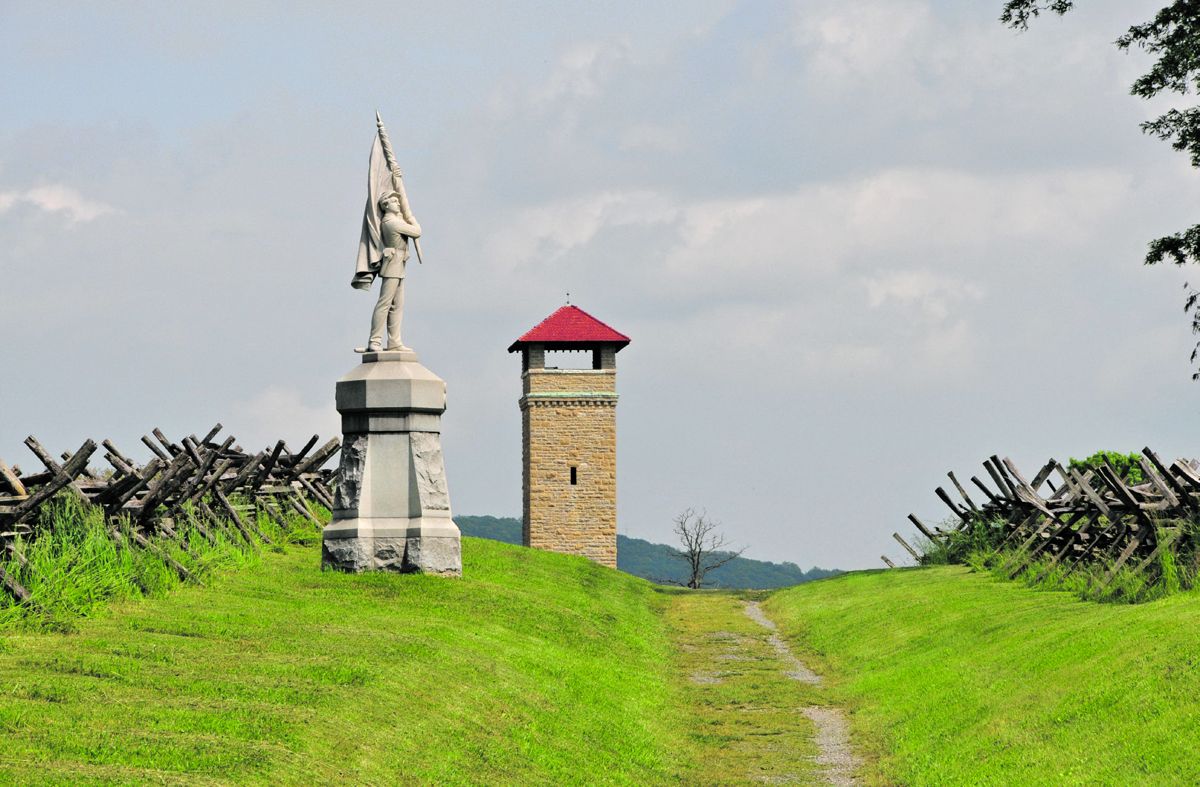
The Confederates had lost their strong point in the road, but the fighting in this sector was not over. Barlow’s regiments, “with the rest of our line, advanced into the corn-field through which the enemy had fled, beyond the deep road….” However, they and the other Union regiments faced desperate counterattacks. Barlow changed front once to counter Confederates coming from his right. He changed front again to face Confederates coming from another direction. At this point the colonel was wounded and turned command over the Lt. Col. Nelson Miles. The counterattacking Confederates were not numerous, but, supported by artillery, they succeeded in slowing the Federal advance. At this point the division commander, Maj. Gen. Israel Richardson, also fell wounded, his being a mortal one. Many company officers and hundreds of men had fallen as well along with higher leaders. The Federal push against the Confederates in this sector slowed and stopped. The carnage in the center ended about 1 p.m. Miles reported that after Barlow fell, he “was ordered to let the skirmishers remain and form in the open field…, which position we held until relieved.” The command of two depleted regiments then withdrew and “was not engaged again during the day.” In the center, as on the Federal right earlier in the day, casualties were heavy, with many hundreds falling on each side. The Confederates bent under the force of the Federal assaults, but ultimately held. In both sectors the opposing forces stood like two boxers who had hammered each other round after round. There was yet no winner and no loser. They stood staring at each other’s bloody and swollen faces, both holding their arms as if ready to punch some more, but both too weary to swing with any force. So the battle shifted to the southern end of the line, where the Federals’ task was to cross the creek and move against the thinly held Confederate position on the heights above. Next month we will examine this final phase of the battle from the perspective of Federal officers who led men on the Union left. •
Sources and further reading:
Official Records, Ser. I, Vol. XIX, Pt. I, Reports of Col. John Andrews, Col. Francis Barlow,
•
Brig. Gen. Nathan Kimball and Lt. Col. Nelson Miles. Richard F. Welch, The Boy General: The Life and Careers of Francis Channing Barlow, The Kent State University Press, 2003.
Gould Hagler is a retired lobbyist living in Dunwoody, Ga. He is a past president of the Atlanta Civil War Round Table and the author Georgia’s Confederate Monuments: In Honor of a Fallen Nation, published by Mercer University Press in 2014. Hagler speaks frequently on this topic and others related to different aspects of the Civil War and has been a regular contributor to CWN since 2016. He can be reached at [email protected].