
Lincoln Forum Has Largest Attendance And Most First-Timers Ever
By Leon Reed · Originally published January 2020 · pp. 6–7
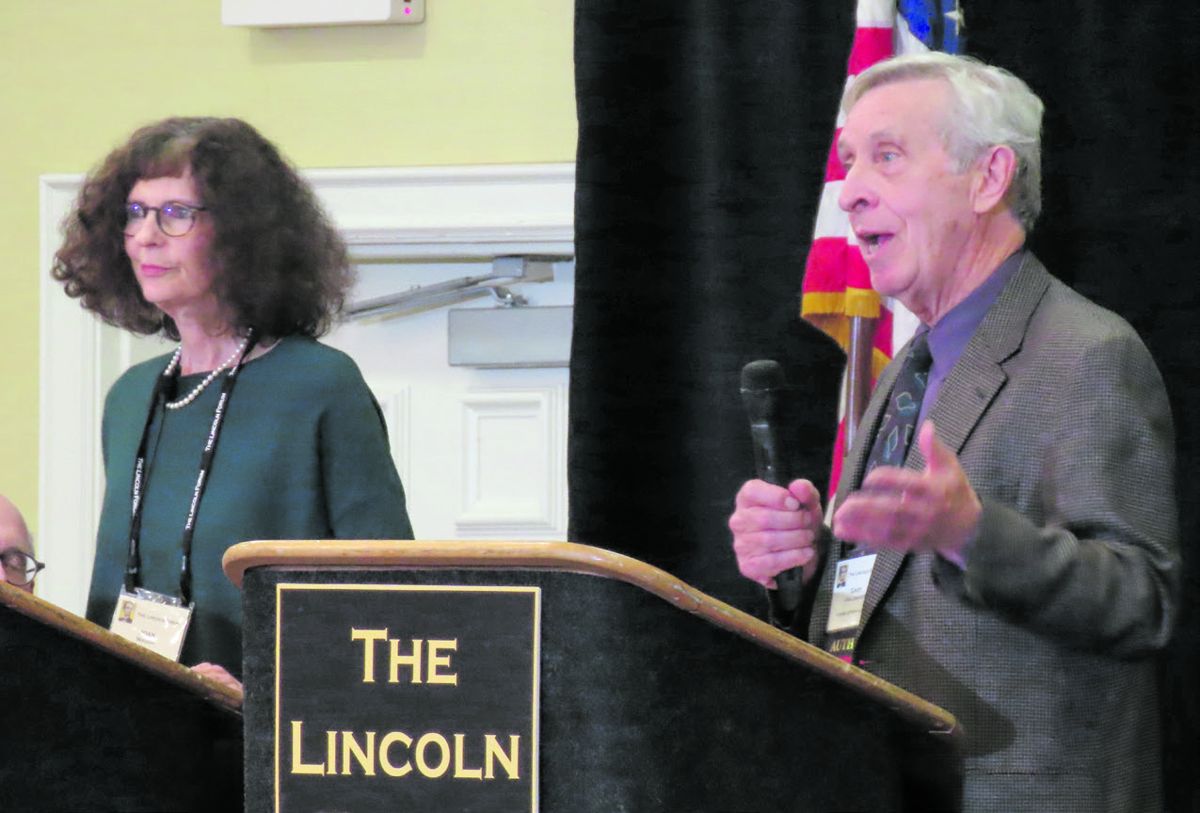
Over 350 Lincoln scholars and enthusiasts gathered from November 16-18 at Gettysburg’s Wyndham Hotel for the 24th annual Lincoln Forum Symposium. It was the best-attended Lincoln Forum meeting ever, with more than 50 first time attendees. A lengthy list of presenters addressed topics as diverse as causes
Forum Chair Harold Holzer opens the Symposium.
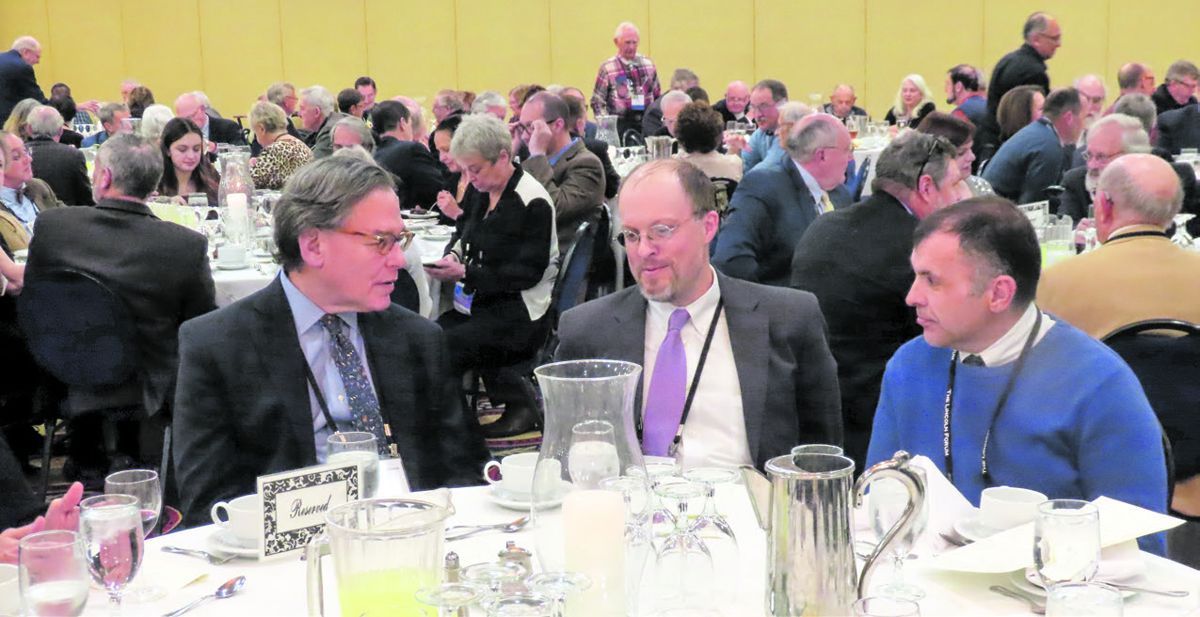
Presidential biographer Michael Beschloss. of the Civil War, the 1860 and 1864 elections, and the Civil War navies. Specific examinations of Lincoln included presentations on Lincoln and Union soldiers, Lincoln and the Constitution, and Lincoln’s experiences with death. Present and forward-looking topics included panel discussions on Confederate monuments and the status of the study of Civil War military history. Lincoln biographer Sidney Blumenthal received the first annual Lincoln Forum book award and presidential biographer and TV commentator Michael Beschloss was given the Richard Nelson Current Award of Achievement. To encourage teaching and learning, the Forum also presented scholarships to students and teachers. Causes of the War. Many speakers discussed causes of the Civil War. UCLA professor Joan Waugh noted a New York Tribune article that said the United States had become “one nation but two peoples.” She agreed that the Civil War was “an irrepressible conflict” in the words of William Seward’s speech. But UVA professor emeritus Gary Gallagher disagreed that it was inevitable. The North had had “long experience of Southern threats that never came to fruition” and easily could have misjudged the likelihood of secession and Civil War. Even President Buchanan commented that the South had “so often cried wolf” that it was hard to make people believe it. While concern that Republicans would take action to end slavery was the underlying concern of Southerners, Gallagher pointed out that “Lincoln’s election provoked only 7 states to secede.” The precipitating event for the final secession crisis was the Northern reaction to the attack on Fort Sumter and Lincoln’s call for troop to suppress the rebellion. Waugh commented that “nobody at the time of Lincoln’s call for troops knew what lay ahead; but everyone knew that a threshold had been crossed.” Soldiers. Many people discussed the common soldier in the Civil War. Gettysburg College professor Peter Carmichael commented that historians are fortunate to have “oceanic amounts of material,” including letters, diaries, and other records, but he expressed concern that “if a scholar searches long enough,” some document can be found to “buttress every argument.” He advocated a “case study” approach and made an extended presentation on the two way correspondence between Civil War soldier William Standard and his wife, Jane. UVA professor Elizabeth Varon explained that the prevalent “slave power” conspiracy theory led many northerners to believe that a small band of conspirators had duped the majority of southerners into supporting secession even though it was against the
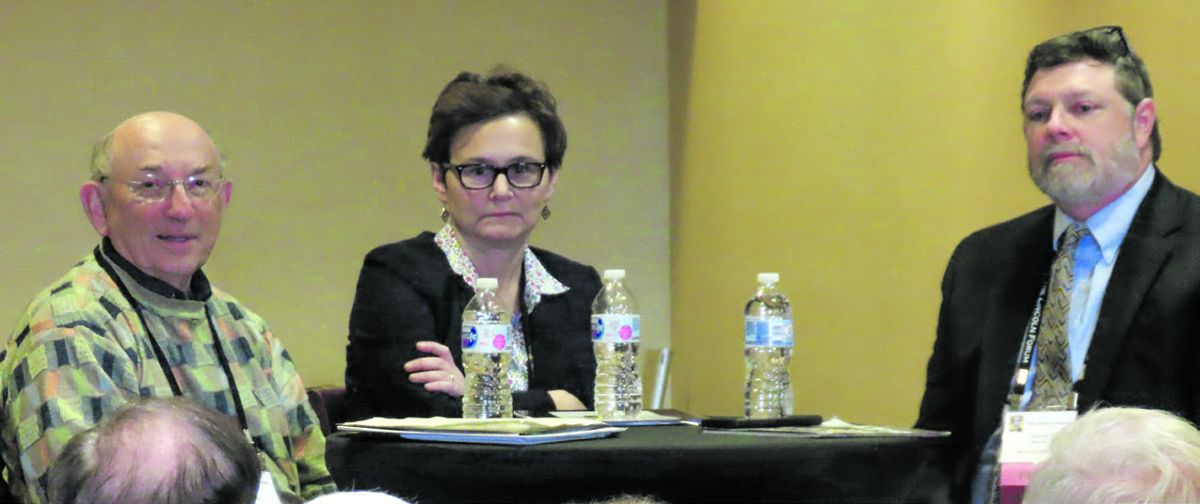
Gettysburg College professor Peter S. Carmichael.
majority’s interests. Many northerners, including many soldiers in Lincoln’s army at the start of the war, believed that they were fighting a war for deliverance “to save the southern people from their leaders.” She commented that there was “a widespread belief that we can save the South despite widespread evidence that they did not want to be saved.” She concluded that it is “clear in hindsight that Lincoln and his allies significantly over-estimated the Unionist support in the South.” Lincoln’s political leadership. Many speakers addressed Lincoln’s leadership style. Speaking on “Why Lincoln Still Matters,” Howard University professor Edna Greene Medford asserted that Lincoln recognized the importance of the new territories as an outlet for the growing numbers of poor white laborers, quoting Lincoln as saying “the slave states are places for poor people to remove from, not move to … The nation needs these territories.” As a result of this belief, Lincoln was unyielding during the campaign and secession crisis on the issue of extending slavery into the territories. Yet, in a discussion of Lincoln and the Constitution, Anderson University professor Brian Dirck and Lincoln Forum vice chair Jonathan White observed that Lincoln’s opposition to the Dred Scott decision was almost entirely a legal response. He didn’t advocate any resistance and instead suggested that the solution was to win elections, appoint more amenable Supreme Court justices, and bring a new case. Greene Medford also pointed out that the period of Lincoln’s presidency was a period of significant legislative achievement, including adoption of the Homestead Act, “which provided an opportunity for land ownership for people who would never have had the chance otherwise,” and the Morrill Act, “which gave many people access to higher education.” The final night, presidential historian and TV commentator Michael Beschloss contrasted
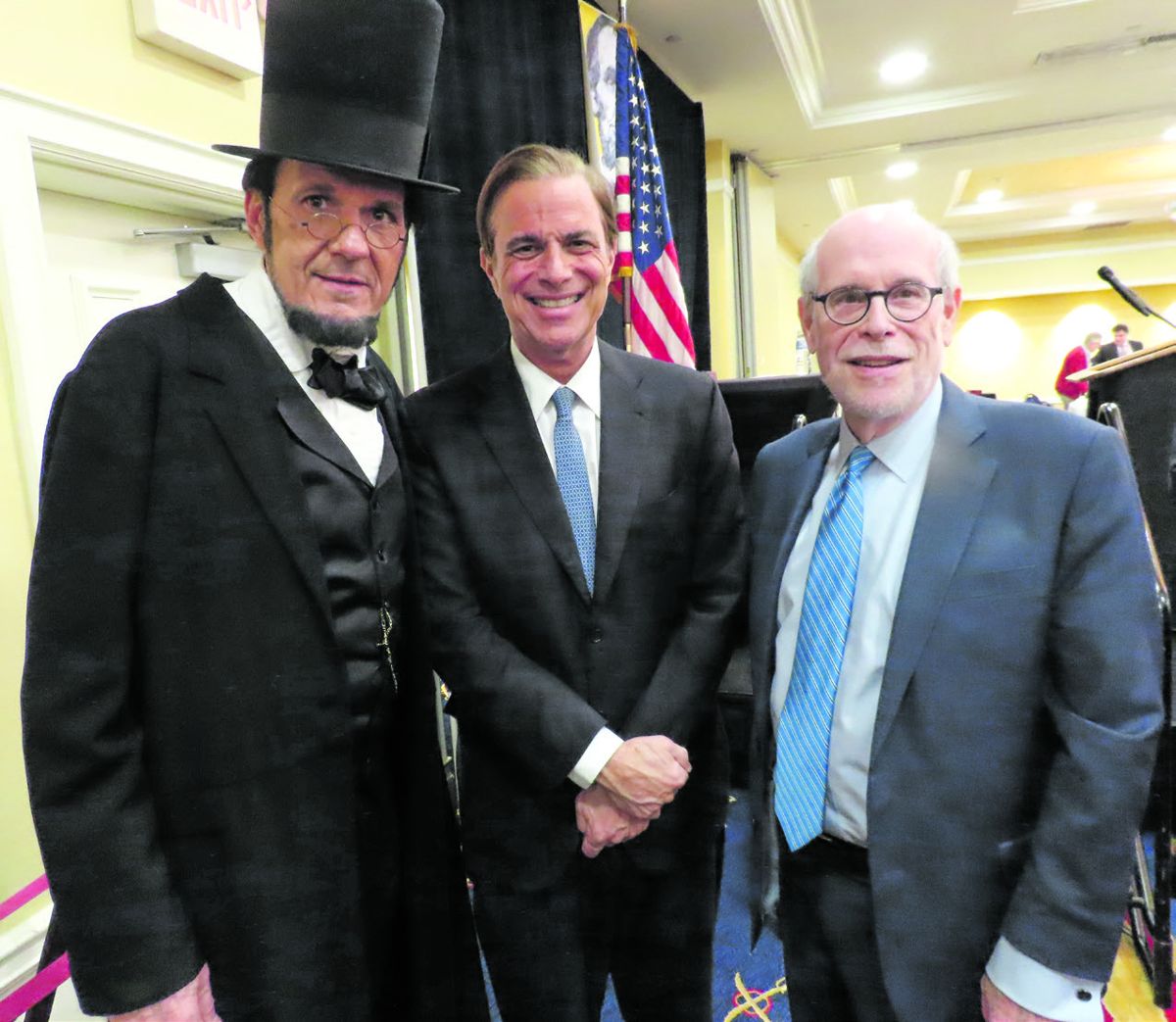
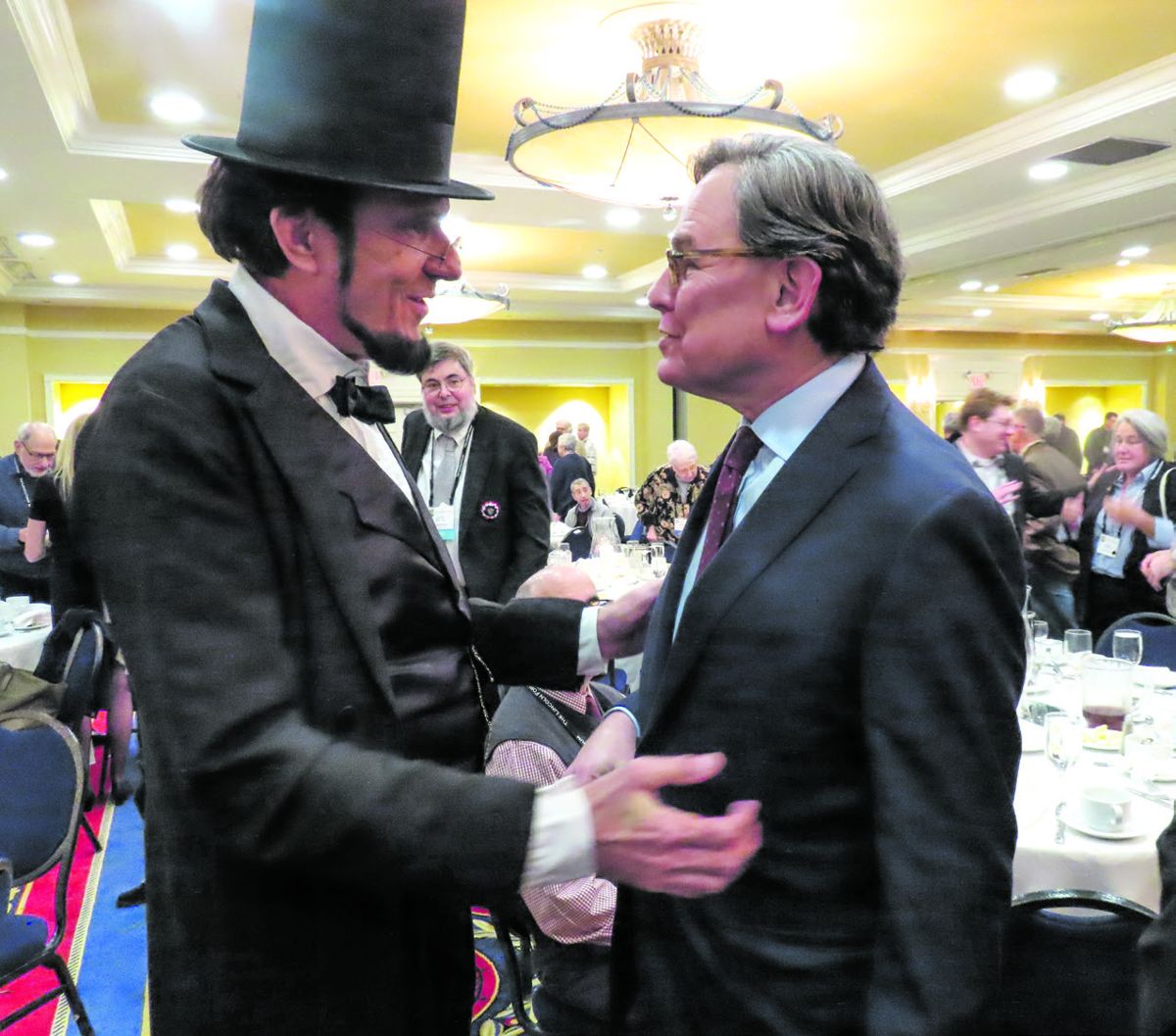
Lincoln reenactor George Buss reads a condolence letter written by President Lincoln.
Edna Greene Medford President Lincoln’s wartime leadership with other wartime presidents such as James Madison (1812), James K. Polk (Mexican), William McKinley (Spanish), Woodrow Wilson (World War I), FDR (World War II), Harry Truman (Korea), and LBJ (Vietnam). Beschloss criticized many wartime presidents for lack of frankness with the American people and for bringing the U.S. into war on false pretenses. He concluded that “I have studied all eight (wartime presidents) closely and none comes close to Lincoln.” Military history in the present day. A panel of Grant historian John F. Marszalek, historian Elizabeth Varon, and Civil War Times editor Dana Shoaf considered the present-day status of military history. Their presentation stimulated a lively dialogue with the attendees. Professor Varon concluded that scholarship is undergoing a Golden Age, with innovative new interpretations across the entire breadth of the
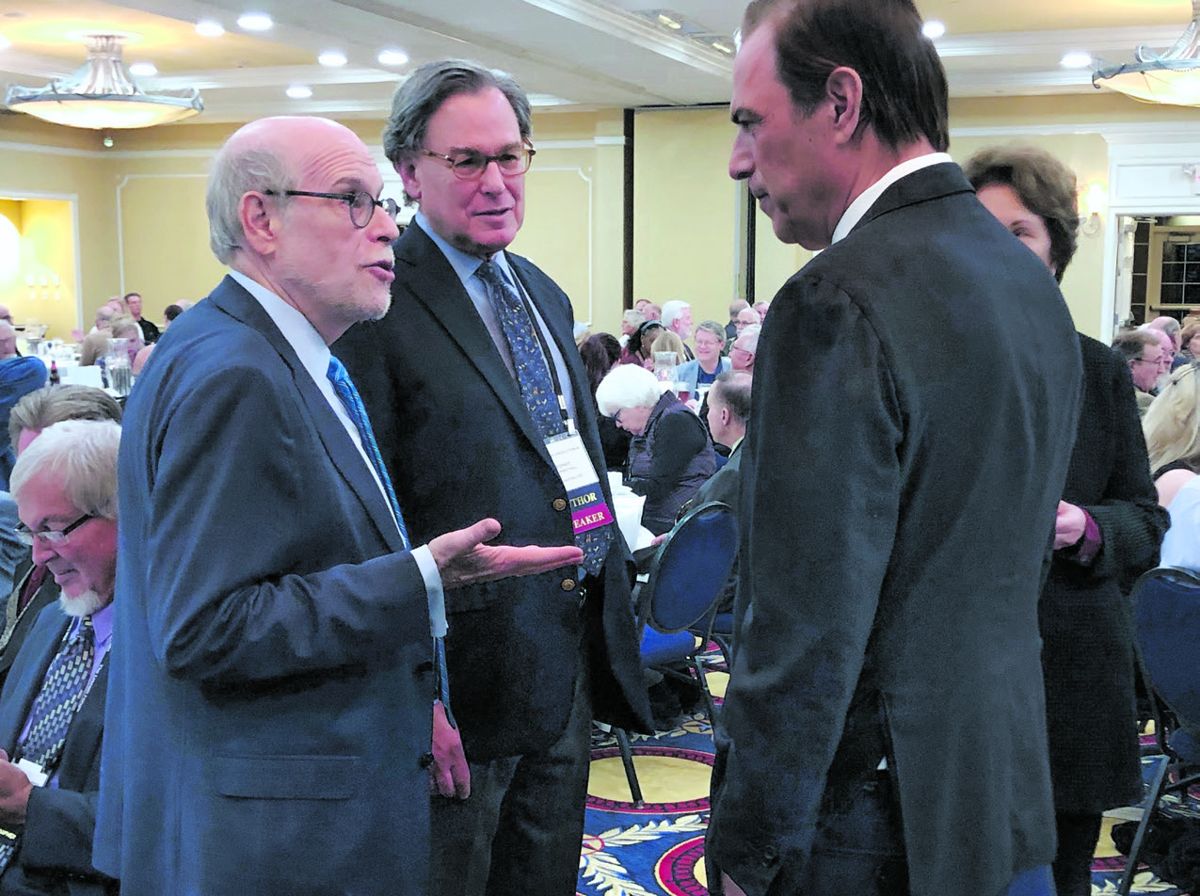
Presidential biographer Sidney Blumenthal meets subject area. All three panelists agreed that there are many indicators of declining interest, such as attendance at Roundtables, participation in re-enactments, and visitation at some historic sites. Varon also expressed concern about the educational curriculum and the increasing belief among college students that “you have to do something practical.” Shoaf pointed out that not everything indicates a decline in interest. For example, he asserted, and was supported by several reenactors in the audience, that much of the decline is due to time and cost rather than interest in the subject. The panel emphasized that researchers and historic sites need to do more to recognize that young people consume information in different ways; they all agreed that historic sites and writers need to capitalize more on social media. Throughout the event, the crowded meeting rooms, lengthy lines to ask questions, or get autographed books, showed that interest in the Civil War remains high in the Lincoln Forum. As the conference was wrapping up, Anderson University (IN) professor Brian Dirck, who spoke on Lincoln and the Constitution and on his recent book, The Black Heavens: Abraham Lincoln and Death, praised the conference. “It is gratifying to be around people who are literate about the Civil War and who understand that Lincoln remains important to the present day.” Dana Shoaf, who spoke on a panel about the state of scholarship and interest in military history, said that the Lincoln Forum is “one of the best conferences in the field.” He described it as “vibrant,” “growing,” and said that it “contains a lot of energy.” He agreed that the growing attendance “bodes well for Civil War scholarship.” An expanded, four-day Forum will return to the Wyndham at the same time next year. Leon Reed is a former congressional aide, defense consultant, and U.S. History teacher. He lives in Gettysburg and writes military history books.