Gettysburg Remembrance Day 2019
By Steve Reilly · Originally published January 2020 · pp. 4–5
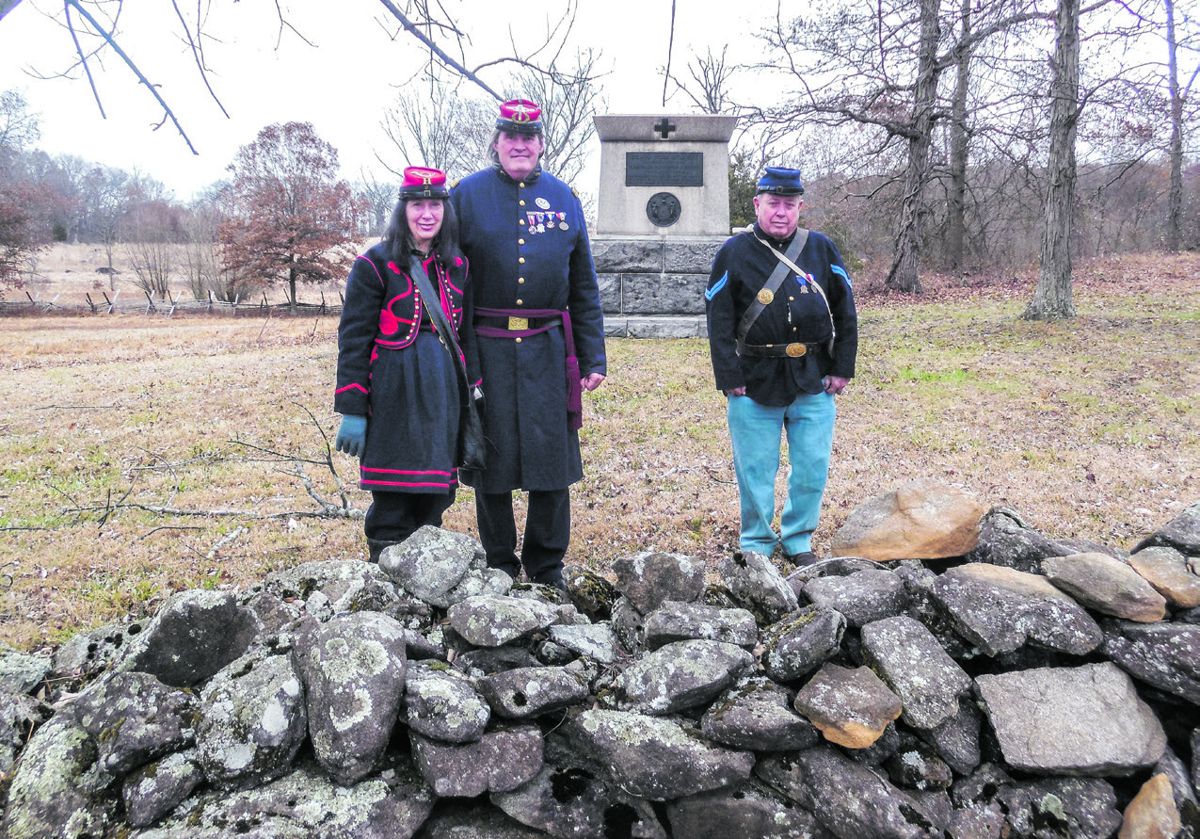
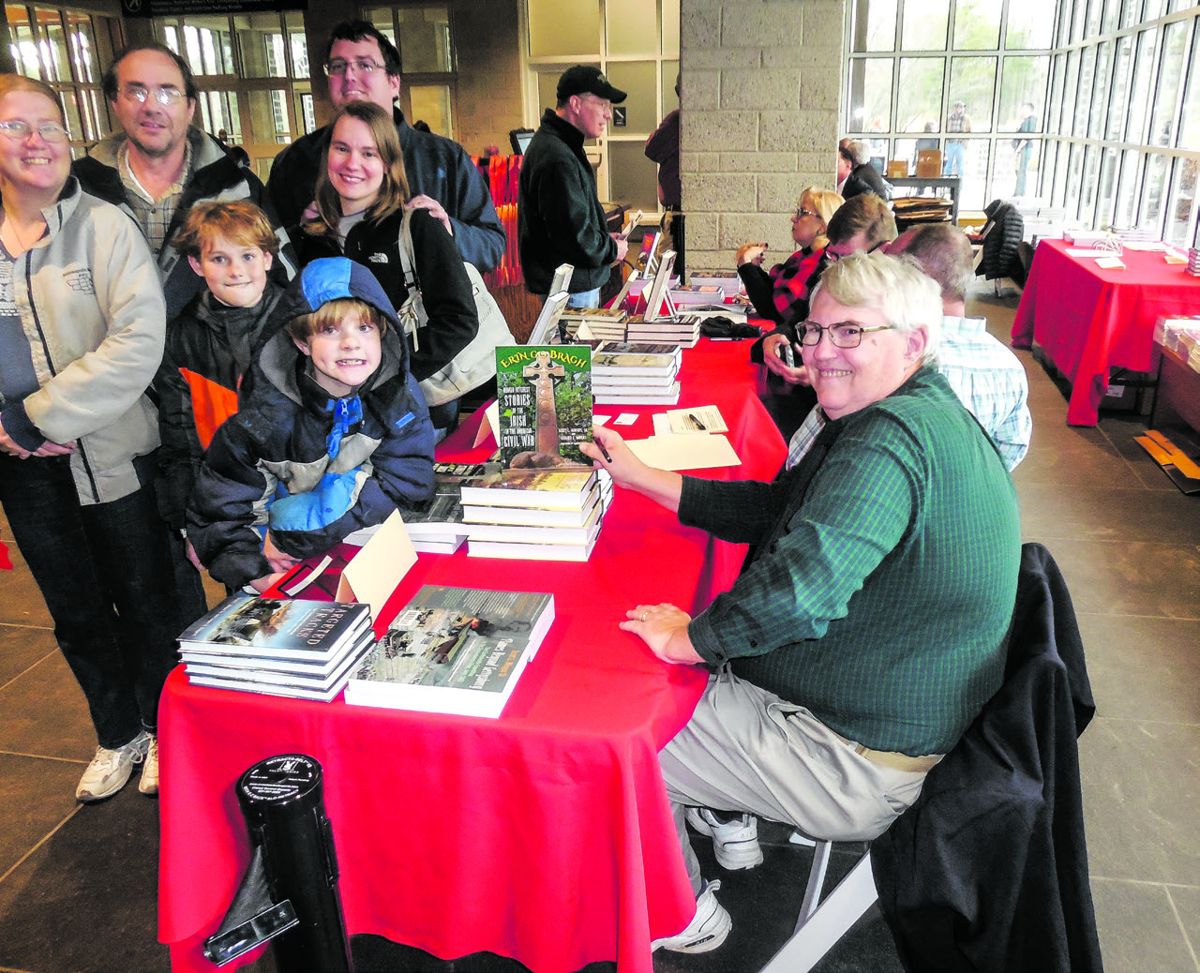
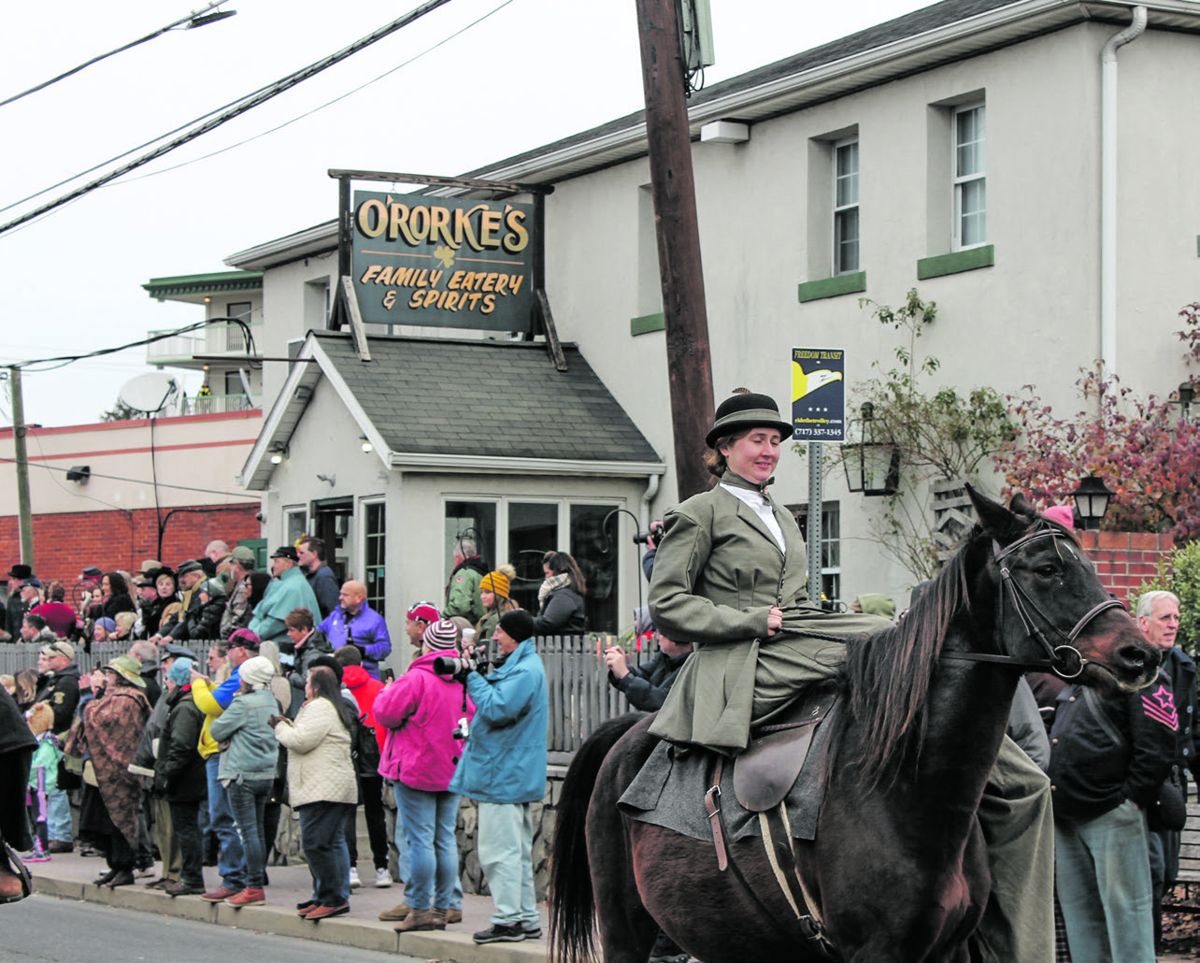
Publisher’s Note: We asked Steve Reilly to send in an additional article to cover the Gettysburg Remembrance Day for another viewpoint. By Steve Reilly On November 23, 2019, we commemorated the 156th Anniversary of Lincoln’s Gettysburg Address. A question that I needed to answer was when did Remembrance Day begin? I contacted Michael McCloskey, Professor of History. Professor McCloskey is my go-to guy in Gettysburg. Now, Professor McCloskey’s words. Remembrance Day is today a solemn recognition of an event that took place 156 years ago. Even before the dedication, people came to the small hamlet of Gettysburg to visit the battlefield and remember what took place here. The war was raging in other regions, but people still wanted to come to Gettysburg to seek loved ones, hear what happened, or just offer their own small respect for what took place. When the dedication for the National Cemetery took place with the president present, it only heightened the perception of importance. Over the course of time, units came to Gettysburg for placing monuments, reunions of survivors, and to remember those who did not. Gettysburg became a place of gathering and of importance. My first stop on Friday was the National Battlefield Park Visitor Center and Bookstore, to get a feel for the weekend. Walking in, I eyed eight book sellers with Scott Mingus sitting on the end. Scott was just at my Civil War Round Table at Kennesaw Mountain, so I walked over. Scott had the attention of the Gardner family from Boone, Iowa. He was telling the two Gardner sons, Nathaniel and Sean, how his ancestors, the Chambers boys, joined the 7th West Virginia and fought on Cemetery Hill on July 2. Their regiment marched into Gettysburg with 319 men, 5 were killed and 41 wounded. I decided to do some sightseeing and meet George Weinmann, his wife Janice, and Charles Lirio at the 62nd New York State Vol. Monument. George was visiting the location where his uncle’s regiment fought, just off Wheatfield Road. The regiment lost 2 killed and 16 wounded. Janice Weinmann is the President of the Greenpoint Monitor Museum. They own the East River waterfront property in New York City where the
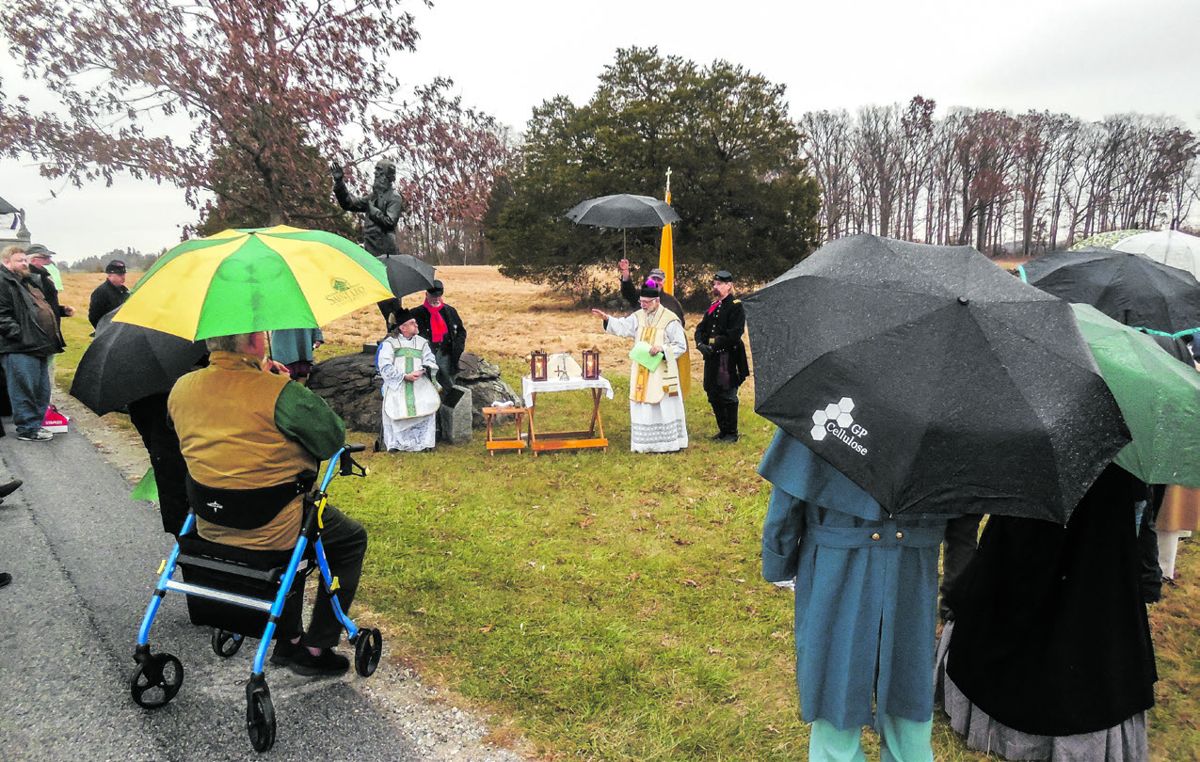
69th New York at their annual 4 p.m. Mass, at the Father Corby’s Monument. (Photos this page by Steve Reilly)
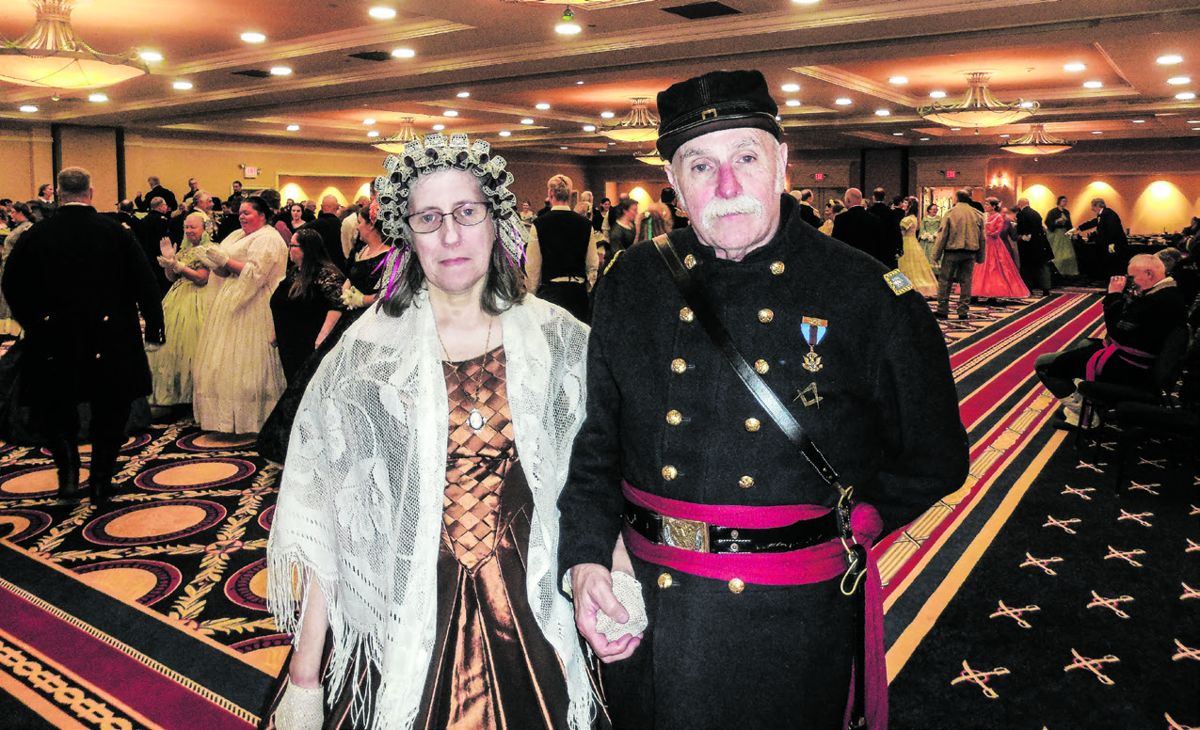
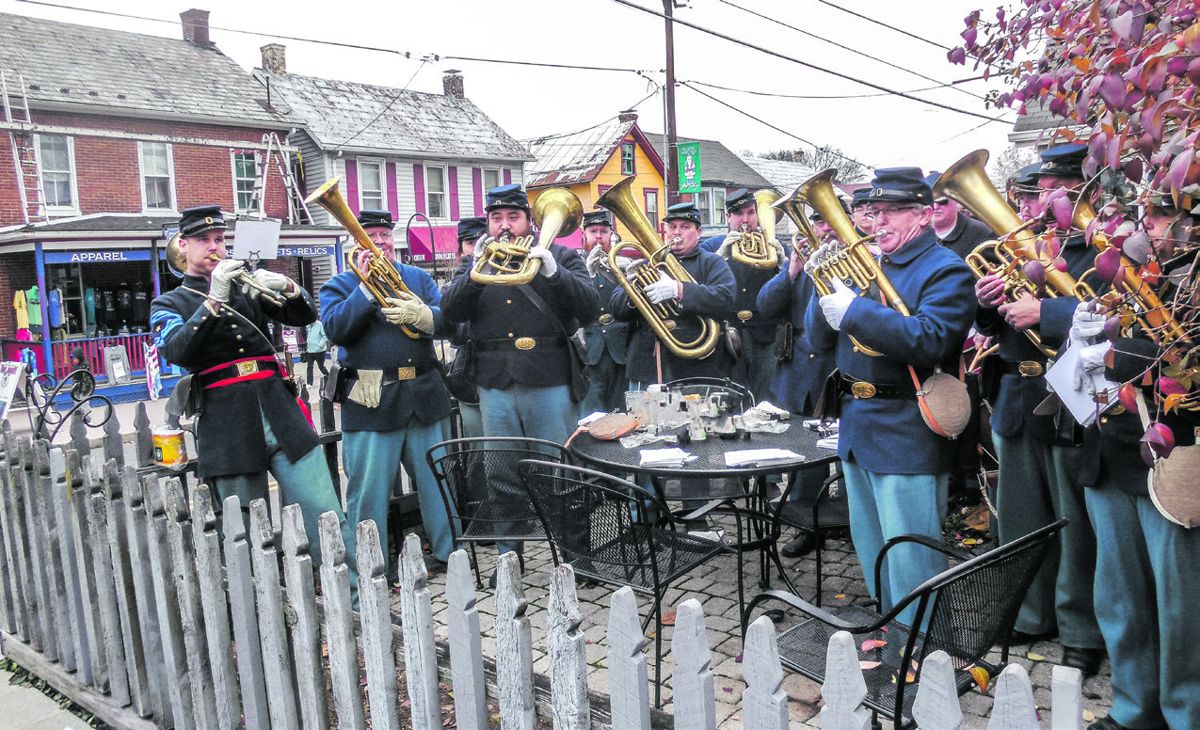
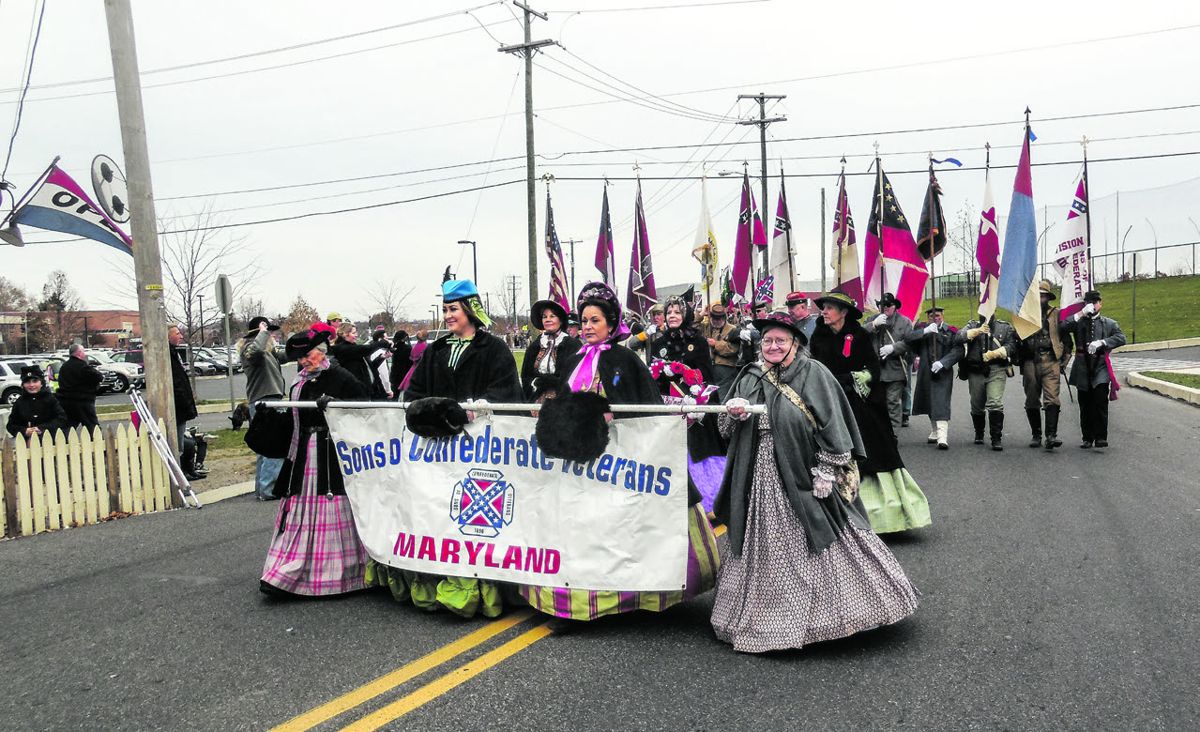
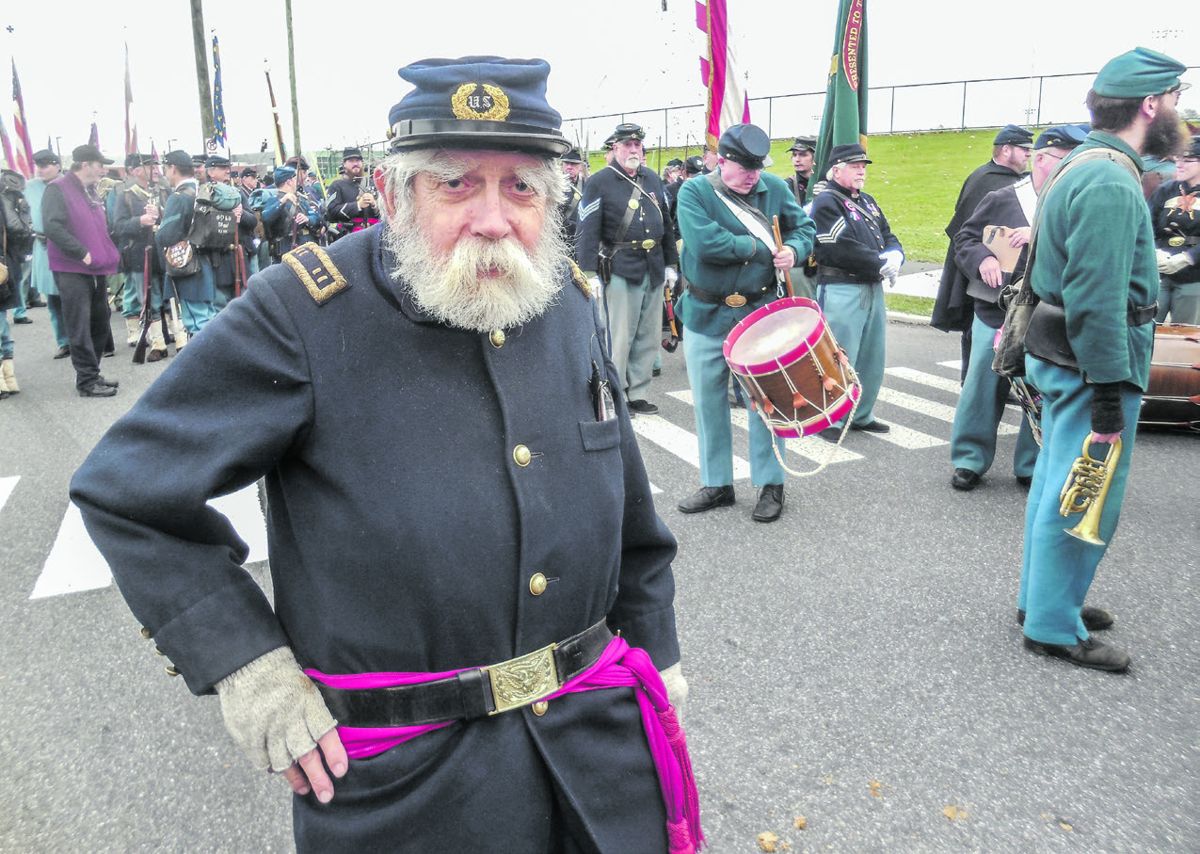
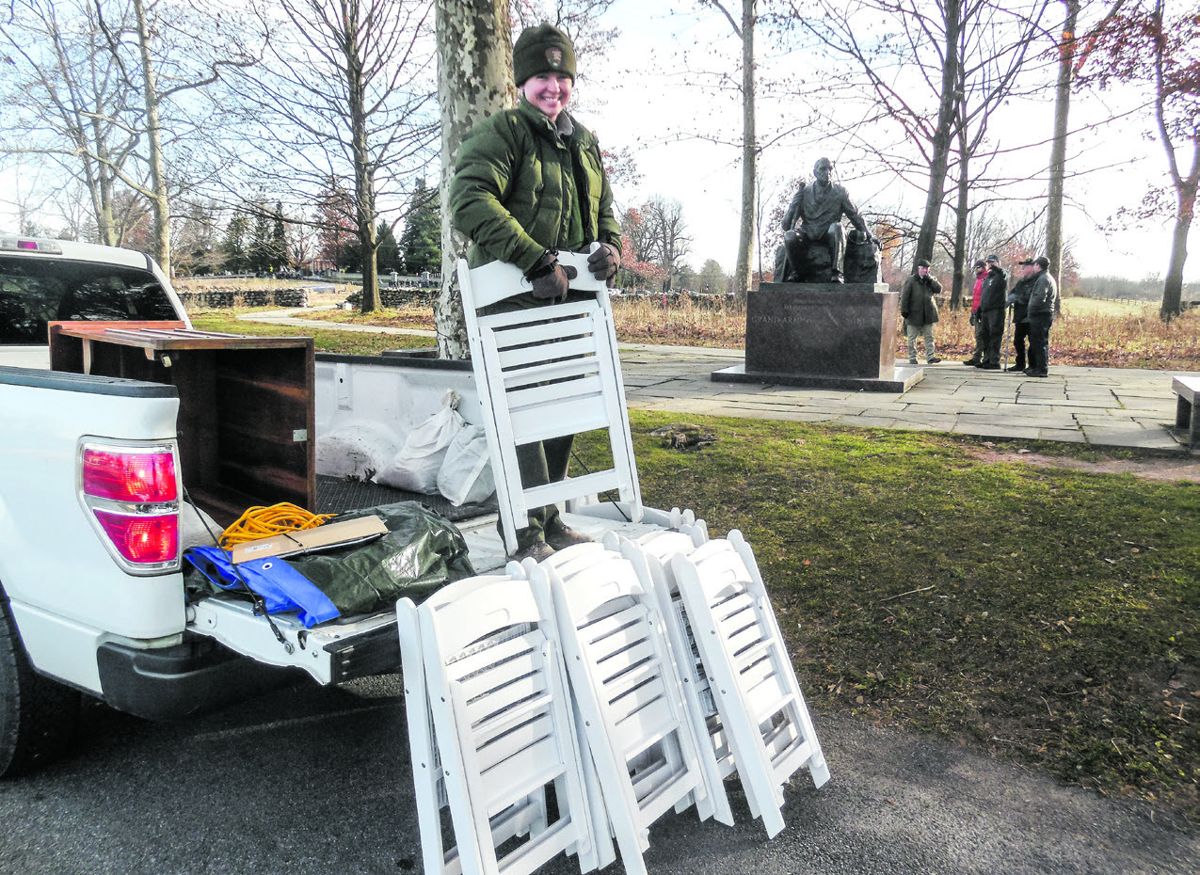
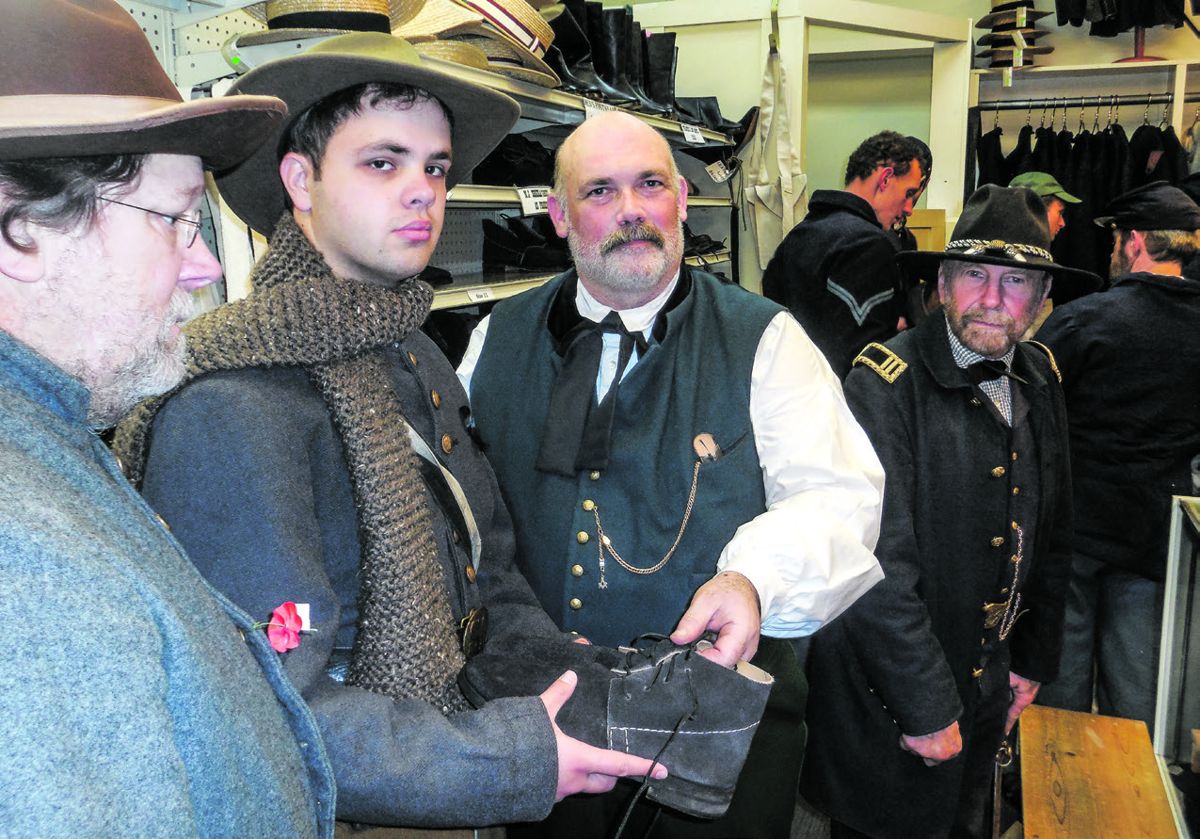
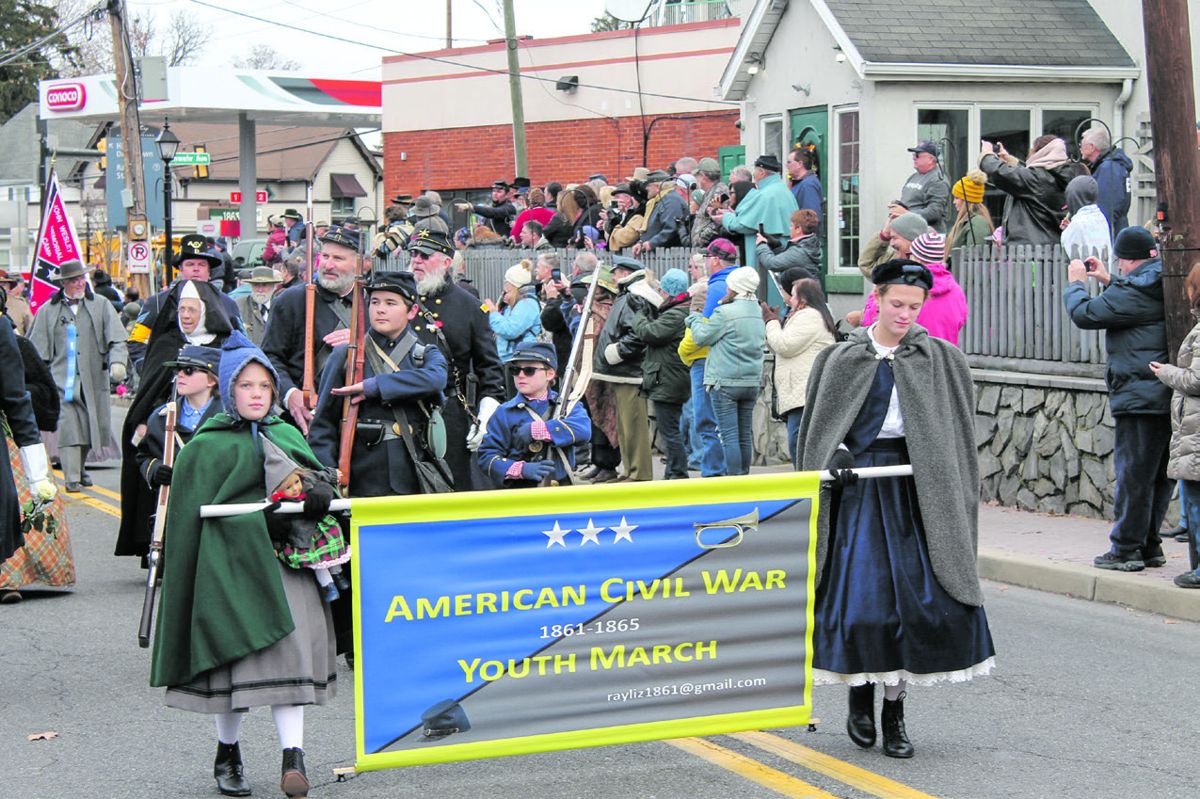
USS Monitor was constructed. Presently, they are repairing the waterfront and plan on beginning construction of the Monitor Museum. The next morning opened cold, but clear, good marching weather. I drove up, parked near the high water mark and walked over to the National Cemetery and saw Meghan Weber of the National Park Service unloading chairs. When I took a photo, she looked at me and asked, “Why are you taking my photo, I’m not a VIP.” Without you, Meghan and your co-workers, there would be no Remembrance Day. The Delaware River Blues, “K” Company, 1st Delaware Regiment, was walking across the field. Their unit was on McPherson Ridge the first day. They marched into Gettysburg with 288 men; 10 were killed, 54 wounded, 13 missing; the regiment was credited with capturing a Confederate flag. I walked into the National Cemetery with the National Volunteer Brigade, with John Ault, NPS, stopping traffic for us. Inside there were several units with bands including the Providence Brigade with the 2nd Conn. and Battery “B,” 1st R.I. Light Artillery. Then there is the 69th Pennsylvania; my great grandfather had a cousin in the unit; they fought at the high-water mark during Pickett’s Charge. They were placing coins on the graves of men killed in action; later they marched to the Angle, placing American flags along the wall. In 1863 they marched into Gettysburg with 258 men and had a total of 143 killed, wounded, and missing. By this time, the streets were filling up with spectators; some areas of the sidewalk were two or three deep. In the parade staging area, I encountered Colonel Brian Pierson, USAF Ret., and currently the Senior Vice President of the Sons of Union Veterans. Moving up the line, there was John Griffiths, the great grandson of the President Grant. Marquett Milton from the USCT Museum in Washington, D.C., told me of the big events happening at the museum. Marquett is one of the nicest men that I ever met; and wears his USCT uniform to work, to generate interest in the USCT Museum. Off to the side was Bryan Cheeseboro, a VIP who works at the National Archives. The United States Colored Troops are out in force this day including Robert Houston, the force behind the 3rd Regiment, USCT in Philadelphia, Penn. Behind them was the 14th Brooklyn, marching with the folded uniform of Frank Santella, a member since 1980 who just passed away. Alongside them, were the 5th New York, Duryee Zouaves. The 14th Brooklyn marched into Gettysburg with 356 men, and lost 13 killed, 93 wounded, 98 missing. Approximately 500 uniformed troops composed the Confederate line. General Lee, 21st Georgia, 14th Tennessee, 19th Virginia, and 43rd Mosby’s Rangers to name a few. As the parade moved up Baltimore Street, I walked over to the Lincoln Cemetery to pay my respects at the graves of several USCT Soldiers. On the way back, I stopped at the Regimental Quartermaster and said goodbye to Susan. My friend Mike was in the back, doing his best to sell some shoes to a couple of Johnny Reb’s. Hey Mike, didn’t the Confederate army come to Gettysburg for free shoes? Across the street, is the 73rd Ohio Vol. Inf. Band, doing a concert at O’Rourke’s. A good 75 soldiers are standing around enjoying the music. They asked me to tell you, that their instruments date from around the Civil War. About 4 p.m. there was just enough time to get to Father Corby’s statue, where the 69th New York Historical Association was sponsoring a Catholic mass. I arrived just as Father David Moreno of New Rochelle, N.Y., and Father Jerome Lukachinsky of Garfield Heights, Ohio, were beginning the Mass and the heavy rains began. The 69th New York entered Gettysburg with 75 men, and suffered 5 killed, 14 wounded, and 6 missing. My great grandfather joined at age 12, in April 1861, and my son Rich just turned over command of Delta Company. He is now the aidede-camp to the Commanding General, 42nd Division. My last stop was the Sons of Union Veterans SVR Dance. As I walked in, the first person I see is Brigadier General Shaw, Deputy Commander of the Sons Veterans Reserve. I asked him how this year’s SVR Ball is going, and learned attendance is better than last year. As I walk into the ball room, Mark Day and his wife Barbara met me at the door. Mark is the past Commander and Chief of the SUVCW; he told me, that he was just requested to join Lincoln Generals, as General Ore. Mark is a retired Navy Master Chief and a former American History teacher in Western Virginia. Steve Reilly is a member of the SUVCW, Tilden Camp NYC and the 69th New York Historical Association.