Captured 2nd National Battle Flag
By Shannon Pritchard · Originally published January 2020 · pp. 32–33
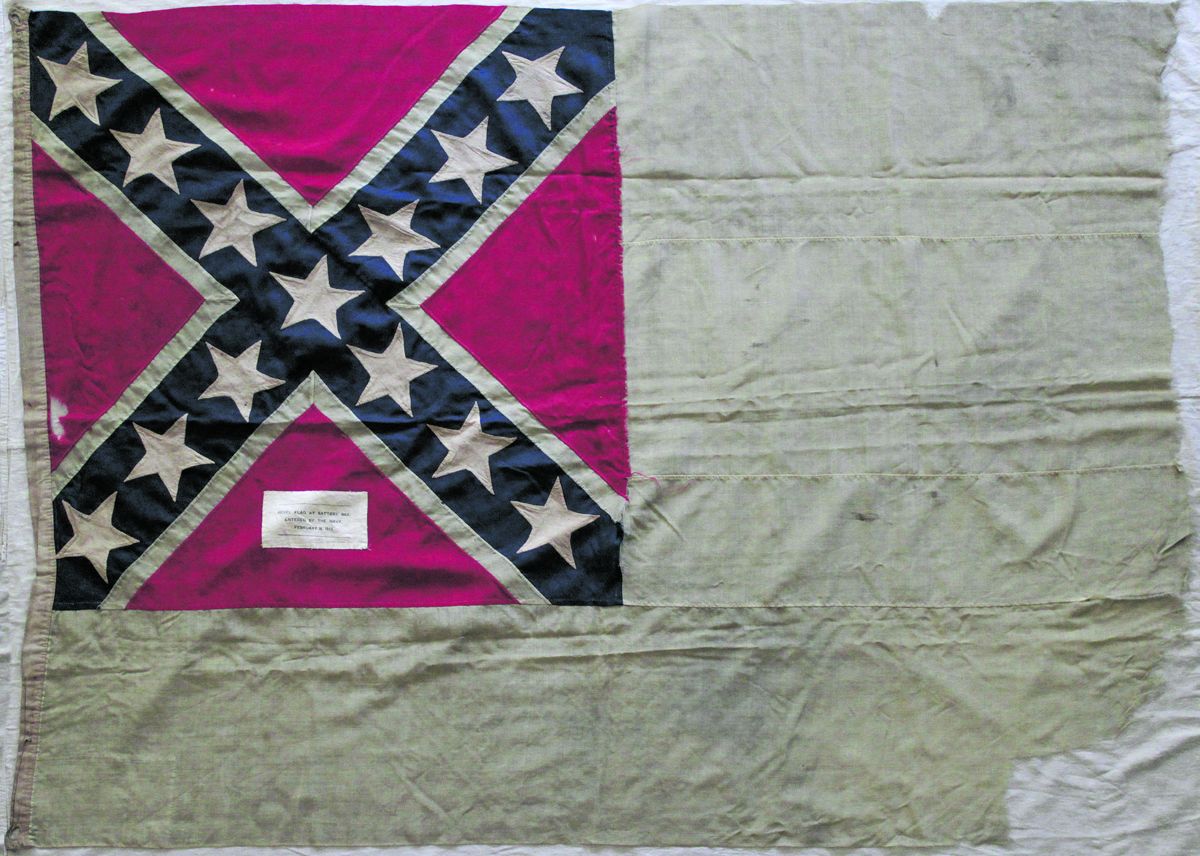
The flag of the Confederacy rose and fell in only four years. It rose over a prosperous, peaceful nation whose mothers sent their husbands and sons to die, if need be, under its folds. Die they did, from the plains of Manassas to the fields of Pennsylvania, from Shiloh to Nashville, from the Wilderness to Appomattox, and from Southern seaports to the shores of distant lands. The flag the Confederacy adopted as its national standard on March 4, 1861, was first raised on Capitol Hill in Montgomery, Ala. The honorable Jefferson Davis, ex-U.S. Secretary of War and new president of the Confederacy, invited Letitia Christian Tyler to raise the first official flag of the new Confederacy. Miss Tyler had been born in the United States White House. She was the granddaughter of ex-U.S. President John Tyler. The seven star flag Miss Tyler raised that day has come to be known as the First National Confederate Flag, or the Stars and Bars. The circle of seven stars in the canton represented the seven Southern States that had seceded up to that time: South Carolina, Mississippi, Alabama, Florida, Georgia, Louisiana, and Texas. As disunion became a reality and war fever swept the nation in the late winter and spring of 1861, countless towns, communities, and counties formed local military units in hopes of participating in the coming conflict. Lincoln’s illegal demand that the Southern States aid in subjugating her sister states caused another six states to secede. Virginia on April 17, Arkansas, May 6, Tennessee, May 7, North Carolina, May 20, Missouri, August 5, and Kentucky on November 5. A star was added as each new state joined the Confederacy. During the Battle of Manassas, it became obvious that the Confederate First National “Stars & Bars” would not do on the battlefield; it was too hard to tell it from the old “Stars and Stripes.” It had intentionally been similar to the flag their forefathers fought under, but a distinct, soldier’s flag was needed and what we now know as the Battle Flag was the result. After two years of war, there was only hate for the old Stars and Stripes, so by an act of Congress, signed into law on May 1, 1863, a new flag was selected. After some last minute alterations, the final design was the “Stainless Banner.” It was part soldier’s flag and part national flag. The canton consisted of the battle flag, and the field was pure white, symbolizing the purity of the Confederate cause and her people. The Second National Flag was used as a national, and also as a regimental, flag, by both the eastern and western Armies. Much more is known about the military issued flag shown here than the vast majority of Confederate flags. Noted flag historian Dr. Howard Madaus wrote a report on this flag on Nov. 26, 2003, from which much of the information is taken.
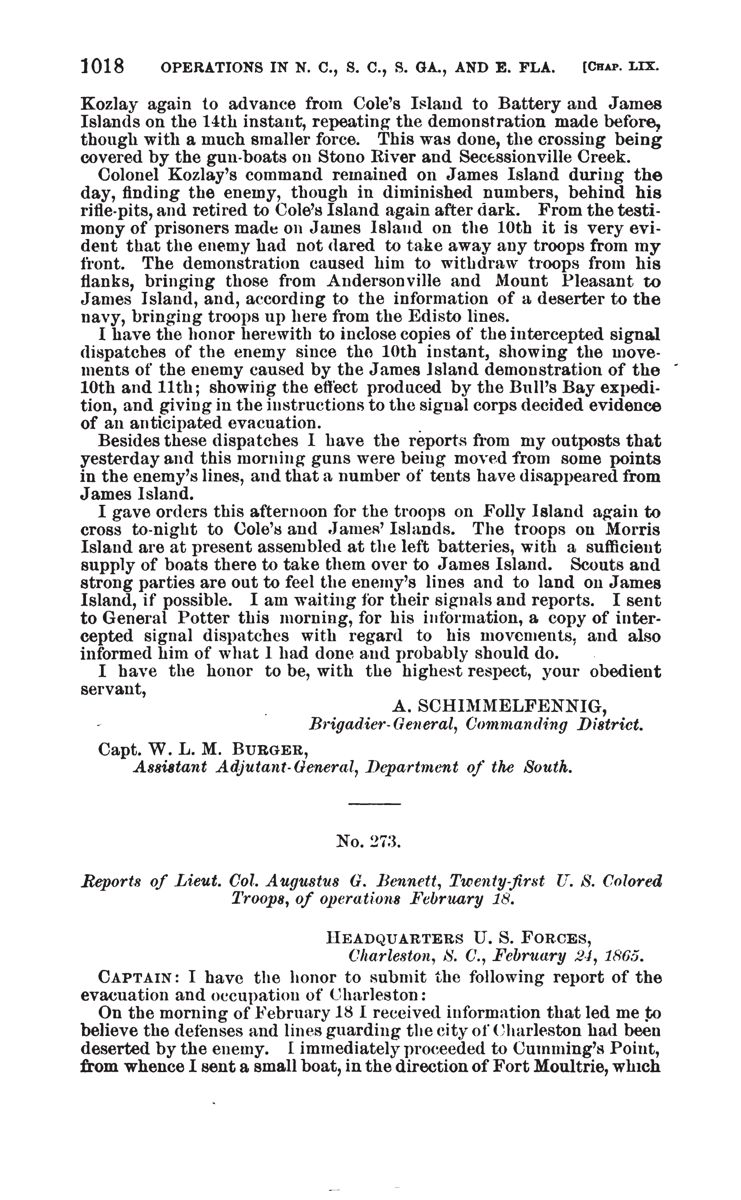
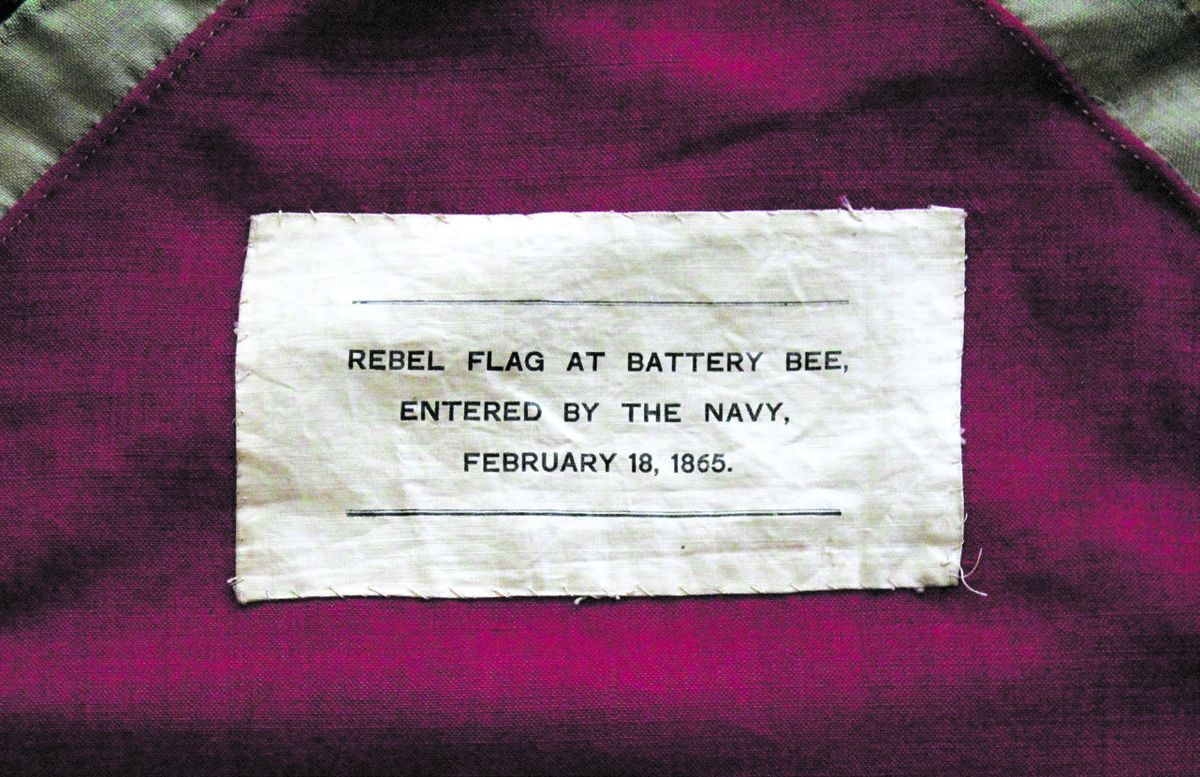
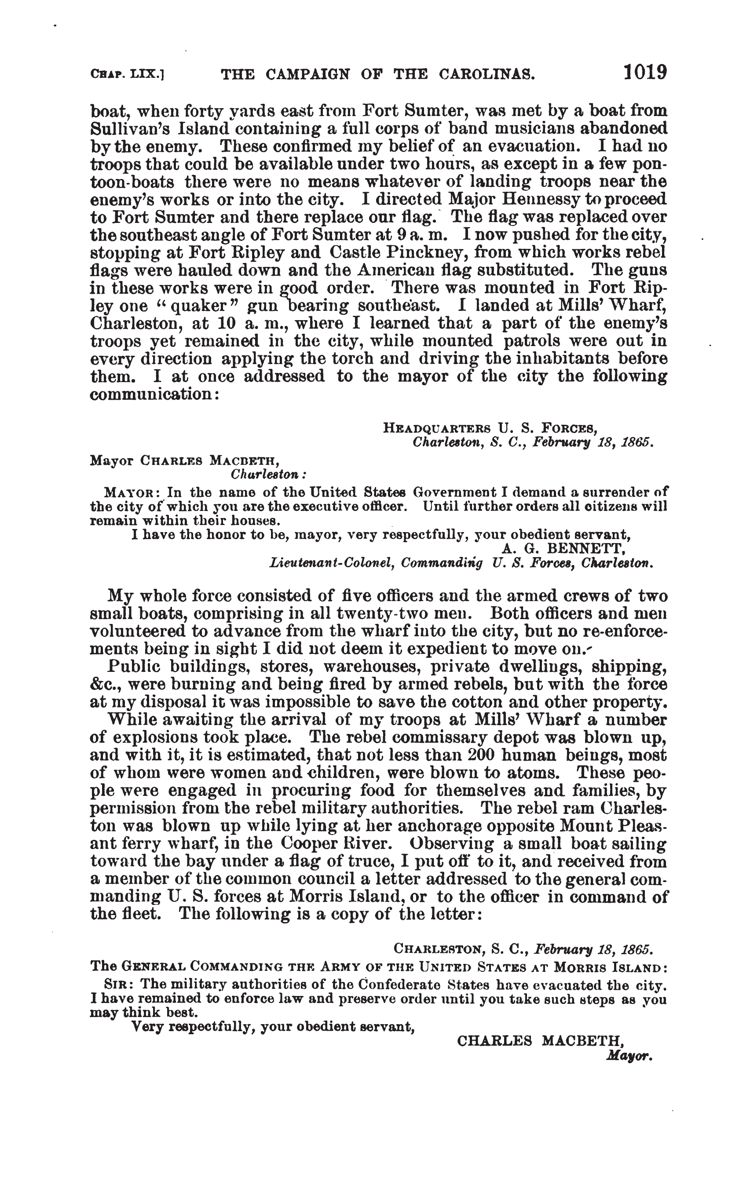
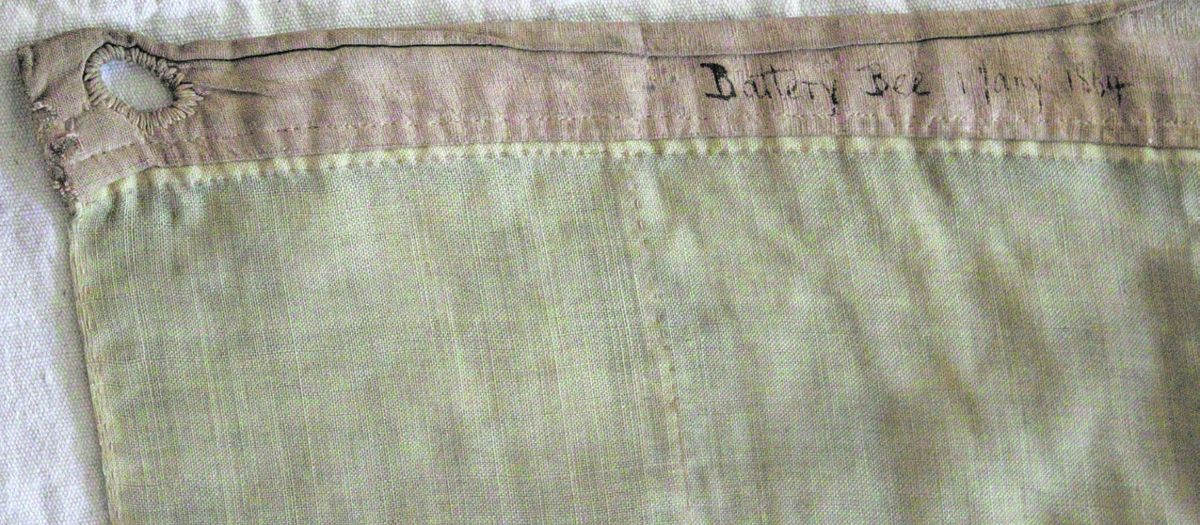
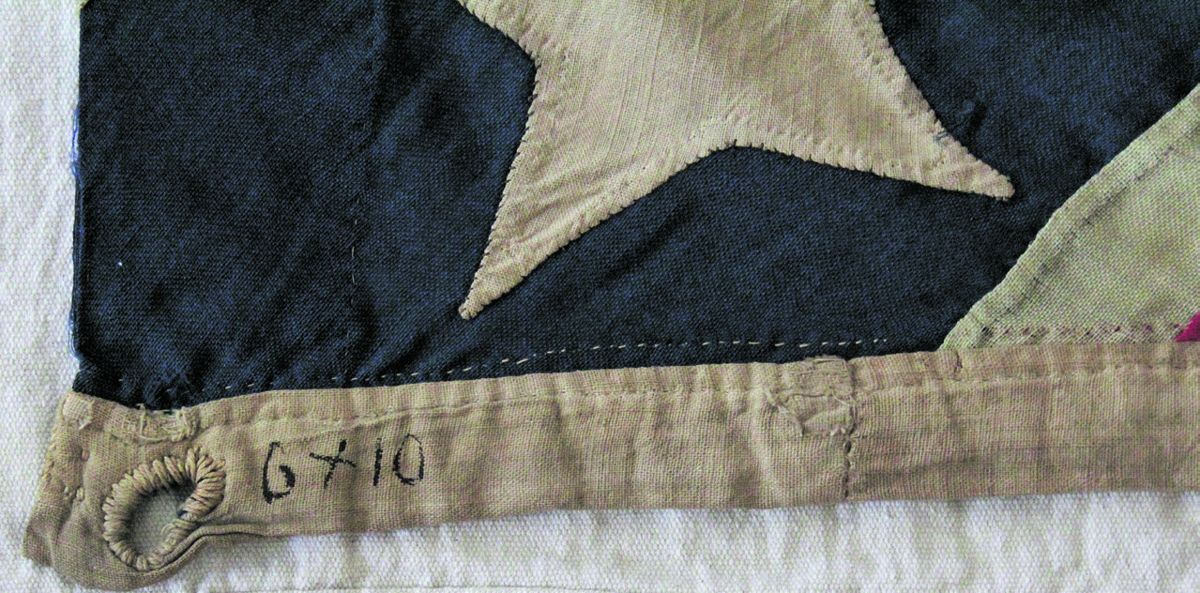
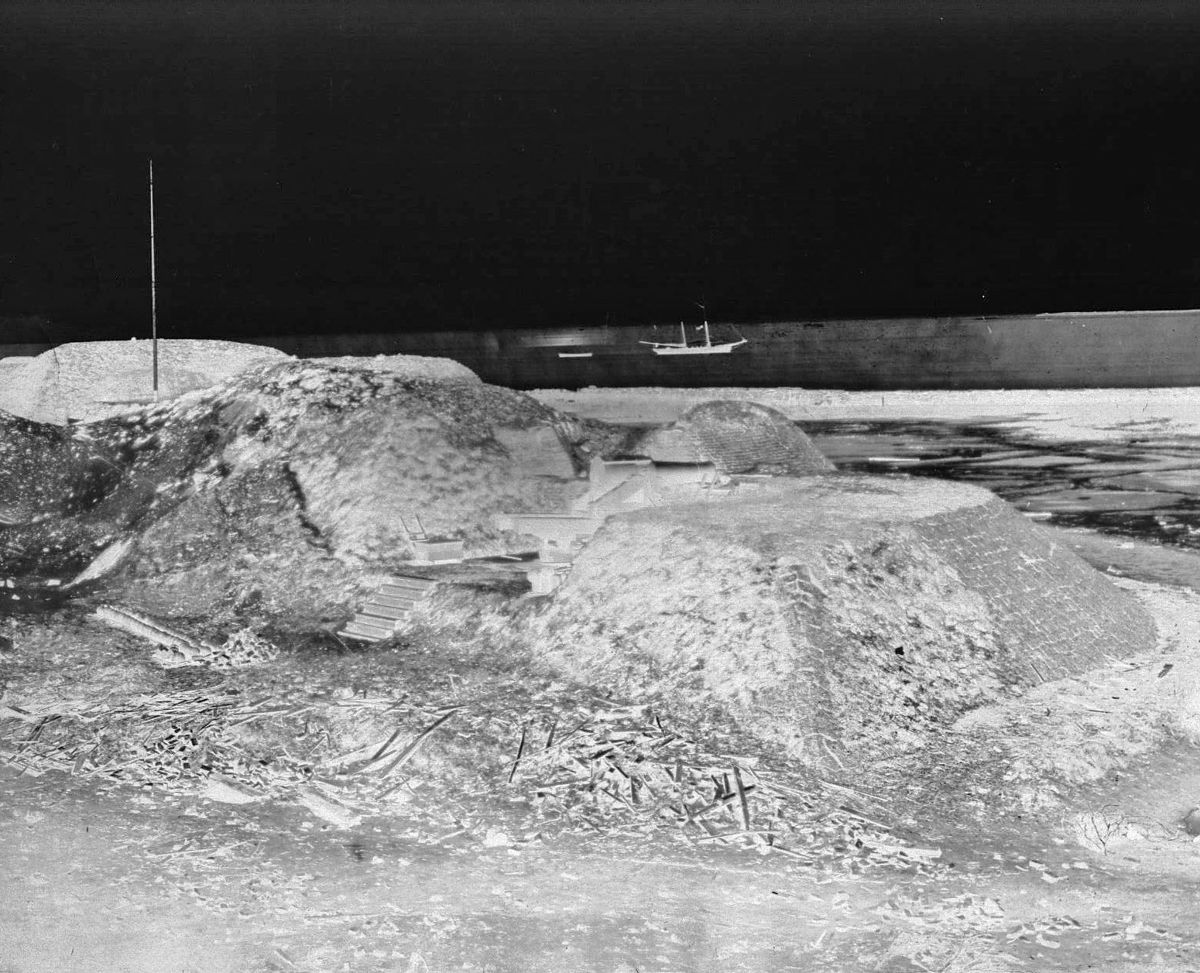
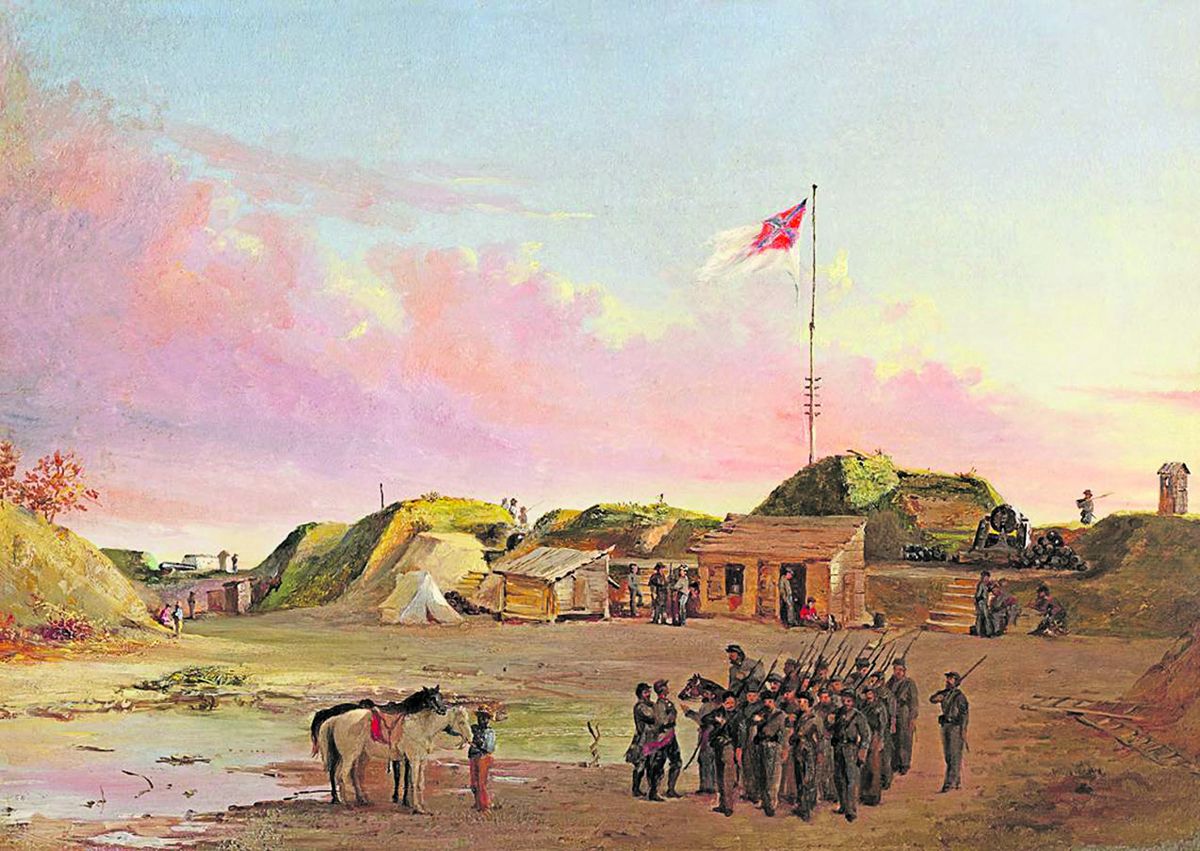
This flag measures 64½-inches on its hoist by 92½-inches on the fly (worn down from 96-inches), including 1¼” linen hoist binding. It is constructed of bunting with 7-inch linen stars inset with a welt and visible from both sides. Hand stitched grommets are at the top and bottom corners, with a 7 x 11-inch white reinforcing strip by the lower grommet and a 3 x 6-inch blue reinforcing panel at the top. The canton features a 46 inches square Army of Northern Virginia Battle Flag. The white field is composed of four strips, three 18-inches and one 10-inch; there is no fold on the top or bottom edge. The flag is completely hand stitched. Written in ink toward the lower corner of the hoist is “Battery Bee 1 Jany 1864” and at the upper corner “6 x 10”. Stitched to the flag on the lower center red portion of the canton is a 4½ x 8-inches polished cotton rectangle bearing the printed legend: “Rebel Flag Battery Bee/ Entered By The Navy,/ February 16, 1865.” The date refers to the day Union forces entered the Charleston defenses. According to Madaus’ evaluation, “…the flag conforms to the style and size of the type produced for ‘posts and camps’ by the Confederate Clothing Depot at Charleston, S.C., there is no reason to doubt the ascribed history written on this cotton patch.” Doubtless this flag appears exactly as it was when removed from Battery Bee with one small tear along the hoist, the edge of the fly somewhat tattered, and a section of stitching that has opened along one side of the canton. Battery Bee was located in Charleston Harbor. The Report of Captain Warren Adams dated Nov. 20, 1863, indicates that Company I, 1st South Carolina Regular Infantry, also known as the 3rd South Carolina Heavy Artillery occupied the fortifications and took casualties on November 19, 1863. This would have been a mere six weeks prior to the flag`s issue of the flag. There are no records of that regiment being moved from their position although there may be later reports of Battery Bee being held by others after the evacuation. After several attempts Battery Bee was finally captured by the U.S. Navy on February 16, 1865. The flag itself conforms to the Army revisions of the national flag adopted by the Confederate Congress on May 1, 1863, commonly referred to during the period as the Stainless Banner. When the flag was issued in Jan. 1864, the forces that held “Battery Bee” were probably members of Company I, 1st South Carolina Regular Infantry, also known as the 3rd South Carolina Heavy Artillery (see the report of Captain Warren Adams, dated Nov. 20, 1863, regarding the casualties incurred at “Battery Bee” on Nov. 19, 1863, Official Records of the War of Rebellion, Series I, Vol. 28, Pt. 1, p. 744). Companies C and H were also garrisoned at the battery at some point. Battery Bee, so named under General Order dated Nov. 4, 1862, to honor South Carolina General Barnard Elliot Bee, who so famously coined the term “Stonewall” before being mortally wounded at 1st Manassas, was situated on the “western extremity” of Sullivan’s Island west of Fort Moultrie and designed to guard Charleston Harbor. Progressively enlarged, and mounting up to eleven heavy guns, the battery was initially commanded by Lt. Col. Lawrence M. Keitt, of the 20th South Carolina Infantry, who later gave his life at Cold Harbor. By May 1864, the battery was commanded by Major Warren Adams, 1st South Carolina Regular Infantry with two companies. Battery Bee’s guns engaged Union Navy forces on several occasions in 1863–64 with slight loss (detailed reports found in OR’s). The city of Charleston and Battery Bee were evacuated on Feb. 17, 1865 in orderly fashion (guns disabled, some critical stores withdrawn) and occupied by Federal troops under General Quincy Gillmore on Feb. 18, 1865. The flag was no doubt left flying in order to fool the Yankees that the battery was still occupied. No specific mention of the flag from Battery Bee is found in the Official Records though we can assume that once the defenses of Sullivan’s Island collapsed, the flags of all batteries on the island were quickly seized. On Feb. 18, Lt. Colonel A.W. Bennett of the 21st US Colored Troops, reported that men under his command had occupied Charleston and secured the flags of Fort Moultrie, Castle Pinckney, Fort Ripley, and seventeen signal pennants found in the city (Official Records, Series I, Volume XLVII, Part I:, 1018-1019).
Official Records, Series I, Volume XLVII, Part I:, 1018-1019. Shannon Pritchard has authored numerous articles relating to the authentication, care, and conservation of Confederate antiques, including several cover articles and is the author of the definitive work on Confederate collectibles, the widely acclaimed Collecting the Confederacy, Artifacts and Antiques from the War Between the States, and is co-author of Confederate Faces in Color.