
The Graphic War
The Grand Review
By Salvatore Cilella · Originally published February 2020 · pp. 22–23
The Graphic War highlights prints and printmakers from the Civil War discussing their meaning and most importantly, the print maker or artist’s goals. On the green hills of northern Virginia, a sea of Yankee blue sparkled in the hot, late days of May 1865. The victorious Union armies gathered across the river from Washington to disband and send those surviving heroes, mostly volunteers, on their way home. Before dealing with the bureaucratic paperwork signifying their release, the survivors had one more act in the drama. Earlier in the month, anticipating the arrival of the Union armies, the New York Times wrote, a “grand military review, which will take place as soon as the armies under Sherman get here, will be the greatest event of its kind that has taken place during the war, and its moral significance, as the closing scene in the drama, will be very striking.”1 Just two days earlier, the paper was calling for a grand review of the armies in recognition of the blood and treasure spent over the preceding four years. The Times particularly singled out Grant’s magnanimous surrender terms to Lee as critically important to restoring the Union and peace, but recognized lingering resentment among many citizens “by the manner in which the war has been ended.”2 Once the review was over, the paper naively opined that we would never need an army this large again, for the next conflicts will “be almost exclusively maritime, and no extensive enlistments of soldiers would be required.”3 It proved, by all accounts, to be a grand affair. It lasted two days, May 23 and 24, involving principally the Army of the Potomac and Sherman’s westerners of the Army of the Tennessee. In all, seven corps of infantry, one cavalry corps and a full complement of artillery participated. Both days the participants struck off at 9 a.m. and in both cases, the review lasted the entire day. Washington was wrenched from mourning Lincoln’s assassination to the giddiness of a grand parade honoring the heroes of the rebellion. Ensconced in the reviewing stand were President Johnson, General Grant, Secretary of War Stanton, and other notables. On the second day, Sherman’s army passed the stand to great cheers. Sherman was invited to join the dignitaries on the dais. He did, and snubbing Stanton for his perceived treatment of Sherman’s surrender terms with Joseph Johnston, took his seat among the reviewing party. Noticeably absent was the VI Corps, Army of the Potomac, which had arrived late to their camp at Hall’s Hill outside Arlington. The Grand Review reprised June 8, featuring just the Sixth Corps. By then, many soldiers were anxious to return home and evinced no enthusiasm for yet another soldierly duty. The Times duly reported that “the pageant was only less in interest than that of two weeks ago, because less in size” and fondly reminded readers that the Sixth Corps had saved the city a year before when Jubal Early threatened it. In Virginia,
The grand review at Washington May 23th 1865 The glorious Army of the Potomac passing the head stand / / Lith. by E. Sachse & Co., Boston.
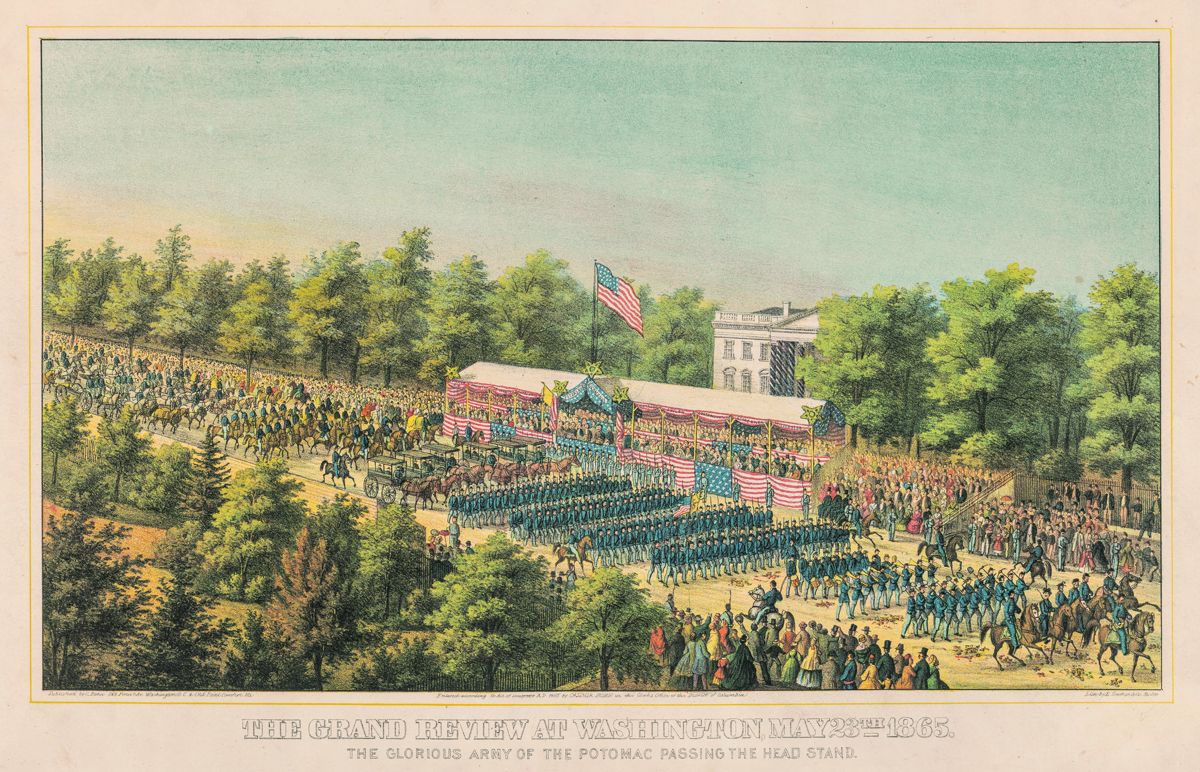
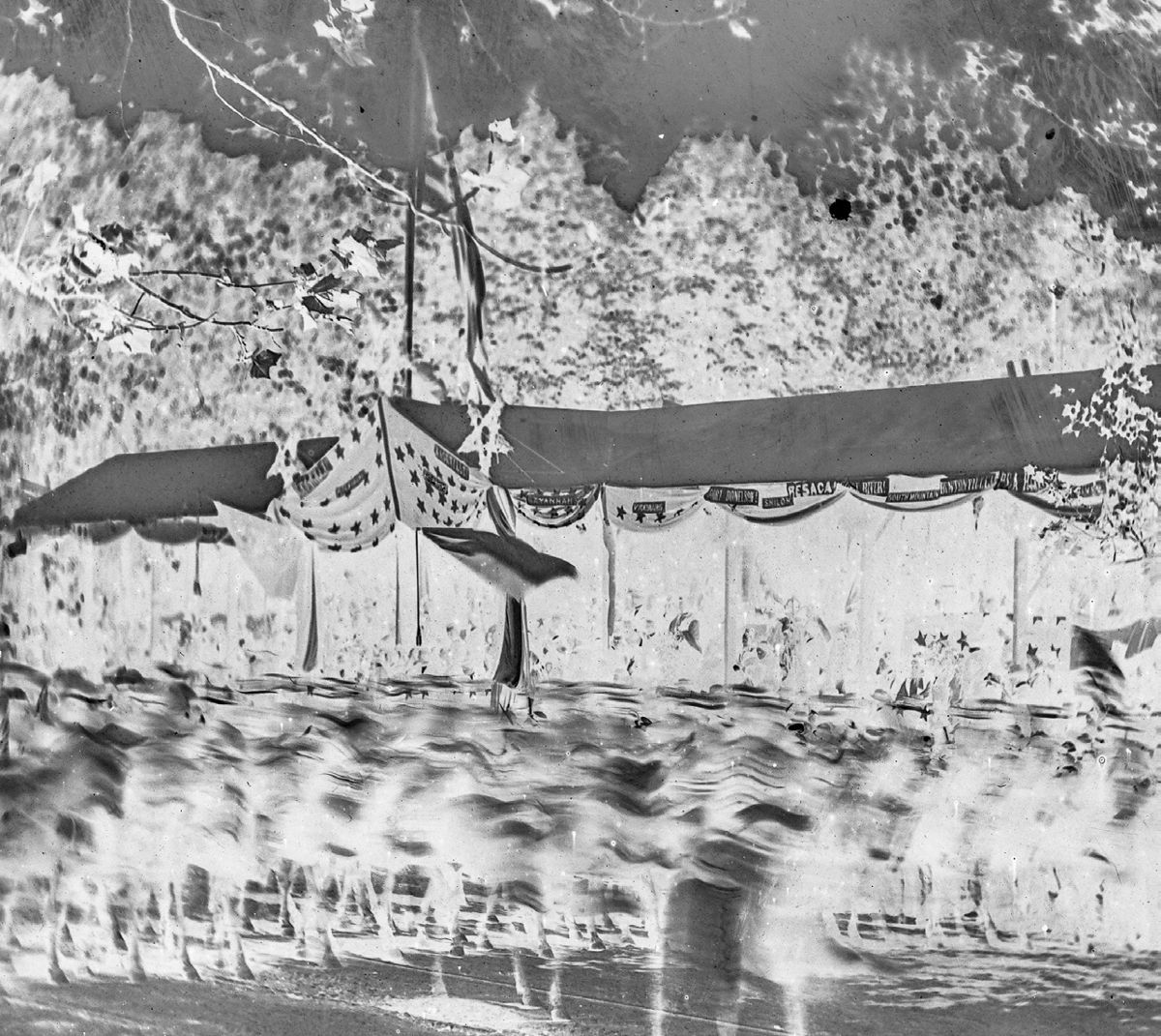
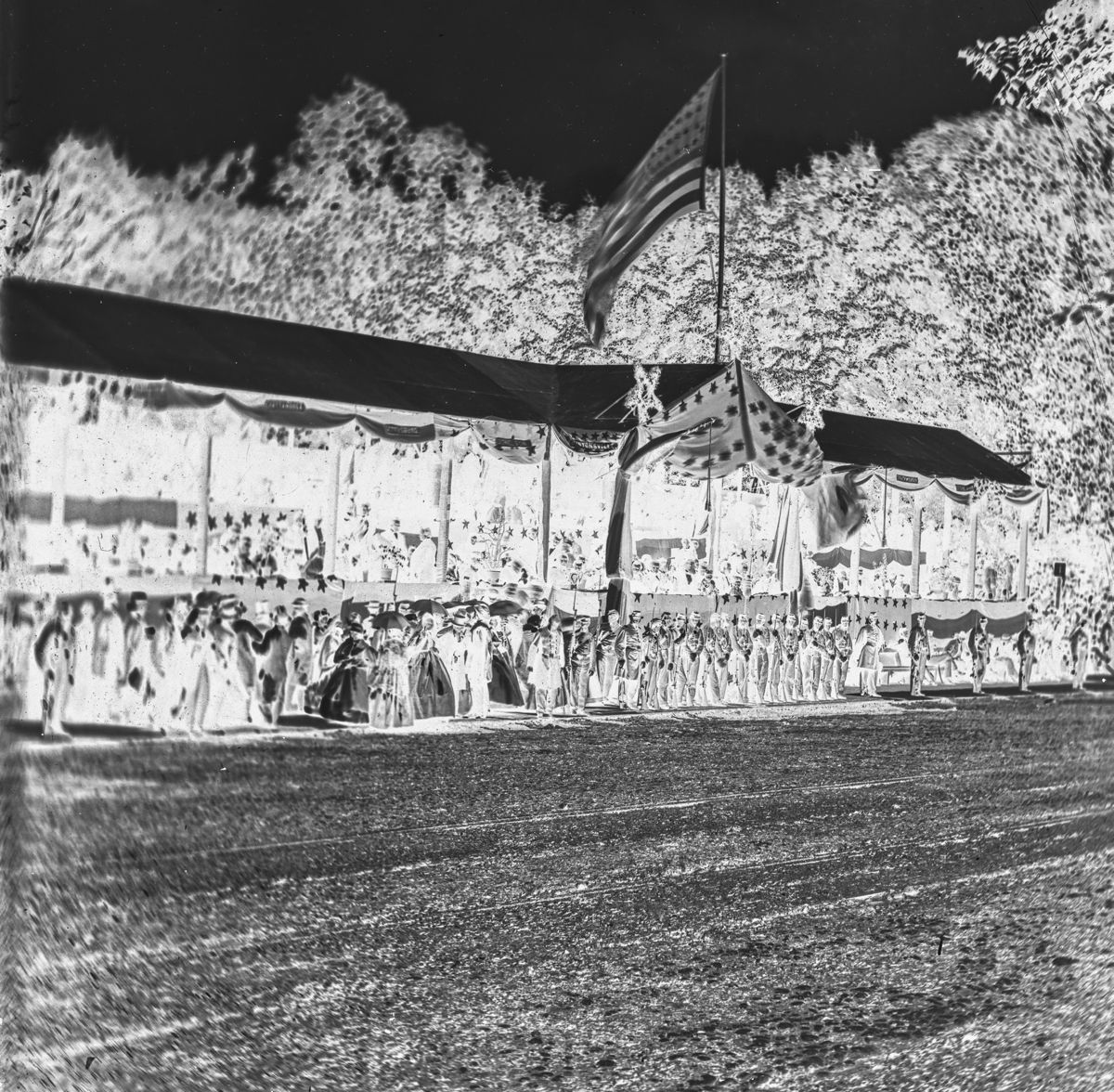
before they crossed the Potomac into Washington, Sedgwick’s old corps, now under command of Horatio Wright, drilled one last time to insure a proper parade presentation.4 Every man wore white gloves on another intensely hot day. One New Yorker remembered the “experience more pleasant to look back upon, than to participate in.”5 Mathew Brady captured the first review with his camera. Edward Sachse, prolific Baltimore lithographer, also documented the scene of May 23. It appears that Sachse was the only lithographer to attempt to compete with the increasingly important role photography began to play in documenting life. That said, upon close examination, it appears that the Sachse print of the review was more realistic than Brady’s photographs. Close scrutiny of Sachse’ work reveals that the essential realism of horse manure did not escape him. Somehow Brady managed to miss that aspect of the Grand Review.
Endnotes: 1. New York Times, May 6, 1865. 2. Ibid., May 4, 1865. 3. Ibid., May 25,1865. 4. Ibid., June 9, 1865. 5. Salvatore Cilella, Upton’s Regulars: The 121st New York Infantry in the Civil War, University Press of Kansas, 2009, 393. After 43 years in the museum field, Salvatore Cilella now spends his time writing and is the author of several articles and books. His last professional position was President and CEO of the Atlanta History Center. His most recent books are Upton’s Regulars: A History of the 121st New York Volunteers in the Civil War (U. Press Kansas, 2009). His two-volume Correspondence of Major General Emory Upton, (U. of Tennessee Press, 2017), is the recipient of the 2017-2018 American Civil War Museum’s Founders Award for outstanding editing of primary source materials. His edited manuscript of Upton’s letters to his wife is scheduled to be released this spring by the University of Oklahoma Press.
Washington, District of Columbia. Grand review of the army by Mathew Brady.
(All images courtesy Library of Congress.)
Deadline for submissions is the 20th of each month.