
Stuart Shields Retreat From Gettysburg
By Carl L. Sell, Jr. · Originally published February 2020 · pp. 18–19
Major General Jeb Stuart knew exactly where he was going when he headed south from Gettysburg early in the morning of July 5, 1863. His cavalry forces had been ordered to protect the Confederate retreat. He led two brigades south toward Emmitsburg, Md., while the others stayed close to the main body heading south and west through the mountain passes toward the Potomac River and safety in what is now West Virginia. General Robert E. Lee ordered Brigadier General John Imboden’s Brigade to escort a 30-mile long wagon train composed of Hill’s, Longstreet’s, and Stuart’s supply and ambulance wagons. Ewell’s Second Corps wagons were on a parallel route. Since Imboden’s Brigade was independent, it operated from Army of Northern Virginia’s leader instead of cavalry commander Jeb Stuart. The wagons began to roll at 4 p.m. on July 4; the last one reached Williamsport, Md., early on July 6. Along the way, it encountered attacks, both by Union cavalry and angry citizens. Stuart sent brigades led by Brigadier General Fitzhugh Lee and Colonel Lawrence Baker to protect the army’s left flank and a wagon train consisting of supplies and ambulances filled with wounded Confederates, along with captured Union soldiers. Baker led the brigade formerly under Brigadier General Wade Hampton, who had been wounded in battle, first slightly at Hunterstown on July 2 and then more seriously by a saber at the East Cavalry Field on July 3.
Hampton was in an ambulance with Maj. Gen. John Bell Hood, wounded severely in the arm by an exploding shell in the late afternoon of July 2 as his infantry division attacked Little Round Top. Brigades led by Brigadier General Beverly Robertson and Brigadier General William (Grumble) Jones were sent to guard the mountain passes. Riding with Stuart were the brigades of Colonel John Chambliss and Colonel Milton Ferguson. Chambliss was filling in for W.H.F. (Rooney) Lee, General Lee’s son who was wounded at Brandy Station, while Ferguson headed the brigade previously led by Brigadier Albert Jenkins, who had been wounded in the head by shrapnel while returning from General Lee’s headquarters on the afternoon of July 2. Stuart headed for the road that would take him through the Catoctin Mountains and South Mountain, the same route he had followed in 1862 on the way to Sharpsburg and was approaching through the mountains as he did to reach Sharpsburg. After being slowed by darkness and heavy rain overnight, Stuart pressed on from Gettysburg to Emmitsburg, which had been hit by a devastating fire that burned a quarter of the town on June 15. After a short skirmish with some home guards, the Confederates gathered up medical supplies that were on the way to the Union army, along with some prisoners, and headed down the Frederick Post Road. Among the prisoners were two signal officers who had operated a relay station on the mountains near Emmitsburg. Along the way, he ran into Rev. John McCloskey from nearby Mount St. Mary’s College and the two rode together for a way. Father McCloskey recalled that an aide rode up to Stuart and asked for directions. Stuart took off his hat, looked attentively at a map he had inside it, and then gave the orderly his directions. When the column reached the intersection of the Frederick Post Road and Rocky Ridge Road, Stuart sent a detachment led by Colonel Robert Beale on Rocky Ridge Road toward the nearby town of Graceham. Stuart and the main column continued on toward Creagerstown, which he called Cooperstown. Stuart later would return to the vicinity of Graceham via a road from Creagerstown. The written history of Graceham records that 300 Confederate cavalry had passed through the town on the way to South Mountain on Sept. 12, 1862. More passed through Graceham the next day, including seven who stopped for breakfast at the parsonage of the Moravian church, which dates back to 1758. Stuart obviously had been there previously. The history also mentions the Confederate cavalry’s visit in the afternoon of July 5, 1863. Although no Union troops marched through Graceham on the way to Gettysburg, local history records that residents went east of town to watch XI Corps soldiers led by Maj. Gen. Oliver Howard march north on the Frederick Post Road, as Major General John Reynolds (Photos by Bill Kamenjar)
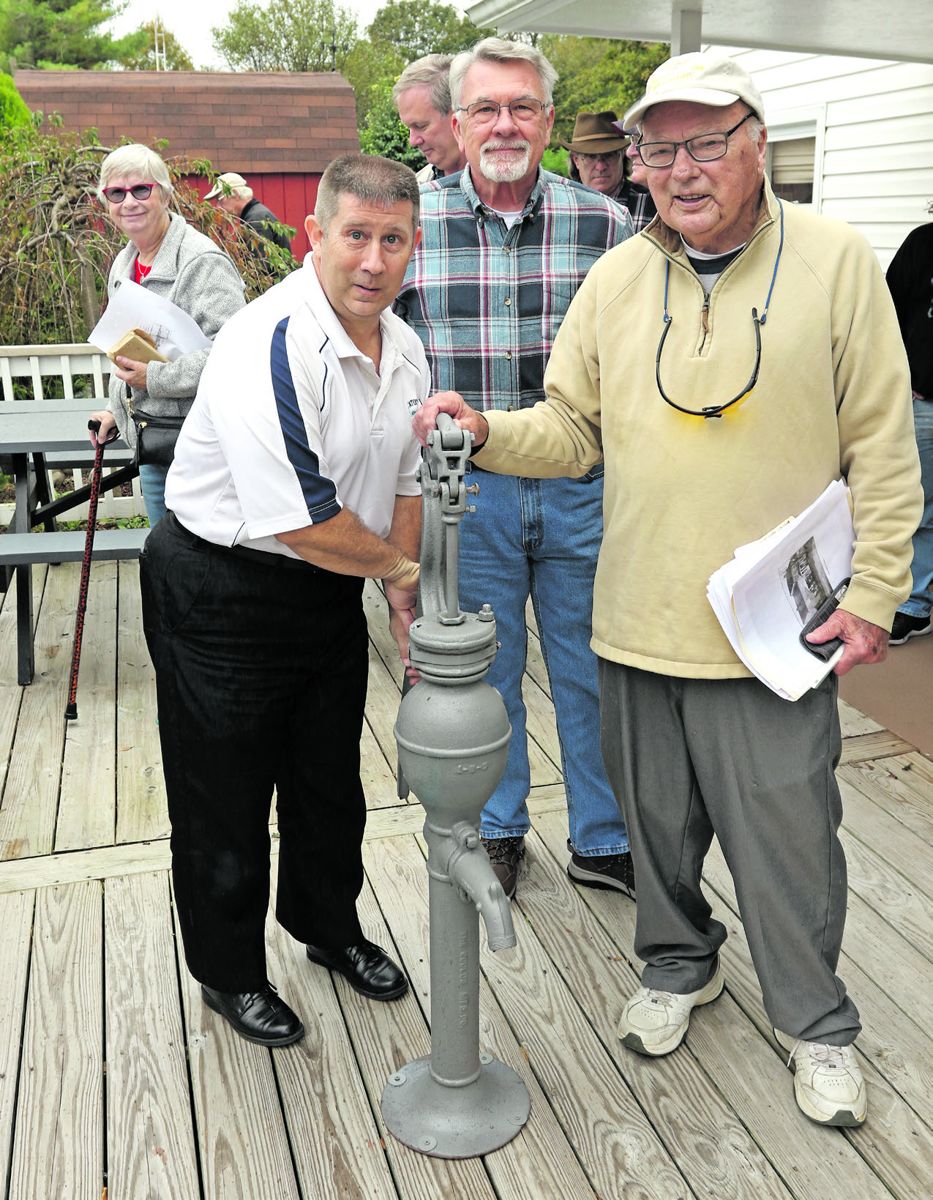
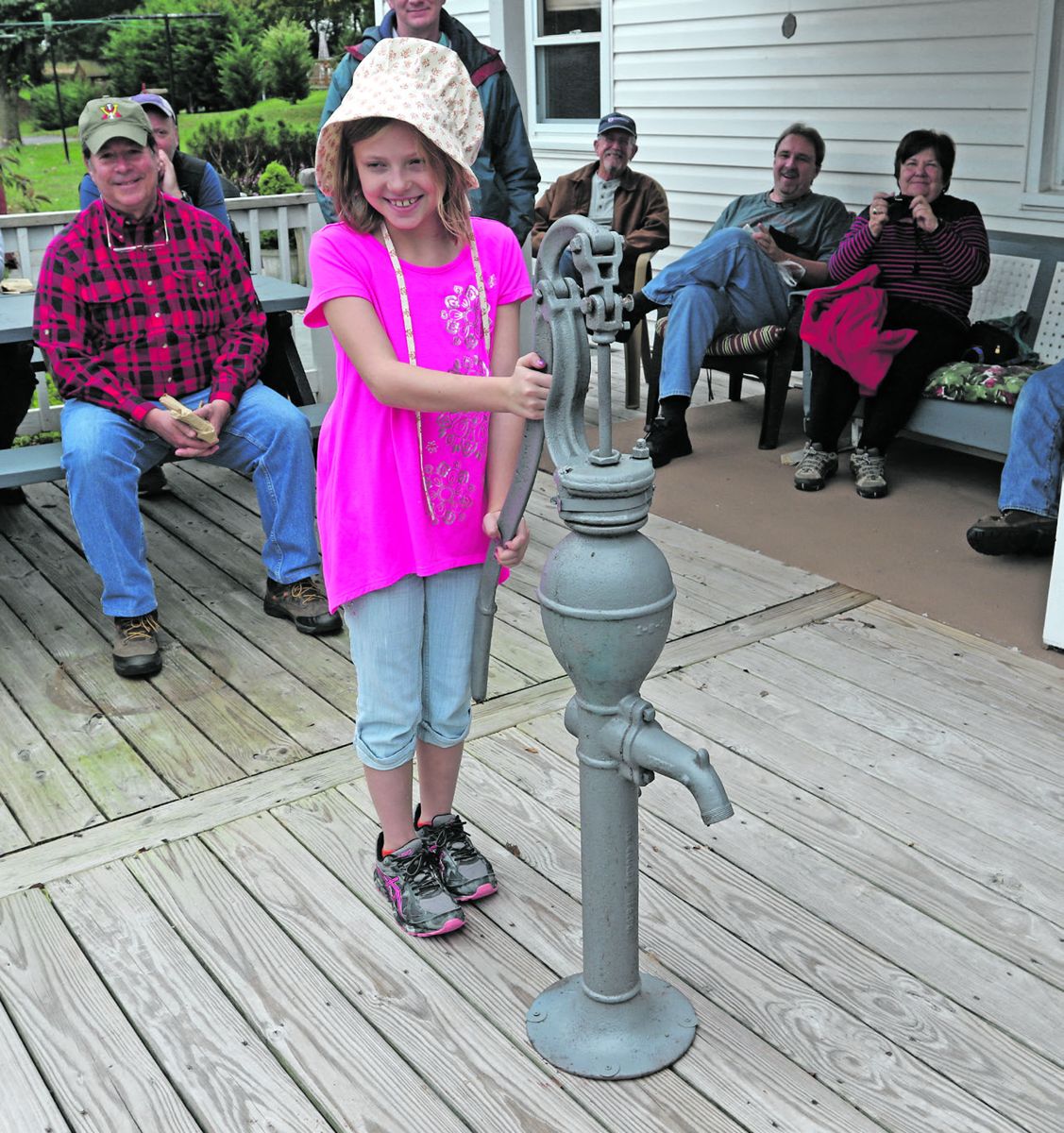
after the First Corps passed on the way from Frederick. While in Graceham, the Confederates stopped to water their horses at a trough in front of a store owned by William Cramer. The store owner’s daughter, Belva Anne Elizabeth Cramer, pumped water for the men and their horses. As she did, tears started to run down her cheeks. Thinking she was afraid of the troopers, they told her not to cry because they would not hurt her. The men didn’t know that Belva had a toothache and the pumping made the pain worse. (A pump, manufactured by a company that began business in 1865, was viewed late in 2019 when the Both Sides Civil War Tour visited Graceham. It was placed over the spot of the original well from which Belva Ann pumped the water. The store is no longer there. The site is the home of Thomas Seiss, who traces his ancestry back to the beginnings of Graceham. Godfrey Siess (the ‘i’ often went before ‘e’ in German) built his house in the 1750s and was involved in the formation of the new church. Jacob Siess was on the building committee for the new church in 1797. John Siess was a member of the Congregation Committee during the Civil War and would have been there during both Confederate visits. George Siess joined the Union army late in the war. Belva Anne Elizabeth, known as Betsy, was eight years old in July 1863. In 1875, she married William Henry Colliflower, the son of a shoemaker who lived just down the street. They had a son, Roy, on April 2, 1876, but William passed away unexpectedly less than a year later. Belva and the toddler then lived with her parents, William and Sarah Cramer. In 1881, Belva married Samuel Milton Birely, who ran the family produce and grain business in Graceham after his father died. He later ran an insurance and brokerage business and founded the Birely-Osler Bank in Thurmont. The bank later became the Thurmont National Bank with Samuel as its president. He and Belva had four children before he died at age 45 from an infection caused by the cutting of two boils on his face while shaving. Belva died at age 86 on February 12, 1942, and is buried with her
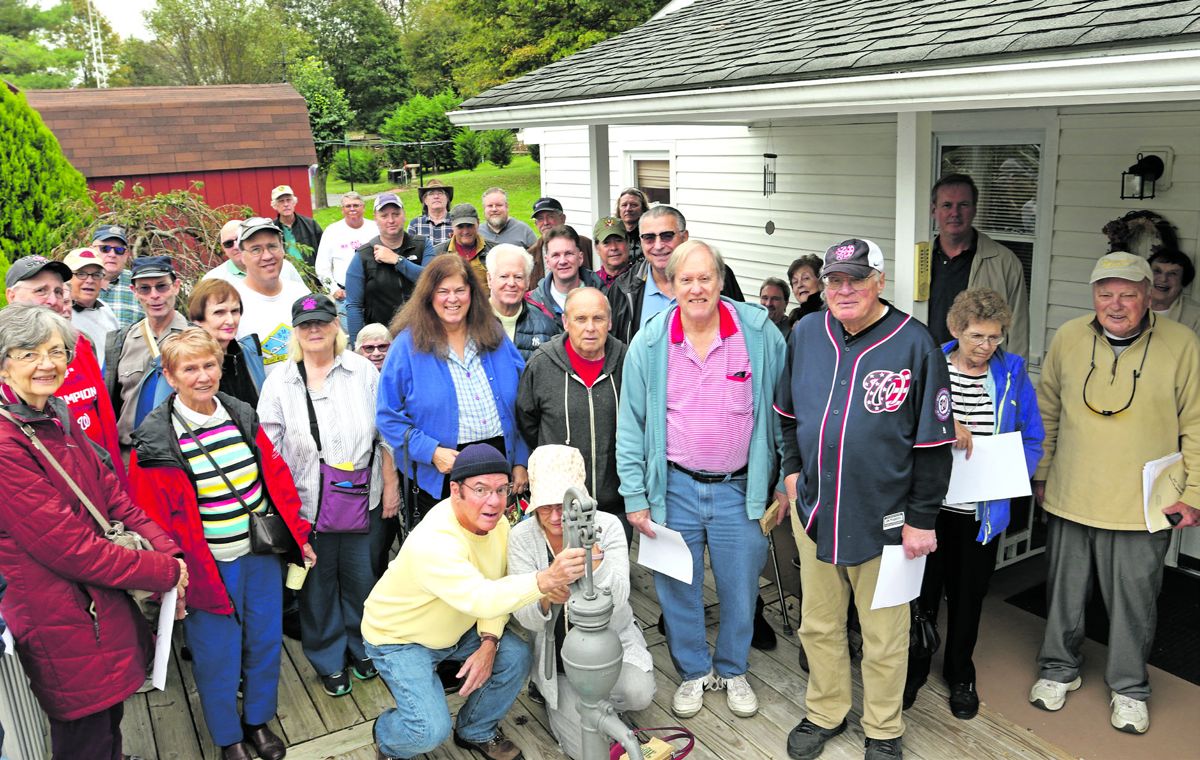
Graceham resident Timmie Bentz, author Carl Sell, and homeowner Tom Seiss on the deck under which the well for the pump is located. Timmie helped Sell find the location of the store where the horses of Confederate cavalry drank on July 5, 1863. He also pointed out the Moravian Church next door was having an oyster and turkey dinner on the very date the Both Sides Civil War would visit Graceham. One thing led to another. Seiss’ ancestors helped found the church and Graceham in the mid-1700s. husband in Thurmont. over South Mountain. They ran A pre-tour stop in Graceham into pickets on the other side of resulted in uncovering the history the mountain who were protectof the church and the site where ing the main Federal column just Belva pumped the water. Most ahead in Smithsburg. importantly, there was a sign at The Federals, including the church that advertised n oys- Brigadier Generals Judson ter and turkey dinner the same Kilpatrick and George Custer, day the tour would arrive. were enjoying a community celThe tour members enjoyed ebration in Smithsburg when their oyster and turkey dinner at Stuart’s guns interrupted their the historic church before riding dinner. Kilpatrick ordered Union on toward battlefields involv- guns placed on nearby hills and ing Union forces at Smithsburg, their answer was swift. However, Boonsboro, and Funkstown. the Union cavalry then quickThe earlier part of the day cov- ly withdrew toward Boonsboro. ered the transfer of leadership of Since it was nearly dark, Stuart the Union Army of the Potomac decided not to follow until he and Major General George W. opened communication with the Meade’s route to Gettysburg. The main Confederate army. semiannual tours are organized A citizen informed Stuart that by the Franconia Museum in Kilpatrick’s column had broken Northern Virginia. into the Confederate wagon train Refreshed that day in July at Monterrey Pass the previous 1863, the Confederate troop- night and captured 4-500 wagers headed out of town where ons and thousands of prisoners. they were rejoined by the main In his official report on the retreat column heading through the from Gettysburg, Stuart wrote Catoctin Mountains and then that “other facts I heard led me to believe the success was far overrated.” About this time, Stuart wrote, Captain G.M. Emack, First Maryland Cavalry, arrived with his arm in a sling and reported that he had been in the fight and partially confirmed the citizen’s report. Emack later said he and his small band had held off the Union cavalry long enough to allow much of the wagon train to escape. He also reported that Grumble Jones had been captured, information that quickly turned out not to be true. Stuart heard from General Lee the next morning and decided to head toward Hagerstown rather than follow Kilpatrick toward Boonsboro. He was soon joined by Jones and his brigade, which had moved through Monterrey Pass with the main wagon train and reached Williamsport, where he reported the Potomac too “swollen” to ford. Stuart told Jones to head toward Boonsboro, then proceed toward Funkstown, covering the eastern approach to Hagerstown. Stuart first headed north toward Leitersburg, where he heard from General Lee, and then moved south to Cavetown, then west to Hagerstown. As the Confederates approached Hagerstown, they learned the town was under the control of Kilpatrick’s Federal cavalry. After a house to house fight, including action in a church graveyard, Stuart and his men pushed the Federals back along the Boonsboro Road. Meanwhile, General Lee and Imboden were busy establishing a five-mile defensive line along the Potomac from Williamsport to Falling Waters using every able-bodied l man available. The next day, July 7, Imboden’s defense stopped Union cavalry led by Brig. Gen. John Buford from breaking through. Lee then sent Stuart toward Boonsboro to intercept the Federal cavalry before it could advance again toward Hagerstown and Williamsport. That resulted in pitched battles at Boonsboro on July 8 and Funkstown on July 10, both of which delayed any attack on Williamsport and gave the Confederates more time to cross the river, which had begun to recede. At Boonsboro, cavalry fought dismounted on a muddy field before the arrival of Union infantry resulted in a Confederate pullback. At Funkstown, Stuart established a defensive position that caused a Union withdrawal back toward the safety of its main column near Boonsboro. By that time, the Confederate defenses at the Potomac proved too strong for a Union assault. On July 12, Army of the Potomac’s Major General Meade convened a meeting of his commanders to determine if an assault on the Confederate line was advisable. The commanders counseled against such a move and Meade acquiesced. Two days later, he reversed the decision, but it was too late as the Confederates had crossed the river the day before. This article adds to information in Sell’s book “Major General James Ewell Brown Stuart.” Proceeds from book sales are earmarked for the preservation of Stuart’s statue on Monument Avenue. The Stuart-Mosby Historical Society refurbished and repaired the statue in 2015. Sell also has written two books about his great grandfather and great uncle, both of whom were wounded and survived Pickett’s Charge at Gettysburg. Sell can be reached at [email protected] or 703-971-4716. Thanks to Tom Seiss (modern spelling of the family’s name) for encouraging the visit to the site of the pump; Karen Connair, a genealogist who was part of the tour, for providing information on Belva Ann Elizabeth Cramer and the Graceham Moravian Church; and Pastor Sue Kroetch for a fulfilling visit!
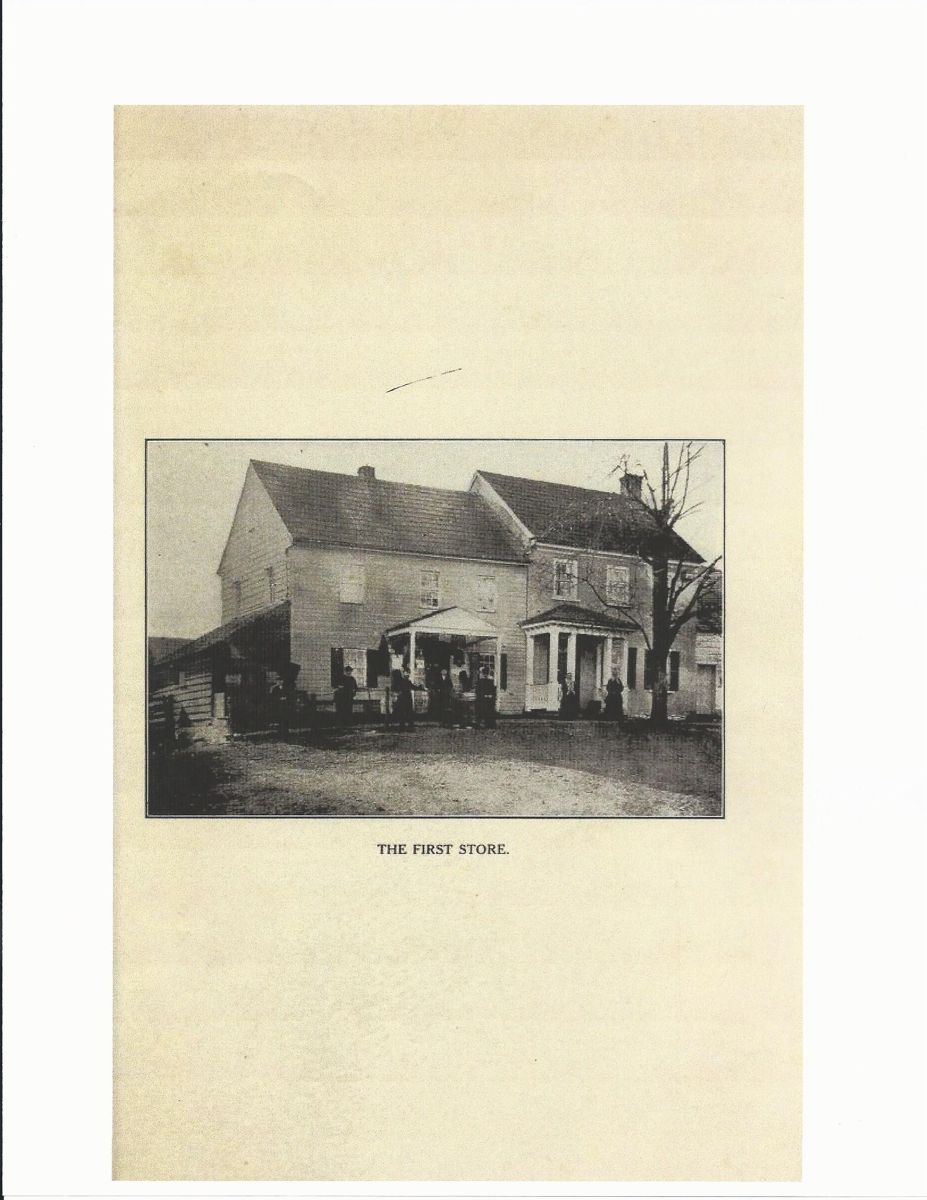
The first store in Graceham was part of an enlargement of one of the original houses. Both burned down in 1893.