
My Journey with Central Virginia Battlefields Trust
By Eric J. Wittenberg · Originally published February 2020 · p. 36
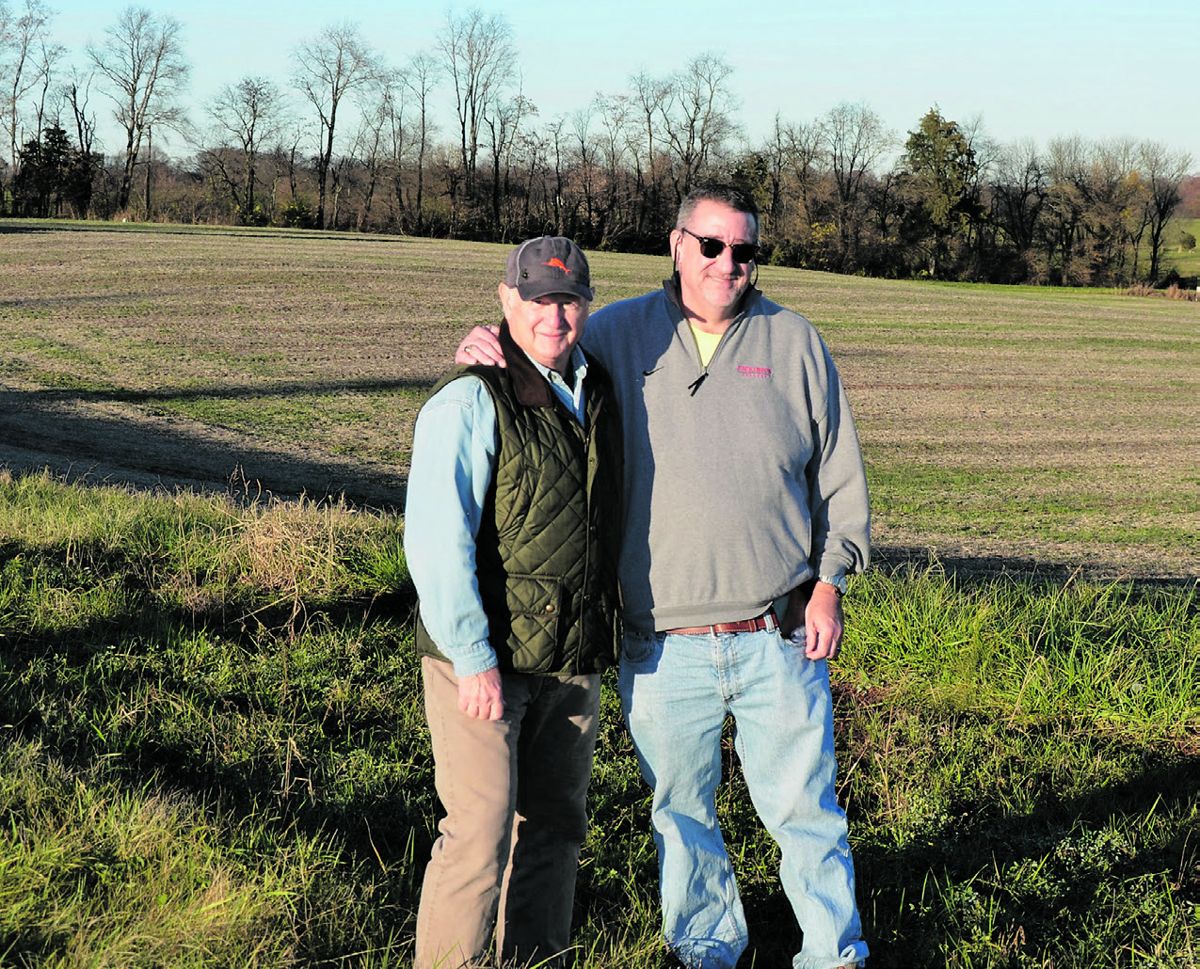
I first became interested in Civil War battlefield preservation when I met Clark B. “Bud” Hall in 1989 when he came to speak to our local Civil War Roundtable here in Columbus, Ohio. In the early 1990’s, I began working on researching the life and career of Brig. Gen. John Buford, the gifted Union cavalry commander. In 1994, I made my first visit to the Brandy Station battlefield in Culpeper County, Va., with Bud as our guide. In those days, the battlefield was still completely in private hands, but it remained in jeopardy of being developed. By the end of that visit, I was committed to doing what I could to promote the preservation of Civil War battlefields. At that time, I had no idea that Bud had been one of the three founders of the Association for the Preservation of Civil War Sites, (“APCWS”) that has morphed into the American Battlefield Trust over the years. Bud became, and remains, not just a great friend, but a mentor. My other mentor, the late Brian C. Pohanka, was the second of three founders of the APCWS. Brian left us too soon, but we often discussed battlefield preservation. Brian was the first one to mention the Central Virginia
Battlefields Trust (“CVBT”) to me. He told me about the newly formed local advocacy group based in Spotsylvania County, that was dedicated to preserving battlefield land located in the central part of Virginia. He told me about the work being done by Dr. Mike Stevens of Fredericksburg, who was leading the charge. Along the way, I became deeply involved in the preservation and interpretation of the great cavalry battlefield at Trevilian Station in Louisa County, Va. I knew about the local preservation advocacy group, the Trevilian Station Battlefield Foundation, that was working with the Civil War Preservation Trust, how the APCWS became known once it merged with the Civil War Trust, to preserve about 2,000 acres at Trevilian Station. This was core first day’s battle land on the battlefield owned by a logging company. It had been logged and replanted with pine trees, but it remained largely undisturbed. The local group had little in the way of resources, but with the help of the CWPT, it found a way to do the deal. Since that time, I’ve been heavily involved in identifying additional parcels to purchase at Trevilian Station, and in helping raise money for doing so. I’ve also worked on the preservation of the Brandy Station battlefield, and with the miserably unsuccessful fight to try to preserve the Buffington Island battlefield here in Ohio. There was no interest in saving the battlefield among the ranks of the Ohio state government here. I recall one meeting with the policy advisor for then governor-elect Bob Taft, who told me that jobs were much more important than preserving the battlefield and that Taft would not help. We lost that fight, and the heart of the battlefield was turned into a hideous sand and gravel mine, forever destroyed. That was a cautionary tale, and it led to my becoming completely committed to the cause of battlefield preservation. I am a native Pennsylvanian, and I went to college in Carlisle, roughly thirty miles from Gettysburg. As a result, Gettysburg has always been my first love when it comes to the Civil War. However, in the mid1990’s, I began developing an interest in the Chancellorsville Campaign. Before long, it became my second-favorite battlefield, and I began studying it in detail. Along the way, I decided to tackle a book project on the Army of the Potomac’s Cavalry Corps during the first six months of 1863, a critical period in its development. Beside the infamous Stoneman Raid of May 1863, it includes detailed tactical studies of some actions that occurred at Chancellorsville itself, including the charge of the 8th Pennsylvania Cavalry late in the afternoon of May 2, 1863. I also have done a fair amount of work on cavalry actions that opened the Battle of the Wilderness and the brutal slugging match at Todd’s Tavern on May 7, 1864. All these things made me keenly aware of the work of the CVBT in preserving the battlefields in and around Spotsylvania County. There is no other location with more significant battlefield land than Spotsylvania County, Virginia: the battles of Fredericksburg, Chancellorsville, Wilderness, and Spotsylvania Court House all occurred there, along with other lesser known
Bud and Eric on the crest of Fleetwood Hill, Brandy Station battlefield.. actions that are nevertheless sig- Spotsylvania Court House battlenificant. When he passed away, field. There is always more land my friend Brian Pohanka made a to be saved; it is an endless fight gift to the CVBT of $1 million. that only succeeds because of the The CVBT purchased a significant efforts of hard-working volunportion of the at Chancellorsville teers, some dedicated professionbattlefield known as the McLaws al staffers, and the generosity of Quarter that was jeopardized. It the citizens who open their hearts purchased the location of Grant’s and their wallets to fund the acheadquarters at the Wilderness. quisition of battlefield land. The All these sites fall within the aegis threats to battlefield land never of the CVBT, which has evolved seem to end. into one of the premier local presThe problem, of course, is that ervation advocacy groups. It is there are constant pleas for donaworthy of support. tions for all varieties of non-profIn 2018, I was invited to lead a it organizations, including the tour of the Trevilian Station bat- American Battlefield Trust, the tlefield for the annual conference CVBT’s frequent partner in comof the CVBT. As I worked with pleting land acquisitions. We unCVBT staff to develop and plan derstand that most people have the tour, the more I realized that limited resources available for here was an opportunity for me making donations and that there to make an impact. The board of are other worthy causes out there the CVBT primarily consisted of chasing the same donation doldedicated local volunteers and lars. We appreciate all the supRobert Lee Hodge, who lives in port that we receive, and we hope Nashville, but is committed to the that you will continue to support work of the CVBT. I saw an op- our efforts to preserve battlefield portunity to lend my historian’s land. name and expertise and make a REINFORCEMENTS difference in these local preserMAKE ALL THE DIFFERENCE!!! vation efforts, so I volunteered to join the CVBT board. The board, led by President Tom Van Winkle, accepted my offer, and I joined in May 2018. Board meetings are held at the CVBT’s offices in Fredericksburg on weeknights; I live in Columbus, Ohio, so it’s not realeven comes close to building a ly possible for me to attend meet- Nobody Civil War tent with as much attention to ings in person. Rob Hodge and I reinforcing the stress areas as Panther. extra heavy duty reinforcing is just typically attend remotely, and I Our one of the added features that makes am able to attend most meetings. Panther tentage the best you can buy! PANTHER Catalog - $2 I view membership on the board Web: www.pantherprimitives.com and participating in the work of pages of the best the CVBT as one of the great 160 selection of historical reenactment items from honors of my life. Medieval era to Civil War Includes over 60 The CVBT is making a real dif- era. pages on our famous tents and a ference. Our preservation work 4-color section. has saved critical parcels of prisThe Best Tents in History $2 cost is refundable P.O. Box 32N tine battlefield land, most recent- Your Normantown WV 25267 with your first order. ly, the Myers Hill parcel on the