The Unfinished Fight
Brass Bands
By Craig L. Barry · Originally published February 2020 · pp. 14–15
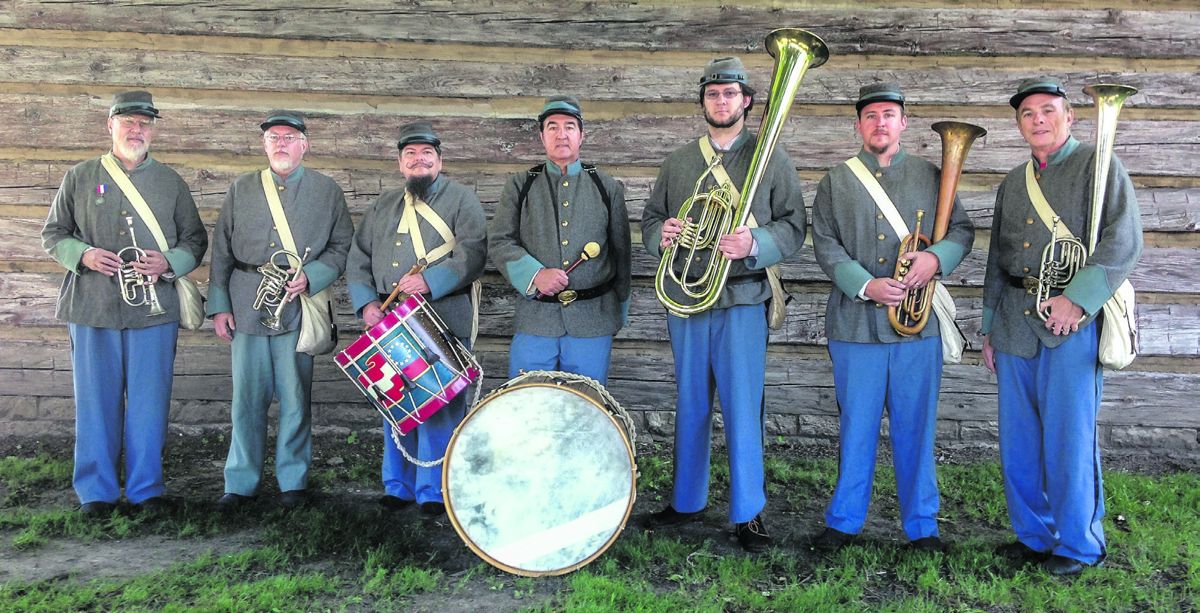
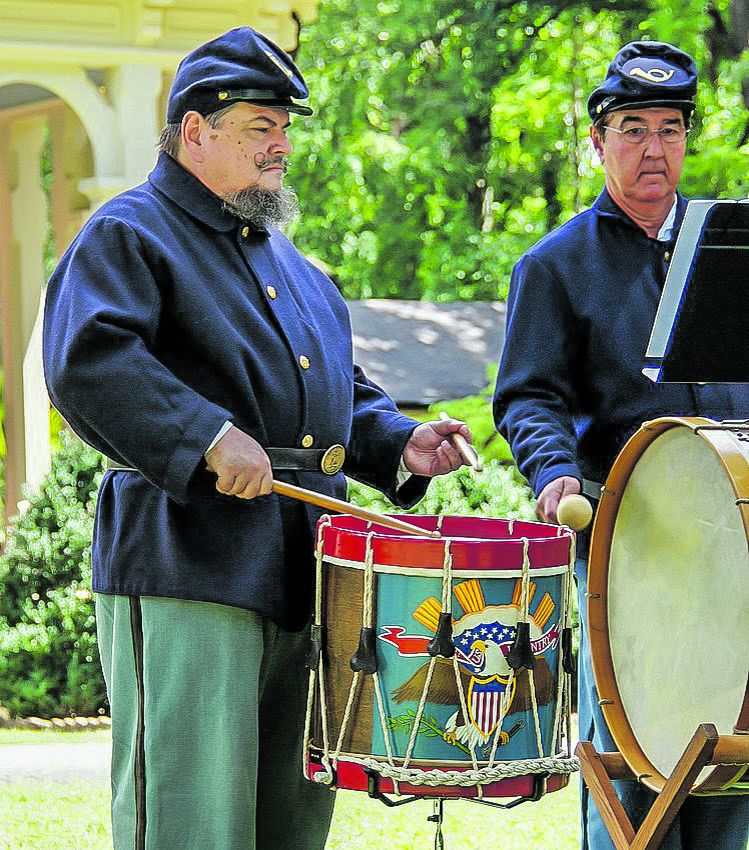
“I don’t believe we can have an army without music,” – General Robert E. Lee to Colonel John R. Lane Commander of the 26th NC Regt., prior to the Battle of the Wilderness, May 2, 1864. During the Civil War, military musicians were divided into two main groups. The first group was field musicians; the second was the marching band. Field musicians played the fife, bugle, or the field snare drum. The main purpose of field musicians was to transmit routine orders through music. Field musicians didn’t need as much musical ability as those who served in marching bands. The instruments of field musicians were easier to learn and the pieces they were required to play required less technical ability.
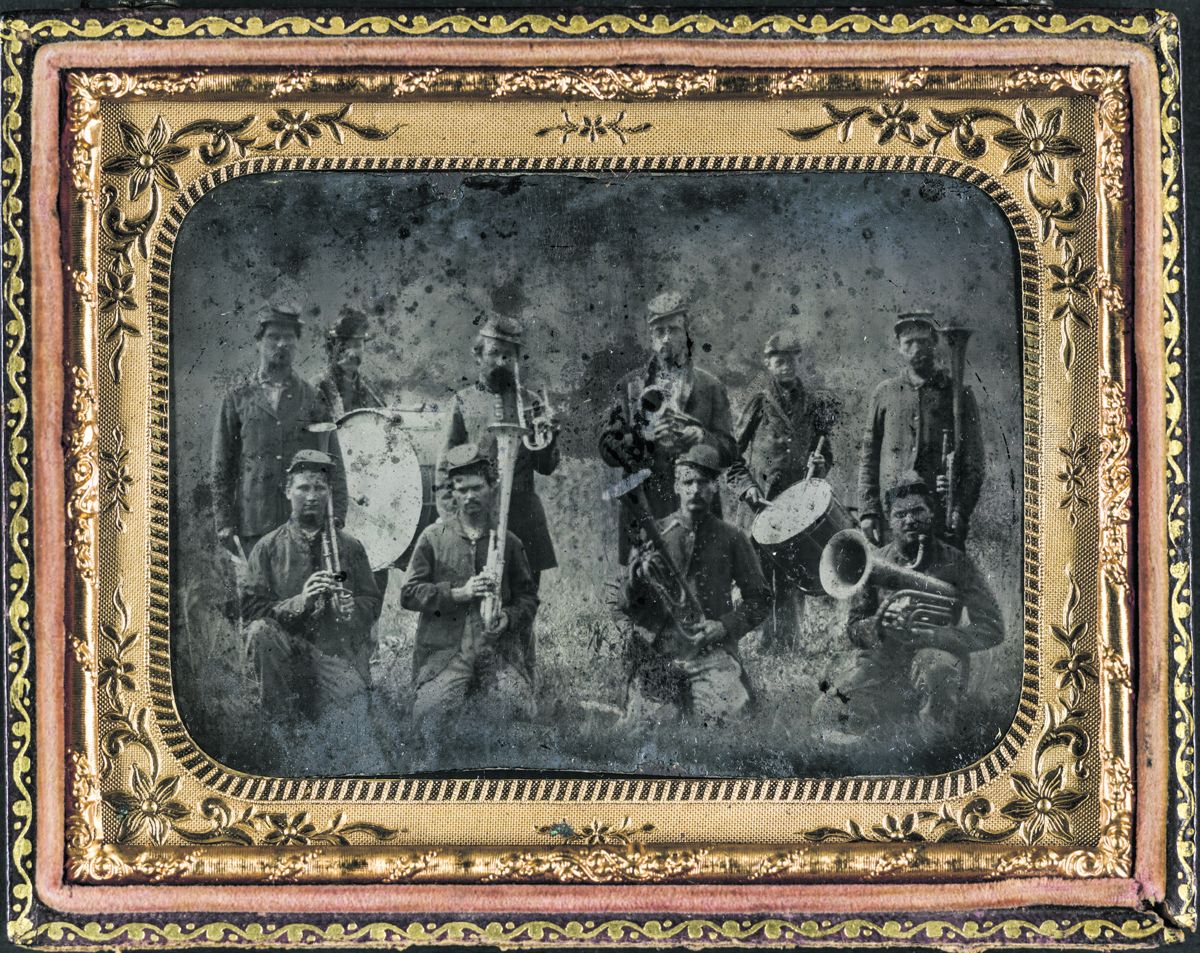
The role of the military brass marching band was quite different. The rise of the brass marching band was an interesting development of the mid-19th century that mirrored broader societal trends across the country. The military marching band itself was a common feature of large European armies as early as the 1700s and they made their way to the American colonies by the time of Revolutionary War. The European military bands of that time were made up of woodwinds: usually two oboes and clarinets, two bassoons or serpents (similar to a clarinet), a simple horn like a bugle with no valves or keys, and a trombone. Prior to the mid-nineteenth century, brass instruments were valveless and, with the exception of the trombone, their use by amateur players was limited to fewer musical tones.
This all changed in the 1840s when Adolph Sax invented a series of valved brass instruments known as “saxhorns.” As a result it became easier to accomplish a broader array of tones using the new brass instruments. Over the next twenty years, the brass band became an integral part of the American music scene. There were community brass bands made up of professional musicians thriving in most major U.S. cities. Sax’s brass instruments ran a full range from soprano to bass. Adolph Sax also invented a line of woodwind instruments for which he later became much better known: the saxophone. These were not a feature of brass bands until later in the 19th century and were not in use during the Civil War-era. By the 1850s, most of the woodwinds in marching bands with the exception of the fife, or perhaps a clarinet, were not in wide use. Another interesting feature of some of the saxhorns was the backward facing bell that directed sound to the rear of the musician, where the
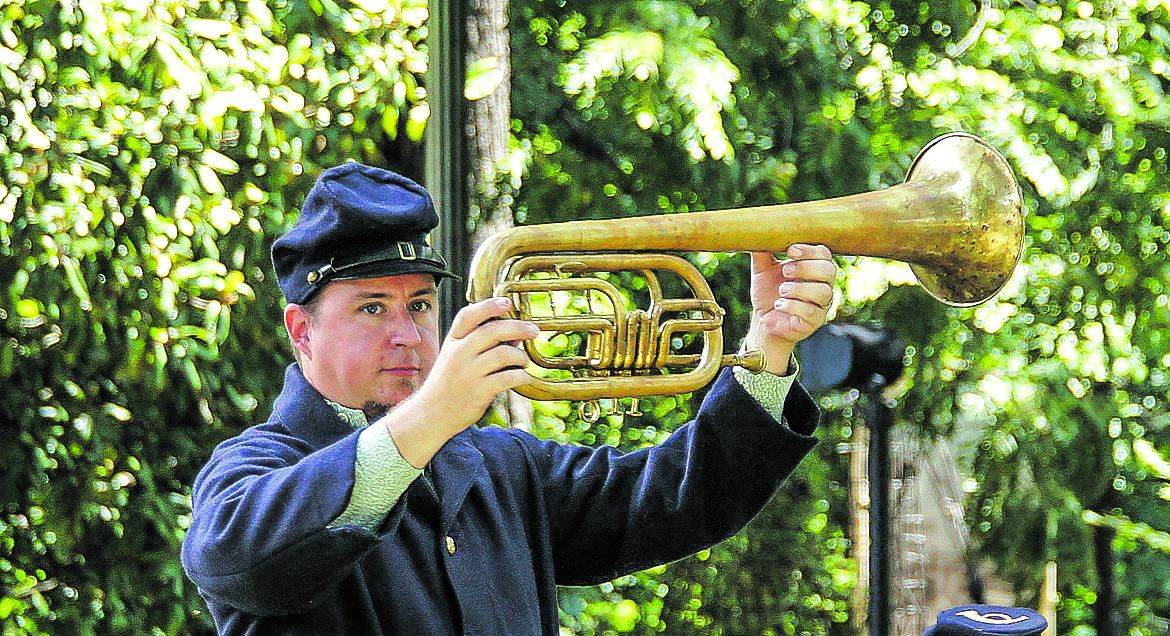
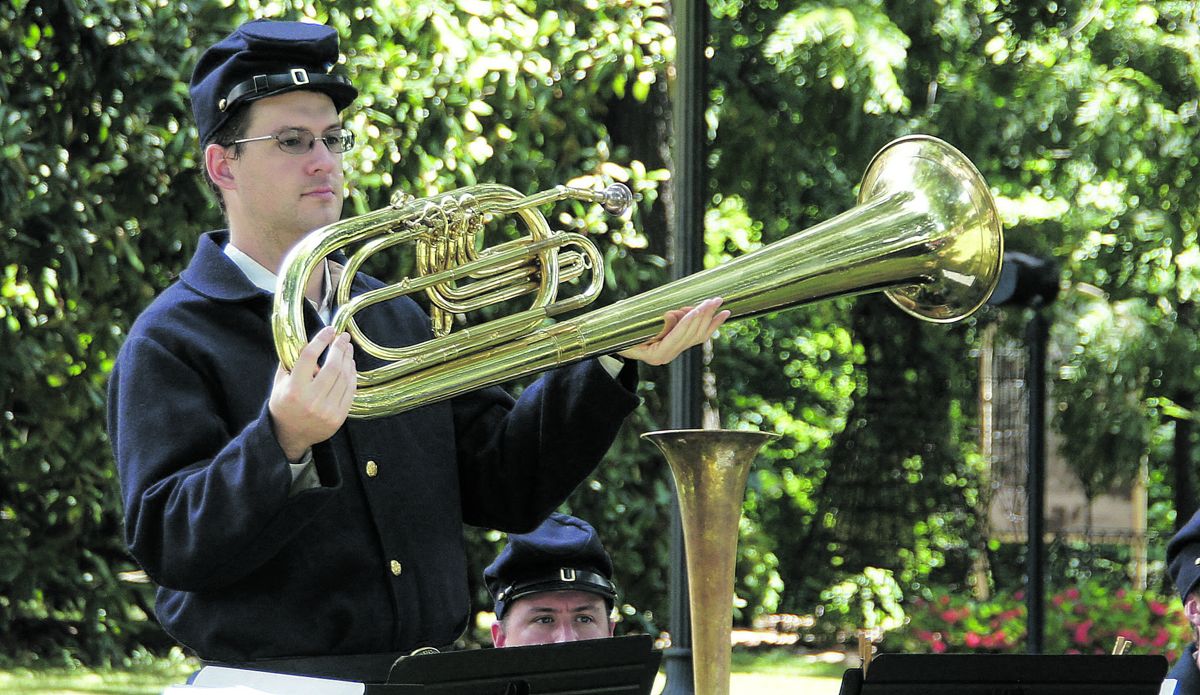
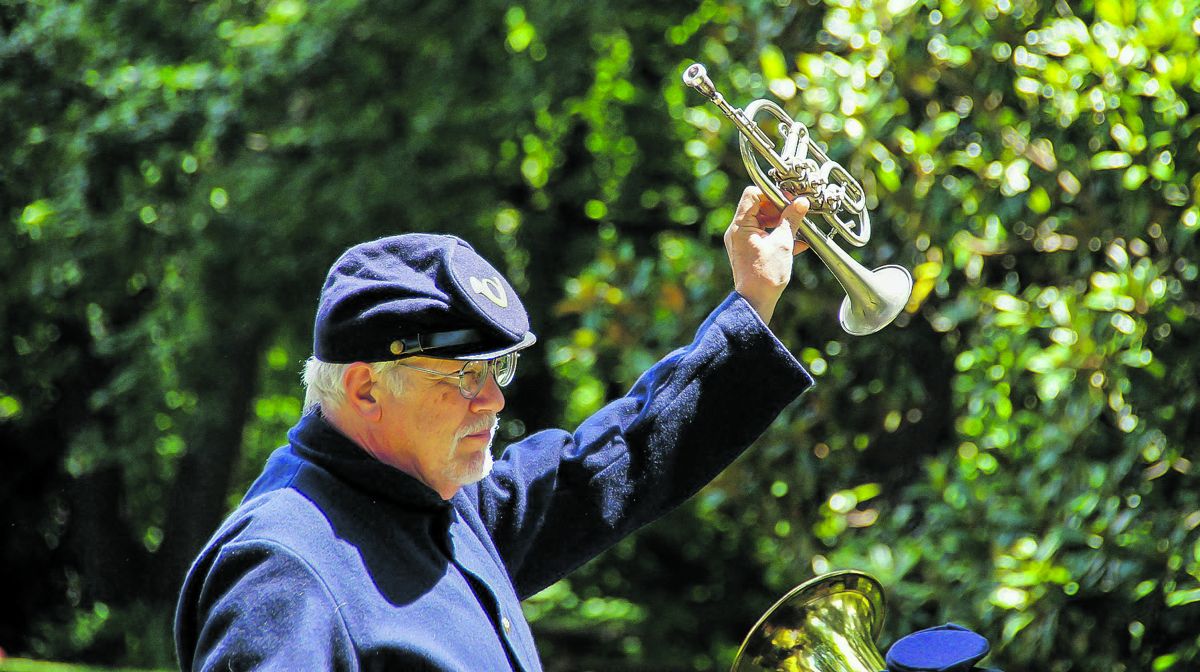
Ian Lowther – 1864 Eb Bass
Dale Proctor – 1864 Bb Cornet
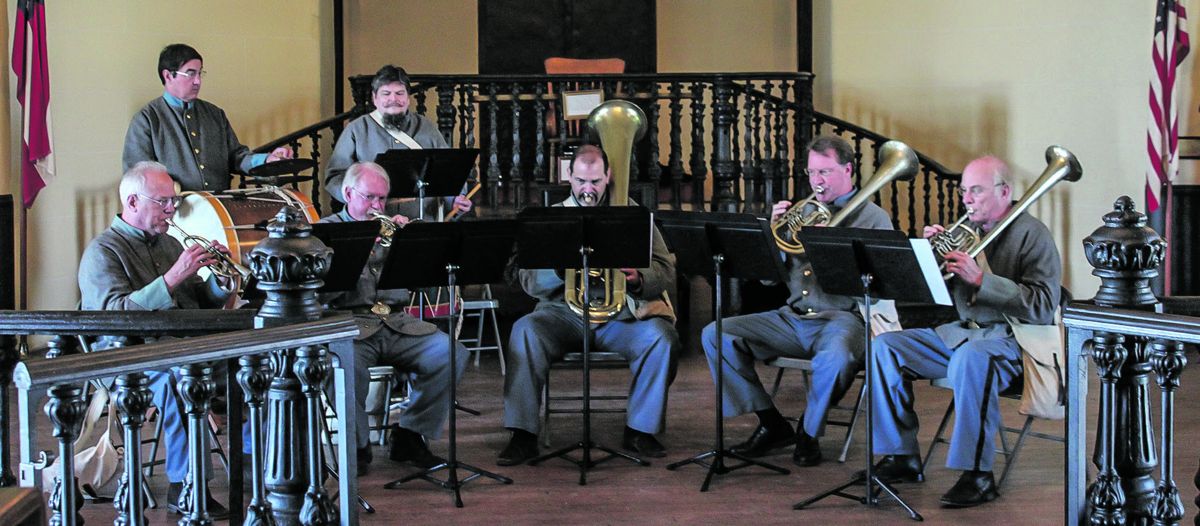
Rory Hamaker – 1862 Bb Tenor Horn Army was marching. According to E. Lawrence Abel (Singing the New Nation: How Music Shaped the Confederacy, 1861–1865), by the beginning of the Civil War in 1861, “[a] brass band was such an integral part of American culture that soldiers on each side felt their regiments and brigades were inferior if they did not have one. A brass band greatly enhanced the prestige of a military unit. Oftentimes officers paid for bands out of their own pockets. Band music lightened a march; it surged a soldier’s adrenaline before a battle; it rallied flagging spirits.” By 1862, there were an estimated four thousand musicians in the Union Army alone. It was also estimated there were an additional 150 regimental bands in the Confederate Army. The expense of having to maintain so many marching bands in the Union Army cost the Federal government an estimated four million dollars a year. The U.S. Congress finally had to pass a bill eliminating regimental bands and limiting the Army to one marching band per brigade (made up of three or four regiments). In response, many regiments self-funded their own bands made up of soldiers recruited for their musical abilities. According to John Nicholas, Park Ranger at Gettysburg National Military Park, “With fewer resources, the Confederate armies had fewer bands (than the Union). That did not mean Confederate soldiers were any less enthusiastic about music. General Jeb Stuart, was a connoisseur of music, and always ensured there were musicians at his headquarters and he sometimes went into battle accompanied by a banjo player (named Sam Sweeney). The band of the Stonewall Brigade was considered one of the best, if not the best band in Lee’s army. Many Moravian immigrants settled in Salem, North Carolina, and served in bands during the war; the best known of which was the 26th North Carolina band, which served at Gettysburg.” The 26th NC band was noteworthy as well because their band books survive in the collections of the Moravian Music Foundation. They are the only known surviving complete set from a Confederate military marching band. According to Bob Baccus of the Olde Towne Brass Band (Huntsville, Ala.) there are six complete sets and a seventh partial set that contain “several hundred titles, representing a true cross-section of music played by both Union and Confederate bands. There are marches and quicksteps, ballads, waltzes and polkas, novelty tunes, patriotic airs, and chorales.” As you might expect, some tunes are associated with the Confederacy such as “Bonnie Blue Flag,” “26th Regiment Quickstep,” “Old North State,” “Maryland! My Maryland!,” “The Southern Victorial March,” and “Dixie’s Land.” Baccus noted, “One must recall that Dixie’s Land, while it came to be more closely associated with the South, was written by a Northerner from Ohio named Daniel Decatur Emmitt in 1859 and was popular across the country. It was also said to be a favorite of US President Abraham Lincoln and he had it played at political rallies.” The 26th NC band also played novelty tunes such as “Mister Here’s Your Mule” and “India Rubber Overcoat.” According to Baccus, “The last tune the band played before being taken as prisoners on April 5, 1865, was the sentimental ballad “Lorena.” They were imprisoned at Point Lookout, Md., for nearly three months; after their release, they returned to Salem, arriving on the afternoon of July 2, 1865.” Bob Baccus and the Old Towne Brass Band recently played two concerts at Oaklands Mansion in Murfreesboro, Tenn., that featured a variety of different period military marches and patriotic airs. Baccus and the Olde Towne
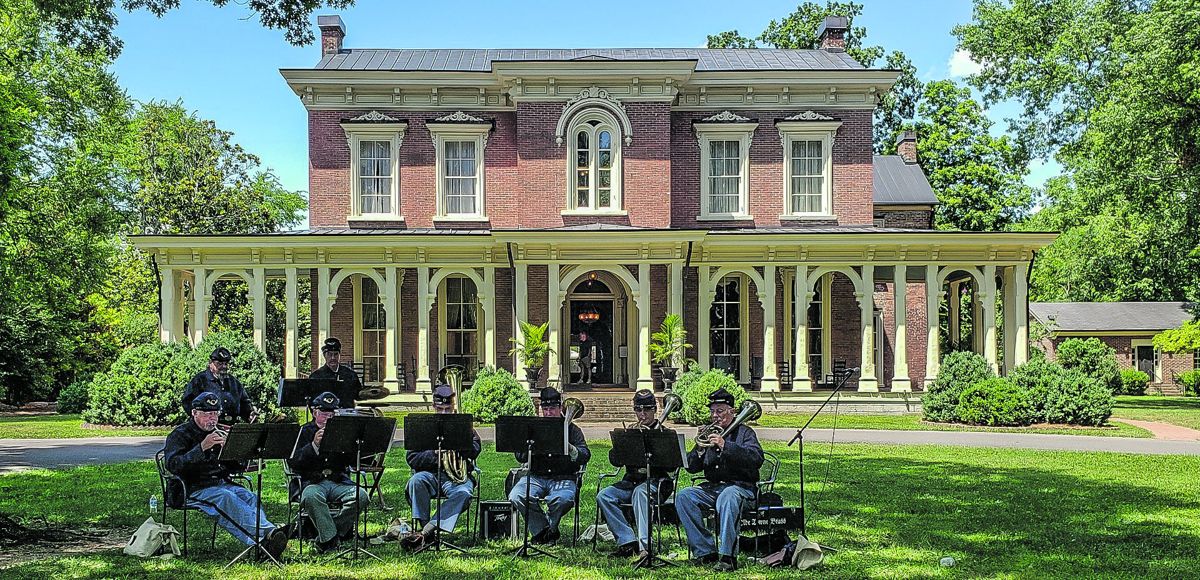
Brass perform songs from Civil War marching bands, both North and South. In addition, several musicians play original Civil War period Over-The-Shoulder (OTS) brass horns. This lends excellent insight into what the music of the time period actually sounded like to listeners. Olde Towne Brass will be playing at the Battle of the Bands program at Stones River National Battlefield on October 17, 2020. Craig L. Barry was born in Charlottesville, Va. He holds his BA and Masters degrees from the University of North Carolina (Charlotte). Craig served The
Watchdog Civil War Quarterly as Associate Editor and Editor from 2003–2017. The Watchdog published books and columns on 19th-century material and donated all funds from publications to battlefield preservation. He is the author of several books including The Civil War Musket: A Handbook for Historical Accuracy (2006, 2011), The Unfinished Fight: Essays on Confederate Material Culture Vol. I and II (2012, 2013) and three books (soon to be four) in the Suppliers to the Confederacy series on English Arms & Accoutrements, Quartermaster stores and other European imports.