A Civil War Battlefield Monument in North Dakota The Whitestone Hill Battlefield Monument
By Charles H. Bogart · Originally published February 2020 · p. 31
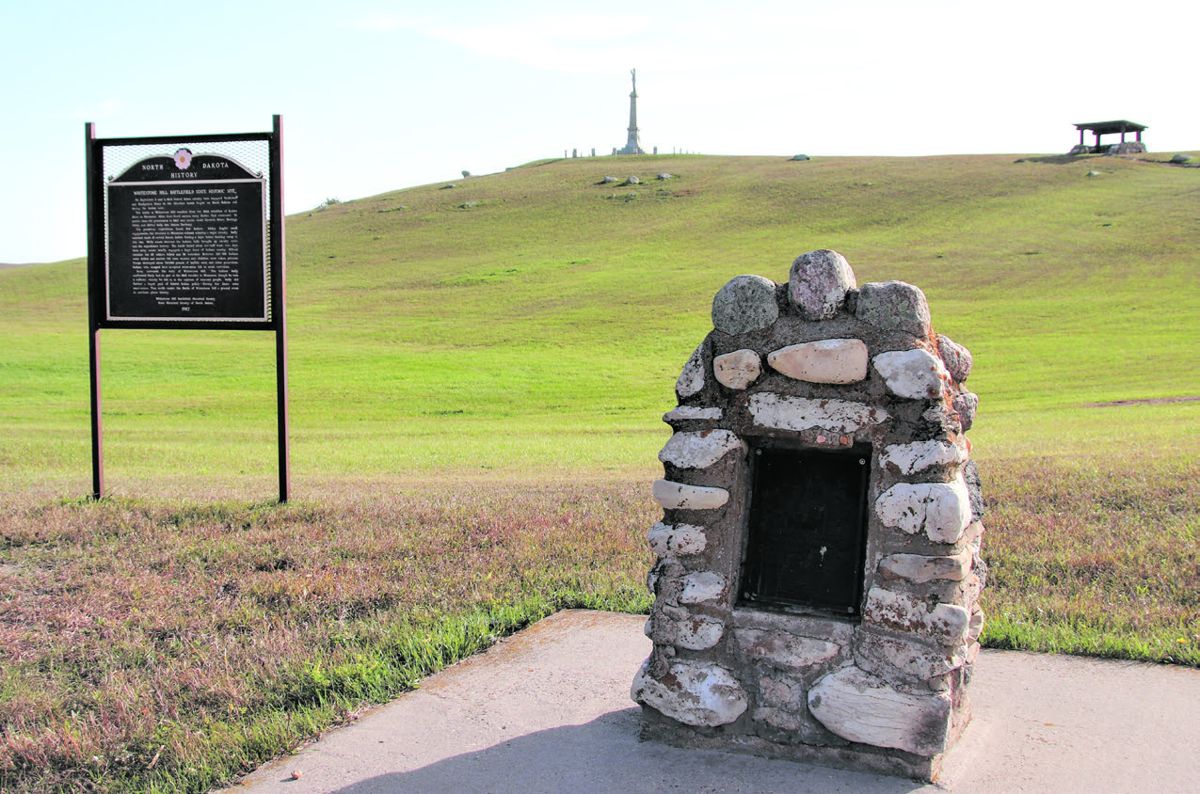
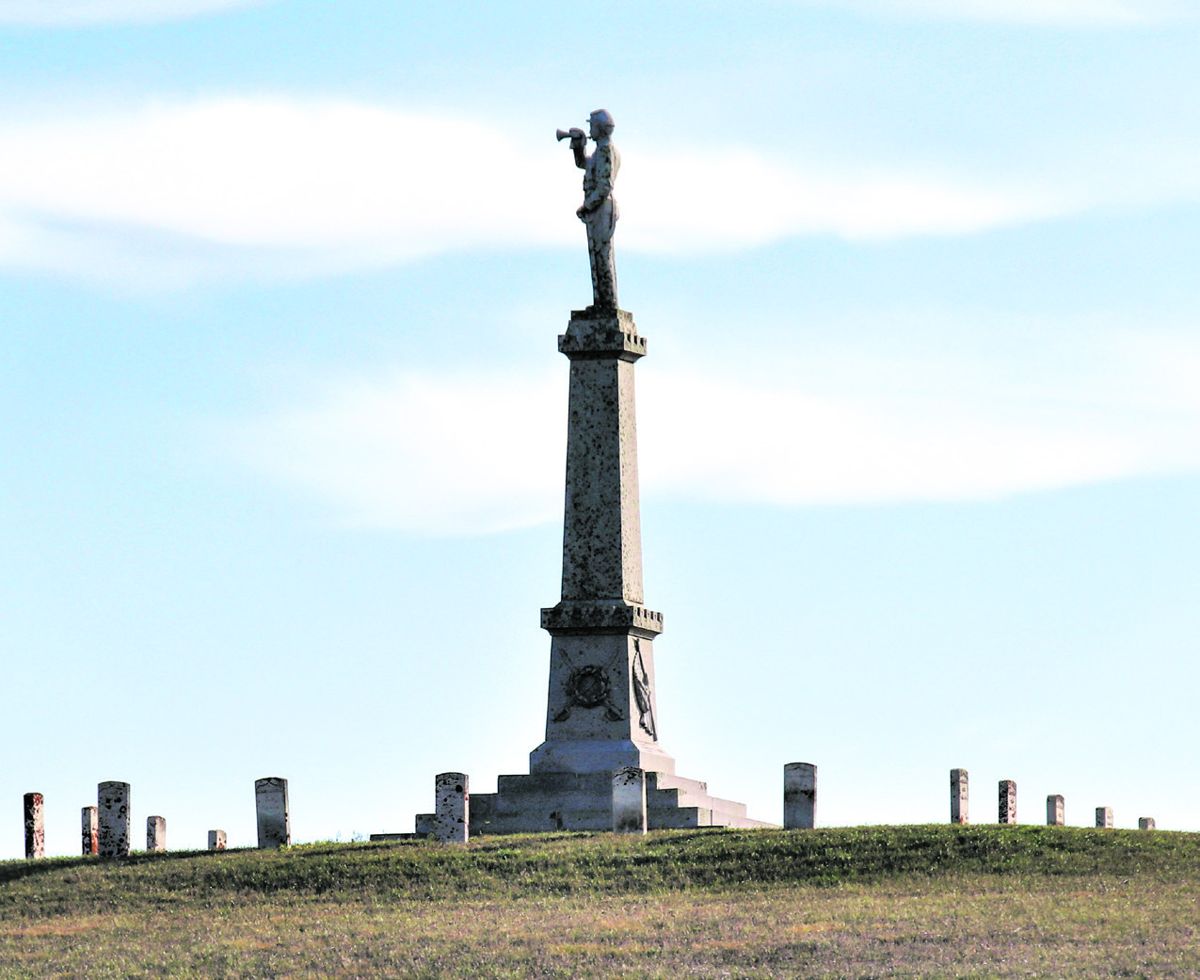
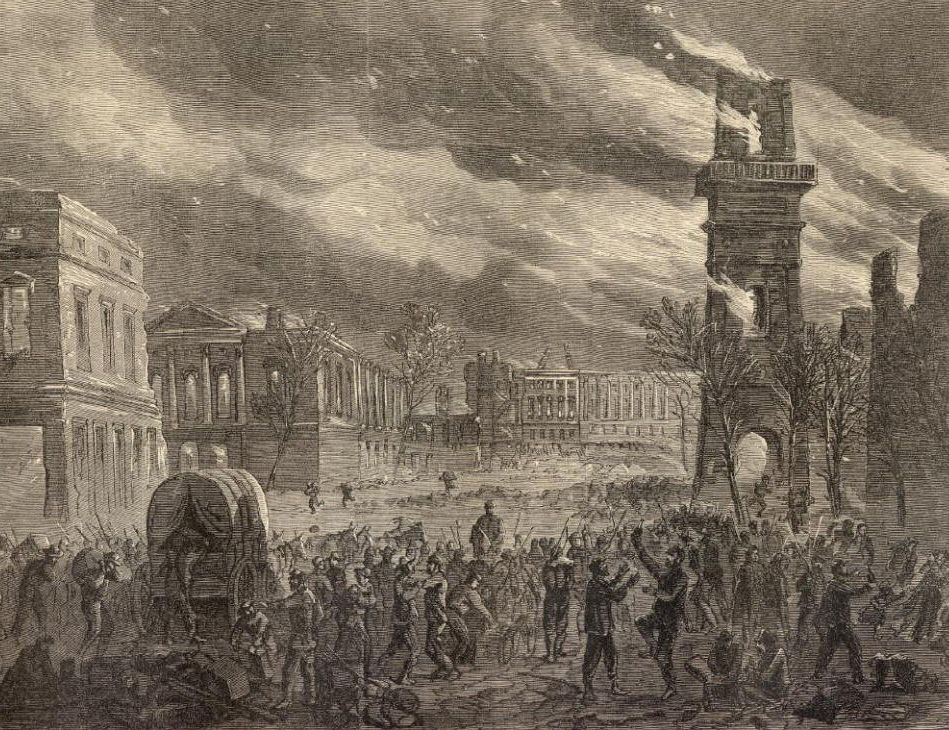
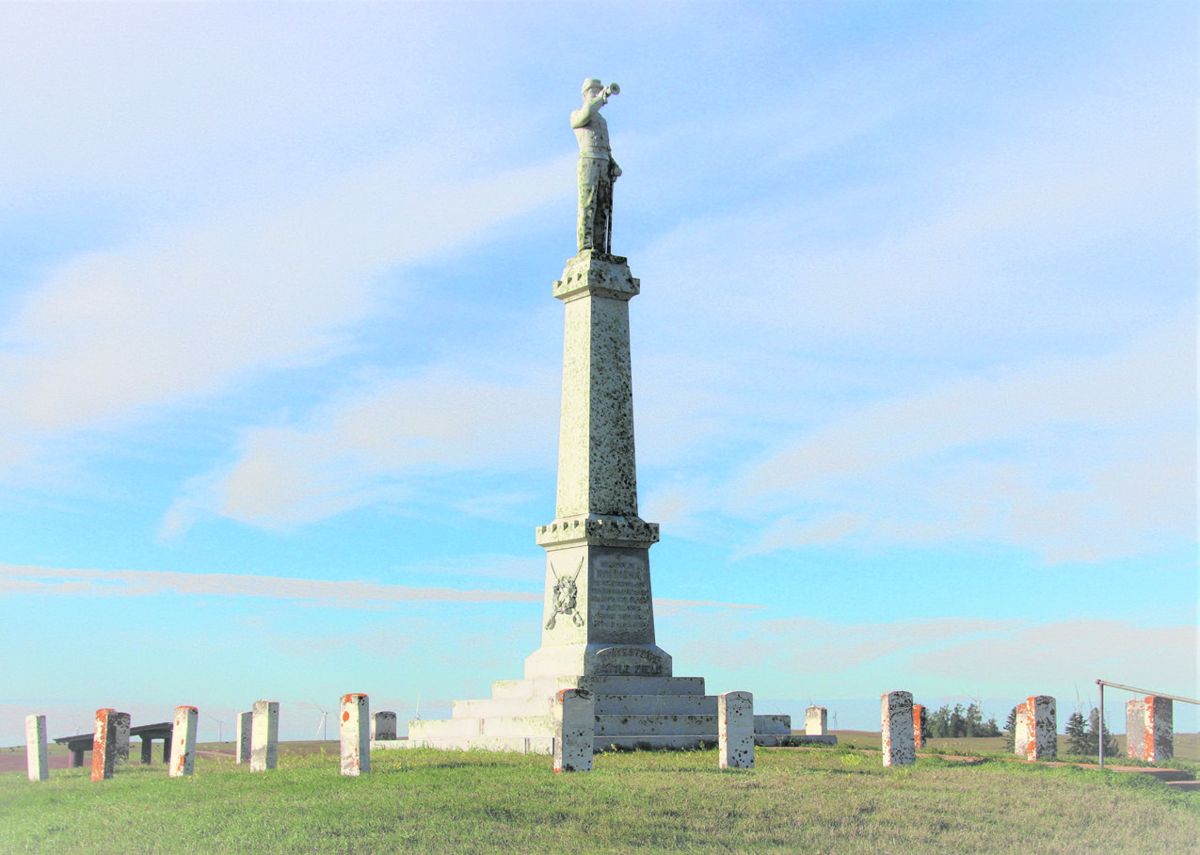
The period of the American Civil War, 1861–1866, saw not only Federal and Confederate troops battling each other but also saw Federal and Confederate forces fighting various American Indian tribes. In August 1862 the Sioux went to war with the United States in the Dakota War of 1862, and attacked settlements throughout Minnesota killing some 600 white settlers. In response the War Department in 1863 organized various military expeditions to hunt out and destroy the hostile Sioux warriors. These United States military expeditions into the Dakotas consisted of state troops in Federal service. Among the units were the 2nd Nebraska Cavalry and 6th Iowa Cavalry. Both regiments had been raised for service on the Western Frontier, the 2nd Nebraska in October 1862. and the 6th Iowa in January 1863. These two cavalry regiments were actually mounted infantry as they were armed with infantry guns. In early August 1863, Brigadier General Alfred Sully loaded the 2nd Nebraska and 6th Iowa on steamboats and sailed up the Missouri River to present day Bismarck, North Dakota. In total General Sully had some 1,200 men with him on this expedition. At Bismarck General Sully established a supply base to support his advance into the interior of North Dakota. When General Sully moved out from Bismarck his command numbered some 700 men. On Sept. 3, 1863, in the late afternoon, General Sully and his command discovered a large Indian village at Whitestone Hill, near present day Kulm, N.D. The village consisted of some 400 lodges that contained Yanktonai, Santee, and Teton Sioux, and had a population of approximately 3,000, of which some 900 were warriors. It was not until 6 p.m. that General Sully and his men were ready to move against the Sioux. As he approached, Sully deployed his men in a line abreast so they could sweep through the village, the 6th Iowa on the right and the 2nd Neb. on the left. What happened after General Sully brought in his men into line of battle is the subject of some controversy. The Sioux hold that their chiefs rode out to meet the general and explained that they were just camped here to gather food for the winter, that they were peaceful, and would soon return to their reservation. Sully claimed in his after-action report that the chiefs were just stalling for time so that the village could flee. At any rate, Sully ordered his men to advance on the village. The first Sioux Sully’s men encountered surrendered to the troops as they entered the village, but shortly after the soldiers penetrated the village firing broke out. It is unknown who fired the first shot, however hand to hand combat soon began throughout the village. The warriors resisting the cavalry’s advance into the village bought time for non-combatants to flee. As night began to descend on the village, Sully ordered his men to pull out of the village afraid of his men firing on each other. The men of the 6th Iowa and 2nd Nebraska left the Sioux village and set up camp on the hill from which they first saw the village. By first light the next morning the Sioux had abandoned the village. When Sully’s men reentered the village they encountered both dead and living Indians. The living consisted of some elderly Sioux who had been unable to flee, along with a few children who had become separated from their parents. In the village General Sully’s command found some 450,000 pounds of dried buffalo meat, the village’s winter meat supply. This meat supply, along with the lodges, was ordered destroyed. The elderly and children were gathered up for transport to Fort Pierre, S.D. The fight with the village’s warriors however was not yet over. On Sept. 5 a patrol of 27 soldiers led by Lt. Charles Hall attempting to follow the path of the retreating Sioux was attacked as they encountered Sioux fleeing the village heading north for Canada where they would winter. Sully’s command suffered 22 killed and 38 wounded while Sioux casualties are estimated to have been 150 killed and wounded and 150 captured. In 1909 a monument was erected on a hill above the village to honor the men of the 2nd Nebraska Cavalry and 6th Iowa Cavalry. The shaft is topped by a trooper blowing a bugle sounding Taps. On its base is recorded: “In memory of the soldiers of the 6th Iowa and 2nd Nebraska who were killed on this ground in battle with Sioux Indians on September 3 and 5, 1863.” Around the monument are twenty-two headstones commemorating the soldiers who died. In 1941, a monument was erected at the site of the Sioux village to honor the Sioux who fought and died here. In that same year Civilian Conservation Corps (CCC) workers erected two rock shelters on the battlefield, one near the soldier monument and one near the Sioux monument. The battlefield today is part of the North Dakota Park system and, while well off the main highways, is worth visiting as the battle site remains as it was in 1863. Charles H. Bogart is a graduate of Thomas More University and Ohio State University. He is president of the Frankfort Civil war Roundtable, serves on the board of the Kentucky Civil War Roundtable, and is employed as a tour guide at the Fort Boone Civil War Battle Site in Frankfort, Kentucky. He has co-authored two books on Kentucky and the Civil War.