The Unfinished Fight
Wedding Rings
By Craig L. Barry · Originally published December 2020 · pp. 8–9
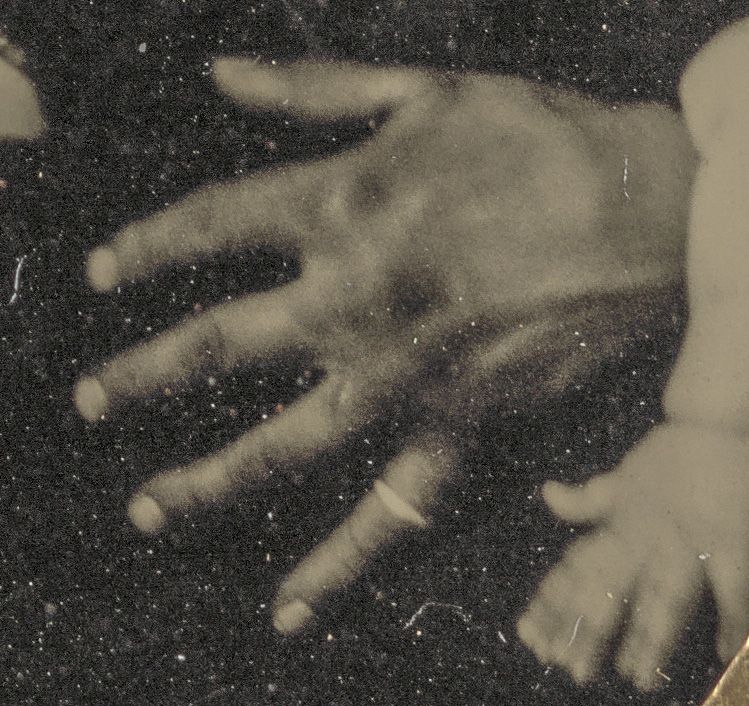
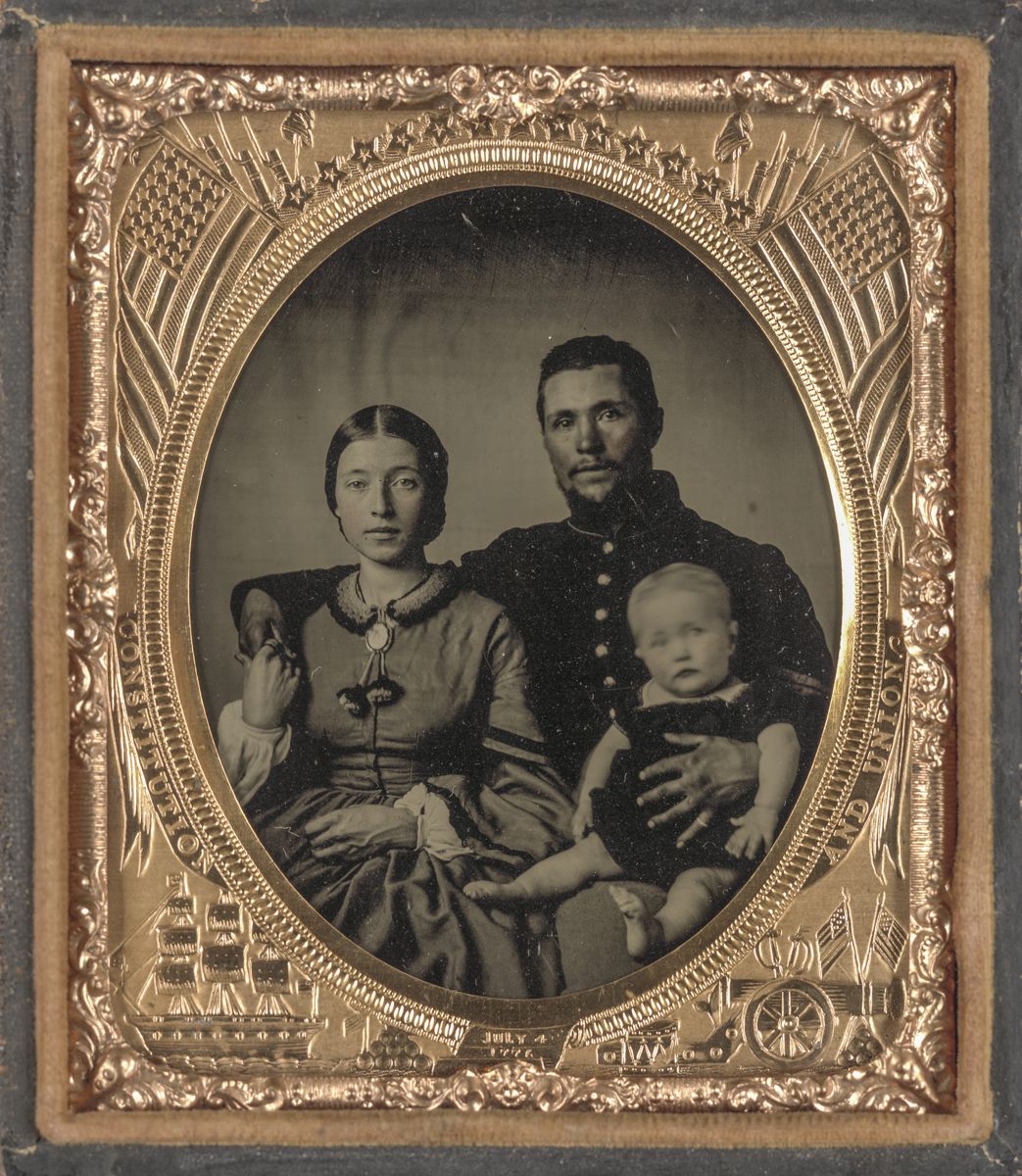
While the wearing of wedding rings by married women has been traced back to ancient times, it is only in the latter part of the last century that more than a small minority of married men began doing the same. Historically, one reason a wedding ring was worn only by a woman was because it served, at times, to represent ownership by her husband, or at least that she “belonged” to someone. While wedding rings were not the norm for men during the Civil War era, they are occasionally found while digging for relics in Civil War campsites. They are almost always copper or brass although sometimes the brass ring is gold plated. The expense of a solid gold ring would have put such a luxury out of reach for the working-class men who served during the Civil War. Presumably those who chose to wear a wedding ring could not afford the luxury of jewelry in solid gold. In the book Tenting Tonight (Time/Life Books) on both pages 39 and 43 there are photos of married men wearing rings on their little (pinky) fingers. A recent biography of General Ulysses S. Grant provides an account of him losing his wedding ring while he was stationed at Fort Humboldt on the northern California coast during 1854; he became quite despondent over the loss. Grant was married in 1848; ironically future Confederate General James Longstreet was the “best man” at Ulysses and Julia Dent Grant’s wedding in St. Louis. Grant’s time at Fort Humboldt was a low point for him overall. He wrote, “I do nothing here but sit in my room and read and occasionally take a short ride. I have not been a quarter of a mile from my room for about one week. I am enjoying good health but growing more lazy every day for want of something to do.” In a number of period images, men with what are assumed to be wedding rings are shown wearing it on their little finger. Grant is also pictured wearing his wedding ring on his little finger. In period images of General J.E.B. Stuart, he wears his West Point signet ring on the little finger. Of course, not all rings were wedding rings. Union soldier N.H. Panghorn, recalling the
1865 surrender at Appomattox, wrote, “Our boys and the Rebels would be in each others camps talking and exchanging pen knives, finger rings, hats and caps and all kinds of little keepsakes…or as the Rebels say ‘trick’…there were a good many instances where we had but for a few hours before been trying to kill each other.” There were also accounts of soldiers sending personal possessions of a fallen comrade-in-arms back home to his loved ones. It is not specified if they included wedding rings or not. An account from The Civil War in Louisiana: Military Activity notes, “the Confederate prisoners were driven into a back corner and compelled to lie down…Union soldiers arrived and looted one officer, cutting off his gold uniform buttons and the wedding ring from his hand.” Clearly the officer wore a wedding ring, but it is not clear on which finger he preferred to wear it. There was also an ethnic component to men wearing wedding rings in the mid-19th century. It was not uncommon for German men to wear wedding rings on their right hand, at least as far back as the 18th century; in Scandinavia the wearing of wedding rings for men is a tradition that dates back to the Viking-era. It is believed that World War II heralded a seismic shift as far as men wearing wedding rings. Western men fighting overseas may have chosen to wear wedding rings as a comforting reminder of their wives and fam-
ilies back home. A colleague of mine who works for a jewelry store confirmed as much. In their retail training materials it states that it was not customary for men to wear wedding rings prior to World War II. Craig L. Barry was born in Charlottesville, Va. He holds his BA and Masters degrees from the University of North Carolina (Charlotte). Craig served The Watchdog Civil War Quarterly as Associate Editor and Editor from 2003–2017. The Watchdog published books and columns on 19th-century material and donated all funds from publications to battlefield preservation. He is the author of several books including The Civil War Musket: A Handbook for Historical Accuracy