
Never-Before Seen Scrapbook Sheds New Light—Provides Valuable Insights
By Leon Reed · Originally published December 2020 · pp. 1–13
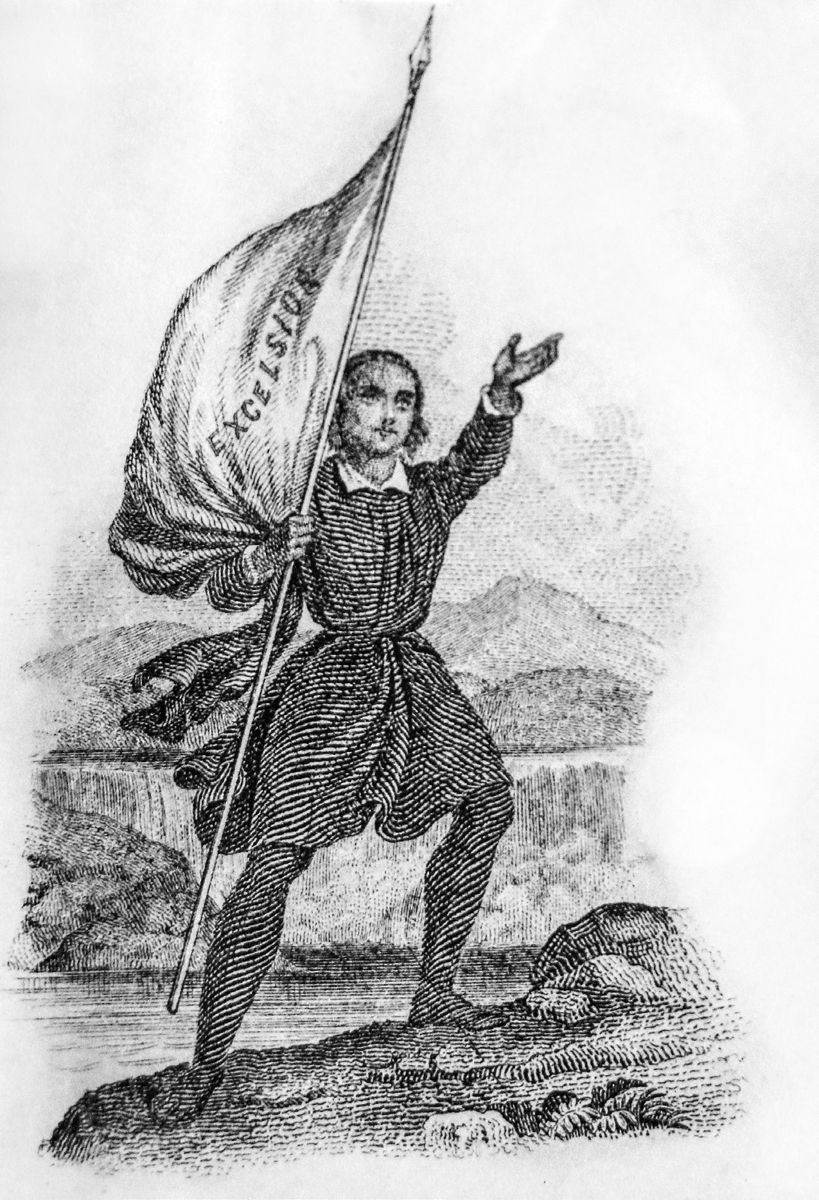
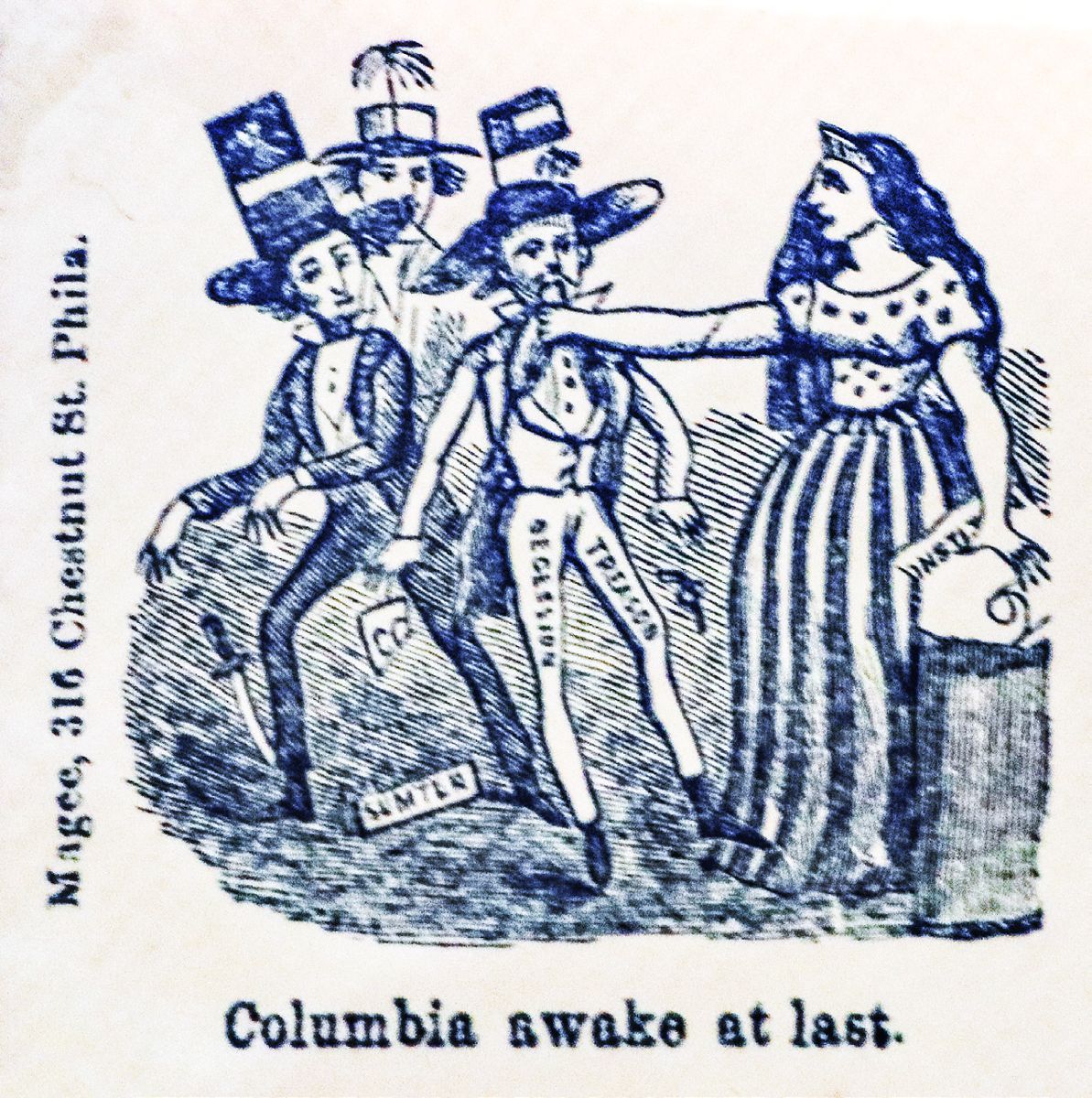
In the heated days following the fall of Fort Sumter and President Lincoln’s call for 75,000 troops, northern governors raced to declare their full support and promise that their state would meet or exceed the president’s quota for volunteer troops. Lincoln and his nervous cabinet cared little about promises. Troops on the ground, in Washington, D.C., were what mattered to a group of people increasingly concerned about the possibility of Virginia troops, or southern sympathizers in Washington, swooping in to kidnap Lincoln and his cabinet. A never-before seen scrapbook maintained by Hiram Roosa of Rondout, N.Y., the corresponding secretary of the New York Military Association, provides valuable insights into the secession crisis and the nation’s progress toward civil war. The collection consists of photos, original correspondence, souvenirs sent to Roosa by various New York soldiers, and a collection of approximately 300 patriotic envelope covers that commented on various aspects of the crisis and the war. The collection provides particular insights into the pivotal role played by New York militia regiments in the early days of the war.
Sandford, commander of the 1st Division NYSM, offered the entire division to be ready to march “on an hour’s notice.” The lame duck Buchanan administration wasn’t eager to provoke a confrontation at this time, so the offer was politely declined. Even earlier, on January 9, 1861, after South Carolina forces fired on the Star of the West, a ship attempting to resupply the Fort Sumter garrison, the New York Military Association (NYMA) notified Major Anderson of a resolution of support. 1 After the Star of the West confrontation, the standoff over Fort Sumter simmered on for almost three months. The issue was brought back to the front burner when Lincoln ordered another resupply expedition. This was approaching Charleston in mid-April when CSA forces in Charleston opened fire on the fort. The attack on and surrender of Fort Sumter shook the North out of its complacent attitude. The reaction in New York City was instantaneous. Democratic newspapers and politicians who had opposed Lincoln now supported the war policy. Politician Dan Sickles wrote: “The city of New York will sustain the government… Democrats are no longer partisans. … The attack on Fort Sumter has made the North a unit.” Even the New York Herald, previously highly critical of Lincoln’s policy, came out in support of Lincoln’s war program. All the northern governors quickly issued statements of support, but Lincoln needed to defend Washington NOW and troops parading in Indianapolis or being recruited in Lansing wouldn’t help defend the national capital. Massachusetts raised four regiments immediately. Two were sent to reinforce
New York and Secession While much of the north reacted calmly to the initial round of secession and felt that, like always, a compromise would be worked out; the New York State militia organization took the crisis more seriously. In January 1861, Major General Charles
Fort Monroe; the other two were among the first to head toward Washington. Other than these regiments, the state of New York was in the best position to dispatch significant numbers of reinforcements. The reason for New York’s comparatively fast mobilization was that, under the sponsorship of the NYMA, many regiments already existed. An active New York militia was organized into two divisions and regiments often had officers and at least partially full rosters. In some cases, militia units had their own armory, some weapons, and a regular drill schedule. In fact, New York militia units were regularly activated in peacetime to perform ceremonial duties or maintain law and order. Regiments were frequently called up to deal with fires, riots, or other local emergencies and several regiments were paraded to honor the Prince of
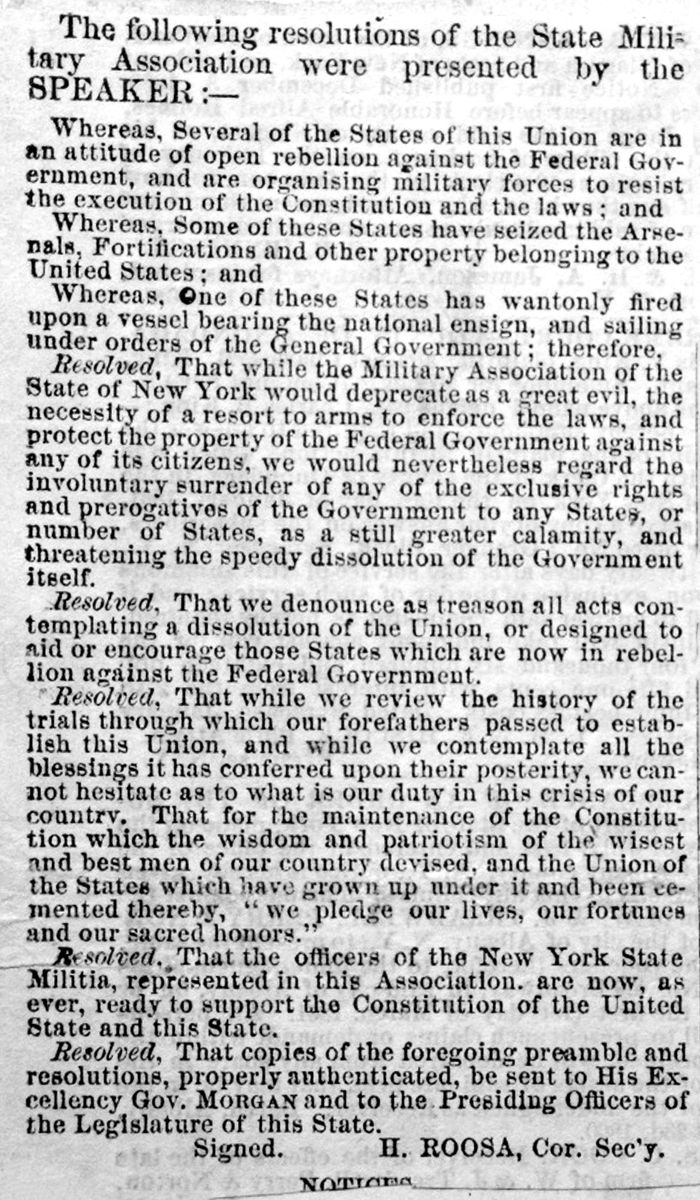
Wales (later King Edward VII) in 1860.2 In these early days, militia regiments would be dispatched immediately and serve as gap-fillers until the adjutant general could recruit volunteer regiments that would serve for two years.
Union Square On Monday, April 14, Horace Greeley’s Tribune called for a patriotic assembly to be held in New York City the following Saturday. A group described as “the solid men of Wall Street” met to plan the rally and speakers. By the time the rally was held, word had already reached New York that a Massachusetts regiment had been ambushed while passing through Baltimore, and New York City was totally aroused.
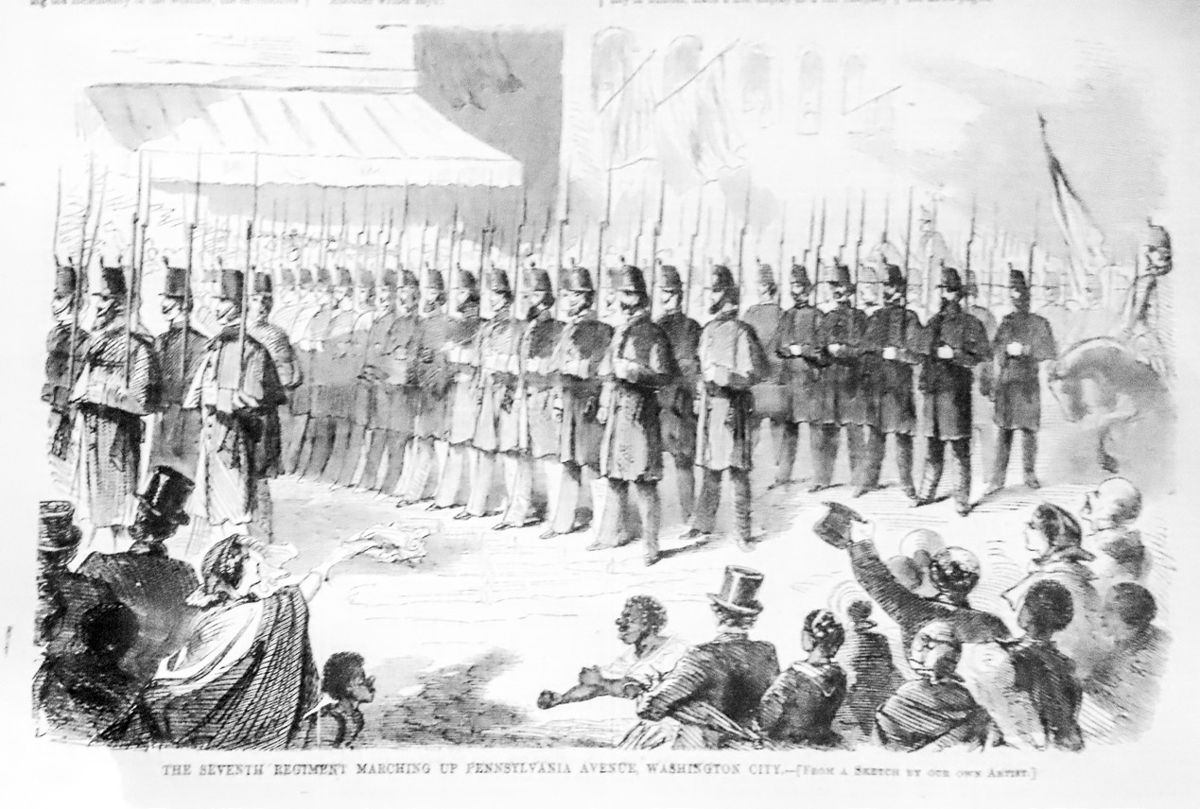
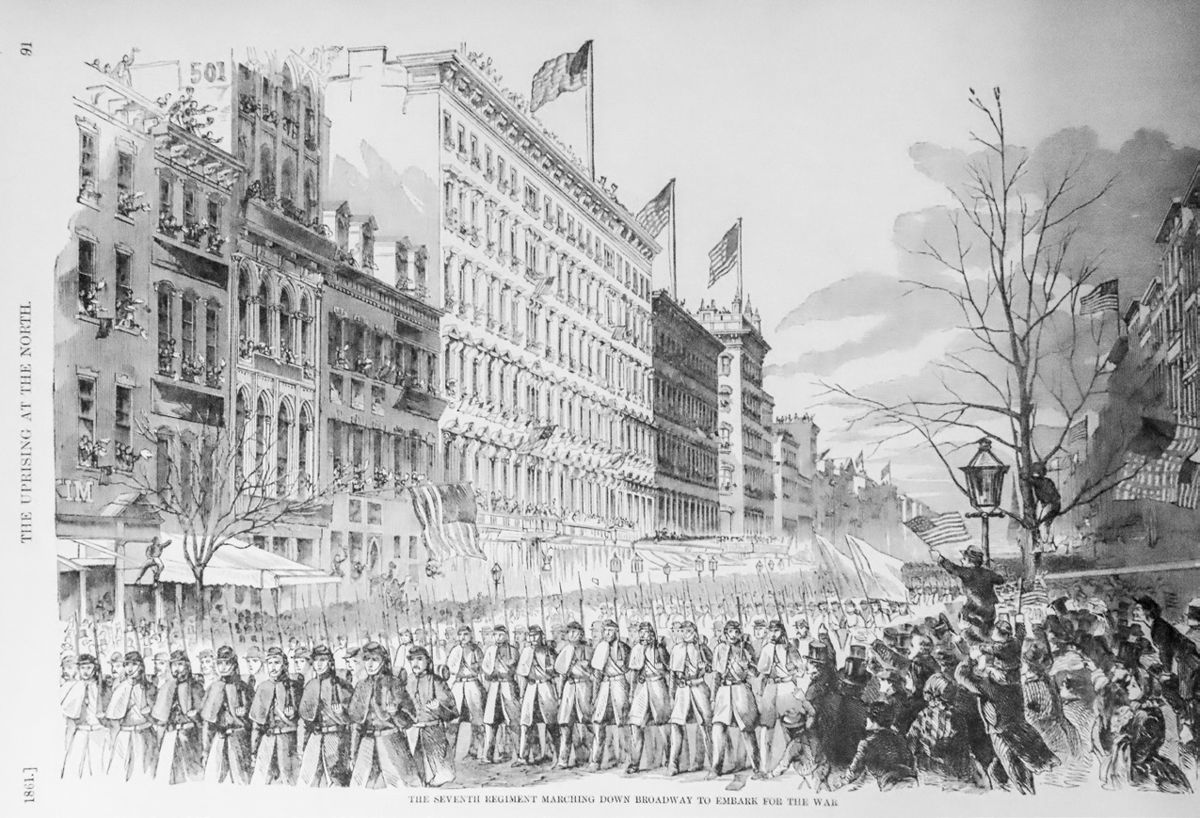
Seventh’s journey and its visit to Mount Vernon was a major national story. The 7th was celebrated in every city and participated in a parade and review by the president and his cabinet during its visit to Washington, D.C. The New York Herald wrote a 7-column front page story on their July 12, 1858, return home.3 By April 19, the 7th and 69th had offered their services; the 7th NYSM and 8th Massachusetts paraded down Broadway that day. A 7th militia soldier, writer Pvt. Ted Winthrop, wrote about the excitement of the event for Atlantic magazine: It was worth a life, that march. Only one who passed, as we did, through that tempest of cheers, two miles long, can know the terrible enthusiasm of the occasion. I could hardly hear the rattle of our own gun-carriages, and only once or twice the music of our band came to me muffled and quelled by the uproar. … Handkerchiefs, of course, came floating down upon us from the windows, like a snow. Pretty little gloves pelted us with love-taps.4
On April 17, the New York adjutant general issued General Order No. 15, ordering Gen. Sandford to dispatch one regiment for immediate service; Sandford sent the 7th NYSM. The best-known New York militia regiment, the 7th, was ordered to report immediately. The 7th was a “silk stocking” regiment, made up primarily of children of the city’s elite. The 7th was regularly called out for law enforcement duties, including election riots, the abolition riot (1834), stevedore riot (1835), anti-rent war (1839), Croton water riot (1840) and many others. The regiment was also highly prized for ceremonial duties. It earned particular fame in 1858 for escorting President Monroe’s remains back to Virginia. The
New York’s response was complex. The militia units were the first to go, but the majority of the militia regiments only enlisted for 90 days. In all, 11 militia regiments signed up for three months service. Once the administration said it would accept no more 90 day regiments, four additional regiments enlisted for 3 years (2nd, 9th, 14th, and 79th). Thirteen of these 15 regiments were from either New York City or Brooklyn; the other two came from Albany and Kingston. It might have seemed to the marchers and onlookers watching the 7th NY and 8th Mass. parade that the resources needed to relieve Washington were well in hand, but as the regiments prepared to move south, the seemingly routine rail passage through Baltimore to Washington was becoming more complicated.
The rally on Union Square was the largest held in the United States up to that point. An estimated 200,000 people rallied in favor of the Union, and businessmen pledged financial support for the then-forming volunteer regiments. At the conclusion of the rally, business leaders agreed to form the Union Defense Committee to help organize regiments, equip them, and transport them to the front.
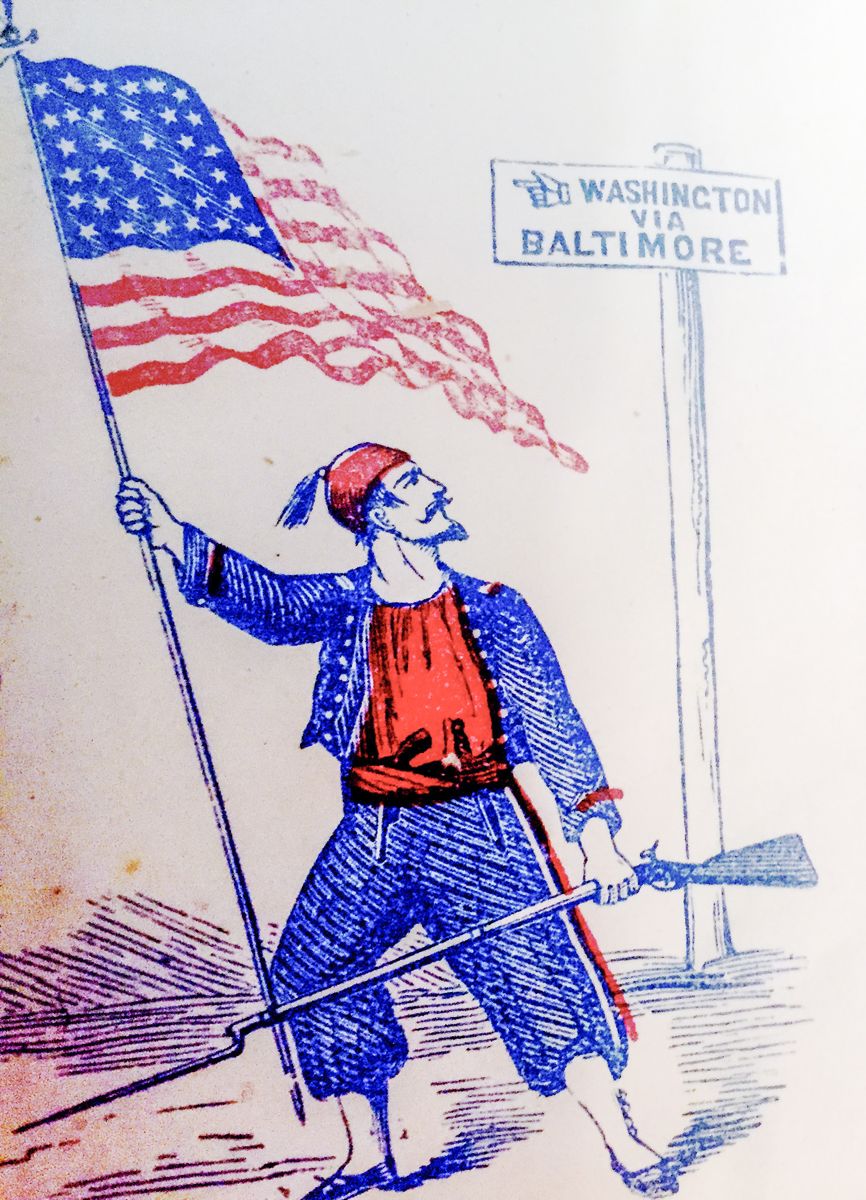
On April 19, soldiers from the 6th Massachusetts Infantry had to fight their way through an angry pro-secession mob in Baltimore. That night, the governor and mayor insisted to President Lincoln that no more Federal reinforcements should be sent through Baltimore. The same night, the Maryland militias took more direct action. Parties led by the Baltimore police chief and the pro-secessionist state mi- of repairing and guarding the litia commander burned rail- branch line fell to the 7th New road bridges and cut telegraph York, while the Massachusetts lines north of Baltimore. With regiment was responsible for the direct route by rail through maintaining law and order in Baltimore cut off, it was neces- Baltimore. sary to establish a new route The Seventh finally linked up through Annapolis. Units trav- with the Washington rail line, eled by ship to Annapolis, then and its arrival in Washington on follow the branch railroad to a April 25, is considered the event junction with the main north- that finally secured the nation’s south line south of Baltimore. capital. The flood of other New The two first regiments to follow York regiments followed closely this route were the 7th New York behind. The 6th, 12th, and 71st, and the 8th Massachusetts. gathering in their armories on To open this route, it was April 20, embarked on steamers necessary to repair the branch April 21. railroad from Annapolis to the Not all newspapers celebratjunction, guard the branch line ed the 7th or accepted that the and bridges, and get a locomo- regiment had made a bloodless southern newspaper reported gleefully: An engagement … on Annapolis Heights … the New York City 7th regiment … were literally cut to pieces. The dispatch spread like electricity all over the city.5 According to a history of the Union Defense Committee, the public was indignant about the actions in Maryland and the cry “To Washington via Baltimore” expressed their view that the Annapolis bypass was unacceptable and U.S. troops should force their way through Baltimore.6
For the time, passage would still be via Annapolis. This passage, plus the raising and equipping of regiments, would be aided by a new organization.
Union Defence Committee (UDC) The original purpose of the UDC was to collect funds to use to help raise and transport troops. The new organization set about its work immediately, chartering the Kill von Kuil to open the transport route via Annapolis, helping equip newly forming regiments, and providing financial assistance to families left behind. Lincoln was so desperate to get troops dispatched that he authorized direct payments to the UDC from the Treasury and for a while the UDC became a sort of mobilization coordinator and purchasing agent. Among the actions taken by the UDC during the first hectic months were: 1. Chartering the Quaker City to protect Chesapeake Bay shipping from privateers, 2. Surveying loyal governors in early May, to determine the number of troops they were raising and their condition. 3. Purchasing cannon to equip New York regiments. 4. Purchasing 5,000 rifles for the “Union men” in western Virginia and another 1,000 stand of arms and ammunition for the “Union men” in Kentucky. 5. Directly sponsoring the equipping and raising of four regiments, Garibaldi Guard (39th NY), Mozart (40th), Dekalb (41st), and Tammany (42nd). 6. Advocating with the national government and the governor, and then accelerating the equipping and forwarding of regiments in the second wave of deployments. 7. Supplying weapons to General John C. Fremont in Missouri. One of the committee’s last actions, in November 1861, was to provide $1,000 in aid to “the loyal inhabitants” in the area of Cape Hatteras.
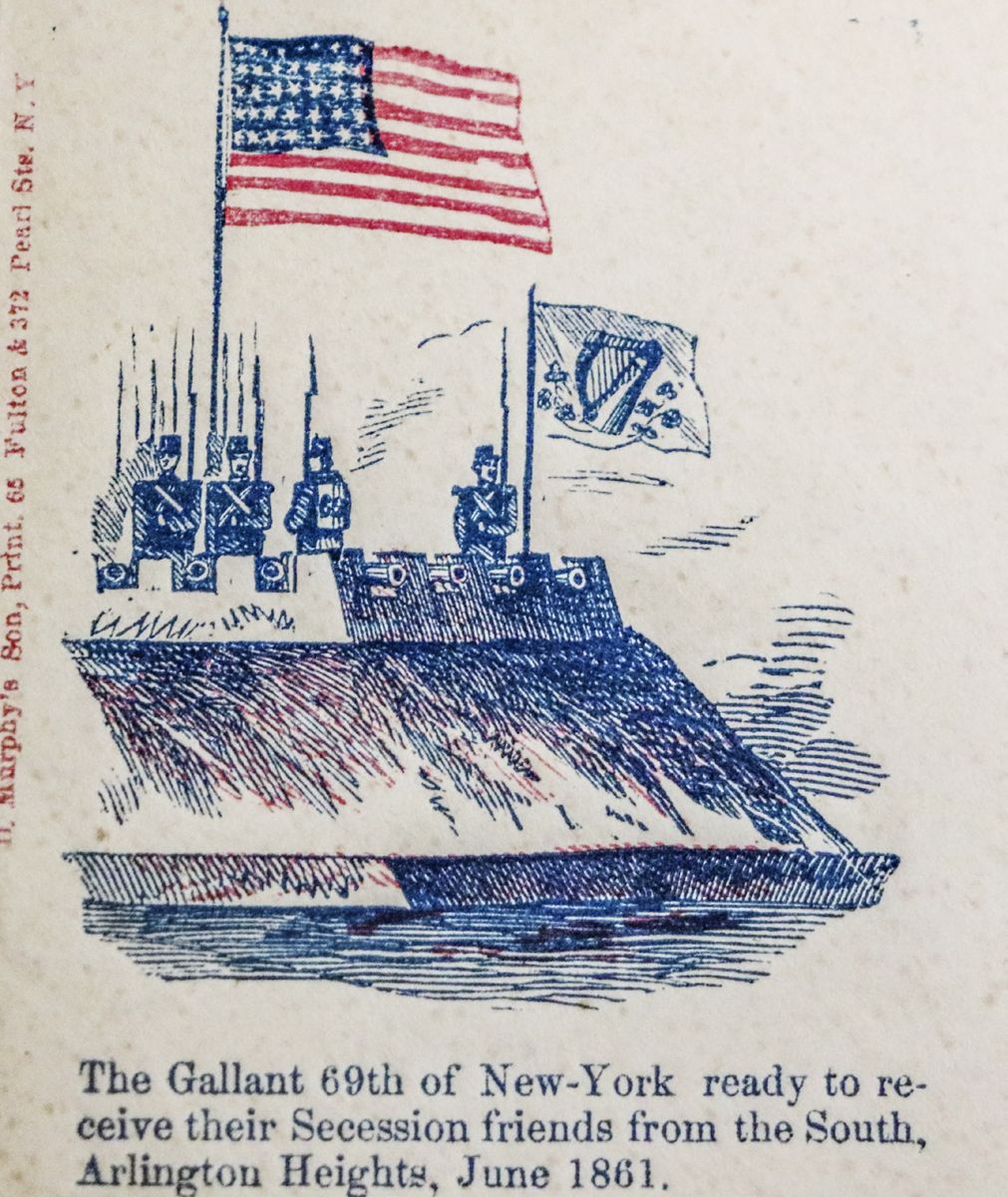
Occupation of Northern Virginia Elmer Ellsworth was a bit of a celebrity, having introduced the Zouave concept to the United States and toured the country with his Zouave troupe. He was also a friend of Lincoln’s and had accompanied him on his journey to Washington. On May 24, 1861, the day after Virginia voted to ratify the articles of secession approved by the legislature, Ellsworth’s regiment played a leading role in the first offensive operation of the war. The New York Times listed eight NYSM units (plus “Ellsworth’s Zouaves,” the 11th New York Volunteers) as making up about two-thirds of a Union force that crossed the Potomac River to occupy Arlington County and Alexandria. While the 69th New York led a column of troops across the Chain Bridge, the 12th, 25th, and 7th marched over the Long Bridge (near today’s 14th Street Bridge) into
Virginia, and Ellsworth and his Zouaves took a steamer down the Potomac to the Alexandria city dock. Most Confederate troops had fled the occupation of the city was relatively smooth. Pvt. Theodore Winthrop, who had provided the description of the April 19 march in New York City, marched across the Long Bridge with the 7th New York. His vivid account of the march is an example of the idealism and enthusiasm that still gripped some soldiers at this point before the casualty lists started to lengthen. Winthrop was killed a few weeks later at the war’s first battle, the Battle of Big Bethel. The outer world is vague in the moonlight. Objects out of our ranks are lost. I see only glimmering steel and glittering buttons and the light-stepping forms of my comrades. Our array and our step connect us. We move as one man. A man made up of a thousand members and each member a man is a grand creature,—particularly when you consider that he is self-made. And the object of this self-made giant, men-man, is to destroy another like himself, or the separate pigmy members of another such giant. We have failed to put ourselves—heads, arms, legs, and wills—together as a unit for any purpose so thoroughly as to snuff out a similar unit. Up to 1861, it seems that the business of war compacts men best.7
Battle of Manassas By the first major battle of the war, other states had managed to get troops to Washington, but still more than one third of the Union infantry regiments participating in First Manassas were from New York. General William T. Sherman’s Brigade, made up of the 13th, 68th, and 79th New York, plus a Wisconsin regiment, suffered the most killed and wounded (328). Brigades commanded by Porter (8th, 14th, and 27th New York plus three battalions of Regulars—232 killed and wounded) and Willcox (11th and 38th New York plus two Michigan regiments—243 killed and wounded) were also among the four Union brigades suffering the highest casualties. The 71st New York was heavily involved in covering the army’s retreat and took severe casualties. After the battle, a southern newspaper showed its delight at the reported slaughter of the regiment most associated with the first offensive of the war and the death of James Jackson, the southern hotel keeper who killed Ellsworth: … the Zouaves of Ellsworth – have fled from the field with two hundred only left of the entire regiment. Retributive justice has overtaken the first of the enemy who put their feet on the sacred soil of Virginia, and from six to eight hundred of them have been cut down dead upon the land which they insolently dared to invade.8
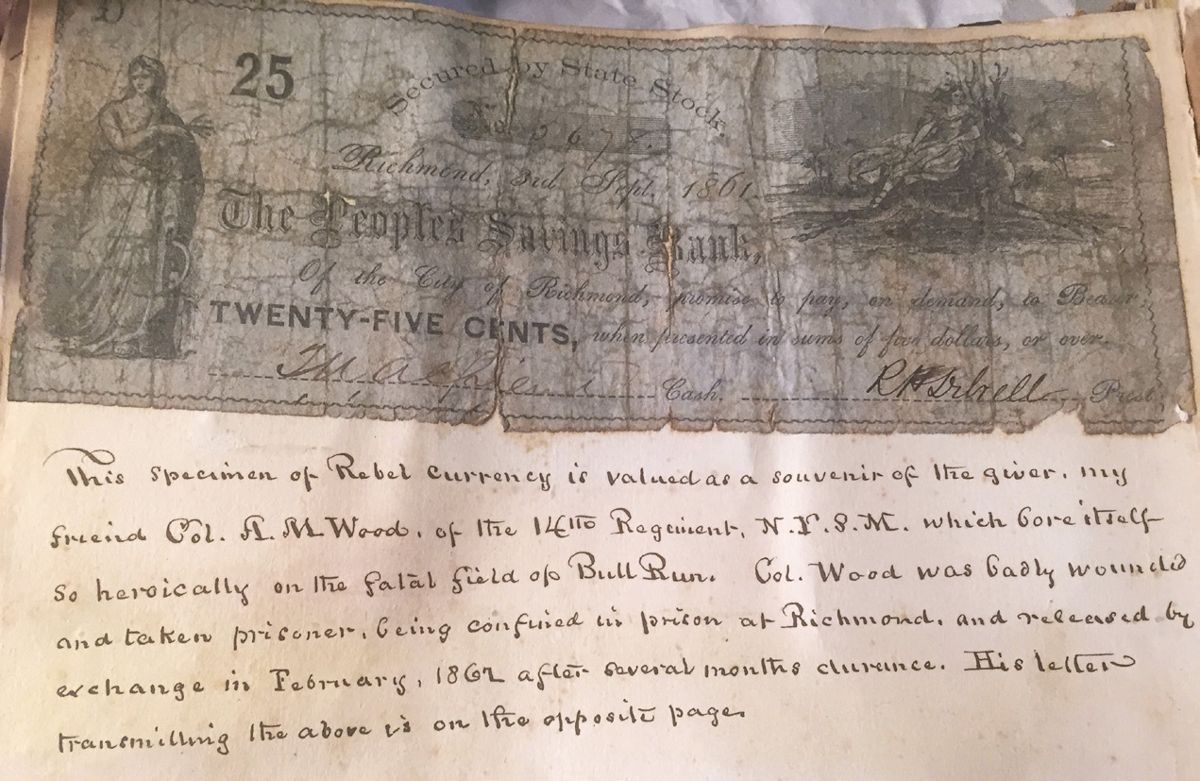
Enchantress Affair Two New York State Militia officers who were captured at Manassas played an inadvertent part in one of the war’s early dramas. When the Confederates began granting letters of marque authorizing private ship owners to attack enemy shipping, the first privateers captured were put on trial for piracy and threatened with execution. In return, the Confederates took 14 prisoners captured at First Manassas or Ball’s Bluff and transferred them from POW facilities to prison, threatening to execute man for man in retaliation for any executions of privateers. Two men who are mentioned in Roosa’s scrapbook, Col. Michael Corcoran of the 69th New York militia and Col. A.M. Wood of the 14th NY militia, were among these hostages. Lincoln relented and both Woods and Corcoran were eventually exchanged.
90 day terms expire/ regiments re-enlist The 90 day regiments came home in August, were celebrated, and given parades in their hometowns. Most of the soldiers re-enlisted, the 20th en masse, and many others formed the nucleus for newly forming New York Volunteer regiments. The “New York State Militia” designation was retired in favor of the newly mandated New York Volunteers designation. Even regiments that enlisted for three years, except the 69th, were given new designations as volunteer regiments. The New York State Militia had done its duty in the first days of the crisis but henceforward all New York infantry units would fight as volunteers. While the New York authorities could change the official designation of the regiments, they could not change the men’s hearts. All five regiments continued to show loyalty to their old regiments. In fact, the designations even survived the end of the war. When the 80th NY (20th NYSM) was appointed to patrol Richmond at the end of the war, the captain assigned as administrator of military prisons identified himself on official documents as an officer of the 20th
New York State Militia, a unit that hadn’t existed for nearly four years. All five NYSM regiments in the Army of the Potomac fought hard at Gettysburg. The 14th was in the first infantry division to arrive and was part of the bloody attack on the unfinished railroad cut. The 9th fought July 1 on Oak Ridge. The 20th was literally the second regiment from the army’s left flank on the afternoon of July 1, and on July 3, along with the 2, helped crush the right flank of Pickett’s Division. When the time came to erect monuments at Gettysburg, all four regiments who had their number changed paid tribute to their old NYSM units.
were incurred at the Seven Days battles, Antietam, Fredericksburg; 20th NYSM (80th NY Vols.): 128 KMW. Its principal battles were 2nd Manassas and Gettysburg; 2nd NYSM (82nd NY Vols.): 181 KMW. Its major fights were 1st Manassas, Antietam, and Gettysburg; 9th NYSM (83rd NY Vols.): 156 KMW. Principal battles: Fredericksburg, Wilderness, and Spotsylvania; 14th NYSM (84th NY Vols.): 162 KMW. Principal battles: 1st Manassas, 2nd Manassas, and Gettysburg; 79th NYSM (79th NY Vols.) Principal battles: Major battles First Manassas, James Island, S.C. 119 KMM.
Casualties
NYSM After the 90 Days
The most definitive postwar study of Union army casualties9 concluded that the clearest identifier of “hard fighting regiments” was the number killed and mortally wounded in battle. Precisely 300 (of more than 2,000) Union regiments had more than 100 killed and mortally wounded, including all NYSM regiments that re-enlisted:
Once volunteer forces replaced the militia units in the active forces, the NY militia resumed its normal duties of organizing reserve forces ready to be activated in an emergency. These regiments were called to active duty several times. On May 21, 1862, 12 regiments (8,500 men) were called up to defend against a feared invasion after the Union defeat at Winchester. An even larger force of 26 regiments was activated in June 1863, to deal with Lee’s
69th NYSM (69th NY Vols.): 259 killed and mortally wounded (KMW). Its principal casualties invasion. Finally, a large force was called out the following month to quell the New York City draft riots. Endnotes: 1.
Hiram Roosa’s scrapbook contains original correspondence, including Anderson’s letter from Fort Sumter to Roosa, thanking him for the association’s support. One regimental commander, Col. Michael Corcoran of the 69th New York, had been removed from command and threatened with court martial when he refused to parade the 69th for the Prince of Wales as a protest against English oppression of Ireland. He was restored to his command when the mobilization started. “The ‘Seventh’ at Home, Full Account of the Visit to Washington, Parade and Review by the President and Cabinet,” New York Daily Herald, July 12, 1858. Theodore Winthrop, “Our March to Washington,” Atlantic Magazine, July 1861. Fayetteville North Carolinian, April 27, 1861. John Austin Stevens, The Union Defence Committee of the City of New York: Minutes, Reports, and Correspondence with a Historical Introduction. Adam Goodheart, “In Death, a Young Author Is Born,” June 19,