
The Graphic War
John Brown
By Salvatore Cilella · Originally published December 2020 · pp. 26–27
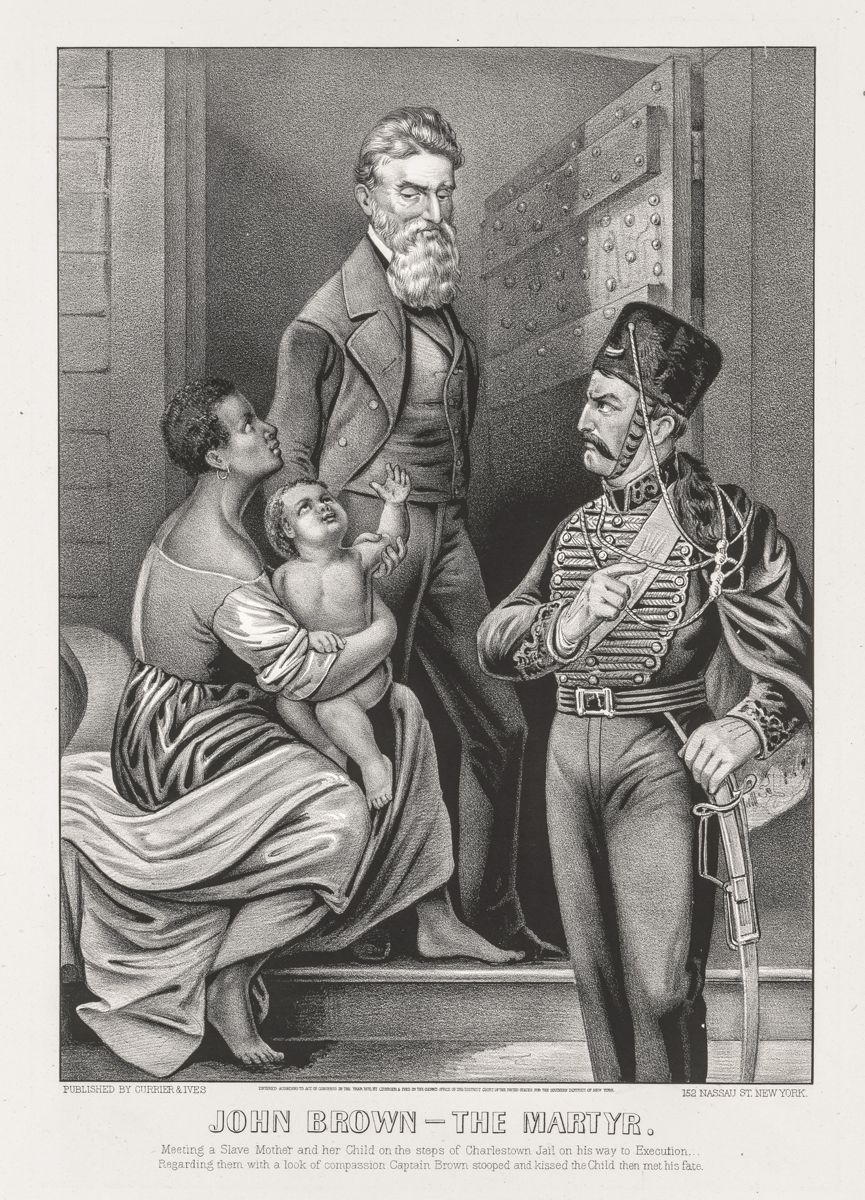
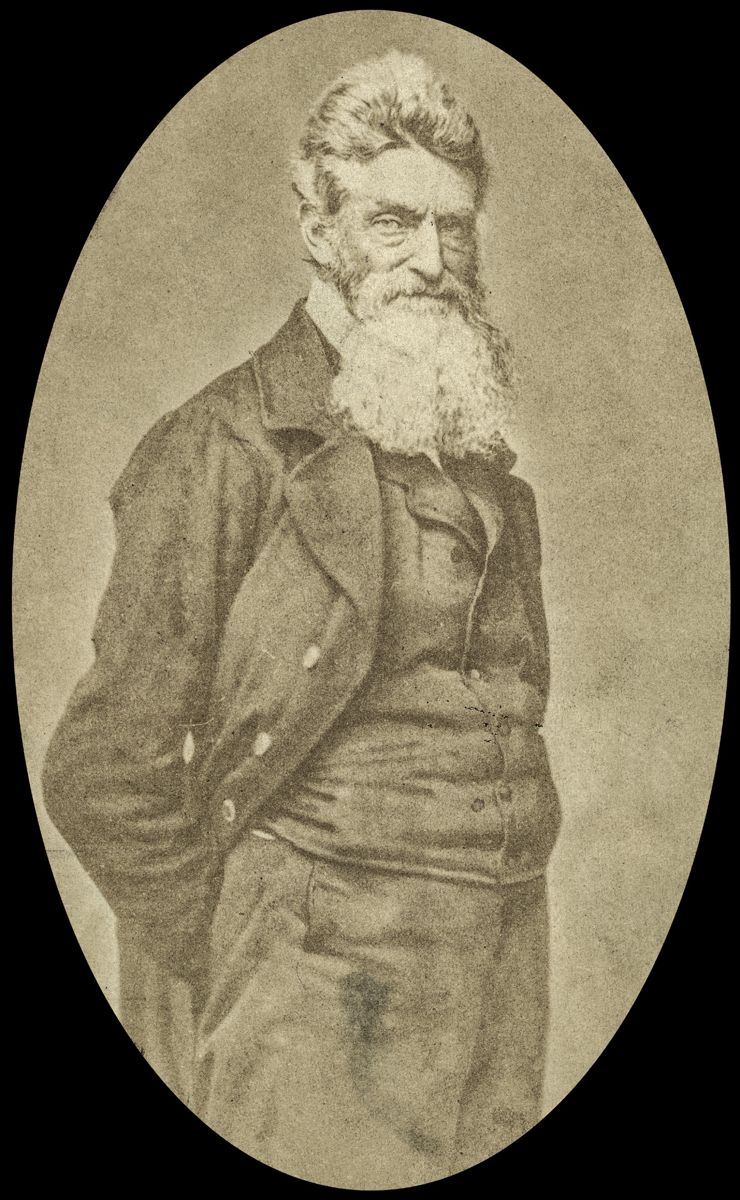
The Graphic War highlights prints and printmakers from the Civil War discussing their meaning and the print maker or artist’s goals. Currier and Ives published two similar lithographs of the notorious abolitionist John Brown. In October 1859 Brown and a gang of antislavery fanatics attacked the U.S. Armory at Harpers Ferry, Virginia. The “raid” was squelched by Colonel Robert E. Lee, along with future noted figures of the Civil
War, Stonewall Jackson and Jeb Stuart. Supposedly John Wilkes Booth was in the crowd and witnessed Brown’s execution. Ten raiders were killed; six others, along with Brown, were captured; five escaped and were never captured. Six civilians including two slaves and one free African-American were killed. One U.S. Marine was killed and one wounded. Brown was taken to the Charles Town courthouse for trial and, in less than two months, he was tried, convicted, and hanged. At the December 2 hanging, Brown was prohibited any last words but he managed to write a few comments slipped to his jailer. The remaining six raiders were executed on December 16, and March 16, 1860.
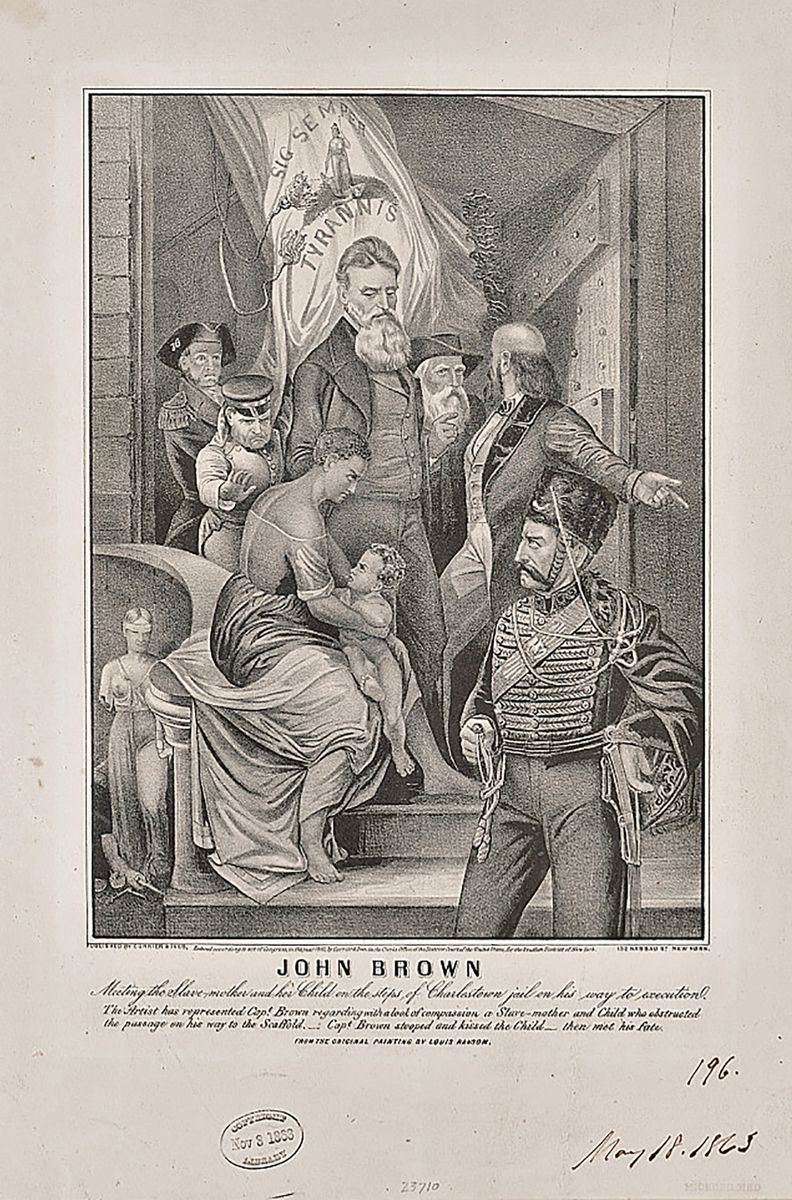
Almost immediately, Brown, his men, and his rash, ill-prepared raid became contentious. In his official report, Lee branded Brown as “a fanatic or madman.”1 To this day, Brown remains a controversial figure as he and his band of raiders became the center of raging debate. Was he a man sent from God to liberate the black man or was he a dangerous, deranged fanatic as Robert E. Lee portrayed him? During the war, the lithographic publishing firm of Currier and Ives firmly came down on the side of those who saw Brown as an avenging angel. In May 1863, the firm published a small folio black and white print complete with overdrawn melodramatic figures. It depicted Brown leaving jail on his way to the gallows. The title margin, consisting of five lines, explained it all: “John Brown.” “Meeting the
Slave mother and her Child on the Steps of Charlestown jail on his way to execution.” “The artist has represented Capt. Brown regarding with a look of compassion a Slave mother and Child who obstructed/the passage on his way to the scaffold. Capt. Brown stooped and kissed the Child…then met his fate.” “From the original painting by Louis Ransom.” The original painting of “John Brown on His Way to Execution” is owned by Oberlin College. It now hangs in the Paul Lawrence Dunbar High School in Washington, D.C., having been lent to the school by the college in April, 1919.2 According to the Library of Congress catalogue entry, “The strikingly Madonna-like slave woman is seated on a stone railing, holding an equally Christlike infant. One of Brown’s guards reaches forward, about to push her away. In the foreground a mustachioed and elegantly uniformed soldier waits impatiently, hand on his sword hilt. Behind Brown a figure from the American Revolution, wearing a tricornered hat emblazoned ‘76,’ watches with concern. The flag of the state of Virginia with the motto ‘Sic semper tyrannis’ flies prominently above Brown’s head. A statue of Justice, with its arms and scales broken, stands forgotten behind the railing at left.” Perhaps the most outrageous image presented by artist Ransom is the scowling, Prussian looking military figure to the right of the tableau. His presence, obviously to denote authority, smacks of a European operatic/comedic farce that would have proven unworthy of Gilbert and Sullivan.3 Yet it is this image (with the slave mother and child) that survived to grace Currier and Ives second iteration of the scene. In the later, ca. 1870 lithograph, Currier has removed all but those four figures, which are set now in a religious tableau. The scowling “Prussian” officer has moved his right arm up and with a pointed finger (the fickle finger of fate?) indicates the direction of the scaffold as Brown contemplates the slaves at his feet. Currier left no doubt about its intention. The firm reduced the lines in the title margin down to two, and altered the main title to simply “John Brown—The Martyr.” Endnotes: 1.
Col. Robert E. Lee. “Report to the Adjutant General Concerning the Attack at Harper’s Ferry.” Reproduced in Linder, Douglas O. Famous Trials. University of MissouriKansas City School of Law Ms. minutes of the Prudential committee of Oberlin College, April 11, 1919, office of the secretary. This title was furnished by the painter’s son, Eugene Ransom. see James C. Malin, “The John Brown Legend in Pictures,” The Kansas Historical Quarterly, v. VIII (November, 1939), pp. 339341. As cited on the website: https://www.kshs.org/p/kan-
After 43 years in the museum field, Salvatore Cilella devotes his time collecting American prints and maps and writing. His last professional position was President and CEO of the Atlanta History Center. His most recent books are Upton’s Regulars: A History of the 121st New York Volunteers in the Civil War (U. Press Kansas, 2009). His two-volume Correspondence of Major General Emory Upton, (U. of Tennessee Press, 2017), received the 2017-–2018 American Civil War Museum’s Founders Award for outstanding editing of primary source materials. His latest book “Till Death Do Us Part,” an edit of