
This And That
History’s First Draft – The Maryland Campaign as it Happened
By Gould Hagler · Originally published December 2020 · pp. 14–15
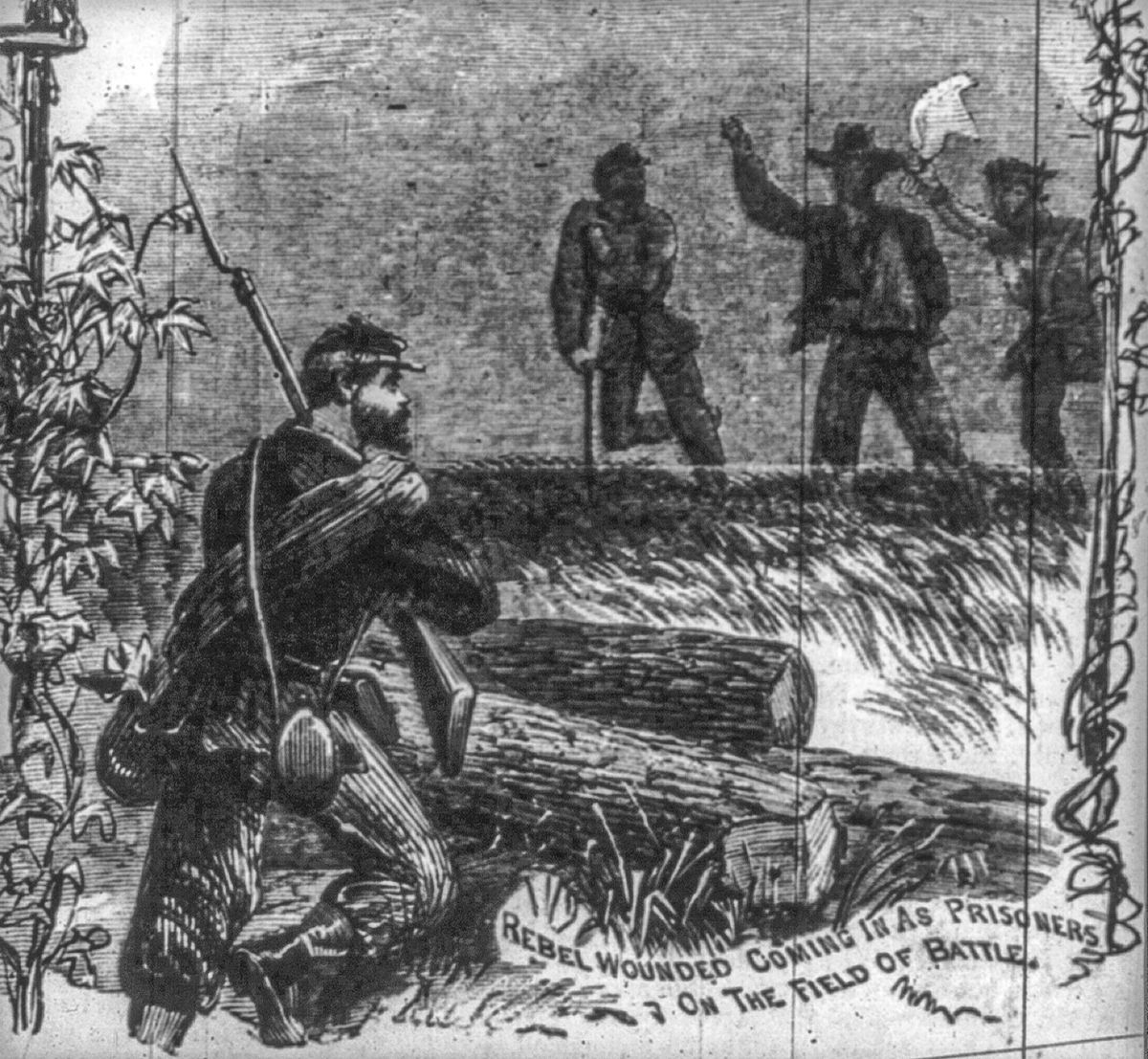
How fast did the news travel? How accurate were the reports in the press? What did Northern readers know during the middle of September 1862, as Lee’s forces marched from place to place in western Maryland, and McClellan followed, in the days leading up to the great battle of September 17? What did they know, in the days that followed, of the battle and its aftermath? We can read any number of books and articles about the Maryland Campaign and the Battle of Antietam, or Sharpsburg, written decades after the events. Historians have been able to study official reports, memoirs, correspondence and other sources, sift through the data, and craft comprehensive and comprehensible accounts of these events. That is now. How about then, as these events were unfolding? To find out, I picked a daily, the Philadelphia Press, and examined several issues. Most of what follows comes from the editions published from Monday, September 15 to Saturday, September 20. In this column I will try to answer three questions. What did the readers know? When did they know it? What did they know that wasn’t so? The August 28-30 Confederate victory at Second Manassas, or Bull Run, opened the way for Lee’s invasion of Maryland. However, the early reports in the Press presented the action on the old 1861 battleground as a resounding Federal victory. Well, this was something the readers knew that just wasn’t so. Soon the Philadelphia paper was writing that Lee had crossed the Potomac and was marching about in the Old Line State; that Pope had been sent west to battle the Sioux; and that McClellan, back in charge in the East, was pursuing Lee. Let’s now look at the news the week of the battle.
Monday, September 15 By Monday, Pennsylvanians were well aware that Lee was in Maryland in force and that their own state was threatened. The bank headlines on page one of that day’s edition summarized the situation. The main rebel army was at Boonsboro, Md.; Confederate pickets extended to the Pennsylvania border; Longstreet and 10,000 men were at Hagerstown; a four-hour battle had been fought south of Hagerstown; and Jackson was at Williamsport with a force of 16,000. As was always the case in this era, the editors relied on dispatches written at different places and times. The news conveyed on Monday was based on six dispatches, the earliest sent from Chambersburg the previous Friday and the most recent from Harrisburg at 11 p.m. on Saturday. The Monday paper also ran an article taken from the Saturday Baltimore American, which reported a Confederate attack on Harpers Ferry that was “repulsed with great slaughter.” According to this account, the effort to force a crossing of the Potomac by Confederate cavalry and infantry was broken by “grape and canister, causing the river actually to run with blood.” Of course, by the time Philadelphians read their Monday paper Harpers Ferry had already surrendered.
Tuesday, September 16
In Tuesday’s paper the editors wrote of the “signal victory” achieved two days before. As the Confederates withdrew westward, into and over the mountains, they suffered “a shameful and overwhelming defeat.” The threat was ended. The editors believed that the enemy could not avoid “utter annihilation, or, at best, the virtual surrender of his position.” The Sunday battle was the Battle of South Mountain. After a day of hard fighting, the Confederates were forced to withdraw from the gaps and move westward. The Federals had achieved a victory, but it was far from the decisive triumph announced by the Press on Tuesday. The editors relied on McClellan’s dispatches to Halleck, printed in the same edition. In a Sunday night dispatch McClellan proclaimed “a glorious victory.” On Monday morning he assured the general-in-chief that Lee’s force was “making for the river in a perfect panic” and that Lee had admitted that his troops had been “shockingly whipped.” In a second dispatch that morning McClellan wrote “It is stated that General Lee gives his losses at 15,000.” Three brief dispatches in Tuesday’s edition hinted that the garrison at Harpers Ferry was in serious danger.
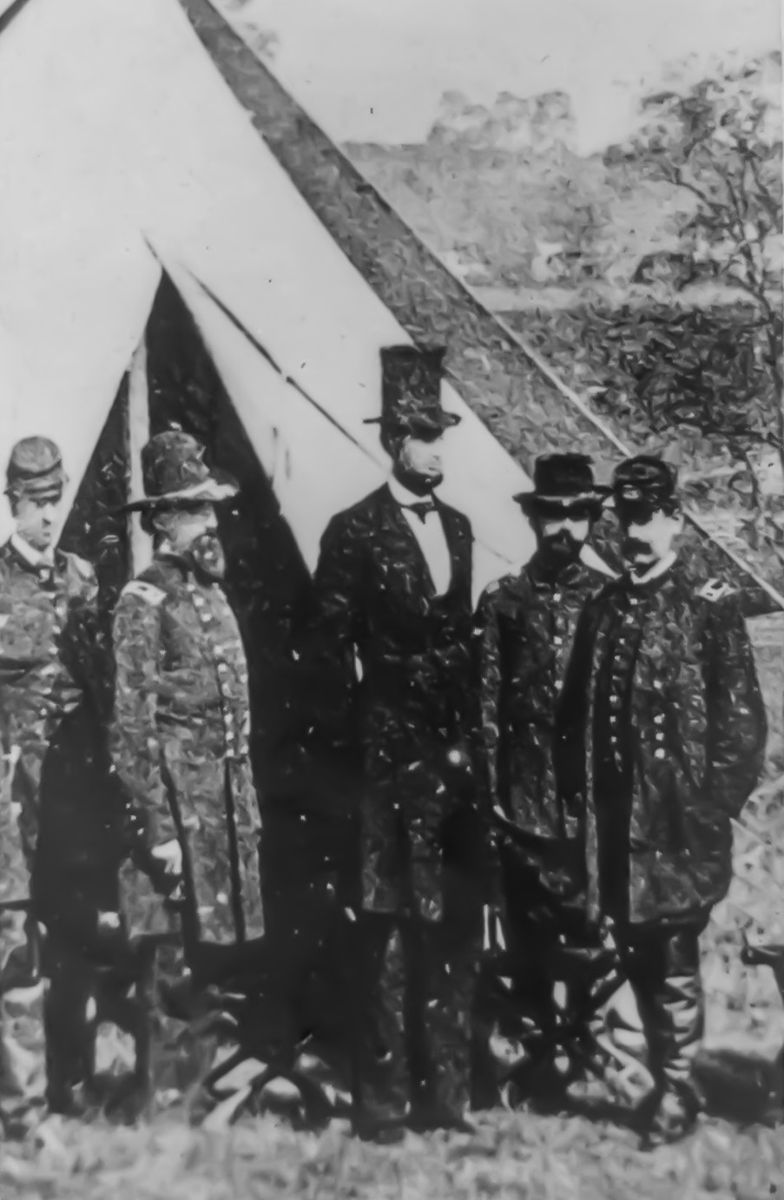
Wednesday, September 17 As the opposing armies battled along Antietam Creek, Philadelphia readers could get the bad news that Harpers Ferry had fallen on the 15th. Wednesday’s edition also contained more details about South Mountain, with varying estimates of casualties on both sides. One report on South Mountain included news of a chance discovery in an abandoned Confederate camp near Frederick. In small print, just above a casualty list, was the news that Lee’s Special Order No. 191 (misnamed as No. 119 in the paper) had been found by Union troops. This was the famous “Lost Order” detailing the movements of Lee’s dangerously divided army. McClellan was now armed with the knowledge of Lee’s bold plan. Philadelphia readers knew also, as the Press quietly summarized Lee’s plan. Every edition of the Press contained a column in which the editors attempted to digest the flood of news and create some order for the reader, surely confused by the contradictory dispatches appearing in news columns. On Wednesday, the editors’ digest presented South Mountain as a decisive Federal victory that would force the Confederates out of Maryland. “That they are recrossing the Potomac is certain, and, indeed by the time this meets the reader’s eye not a single rebel regiment may be in Maryland.” Lee’s army, the editors said, was a “demoralized mass…in full retreat.” Further down, however, the editors mentioned a report “that a battle was going on yesterday near Sharpsburg, Maryland. This looks as if McClellan was pushing the enemy hard to the river.” The editors were right about the armies meeting at Sharpsburg, but a fierce battle would be fought before the Confederate retreat began.
Thursday, September 18
The Thursday edition contained the usual jumble of dispatches reporting on various matters related to the Maryland Campaign. Any reader would be mightily confused. The editors provided the usual summary, context, and interpretation. “Reports from the Army of the Potomac last night cover nothing but success….. Lee’s army, large as it is, will certainly be annihilated before it can get back to Richmond.” A dispatch printed on Thursday erroneously reported that the Federals had reoccupied Harpers Ferry on Tuesday at 7 p.m. Relying on this false information; the editors opined that Federals’ possession of that point “almost precludes the possibility of the fording of the Potomac by the rebels.” The big news on Thursday was the battle at Sharpsburg. Several dispatches (sent on Wednesday) reported on Tuesday’s fighting, mainly an artillery battle as the armies readied for the main event. Dispatches sent Wednesday night provided some information on the main fight that day: “The battle has continued all day today, but no official news has yet been received of its results,” one correspondent wrote. Another dispatch claimed “a glorious victory after a great battle.” This report noted that “no particulars of the battle have yet been received” but this much was known: “the carnage on both sides was awful.” In addition to the news, there was also the usual optimistic speculation: a report from Hagerstown assured the readers that “the entire rebel army will be captured or killed.”
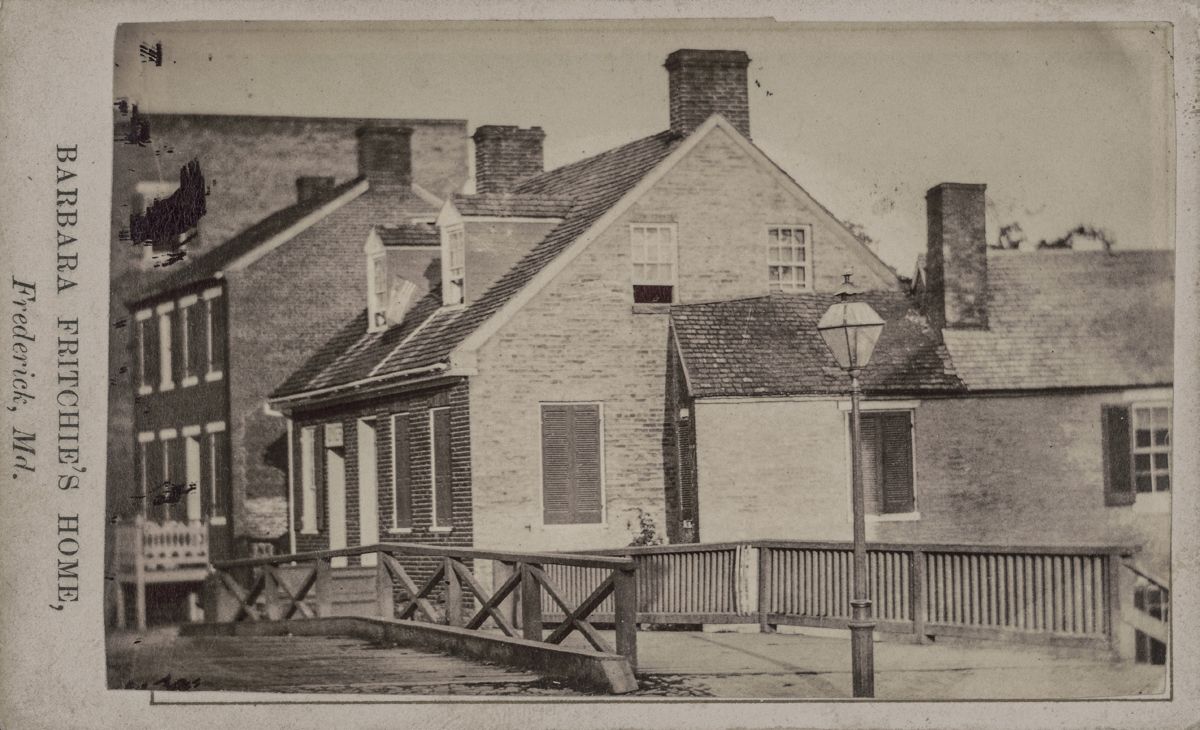
Friday, September 19 Friday’s paper provided more detail on Wednesday’s combat. Two dispatches from the Army of the Potomac headquarters, sent Tuesday night and Wednesday, described the action on those two days. These dispatches were accurate, but naturally they accentuated the positive. The Wednesday dispatch did imply that the victory was incomplete. After Burnside’s force crossed the bridge and ascended the hill, “our troops were forced to retire before a superior force, the rebels knowing that if they lost the ridge the complete rout of their army would be the result. They fought with great desperation.” The army’s dispatch estimated that each side suffered about 10,000 casualties. The Press, a Democratic paper, was full of high praise for General McClellan. The editors’ summary commented on the “magnificent victory” achieved on Tuesday and Wednesday and predicted more victories as McClellan’s army “gather[s] up all its energies afresh to smite the audacious enemy.”
Saturday, September 20 On Saturday the Press ran a dispatch printed earlier in the New York Tribune. Through this dispatch, written on Wednesday night, Philadelphia’s readers got an accurate summary of the battle. The dispatch described the positions of the armies at day’s end, with the one road open for the Confederates’ retreat.
The assessment of the results: “Neither [side] can claim a complete victory….” The editors’ summary displayed the usual optimism. McClellan, having won this great victory, “has completely changed the aspect of affairs in the north from gloom and uncertainty to cheerfulness and brightened hope.” The Press magnified McClellan’s achievement by exaggerating Confederate strength, claiming that on Wednesday he had “fought an enemy numerically equal to his own.” Still, the editors understood that as great as McClellan’s victory was, its strategic result was still in doubt. Would Lee’s army be annihilated or captured? The editors said “it is impossible to know.” Another dispatch in Saturday’s paper must have arrived too late for the editors to take into account as they penned their summary. This dispatch, sent from Frederick on the 19th, said that Lee had gotten away. The correspondent seemed to anticipate the severe criticism that was about to come McClellan’s way, and began to make excuses for him. On the 18th, the reader was told McClellan was about to launch an attack on the Confederate left, “when it was discovered that the enemy were apparently posted on our right in some force, and threatening a flanking movement.” The perspicacious general “saw the ruse, and at once changed front,” thus checking the Confederate threat. The correspondent put an interesting slant on the Confederates’ escape. Having crossed the river, they “were driven off…in the direction of Winchester.” A careful reader would note that the driving off was done by artillery north of the stream, not by infantry nipping at Lee’s heels. Lee was certainly appreciative of McClellan’s cautious disposition. Lincoln was not. McClellan failed to follow up his victory as his commander-in-chief wished. He was relieved of command on November 6. A review of the Philadelphia Press in the days before and after the climactic battle at Sharpsburg indicates that readers in the North, at least those with access to daily newspapers in major cities, had information on the Maryland Campaign that was reasonably up-to-date. As for accuracy, we need to repeat and stress the adjective “reasonably.” The correspondents often relayed news gleaned from questionable sources. I get the impression that the reader was implicitly told “take it for what it’s worth.” Lee was reported to be wounded; Longstreet to be killed; Hill to be captured (which Hill not specified). The Press also published wild overestimates of Confederate strength. These limitations notwithstanding, an attentive reader could stay abreast of developments during the week and by Saturday read a coherent narrative of Wednesday’s battle. Sources: The Philadelphia Press and much else can be accessed at https://panewsarchive.psu.edu/. My thanks to Stephen Davis and Bill Hendrick for allowing me to see the pertinent passages in their upcoming book which shed light on history’s first draft as read by Atlantans. Philadelphia is 175 miles or so from Sharpsburg. What about a town in the Confederacy 650 miles away from the action? How long did it take the news to travel to Atlanta? How accurate was the story Atlantans were reading? In their upcoming book The Atlanta Daily Intelligencer
Covers the Civil War, Stephen Davis and Bill Hendrick address these questions. As one would expect, the news Atlantans read was less up-to-date, less detailed, and less accurate than the first draft of history read by Philadelphians. The first of Lee’s forces to enter Maryland crossed the Potomac on September 4. The Intelligencer reported this news on September 13. On September 17, as Georgia troops were defending the crossing at the Rohrbach Bridge, the Intelligencer’s editor wrote that he had no reliable information on developments in Maryland and that he would not print mere rumors. News of the September 14 fighting at South Mountain reached Atlantans on the 20th. The paper reported the capture of Harpers Ferry on September 21, six days after the event. Also on the 21st, the Intelligencer published Lee’s September 8 proclamation to the people of Maryland. The September 23rd edition contained a telegraphic dispatch about the battle fought on the 17th. The report announced a victory in that bloody clash, and, with even less accuracy, claimed that the enemy was routed when the fighting renewed the next day. On September 24 the paper referred to a troubling report that Lee was back in Virginia. Ten days after the battle the editor repeated the claim of a Confederate victory and, with no apparent basis but wishful thinking, stated that Lee was still in Maryland, after Lee had been south of the river for five days. For a detailed report on the Battle of Sharpsburg, Atlanta readers had to wait until the 28th. This came in a dispatch written just hours after the battle ended. It reported the repulse of the Federals. There was nothing on the retreat, of course, and no commentary on the earlier report of the rout said to have occurred on the 18th.