
“Conduct Unbecoming an Officer and a Gentleman…”
By Bruce Allardice and Wayne Wolf · Originally published December 2020 · p. 12
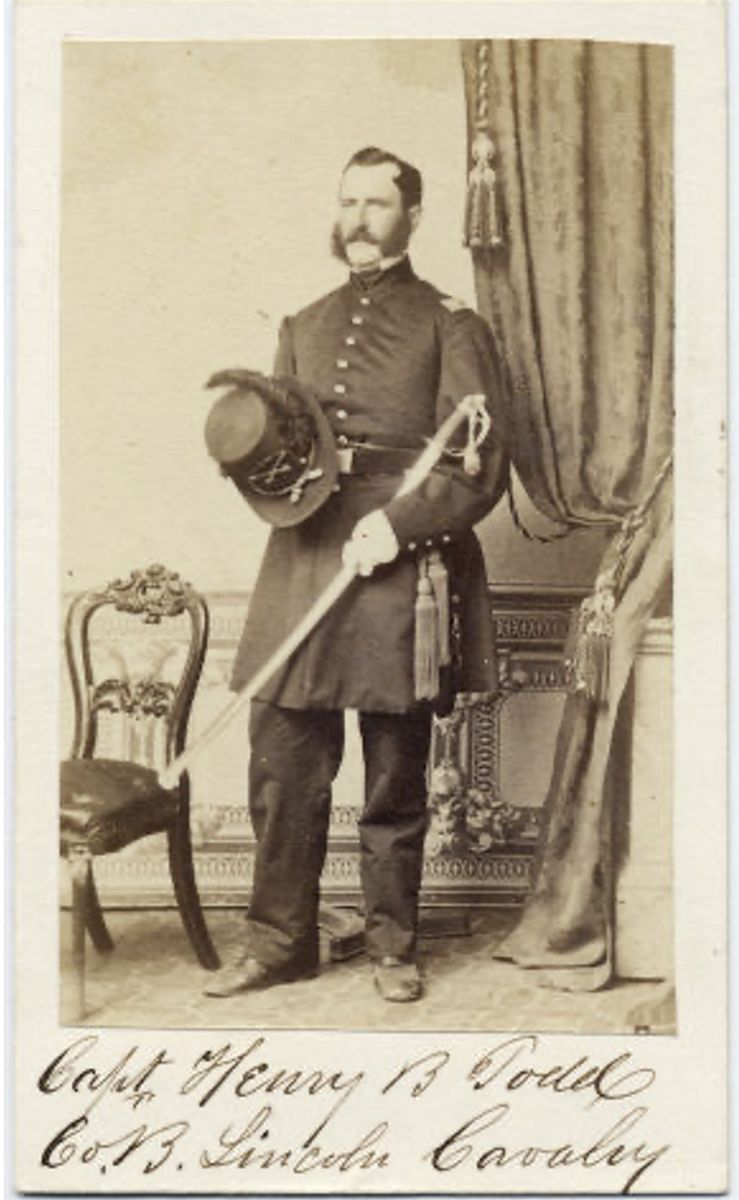
During the Civil War President Lincoln put the nation’s capital under military rule (martial law), fearing that otherwise crime and sedition would flourish. The officers in charge performed normal police duties, along with combatting specific wartime vices such as hunting down deserters. Three recently discovered letters highlight the problems one such officer faced. Henry Baldwin Todd (1822– 82), a prewar ice manufacturer and custom house clerk, enlisted in 1861 as captain of the 1st New York Cavalry. Todd was detailed to take the onerous position of provost marshal of wartime Washington, D.C. In this post Todd arrested deserters and enforced martial law in the city. The job involved numerous interactions with a variety of shady people. The letter below details how one such interaction led to Todd being charged with embezzling property and converting silver into a teaspoon set for this wife. The court martial found him guilty, and dismissed from the service.1
The politically-well-con-
was “not necessarily criminal.”2 Stanton thereupon reversed the decision and reinstated him.3 The conviction didn’t seem to harm Todd’s reputation and he went on to a long and prominent postwar career. Although Todd was not a relative of Mary Todd Lincoln, his photo nonetheless was found in President Lincoln’s personal album.
Washington, Feby. 25, 1864 W. E. Doster,4 Dear Sir: Your favor of yesterday is duly General W. E. Doster. received. Many thanks for your Wikimedia. sympathy as well as your ofnected Todd then complained fer of assistance so frankly ofto four Congressmen (all fered—The charge against me Democrats) from his home ostensibly is this (although I state of New York, recounting think the truth is I was too popthe case as set forth below, and ular5 and in some one’s way). asking that he be allowed to re- Last May a pawnbroker named sign his commission rather than Pella [German-born John Pella be dismissed from the service. (1814–72)] was arrested by the The Congressmen duly urged detectives of the Treasury Dept. Todd’s case on Secretary of War for dealing in counterfeit Postal Stanton, averring that Todd Currency and receiving stolen was “incapable of doing the act goods.6 complained of for any purpose A few days after his arrest a of personal gain or emolument” woman called on me and said and that though Todd’s conduct she had some things pawned “may have been indiscrete,” it there. They were forfeited within a few days, and wished my assistance. I told her I would do what I could personally for her and sent word to Lieut. Cooper7 at the guardhouse to say to Pella if he would send me the things—12 oz. old silver and a ten stone diamond ring—I would become personally responsible for them and either see the things returned or be paid for them. Pella assented and sent the things. He was cleared in May and called for a settlement. I put him off not having again seen the woman, who was to call with the money in a few days and who gave the name of Cammak. I set the detectives to find her in vain. July 17 Pella came with his lawyer [Samuel
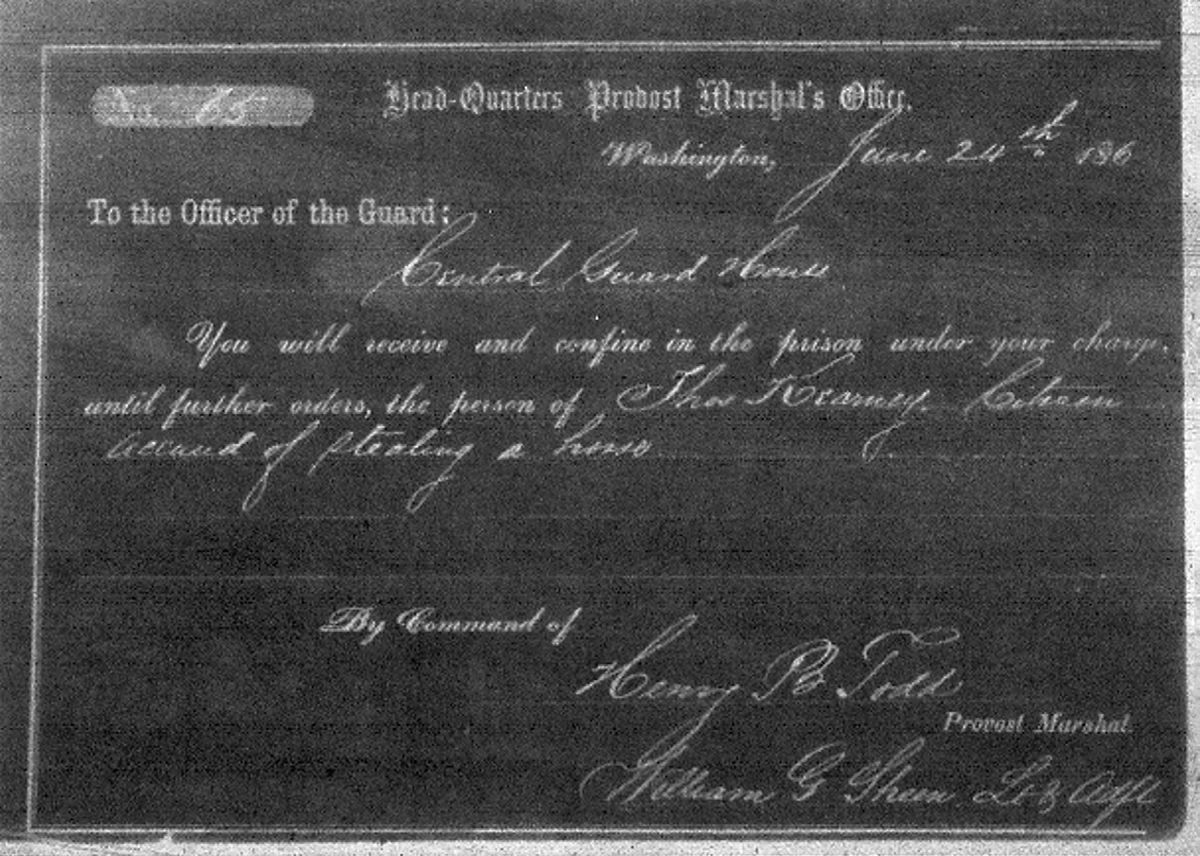
Simms Williams (1822–64), described in the newspapers as “a well-known local lawyer”] and demanded a settlement on my promise. I paid him for them out of my own funds and took his receipt in full for them signed by Pella and witnessed by his lawyer, a regular bill of sale. No Mrs. Cammak yet heard from or to be found. The silver was old broken silver, the ring an old one, stones loose and unsafe to wear. I had the silver cast into a set of tea spoons and the ring reset in August. Pella had the right to sell after 20 days from May 4th. Nov. 28 Mrs. Cammak came for her things under the name of Rodriquez8 but had no money. I told her I had bought them of Pella and what I had done. She left and made complaint to the War Dept. It was referred to Genl. Martindale9 who investigated and said I had better return her the rings (the silver she did not count). I did so, gave her the ring but the $18 paid for resetting paid her the value of the old silver and recd. the balance that I had paid Pella in money and supposed the thing ended. The 12th of this month I was put under arrest for conduct unbecoming an officer and a gentleman. This is the whole case. I am prepared to prove it and do not fear the result. Have lots of friends here who will do or die for me. I intend to be restored to my old place. If I resign the next day Baker10 is still in the office as efficient and reliable as ever, one of the best officers I ever knew. I showed him your letter. With many thanks for your kindness, I am, Your obedt. Servt. Henry B. Todd, Captain 452 6th St. Endnotes: 1.
The trial was reported in the
Washington Evening Star, March 4, 1864. See the National Republican, April 22, 1864 for the verdict. 2. Todd’s letter to the four Congressmen, and their April 7, 1864 letter to Stanton, courtesy of Todd’s descendant Patricia Todd Pender. 3. See The Star of the North (Bloomsburg, PA), July 13, 1864. 4. Brigadier General William Emil Doster (1837–1919) was provost marshal of Washington 1862–63. 5. The Washington Evening Star, January 1, 1864, recounts how provost marshal office employees gave Todd a “handsome gold chain” in recognition of “their attachment and esteem.” 6. The arrest was reported in the Washington Evening Star, April 11, 1863. The forgery was of 50 cent postal notes, some of which were passed (inadvertently or not) by Pella. 7. Lt. John S. Cooper, 10th New Jersey, commander of the DC guardhouse. 8. The name change and the fact that the Provost Marshall’s department couldn’t locate her, led Todd to suspect her of illegal doings. In the letter to the Congressmen, Todd expressed his belief that she was “an abandoned and transient woman.” 9. General John H. Martindale (1815–81), Military Governor of Washington from 1862 to 1864. 10. Lt. Arthur S. Baker (1836–93) of the 86th New York, a pre (and post)-war newspaper editor in Hornellsville, New York. Bruce S. Allardice is Professor of History at South Suburban College in Illinois. He is a past president of the Civil War Round Table of Chicago. Wayne L. Wolf is past president of the Lincoln-Davis Civil War Roundtable.