
A Tribute to Edwin C. Bearss: Champion of West Virginia Battlefields
By Hunter Lesser · Originally published December 2020 · p. 28
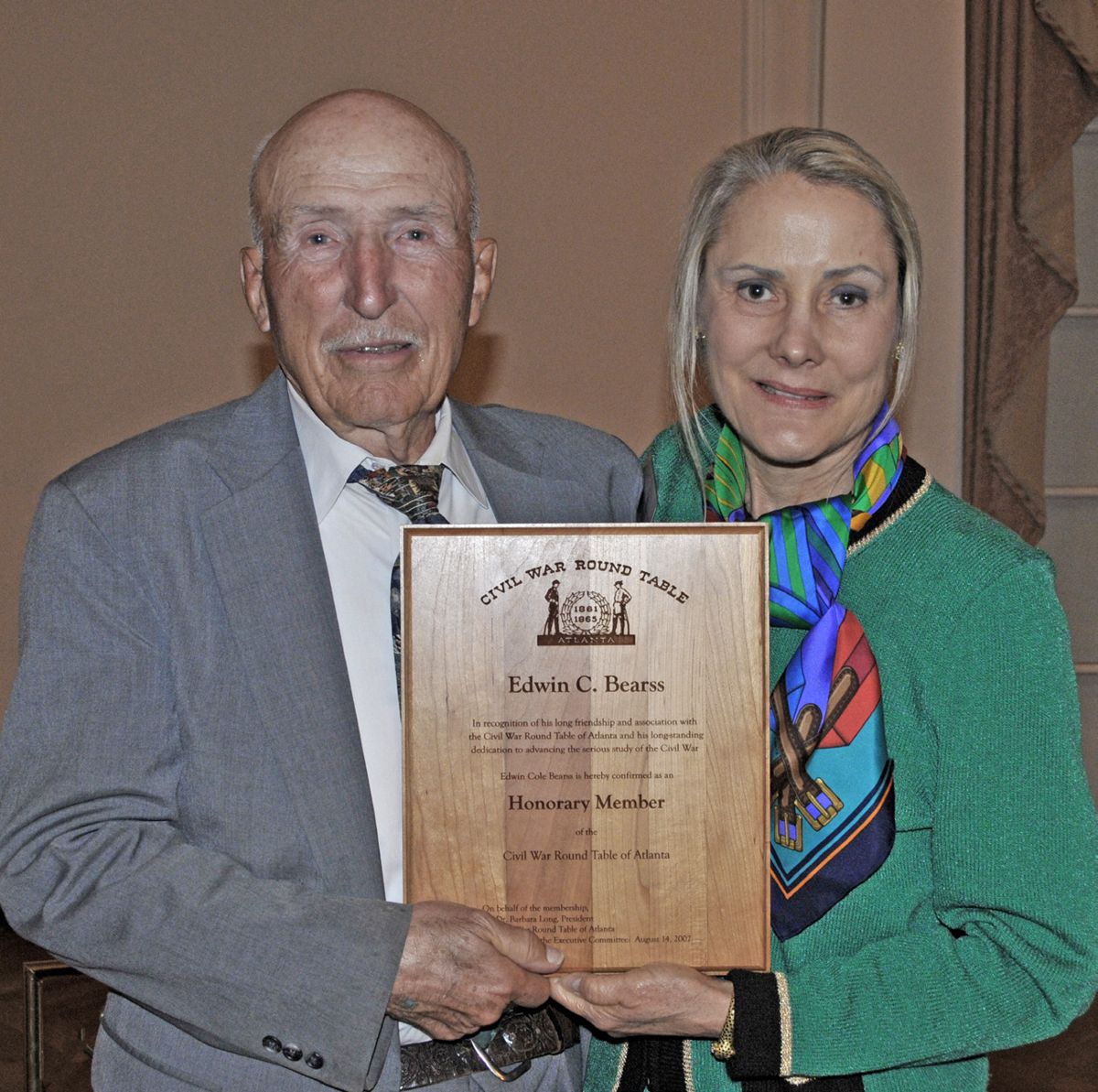
Edwin Cole Bearss, legendary battlefield guide and preservationist, Chief Historian Emeritus of the National Park Service, and decorated Marine veteran of World War II, passed away on September 15, 2020, at age 97. See battlefields.org for a marvelous eulogy to his amazing life. As NPS Chief Historian and a board member of what is now the American Battlefield Trust, Ed was a tireless advocate for battlefield preservation nationwide. He played a key role in preserving numerous properties in West Virginia, including Rich Mountain Battlefield. Ed supported efforts by the fledgling Rich Mountain Battlefield Foundation, ensuring this important site would be protected for the ages. Ed was a masterful interpreter and spellbinding battlefield guide. He believed you had to walk a battlefield to understand it. His deep, raspy voice and dramatic style were unforgettable, aptly described by one reviewer as “Homeric monologues.” Ed kept a breakneck schedule into his 90’s, on the road for some 200 days a year, with a huge following of loyal fans, the Bearss Brigade. I was fortunate to be Ed’s “color man” on a number of West Virginia battlefield tours. A few anecdotes might best describe the magic of this “Pied Piper” of history: Ever the Marine, Ed was indefatigable. Once he drove through the night to lead a tour early the next morning. Dismissing our concerns, he replied, “I’m running on adrenaline!” Even later in life, Ed enjoyed racing up steep terrain to the historic “high ground” while leading tours. He eyed his younger guests impatiently as they huffed and puffed to keep up at battlefields like Rich Mountain, Kessler’s Cross Lanes, Greenbrier River, and Camp Allegheny. Pointing out features with his ever-present swagger stick, Ed used the ground to drive home his colorful narratives. One day as our tour bus bounced to a halt at Valley Mountain in Pocahontas County, Ed jumped out and began to narrate the events of Robert E. Lee’s first Civil War campaign. Weather played a prominent role in the story. It happened to be raining as we got off the bus, and everyone sported rain gear or umbrellas. Not Ed. Standing in the cold rain, clad in a cotton t-shirt, he began to spin the tale. “It was raining harder than this in 1861,” Ed rasped while relating the non-stop rain, the sickness, and failure of Lee’s campaign. “Much harder than this!” As Ed continued, the rain got heavier. He was soaking wet, but in no hurry. Soon the storm became a downpour. Ed wore a “Rich Mountain Battlefield” cap, which flattened on his head from the pummeling rain. Finally, with a gleam in his eye, Ed boomed: “NOW it’s raining like it did in 1861!” The haunting landscape at Camp Allegheny made that mountaintop stronghold one of Ed’s favorite Civil War battlefields, “and I’ve seen most of them,” he added with a wink. During the Congressionally appointed Civil War Sites Advisory Commission tour in the 1990’s, I helped Ed guide a busload of distinguished historians, dignitaries, and Washington staffers to various West Virginia battlefields. One spring day, as the bus climbed U.S. Rt. 250 to the intersection of a gravel road that led to Camp Allegheny, we discovered three inches of freshly fallen snow! Tree branches hung ominously in the narrow roadway, giving it the look of a tunnel. The bus driver would go no further. The beltway staffers balked as well. We were stymied. I knew Ed desperately wanted that group to see Camp Allegheny, as did I. Seated behind the driver, Ed turned to the rear and looked at me, seated beside historian James McPherson of Princeton. He rasped: “How far is it to Camp Allegheny?” “Less than two miles,” I answered cheerfully. Ed repeated loudly to the group; “Hunter says it’s less than two miles.” “Is it a good road, Hunter?” “A gravel forest road with good base,” was my reply. Ed cried out, “Hunter says it’s a good road!” “Do you think we can make it, Hunter?” Ah, the crux of the matter. “Yes, I replied warily, thinking of the repercussions if the bus slid off the mountain, “if we take it slowly.” “Hunter says we can make it!
Ed bellowed, “LET’S GO!” And we did. Camp Allegheny figured prominently in their report to Congress. When you visit an historic