
This And That
Perspectives on Sharpsburg, Phase One
By Gould Hagler · Originally published August 2020 · pp. 32–33
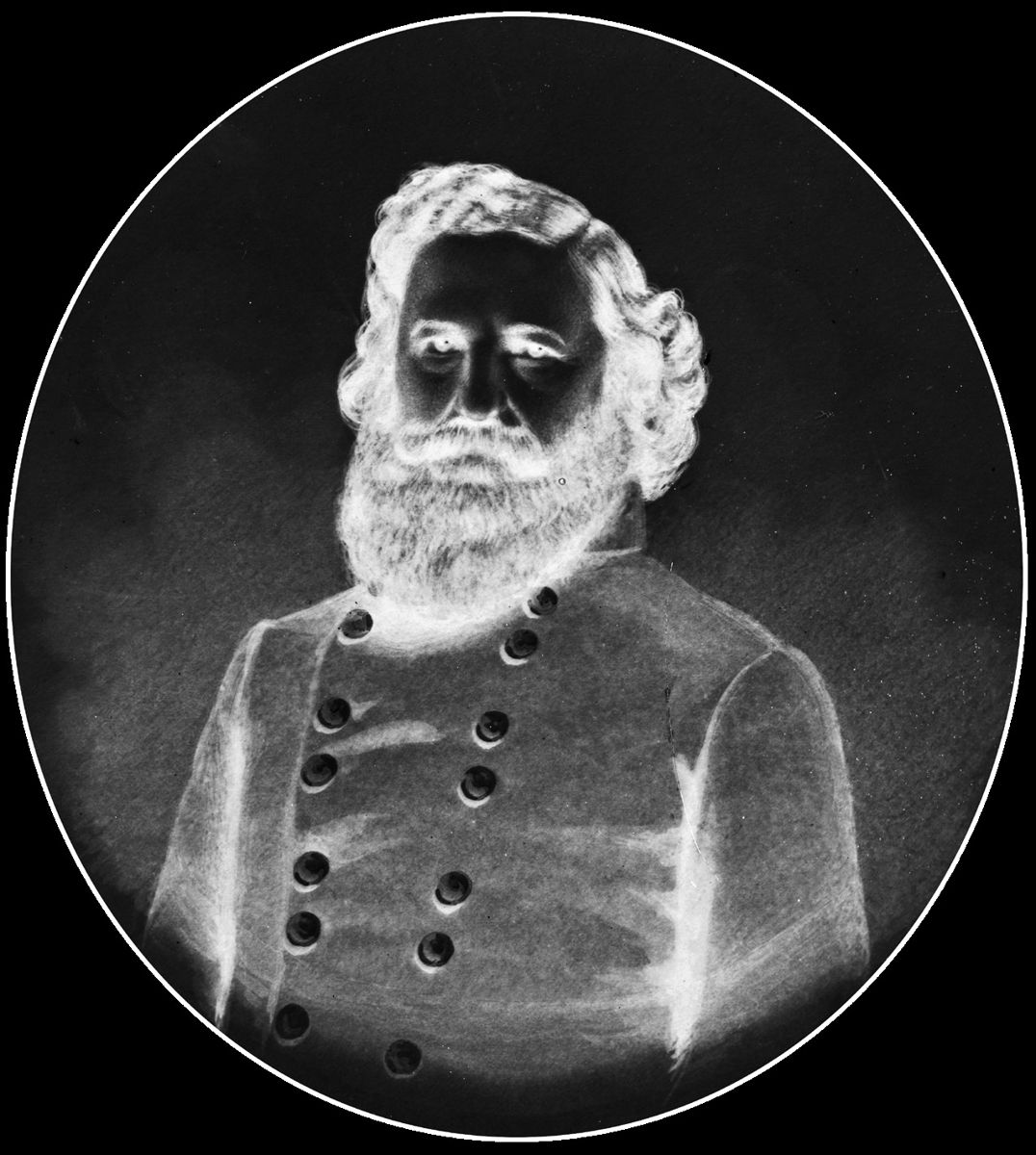
In previous columns we viewed the Battle of Antietam from the perspective of Federal officers whose troops contended with their Confederate enemies throughout the day in the woods and fields around Sharpsburg. In one of the most famous episodes of the war, Maj. Gen. A.P. Hill’s Division, hastening from Harpers Ferry, arrived on the battlefield late in the day just as the Federals were breaking through the Confederate right. Hill’s attack halted the Union advance and turned what was about to become a disastrous defeat into a tactical draw. Hill’s Division was not the only Confederate unit that had a long and hurried march to the battlefield. Other components of Lee’s dangerously divided army raced to Sharpsburg from Harpers Ferry and beyond, entering the fight as they arrived, footsore and hungry, to check the Federals’ dawn attack on the Confederate left. In this column we will hear from officers who led the troops in the bloody melee at this end of the line. Job number one for Lee was to unite his dispersed army. In his report Brig. Gen. John R. Jones described his division’s rush to Sharpsburg. At 7 a.m. on September 15 the Federal force at Harpers Ferry surrendered, “much to the joy of the toil-worn soldiers, who were ready to encounter the enemy again if necessary. At 3 p.m. orders were received to march back to camp and cook two days’ rations and be ready to march. The cooking was complete by 12 o’clock at night, and at 1 o’clock the march commenced. Reaching the Potomac at sunrise, the division was hurried across and on to Sharpsburg.” The division was allowed a two-hour rest, then “was again put in motion, and took up its position on the extreme left….” The men under Maj. Gen. Lafayette McLaws also had a long march to the battlefield. McLaws’s report went into some detail about the marching and fighting and the final dash to the climactic battle. “The entire command was very much fatigued. The brigades of Generals Kershaw and Barksdale had been engaged on Maryland Heights on the 12th, 13th, and 14th, and on the 15th had been marched from the heights to the line of battle up the valley, formed to oppose that of the enemy below Crampton’s Gap. Those of Generals Cobb, Semmes, and Mahone…had been engaged and badly crippled at Crampton’s Gap, and all the others had been guarding important points under very trying circumstances. A large number had no provisions, and a great portion had not had time or opportunity to cook what they had. All the troops had been without sleep during the night previous, except while waiting in line for the wagon trains to pass over a pontoon bridge at Harpers Ferry…. [N] otice was sent to me to hasten the troops to Sharpsburg. I…started the command at 3 p.m. Halted after dark…within 2 miles of Shepherdstown, when, receiving orders to hasten forward, commenced the march at 12 o’clock that night, many of the regiments still without provisions.” There was no time to lose. McLaws’s report continued: “On the morning of the 17th, about sunrise, the head of my column reached the vicinity of General Lee’s headquarters near Sharpsburg.” McLaws located Lee, received orders and moved his brigades into the battle already well underway. McLaws wrote: “I was, of course, entirely ignorant of the ground and the location of the troops [of other commands].” One of McLaws’s brigade commanders, Brig. Gen. Joseph Kershaw, described this march and the condition of his men when they arrived at Sharpsburg: “Owing to the exigencies of the service, my command were without their usual supply of subsistence from Monday morning, September 13, until the night of the 17th. They were also under arms or marching nearly the whole of the nights of Monday and Tuesday, arriving at Sharpsburg at daylight on Wednesday morning, September 17. As a consequence, many had become exhausted and fallen out on the wayside, and all were worn and jaded.” Brig. Gen. William Barksdale, commanding another brigade in this division, reached the main Confederate force about 9:00 a.m. “The battle was then, and had been, raging for several hours,” Barksdale wrote, adding that “a portion of my men had fallen by the way from loss of sleep and excessive fatigue, having been constantly on duty for five or six days, and on the march for the whole of the two preceding nights.” Barksdale took 800 men into the fight. Many weary troops fell out on the way, but much of the division was present in time to advance against Federals who had driven back those troops in line when the struggle began. The division commanded by Brig. Gen. John Bell Hood was in place earlier, near the Dunker Church, on the afternoon of the 16th. After the division helped slow the Federal advance at Turner’s Gap, Hood’s force served as the rear guard on the 15th and the morning of the 16th as the army fell back to Sharpsburg. In his memoirs Hood described the condition of his men. “My troops…were sorely in need of shoes, clothing and food. We had had issued to us no meat for several days, and little or no bread; the men had been forced to subsist on green corn and green apples.” Hood was relieved by three brigades of Brig. Gen. Alexander Lawton’s division. His hungry men retired to their supply wagons and began to cook their rations. As is well known, Hood’s troops had no time to finish their meal. “As the dawn of morning broke upon us,” Hood writes, Lawton sent an urgent message for Hood to come to his support. The Yankees had struck with great force. One of Lawton’s brigades was led by Brig. Gen. Harry Hays, who reported that of his 550 men engaged at the beginning of this ferocious onslaught, 323 were killed or wounded “in a very short time.” Relieved by Hood, Hays retired. “I then proceeded to gather the remnant of my brigade. When this was accomplished I again moved toward the front.” According to Hood, Hays could rally only 40 men for the renewed effort. The field was covered with the dead and wounded comrades of these few remaining men. “Never before,” Hood wrote, “was I so continuously troubled with fear that my horse would further injure some wounded fellow soldier, lying helpless on the ground.” The colonel commanding another of Lawton’s brigades was killed in the initial attack. The lieutenant colonel who assumed command was soon wounded. Maj. John H. Lowe then took charge. Like Hays’s men, Lowe’s were forced back in the severe fight, but moved forward again with the reinforcements. Lowe reported that the brigade lost not only its commander and his successor, but “nearly every regiment lost its regimental commander; also the greater portion of the different companies lost their company commanders.” Let’s now advance with two of Hood’s brigades, relieved earlier for a meal, but called back to battle with their hunger unsatisfied. Colonel William Wofford,
CWN commanding the Texas brigade, wrote that “at daylight the battle was opened. Our brigade was moved forward, at sunrise, to the support of General Lawton….” One of his regiments “pressed [the enemy] rapidly to their guns, which now poured into them a fire on their right flank, center and left flank from their different batteries, before which their well-formed line was cut down and scattered….” Another of Wofford’s regiments was “in front of the extreme right battery of the enemy…, which now opened upon our thin ranks a most destructive fire.” The Federal infantry also “now opened a furious fire…upon our thinned and almost annihilated ranks.” Wofford was forced to fall back. Of the 854 officers and men Wofford led into this battle, 560 were killed, wounded or missing. His report named 12 officers killed. Col. Evander Law commanded another of Hood’s brigades that came forward to support Lawton’s hard-pressed troops. Law wrote that as he advanced he “found but few of our troops on the field and these seemed to be in much confusion, but still opposing the advance of the enemy’s dense masses….” These fresh troops forced the enemy to “give way before us, though in vastly superior force.” But as Hood’s brigades reinforced Lawton’s, so did fresh Federal brigades come forward. “At this stage of the battle a powerful Federal force (ten times our number)…was thrown in our front. The losses up to this time had been very heavy…; our ammunition was expended; the men had been fighting long and desperately, and were exhausted from want of food and rest.” Law ordered his men to fall back “to the wood from which I had first advanced.” At this point Confederate reinforcements arrived. We have heard McLaws, Barksdale and Kershaw describing their rush to Sharpsburg. Now we hear what happened after their just-in-time arrival. General McLaws reported that as his division advanced “Just in front of the line was a large body of woods, from which parties of our own troops, of whose command I do not know, were seen retiring, and the enemy, I could see, were advancing rapidly, occupying the place.” McLaws’s troops checked this Federal advance, “inflicting great loss on the enemy” and driving them “not only through the woods, but over a field in front of the woods, and over two high fences beyond and into another body of woods over half a mile distant.” With no immediate support, some of McLaws’s brigades “fell back into the woods,” but advanced again when additional units came up. A battery supporting the attack “did most excellent service,” but, McLaws wrote, was ordered to retire “after losing 14 officers and men and 16 horses.” Another battery was “so severely cut up that in a short time by the direct and cross-fires of numerous batteries” that it also was ordered back. The enemy did not attempt another advance but continued to punish McLaws’s troops “with an incessant storm of shot and shell, grape and canister.” Of 2,893 officers and men carried into action, the division lost 1,093 killed and wounded, and 26 missing. “I could do nothing but defend the position my division had occupied,” McLaws wrote in conclusion. Barksdale’s report recounted this same bloody back-and-forth through the woods and fields north of Sharpsburg. At 2 p.m.
l
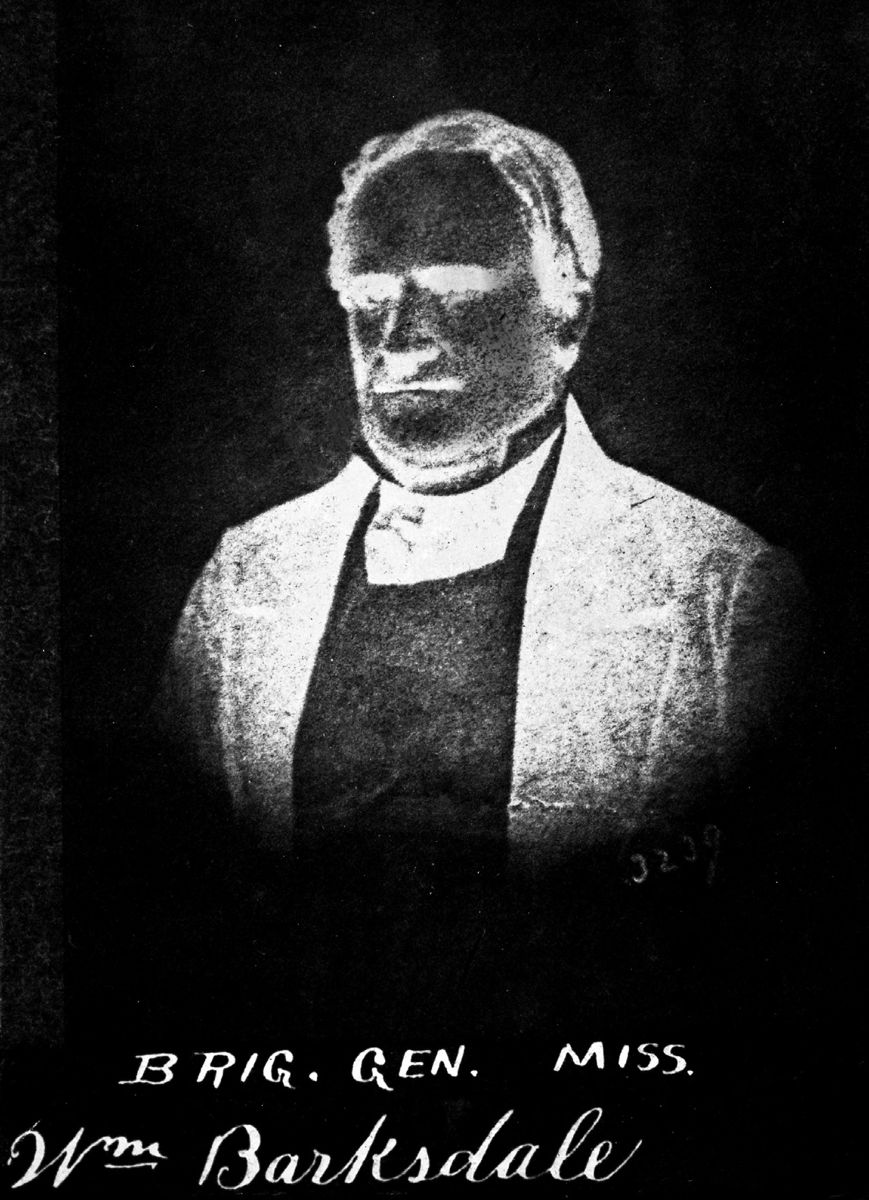
Barksdale “occupied the battleground over which we had passed in the morning.” General Kershaw’s casualty report is very telling of the army’s condition at the start of the day and at the end. One of his regiments, the 8th South Carolina, lost 23 officers and men. This may not sound like a heavy toll, until you consider how small a force the 8th was at the beginning of the battle: the regiment started the day with 26 officers and 45 enlisted men. Brig. Gen. Paul Semmes, another brigade commander under McLaws, reported his unit’s advance as an “incessant current of wounded flowed to the rear.” In his account “Our troops continued to press steadily forward, pouring a deadly fire into [the enemy’s] ranks, and he, after advancing 100 yards, gave way; and we continued to drive him from position to position, through wood and field for a mile….” Semmes concluded with an interesting assessment of the Battle of Sharpsburg. “Had it been possible to have strengthened [my brigade] by a supporting force of 2,000 to 3,000 men, there was not then, nor is there now, a doubt in my mind that the enemy’s right, though in vastly superior numbers, would have been driven upon his center and both, in confusion, on his left, utterly routing him. The victory, though decisive, would thus have been rendered signal, and the enemy’s lines broken and dispersed.” Where these 2,000 or 3,000 men might have come from is unclear, as is the reason for Semmes’s assessment of Sharpsburg as a decisive victory. Barksdale’s report concludes without such speculation or assessment. “I close this report,” he wrote, “with the remark that my command did its duty on the ensanguined field of Sharpsburg.” The horrendous bloodletting on the Confederate left flank ended with both sides exhausted. Heavy fighting in this sector ended by late morning. In Part II we will move to another place on this “ensanguined field.” Sources and additional reading:
Advance and Retreat, by General John Bell Hood; Official Records, Series I, Volume XIX, Part I, reports of Barksdale, Hays, John R. Jones, Law, Lawton, Kershaw, McLaws, Semmes and Wofford. Maps of the Sharpsburg battlefield can easily be found online. The American Battlefield Trust shows excellent maps at its site, www.battlefields.org. The reader can appreciate the effort McLaws’s and Jones’s divisions made to reach the battlefield from the maps at Wikipedia’s article on the Maryland Campaign. Gould Hagler is a retired lobbyist living in Dunwoody, Ga. He is a past president of the Atlanta Civil War Round Table and the author of Georgia’s Confederate Monuments: In Honor of a Fallen Nation, published by Mercer University Press in 2014. Hagler speaks frequently on this topic and others related to different aspects of the Civil War and has been a regular contributor to CWN since 2016. He can be reached at [email protected].