Chesapeake Monument Commemorates Jackson Greys
By Bob Ruegsegger · Originally published August 2020 · pp. 38–39
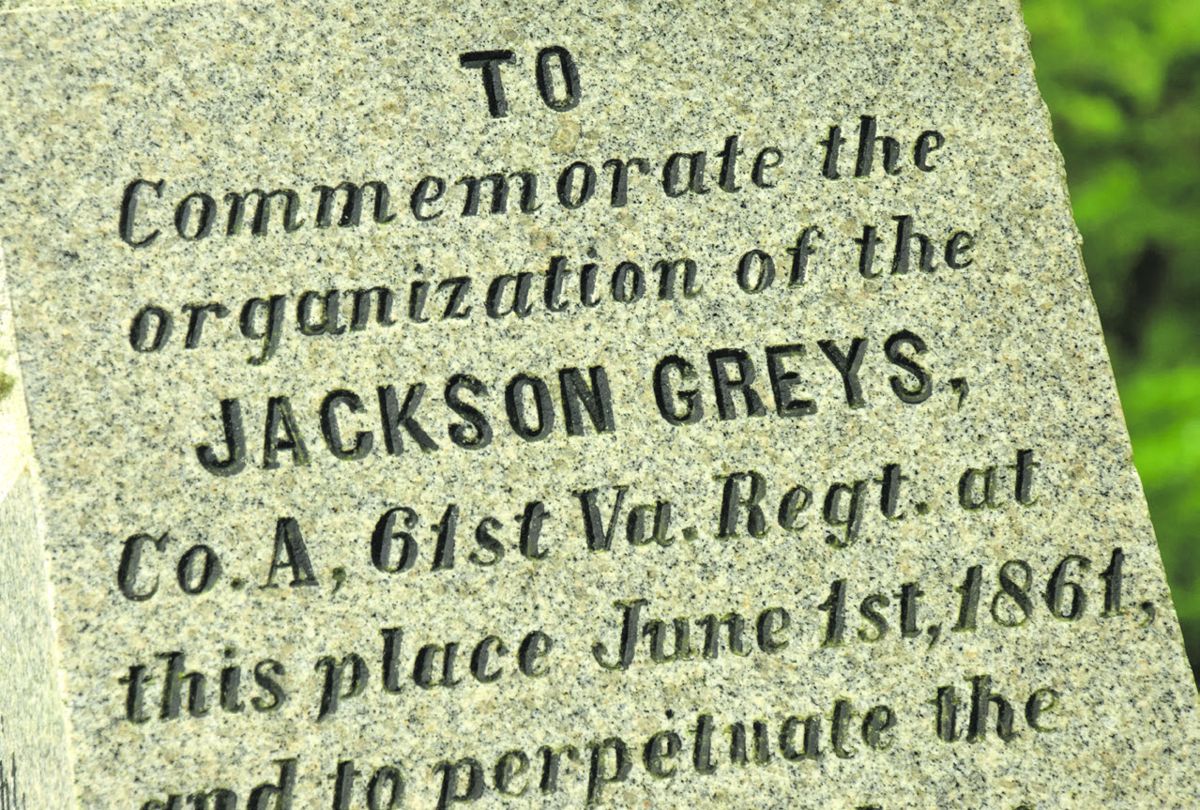
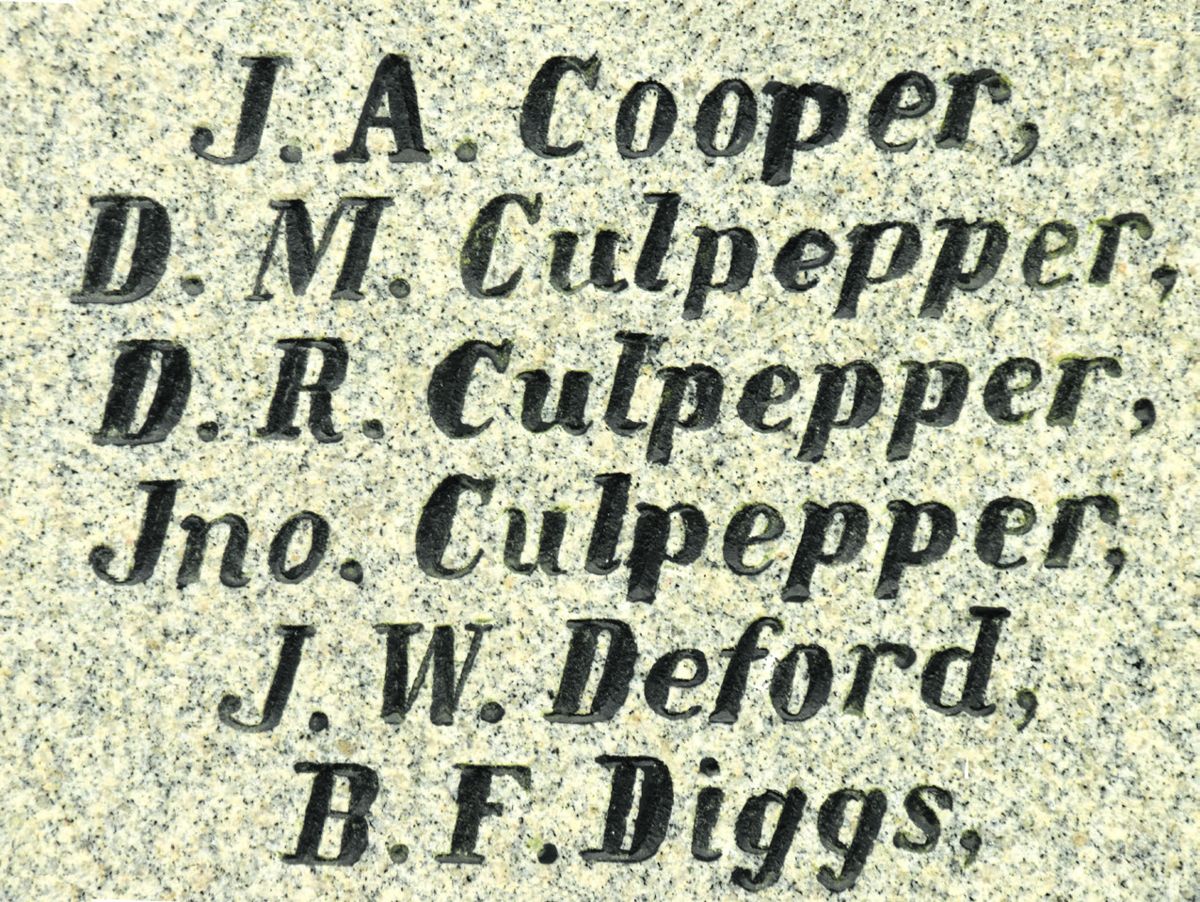
In the old Pleasant Grove Baptist Churchyard on St. Brides Road West, a rough granite obelisk commemorates formation of the Jackson Greys on July 11, 1861. The Greys were a company of local men who volunteered their services to their state and ultimately to the Confederacy during the Civil War. Recruited from St. Brides Parish in what was then Norfolk County, the Jackson Greys were named in honor of James W. Jackson, the proprietor of the Marshall House in Alexandria, Va. Jackson shot Colonel Elmer Ellsworth of the New York Fire Zouaves when Ellsworth attempted to remove the Confederate flag from his hotel. During the disturbance that followed Ellsworth’s shooting, Jackson was also killed. The company was created on the grounds of Pleasant Grove Baptist Church by Captain William H. Stewart whose residence, Beechwood, was situated nearby. Stewart was born on September 25, 1838, in Deep Creek, Norfolk County, Va. He was educated at the Union Academy in Hertford County, N.C., and left his home in the Tidewater to attend the University of Virginia in 1857. During the spring of 1861, many young Virginians who were advocates of secession were forming militia companies in anticipation of defending the Old Dominion. Captain William H. Stewart was one of those young men. The Jackson Greys were mustered into the service of the Confederacy as Co. A, 61st Virginia Volunteer Infantry Regiment and initially defended the Gosport Navy Yard. Members of the Jackson Greys met in Richmond with other men from South Hampton Roads to form Co. A, 61st Regiment Virginia Infantry and to elect the field grade officers of the regiment. Virginius Despeaux Groner was elected colonel, and William Frederick Niemeyer, a former West Point cadet, was named lieutenant colonel. William Stewart accepted the post of major. After Niemeyer was killed in battle near Spotsylvania Courthouse, Stewart replaced him as lieutenant colonel. In December 1861, the unit was transferred to an advanced artillery battery at Sewell’s Point where they exchanged artillery fire with Fort Wool in the middle of Hampton Roads harbor. Local militia units kept a watchful eye on developments at the U.S. Navy Shipyard at Gosport. When Union forces set fire to the shipyard and evacuated Gosport, Virginia militia units charged into the yard in an effort to save as much military equipment as was feasible. The partially burned hulk of the USS Merrimac was among the stores and equipment salvaged by the Confederates. The Merrimac’s hull served as the core of the ironclad CSS Virginia. When the CSS Virginia steamed out of Gosport on March 8, 1862, to do battle with the frigate USS Congress and the sloop-of-war USS Cumberland, Captain Stewart and the Jackson Greys manned the rifled guns on Sewell’s Point. As the steam frigate USS Minnesota moved up from Fort Monroe during the contest, the ship passed within range of Sewell’s Point’s guns; several shots slammed into the vessel. One projectile, struck the main mast. By May 1862, despite protests from the local citizenry, Confederate troops began removing military stores and preparing to abandon Norfolk and the Gosport Navy Yard. When General Wool arrived at Ocean View with a large contingent of Union troops, Confederate troops, including the Jackson Greys, had already evacuated Norfolk. Norfolk and the best shipyard in America returned to Union control. Upon evacuating Norfolk, the Jackson Greys were relocated to Bermuda Hundred near Petersburg. On June 26, 1862, the unit exchanged cannon fire with Union gunboats at Port Walthall. After a brief period of independent service, the regiment joined Gen. William Mahone’s Brigade near Fredericksburg. The 61st Virginia became the final component of one of the best brigades in the Army of Northern Virginia. Most men in the brigade, like their commander, were from southeastern Virginia. The 61st fought at Fredericksburg, Spotsylvania,
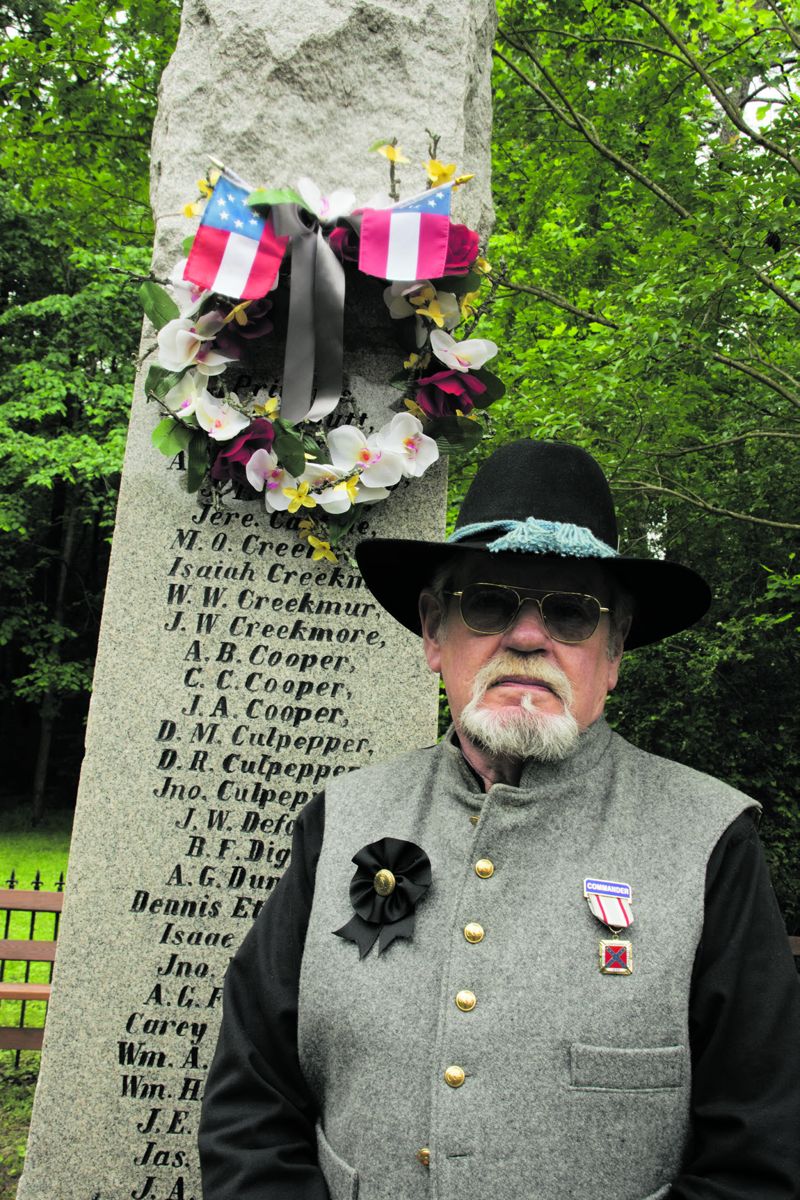
Jackson Greys Monument detail.
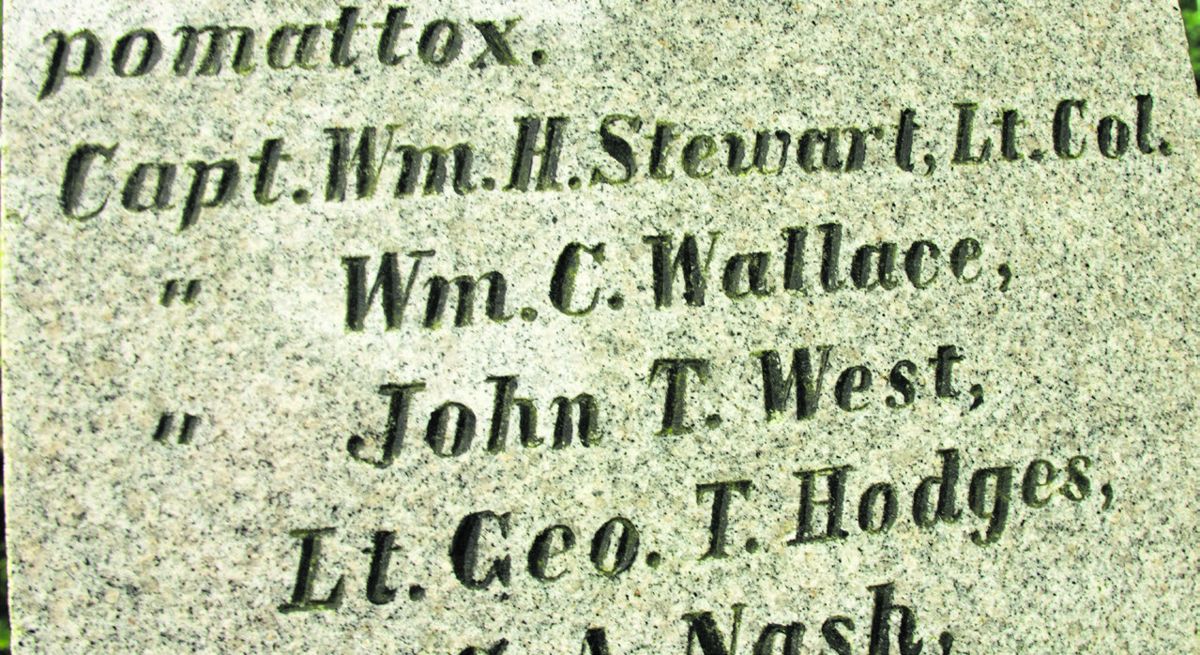
Lt. Colonel William H. Stewart. Chancellorsville, Salem Church, Gettysburg, Cold Harbor, the Wilderness, the Crater, Wilcox’s Farm, Burgess’ Mill, Bristoe Station, Weldon Railroad, and Cumberland Church before surrendering at Appomattox on April 9, 1865. Lt. Colonel Stewart and his men were paroled by Union authorities at Appomattox. After the Civil War, Stewart returned to Norfolk County and farmed his father’s land for five years before moving to Portsmouth to study law. Stewart served as commonwealth’s attorney for Norfolk County and as vice president of the Norfolk and Portsmouth Bar Association. In addition, Stewart worked as an editor for The Norfolk Landmark and founded and edited the Tidewater Times (Portsmouth Times Weekly). On July 11, 1905, Stewart, with other former Jackson Greys, watched as a small granite monument was unveiled in their honor at the church where local men first volunteered for military service. The rough granite monument still stands where it was unveiled. On its polished surfaces, the names of those who served with the Jackson Greys in the 61st
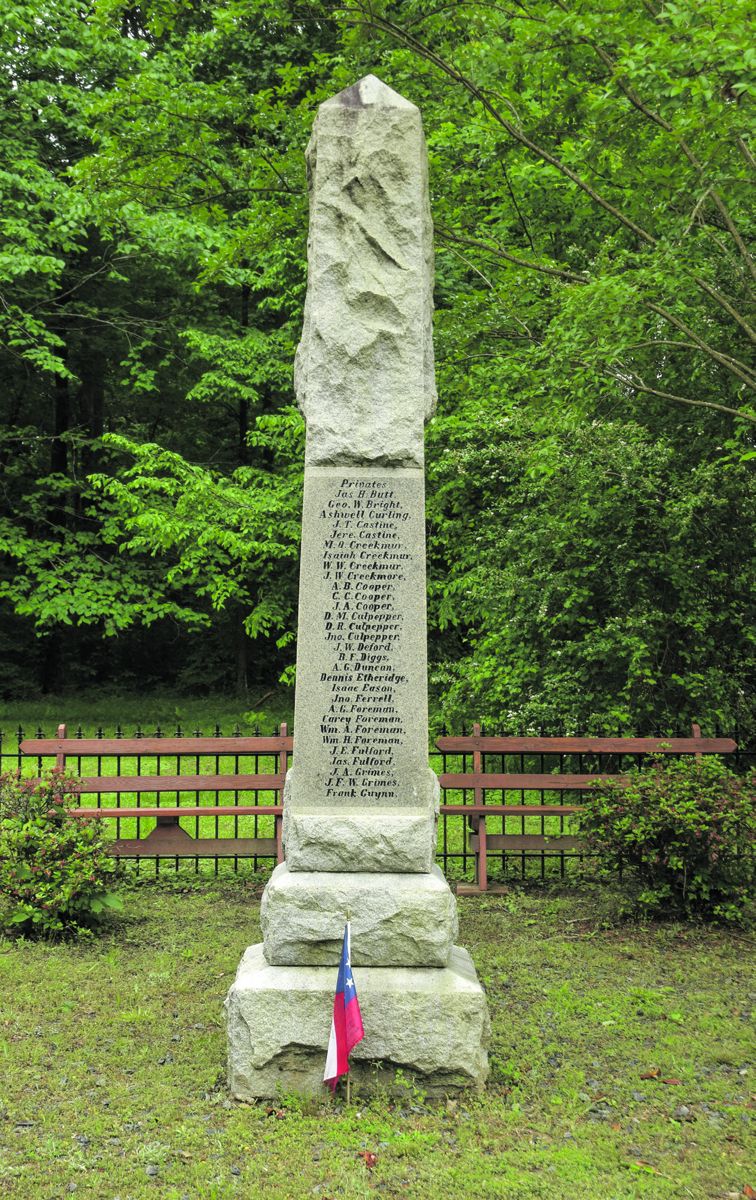
This weathered sign on Battlefield Blvd. (Route 168 South Business) directs visitors to the Jackson Greys Monument. Virginia Infantry are inscribed as a tribute to their courage and honor. Lt. Colonel Stewart’s sword, acquired during the Wilderness Campaign from a Union cavalryman who no longer needed it, is on display in the Wallace Local History Room at the Chesapeake Central Library along with other relics from Chesapeake’s past.
Bob Ruegsegger is an American by birth and a Virginian. His assignments frequently take him to historic sites throughout Virginia, the Mid-Atlantic, and the Southeast. His favorite haunts include sites within Virginia’s Historic Triangle—Jamestown, Yorktown, and Williamsburg. Bob served briefly in the U.S. Navy. He is a retired educator and has been an active newspaper journalist for over twenty years.